
Jeremy Grantham – Bubbles, Value Investing, and the Long Game at GMO (EP. 493)
The Capital Allocators episode features Jeremy Grantham, co‑founder of GMO, discussing his lifelong view of market bubbles, value investing and the current AI‑driven frenzy. Grantham traces his upbringing in wartime Yorkshire, where scarcity bred frugality, to early stock‑picking experiments that taught him the danger of over‑expansion, exemplified by Acro Engineering’s collapse. He credits GMO’s early nine‑year winning streak to a strict value framework that shunned popular growth narratives. He likens today’s Nvidia rally to the internet boom, noting that Amazon once fell 92% before dominating, and warns that “Nvidia looks like Amazon squared.” The analogy underscores his belief that spectacular price spikes are often precursors to steep corrections. For investors, Grantham’s message is clear: maintain a long‑term, value‑oriented lens, resist the lure of hype, and recognize that bubbles inevitably burst. His track record suggests disciplined contrarianism can protect capital and generate outsized returns over decades.

They Call It a Lottery Ticket. The Data Says Otherwise | The Hidden Alpha of Biotech
Biotech investing is portrayed as a lottery ticket, yet specialist investors argue persistent alpha exists. The conversation with DA Wallak explores how early‑stage biotech firms are valued using a “bag of options” framework that sums the net present value of...

Bill Ackman Plans Pershing Square IPO
Bill Ackman is returning to the public markets with a fresh offering: Pershing Square USA, a closed‑end fund slated to raise as much as $7 billion. The IPO will bundle the fund with a newly created parent, Pershing Square Inc., which...
The Future of Hedge Funds: AI Agents Tracking Every Stock
Divya Nettimi of Avala Global highlighted a nascent strategy where hedge funds deploy a dedicated AI agent for every publicly traded stock. Each agent would ingest real‑time news, filings, social sentiment and market data, then filter out noise to surface...

Bloomberg Invest | Day 2 | Mainstage AM
Bloomberg Invest’s Day 2 mainstage brought together senior leaders from Temasek, State Street Global Advisors, Apollo Global Management, Clearlake Capital and KKR to discuss the evolving investment landscape. The panel highlighted a shift toward private assets, emphasized Asia’s growth potential, and...

Bloomberg Invest | Day 1 | Mainstage PM Sessions
Bloomberg Invest’s Day 1 Mainstage PM Sessions featured a lineup of senior leaders from leading asset managers and exchanges, including Sixth Street’s Alan Waxman, Brookfield’s Connor Teskey, Invesco’s Andrew Schlossberg, NYSE’s Lynn Martin, BlackRock’s Samara Cohen, and Ariel Investments’ John W. Rogers Jr. The session focused on private‑market strategies,...
Gavin Baker – Truth-Seeking and Crossover Investing at Atreides (EP.489)
The Capital Allocators episode spotlights Gavin Baker, managing partner and CIO of Atreides Management, which oversees roughly $7 billion across public, private and crossover strategies focused on technology and consumer sectors. Baker recounts his unconventional path—from a book‑filled childhood and rock‑climbing...

The Flows Are Reversing
The video highlights a fundamental shift in global capital dynamics: after twenty years of massive foreign investment into the United States, those flows are now reversing. The speaker stresses that this reversal is not a classic capital flight scenario,...
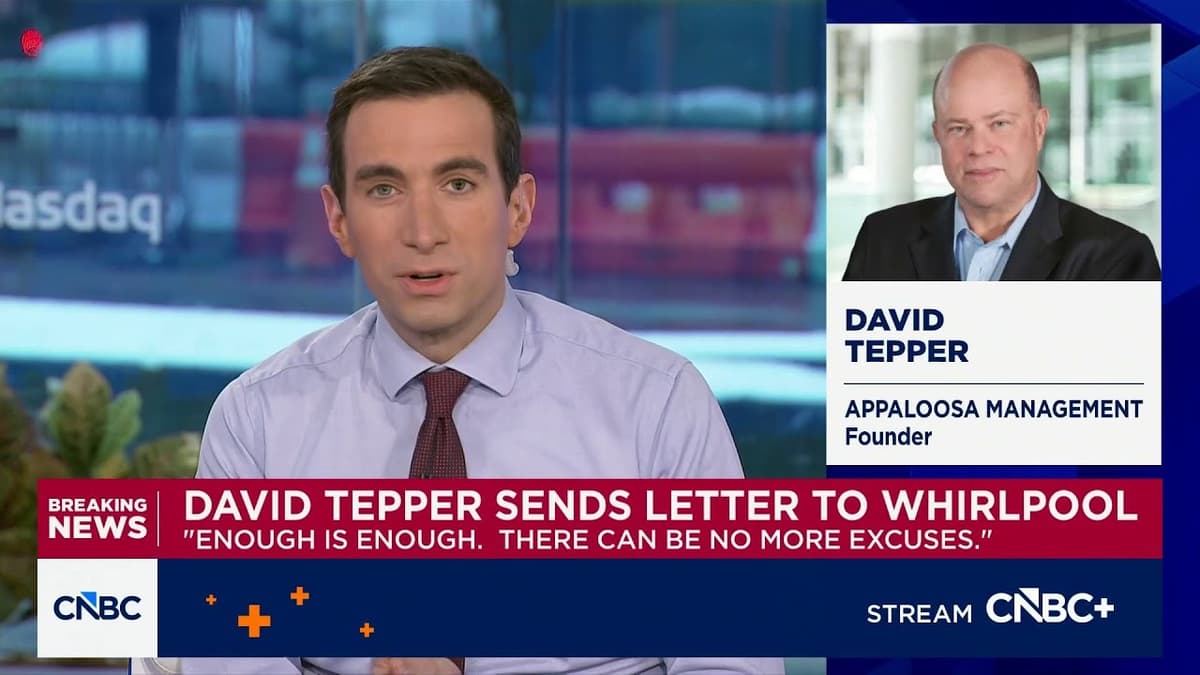
David Tepper Sends Scathing Letter to Whirlpool for Destroying Shareholder Value, Pushes for Changes
Activist billionaire David Tepper, founder of Appaloosa Management, sent a sharply worded letter to Whirlpool’s board accusing the appliance maker’s leadership of erasing hundreds of millions of dollars in shareholder value. Tepper singled out the recent equity raise, which he says...
Uncertainty Is Good for Your Portfolio
The speaker argues that market uncertainty and volatility often create the best buying opportunities, while calm, predictable periods tend to be the worst times to be invested. Historical episodes of complacency—when investors felt certain about earnings and the economy—preceded poor...

Small-Caps Have a Junk Problem
The video argues that today’s small‑cap market is plagued by junk companies, a condition driven by the abundance of private capital that lets quality firms stay private rather than endure public‑market burdens. Because private funding is readily available, only companies that...

US Economic Resilience Weights on Rate Cut Bets, Private Credit Risks | Real Yield 2/20/2026
Bloomberg Real Yield’s February 20 episode centered on the Supreme Court’s unexpected ruling that struck down President Trump’s global tariffs, a move that instantly lifted U.S. 10‑year Treasury yields and sparked debate over the fiscal impact of losing roughly $170 billion in...
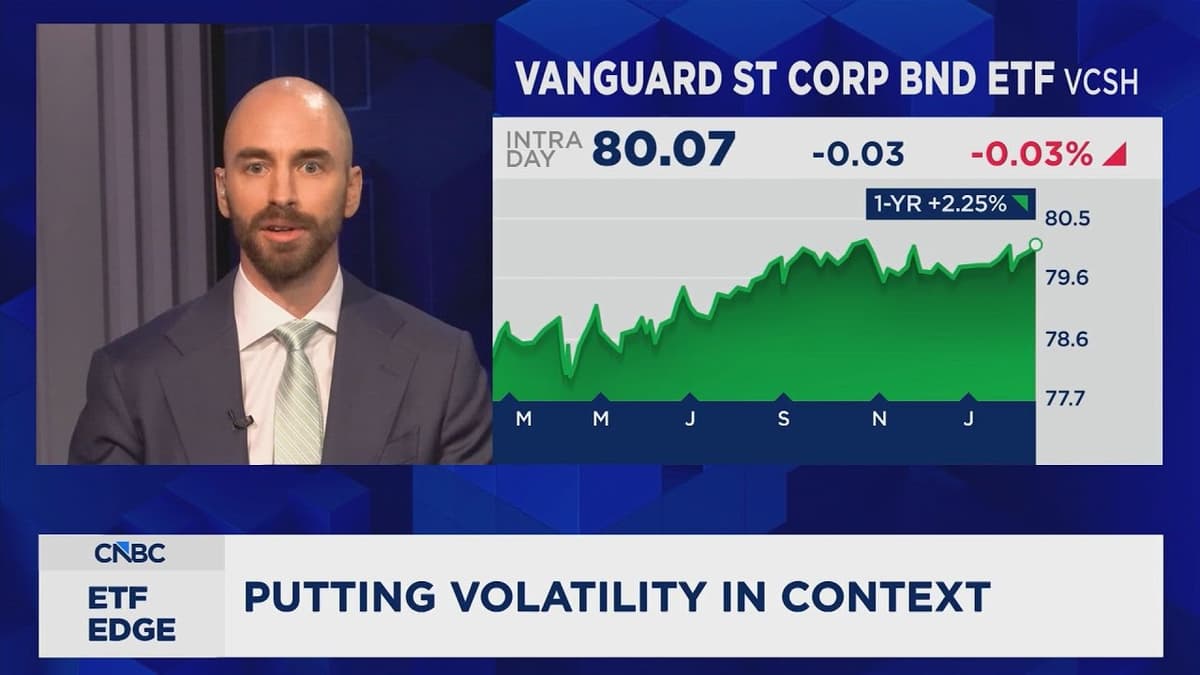
Income-Focused Investing Often Leaves Too Much on the Table, Says Kathmere CIO
Amplify’s chief investment officer, Christian, used a recent market‑volatility roundtable to argue that traditional income‑focused strategies often leave performance on the table. He outlined how the firm’s “yield‑smart” ETFs combine dividend exposure with tactical covered‑call writing to generate 5‑6% yields...

How Hedgeye’s Global Process Is Beating Consensus
The video outlines Hedgeye’s global investment framework, emphasizing how its country‑specific bets have outperformed mainstream consensus. By spotlighting recent returns—Turkey up 22% since December, Israel 19% since November, Mexico 18% since December, and Japan 9%—the presenter argues that the model’s...

Steve Cohen's $3.4 Billion Payday Tops Hedge Fund Ranks
Steve Cohen, the billionaire owner of the New York Mets, topped Bloomberg’s latest ranking of highest‑earning hedge‑fund managers by pulling in roughly $3.4 billion from his Point72 Asset Management firm in 2023. The haul translates to about $9 million a day, enough to...
The Capitalism No One Sees | Jason Hsu on What Investors Miss About China
Jason Hsu argues that China functions as a fiercely competitive capitalist engine rather than a monolithic, centrally planned economy. He says the Chinese state often acts like the largest limited partner/venture capitalist—providing capital and protection while letting many private firms...
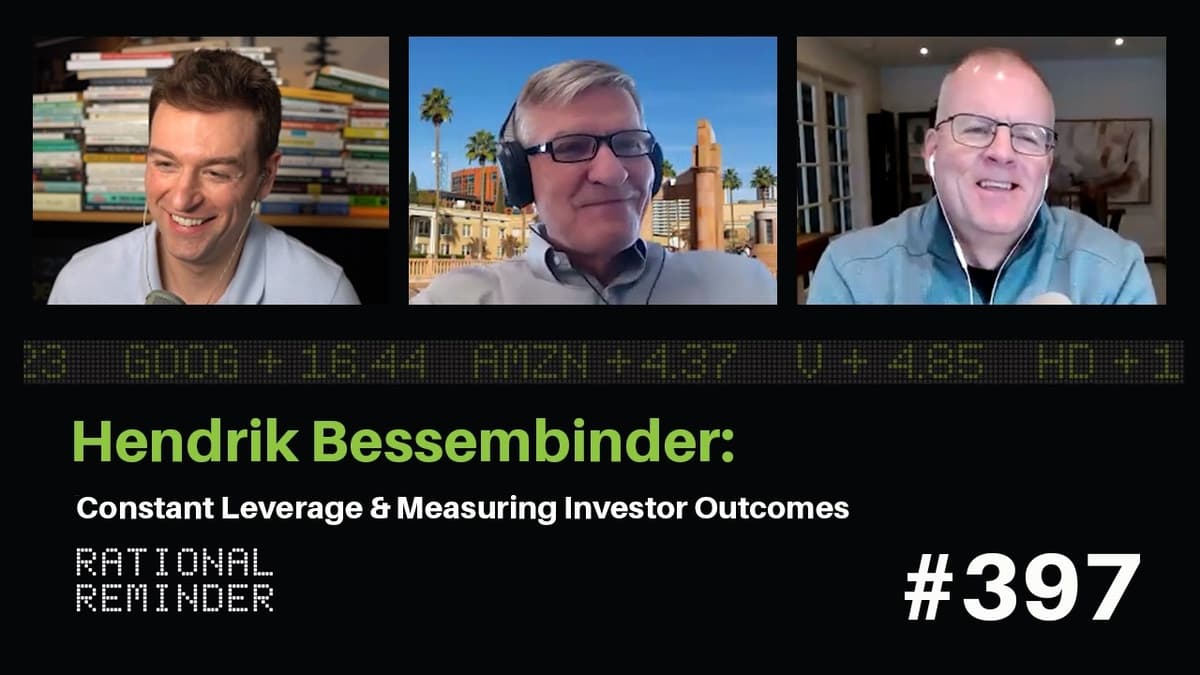
Hendrik Bessembinder: Constant Leverage & Measuring Investor Outcomes | Rational Reminder 397
Hendrik Bessembinder told the Rational Reminder hosts that leveraged single-stock ETFs have material costs and tail risks, finding long 2x/3x products underperform a frictionless leveraged benchmark by about 0.79% per month (roughly >9% annually) and short products by ~1% per...
The Map Isn't the Territory
The speaker invokes Korzybski’s axiom “the map is not the territory” to warn investors against treating financial statements as the full picture of a company. Income statements, balance sheets and cash-flow statements are useful maps, but they can mask the...
Bobby Jain – Multi-Strategy Hedge Fund First Principles at Jain Global (EP.487)
The Capital Allocators interview spotlights Bobby Jain, former co‑CIO of Millennium, who founded Jain Global last year. The new hedge fund now manages roughly $6 billion across more than 350 employees, built from the ground up using a first‑principles approach...
The Fourth Turning Is Here | Neil Howe and Ben Hunt on Inflation, Trust and What Comes Next
The video brings together historian Neil Howe and investor Ben Hunt to examine how the current era fits the “Fourth Turning” framework—a generational cycle that alternates between periods of building and crisis. They argue that today’s inflation surge, broken trust,...
You Can't Eat Risk-Adjusted Returns | AQR's Pete Hecht on Portable Alpha's Capital Efficient Edge
In the interview, AQR’s Pete Hecht explains portable alpha as a capital‑efficient way to combine unconstrained, long‑short alpha with a market‑beta overlay, allowing investors to retain a traditional equity exposure while harvesting uncorrelated returns. He frames the concept against the...
Stephen Gilmore – CalPERS’ Total Portfolio Approach (EP.486)
The video features Stephen Gilmore of CalPERS outlining a total‑portfolio approach designed to curb the fund’s historically procyclical investment patterns. By anchoring decisions to a reference portfolio rather than ad‑hoc market timing, CalPERS aims to align risk exposure with its...