Today's Human Potential Pulse

Clock vs Compass: Rethinking Productivity Tools
The article contrasts speed‑focused clock methods with direction‑focused compass approaches, arguing that without a clear north‑star fast work leads to wasted effort. It recommends starting weekly reviews with two simple questions, a habit that can trim about a third of work.

The Psychology of Emotions: How Recognizing Your Feelings Reduces Impulsive Reactions
The post argues that most impulses stem from emotions we fail to label, and that consciously recognizing those feelings rewires our brain’s reaction pathways. It explains how the brain treats unidentifiable feelings as emotional alarms, prompting automatic impulses. By pausing to name the emotion, we give the prefrontal cortex a chance to intervene, reducing impulsive behavior. The author reinforces the point with a quote about disciplined daily actions and links to an e‑book on building self‑discipline.

The Discipline of Facing What You Don’t Want To Feel
The post argues that many professionals postpone tasks, conversations, and decisions not because they lack clarity, but because the associated feelings are uncomfortable. It describes how short‑term avoidance provides temporary relief while allowing new anxieties to surface. The author urges...

Discipline as Proof of Self-Belief
The post reframes discipline as a visible indicator of self‑belief rather than a mere habit skill. It argues that on days when actions align with internal conviction, discipline flows, while gaps reveal a lack of belief. To operationalize this insight,...

Emotional Regulation During Waiting: Reducing Anxiety and Frustration
The post explores how waiting—whether for answers, outcomes, or change—creates uncomfortable anxiety and tension despite the absence of external events. It explains that the mind fills idle moments with pressure, leading to restlessness and quiet stress. The author outlines practical...
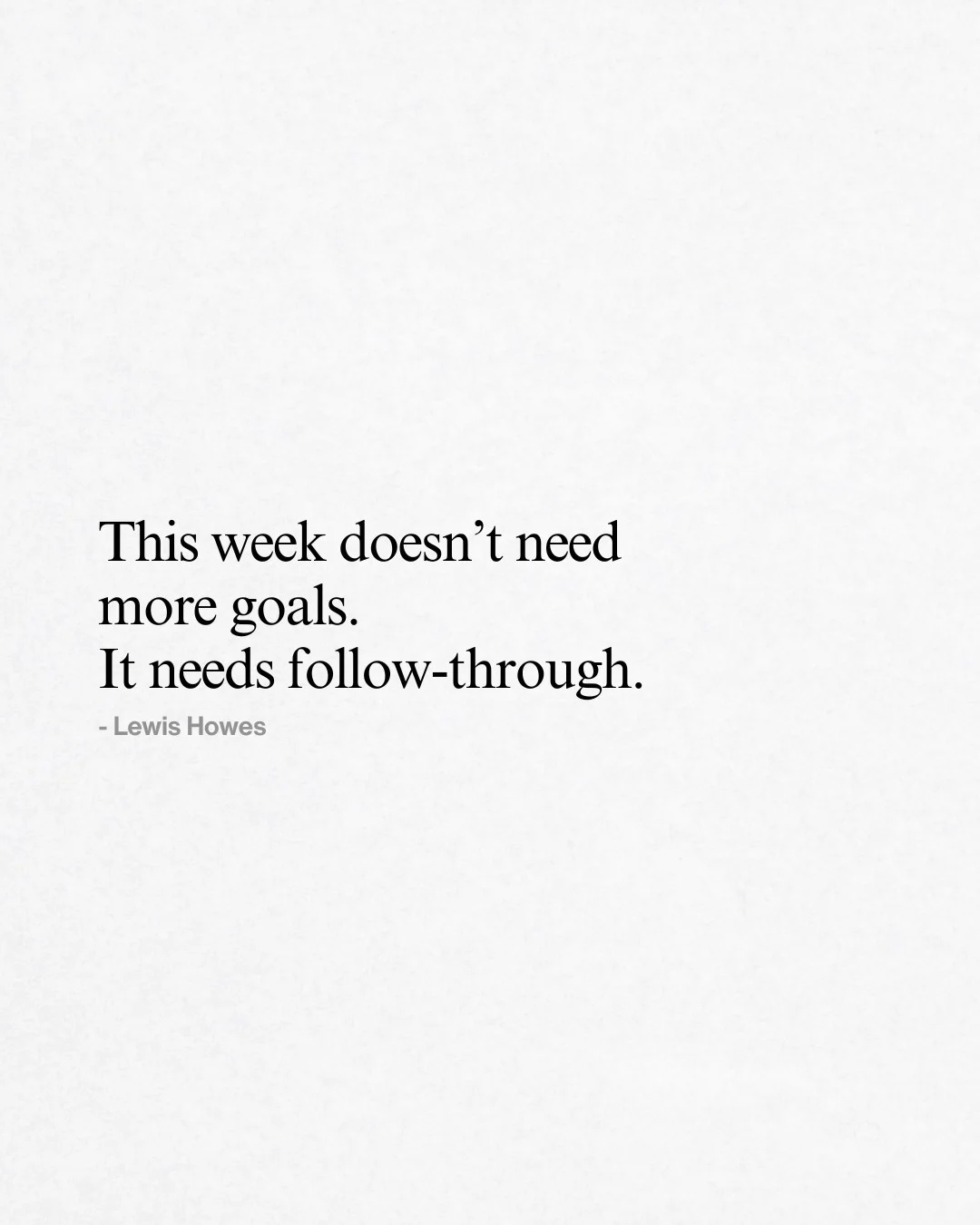
Commit to One Last‑Week Priority This Week
What is something from last week you are going to make a priority and follow-through with? 💭
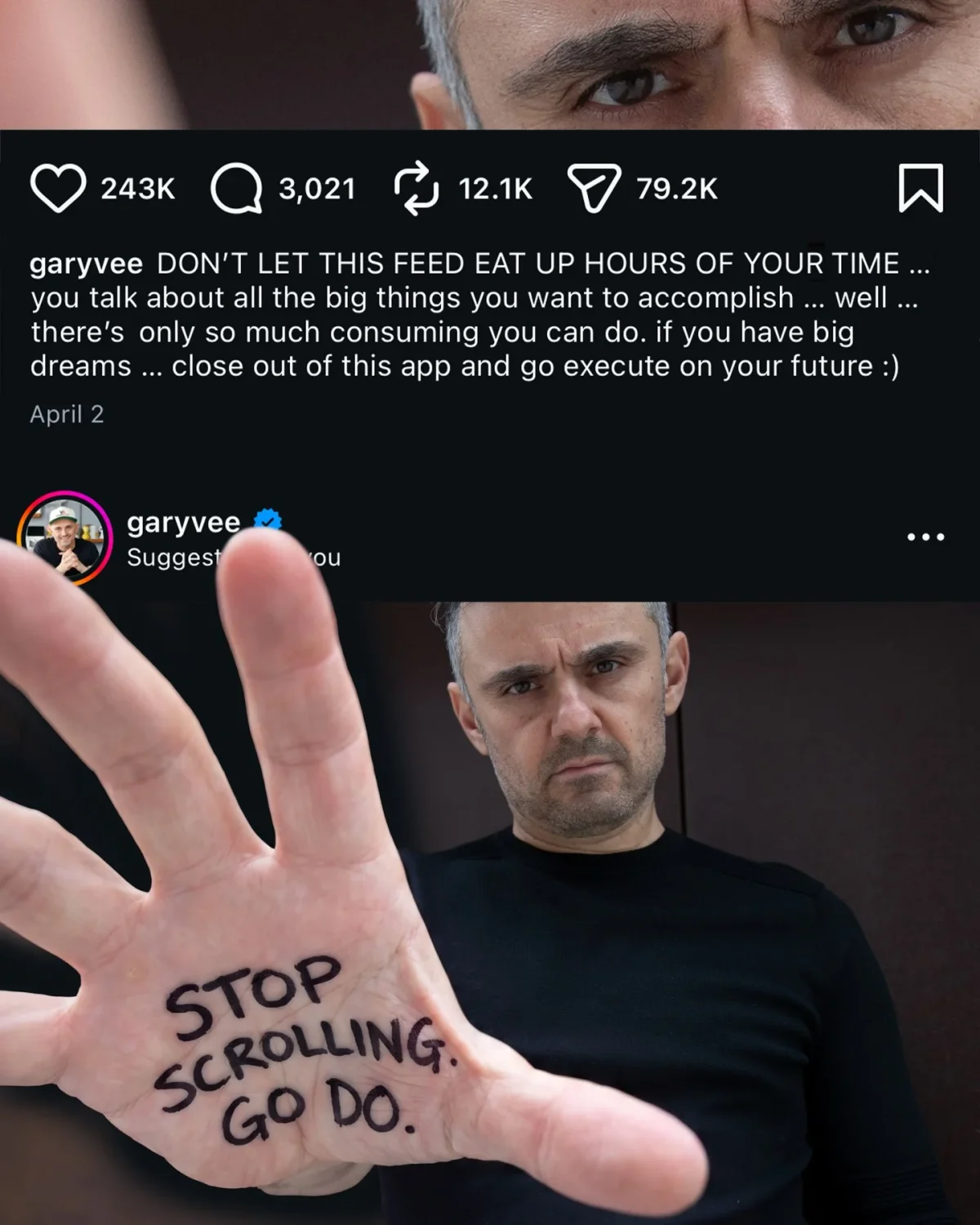
Stop Scrolling, Start Acting This Monday
Enough scrolling … it’s Monday .. go finally attack what you’ve been “talking about”, pondering, debating, fearing to do … this is your sign 🍀share this with 4 people for four years of good luck 😝 #garyvee #inspiration #advice

Every Escape Has a Price — 20 April
The post argues that escaping uncomfortable tasks feels easy now but builds hidden mental weight over time. Each avoided decision creates a gap between intention and behavior, eroding self‑trust and increasing future stress. By confronting issues directly, even imperfectly, the...

Speak to Yourself Like You Speak to Friends
You would never tell a friend they’re not good enough. You wouldn’t tell them they’ll never make it. You wouldn’t constantly remind them of their flaws. So why do it to yourself? The way you speak to yourself matters. Your thoughts shape your confidence....

Focus on What Matters and You Can Control
Most of what you’re worried about right now… you can’t control. Years ago, I drew a simple sketch with two circles. Things you can control. Things that matter. 🎯 The overlap is where your attention belongs. When your circle of concern gets bigger than your...
![High Performance Planner [Our 2026 Review]](/cdn-cgi/image/width=1200,quality=75,format=auto,fit=cover/https://www.developgoodhabits.com/wp-content/uploads/2024/10/cropped-DGH-v1.6.png)
High Performance Planner [Our 2026 Review]
The High Performance Planner, launched in 2018 by personal‑development guru Brendon Burchard, is a 60‑day, 192‑page hardcover that merges daily scheduling, habit tracking, and reflective journaling. Developed after two decades of research on elite performers, the planner offers structured morning...

Economic Times Spotlights African Proverb on Inner Resilience and Self‑Discovery
The Economic Times highlighted an African proverb—“When there is no enemy within, the enemies outside cannot hurt you”—as a lesson in inner resilience and self‑discovery. The piece ties the ancient wisdom to modern psychological concepts and the growing personal‑development market.

4 Attentional States That Explain Why You Reach For Your Phone 47 Seconds Into A Book
Gloria Mark’s two‑decade research shows the average screen‑switching time for knowledge workers fell from 2.5 minutes in 2004 to about 47 seconds by 2020. Crucially, the data reveal that 44% of those switches are self‑initiated, meaning we often distract ourselves...

Rekha Bhardwaj Unveils Five Mantras to Boost Motivation and Well‑Being
Renowned Indian singer Rekha Bhardwaj told The Week on April 19, 2026 that five simple mantras have guided her toward a happier, healthier life. The mantras, focused on positivity, self‑acceptance, compassion, health, and daily good deeds, are being promoted as...

Productivity Trap Fuels Exhaustion as Workers Face Constant Optimization
A surge in relentless productivity tracking is pushing workers into a “productivity trap,” where 40% of employees start their day before 6 a.m. and are interrupted every two minutes. The trend is linked to rising burnout, mental‑health strain, and widening inequality...

How Lifelong Learning Shapes Personal Growth for Men
Modern masculinity is shifting toward adaptability, with lifelong learning emerging as a core driver of personal growth for men. The article highlights that learning now extends beyond formal classrooms to include self‑study, hobbies, and relationship‑focused experiences. By cultivating cognitive flexibility...

Peak Brain Power Comes After 50: Here’s Why Your Business Can’t Afford to Ignore That
Recent research overturns the long‑held belief that cognitive ability peaks in early adulthood, showing that crystallized intelligence—knowledge, judgment, and pattern recognition—continues to improve into the 50s. While fluid intelligence, the capacity for rapid abstract problem‑solving, declines after the late teens,...

7 Small Morning Habits That Make a Big Difference
A new case study by Naturepedic and Talker Research found that 49% of Americans say their morning routine shapes the rest of their day, with 37% able to predict their day’s quality within ten minutes of waking. The research highlights...

Integrate the Slingshot Pause
The post urges professionals to embed a daily "thinking pause" into their schedules, arguing that deliberate mental time drives the most consequential decisions. It contrasts the common habit of allocating hours to physical exercise with the rarity of setting aside...

5 Signs You're Living Someone Else's Definition of Success (and How to Stop That Without Burning It All Down)
Becca Pearce warns that many high‑achievers are living by a borrowed definition of success, chasing external markers like bigger houses, titles, and salaries. She outlines five tell‑tale signs—comparison‑driven ambition, hollow achievements, role‑based identity, guilt over new desires, and postponing happiness—that...
5 Lessons Men Learn Too Late in Life, According to Warren Buffett
Warren Buffett distills five late‑life lessons for men, emphasizing disciplined time management, reputation protection, minimal leverage, thoughtful partner selection, and an inner‑focused scorecard. He argues that saying no safeguards the most valuable asset—time—while a reputation built over decades can be...
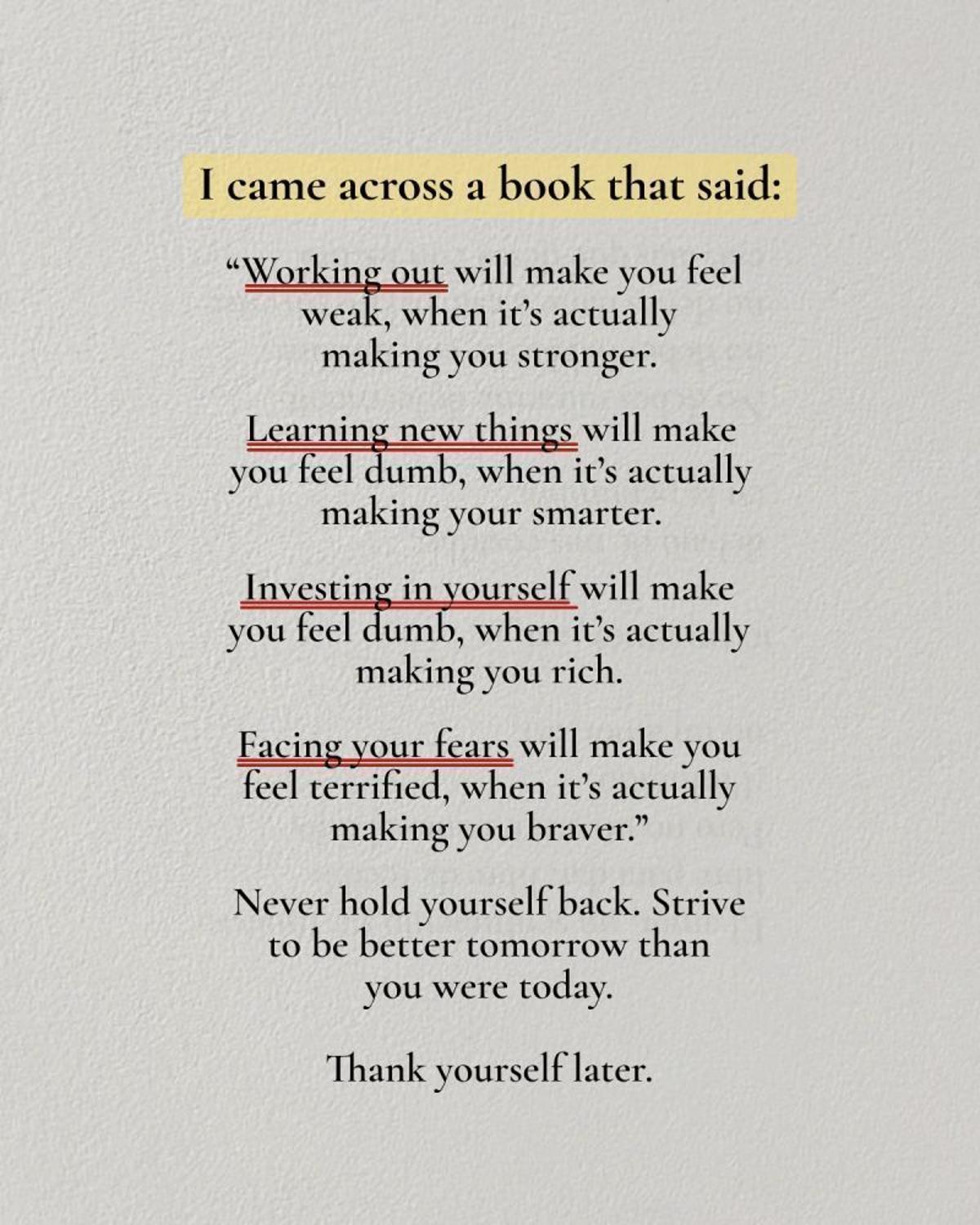
Discomfort Signals Growth, Not a Warning to Quit
Discomfort has a bad reputation. We treat it like a warning sign. Like something is wrong. Like we should step back. But often, it’s the opposite. Discomfort shows up when something is changing. When you’re learning, stretching, trying something you haven’t mastered yet. That’s why it feels...

Permission: The One Word Solution to Procrastination
Jon Acuff’s latest podcast episode argues that a single word—permission—can instantly overcome procrastination. Drawing on his new book *Procrastination Proof*, he likens adult hesitation to the lack of a childhood permission slip that once unlocked opportunities. By consciously granting oneself...
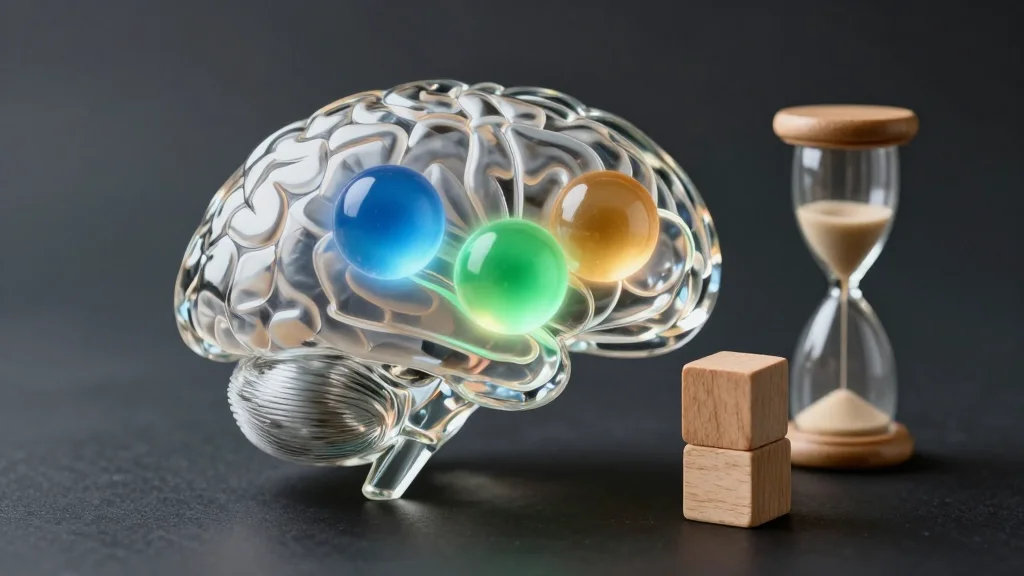
Boost Recall: Reduce Distractions, Chunk, Space Study
Memory operates in three key stages—sensory, working, and long-term—each involving distinct brain regions, and simple strategies like reducing distractions, chunking information, and spacing study sessions can significantly enhance recall. memoryscience

Stanford Luck Researcher: How to Manifest the Life You Want
In this episode, Mel Robbins talks with Stanford neuroscientist and entrepreneurship professor Dr. Tina Selig about the science of luck. Selig explains that luck is not a mystical trait but a skill built through intentional actions, calculated risks, and how...

Blue Zones’ Dan Burden Marks 80th with Call for Outdoor Adventure to Boost Longevity
Dan Burden, Blue Zones Director of Inspiration & Innovation, celebrated his 80th birthday by telling Blue Zones how outdoor adventure fuels longevity and purpose. His interview highlights the need for community‑driven outdoor programs to keep aging adults engaged and healthy.

World Champion and Awake Academy Founder Layne Beachley Talks High Performance at Sydney Growth Summit
World champion surfer and Awake Academy founder Layne Beachley will speak at Sydney's Growth Summit on June 18, delivering a session titled “High performance that lasts.” She will discuss emotional fitness and resilience, drawing on her seven‑time world title experience...

Innovative Freedom
The article argues that true creative freedom arises from supportive conditions—personal safety, curiosity, risk intelligence, and iterative practice—rather than the absence of limits. It outlines concrete habits such as low‑stakes making, a “draft quota” of 20 bad ideas, playful constraints,...
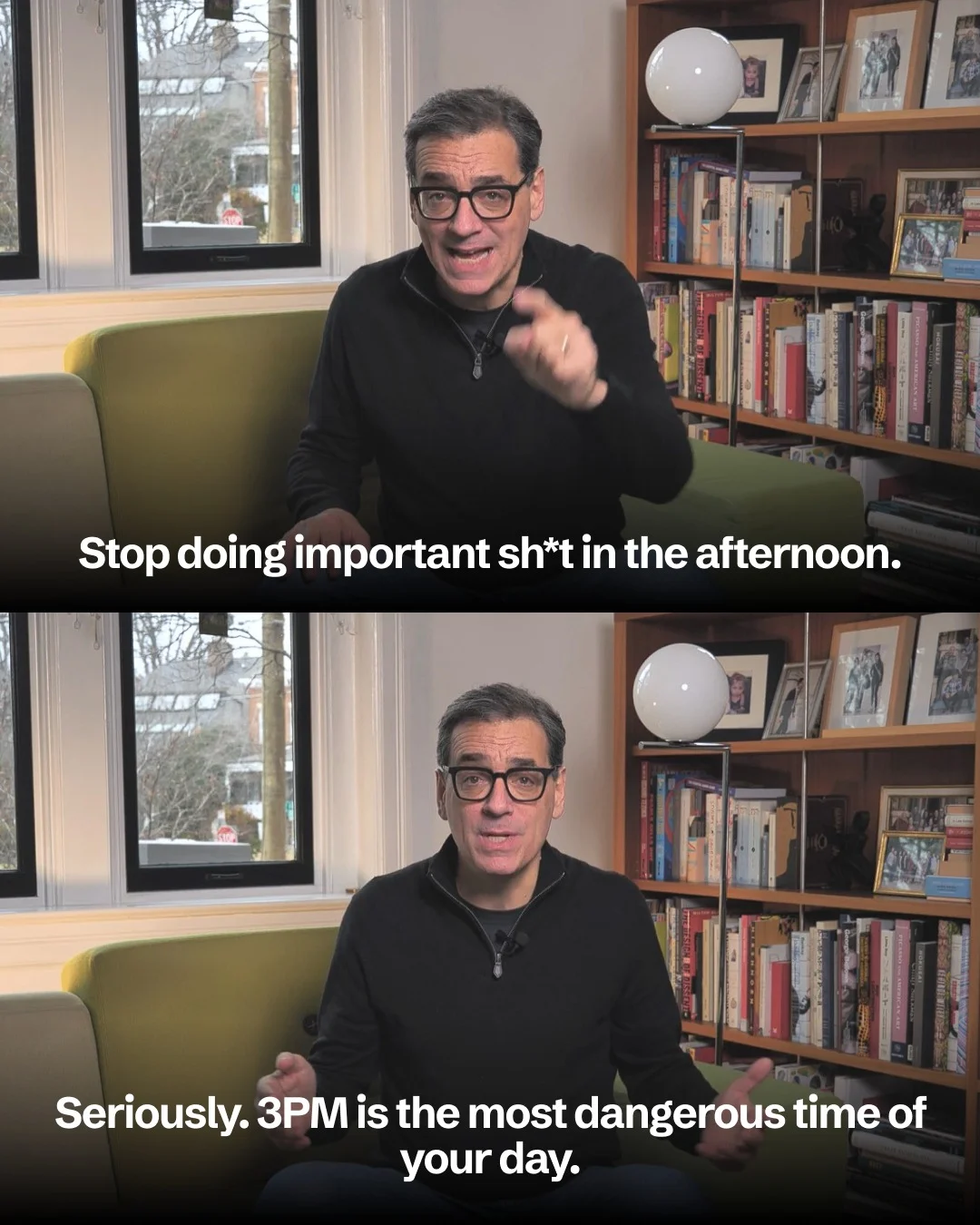
Do Hardest Work Before Lunch; Afternoons Are Low‑energy
NO ONE in my family schedules an important doctor appointment at 3PM. About seven hours after you wake up, your brain hits a biological trough. Focus drops, mistakes rise, and decisions get worse. The fix is simple. For most people, it pays to...

Stop Sabotaging Yourself: Action Beats Skill Mastery
I have trained over 12,000 writers & ghostwriters. And what people struggle with the most isn't the "hard skills." It's the relationship they have with themselves. They are their own worst enemy. They talk themselves out of taking action. They...

Take Control of Your Technology
The article traces how each communication breakthrough—from fax to email to smartphones and generative AI—has amplified both speed and information overload. While early tools seemed miraculous, they introduced new layers of distraction that now drown workers in “workslop.” The author...

Compound Your Daily Work for Cumulative Growth
A Monday morning question for you: How can the work you're doing today accumulate and layer on top of what you did yesterday? Find ways to compound your efforts.

Authenticity Is the Toughest Battle in a Conformist World
"To be nobody-but-yourself — in a world which is doing its best, night and day, to make you everybody else — means to fight the hardest battle which any human being can fight." A classic: https://t.co/6ukylEt2ZV

I Hit Every Goal I Set – the Title, the Income, the House – and Sat in My Car in...
The article explores the "achievement trap," where reaching long‑held goals—like a dream house, a big contract, or financial security—leaves many professionals feeling empty. Citing psychologists such as Tim Kasser and concepts like hedonic adaptation, it shows that extrinsic milestones often...

Claim What’s Yours: Stop Settling for Less
Stop settling for scraps. You're better than that. Decide today, right now, To get what you know is yours.

Small Actions Beat Procrastination's Hidden Energy Drain
That thing you keep putting off? It’s quietly draining your energy. Not doing it costs more than doing it. You don’t need a big plan… just a start. One small action today changes everything. Pick one thing. Start. 👉 Read more and subscribe to my LinkedIn...

The Winner's Mindset
Sifu Yik’s post outlines ten practical rules that separate strong, high‑performing individuals from the rest. The guidelines stress earning respect through value, building personal strength, speaking less, continuous self‑improvement, decisive action, and strategic silence. They also highlight cutting toxic habits,...

The Hidden Architecture of High-Capacity Minds
The article argues that high‑capacity minds—individuals with intense pattern‑recognition, emotional depth, and divergent thinking—are routinely evaluated against linear productivity metrics they were never designed to meet. This mismatch leads to chronic mischaracterizations such as “too scattered” or “inconsistent,” despite the...

Growth Comes From Repeating Clear Ideas, Not New Ones
You don’t need more ideas you need more repetition The same ideas explained better That’s how people grow Not by being new but by being CLEAR

Weekly Review: Prioritize, Declutter, and Focus on What Moves You
How to review your week to stay organized and productive: 1️⃣ Reflect on what worked and what didn’t last week? Noticing patterns helps you repeat wins and avoid burnout. 2️⃣ Reset: Clear tasks and declutter your workspace. A clean slate sets the stage for...

Revisiting the 3-3-3 Rule
The author revisits the 3‑3‑3 rule—a dog‑adoption framework that allocates three days for adjustment, three weeks for training, and three months for socialization—and shows how it mirrors personal and professional transitions. By aligning a new‑job onboarding cadence with the same...

Deadlines Spark Breakthroughs: Constraints Fuel Innovation
Check the link in my bio for more info and pre-order links for my new book, Inside the Box, in which I share science and stories that show how constraints can make you more creative, productive, and satisfied. The story...

People Who Accomplished Remarkable Things by 60 Share One Pattern — They Changed Their Minds More Often and Their Identity...
People who achieve extraordinary results by age 60 share a distinct mental pattern: they regularly update their beliefs while keeping their core identity stable. Research on epistemic humility shows that frequent mind‑changing improves forecasting, decision‑making, and long‑term outcomes. Conversely, most...

You’re Not Busy, You’re Afraid to Stop
The post argues that rest is a theological mandate, not a reward earned after work. It explains that the Sabbath command calls for ceasing on the seventh day, independent of productivity, and frames rest as an identity statement rather than...

Stop Caring About Others' Imagined Judgments; You Aren't Central
Harsh truth: No one on earth is thinking about you anywhere near as much as you think they are. Despite what you believed growing up, you are not the center of the universe. The people you think are judging you...
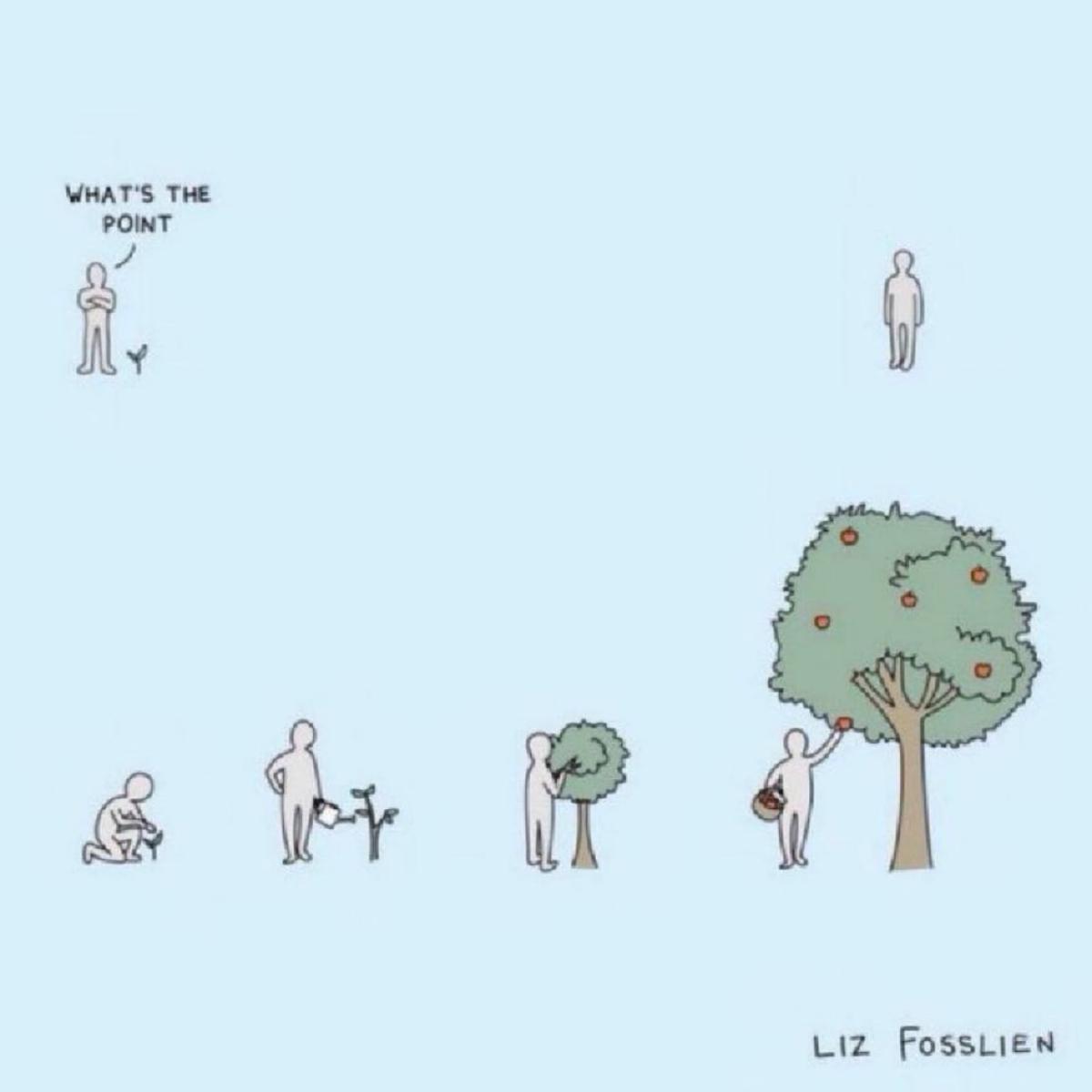
Your Future Self Is Built on Daily Choices
The person you will be in 5 years depends on: • books or articles you read • how much more you write • money you save and invest • who you work with • friends you spend time with • new skills you develop • the...

Happiness Hacks: 28 Simple Strategies For A Brighter, Joy-Filled Life (P)
Psychologist Dr. Jeremy Dean outlines 20 evidence‑based strategies to improve everyday happiness. The article, titled “Happiness Hacks,” groups simple mindset, habit, and lifestyle tweaks that readers can adopt immediately. Dean draws on decades of research to explain how gratitude, physical...

Winning Habits Grow Daily, Not Just on Game Day
Kara Lawson, head coach of Duke Women's Basketball, emphasizes that winning habits are built daily through discipline, not just on game day. https://t.co/Vv7Hz6Un3U

Growth Comes From Coaches Who Push Beyond Comfort
Tom Brady: “You need coaches that push you outside your comfort zone because that’s how you grow and that’s how you develop self confidence and self esteem. They push you to deal with failure.” https://t.co/yGwDhNbzaa

Breakthroughs Come From Action, Not Over‑Planning
Your biggest breakthroughs will come from just doing the thing, not planning it to death.

Stubborn Consistency Beats Motivation and Hype
I’ve always found stubborn consistency is what actually carries you through the dark, not motivation, not hype. https://t.co/RJQWJ3bA4V