Today's Human Potential Pulse

Athletes thrive under pressure by mastering three key pillars
Research shows athletes choke when perceived stress outstrips their resources. The Conversation identifies three pillars—physical competence, mental skills, and normalizing competition—that help turn high‑stakes moments into opportunities, while framing pressure as a challenge rather than a threat.

What Your Childhood Bedroom Can Teach You About Purpose
Jordan Grumet, M.D. argues that purpose isn’t discovered but built, and that childhood interests act as "purpose anchors" that guide us toward meaningful engagement. He explains how the flow state children experience reveals a process‑oriented, little‑p purpose that contrasts with the adult pressure for a grand, big‑P purpose. By visualizing one’s childhood bedroom and recalling past passions, adults can reconnect with these anchors. Re‑engaging these activities can reignite motivation and clarify a personal sense of purpose.

Stop Auditioning for Approval
The post warns that many professionals behave like performers, constantly tailoring language and actions to win approval. This habit shifts focus outward, eroding self‑trust and causing decisions to be driven by applause rather than alignment. Over time, reliance on external...

Hypocrisy and Intolerance Drive Religious Doubt Among College Students
A new study published in *Psychology of Religion and Spirituality* surveyed 3,953 U.S. college students across private, public, and Christian campuses, revealing that perceived hypocrisy and LGBTQ intolerance are the top reasons for religious doubt. The research shows that doubt...

Jeff Bell: Lessons that OCD and Its Treatment Have Taught Jeff About Navigating Parkinson's (#528)
Jeff Bell, longtime OCD advocate and author, discusses how the strategies he honed treating OCD have helped him cope with a recent Parkinson’s disease diagnosis. In episode 528 of The OCD Stories, he explores the intersection of obsessive‑compulsive disorder, stoic...

Weekends: Rest, Not Reason to Quit Goals
Weekends are not an excuse to give up on your goals. And rest is absolutely necessary. But so is keeping the promises you made to yourself.

Master Selling, Creating, and Attention to Secure Wealth
If you can't: • Sell, you'll always be poor • Create, you'll always be average • Get attention, you'll always be invisible Master these 3 and you will never have to worry about money again.

From Gambling Spiral to Waikiki Savior: How Buddy Wiggins Is Giving Away First Waves
Buddy Wiggins, a 32‑year‑old Honolulu pool cleaner, hit rock bottom after a years‑long sports‑betting addiction. He launched the First Wave Project, offering free surf lessons to strangers on Waikiki Beach. The initiative has introduced roughly 100 novice surfers to the...

Learn AI at 70, Join Mastermind, Limited Spots
I learned AI at 70 with no technical background. If I can do it, you can do it. You just need the right room. The AI Business Lab Mastermind has a handful of spots left. https://t.co/B3ac1JrQNc

Your Body, Bank, and Relationships: Triple Growth Scoreboard
The 3 great scoreboards of your personal habits: • Your physical body • Your bank account • Your relationships Which is why there are no better vehicles for personal growth than getting in shape, building a business, and dating. These would be much better if...

Why Too Much Stress Makes Us All Regress
Prolonged, high‑intensity stress shuts down the prefrontal cortex, limiting reasoning and empathy. This neurological regression spreads socially, creating a feedback loop of dysregulation that fuels conflict across families, workplaces, and nations. The article outlines how simple physiological tools—breathing, cold exposure,...

Rest Isn't a Reward—It's a Necessity
If your idea of relaxing is finishing everything first so you can “earn” your rest… hi. Recovering overachiever here too. Rest isn’t a reward for productivity. Download my free guide and let’s unlearn that together.

Why You Care If I Think You Matter
Rebecca Newberger Goldstein’s new book, *The Mattering Instinct*, expands a four‑decade philosophical inquiry into why humans crave to matter. Drawing on her earlier "matter‑map" concept, the work blends philosophy, psychology, and behavioral economics to explain the instinct for personal attention...
The Story You Repeat Becomes Your Life
The post explains how the stories we repeatedly tell ourselves become self‑fulfilling identities, shaping perception and behavior. Negative self‑talk solidifies limiting beliefs, while deliberate contradictions can weaken those narratives. By recognizing and rewriting habitual statements, individuals can shift from a...

Authenticity Beats Approval‑seeking; True Greatness Attracts Right People
The more you chase approval, the further you run away from your true self. Embracing who you are, unapologetically. The right people will recognize your greatness.

Do Schools Kill Creativity?
Ken Robinson’s claim that schools stifle creativity sparks debate over how creativity is defined, measured, and taught. Psychological research distinguishes between novelty and usefulness, and frames creativity as a system involving individuals, domains, and fields. Studies show divergent‑thinking scores decline...

4 Hard Life Lessons We All Learn by Letting Things Go
The article shares four hard‑earned lessons about letting go of past stories to improve present well‑being. It explains how clinging to personal narratives fuels ongoing pain, while recognizing their emptiness eases mental strain. Compassionate breathing and shifting focus to others...

Five Ways a Man Can Strengthen His Presence
The article argues that a man’s presence is a visible expression of self‑command, not mere personality. It highlights how posture, tone, composure, listening, and appearance shape others’ perception of reliability. In an era of casualness, intentional behavior distinguishes individuals. Five...

Why Closure Is Often Self-Created, Not Externally Given
Many people expect closure from others—an apology, explanation, or conversation—yet life rarely provides neat endings. The article explains that the mind craves complete narratives, causing endless replay until acceptance replaces the need for answers. True closure is a personal decision...

The Science of Habit Formation for High Achievers
Recent research shows that top performers—entrepreneurs, athletes, writers, and scientists—attribute their sustained success to structured habits rather than fleeting motivation or sheer willpower. By automating routine actions, habits eliminate the need for constant decision‑making, creating invisible systems that keep progress...

Why Purpose Feels Different Later?
The article explains how purpose evolves from a loud, achievement‑focused drive in early career stages to a quieter, personally aligned motivation later in life. Initially, purpose is tied to proving oneself, gaining recognition, and rapid growth. Over time, experiences such...

A Guide to Staying Human (Part 1): Desperately Seeking Agency
In the first installment of the "Staying Human" series, the author examines why heightened awareness of global crises often leads to personal paralysis rather than action. Drawing on learned helplessness and self‑efficacy research, the piece argues that digital environments fragment...

How Knitting Can Help You Kick Harmful Habits
Knitting is emerging as a low‑cost, portable intervention that helps people curb addictive behaviours, from nail‑biting to cigarette smoking and even street‑drug dependence. Preliminary studies and anecdotal evidence show that the rhythmic, bilateral motions of knitting can calm the nervous...

How to Be the Most Persuasive Person in Any Room
James Madison, despite his shy demeanor, became the dominant voice at the 1787 Constitutional Convention by mastering preparation. He immersed himself in extensive reading of ancient and modern republics and then distilled his insights into private essays. This disciplined blend...
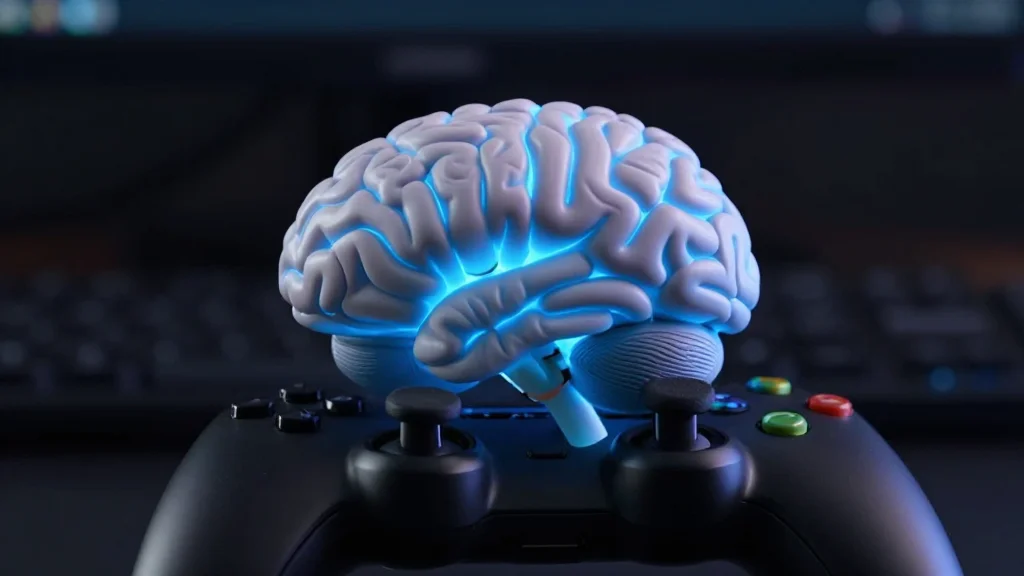
2 Video Games Linked To High Intelligence
A 2017 PLOS ONE study found that performance in the multiplayer online battle arena (MOBA) games League of Legends and DOTA 2 strongly correlates with traditional IQ test scores. Researchers observed that players’ strategic abilities improve with age, while proficiency in...

Do You Punish Yourself Relentlessly?
The post challenges readers who constantly take bold risks yet berate themselves when outcomes fall short. It highlights how external opinions can amplify self‑criticism, turning normal setbacks into personal shame. By questioning this pattern, the author urges a shift toward...

Don’t Get Carried Away with Pleasures…
Stoic thinker Donald J. Robertson warns against impulsively chasing pleasures, urging a deliberate pause before acting on desire. He advises weighing the fleeting joy against future regret and recognizing the personal victory in restraint. The commentary highlights this as a...

Why Your 'Best Self' Is Your Worst Enemy
The episode explores the modern anxiety of living under the weight of our own potential, using the simple act of choosing between two olive oils as a metaphor for the constant self‑judgment we face. It argues that the "best self"...

2 Personality Traits That Indicate High IQ
Research published in *Personality and Individual Differences* finds that openness to experience, emotional stability, and introversion are linked to higher crystallized intelligence, measured through general‑knowledge tests. In a sample of 201 UK university students, those scoring higher on these traits...

IQ Scores Are Falling but, No, We’re Not Growing More Stupid
Recent studies show a reversal of the historic Flynn Effect, with average IQ scores slipping in the United States, United Kingdom and several Nordic countries. Researchers attribute the decline to factors such as digital media consumption, AI‑driven cognitive offloading, and...

Listen to the Sound of Stone-Age
Researchers led by Vialet, in partnership with Radio France, have used anatomical data to recreate the likely sounds of early hominins, tracing language’s roots from 27 million‑year‑old primate vocalisations to modern Homo sapiens. The timeline highlights key milestones: vowel‑producing capacities in...

Self‑Endorsed Goals Turn Pressure Into Victory
Alysa Liu’s comeback is a great example of psychology’s overjustification hypothesis. When something you love becomes dominated by external pressure, rewards, and expectations, you lose your autonomy, and it loses its joy. So she retired. That’s why when she decided to come...

Great Ideas Bloom During Boring, Unproductive Moments
The best ideas I’ve ever had came when I was deeply, embarrassingly unproductive. Not in a “romanticizing laziness” way. In a “my brain needed to be bored to actually create something” way. The hustle content is lying to us and...

The Quiet Power of Professional Presence
In a recent talk in Charlotte, the author highlighted the often‑overlooked power of professional presence, arguing that how one shows up matters more than credentials. A joint Harvard‑Carnegie‑Stanford study found that 85% of professional success derives from soft skills such...
Confidence Grows by Completing Challenges, Not Avoiding Them
I know this may be common sense, but common sense isn’t always common practice… You don’t build confidence by avoiding hard things. You build it by completing them. So finish what you start. The next storm won’t feel so scary. 🙏

“Scratch” By Kate Cohen | Why Making Things Matters
In this episode, Frank Schaefer talks with former Washington Post columnist Kate Cohen about her new Substack column "Scratch," which explores how making things—sewing, baking, farming, art—reinforces our humanity in an age dominated by algorithms and late‑stage capitalism. Cohen reflects...

The Surprising Power Of Doubting Your Doubts For Boosting Confidence (M)
The article explores how deliberately questioning one’s own doubts can paradoxically boost confidence. By turning self‑skepticism into a reflective tool, readers learn to engage more deeply with personal goals. The technique leverages cognitive reappraisal to transform uncertainty into motivation, offering...

Can’t Stop Overthinking?
Overthinking, though mentally passive, can exhaust the brain as much as physical exertion. The Washington Post article highlights psychologist Ethan Kross’s view that inner dialogue is a useful tool when directed, but unchecked rumination leads to stress and reduced productivity....

1 Effective Step We All Take Way Too Late in Life
The article argues that lasting progress comes from tiny, consistent actions rather than occasional grand gestures. It highlights the Stoic principle of focusing on what we can control and letting the rest unfold. Using a one‑degree navigation analogy, it shows...

Embrace Negative Emotions, Learn to Manage, Not Suppress
Negative emotions are not evidence that something is broken in you. They are part of being alive. And the goal is not to eliminate them, but to manage them so they do not manage you.

Dan Orlovsky: 4 Reasons You Need to Step Into Discomfort
Former NFL quarterback Dan Orlovsky argues that comfort traps individuals, especially fathers, in mediocrity. He outlines four reasons—laziness, risk avoidance, over‑reliance on others, and a lowered performance ceiling—that illustrate how staying comfortable harms health, relationships, and personal growth. By embracing...

My 40‑Approach Habits
My Ins and Outs as I sail towards 40. And yes, I genuinely think these are life-changing habits. But every annoying Internet person says that. Up to you to agree, I guess

How Can Performance Coaching Enhance Mental Strength?
Performance coaching is presented as a systematic approach to building mental strength, emphasizing that resilience can be cultivated like physical fitness. Coaches use techniques such as visualization, SMART goal setting, and mindfulness to enhance confidence, focus, and emotional regulation. The...

How To Train Young Minds To Live With Uncertainty (M)
A single, 90‑minute online session designed for adolescents dramatically improved their ability to tolerate uncertainty, according to a recent study. The program combined mindfulness exercises, cognitive‑reframing techniques, and interactive scenarios that simulated ambiguous situations. Participants reported lower anxiety scores and...

31 Journal Prompts for March: The Month of Becoming
Amira’s March journal guide offers 31 prompts—one for each day—to help readers pause, reflect, and steer personal growth during the season’s subtle shift. The questions probe identity, habits, boundaries, and emotional maturity, encouraging honest self‑inquiry rather than rapid transformation. By...

Losing Your Gut Is the Number One Reason Why Individuals Fail.
The blog argues that losing one’s gut intuition is the primary cause of personal and professional failure. It explains how growing responsibilities and algorithmic certainty dull this internal compass, leading to indecision and misaligned choices. The author introduces the book...

You Belong Here
The author recounts being invited to Vice President Kamala Harris’s 107‑day tour and the surge of imposter syndrome that followed. The piece reframes imposter syndrome as a mix of disbelief, awe, and feeling unprepared rather than pure self‑doubt. It outlines...

The Reason You’re Afraid to Be Funny on Stage
Speakers often avoid humor because they fear a single joke bombing, which they think could ruin future bookings. The article argues that this fear is misplaced, noting that audience expectations for business presentations are far lower than for stand‑up comedy....

Learning How To Stay
In this episode of "Let's Have the Conversation," host Desiree B. Stevens explores the concept of "staying"—maintaining presence and regulation within community work and difficult dialogues. She outlines three core practices: staying in your body to avoid dissociation, staying without...
Stick With It: Try the Third Rep Rule
Every time I start something new, I follow a simple framework. It's called The Third Rep Rule. Give it a try if you always quit something new:

Self-Education University: How Writing Changed the Way I Think
Rania Gebagi’s March 2026 blog post explores how a disciplined writing practice reshapes cognition and personal reality. She argues that transcribing thoughts onto paper forces clarity, turning abstract ideas into concrete plans. The piece outlines specific techniques—daily journaling, bullet‑point mapping,...