
Engineering the Present Moment
Alan, owner of a non‑emergency medical transport firm in Tacoma, was overwhelmed by constant operational fires, shifting Medicaid rules, and fragmented AI scheduling tools. Seeking relief, he turned to Dr. Joe Dispenza’s "Becoming Supernatural" to rewire his stress response. A consultant repurposed a large language model into a cognitive‑behavioral mirror, embedding Dispenza’s neuroscience principles into prompt architecture. The solution helped Alan manage stress, align emotional frequency, and streamline dispatch without adding tech complexity.

Oxygen Advantage® Method Vs. Mindfulness: Key Differences Explained
The Oxygen Advantage® Method is a science‑based breathing system that retrains nasal, functional breathing to increase carbon‑dioxide tolerance and improve oxygen delivery, whereas mindfulness uses breath as a neutral anchor for present‑moment awareness. By deliberately lowering breathing volume and incorporating...

8 Habits That Look Productive But Secretly Kill Growth8 Habits That Look Productive But Secretly Kill Growth
The blog warns that many ambitious professionals mistake busy‑work for genuine progress, highlighting eight counter‑productive habits that masquerade as productivity. It illustrates how overplanning and obsessive note‑taking create a false sense of achievement while actual results remain stagnant. By exposing...

How to Build Confidence, According to Neuroscience
Recent neuroscience research reframes confidence as a dynamic, brain‑driven process rather than a static trait. The brain continuously evaluates internal cues, past outcomes, and social feedback to generate a metacognitive judgment of certainty. Deliberate practice, action‑oriented learning, and shifting validation...

Join Matt Fitzgerald for Tuesday Teaching: Everything Matters
Matt Fitzgerald’s Tuesday Teaching session, titled “Everything Matters,” argues that environmental factors—training venues, partners, and coaching—outweigh genetics in endurance performance. The lesson, hosted by Endurance Mastery by MG, is offered as a free preview with an option to subscribe for...

Overcoming Creative Blocks During the Filmmaking Process
Filmmakers often hit creative blocks caused by pressure, fatigue, and decision paralysis, which can stall story development, visual planning, or editing. The article outlines practical tactics such as changing work environments, leveraging fresh collaborative input, and using simple decision‑making tools...

10 Things to Do on Days When You Just Want to Give Up
The Positivity Blog outlines ten practical tactics for anyone battling the urge to quit a habit, project, or personal goal. It starts with setting realistic expectations and reconnecting with the deeper “why” behind the effort. The piece then advises simplifying...

Disrupting the Spiral: A Lesson From March Madness
Maryland women’s basketball coach Brenda Frese halted star Oluchi Okananwa’s performance spiral during an NCAA tournament game by confronting her with direct eye contact and a firm belief statement. The intervention sparked a 13‑point surge, with Okananwa finishing with a...

The Myth of Originality and How Interesting Thinking Actually Works
The article argues that originality is a myth, contending that all ideas are recombinations of existing knowledge. It suggests that true creativity arises from interdisciplinary mental scaffolding that creates unique constellations of influences. By recognizing that each person’s perspective is...

How to Eliminate Crazy Busyness
Leadership coach Zena Everett warns that many executives mistake efficiency for effectiveness, leading to "Crazy Busyness." She attributes this to productivity drag—digital interruptions, long meetings, and low‑value tasks—that steal precious time. In her April Vistage Climb webinar, she will teach...

The Wedding Dress Metaphor: A Powerful Lesson on Being Authentic
The piece uses a wedding‑dress metaphor to illustrate how leaders often reshape themselves to be chosen, only to lose authenticity and confidence. It argues that true belonging and effective leadership stem from embracing one’s unique design rather than conforming to...

Choosing Discipline over Instant Happiness
The piece contrasts the fleeting relief of choosing immediate comfort with the deeper, lasting satisfaction that comes from disciplined action. It illustrates how short‑term avoidance—delaying tasks, skipping effort—provides momentary relief but adds hidden pressure later. The author frames this as...

Stop Trying To Become A Morning Person
Amy Landino argues that chasing the label of a "morning person" distracts from building routines that serve personal purpose. She suggests shifting focus to the version of yourself you aspire to be, starting the day with intention rather than a...

What You Tolerate Trains You
The post argues that training occurs as much through what we allow as through what we actively pursue. Each time we tolerate a lowered standard—whether lateness, disrespect, or distraction—we silently reinforce that behavior. Small compromises accumulate, gradually shifting expectations and...

5 Extremely Important Books To Read In Your 20s
The article highlights five essential books for people in their twenties, ranging from Meg Jay’s *The Defining Decade* to the *Almanack of Naval Ravikant*. Each title targets a core pillar of early‑adult life—psychology, habit formation, financial behavior, networking, and wealth leverage....
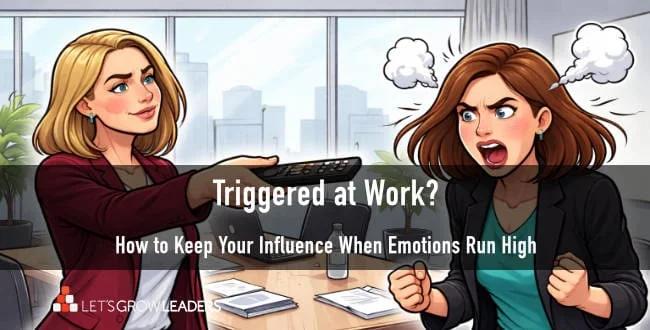
Triggered at Work: How to Keep Your Influence When Emotions Run High
The article explains how workplace triggers can instantly undermine a leader’s influence, especially when a senior figure uses provocative language in front of peers. It outlines five practical tools—naming the trigger, slowing the body, using dignity‑preserving phrases, redirecting to purpose,...

From $250 Tuesday Nights to Tonight Show: What John Crist Learned in 13 Years of Comedy
John Crist reflects on a 13‑year journey from $250 Tuesday night gigs to a Tonight Show appearance, revealing how meticulous performance tracking, relentless perseverance, and unconventional mentorship propelled his rise. He shares candid details about sleeping in his car, carrying...

Task Triangulation Method: How Covert Operatives Prioritize Action
The Task Triangulation Method adapts covert‑operative tradecraft into a three‑factor framework—Impact, Effort, and Reversibility—to decide which tasks deserve attention. Each factor is scored on a 1‑to‑5 scale, allowing professionals to quickly pressure‑test ideas before committing resources. The method emphasizes high‑impact,...

Three Books for the Next Phase
The author highlights three recent reads that converge on navigating the next phase of entrepreneurial life. James Oliver Jr.’s *Burn Bright, Not Out* spotlights founder mental‑health struggles and introduces the Kabila Founder Mental Health Fund. *Hiking Zen* by Buddhist monks...

5 Books That Quietly Build Unshakable Self-Confidence
A new roundup highlights five books that teach readers how to build unshakable self‑confidence through deliberate practice rather than quick fixes. The titles—ranging from Susan Jeffers' action‑first approach to Brené Brown's embrace of imperfection and Maxwell Maltz's self‑image techniques—share a...

Maybe Not so Much with the "Optimization"
The article argues that an over‑reliance on optimization—A/B tests, metrics, and lean processes—can suppress the creative spark that makes products memorable. It uses Smart Bear’s 2002 “mini‑viewer” in Code Historian as a case study: a wasteful, non‑optimal feature that nonetheless...
Protecting Energy While Staying Disciplined
The post argues that discipline falters when energy is mismanaged, not due to lack of willpower. It explains that the brain’s limited regulatory resources are depleted by repeated decisions, self‑control, and task switching. By simplifying environments, setting clear start times,...
When Simple Becomes Extraordinary
Robert F. Schuler’s new book, *When Simple Becomes Extraordinary*, chronicles a 60‑year‑old diabetic man’s shift from 28 years of sedentary living to completing an ultramarathon. The narrative details the training regimen, dietary adjustments, and mindset changes that enabled the transformation....

The Unexamined Narrative: What Pundits Get Wrong About the American University
Bill Ramsey, a philosophy professor at UNLV and elite rock climber, sat down for a Substack interview that challenges the prevailing media narrative about American universities. He argues that the “woke‑culture” hype largely reflects a few elite private campuses, while...

What Ryan Coogler’s Football Career Teaches Us About Identity and Excellence
Former Sacramento State wide receiver Ryan Coogler, once aiming for the NFL, has become an Oscar‑winning director with his film *Sinners*. While studying creative writing, he realized football wouldn’t lead to a professional career and pivoted to USC’s film school,...

Book Freak #201: Indistractable
Nir Eyal’s *Indistractable* reframes distraction as an escape from internal discomfort rather than a technology problem. The book presents a research‑backed four‑step model—recognizing internal triggers, distinguishing traction from distraction, mastering discomfort, and scheduling traction time. By naming feelings and deliberately...

How I Broke My Worst Habits with the Easy, Stress-Free Way Ever?
Breaking bad habits often feels like a battle of willpower, but the author discovered a calmer, easier path. By redesigning routines to make desired behaviors simpler than the old ones, the struggle faded. This approach emphasizes environmental tweaks and habit...

Morning Pages Co-Writing in 30 Mintutes
The post invites creatives to a 30‑minute virtual Morning Pages session via Zoom at 9:30 ET. Participants will write silently, with no pressure to be on camera or dressed formally. The practice, championed by Julia Cameron, aims to clear mental clutter...
.jpg)
How To Change Yourself To Change Your Company
"Reinventing the Leader" by Walmart executive Gui Loureiro and coach Carlos Marin argues that personal transformation is a prerequisite for corporate change. The book chronicles how Loureiro’s data‑driven, customer‑centric overhaul of Walmex—Walmart’s largest Latin‑American division—revitalized growth and culture. It offers...

Why Lawyers Need Boredom, Even Though It May Terrify Us
Lawyers’ constant mental engagement leaves little room for boredom, a crucial recovery state. The article outlines five practical strategies—input‑free transitions, low‑stimulation repetitive tasks, protected unscheduled time, resisting the urge to fill silence, and thinking walks—to reintroduce strategic boredom. Implementing these...

10 Powerful Books to Boost Creativity and Imagination
The article curates ten influential books that teach creativity as a skill rather than a mystical talent, covering personal habits, psychological barriers, flow states, and organizational culture. It highlights how each title offers practical frameworks—from daily rituals and resistance management...

The Relief Of Not Being Perfect
The post argues that true freedom comes from accepting personal limits rather than striving for perfection in every area. It emphasizes that being brilliant in some domains while ordinary in others is not a flaw but a realistic self‑view. The...

Dear Roxane: Seeking Creative Sustenance
The post asks Roxane how she sustained her writing before gaining an audience, probing the emotional and practical challenges of early‑career authors. It frames the question through the lens of a tired MFA‑trained mother juggling school drop‑offs and writing on...

You’re Probably Typing Yourself Based on Your Best Moments
The post argues that most people identify their personality type by focusing on their best, most polished moments rather than their everyday self. It warns that this "photo‑op" approach creates a misleading self‑image that can confuse personal development. The author...

The Ugly Truth About Wanting to Be Liked
The post argues that the drive to be liked leads to constant self‑editing and loss of authentic voice. It distinguishes between seeking approval and making approval a byproduct of genuine behavior. The author proposes a behavioral shift: stop negotiating statements...

The Science of Defiance (and Why You Need It)
The post argues that most people default to compliance because early‑life conditioning wires us to equate saying “yes” with safety. It explains how hidden social pressures, such as fear of offending, keep us silent even when our values are at...

7 Things I’d Tell My 20-Year-Old Self
Jack Waters reflects on a turbulent decade and distills seven lessons for his 20‑year‑old self. He stresses early investing with patience, the transformative power of travel, and preserving playfulness amid ambition. He advises selective responsibility, resisting the pressure to settle,...

Your Brain Isn’t Broken. Your Workday Is.
The author’s new video reveals why breakthrough ideas often surface outside traditional work hours, highlighting the brain’s two thinking modes—focused and diffuse. It argues that redefining work to include low‑pressure moments is the core mistake many make. Viewers receive three...

Scramble of a Q7: “Do I Have a Purpose?”
Mike Foster’s newsletter explores the Q7 primal question – “Do I have a purpose?” – and defines the “Scramble” as the chaotic reaction when that need isn’t met. Q7s either freeze in endless dreaming or over‑commit to every cause, both...

Only 3 Minutes: 9 Dark Psychology Tactics to Make Gaslighters Completely Lose Control
The article outlines nine dark‑psychology tactics that can neutralize a gaslighter in roughly three minutes. It frames gaslighting as a pervasive manipulation technique that erodes confidence and self‑trust. By leveraging rapid psychological maneuvers—mirroring, reframing, anchoring, and others—readers can flip power...

Why You Avoid Things Even When You Have the Time?
The post explains why people postpone important work even when their schedules are open. It argues that the brain interprets effort and uncertainty as subtle threats, prompting avoidance. Small, low‑effort distractions flood the mind with dopamine, making larger tasks feel...

The Quiet Burnout of Constant Self-Control
The article highlights how relentless self‑control can silently drain mental energy, a phenomenon known as ego depletion. While discipline is praised, continuous impulse suppression leads to subtle fatigue that erodes decision‑making and creativity. The piece urges readers to recognize this...

We Should Model Failure, Not Just Success
The author, an autistic educator with a hearing impairment, argues that modeling failure rather than only success reshapes classroom dynamics. By openly showing mistakes, teachers build trust, reduce anxiety, and spark student curiosity. This vulnerability-driven approach is especially effective in...

The Conversations That Change Us Begin After the Noise Falls Away
The post reflects on how the most transformative conversations occur after the initial noise fades, using a personal anecdote about a Japanese friend who values silent companionship. It argues that modern culture’s rush for quick answers and decisive language suppresses...

11 Life Lessons I Wish I’d Learned Before I Bought So Much Stuff
The author reflects on a period of excessive purchasing and distills eleven life lessons about the hidden costs of materialism. They argue that time, money, and energy spent on acquiring and maintaining possessions detract from meaningful experiences and relationships. The...

Seize Pivotal Moments
Leadership expert Marcus Aurelius' insight frames pivotal moments as catalysts that expand potential. The article outlines five characteristics of such moments—unexpected arrival, involvement of others, awkward discomfort, reflective necessity, and a call for change. It provides practical prompts for leaders...

“Let It Go” Is Terrible Advice for Your Brain
The blog argues that the ubiquitous "let it go" mantra is ineffective for many because it assumes a uniform nervous system. It explains that forcing emotional release can clash with individual brain chemistry, leading to heightened stress rather than relief....
The People You Keep Shape Your Future
The article argues that the people you surround yourself with gradually shape your habits, mindset, and future outcomes. It explains how repeated exposure to others' standards, language, and attitudes subtly programs behavior. The author urges readers to audit their closest...

Your Ego the Saboteur
The article frames ego as a hidden saboteur that drives reactive behavior in leaders. It identifies three ego expressions—Complier, Protector, and Controller—each undermining team dynamics. Practical action items include naming defensive reactions, pausing before saying “yes,” and soliciting candid feedback...

12 Books Self-Taught Geniuses Read to Build Their Minds
A new roundup highlights twelve books that self‑taught geniuses—from Benjamin Franklin to Elon Musk—have relied on to sharpen their minds. The list spans ancient biographies, philosophy, economics, and modern psychology, illustrating how disciplined reading builds mental models, character, and cross‑domain...