
How I Work Through Performance Anxiety
Claire, a veteran speaker who has presented at NASA, Harvard Business School and the United Nations, admits she still feels intense nerves before each engagement. She reframes anxiety as untapped energy and applies two techniques: redirecting attention from worst‑case scenarios to the concrete benefits of speaking, and using somatic visualization to transform physical tension. By locating the anxiety in the body and consciously replacing it with the desired feeling, she creates a regulated state. The approach is a repeatable, low‑tech routine for any high‑stakes moment.
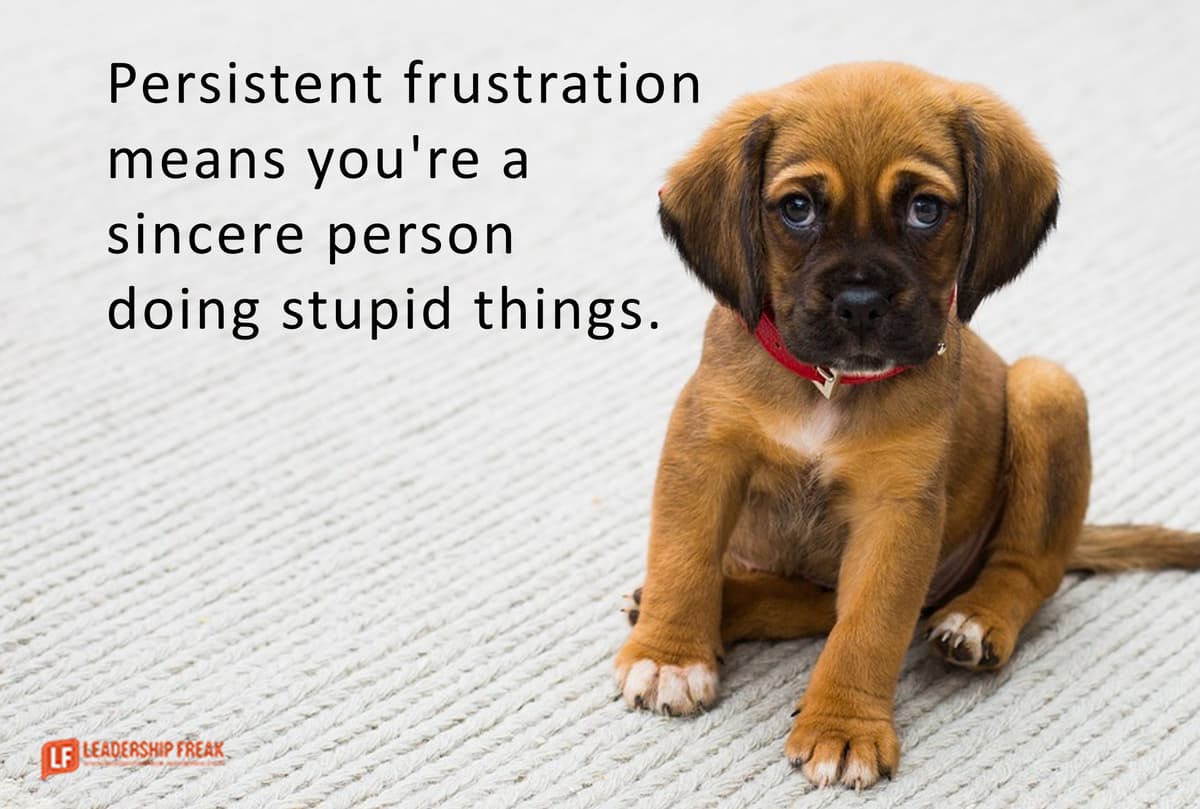
Comfort Makes You Stupid
Leadership Freak outlines four practical habits to counteract complacency and boost mental growth. It urges readers to step out of comfort zones, ask probing questions, reflect through journaling or coaching, and avoid the arrogance trap by staying open to diverse...

Charlie Munger: The Inversion Process Is The Quickest Way To Find Out What You Need To Succeed
Charlie Munger champions inversion—asking how you can fail before seeking success. By mapping consistent failure patterns, he creates a simple checklist of what to avoid, turning complex decisions into clear, actionable filters. The approach emphasizes avoiding stupidity over pursuing brilliance,...

Mario Harik: Playing to Win
Mario Harik, who rose from employee #3 to CEO of XPO Logistics, now oversees roughly 40,000 staff using a disciplined engineering mindset. He relies on just ten daily metrics, real‑time data, and a “second‑derivative” decision framework to steer the $1 billion‑valued...

Leadership Lessons #3: What Racing Teaches About Coordination
The article uses the 2.5‑second Formula 1 pit stop as a metaphor for high‑velocity teamwork. It argues that clear, practiced roles, relentless rehearsal of routine tasks, and rapid recovery from errors are the keys to cutting coordination costs. Minimal, purpose‑driven communication...

How I Stopped Feeling Overwhelmed by Everything
The author describes how chronic overwhelm turned daily chores and work tasks into a chaotic mental flood. By recognizing that not every item warrants the same emotional weight, they shifted from labeling everything a problem to treating alerts selectively. This...

Eight Thinking Habits of Geniuses, Champions, and Legacy-Leavers
The article outlines eight thinking habits that consistently appear among geniuses, champions, and legacy‑builders. It argues that mental models and perception shape behavior more than external factors. By identifying these habits, readers can adopt proven cognitive strategies to boost performance...

No Notifications, Meetings, or Mercy: How to Engineer Deep Work
The article argues that deep work is not a personal trait but an outcome of a deliberately engineered environment. It explains how constant notifications, meetings, and digital noise increase cognitive load, leading to stress and low‑value output. By removing these...
Why You Feel Lost Without Something to Push Against
The article explains how external challenges—problems, crises, or personal friction—provide a clear sense of direction and purpose. When those pressures dissolve, progress appears outwardly, but internally many experience a loss of clarity and motivation. The piece argues that without something...

You Don’t Need a Better Routine, You Need a Quieter One
The post argues that piling on new habits and tighter schedules rarely yields true rest; instead, a quieter routine is needed. It describes how even a perfectly organized day can leave the mind feeling busy and unfinished. By shifting focus...

The Psychological Friction of Living a Life That No Longer Matches Your Identity
The post describes a subtle psychological friction that emerges when a person’s self‑identity evolves faster than their external life circumstances. Outwardly, everything appears functional—work, routines, relationships—but an undercurrent of misalignment creates a feeling that interactions and decisions are slightly off....

The Cost of Delay: The Dangerous Lie Behind Procrastination
Procrastination is often framed as a harmless delay, but it systematically erodes productivity and future performance. The article argues that postponing tasks creates a hidden cost, as the anticipated “sharper future self” rarely materializes. By linking procrastination to stress, missed...
Being Capable but Not Consistent Enough
The post argues that most people have the talent to succeed, but they falter because they lack daily consistency. It explains that occasional bursts of motivation feel good, yet only repeated, automatic actions produce lasting results. By removing decision friction...

Navigating the Metacrisis: Finding Calm in the Storm Through Awareness and Meditation
The Great Simplification podcast episode explores how cultivating inner awareness through meditation can help individuals and societies navigate the "metacrisis" of overlapping global and personal challenges. Host Sam Harris argues that most suffering stems from unconscious identification with thought, which,...

5 Habits of Mentally Strong People, According to Warren Buffett
Warren Buffett attributes his success to mental strength, outlining five habits: independent thinking, emotional control, staying within one’s circle of competence, focusing on long‑term outcomes, and protecting an inner scorecard. These habits guide investors to act contrary to market hype,...

5-Minute Morning Habits That Set a Minimalist Tone for the Day
The article outlines a series of five‑minute morning habits designed to create a minimalist tone for the day. By inserting intentional pauses before reaching for a phone, sitting in silence, naming three priorities, making the bed, and hydrating, readers can...

Constant Entertainment Kills Original Thought
The essay argues that relentless digital entertainment has eliminated boredom, a mental state once essential for generating original ideas. By filling every idle moment with podcasts, videos, and scrolling, we have reduced the brain’s capacity for deep, generative thinking. The...

🏋🏽Did You Grow?
Parin Mehta’s latest blog post introduces a quick, two‑point self‑assessment designed to quantify a leader’s evolution over a year. Readers score themselves on eight dimensions—Decisiveness, Delegation, Conflict, Vision, Focus, Energy, Hiring, and Truth—for April 2025 and April 2026, then compare the results...

The Moment You Say This, Their Gaslighting Stops—5 Calm Yet Unstoppable Ways to Take Back Control
The article outlines five calm, unstoppable tactics for ending a gaslighter’s influence, emphasizing a precise moment when a deliberate response halts the manipulation. It frames gaslighting as a systematic attack on perception and memory, affecting both personal relationships and professional...

The Architecture of Ascent: Rewiring Your Brain for Automatic Wins
The post explains how the brain rewires itself from the effort‑heavy prefrontal cortex to the efficient basal ganglia through myelination, turning conscious actions into automatic reflexes. It debunks the 66‑day habit myth, showing that complexity, emotional resonance, and daily repetition...

Create Your Personalized 30-Day Ritual
The Happiness Planner founder Mo Seetubtim announced the launch of Ritualy, a behavior‑change platform that delivers a personalized 30‑day ritual based on user responses. The service is currently exclusive to the Happiness Planner community, accessed via a web link or...

When We Abandon Ourselves
The author recounts a restaurant incident where she accepted a fried grouper she didn’t want, realizing she had slipped back into a lifelong habit of self‑abandonment. She links this pattern to early conditioning that teaches women to suppress needs and...
Clarity Reset: 5 Decision Filters That Eliminate 80% of Career Noise
The post introduces a five‑step decision‑filter framework designed to cut 80% of career‑related noise. Each filter—Alignment, ROI, Opportunity Cost, Energy, and Compounding—offers a concrete question to assess whether a prospect advances long‑term goals. By applying the filters, professionals can quickly...

Learning by Doing: A Personal Curriculum for ISTPs (Virtuosos)
The post outlines how ISTP‑type “Virtuosos” learn best through hands‑on, visual experiences and proposes a personal curriculum framework to harness that instinct. Survey data from over 15,000 respondents shows 44% favor kinesthetic learning, 30% visual, and only 9% auditory. The...

Day Fifty-Eight: Commune With Your Higher Self
In Day Fifty‑Eight of his "Higher Self" series, Dr. Roger McFillin urges readers to commune with their inner guide through silence, focused journaling and gratitude. He frames the higher self as an innate compass that can steer personal and professional choices....

Why "I Don't Know What To Do" Can Be The Biggest Lie We Tell Ourselves - The Emotions Diary #57
The author reveals that saying “I don’t know what to do” often serves as a self‑protective excuse, masking a deeper fear of wasting time. He introduces the Emotions Diary, a four‑step journaling practice designed to surface hidden motivations and guide...

Add a Familiar and a Little Weird
Michael Bungay Stanier reflects on two decades of mastermind groups, emphasizing that mixing people who feel familiar with those who seem a little weird drives both personal happiness and professional success. He describes his current circles—author collectives, writing squads, thinking groups,...

How To Be More Playful To Build Resilience, Navigate Challenges And Find More Joy
Piera Gelardi’s new book *The Playful Way* argues that playfulness is a mindset that boosts problem‑solving, stress management, and overall life satisfaction. The work outlines the Eight Powers of Play, from the Joyful Jester to the Curious Quester, and provides...

Hypnagogic State: The Twilight Zone Between Sleep and Wakefulness Is a Creative Sweet Spot. Here’s How You Can Make It...
The hypnagogic state—a semi‑conscious twilight between sleep and wakefulness—has long fueled creative breakthroughs, from Paul McCartney’s “Yesterday” melody to Niels Bohr’s atomic model. Recent research shows participants in this state are three times more likely to uncover hidden problem‑solving rules, linking the...

Race-Day Nerves Are Costing You More Than You Think (Science Says So)
A 2021 study in the Pakistan Journal of Humanities and Social Sciences found that both cognitive and somatic pre‑race anxiety directly impair endurance performance. Athletes with heightened anxiety show elevated heart rates, premature pacing, and poorer decision‑making during critical race...
How to Upload Any Behaviour to Your Brain
The article argues that habits are driven by structural systems rather than motivation. It explains how environmental cues, pre‑commitments, and social accountability turn desired actions into automatic behavior. The author shares a personal example of preparing gear the night before...
Avoiding Discomfort that Leads to Growth
The post argues that the life people desire lies behind the discomfort they habitually avoid. While evading uneasy tasks offers immediate relief, it also halts growth because meaningful progress stems from challenge and effort. By intentionally choosing short‑term discomfort—such as...

Monday Morning Minute: 06/April/2026 ~ Trust Those You Teach, and Teach Those You Trust ...
Mark Kolke’s Monday Morning Minute emphasizes that effective leaders must teach their teams how to think, decide, and act, rather than merely assigning tasks. He argues that delegating real authority—decision‑making, spending, and risk‑taking—builds trust and enables rapid responses in fast‑moving...

Why Rest Is Essential for Performance
Julia Samuel’s latest Longer Monday Top Tips episode, featuring regenerative performance coach Dr. Pippa Grange, argues that modern work culture’s obsession with nonstop productivity is eroding mental and physical health. The discussion frames burnout as chronic stress that worsens when...

The ‘Coach Carter’ Speech: Unpacking “Our Deepest Fear”
The climactic moment in Coach Carter (2005) finds Timo Cruz reciting a passage that has become iconic: “Our deepest fear is not that we are inadequate…”. Though many assume the line was written for the screenplay, it actually originates from...

You Can Control Your Environment
The piece argues that true control lies in shaping the environment around us rather than trying to dictate outcomes. By consciously curating digital feeds, social circles, daily routines, and personal narratives, individuals can create a mental architecture that supports focus...

The Real Reason You Procrastinate (It’s Not What You Think)
Jon Acuff’s latest podcast episode argues that procrastination isn’t a flaw but a misguided solution people use to find the perfect answer. He dismantles five common excuses—task overload, time scarcity, past success, fear, and ego—and reveals a single underlying motive....

Defending Habit Streaks
The author outlines personal habit streaks—daily Anki study, meditation, and flossing—and explains why small, flexible routines sustain them. He argues that the true value of streaks lies in consistent execution, not flawless continuity, and offers a recovery plan centered on...
Coaching Letter #230
Isobel Stevenson’s Coaching Letter #230 explores the concept of optimization, arguing that systems inevitably trade off speed, quality, and cost and must deliberately choose a single variable to maximize. She illustrates how education has defaulted to optimizing for immediate, grade‑centric...

THE CREATIVE YOU'RE COMPARING YOURSELF TO ISN'T REAL
The post revisits Leon Festinger’s social comparison theory, showing how it misfires for creators who measure themselves against polished outcomes rather than ongoing processes. It argues that the “ideal writer” is usually a composite of multiple role models, making direct...

Where Is Your True North if the World Goes South?
In this reflective piece, the author emphasizes the importance of discovering one’s True North—a personal compass rooted in self‑awareness—especially during turbulent times. By posing probing questions about joy, purpose, and legacy, the article guides readers toward deeper introspection. It stresses...
Human Architecture: The Operating System For Elite Performance
The Meta Manv framework proposes a systematic "operating system" for elite performance, replacing ad‑hoc motivation with a structured architecture of twelve interdependent systems spanning biology, cognition, environment, and execution. By automating habits and decision‑making, the model aims to eliminate decision...
🤯Accept Your Triggers
The post explains that defensive reactions arise when external criticism mirrors an internal insecurity, calling these moments “triggers.” It introduces a four‑step template—identifying the trigger, naming the emotion, uncovering the secret agreement, and accepting the trait—to transform shame into self‑awareness....

Most Habits Are Dead on Arrival. Here’s How to Tell Before You Start.
Dr. Laura Marbas unveils the CAN Test – a three‑question framework (Clear, Actionable, Nourishing) for vetting new habits before you start them. The method, built from her clinical experience, aims to eliminate the common “selection problem” that causes most habit...

A Prompt to Build Emotional Connection With One Task
The post introduces a simple prompt that asks you to identify a personal reason why a task matters, turning a neutral chore into an emotionally connected activity. By uncovering even a modest relevance, the brain perceives higher value, which steadies...

Master the Method or Lose the Meaning
Rabbi Akiva, who began studying Torah at age forty without literacy, was forced to develop a rigorous learning method after the Roman destruction of the Second Temple in 70 A.D. The loss of the Temple eliminated the sacrificial system, prompting Akiva...

Wherever You Think There Is Nothing
Maria Popova’s The Marginalian, formerly Brain Pickings, continues as a free, ad‑free cultural newsletter funded entirely by reader donations. The one‑woman operation invests thousands of dollars each month to curate essays, poetry, and a weekly newsletter that reaches a global audience....

Your Phone Already Knows What You Need to Do. It Just Doesn’t Show You.
The post shows how to transform an iPhone home screen from a static app gallery into an active task dashboard using native widgets, Shortcuts, and Focus modes. By stacking Reminders and Calendar widgets and linking a Shortcuts folder, users can...

Unlearning Nice: You Were Trained to Be Easy, Not Good
The essay argues that many high‑capacity professionals suppress their natural clarity and speed to appear "nice" and avoid discomfort in group settings. This self‑censorship creates a filter between thought and speech, leading to fatigue and missed opportunities for genuine insight....

A Reset for When It Feels Like Nothing Is Working...
The post urges entrepreneurs to pause and reset by revisiting the original vision that sparked their business. It uses the apple‑tree metaphor to illustrate that growth often occurs unseen beneath the surface, warning against premature pivots. Readers are invited to...