
What’s Your Chronotype? How Brain Science Can Boost Performance
A joint study by the Wharton Neuroscience Initiative and Slalom examined how individual chronotypes—natural sleep‑wake rhythms—affect creative performance. Using the Morningness‑Eveningness Questionnaire and a divergent‑thinking task, researchers found that employees generated more ideas and higher‑quality concepts when work aligned with their biological peak. Early data show significant gains in fluency, originality, and flexibility for both morning‑type and evening‑type participants. The report outlines practical steps, including AI‑driven scheduling, for organizations to embed chronotype awareness into daily workflows.

Living Life on Your Own Terms: A Heartfelt Reflection on Choosing Your Own Path
The essay recounts Stephanie Roberts’s journey from a restrictive upbringing to embracing personal autonomy in Bombay’s bustling 1960s scene. She describes shedding the need for external validation and learning to trust her intuition, which led to greater confidence and inner...
How to Study Effectively
Popular study habits like cramming, rereading, and highlighting often produce fleeting gains, according to cognitive research. Psychologists Elizabeth and Robert Bjork emphasize retrieval practice, spaced repetition, and interleaving as superior techniques for durable learning. A 2006 study of surgical residents...

The Uses of Equanimity
The article explains that equanimity, while appearing as calm concentration, can conceal subtle attachment and delusion. It warns that staying absorbed in a state of equanimity without probing can prevent genuine insight. Practitioners are urged to use equanimity as a...

Distracted by Everything? The Bhagavad Gita Explains Why
The Bhagavad Gita teaches that a lack of commitment breeds distraction, a lesson that resonates in today’s hyper‑connected world. By urging single‑minded focus and detachment from outcomes, the text parallels modern research on multitasking’s productivity costs. The article argues that...

Mental Decluttering Relieves Stress and Improves Decision-Making
Therese Yeung, an accredited coach, explains that the brain fixates on unfinished tasks, creating mental clutter that drains leaders' energy. Practicing mental decluttering—whether of physical, digital, or thought spaces—provides immediate tension relief and a feeling of lightness. This clearing isn’t...

Why Waking up Early Is Not for Everyone, and What Sleep Experts Say About Rising Early
Early‑riser hype, like the "5 am club", suggests waking at dawn boosts success. Sleep scientists counter that chronotype determines optimal wake times, with only about 20 % of people naturally suited to early mornings. For most, maintaining seven to nine hours of...

How Crises Teach Us to Live and Why Ignoring Them Costs Us
Author Aigerim Alpysbekova recounts a near‑fatal traffic incident that sparked a period of personal crisis, leading her to adopt daily meditation and deep self‑reflection. She describes how confronting abuse, health scares, and a pending divorce forced her to listen to...

7 Daily Habits that Quietly Build Lasting Confidence
Confidence is often seen as innate, but the article argues it’s a skill cultivated through daily habits. It outlines seven actionable practices—keeping small promises, positive self‑talk, modestly leaving comfort zones, focusing on progress, maintaining physical health, celebrating minor wins, and...

The Hidden Reason Life Feels Shorter Than It Is
Seneca the Younger observed that life feels short because we waste time, not because time itself is limited. The Roman Stoic argued that purposeful living, not sheer longevity, defines a life’s value. Today’s digital distractions and endless busyness echo his...

How 1 Leadership Advisory Firm Measures a Potential CEO’s Agility
In a climate where 70 percent of CEOs cite high disruption, boards are shifting focus from résumé credentials to executive agility. Russell Reynolds Associates (RRA) uses its 26‑year‑old Leadership Portrait to quantify traits such as curiosity, resilience, and social intelligence, adding...
Break Negative Thinking: 7 Habits that Build Resilience
The article outlines seven mental habits that can curb chronic negative thinking, ranging from self‑awareness to daily gratitude and mindfulness. It explains how each habit interrupts automatic pessimistic loops and replaces them with more balanced, controllable thought patterns. By practicing...
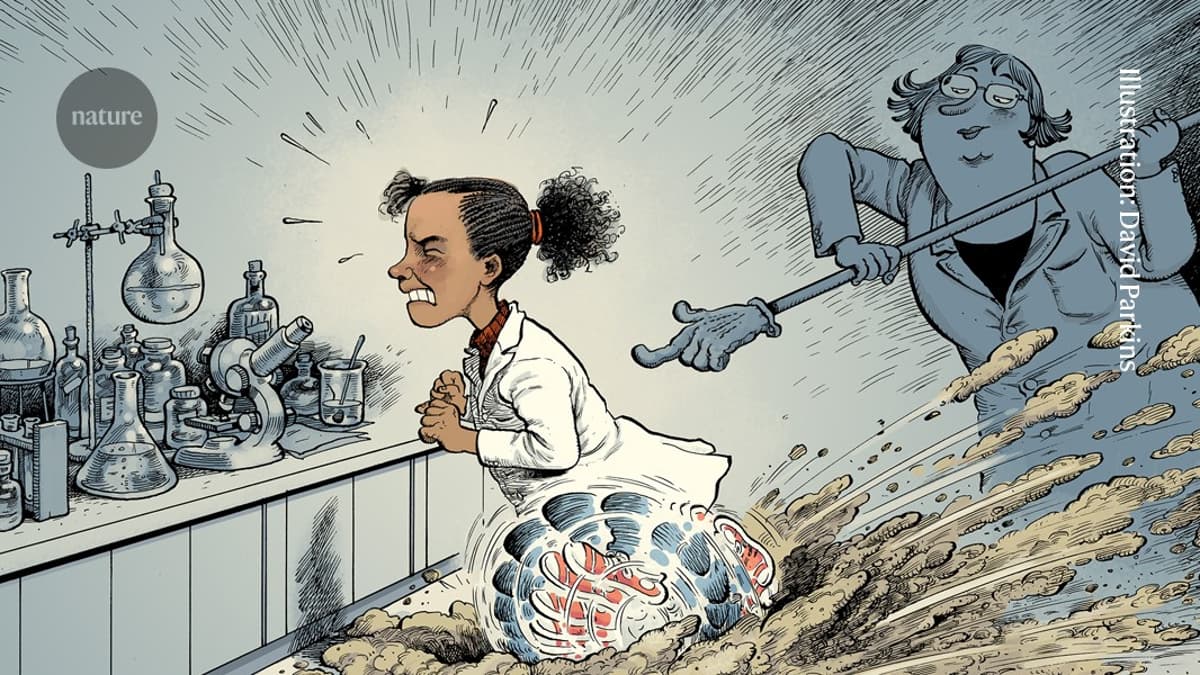
My PhD Student Is Stuck. How Do I Teach Them Perseverance and Problem Solving?
A new principal investigator seeks strategies to teach perseverance and problem‑solving to PhD students facing experimental setbacks. Experienced PIs recommend building collaborative lab cultures, pairing newcomers with senior members, normalizing failure, and setting realistic research goals. These practices aim to...

Supportive Relationships Are Linked to Positive Personality Changes
An eight‑month longitudinal study of 1,403 university students found that perceived autonomy support from close others was associated with modest gains in subjective well‑being and slight increases in the Big Five traits of agreeableness, conscientiousness and openness. Participants who reported...

The Action Potential of Achievement
The article argues that self‑reflection and self‑directed learning are fundamental drivers of personal and societal advancement. It draws on historical philosophers and modern cognitive research to show how disciplined inquiry builds critical‑thinking, metacognition and higher‑order reasoning. Early literacy and structured...

What Your Childhood Bedroom Can Teach You About Purpose
Jordan Grumet, M.D. argues that purpose isn’t discovered but built, and that childhood interests act as "purpose anchors" that guide us toward meaningful engagement. He explains how the flow state children experience reveals a process‑oriented, little‑p purpose that contrasts with...

Hypocrisy and Intolerance Drive Religious Doubt Among College Students
A new study published in *Psychology of Religion and Spirituality* surveyed 3,953 U.S. college students across private, public, and Christian campuses, revealing that perceived hypocrisy and LGBTQ intolerance are the top reasons for religious doubt. The research shows that doubt...

From Gambling Spiral to Waikiki Savior: How Buddy Wiggins Is Giving Away First Waves
Buddy Wiggins, a 32‑year‑old Honolulu pool cleaner, hit rock bottom after a years‑long sports‑betting addiction. He launched the First Wave Project, offering free surf lessons to strangers on Waikiki Beach. The initiative has introduced roughly 100 novice surfers to the...

Why Too Much Stress Makes Us All Regress
Prolonged, high‑intensity stress shuts down the prefrontal cortex, limiting reasoning and empathy. This neurological regression spreads socially, creating a feedback loop of dysregulation that fuels conflict across families, workplaces, and nations. The article outlines how simple physiological tools—breathing, cold exposure,...

Why You Care If I Think You Matter
Rebecca Newberger Goldstein’s new book, *The Mattering Instinct*, expands a four‑decade philosophical inquiry into why humans crave to matter. Drawing on her earlier "matter‑map" concept, the work blends philosophy, psychology, and behavioral economics to explain the instinct for personal attention...

4 Hard Life Lessons We All Learn by Letting Things Go
The article shares four hard‑earned lessons about letting go of past stories to improve present well‑being. It explains how clinging to personal narratives fuels ongoing pain, while recognizing their emptiness eases mental strain. Compassionate breathing and shifting focus to others...

How Knitting Can Help You Kick Harmful Habits
Knitting is emerging as a low‑cost, portable intervention that helps people curb addictive behaviours, from nail‑biting to cigarette smoking and even street‑drug dependence. Preliminary studies and anecdotal evidence show that the rhythmic, bilateral motions of knitting can calm the nervous...
2 Video Games Linked To High Intelligence
A 2017 PLOS ONE study found that performance in the multiplayer online battle arena (MOBA) games League of Legends and DOTA 2 strongly correlates with traditional IQ test scores. Researchers observed that players’ strategic abilities improve with age, while proficiency in...

2 Personality Traits That Indicate High IQ
Research published in *Personality and Individual Differences* finds that openness to experience, emotional stability, and introversion are linked to higher crystallized intelligence, measured through general‑knowledge tests. In a sample of 201 UK university students, those scoring higher on these traits...
IQ Scores Are Falling but, No, We’re Not Growing More Stupid
Recent studies show a reversal of the historic Flynn Effect, with average IQ scores slipping in the United States, United Kingdom and several Nordic countries. Researchers attribute the decline to factors such as digital media consumption, AI‑driven cognitive offloading, and...

Listen to the Sound of Stone-Age
Researchers led by Vialet, in partnership with Radio France, have used anatomical data to recreate the likely sounds of early hominins, tracing language’s roots from 27 million‑year‑old primate vocalisations to modern Homo sapiens. The timeline highlights key milestones: vowel‑producing capacities in...

The Surprising Power Of Doubting Your Doubts For Boosting Confidence (M)
The article explores how deliberately questioning one’s own doubts can paradoxically boost confidence. By turning self‑skepticism into a reflective tool, readers learn to engage more deeply with personal goals. The technique leverages cognitive reappraisal to transform uncertainty into motivation, offering...

Can’t Stop Overthinking?
Overthinking, though mentally passive, can exhaust the brain as much as physical exertion. The Washington Post article highlights psychologist Ethan Kross’s view that inner dialogue is a useful tool when directed, but unchecked rumination leads to stress and reduced productivity....

1 Effective Step We All Take Way Too Late in Life
The article argues that lasting progress comes from tiny, consistent actions rather than occasional grand gestures. It highlights the Stoic principle of focusing on what we can control and letting the rest unfold. Using a one‑degree navigation analogy, it shows...

Dan Orlovsky: 4 Reasons You Need to Step Into Discomfort
Former NFL quarterback Dan Orlovsky argues that comfort traps individuals, especially fathers, in mediocrity. He outlines four reasons—laziness, risk avoidance, over‑reliance on others, and a lowered performance ceiling—that illustrate how staying comfortable harms health, relationships, and personal growth. By embracing...

How To Train Young Minds To Live With Uncertainty (M)
A single, 90‑minute online session designed for adolescents dramatically improved their ability to tolerate uncertainty, according to a recent study. The program combined mindfulness exercises, cognitive‑reframing techniques, and interactive scenarios that simulated ambiguous situations. Participants reported lower anxiety scores and...

The Seeds I Water
The author marks a decade of sobriety, Buddhist practice, and the anniversary of his father’s fatal overdose, reflecting on how both trauma and recovery are shaped by mental habits. He describes his father’s life of addiction, incarceration, and eventual death,...

Can 'Friction-Maxxing' Fix Your Focus?
In March 2026 the BBC spotlighted “friction‑maxxing,” a movement urging people to deliberately add inconvenience to counteract shrinking attention spans caused by relentless digital stimulation. Artist Stuart Semple’s shift from phone‑driven habits to analog practices sparked a surge in creativity,...

How To Trick Your Brain Into Getting Motivated, According To Science
The article outlines science‑backed tricks to jump‑start motivation, emphasizing that small actions can rewire brain chemistry before motivation appears. Experts cite neuroscience and behavioral psychology, recommending pre‑emptive movement, consistent sensory cues, and task mini‑sizing to reduce decision fatigue. Techniques from...

No Time to Heal: The Psychological Rehabilitation of a Ukrainian Soldier After Russian Captivity
The Guardian profiles Ukraine’s first psychological trauma centre, Forest Glade, where soldiers like 25‑year‑old Kyrylo Chuvak undergo intensive three‑week rehabilitation after years of Russian captivity. The programme blends conventional therapy with unconventional activities such as tango, archery and guided breathing to...