
Less Forceful Ways of Expressing Disagreement
Leaders often need to voice disagreement, but forceful tactics can erode trust and stifle innovation. The article outlines three indirect methods—engaging with curiosity, soliciting alternative options, and probing underlying evidence—to convey dissent without alienating team members. By shifting from outright rejection to collaborative inquiry, leaders preserve relationships while still guiding decisions. These approaches foster a culture where ideas are challenged constructively rather than defensively.

The Generosity Advantage
The article frames generosity as the missing ingredient for greatness, presenting seven actionable practices and four core strengths that leaders should adopt. It argues that skill alone cannot compensate for a stingy heart, and that giving without expectation multiplies influence....

Building an Agent that Coaches You as a Leader
Zapier’s chief people and AI transformation officer Brandon Sammut built an AI‑driven accountability agent using Cursor and Zapier MCP. The agent scans his Slack, Google Docs, calendar and other work apps each week, then produces a concise report comparing actual...

Connor Teskey: Inside Brookfield’s Culture, Capital Allocation, and Competitive Edge
Connor Teskey has been named chief executive officer of Brookfield Asset Management, the trillion‑dollar alternative‑investment firm spanning infrastructure, power, real estate, private equity and credit. Teskey, a long‑time insider, succeeds founder‑CEO Bruce Flatt and promises continuity with a fresh strategic...

A Model for Growing the Next Generation of Developers
Microsoft Azure CTO Mark Russinovich and VP Scott Hanselman propose a software preceptorship model that pairs junior developers with senior mentors to work alongside AI coding assistants. Borrowing from nursing, the approach treats mentorship as a year‑long, equal partnership where...

Why Your RTO Strategy Needs Purposeful In-Person Experiences (Not Mandates)
New research reveals that forward‑looking leaders are reshaping return‑to‑office (RTO) strategies by embedding purposeful in‑person experiences rather than imposing attendance mandates. These activations—ranging from purpose‑driven days and inclusive cultural events to skill‑building workshops—strengthen employee connection to mission, foster belonging, accelerate...

Executive Housekeepers in the Spotlight at Halekulani
Audrey Goh has served as Executive Housekeeper at Halekulani in Honolulu since 1991, overseeing a team of more than 160 room attendants. The pandemic forced the department to lose 50 staff members, prompting a broadened recruitment strategy and intensive training...

Assertiveness Part 1: Why Every Breakthrough Leader Masters This Trait
Assertiveness is a learnable communication language that separates confident clarity from aggression. A pharmaceutical VP’s assertive intervention added €50 million in revenue by reshaping a product launch timeline. Harvard and industry studies show assertive leaders outperform peers, earn more promotions, and...

Stop Rescuing Your Team: How to Ask for Help and Make Everything Better
The article warns that high‑performing leaders often rescue their teams by taking on work that should be shared, which unintentionally suppresses team growth. It outlines a four‑step framework: make workload visible, clarify ownership, replace rescue with explicit agreements, and tolerate...

First Names Revealed for Thinkers50 London Summit
Thinkers50 has announced the first speakers for its 2026 London Summit, scheduled for 2 November at the historic Guildhall. The lineup includes #1 ranked thinker Paul Polman, along with Ndidi Okonkwo Nwuneli, Liz Wiseman, Jesper Brodin and Rahaf Harfoush. The summit’s theme, “Leading in a Fragmented World,”...

Chubb Names Seshadri Iyer to Lead Global Operations, Technology & Digital Transformation
Chubb announced that Seshadri Iyer will assume the role of Executive Vice President, Operations, Technology and Digital Transformation on 6 April 2026, succeeding retiring veteran Julie Dillman. Iyer arrives from Boston Consulting Group after nearly two decades, most recently serving as North...

Emotional Intelligence Is Essential for ERM Leadership
KeyBank CRO Mo Ramani says emotional intelligence is as vital as analytical skill for modern risk leaders. He argues EQ drives transparent communication, stronger collaboration, and better decision‑making across the enterprise. Ramani also stresses that risk executives must act both...
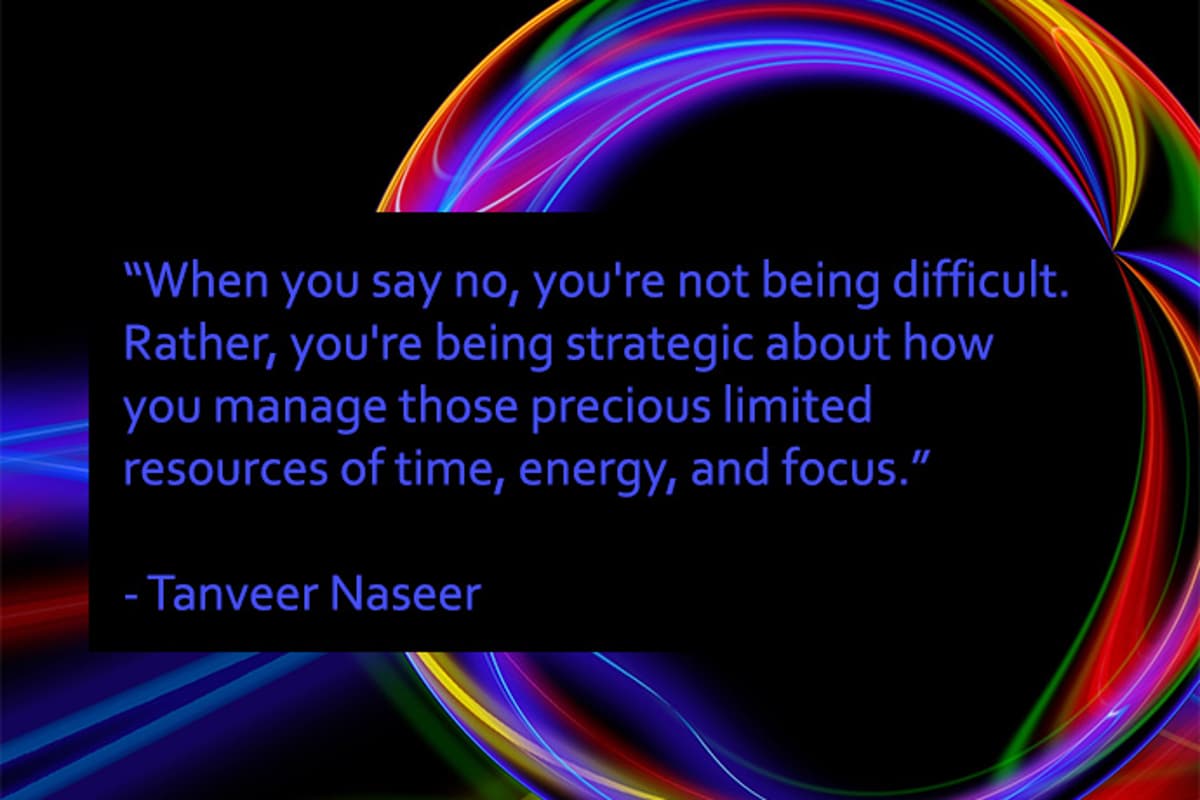
Why Saying No Is the Most Strategic Thing A Leader Can Do Right Now
The article argues that modern leaders must master the art of saying no to protect scarce resources of time, energy, and focus. It cites Warren Buffett’s disciplined refusal strategy and McKinsey research showing only 52% of executives spend most of...

Strategies to Address Leadership Talent Gaps
Leadership capability is emerging as a critical enterprise‑level risk, according to a new McKinsey thought paper. The study argues traditional development models are insufficient and recommends building a "leadership factory" that continuously produces future‑ready leaders. For CROs and ERM leaders,...

How to Stop Firefighting in Business
The article argues that chronic firefighting in companies is a symptom of a broken system, not a temporary workload spike. By redesigning operational infrastructure—defining clear roles, establishing consistent processes, and applying accountability—leaders can shift from constant triage to strategic leadership....

Sailor’s First – Aligning the Leadership Continuum
The article argues the Navy’s leadership development is fragmented, with the Navy Leadership and Ethics Center and Senior Enlisted Academy placed under a training command, creating a mechanistic approach. It proposes reintegrating these entities under the U.S. Naval War College...

The Suspicion Economy: Why Low-Trust Organisations Are Racking up ‘AI Cultural Debt’
Deloitte’s 2026 Human Capital Trends report warns that rapid AI roll‑outs without clear cultural guidelines are creating a growing "AI cultural debt" across organisations. The study finds over half of leaders view AI’s cultural impact as critical, yet only 5%...

A Sex Offender (Related to the CEO) Is Moving on to My Team
A senior employee, related to the CEO, was arrested for soliciting a minor and is slated to join the reader’s team. The employee has not been terminated, raising concerns of nepotism and inconsistent enforcement of past policies. The manager seeks...

These HR Leaders Messed up Delivering Bad News to Employees. Here Are the Lessons They Learned.
HR leaders RC Whitehouse and Colin H. Mincy recount painful missteps when delivering layoffs and terminations, highlighting how excessive empathy and unclear delivery turned sensitive conversations into grievance sessions. Both realized that overly emotional or rambling communication confuses employees and...

Why Great Leaders Connect Before They Communicate
Great leaders are shifting from agenda‑first talks to a three‑step framework: Connect, Context, Content. By pausing to acknowledge the person, they establish trust, then set clear purpose before delivering the message. This sequence reduces defensiveness, clarifies expectations, and accelerates problem‑solving....

Five Conversation Habits That Command Respect
The article argues that a man's respect in conversation stems more from delivery than content. It highlights a cultural shift toward careless, confrontational dialogue on both personal and digital platforms. Drawing on timeless communication principles, the author outlines five disciplined...

From Petrified Forests to Living Systems – Why Identity-First Workplaces Provide the Antidote to Workforce Crises
The article argues that today’s workforce crisis—burnout, disengagement, quiet quitting—is rooted in a design flaw rather than effort. It proposes an identity‑first workplace, where work structures, performance metrics, and development paths explicitly account for employee identity. By treating identity as...

CEO Tenure Is More Important than the CEO-Chair Debate
The Harvard Law School Forum highlights that CEO tenure, not the CEO‑chair structure, drives long‑term value. Empirical data show CEOs who also serve as board chairs stay in office about three years longer, yet performance outcomes remain mixed across contexts....

5 Positive Ways to Say No
The article outlines five positive techniques for declining requests, emphasizing that saying no protects time, credibility, and relationships. It frames boundaries as a strategic asset rather than a personal rejection. Each step—starting with gratitude, being direct, offering brief reasons, suggesting...

What’s Keeping Presidents Up at Night in 2026
The Inside Higher Ed‑Hanover Research 2026 Survey of 430 college and university presidents shows financial volatility and political interference emerging as the fastest‑growing risks, with 45 percent and 43 percent of leaders flagging them respectively. A second Trump administration has intensified regulatory...

Presidents Pressured in Trump’s Second Term
A new Inside Higher Ed survey of U.S. college presidents reveals that the second Trump administration—dubbed Trump 2.0—has deepened regulatory and financial strain on higher education. Over 80% of respondents say the administration harms the sector’s financial outlook and diversity, equity,...

How To Create More Human Workplaces By Tackling Hidden Patterns
Clay Parker Jones’s new book *Hidden Patterns* offers a systems‑level playbook for building more human workplaces. It catalogs 75 recurring organizational problems and pairs each with core solutions framed as reusable patterns rather than prescriptive procedures. Drawing on behavioral science...

Lead Like Her: Marcy Schaffir, Turnaround Legend
Marcy Schaffir, former chief merchandising officer of Lane Bryant, was thrust into leading the brand after a pandemic‑era bankruptcy eliminated senior roles. She prioritized personal well‑being, restructured the leadership team, and pivoted product assortments and e‑commerce fulfillment, driving the company’s most...

How to Transition From Operator to Business Leader
The article explains that moving from a hands‑on operator to a strategic business leader requires a fundamental shift in mindset, behavior, and performance metrics. It emphasizes delegating tasks, building robust systems, and freeing up time for strategic thinking. The piece...

Smoother Insurance Agency Succession Planning
The article stresses that independent insurance agents should embed technology‑enabled operations from day one to ensure smooth succession planning. Leveraging agency management systems provides real‑time performance metrics, AI‑driven client knowledge transfer, and automated renewal tracking, which together lower handoff friction...

Horizon Quantum Holdings Ltd. To Expand Leadership Team Following Business Combination
Horizon Quantum Holdings Ltd. is bolstering its leadership team ahead of a public listing, appointing former Apple, Grab, Broadcom, and dMY executives to its board. Catherine Fitzsimons from Fidelity International will become Chief Legal and Compliance Officer. The company also...

In Customer-Facing Jobs, Where’s the Line for Tolerating Abuse From the Public?
A healthcare worker describes a tense encounter where a patient’s husband verbally berated staff after a system outage prevented treatment. The incident highlights the gray area between understandable frustration and verbal abuse, especially when staff lack clear guidelines. The article...
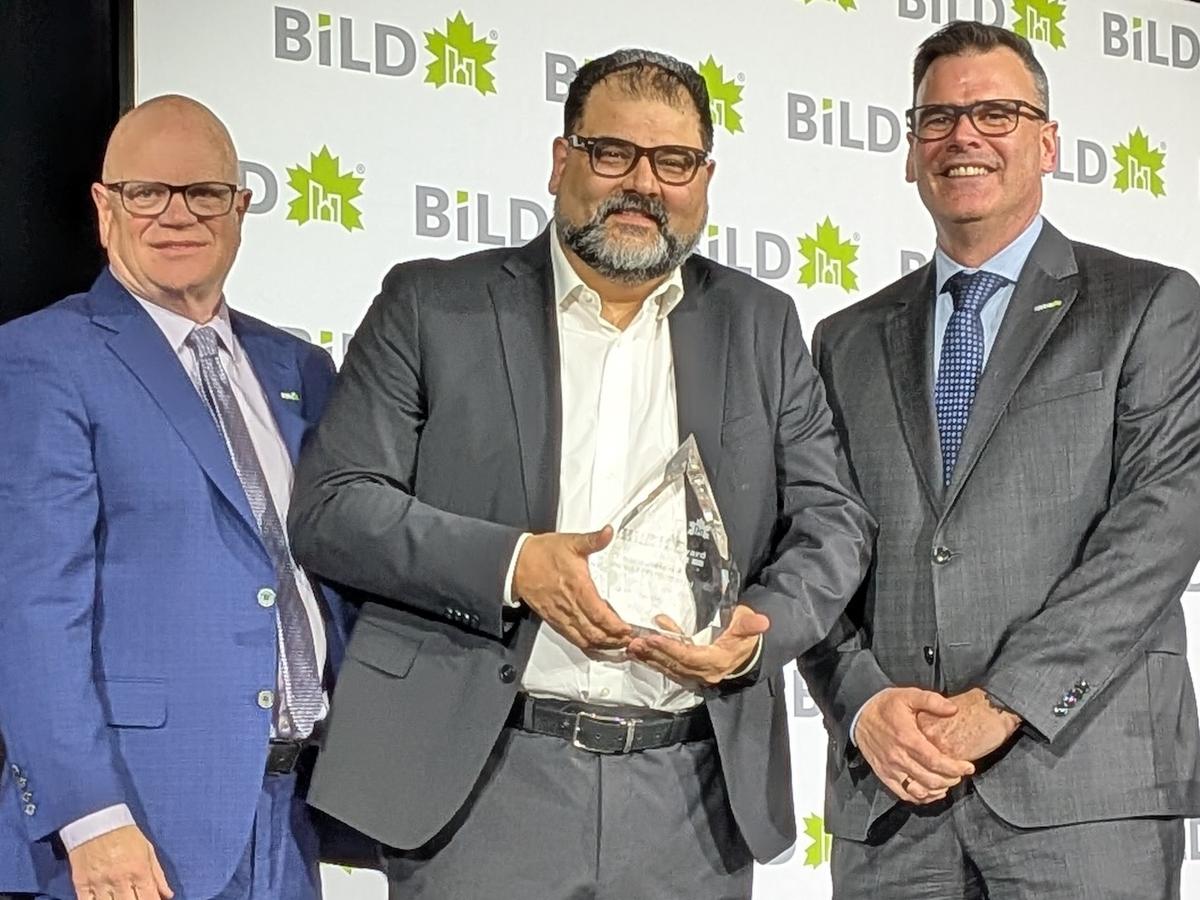
BILD Announces 2026 Board Leadership Appointments
The Building Industry and Land Development Association (BILD) announced its 2026 Board leadership slate, naming Jason Sheldon of Remington Group as Chair and Remo Agostino of The Daniels Corporation as Vice Chair. Cheryl Shindruk of Geranium will stay on as...

Why Chaos Feels Fast but Scales Slow
Early‑stage companies often thrive in chaotic environments where decisions are made instantly and visible progress appears constant. This adrenaline‑driven pace creates the illusion of momentum, but as headcount and revenue grow, informal processes falter and execution becomes inconsistent. The article...

Holding on to Hope: Women’s Leadership and the Work Still Ahead
The author reflects on Women’s History Month, emphasizing that true progress requires women in leadership roles across sectors such as health, technology, and public policy. She highlights recent initiatives—including a health‑IT women’s summit, mentorship with Girls Inc., and support for...

The CEO Mask: How Imposter Syndrome Can Make You a Stronger Leader
Imposter syndrome affects more than 70% of CEOs despite strong performance, surfacing especially during high‑stakes events like board presentations or market expansions. The article argues that this self‑doubt can be reframed as a growth signal, enhancing empathy, decision‑making, and emotional...

The Science of Oversharing: Why Revealing More Builds Trust
The post argues that the real risk isn’t oversharing but undersharing, and that thoughtful disclosure can strengthen trust, influence, and wellbeing. It cites research showing people default to silence, which limits connection in personal and professional relationships. By treating disclosure...

A Culture-Driven Organization
The article argues that culture should be the foundation of a business, not a peripheral marketing layer. In mature markets where product advantages fade quickly, cultural relevance becomes the durable moat that fuels pricing power, better unit economics, and sustained...

Succeeding in an AI World (Part 3)
Pascal Dennis revisits his V = Q × A equation, asserting that AI‑driven value hinges on both quality and acceptance. While AI can dramatically raise the quality of data, models, and processes, it often undermines acceptance due to growing public skepticism toward technology. The...

Is AI Putting Your Leadership Job at Risk—Or Opening Your Biggest Career Opportunity?
The article outlines four AI‑driven triggers reshaping transformational leadership: late‑2025 AI model releases, volatile investor reactions, a 35% drop in U.S. venture‑capital funding with AI firms capturing 61% of the pie, and heightened geopolitical uncertainty. Concurrently, the U.S. labor market...

Turning Talent Into Superstars – How Arizona Cardinals CPO Is Aligning People Strategy with Business Success
Arizona Cardinals Chief People Officer Shaun Mayo outlines a five‑point people strategy for 2026, targeting leadership effectiveness, AI‑ready capabilities, a best‑place‑to‑work culture, expanded learning, and HR system optimisation. The plan hinges on "The Cardinals Way" manifesto, co‑created by staff to...

She Should Have Known: The Leadership Cost of Unsaid Appreciation
The article reflects on a colleague’s death revealing how leaders often withhold genuine appreciation until after a person is gone. It argues that ambiguous feedback creates fear, reduces innovation, and leads to silent, over‑working employees. The author proposes concrete practices—specific...

Hard Questions Are Standard. Your Answer Isn't.
The post argues that senior executives frequently lose job offers not because of qualifications but because they mishandle standard, tough interview questions. It highlights the career‑gap question as the most common stumbling block and shows a before‑and‑after rewrite that turns...

Positive vs Negative Freedom in Organizations: The Distinction That Changes Everything
The article revisits Isaiah Berlin’s distinction between negative freedom—removing external obstacles—and positive freedom—the internal capacity for self‑direction. It argues that most organizations conflate the two, eliminating hierarchies without cultivating the psychological and relational skills needed for genuine autonomy. Empirical studies,...

Learned Helplessness at Work: Why Removing Hierarchy Isn't Enough
The article explains that learned helplessness—employees’ conditioned passivity under strict hierarchies—does not disappear when a company flattens its structure. Without targeted capability development, workers experience cognitive, motivational, and emotional blocks, leading to anxiety and the re‑emergence of informal hierarchies. Valkiainen...

Leaders Know How To Run The Present, But That’s No Longer Enough
Today's workforce delivers strong short‑term results, yet confidence in future AI‑driven roles is waning. ManpowerGroup’s 2026 Global Talent Barometer shows 87% of employees feel skilled now, but many doubt their readiness for upcoming technologies. Simultaneously, 60% are actively job‑searching despite...

CEO Interview with Jerome Paye of TAU Systems
TAU Systems, led by CEO Jerome Paye, is developing compact laser‑driven particle accelerators that generate X‑ray free‑electron lasers for semiconductor lithography. The technology promises shorter wavelengths, higher power and dramatically lower cost than today’s $400 million EUV machines. In the short...

Professionalism
The article outlines professional maturity as a blend of experience, intellectual growth, and intentional development. It defines maturity through traits such as accountability, sound judgment, emotional regulation, and strategic thinking, positioning these qualities as markers of leadership and autonomy. Practical...

Global Sense & Sensitivity
Global sense and sensitivity have become strategic imperatives for leaders operating in an increasingly complex, cross‑border environment. The concept blends macro‑level awareness of geopolitics, trade, technology and climate with deep cultural intelligence, empathy, and ethical responsibility. Practitioners are urged to...

The Pitfalls of Narrow‑Mindedness
Narrow‑mindedness—rigid thinking and resistance to new ideas—undermines decision quality, stifles innovation, and creates strategic blind spots across individuals, teams, and entire organizations. The article outlines cognitive and performance costs such as biased choices, fragile solutions, and slower learning, alongside interpersonal...