Legal Blogs and Articles
Legal Blogs and Articles
Legal Pulse
EMAIL DIGESTS
Daily
Every morning
Weekly
Tuesday recap
EMAIL DIGESTS
Daily
Every morning
Weekly
Tuesday recap

Harvey has launched Shared Spaces, a secure, branded environment that lets law firms and their clients co‑create legal work in real time. The platform replaces traditional client portals and file‑sharing tools with a unified, searchable workspace. Robust governance—including object‑level permissions, ethical walls, and audit trails—protects sensitive information throughout the collaboration lifecycle. Early adopters worldwide are already using Shared Spaces to build reusable knowledge assets and deepen client relationships.

GRC 7.0 – GRC Orchestrate introduces a homeostatic compliance model that turns compliance from a periodic check into a continuous, adaptive system. It integrates regulatory intelligence, structured obligation management, digital twins, and agentic AI to sense, interpret, and orchestrate changes across...

The SEC’s Corporate Finance Division issued a new Compliance Disclosure Interpretation (CDI) that relaxes the 20‑business‑day rule for broker searches ahead of shareholder meetings. The guidance lets companies set record dates earlier, giving them more flexibility when seeking shareholder approval...

The federal judiciary is confronting a wave of politically charged cases, from the Justice Department’s stalled autopen investigation into President Biden under Trump pressure to a judge ordering over $130 billion in tariff refunds from the previous administration. Simultaneously, the Supreme...

OpenAI has signed a new contract with the U.S. Department of Defense, expanding its involvement in Pentagon projects. The agreement’s surveillance language contains numerous ambiguities that could allow broad data collection. Critics on LessWrong highlight potential loopholes that may undermine...

Harvey announced a deep integration with Microsoft 365 Copilot, embedding its legal intelligence directly into the Copilot environment. The new feature lets lawyers invoke the Harvey Assistant from within Copilot to analyze contracts, research market terms, and pull precedent without...

The Department of Education launched a public Section 117 transparency dashboard in February 2026, publishing over $60 billion in cumulative foreign‑funding disclosures from U.S. universities. By making gift and contract data searchable, flagging country‑of‑concern entities, and allowing direct institutional comparisons, the...

A federal judge dismissed a group of Title VI discrimination lawsuits against Northwestern University alleging a hostile environment for Jewish students after the October 7 Hamas attacks. The court held that plaintiffs failed to show that university officials had actual knowledge of...

CloudNine announced an on‑premise version of its CloudNine Review platform slated for a 2026 launch, responding to client demand for cost control, data sovereignty, and workflow autonomy. The move follows the market exit of competing on‑premise eDiscovery tools, positioning CloudNine...

The U.S. Supreme Court unanimously ruled that immigration courts must defer to executive agencies by applying the substantial‑evidence standard when reviewing an agency’s finding that undisputed facts do not constitute persecution. Justice Ketanji Brown Jackson wrote that the lower court...
The U.S. Supreme Court unanimously held that New Jersey Transit is not an arm of the state, stripping it of sovereign immunity and overturning the Pennsylvania Supreme Court’s contrary ruling. The decision affirms the New York Court of Appeals’ view,...

Spellbook has secured a $40 million debt facility from RBCx, the tech‑focused arm of Royal Bank of Canada, to fund future acquisitions in the rapidly consolidating legal AI sector. The financing follows a $50 million Series B round that lifted the company's post‑money...

McDermott Will & Schulte advised Groupe Bruxelles Lambert (GBL) on a strategic investment that will give GBL a 45% co‑control stake in Rayner, a leading UK‑based ophthalmic MedTech specialist. GBL will contribute €0.5 billion of equity alongside existing shareholders CVC and...

A new empirical study of the 2023‑24 Supreme Court term shows that in 79% of cases the counsel changes as the dispute moves from the circuit courts to the high court. The shift is driven by a small, elite group...

On March 2, 2026 the U.S. Supreme Court declined to hear *Thaler v. Perlmutter*, leaving the requirement that a human author must be identified for copyright protection intact. The case centered on whether an AI system, DABUS, could be listed...

The latest Israel‑U.S. campaign that killed Iran’s supreme leader Ali Khamenei and other senior officials raises complex questions about the law of armed conflict (LOAC). Under LOAC, state leaders can be lawfully targeted if they are combatants or civilians directly participating...
In *Perez v. City of San Antonio*, a Fifth Circuit panel upheld San Antonio's plan to clear a river‑bend sacred to the Lipan‑Apache Native American Church, finding no substantial burden under the Texas Religious Freedom Restoration Act (TRFRA). Judge Andrew...

Latitude59 has opened applications for its 2026 pitch competition, with a deadline of April 15, 2026. The event will take place May 20‑22 in Tallinn, featuring jurors, mentors, and regional angel networks. Last year attracted 407 applications from 48 countries,...

White & Case LLP has bolstered its Global Litigation Practice by adding Jeffrey Steinfeld as a partner in Los Angeles. Steinfeld is a first‑chair trial and appellate lawyer renowned for securities litigation, corporate governance, and white‑collar defense. He has led...

Bloomberg argues that U.S. prediction markets operate without a clear federal framework, exposing traders to manipulation similar to unregulated gambling. It calls on Congress to amend the 1936 Commodity Exchange Act to define event contracts, separating legitimate market-driven bets from...
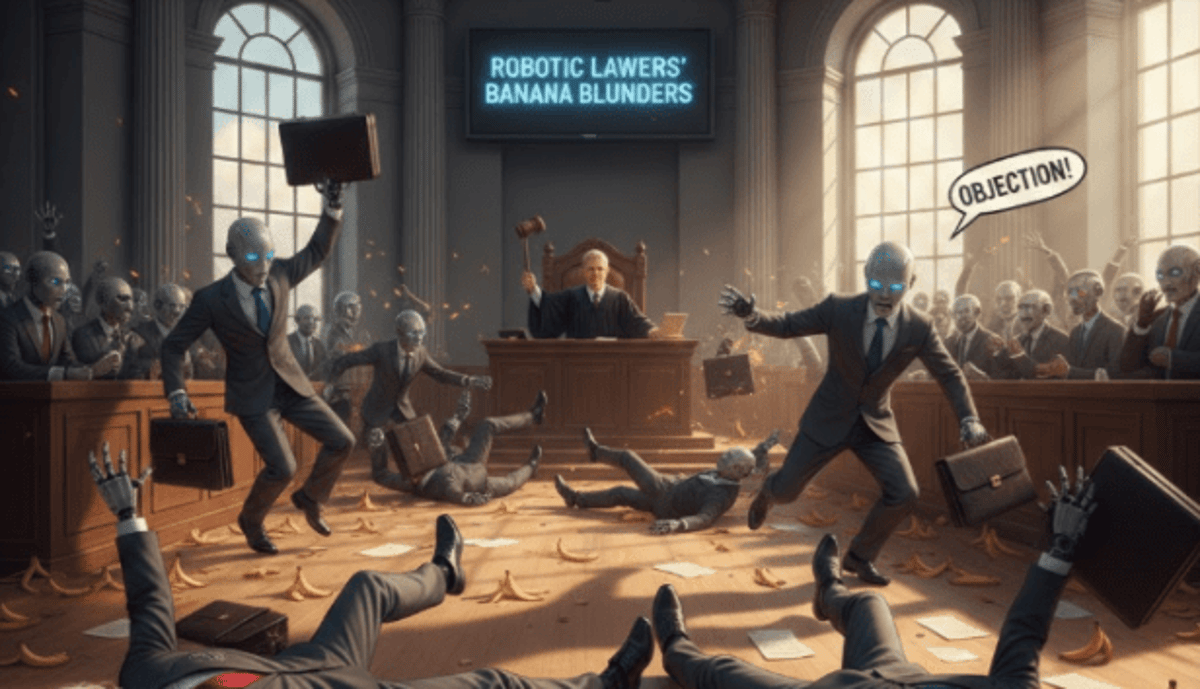
The article examines the surge of AI‑generated hallucination cases in U.S. courts, noting that out of roughly 982 documented incidents, only 257 are solely attributable to lawyers while pro se litigants account for about 412. It references the Fifth Circuit’s recent...

The Trump administration, led by Treasury officials Paul Atkins and Selig, is drafting the first U.S. crypto framework that explicitly addresses decentralized finance. The proposed rules would let major exchanges such as Kraken, Coinbase and Crypto.com register with a federal...
Bradley Law is expanding its Government Enforcement & Investigations practice by hiring partner Scott F. Mascianica in Dallas and counsel Andrew Bastnagel in Washington, D.C. Both attorneys come from Hilgers PLLC, where Mascianica led the firm’s enforcement practice. The hires...

The Legal IT Insider report released on March 9 examines whether generative‑AI‑driven Human AI‑Assisted Review (HAR) can be validated under the traditional Technology‑Assisted Review (TAR) framework. Interviews with judges, scholars and leading e‑discovery providers reveal that applying existing TAR validation to...

NetDocuments unveiled Smart Answers, an AI‑driven search tool that interprets natural‑language queries to retrieve the most relevant documents from a firm’s repository. The solution leverages large language models to rank results and surface contextual excerpts, cutting retrieval time dramatically. It...
Annie Lespérance, head of the Americas at Jus Mundi and recent Monica Bay Women of Legal Tech award winner, highlighted a surge in cross‑border legal‑tech adoption across Latin America. She emphasized that clients increasingly demand platforms that operate in multiple...
HaystackID vice president Laura Danielson identified fragmentation and confidence gaps as the primary obstacles to legal‑tech innovation. She explained that disparate tools and unclear data reliability discourage adoption among corporate legal departments. Danielson emphasized that modern legal users demand seamless...
Legal tech experts discussed modernising case management systems (CMS) as firms face performance bottlenecks, hybrid‑work demands, and AI ambitions. 2026 is seen as a turning point, with firms weighing optimisation, SaaS migration, or workflow redesign. Lima’s assessment combines technical diagnostics...
U.S. law firm Husch Blackwell has rolled out the Legora generative‑AI platform firm‑wide, adding AI‑driven document review, research and workflow automation. Legal‑tech startup Harvey bolstered its advisory team with three senior innovation partners from Ashurst, Marsh McLennan and Fasken to...

Malaysia’s Arbitration (Amendment) Act 2024 took effect on 1 January 2026, formally legalising third‑party funding in arbitration. The law carves out funding from the historic champerty doctrine and imposes a light‑touch disclosure regime, requiring funded parties to reveal the existence of a funder...

The European Union’s revised anti‑money‑laundering (AML) and counter‑terrorist financing framework transfers crime‑detection duties from public authorities to private banks and other obliged entities. By mandating extensive collection of personal and transactional data, the rules compel institutions to flag customers as...

Law firms face a perfect storm of compliance obstacles—policy gaps, tick‑box culture, and fragmented legacy technology—that make risk assessments cumbersome. The SRA’s systematic requirements clash with offline templates, leaving firms without clear digital processes. Modern tools such as biometrics, open‑banking...

Ross McNairn, CEO of Wordsmith, argues that legal‑tech firms cannot simultaneously serve law firms and in‑house legal departments because of an inherent conflict of interest. He announces Wordsmith will focus exclusively on the in‑house market, positioning the company against competitors...

American Arbitration Association introduced the Resolution Simulator, an AI‑powered tool that generates simulated, non‑binding arbitration decisions for document‑only commercial and construction disputes. Building on its 2024 AI Arbitrator pilot, the platform analyzes uploaded pleadings, contracts, and evidence using large‑language models...

Zimbabwe's Cabinet approved a new legislative framework that moves beyond the 2024 ban on alluvial river‑bed mining to active ecosystem rehabilitation. The Inter‑Ministerial Committee reported that mechanised mining has largely ceased, while enforcement actions have led to over 300 arrests...
During the Supreme Court’s Hemani oral argument, Justice Kagan posed a hypothetical that a user of ayahuasca—a hallucinogenic tea protected under the 2006 *Gonzales v. O Centro* decision—could be barred from firearm ownership. The scenario pits a religious‑freedom exemption granted...

The Justice Department abruptly reversed its decision to drop appeals defending executive orders that sanction law firms, re‑asserting its position within 24 hours. The reversal follows a brief announcement that the Trump administration would cease defending the orders, which targeted...

In September 2025 the SEC overturned decades‑old guidance and now allows public companies to include forced arbitration clauses in their IPO registration statements. The change is expected to drive up legal expenses for securities claims, as firms will face dozens...

The Electronic Frontier Foundation and the ACLU filed an amicus brief urging the Third Circuit to require a warrant for electronic device searches at the border. The brief centers on U.S. v. Roggio, where agents seized a traveler’s laptop, tablet,...

The D.C. Circuit’s opinion in *Centro de Trabajadores Unidos v. Bessent* refines the change‑in‑position doctrine after *Loper Bright*. The panel affirmed the denial of a preliminary injunction against an IRS‑ICE memorandum and held that when a statute unambiguously backs an...

The U.S. Supreme Court is set to hear Louisiana v. Callais, a case that challenges the constitutionality of Section 2 of the Voting Rights Act. Section 2 has long required states to create majority‑minority districts to prevent racial vote dilution, and the...
The Tenth Circuit ruled that the equal‑protection claim against a public school’s single‑sex fifth‑grade classes can proceed, applying intermediate scrutiny to the district’s sex‑segregation policy. The court found the plaintiffs’ allegations of reliance on outdated gender stereotypes and unequal disciplinary...

Dennis Kennedy warns lawyers against adopting "vibe coding," a practice that relies on large language models to generate code without a robust control plane. He explains that AI systems can suffer from control drift, silently violating constraints such as data‑privacy...

The Terner Center is hosting a March 24 webinar to preview California’s housing policy agenda for the 2025‑2026 legislative session. After a busy first year that delivered high‑profile bills on affordability, zoning and climate, lawmakers are expected to maintain an aggressive...

The CFTC announced it is modernizing its rulebook to accommodate decentralized finance, working hand‑in‑hand with the SEC to clarify jurisdiction over on‑chain software. Chairman Michael Selig said regulated perpetual futures could launch in the United States within weeks, and that...
Elan Hersh, Akerman’s e‑discovery services chair, spoke at Legalweek about the hidden costs of miscommunication in complex litigation. He emphasized that fragmented communication between counsel, clients, and technology teams fuels delays, escalates expenses, and jeopardizes data security. Hersh advocated for...

California’s Division of Occupational Safety and Health (Cal/OSHA) has issued a proposed rule that defines who may accompany inspectors during workplace safety walk‑arounds. The rule mirrors the 2024 federal OSHA “walkaround” standard but expands the definition of employee‑authorized representatives to...

The Macdonald‑Laurier Institute argues that Canada’s internal trade barriers remain a costly, under‑addressed obstacle to growth. While the EU enjoys seamless cross‑border commerce, Canadian provinces still regulate goods, services and professional credentials independently, creating inefficiencies. The report proposes a joint...
The Supreme Court’s per curiam decision in Mirabelli v. Bonta marks a pivotal moment for emergency‑docket jurisprudence, with Justices Barrett, Kavanaugh, and Roberts joining a majority that clarifies when swift relief is appropriate. Justice Barrett’s four‑page concurrence and the Court’s detailed opinion...

Emily Bremer’s forthcoming Yale Law Journal article reinterprets vacatur under the Administrative Procedure Act as an appellate determination rather than an equitable remedy. She argues that the APA’s “set aside” language was intended to fit within the statute’s broader appellate...


