Legal Blogs and Articles
Legal Blogs and Articles
Legal Pulse
EMAIL DIGESTS
Daily
Every morning
Weekly
Tuesday recap
EMAIL DIGESTS
Daily
Every morning
Weekly
Tuesday recap

The article clarifies what a Request for Equitable Adjustment (REA) is and how it differs from a formal claim under the Federal Acquisition Regulation. It cites case law defining REAs as remedies for unforeseen conditions that increase contract costs or schedule time. The piece outlines the contractual clauses that trigger REAs and highlights their informal, negotiation‑focused nature. Finally, it details benefits such as quicker officer response and the ability to recover attorney fees, positioning REAs as a strategic tool for government contractors.

Section 702 of the Foreign Intelligence Surveillance Act will expire on April 20, 2026 unless Congress renews it, threatening a key intelligence tool for counter‑terrorism and cyber threat detection. The author disputes the Brennan Center’s claim that USP identifiers used...

The Connecticut Appellate Court affirmed trial courts' motions to strike three tip‑credit class actions—Farias v. Rodriguez, Woodford v. HRG Management, and Vasquez v. Sliders Restaurant Group. The court held that the old tip‑credit record‑keeping provisions (old E3) do not create...

State‑led lawsuits against the federal government have surged to record levels, with more than 100 cases filed in each of the past two administrations and 95 new filings logged in 2026 alone. Courts are routinely granting relief, allowing states to...

Choosing the right business entity is a nuanced decision that hinges on liability exposure, revenue expectations, ownership structure, and future financing plans. A sole proprietorship requires no filing but offers no personal asset protection, while an LLC delivers liability shielding...

Recent justice‑technology news highlights a surge of AI‑related legal mishaps, from an Oregon attorney fined for citing AI‑generated case law to a wave of AI‑driven lawsuits cluttering courts. The FBI’s admission of purchasing Americans’ location data and a 93 GB breach...

A second former Spartan Capital Securities broker, Ronald Smith, was indicted on securities fraud and conspiracy charges after allegedly profiting by hundreds of thousands of dollars from insider tips. The tips originated from Jordan Meadow, another ex‑Spartan broker who stole...

The U.S. Securities and Exchange Commission (SEC) has pivoted from a skeptical stance to actively drafting crypto‑friendly policies, with senior officials like Gary Gensler’s deputy, Mr. Atkins, and CFTC’s Mike Selig touring industry events nationwide. Their appearances in venues from...

Post‑proxy season 2025 saw 26 reincorporation proposals, with 63% of firms still seeking to leave Delaware. Legal environment considerations dominated, cited by 81% of proposals, while concerns over franchise taxes and D&O liability shifted modestly. Controlled‑shareholder‑driven moves fell sharply to...

The U.S. Attorney’s Office for the Southern District of New York’s securities and commodities fraud unit met with Polymarket to discuss how existing laws might apply to a possible insider‑trading case. The probe focuses on lucrative trades that occurred around...

The SEC’s amended Regulation S‑P, effective August 2, 2024, imposes new privacy and breach‑notification rules on investment advisers. Smaller advisers—those managing less than $1.5 billion in assets—must comply by June 3, 2025, while larger firms have until December 3, 2025. The amendments require...

The Third Circuit ruled that New Jersey’s “Background Circumstances Rule,” which imposed a heightened burden on majority‑group plaintiffs under the NJLAD, is incompatible with the statute and therefore dead in federal court. The decision follows the U.S. Supreme Court’s unanimous...

The Hague Conference on Private International Law welcomed Guatemala as its 93rd member on 4 March 2026, expanding the organization’s global reach. On the same day the 2019 Judgments Convention entered into force for Albania and Montenegro, while Monaco ratified the...

Australia’s private markets are shifting from niche alternatives to a core pillar of capital formation, with private credit expanding 500% to over AUD 200 billion (≈USD 132 billion) and superannuation funds now managing AUD 4.3 trillion (≈USD 2.8 trillion), of which more than 20% is allocated to unlisted...

Canada’s securities regulators launched a voluntary pilot allowing eligible venture issuers to file semi‑annual reports instead of traditional first‑ and third‑quarter filings, including the Management’s Discussion and Analysis. To qualify, companies must be listed on the TSXV or CSE, have...

The SEC issued an Interpretive Release that clarifies when a digital asset stops being treated as a security under the Howey test. Corp Fin Director Jim Moloney labeled the guidance “The Last Chapter in the Book of Howey,” noting that...

A federal court settlement in Missouri v. Biden disclosed that White House officials pressured Facebook to label accurate vaccine information as misinformation. The dispute stemmed from a BMJ investigation on Pfizer’s COVID‑19 trial that was flagged by a Facebook fact‑checker,...

CollBox, a payment‑acceleration platform for law firms, captured first place in the 10th annual Startup Alley pitch competition at the ABA Techshow in Chicago. The contest, which showcases emerging legal‑tech innovators, also saw Candle AI earn second place for its...

LegalTech Connect announced its inaugural Law Firm Research & Innovation Conference, scheduled for April 28 in New York. Early‑bird registration is priced at $949 but expires on March 31, after which tickets increase to $999. The agenda promises sessions on AI‑enabled research...

General Legal, an AI‑native law firm, uses a full‑stack artificial intelligence engine to draft and review commercial contracts, allowing it to deliver standard agreements for as little as $500 while maintaining 40‑50% profit margins. By automating roughly 80% of the...

The Federal Maritime Commission rejected four major carriers' request to impose an immediate war‑risk surcharge on U.S.–Middle East routes without the required 30‑day notice. The decision forces any new fees to wait until at least early April and obliges shippers...

The SEC has delegated full rulemaking authority over U.S. financial disclosure to the private‑sector Financial Accounting Standards Board (FASB), creating a full‑delegation private‑ordering model. This arrangement places standard‑setting power in the hands of accountants who also must comply with the...

Effective AI oversight now hinges on the ability to reconstruct a single AI‑influenced decision with verifiable records. The EU AI Act makes automatic event logging a compliance prerequisite for high‑risk systems, but merely having policies is insufficient. A "proof drill"—a...

Senator Richard Blumenthal has opened a formal Senate inquiry into the SEC after the agency abruptly pulled back from a high‑profile cryptocurrency enforcement case. The move follows the sudden departure of the SEC’s enforcement chief, sparking speculation about internal disagreements...

On March 19, the FDIC rescinded its 2009 Statement of Policy that limited private‑equity participation in failed‑bank acquisitions, aiming to broaden the pool of bidders and reduce resolution costs. The move follows a pilot program that pre‑qualifies nonbanks for asset...

In March 2026 a wave of notable legal developments unfolded: Jones Day added four Supreme Court clerks from the October 2024 term, including Seanhenry VanDyke; veteran attorney J. Klatchko moved to dispute‑resolution firm JAMS; the Trump administration intensified its challenge...

On January 5 2026 the General Services Administration issued an IT Security Procedural Guide that instantly raises cybersecurity requirements for any contractor handling Controlled Unclassified Information. The guide forces compliance with NIST SP 800‑171 Rev 3, selected SP 800‑172 Rev 3 controls, and privacy controls from...

The Fifth Circuit vacated the FTC’s cease‑and‑desist order that barred Intuit from marketing TurboTax products as free, ruling the agency’s internal adjudication violated the separation of powers. The court relied on the Supreme Court’s *SEC v. Jarkesy* decision, characterizing deceptive‑advertising...

AI regulatory sandboxes are emerging worldwide as structured testbeds for emerging technologies. Three primary models—regulatory, operational, and hybrid—offer varying degrees of oversight and infrastructure. These sandboxes intervene at different stages of policy development, often using waivers to permit experimentation before...

At the IAPP Global Summit, attorneys from OpenAI and Anthropic examined the tension between privacy protection and safety safeguards in generative AI. They highlighted how expanding privacy roles now intersect with model alignment, content moderation, and emerging regulatory mandates such...
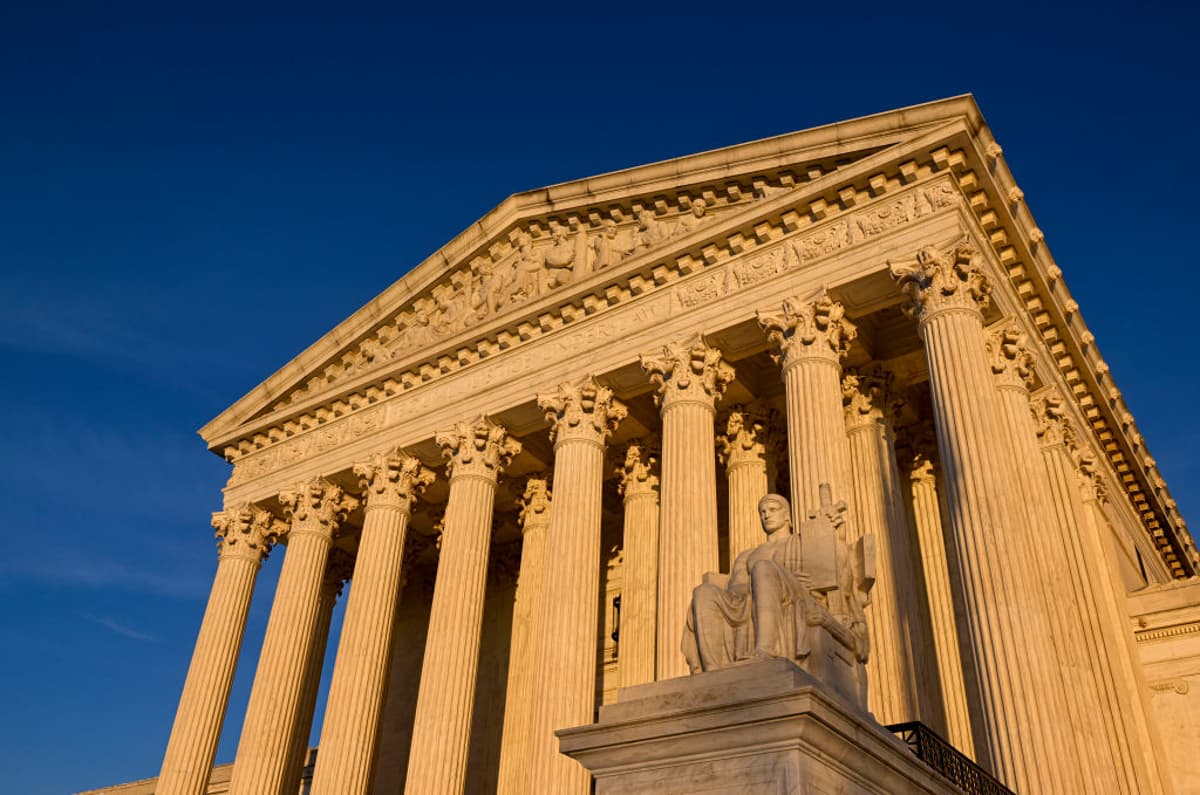
The Supreme Court granted review of Younge v. Fulton Judicial Circuit District Attorney’s Office, a pregnancy‑discrimination suit that asks whether an affirmative defense can be raised after the answer. It denied certiorari in two high‑profile criminal cases: James Skinner’s life‑sentence...
The article warns that the entrenched billable‑hour model could cost corporate legal departments up to $285 billion each year as per‑seat software pricing collapses. It highlights that hourly billing inflates spend, hampers budgeting and slows adoption of subscription‑based legal technology. Recent...
Law firms that market only during slow periods lose momentum, while firms that maintain a steady flow of content stay top‑of‑mind with prospects. Consistent marketing—such as weekly or monthly newsletters, two to three social posts per week, and one blog...

The Weinberg Center has published the results of its recent survey of law professors on shareholder proposals, now available on SSRN. The data show a notable shift toward greater academic endorsement of ESG‑related proposals and calls for more transparent voting...

OOIDA executive Lew Pugh says the FMCSA is finally engaging directly with owner‑operators, signaling a shift from the long‑standing driver‑shortage narrative toward concrete safety improvements. At the Mid‑America Trucking Show, regulators listened to owner‑operators’ calls for better training, fair pay...
Ransomware attacks have shifted focus from merely disrupting operations to stealing and monetizing sensitive data, making downtime less valuable than the information compromised. Law firms, with their troves of confidential client and case files, have become prime targets for these...

The latest CareTalk episode spotlights the growing crisis of surprise medical bills that trap millions of Americans in debt. Patricia Kelmar of PIRG breaks down patient rights under the No Surprises Act and explains how the law reshapes billing practices....

Humana’s Medicare Advantage business, once a profit engine, is now under intense federal scrutiny for alleged overbilling and kickback schemes. The crackdown has stalled revenue growth and led to a February loss, pushing the stock 71% lower from its November 2022...

Bureau Veritas and Trade Technologies have formed a partnership to embed inspection and conformity documents directly into trade‑finance workflows. The integration targets document‑heavy markets in the Middle East and Africa, aiming to speed up letter‑of‑credit (LC) processing and reduce compliance...

A federal judge in Miami granted a judgment of acquittal for Ramirez, who was convicted of federal arson after throwing two flares at an Orlando City soccer match. The court held that the government failed to prove the malicious intent...
A Connecticut federal judge ruled that attorney Michael Bagnell’s defamation lawsuit against Sig Sauer can proceed. The case stems from Sig Sauer’s March 2025 press release, which labeled plaintiffs’ claims that the P320 pistol can fire without a trigger pull as profit‑driven lies...

The Kansas District Court granted Defendants’ motion to amend a protective order, restricting the use of open‑AI generative tools on any discovery material while permitting closed‑AI solutions that meet security standards. The judge rejected plaintiffs’ claims that the amendment would...

The Women’s Bar Association of Illinois (WBAI), founded in 1914, celebrated Women’s History Month with insights from President Katherine A. Twardak. Twardak highlighted the association’s role in mentorship, CLE programming, and legislative advocacy through its Political Action Committee. She cited...

On February 20, the Trump administration announced temporary import tariffs under Section 122 of the Trade Act of 1974, a provision intended to address fundamental balance‑of‑payments crises. The article explains that Section 122 creates a mandatory presidential duty to impose a surcharge...
A federal judge in Northern California denied a preliminary injunction sought by Tenderloin residents and businesses, finding they lacked standing to challenge San Francisco’s harm‑reduction policies. The plaintiffs could not demonstrate that the city’s distribution of drug‑related paraphernalia directly caused increased...

In June 2024 the Biden administration’s Justice Department issued a sweeping Title II mandate requiring every public university to comply with expanded Americans with Disabilities Act accessibility standards. Institutions have until April 24, 2026 to implement the changes, which cover physical infrastructure, digital...

Casepoint’s Amit Dungarani recapped a presentation at the 23rd Annual e‑Discovery, Records and Information Management Conference, emphasizing how AI is moving from experimental hype to operational use in legal, FOIA and records environments. He argued that AI deployments must be...

The Association of Certified Fraud Examiners’ 2026 Anti‑Fraud Technology Benchmarking Report surveyed over 700 anti‑fraud executives and found that 92% of teams still do not use AI, with only 8% feeling prepared for AI‑enhanced fraud attacks. Respondents cite data‑quality, governance,...

The U.S. Department of Labor is signaling a shift away from relying on court cases to enforce ERISA duties, a practice known as “regulation by litigation.” 401(k) lawsuits have climbed from 49 in 2023 to 69 in 2025, driven largely...

Meta’s $799 wristband, released last fall, reads electrical signals in the wrist to infer a user’s intended gesture before the hand moves, turning thought into device input. The technology revives a longstanding Fifth Amendment debate about where the body ends...


