Lavern the Agentic ‘Law Firm’ Has Arrived
Antti Innanen announced the open‑source release of Lavern, an ambitious legal‑tech platform built over six months with 155,000 lines of code. The Apache 2.0‑licensed repository bundles 67 specialist agents, eight end‑to‑end workflows, and a domain‑agnostic orchestration engine that can be repurposed for other regulated sectors. Key modules such as the Clawern folder‑watcher, a hybrid local‑plus‑frontier privacy architecture, and an agent builder are provided as reusable building blocks. Lavern aims to spark a new, collaborative era in legal AI by making sophisticated tools freely available.
Claude Could Become a Lawyer’s Portal to the Law, Look at Legal Data Hunter
Anthropic introduced Claude for Legal, embedding Legal Data Hunter's global corpus into its AI platform. The European startup has indexed 18 million legal documents from over 110 jurisdictions, exposing the dataset via an MCP server for real‑time AI queries. Lawyers can...

TalkingTech Podcast with Harvey: How AI Agents Are Changing Legal Work—And Why It Matters Now
The TalkingTech Podcast with Harvey highlighted the emergence of AI agents that can plan, reason, and execute multi‑step legal tasks autonomously, moving beyond simple automation. On the Harvey platform, hundreds of use cases—from document checks to full‑draft generation—are already in...

"Instead, Claude Just Made Up More Stuff"
In the Brooks v. Lowes Home Centers case, attorney Mark Wilkins used the AI model Claude to draft a brief. The AI generated fabricated citations, which a law clerk uncovered. Wilkins submitted the corrected AI output without further review, prompting...

Prompts Generated by an Expert Are Discoverable, Court Rules: EDiscovery Case Law
In Conservation Law Foundation v. Shell Oil, a Connecticut magistrate ruled that AI prompts used by expert witness Dr. Naomi Oreskes are discoverable under Federal Rule 26(b). The court rejected the plaintiff’s claim that the prompts were protected by a...

Building the AI-Ready Legal Team
Legalfly will host a webinar on June 11 featuring senior legal solutions engineer Stephanie Adriaens, who will explain how legal teams can lay the operational groundwork for AI‑assisted contract review. The discussion will cover selecting the right contracts, centralising template libraries,...
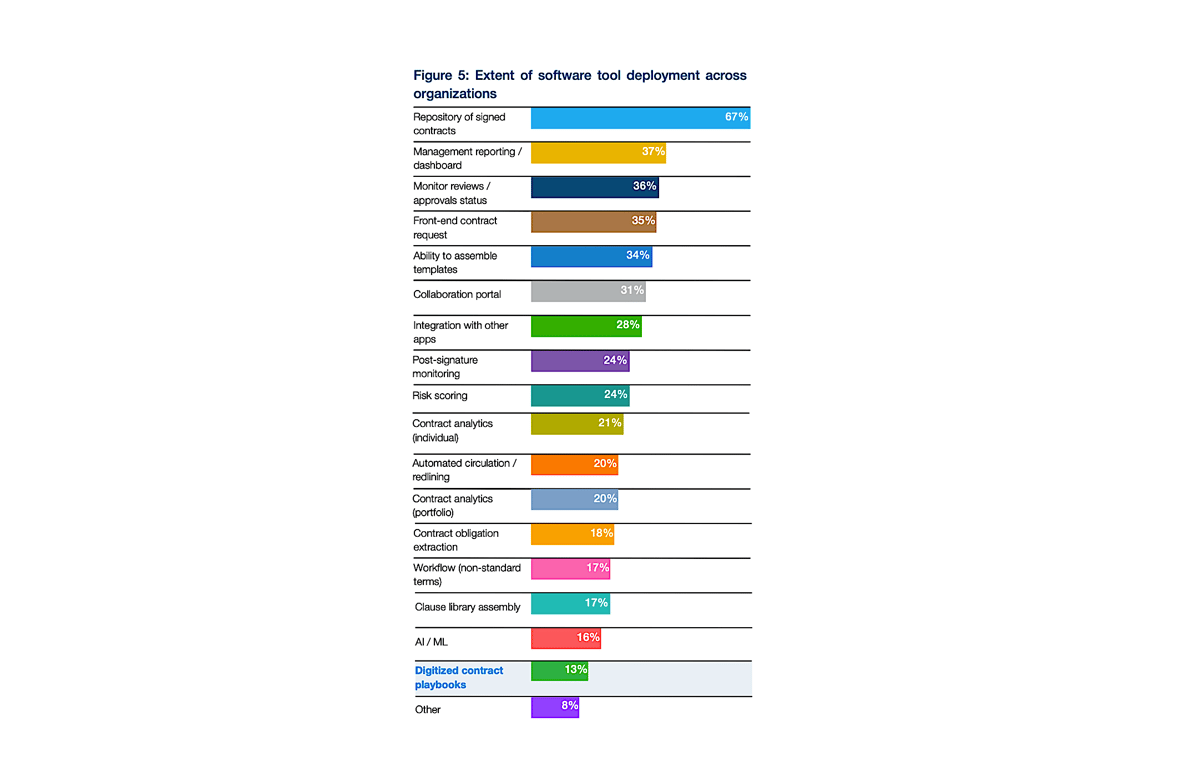
Inhouse AI? Still A Long Way To Go
A joint World CC‑Sirion survey reveals that in‑house legal teams lag behind the latest AI capabilities. While 67% of organizations have a repository for signed contracts, only 16% use AI/ML tools and just 13% have digitized contract playbooks. Even basic functions...

Casey Sullivan, Everlaw: Introducing Everlaw’s Anthropic MCP Integration
Everlaw announced a native integration with Anthropic's Claude via the Model Control Panel (MCP), allowing litigators to search, retrieve, and analyze case materials using generative AI within a single, secure system of record. The integration lets users pose natural‑language queries...
StreemView: The Significant Cost of Going Direct to RSMF: $1.1MM Saved
StreemView’s case study shows that processing chat data with search, filtering, and contextual expansion before creating 24‑hour RSMF files slashes review workload dramatically. By avoiding a direct‑to‑RSMF workflow, the legal team cut review volume by 97% and review costs by...

When “The Devil Made Me Do It” Is Not a Defense: Lessons in AI Governance and Organizational Oversight From an...
A May 7, 2026 Southern District of New York decision rejected the government’s attempt to blame ChatGPT for terminating over 1,400 DEI‑related federal grants. The court found the agency’s AI‑assisted workflow lacked meaningful human oversight, proper prompt design, and documentation, rendering it...

Anthropic Open-Sources Law-Firm Skills for Claude
Anthropic has released an open‑source repository, github.com/anthropics/claude-for-legal, that embeds its Claude AI across the legal sector. The package ships with 12 role‑specific plugins covering corporate counsel, contracts, M&A, privacy, IP and more, plus five hosted agent recipes for tasks such as...

Bar Standards Board Introduces New Guidance on the Use of AI
The Bar Standards Board (BSB) has issued new guidance outlining how solicitors should safely and responsibly incorporate artificial intelligence into legal practice. The framework requires firms to conduct risk assessments, disclose AI‑generated content to clients, and implement robust data‑privacy safeguards....

Anthropic Just Rolled Out Claude for Legal
Anthropic has launched Claude for Legal, an AI suite tailored to law schools and legal clinics. The offering includes a law‑student plugin that assists with exam preparation, a free CourtListener connector that provides research without Westlaw or LexisNexis, and a...

Insurers, Plaintiff Bar Wage AI Arms Race
Insurance carriers and plaintiff firms are rapidly deploying generative AI to value and settle claims, turning the litigation economics into an AI‑driven arms race. Legacy rule‑based tools like Colossus, still used by about 70% of insurers, are being supplanted by...
Legaltech Rundown: LexisNexis Announces Protégé Updates, Deloitte Expands Legora Partnership, and More
LexisNexis unveiled a suite of upgrades to its Protégé AI‑driven legal research platform, adding multilingual support for 15 languages, real‑time case analytics, and a new open API that lets firms embed the engine directly into their case‑management tools. Deloitte announced...
Salesforce CLO: Law Firms That Lag in AI Are Putting Themselves in Peril
Salesforce’s chief legal officer, Sebastian Niles, warned that law firms ignoring artificial‑intelligence tools risk losing efficiency, talent, and clients. He highlighted that AI can streamline document review, predictive analytics, and case management, turning firms into service leaders rather than observers....

CLOC Global Institute 2026: A Market in Transition
The CLOC Global Institute in Chicago highlighted a maturing AI conversation, with legal‑ops teams focusing on embedding intelligence directly into everyday tools rather than using separate solutions. Over 2,400 professionals heard vendors like Mitratech, Bloomberg Law and NetDocuments announce plans...
Bring Your AI Model (BYAIM): Redefining eDiscovery Control
Legal leaders are moving from debating AI adoption in eDiscovery to questioning who controls the model, where it runs, and how data is protected. Standard vendor‑provided AI offers speed but can lock firms into a single intelligence layer, raising governance...

Legal AI Is Dead. Long Live Legal AI?
At the Royal Opera House on May 7, Legora CEO Max Junestrand announced that "legal AI is dead" and introduced Legora aOS, an agentic operating system designed to streamline legal work. The platform can monitor global regulations, auto‑generate entity diagrams, create task...

IManage Unveils Open Protocol
iManage introduced the iManage MCP Server, an open‑protocol gateway that lets any MCP‑compatible AI pull content directly from its repository without custom integrations or bulk exports. The server preserves existing security, ethical walls and compliance controls, and will be demoed...

CLOC Opening Keynote: What If You Could Automate Everything?
Zach Cass opened the CLOC Global Institute by asking whether everything in legal work could be automated and, if so, what would remain for human lawyers. He highlighted growing C‑suite interest in “agentic” workflows that bypass routine counsel requests, making...
Reveal: EDiscovery Hosting in a FedRAMP Environment
Reveal explains that eDiscovery hosting in a FedRAMP environment means deploying litigation support platforms on cloud infrastructure that meets the Federal Risk and Authorization Management Program’s security standards. While FedRAMP authorization is required for federal agencies and contractors, it does...
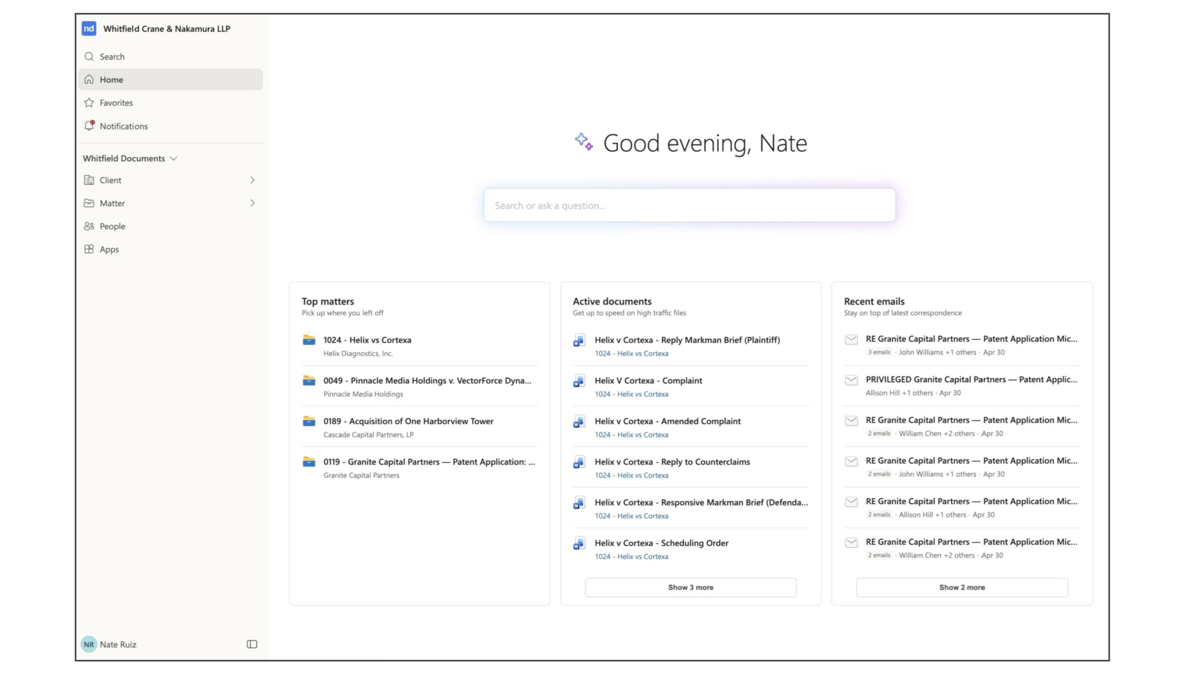
NetDocuments Unveils Legal Context Graph to Map Legal Knowledge, Alongside A ‘Reimagined’ Platform
NetDocuments unveiled its Legal Context Graph, a proprietary knowledge infrastructure that continuously maps relationships among documents, matters, communications, and people while preserving permissions. The company also launched a redesigned, “reimagined” platform featuring AI‑generated matter overviews, SmartSearch, and automatic version‑history summaries....

EDig365 Aims To Gives Legal Teams Reporting and Visibility Within Microsoft Purview E-Discovery
eDig365 debuted at the CLOC Global Institute in Chicago, delivering a reporting and observability layer that sits atop Microsoft Purview eDiscovery. The solution provides legal operations teams with real‑time dashboards, case metrics, hold status, and data‑volume insights. Built to fill...

Claude Changed. The May 2026 Way to Use It
Anthropic unveiled Claude for Financial Services and Claude for Legal in May 2026, extending its AI assistant into industry‑specific stacks. The new Claude is no longer a single chat interface; it offers modular tools—Chat, Projects, Artifacts, Cowork, Code, and Microsoft...
Anthropic Is Building a Legal Tech Ecosystem in Claude. Can Companies Adapt?
Anthropic is expanding its Claude platform into a full‑stack legal tech ecosystem, offering AI‑driven contract analysis, compliance monitoring, and litigation support tools. The company has secured pilot partnerships with three leading law firms and opened a public API priced at...
Claude for Legal: What the Industry Needs to Know
Anthropic unveiled Claude for Legal, a foundation‑model AI tailored for law firms and corporate legal departments. The service provides secure, on‑premise deployment, jurisdiction‑aware reasoning, and citation verification, and is priced at $0.12 per 1,000 tokens. By offering native integrations with...

Are Legal Tech AI Acquisitions Masking an Architectural Problem?
Recent legal‑tech M&A, such as DocuSign’s purchase of Lexion and Workday’s acquisition of Evisort, have added AI capabilities to existing contract‑life‑cycle management (CLM) platforms. The article argues that bolting AI onto document‑centric systems creates an "AI‑led" architecture, whereas platforms built...
The Gap in Anthropic’s Legal Push May Be the Legal Practitioner’s Insight
Anthropic announced a major expansion into legal technology, unveiling more than 20 new MCP connectors that link its Claude AI to the software platforms lawyers rely on, alongside 12 practice‑area specific plugins. The company also struck partnerships with the Free...
Claude For Legal Launches, May Reshape the Legal Tech World
Anthropic has launched Claude for Legal, a dedicated AI platform targeting in‑house legal teams and law firms. The offering bundles practice‑area plugins, connectors to major legal‑tech tools, and an open‑source ecosystem with partners such as Harvey and Legora. Early adopters...
Anthropic Goes All-In on Legal, Releasing More Than 20 Connectors and 12 Practice-Area Plugins for Claude
Anthropic announced a major expansion into the legal market, releasing over twenty new MCP connectors that integrate its Claude AI model with the software law firms and corporate legal departments use. The rollout also includes twelve practice‑area plugins covering litigation,...

Aderant Rolls Out Agent Center at Momentum as Part of Stridyn Platform Expansion
At its Momentum Global 2026 conference, Aderant unveiled the Agent Center, an AI‑driven suite built on its Stridyn platform and powered by the MADDI assistant. The initial release includes three agents that automate collections, handle billing appeals, and consolidate talent‑evaluation...

Eudia Assembles Unified Workspace, Inc. Digital Twins +
Eudia, the Palo Alto‑based legal‑AI provider, has rolled out a unified workspace that consolidates its specialized agents—Argument Analysis, Case Analysis, PII Redaction—and its Expert Digital Twins into a single interface. The Digital Twins model senior lawyers’ decision pathways, delivering expert...
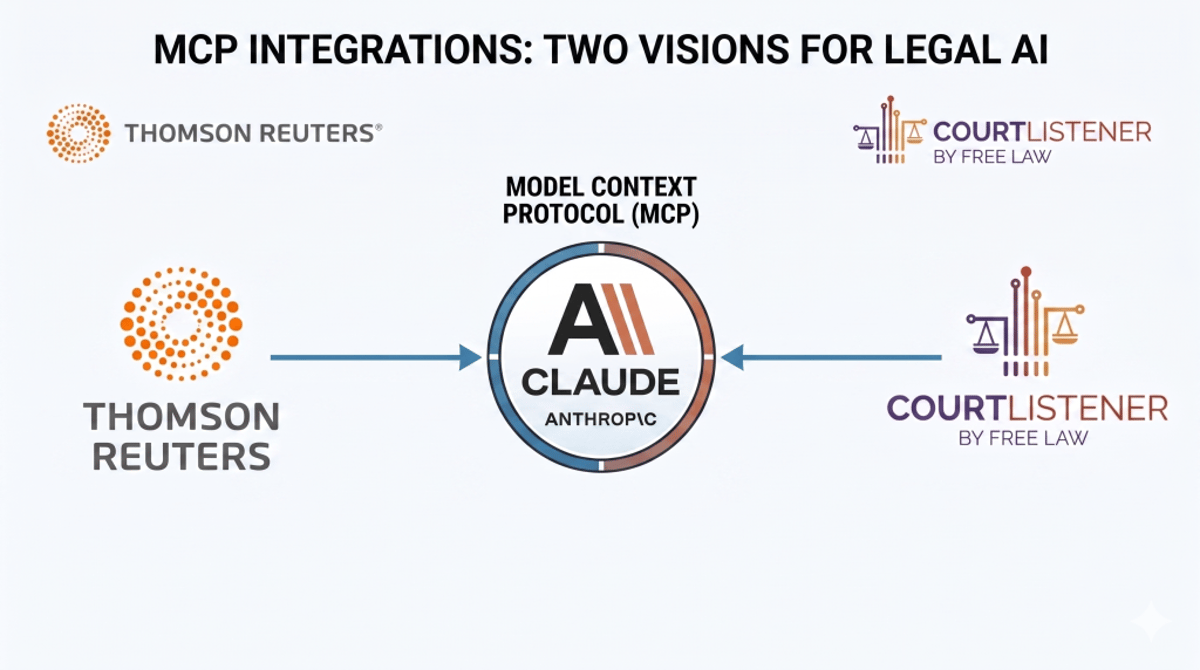
Two Legal Research Providers Launch MCP Integrations with Claude: Thomson Reuters and Free Law Project Connect Their Data to AI
Thomson Reuters and the Free Law Project announced today that their legal research platforms, Westlaw and CourtListener, are now integrated with Anthropic’s Claude via the Model Context Protocol (MCP). The integration lets Claude retrieve and cite primary source documents directly...

The Inside View: Beyond the Hype – GenAI in Legal Practice
Legal IT Insider’s podcast features Travers Smith CTO Olly Bethell discussing the practical impact of generative AI on law firms. He outlines the firm’s current tech stack, its hybrid "buy or build" strategy, and how GenAI is reshaping legal workflows beyond the...

The Real Reasons Your Lawyers Don’t Trust AI – And What to Do About It
Law firms are wary of generative AI because its outputs often lack the matter‑specific context needed for reliable legal work. A SurePoint survey shows 80 % of midsize firms fear AI unreliability, not job loss. Fragmented point solutions force attorneys to...
OpenAI Launches ‘Deployment Company’ – Will It Impact Legal Tech?
OpenAI announced the creation of an OpenAI Deployment Company, acquiring consulting firm Tomoro and assembling a team of Forward Deployed Engineers to embed its models directly into large enterprises. Backed by investors such as Bain Capital, Goldman Sachs, SoftBank, Warburg...

The Predictive Path of Justice: Can Prediction Markets Solve the Arbitration Efficiency Crisis?
International arbitration is grappling with soaring costs and multi‑year timelines, prompting calls for innovative efficiency solutions. Experts propose using prediction markets—financial platforms that aggregate expert judgments through price signals—to price dispute outcomes and accelerate settlements. By allowing vetted lawyers, retired...

“The AI Conversation Is Turning Into a Data Conversation”: Elite Vantage Puts Data Strategy Centre Stage
Elite Vantage, the flagship conference of Elite Vantage after its spin‑out from Thomson Reuters, highlighted the firm’s shift from AI hype to concrete data strategy. Chief product officer Elisabet Hardy noted that top law firms such as Kirkland & Ellis...
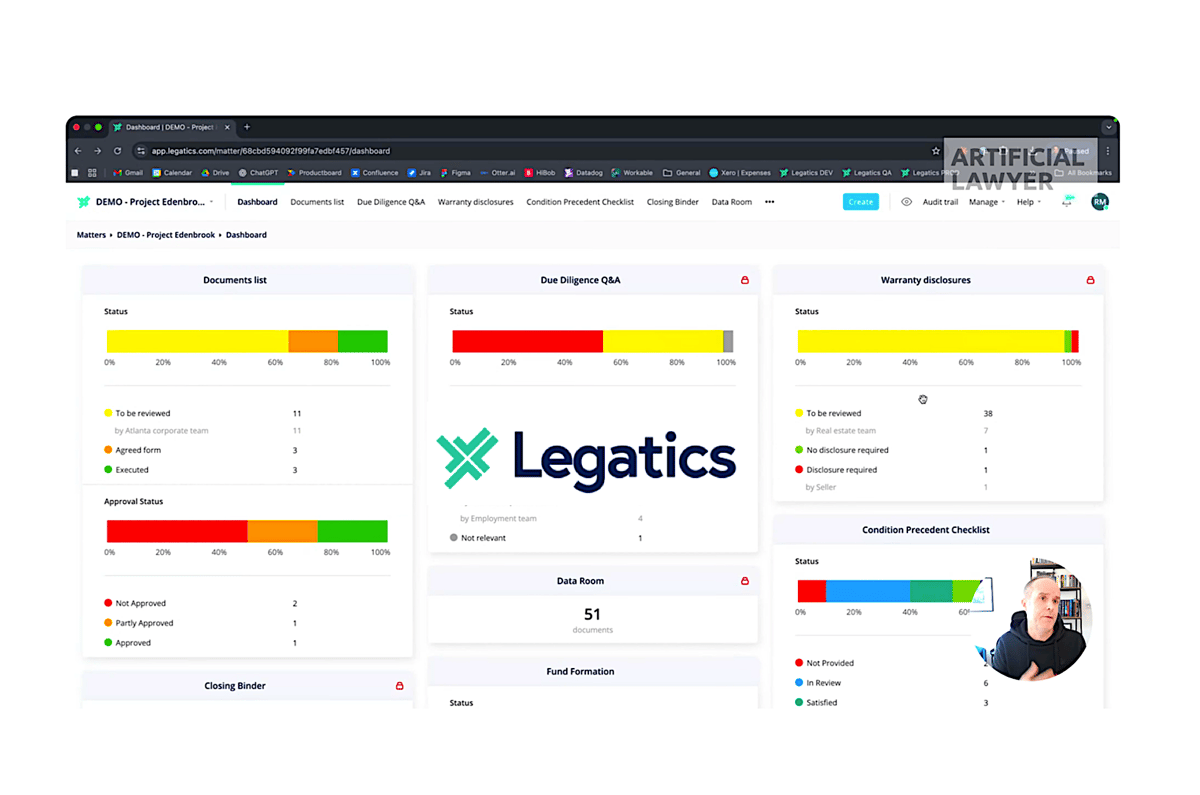
Product Walk Through: Legatics – Transaction Management
Legatics showcased a suite of new features on its AL TV Product Walk‑Through, highlighting an end‑to‑end Transaction Operating System (TransactionOS). The platform now supports collaborative checklists, automated signing workflows, instant closing binders, and built‑in secure data rooms. A standout addition is...

Legal AI’s Next Act Is In-House Productivity
Investors are pouring money into legal AI, but the next breakthrough will come from corporate legal departments, not law firms. Law firms’ billable‑hour model penalizes productivity gains, whereas in‑house teams reap capacity and cost benefits when AI shortens tasks. LegalOn’s...

Webinar: Third-Party Risk Management 2.0: Technology, Enforcement, and Emerging Risks
Volkov Law Group is hosting a live webinar on June 9, 2026 at 12 Noon EST to discuss the evolution of third‑party risk management (TPRM) amid heightened sanctions, cyber threats, and supply‑chain instability. The session will outline how firms must shift from static...
![[Sponsor] Drata](https://hixhlmpcokxhartfkpyi.supabase.co/storage/v1/object/public/images/thumbnails/53aafe558a60fe3a33da171d61fab781.webp)
[Sponsor] Drata
Drata is a compliance‑automation platform that connects to over 130 SaaS tools, enabling continuous evidence collection for more than 25 regulatory frameworks such as SOC 2, HIPAA, PCI and GDPR. The solution provides a library of 40+ auditor‑approved security policies that...
IManage Playbook Analysis Strengthens AI Contract Strategy
iManage has launched a new "playbook analysis" feature that extends its Ask iManage AI platform into structured contract review. The tool leverages an organization’s existing playbooks to deliver instant risk assessments across every agreement, aiming to automate the manual, knowledge‑intensive...
Your DMS Has a New Job: From Document Store to Intelligence Layer
NetDocuments is redefining its document management system (DMS) from a passive repository to an AI‑powered intelligence layer. At a recent ILTA roundtable, legal knowledge‑management leaders highlighted that lawyers now expect search tools to deliver context‑aware, predictive results rather than simple...
Docusign Enhances IAM Contract Platform With Agentic Features
DocuSign announced a major upgrade to its Intelligent Agreement Platform (IAM), adding an AI‑driven assistant, tools for building custom AI agents, and a suite of new integrations with enterprise software. The enhancements aim to automate clause extraction, streamline negotiations, and...
A Curious Footnote Misses the Point on Judicial Use of AI and Judge Rodriguez's AI Scholarship
U.S. Circuit Judge Edith Jones added a footnote to a Fifth Circuit decision on alleged ballot harvesting that implied Judge Rodriguez relied on artificial‑intelligence tools for his legal judgment. The footnote’s source, however, demonstrates that Rodriguez used AI responsibly for...
Clio For Word Add-In Launches in Beta
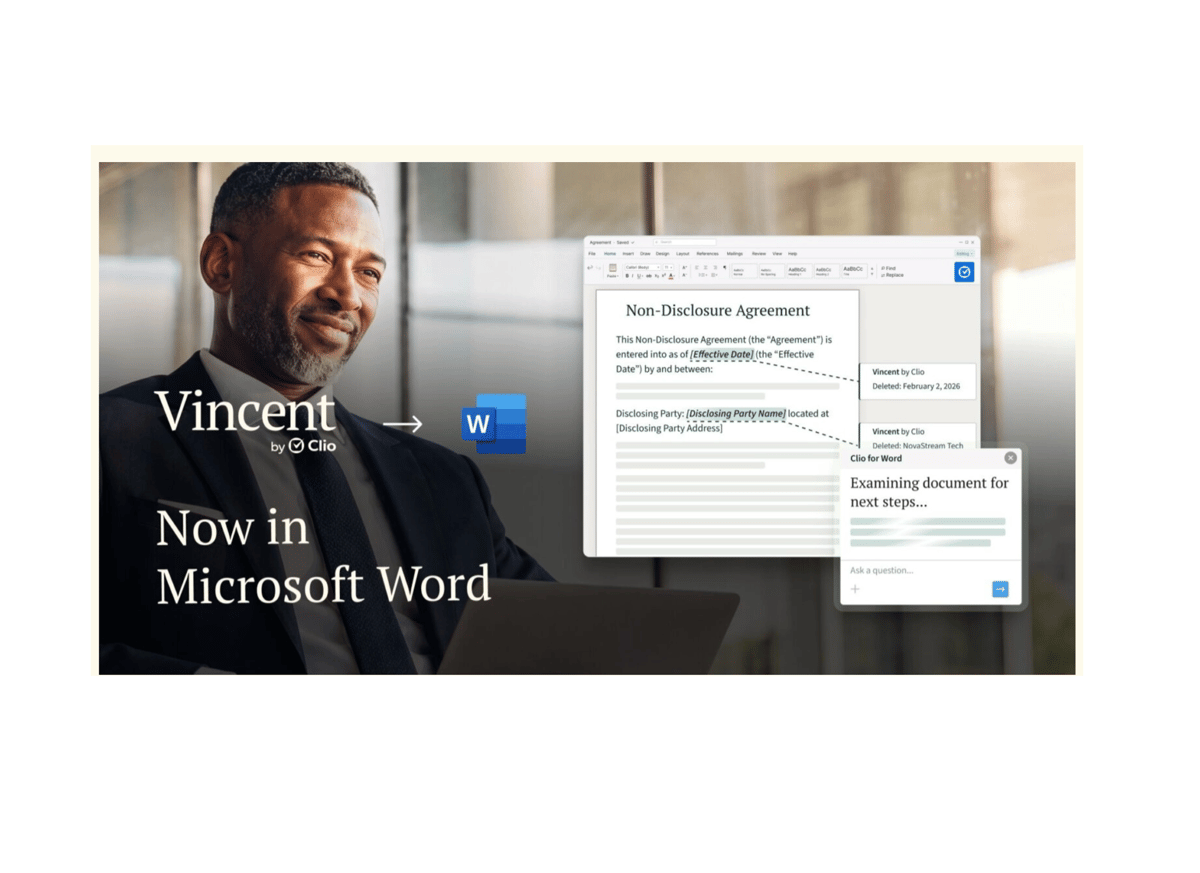
Clio has introduced Vincent, an AI‑driven legal assistant embedded in Microsoft Word via a beta add‑in. The tool generates suggestions as native Track Changes redlines, allowing lawyers to accept or reject changes within their familiar review workflow. By supporting conversational...
Linklaters Launches Applied Intelligence for Firepower “Where Off-the-Shelf Tools Can’t Deliver”
Linklaters has launched Applied Intelligence, a new unit that blends lawyers with data‑science experts to build custom AI‑enabled legal solutions. The team focuses on complex matters where generic, off‑the‑shelf tools fall short, delivering bespoke technology that can accelerate analysis and...

When AI Is In The Room
Law firms are increasingly deploying AI‑powered note‑taking tools to record meetings, attracted by speed and convenience. However, AI transcripts capture every utterance—including jokes and off‑hand remarks—making them fully discoverable and potentially breaching attorney‑client privilege if the AI is treated as...