
Emergency Preservation and Limited Forensic Collection Order Entered by Court: EDiscovery Case Law
U.S. District Judge Lewis J. Liman issued an emergency preservation and limited forensic collection order in Recoop LLC v. Outliers Inc., requiring Recoop to preserve all corporate‑ESI and suspend any auto‑deletion. The order mandates a neutral forensic vendor to conduct a read‑only, targeted acquisition of servers, cloud accounts, and custodial devices, while maintaining a chain‑of‑custody log, hash values, and encryption. A Rule 502(d) clawback provision protects privileged material, and the court retained jurisdiction to impose sanctions for non‑compliance. The ruling clarifies the scope of preservation without deciding ultimate discoverability.

Product Walk Through: ThoughtRiver – AI Contract Review
ThoughtRiver showcased its AI‑driven contract review platform in an AL TV walkthrough, highlighting how generative AI and machine learning pinpoint legal details at a granular level. The demo demonstrated a one‑click redline tool, automated triage of multiple document versions, and...

Document Management for Early-Stage and Scaling Businesses
As early‑stage companies scale, document volume and stakeholder complexity surge, turning file management into an operational risk. Centralizing contracts, HR policies, and financial records in a cloud‑based system cuts search time and safeguards compliance. Features such as version control, role‑based...

Law Librarians Have a Plan for AI. The Publishing of Legal Practitioners Is Not In It.
A white paper released in October by a coalition of senior law librarians outlines a three‑part strategy to shape AI‑driven legal research. The plan calls for a central coordinating body, comprehensive training for legal information professionals, and a shared knowledge...

Nvidia Bet on Legal AI. The Inference Logic Is What Matters.
Nvidia’s venture arm NVentures led a $50 million Series D extension for Legora, marking its first legal‑tech investment and underscoring a bet on the massive inference workload legal AI generates. The EU AI Act will be fully enforceable on August 2, prompting procurement...

How to Replace DocuSign in 30 Minutes for $5 a Month ✍️
DocuSign, a $9 billion e‑signature giant, charges $10‑$65 per user per month and adds fees for SMS, ID verification, and envelope caps, pushing a 50‑person team to $24,000‑$39,000 annually. An open‑source alternative, DocuSeal, replicates the same 13 field types and compliance...

Everlaw and Legora Announce Integration to Connect Discovery and Drafting
Everlaw and Legora have announced a technology partnership that embeds Everlaw’s document repository directly into Legora’s drafting and collaboration platform. The integration lets litigators pull relevant evidence into witness statements, deposition questions, and trial briefs without leaving Legora, preserving a...

Episode 411 — Third-Party AI Risk and Vendor Due Diligence
The *Corruption, Crime & Compliance* podcast highlights the expanding risk of third‑party AI embedded in SaaS, analytics and service platforms. Companies now face data leakage, bias, regulatory liability, and IP concerns stemming from vendors’ AI use. Host Michael Volkov recommends...

Microsoft Puts Legal Agent Inside Word, Sharpening Contract-Review Competition
Microsoft launched Legal Agent inside Word for Windows through its Frontier early‑access program, embedding clause‑by‑clause playbook review, tracked‑change redlining, and rationale comments directly in the drafting environment. The feature is limited to U.S. tenants with Microsoft 365 Copilot licenses and...

Everlaw and Legora Announce Integration to Connect Discovery and Drafting
Everlaw and Legora announced a technology partnership that integrates Everlaw’s cloud‑based e‑discovery platform with Legora’s collaborative drafting environment. The integration lets attorneys pull documents, metadata and privilege markings directly from Everlaw into Legora without manual export or re‑upload. The secure...

The Pyramid Has Already Broken
A fast‑growing U.S. law firm, Pierson Ferdinand, now runs with more than 270 partners and no junior associates, relying on AI to perform tasks traditionally done by entry‑level lawyers. The firm’s model proves that capable AI can undercut the economic...

Interviews with Our Editors: Albert Leung and Wenny Huang of the eBRAM International Online Dispute Resolution Centre
The eBRAM International Online Dispute Resolution Centre, founded in 2018 in Hong Kong, combines institutional governance with purpose‑built LawTech to deliver end‑to‑end online arbitration and mediation. Acting CEO/CTO Albert Leung and Deputy CEO Wenny Huang explain that eBRAM’s not‑for‑profit model embeds...

Court Finds AI Hallucinations in Filing by Former State Senate Candidate
The Southern District of New York magistrate sanctioned former state Senate candidate‑turned‑attorney Tricia S. Lindsay $2,500 after finding that dozens of citations in her memoranda were completely fabricated, likely generated by an AI feature in LexisNexis. The court noted her...

A Refresh of the Annotated ESI Protocol
Craig Ball has issued a substantially revised edition of The Annotated ESI Protocol, updating guidance to reflect the 2026 evidence landscape. The new version adds sections on cloud‑hosted attachments, short‑message platforms like Slack and Teams, and tiered mobile data collection....

Microsoft's Legal Agent Could Shake Up Legal Tech—If It Delivers
Microsoft announced its Legal Agent, an AI‑powered assistant embedded in Microsoft 365 Copilot, aimed at automating contract analysis, e‑discovery, and compliance tasks. The tool leverages Azure OpenAI models and is positioned for large corporate legal departments and law firms. Its...
The Provocative Abramowitz Keynote And The Computer That Won’t Come On
Zach Abramowitz warned that most generative AI (GenAI) projects fail because firms deploy the technology without truly understanding its mechanics. He framed hallucinations not as bugs but as intrinsic features that reshape how organizations should think about AI. Abramowitz urged...

The Provocative Abramowitz Keynote And The Computer That Won’t Come On
At ILTA’s Evolve conference, Zach Abramowitz warned that most law firms are mishandling generative AI. He traced failures—poor training, analysis paralysis, and hallucination panic—to a fundamental lack of understanding of how GenAI works. Abramowitz urged firms to treat hallucinations as...

A Refresh of the Annotated ESI Protocol
Legal tech veteran Craig Ball has released a comprehensive refresh of his Annotated ESI Protocol, first published in January 2023. The updated guide integrates the latest Federal Rule amendments, AI‑driven data identification methods, and cloud‑storage considerations. It also adds practical...
More Data, Fewer Resources: What 100+ Legal Professionals Say Is Holding Ediscovery Back in 2026
A new survey of more than 100 legal professionals reveals that eDiscovery is being hampered by exploding data volumes and shrinking team resources. Respondents cite a 45% year‑over‑year increase in data to process, while many firms have cut staff by...
Startups Are Pushing to Democratize Legal Research. Will They Succeed?
A wave of legal‑tech startups is attempting to democratize access to case‑law databases by offering AI‑driven research platforms at dramatically lower prices than traditional providers. These newcomers claim they can index millions of opinions faster and sell subscriptions for under...
Legaltech Rundown: Spellbook Launches iManage Integration, Norm Law Announces New Big Law Hires, and More
Spellbook, an AI‑driven contract analysis platform, launched a native integration with iManage, enabling law firms to apply generative‑AI insights directly within their document‑management environment. The partnership promises faster clause review and reduced manual effort. At the same time, boutique legal...

Market Intelligence: EDiscovery Market Growth From 2012 to 2030
The global eDiscovery market is projected to expand from $4.73 billion in 2012 to $28.08 billion by 2030, reflecting a 10.4% annual compound growth over 18 years. Software spend is accelerating, rising from roughly 30% to 39% of total spend, while services...
Associates at Law Firms With AI-Heavy Advisory Practices Feel Less Confident About Using AI Tools Themselves
Law firms that advise clients on AI technology are paradoxically seeing their own junior lawyers hesitate to use AI tools. A recent Chambers survey of 300 associates across 50 U.S. firms found that only about a third feel confident deploying...

The New Era For Legal Tech Begins
Microsoft has launched Legal Agent and Claude for Word, embedding AI‑driven contract review directly into the Microsoft 365 suite. Estimates from large‑lawyer language models suggest 18%‑25% of big‑firm attorneys could abandon niche legal‑tech tools for the new offering. Smaller firms...
Agentic Systems Add New Layer of AI Hallucination Risk in Legal Work
Law.com reports that emerging agentic AI systems—software that can act autonomously—are introducing a new class of hallucination risk in legal work. Unlike traditional generative models that require user prompts, agentic tools can initiate tasks, retrieve data, and draft contracts, increasing...
Microsoft Launches Legal Agent in Word
Microsoft announced a new Legal Agent feature built into Word, extending its Copilot AI suite to the legal workflow. The tool can analyze documents, draft edits, and review contracts while automatically tracking changes and verifying suggestions. By embedding the assistant...
LexisNexis Owner RELX Announces Plans to Acquire Legal Tech Company Doctrine
RELX, the parent of LexisNexis, announced plans to acquire Doctrine, a fast‑growing legal‑tech platform. The deal, still subject to regulatory approval, would integrate Doctrine’s AI‑driven research tools into RELX’s European legal‑intelligence suite. By adding Doctrine’s cloud‑based workflow and analytics, RELX...

Definely Launches MCP and Says “Don’t Ask AI to Check Itself”
Definely, a contract‑technology provider serving firms such as A&O Shearman and KPMG, introduced its Model Context Protocol (MCP) on April 30, 2026. The MCP lets lawyers invoke Definely’s structured review tools from enterprise AI platforms, delivering deterministic, auditable analyses of AI‑generated contracts. By...

Microsoft Launches Its Own Legal Agent For Word
Microsoft unveiled a dedicated Legal Agent for Word, targeting the legal‑tech market with a tool built by the team that came from Robin AI. The agent follows structured, audit‑ready workflows to generate clause‑by‑clause redlines, cite source language, and enforce internal playbooks...

Phil Favro, HaystackID: Getting Beyond Spreadsheets: Handling Structured Data Productions
The eDiscovery landscape is moving from a document‑centric view to treating electronic‑stored information (ESI) as structured data. Courts are increasingly ordering parties to produce relevant database content, such as relational tables, dashboards, and data‑warehouse extracts, rather than allowing avoidance through...

Hanzo: Why Contextual Search Matters in Modern eDiscovery Workflows
Contextual search is reshaping eDiscovery by connecting emails, chats, documents, and collaboration data rather than relying on isolated keywords. Traditional keyword‑based methods flood review teams with irrelevant hits, extending review cycles and increasing the risk of missed critical information. Hanzo’s...

David Pemberton, Everlaw: Digital Spoliation of Evidence: Risks, Rules, and Prevention
Digital spoliation—loss, alteration, or destruction of electronically stored information after a preservation duty—poses a major risk in modern litigation. Everlaw’s David Pemberton stresses that robust eDiscovery strategies must embed technical safeguards and clear legal‑hold procedures to avoid severe court sanctions....

Reveal: Legal Tech in the Public Sector: A Story of Transformation and Innovation
The Reveal report highlights how U.S. government legal departments are grappling with exploding electronic data volumes, heightened regulatory oversight, and aging IT infrastructure. A 2023 GAO study notes agencies struggle with records management and litigation readiness as staff mobility rises....

Carly Savar: Reliable by Design: What In-House Counsel Really Need From Legal Tech Partners
Carly Savar’s article argues that modern in‑house counsel must treat legal‑tech partners as extensions of their service team, not just vendors. The shift from a back‑office risk filter to a front‑line business ally demands rapid, reliable contract reviews and other...

Nathan Damweber: From Casebook to Copilot: Bridging Law’s AI Readiness Gap
Nathan Damweber highlights a widening gap between law schools’ curricula and the AI tools now integral to legal practice. He notes that most new associates can master substantive law but lack formal training to evaluate generative‑AI outputs. Interviews with 1L...

Cara Peterman, Courtney Quirós, and Charlotte Bohn: Can Opposing Parties See Your AI Prompts? Discovery Challenges in the AI Era
The article warns that generative AI tools used by employees to draft discovery responses can create discoverable evidence, including prompts, inputs, and outputs. In‑house counsel may unknowingly rely on external AI platforms, exposing internal strategies and data. Courts are beginning...

India’s Legal Tech Market: Homegrown Ambition and Global Inroads
India’s legal tech ecosystem is rapidly expanding, with roughly 1,000 home‑grown startups, second only to the United States. Leading Indian firms such as Trilegal and Cyril Amarchand Mangaldas are piloting domestic AI platforms like Lucio and Jurisphere, while also adopting...

Should Companies Be Using AI to Draft Their Proxy? An Example to Scare You
The article warns that relying on large‑language‑model AI to draft proxy statements can produce generic, boilerplate language that lacks company‑specific facts. It contrasts an AI‑generated CD&A paragraph with a human‑crafted version, highlighting differences in specificity, performance linkage, and strategic nuance....

Magic Circle Firm Slaughter and May Adopts Harvey
Slaughter & May has announced a firm‑wide rollout of the Harvey AI platform, extending its use to all practice areas including M&A, due diligence, regulatory research and document analysis. The Magic Circle firm highlighted Harvey’s agentic capabilities, security features and proven track...
Slaughter and May Goes Firmwide with Harvey
Slaughter & May announced a firm‑wide rollout of Harvey, the firm’s chosen enterprise legal‑AI platform. The deployment will replace a patchwork of legacy tools with a single, cloud‑based solution for contract review, litigation research and regulatory compliance. Harvey’s machine‑learning models have...

CloudLex Introduces the First ‘Personal Injury Ecosystem’
CloudLex launched the first Personal Injury Ecosystem, merging its case‑management platform, Lexee AI, paralegal services, and the Voices of PI community into a single, unified system. The integrated solution eliminates the need for separate logins and data transfers by keeping...
The Opposition’s Playbook: How to Assess Opposing Counsel Using Legal Data
The Trellis blog explains how lawyers can predict case trajectories by analyzing the behavior of opposing counsel rather than relying on stated arguments. By mining litigation data—such as filing patterns, motion histories, and settlement outcomes—practitioners can uncover an opponent’s strategic...
LegalOn Launches AI-Powered Contract Intelligence Tool Vault
LegalOn unveiled Vault, an AI‑powered contract intelligence platform that plugs into its existing suite. The tool automatically extracts key data from both new and historical contracts, then monitors renewal dates, obligations, and risk indicators. By delivering real‑time analytics, Vault aims...
Legaltech Connect: How Paul Weiss, Dell Evaluate AI
At Legaltech Connect’s research and innovation conference, senior leaders from Paul Weiss and Dell Technologies outlined how they assess artificial‑intelligence solutions for legal work. Both firms described a multi‑stage evaluation framework that balances technical performance, data security, ethical risk, and...

Episode 410 — Building a Best-in-Class AI Use Policy
In the latest Corruption, Crime & Compliance podcast, Michael Volkov outlines how firms can craft a best‑in‑class AI Use Policy to mitigate emerging AI risks. He argues that traditional governance models are inadequate for AI’s rapid deployment across functions. Volkov...
How Law Librarians Are Taming the AI Landscape
Law librarians and legal information professionals are confronting the rapid rise of generative AI by establishing governance frameworks, curating trustworthy prompts, and integrating AI tools into research workflows. The co‑authored blog outlines practical steps such as developing AI usage policies,...

Claude For Word Is Weak, Suggests Ivo
Ivo, a contract‑intelligence platform, ran an independent benchmark comparing its AI, Claude for Word (Opus 4.6) and a human attorney on 19 real contracts. The human scored 4.56, Ivo 4.52, and Claude 3.50 out of 10, showing the purpose‑built tool nearly...

Scaling Europe Top 50 Picks 4 Legal AI Companies
The Scaling Europe Top 50 ranking highlighted four legal‑AI startups—Legora, Wordsmith, Curvestone and LawHive—among Europe’s fastest‑growing companies, with Lovable taking the overall lead. The list emphasizes year‑on‑year revenue growth from 2024 to 2025 as its core metric, supplemented by absolute revenue,...

LegalOn Goes ‘CLM-Ish’ With Contract Vault
LegalOn has rolled out its Vault product in the United States and Europe, adding to its earlier launch in Japan. Vault uses AI to automatically extract both standard and custom contract fields and lets legal teams query agreements in plain...
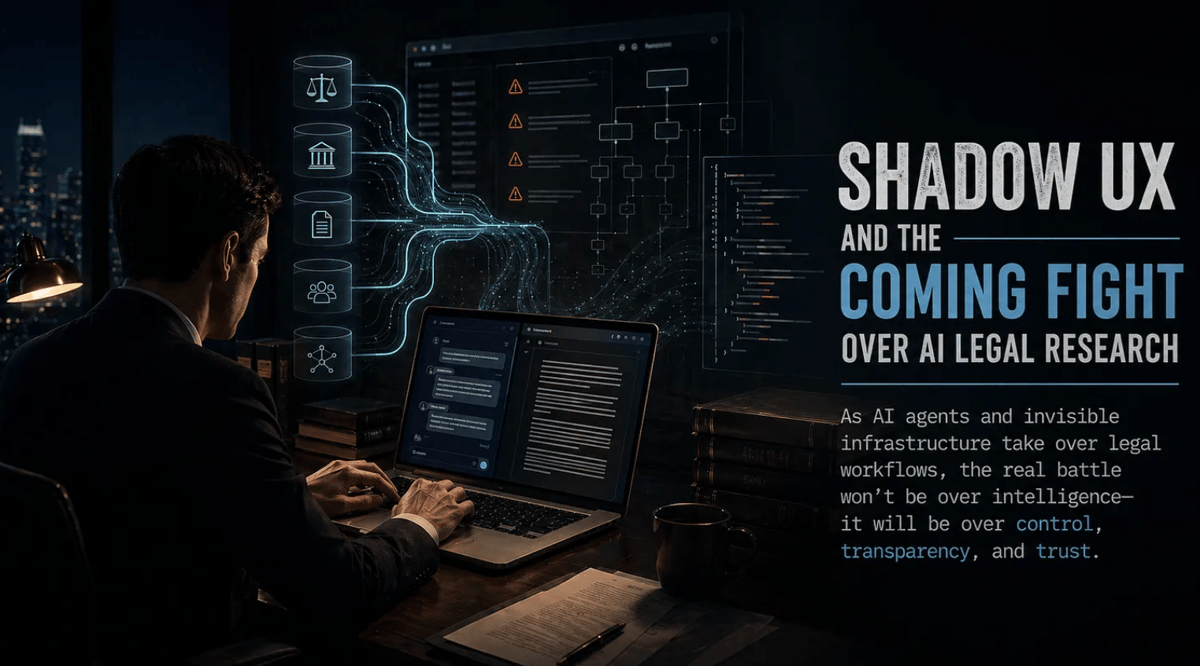
Shadow UX and the Upcoming Fight over Legal Research
Law firms are increasingly using AI chat interfaces to draft research memos, bypassing traditional platforms like Westlaw and LexisNexis. This "Shadow UX" layer, powered by large language models and the Model Context Protocol (MCP), consumes vendor data without displaying the...