
Soren Launches To Deliver ‘Private AI’
AI startup Soren, backed by Y Combinator, has launched a ‘private AI’ platform that deploys generative models on a client’s own infrastructure and fine‑tunes them on internal data. The service targets regulated industries such as law firms and banks, ensuring that models, data, and compute stay within the organization’s perimeter. Soren also builds custom automations, handles deployment and ongoing operations, and aligns with compliance frameworks like HIPAA, SOC 2, GLBA and ISO 27001. Early pilot partners report hours saved on high‑stakes workflows.

How Coding Agents Become Legal Tech Allies
Vesence’s coding agents let lawyers describe a task in plain English and receive a custom script that manipulates PDFs, Excel files, Word documents, and Outlook emails on the spot. The agent runs in a sandboxed bash environment, writes code, executes...

Is AI Actually Making Your Legal Team Faster?
Legal AI tools dramatically cut drafting time, but firms often overlook where the saved minutes go. Junior lawyers can produce a first draft in minutes, yet partners spend extra hours verifying output and reconciling data across fragmented systems. Most firms...

Firm Leaders 'Determined' To Train Attorneys to Avoid Using AI-Produced Mistakes
Law firms are rolling out comprehensive training programs to ensure attorneys recognize and avoid errors generated by artificial‑intelligence tools. Partners like Robert Hays of King & Spalding say clients demand AI adoption, but only if it is used responsibly and...
Legaltech Connect: How Baker & Hostetler, Eversheds Prepare Staff for AI Adoption
Law firms Baker & Hostetler and Eversheds Sutherland are actively preparing their attorneys and support personnel for generative AI integration. They have rolled out firm‑wide training programs, pilot projects in contract analysis, and dedicated ethics oversight bodies. The initiatives aim...
Manifest OS Raises $60m Series A to Build AI-Native Law Firm Model
Manifest OS, a New York‑based legal‑tech startup, closed a $60 million Series A round at a $750 million valuation, backed by Menlo Ventures, Kleiner Perkins, First Round Capital and Quiet Capital. The funding will fuel the development of an AI‑native law firm model...

Manifest OS Raises $60m Series A to Build AI-Native Law Firm Model
New York‑based startup Manifest OS closed a $60 million Series A round, valuing the company at $750 million. Backed by Menlo Ventures, Kleiner Perkins, First Round Capital and Quiet Capital, the funding will fuel its AI‑native law‑firm model that offers fixed‑fee and outcomes‑based...
The AI Governance Risk Hiding in Plain Sight
Elizabeth Suehr, director at Jenner & Block, warns that AI initiatives often overlook a critical governance blind spot unrelated to technology itself. While firms discuss data security, vendor dependence, and compliance, they frequently neglect oversight of decision‑making frameworks and accountability...

X Stop Guessing. Start Deciding with Precision.
Legal teams are adopting AI platforms that can review contracts in minutes, but the tools stop at flagging issues without prescribing actions. Recent RFPs and procurement failures reveal a missing “judgment layer” that defines who decides on high‑risk clauses and...

JT/DL: Justice AI Regs; FBI Gets Encrypted Texts
The latest JT/DL newsletter highlights a surge in AI oversight for criminal justice, with Brookings urging state regulation and Florida launching a criminal probe into OpenAI after its chatbot was linked to a campus shooting. A new Colorado bill targets...

Cyber Law Toolkit Tests Surveillance and Data Collection Under Occupation
The Cyber Law Toolkit released Scenario 35, “Data collection in occupied territory,” in its September 2025 update. The scenario examines three cyber operations—rerouting internet traffic, mass surveillance, and systematic population‑data collection—in occupied regions under international humanitarian and human‑rights law. Developed by...

AI Is Not a Substitute for Good Lawyering, Says Court: EDiscovery Case Law
In White v. Walmart, an Indiana magistrate judge held that artificial intelligence cannot replace the independent judgment of attorneys in discovery disputes. The plaintiff’s counsel relied on an AI‑generated list of alleged deficiencies without conducting its own legal analysis, prompting...

Future-Proofing Global Compliance Policies
Compliance leaders must abandon static, document‑first policies and adopt a data‑first, living compliance system that embeds rules directly into the tools employees use. Rapid AI adoption and a patchwork of U.S., EU and state privacy and AI regulations have made...

Multilingual Legal AI Requires Data, Not Just Better Models
Multilingual legal AI struggles not from model weakness but from a shortage of structured, jurisdiction‑specific data. Michael Krallmann of TransLegal argues that accurate cross‑border legal AI requires curated datasets that map legal concepts across systems, rather than relying on larger...
AI Readiness Starts with Your Accounting Firm’s Document Environment
Accounting firms can only unlock AI’s true value when their document environment is organized and governed. Scattered engagement data across disparate systems prevents AI from delivering firm‑specific insights, limiting decision‑making. Private‑equity buyers now score document management quality during due diligence,...

Product Walk Through: Opus 2 – AI Insights + Case Management
Opus 2 has integrated Uncover’s generative AI into its case‑management platform, launching a suite of tools called Matter Assist, Document Assist and General Assist. The new features enable AI‑driven, case‑wide search, evidence identification, and automated cross‑examination outlines. By blending structured case...

I Tested Claude for Word on Some Classic Litigator Tasks
Anthropic’s Claude for Word, a new beta add‑in for Microsoft Word, lets paid subscribers run the AI directly inside documents, offering tracked‑change edits, comments, and conversational assistance. The tool operates in a sandbox with no open‑web browsing, but can connect...

Apple Sends a “Signal” To Law Enforcement: EDiscovery Trends
Apple disclosed and patched a logging flaw that caused iOS devices to retain push‑notification snippets of Signal messages for up to a month, even after the messages disappeared or the app was removed. The retained data allowed the FBI to...
From Casebook to Copilot: Bridging Law's AI Readiness Gap
Law schools are falling behind on artificial‑intelligence training, creating a widening gap between academic curricula and the expectations of modern law firms. A recent survey shows fewer than 10% of law‑school courses now cover generative AI, while 65% of firm...

Clio Launches EDGAR-Based Corporate Research Tool
Clio has added a new EDGAR‑based research feature to its Vincent AI platform, letting lawyers query more than three decades of SEC corporate filings with natural‑language prompts. The tool returns structured, source‑grounded answers in seconds, surfacing risk factors, financial metrics...

The Legal Tech Giants Powering ICE, Part 1 — How Thomson Reuters and LexisNexis Helped Support America’s Immigration Surveillance Machine
Legal‑tech powerhouses Thomson Reuters and LexisNexis have sold ICE extensive data‑aggregation tools, CLEAR and Accurint, under contracts totaling roughly $51.6 million. Between 2003 and 2024 the Department of Homeland Security paid over $333 million to these firms for surveillance‑grade databases that compile...

Questel Launches QaECTER, a New AI Model Claiming State-of-the-Art Performance in Patent Search
Questel has unveiled QaECTER, an AI model built for semantic patent retrieval that claims state‑of‑the‑art performance. The model, trained with citation‑driven supervision and multi‑view self‑alignment on Questel’s proprietary data, outperforms larger competing systems across all query types, technology domains, and...
Questel Launches QaECTER, a New AI Model Claiming State-of-the-Art Performance in Patent Search
Questel has unveiled QaECTER, an AI model built for semantic patent retrieval that claims state‑of‑the‑art accuracy across every query type, technology domain and jurisdiction tested. The model leverages novel citation‑driven supervision and multi‑view self‑alignment on Questel’s proprietary patent corpus. To...

Adversaries You Might Meet Negotiating an AI-Friendly ESI Protocol: Artificial Intelligence Trends
The article identifies a "Willing Collaborator" as a key adversary in negotiations over AI‑friendly ESI protocols. This party is cooperative, curious, and already using generative AI, seeking clear, defensible validation workflows that can be explained to a judge. The piece...

OpenClaw Reveals Hidden Security Risks of Agentic AI
OpenClaw, an open‑source platform that lets AI agents share system access, was exposed as a major security liability. A February report identified nearly 43,000 public control panels in 82 countries and a mis‑configured database leaking 1.5 million authentication tokens and 35,000...
Anthropic’s AI Agent-to-Agent Marketplace Experiment: The Legal Frameworks Don’t Exist
Anthropic unveiled Project Deal, a prototype marketplace where autonomous AI agents negotiate, sign, and execute contracts on behalf of users. The experiment demonstrated that agents can draft agreements, verify counterparties, and fulfill obligations without human intervention. However, the trial exposed...

Where Legal AI Becomes Legal Work
LexisNexis South Africa unveiled Protégé™ Workflows in March 2026 as part of the global Lexis+® with Protégé™ platform. The solution embeds AI directly into structured legal workflows, aiming to replace fragmented tools with a single, end‑to‑end environment. By integrating content, validation...

Questel Launches QaECTER, a New AI Model Claiming State-of-the-Art Performance in Patent Search
Questel, the Paris‑based intellectual property software provider, unveiled QaECTER, a new AI model tailored for semantic patent retrieval. The company claims QaECTER delivers state‑of‑the‑art performance, beating larger competing systems across every query type, technology sector and jurisdiction tested. Built on...
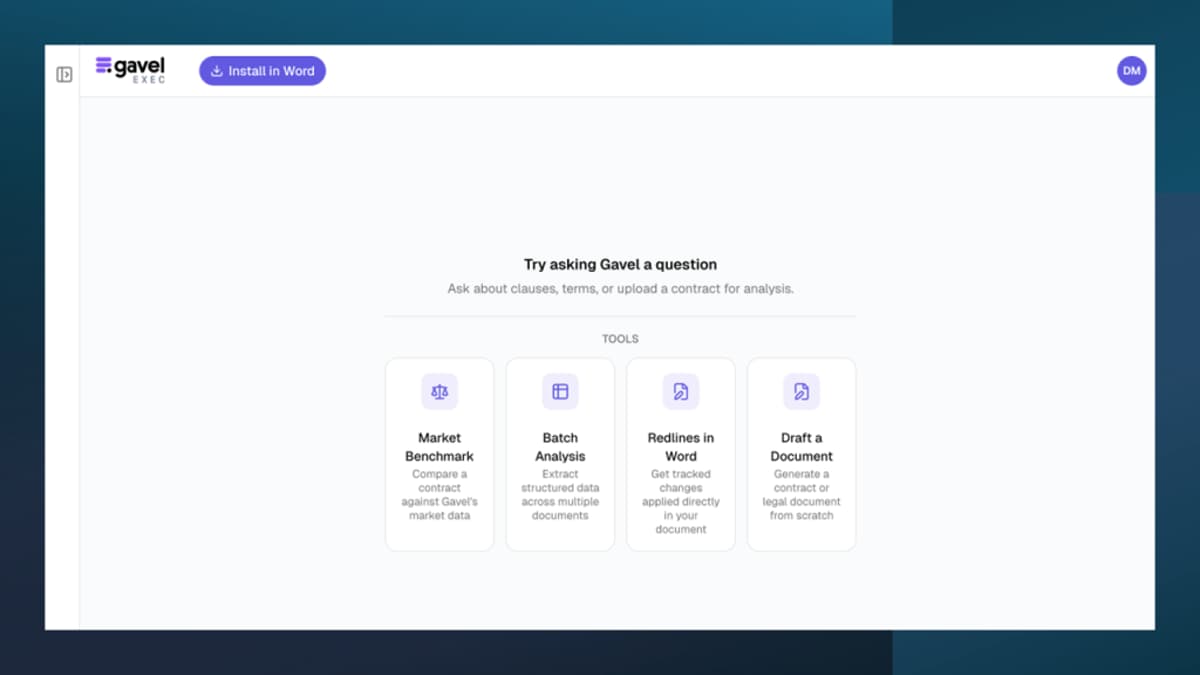
Gavel Launches Web-Based AI Contract Platform, Expanding ‘Gavel Exec’ Beyond Its Word Add-In
Los Angeles‑based legal AI firm Gavel announced Gavel Exec for Web, a browser‑based version of its AI contract review and drafting solution that previously existed only as a Microsoft Word add‑in. The new platform lets lawyers chat with a purpose‑built...
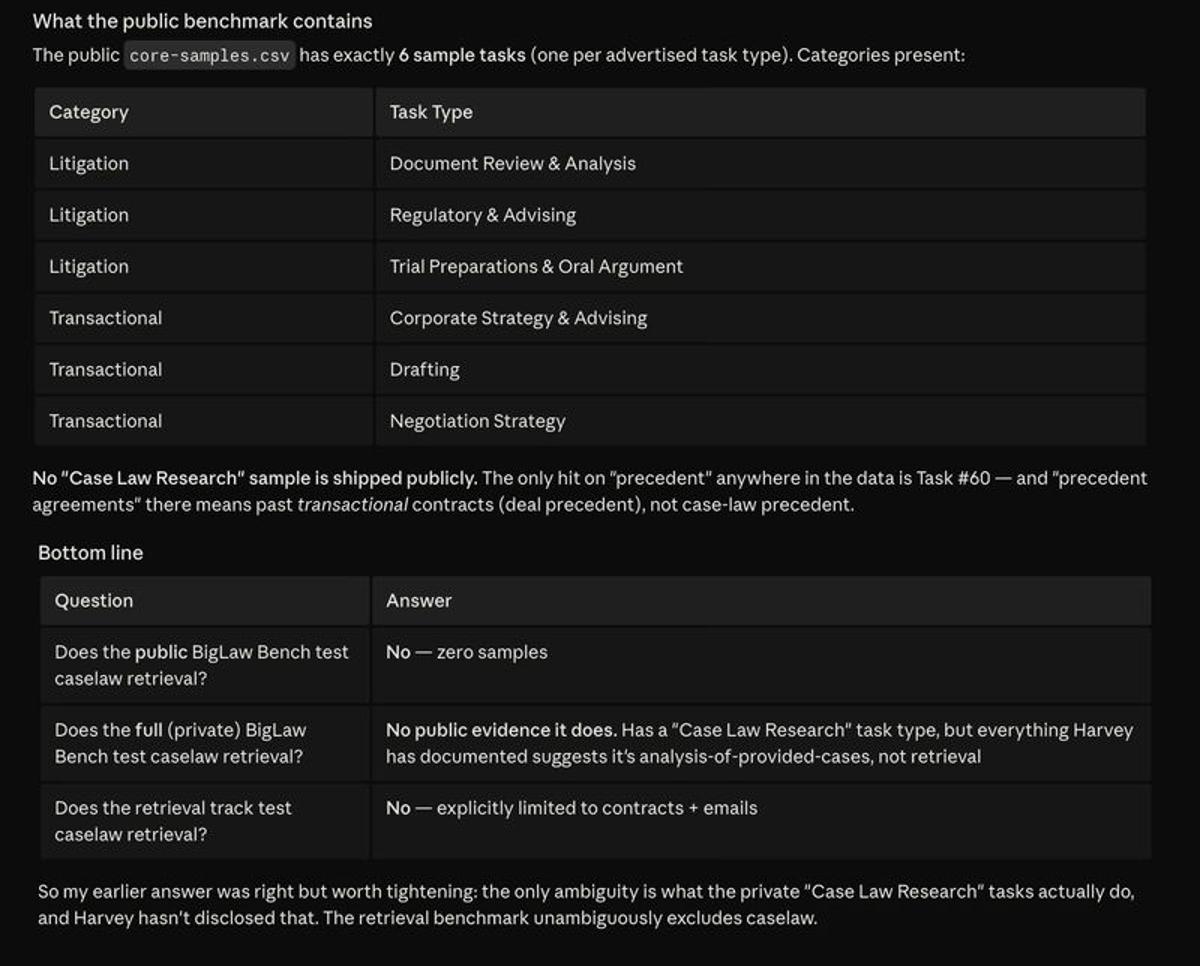
You Do Know Harvey's BigLaw Bench Does Not Actually Test Case Law Research, Right?
The post questions the widely‑circulated claim that GPT‑5.5 excels at legal research, specifically the core task of locating case law and statutes across the world’s 193 jurisdictions. Despite media praise, users have not seen verifiable snapshots or benchmarks confirming the...

Five Great Reads on Cyber, Data, and Legal Discovery for April 2026
The April 2026 Five Great Reads newsletter spotlights five pivotal developments shaping cyber, data, and eDiscovery. Andrew Haslam’s 14‑year eDisclosure Systems Buyers Guide adds eight new articles and over 200 supplier listings, underscoring practitioner‑led stewardship amid market consolidation and AI...

Judging AI
Senior High Court judge Sir Colin Birss outlined four ways UK judges now use secure AI, including spotting inconsistencies, anonymising judgments, generating transcripts, and handling administrative tasks. All judges in England and Wales have access to a secure Microsoft Copilot,...

Major Law Firms Are Warning Clients: Anything You Type Into an AI Chatbot Can Be Used Against You in Court…
Major U.S. law firms are cautioning clients that any text entered into AI chatbots such as Claude or ChatGPT can be subpoenaed and used in criminal or civil proceedings. The warning follows a New York federal judge’s ruling that a...

Claude Legal Is Here, and It’s Worth a Closer Look
Anthropic has launched the Claude Legal plugin, embedded in the Claude Cowork desktop application. The AI‑powered tool lets lawyers automate document review and contract drafting without purchasing a separate legal‑software subscription. It draws on Claude’s large‑language‑model to parse legal language,...

Hallucinations” By West & Lexis AI?
Michael Berman’s LLRX article examines AI legal research platforms such as Westlaw and LexisNexis that use retrieval‑augmented generation (RAG) and the rising risk of hallucinated answers. He critiques current benchmarking practices for overlooking factual accuracy and argues that verification is...

Hyper TPRM: Rethinking Third-Party Risk for Scale, Speed, and Confidence
Third‑party risk management (TPRM) is straining under exploding vendor ecosystems and fragmented risk signals. A new framework called Hyper TPRM replaces questionnaire‑driven reviews with data‑first intelligence, AI‑accelerated assessments, and community‑validated data. The model delivers continuous, risk‑based monitoring while retaining human...
Legaltech Rundown: Thomson Reuters Announces CoCounsel Legal in Beta, Norm Law Hires Sidley Partner, and More
Thomson Reuters unveiled CoCounsel Legal in beta, an AI‑powered platform that augments contract drafting and integrates directly with Westlaw research tools. The launch follows a wave of investment in legal‑tech solutions that promise to cut billable hours. Meanwhile, boutique firm...
Legal Tech Advisory Stella Legal Combines Operations With Legal Service Provider CSB-SBS
Legal tech advisory firm Stella Legal has merged operations with legal service provider CSB‑SBS, creating a unified platform that offers AI consulting, managed document review, and legal‑operations advisory. The two firms will pool resources, technology stacks, and client pipelines to...

The Router on the Shelf Is Now a National Security Problem
A twelve‑agency joint advisory released on April 23 warns that China‑linked groups are weaponizing compromised home and small‑office routers, IoT gear, and smart devices at industrial scale. The advisory, co‑authored by CISA, the FBI, the DoD Cyber Crime Center and...
Hallucinations” By West & Lexis AI?
A Stanford‑Yale study published in 2025 examined hallucination rates in leading legal AI tools, finding that Lexis+ AI hallucinated 17‑33% of the time while Westlaw’s AI‑Assisted Research hallucinated roughly one‑third of its answers. The research highlighted substantial variability in accuracy, with...

GRC News Roundup: Aravo, RAMPxchange, BYU Law & More
The GRC sector saw a wave of AI‑driven product launches, with Aravo unveiling Aravo AI for third‑party risk, Diligent adding an AI Board Member assistant for directors, Serrala deploying AI agents for finance automation, and Thrive introducing managed Abacode Compliance...

Expanding the Frontier of Legal Agentic Work: GPT-5.5 Support in Clio Work and Vincent
Clio announced that every Clio Work and Vincent user will be upgraded to OpenAI’s new GPT‑5.5 model. In internal testing the model achieved an 87.2% benchmark score, outpacing GPT‑5.4 and other frontier models. The upgrade delivers roughly 20% better citation...

It Happened. ChatGPT 5.5 Is Out. We Tested It for Finance
OpenAI unveiled ChatGPT 5.5, and its Finance team used the model to review 24,771 K‑1 tax forms covering 71,637 pages, shaving two weeks off the processing timeline compared with the prior year. The post walks readers through a full CFO workflow...

AI-Native Law Firm Index Hits 40 Listings
The AI Firm Index, launched by Lupl co‑founder Matt Pollins, has reached 40 listed AI‑native law firms, up from 23 a year ago. These firms are built around AI‑enabled intake, pricing, delivery, and team structures, often redesigning the client journey...

Andrew Haslam’s eDisclosure Systems Buyers Guide at 14: What the 1H 2026 Update Reveals
The eDisclosure Systems Buyers Guide, now in its 14th year, released a 1H 2026 update featuring eight new long‑form articles on market dynamics, pricing, M&A, and technology trends. The edition, published by ComplexDiscovery OÜ with EDRM, maintains 164 supplier and 68...

2026 PAW: When Technology Meets Justice
Paris Arbitration Week 2026 highlighted artificial intelligence as a catalyst for faster, more accessible dispute resolution. Panels underscored that AI should augment, not replace, human judgment, with party consent defining its permissible scope in arbitration. Leading institutions such as the...

Choice of Law Dataverse Launch — Online Event
The Choice of Law Dataverse (CoLD) officially launched on April 28, 2026, offering an open‑access platform with more than 17,000 data points—legislation, court decisions, and related materials—from 100 jurisdictions. Developed by the University of Lucerne, the Dataverse was recently honored...
Founded on AI, Newcomers Look to Transform the Legal Services Market
AI‑native legal startups and hybrid law firms are rapidly entering the market, leveraging generative AI to automate contract drafting, litigation research, and compliance monitoring. In the past six months, combined venture funding topped $500 million, with several firms reporting early‑stage revenue...
Inside Freshfields' Partnership With Anthropic and What It Means for the Legal Industry
Freshfields Bruckhaus Deringer has entered a strategic partnership with AI pioneer Anthropic to co‑develop next‑generation generative AI tools for the legal sector. The collaboration gives Freshfields a seat at the table to shape Anthropic’s product roadmap, ensuring new models address...

Hallucinations Are Different for eDiscovery Solutions. Here’s Why: EDiscovery Best Practices
The legal community is reacting to recent AI‑generated hallucinations, especially fabricated case citations that appeared in a high‑profile filing. While public large language models can invent facts, eDiscovery solutions operate on a fixed evidence corpus, so their errors are misinterpretations...