Orange Rag Legal Tech Clinic: “Assume You Will Be Breached” – What Law Firms Must Prioritise Now on Cyber Risk
Legal tech expert Matthew Stringer urges law firms to assume they will be breached, emphasizing that phishing, ransomware and supply‑chain compromises are now routine threats. He highlights the sector's exposure due to valuable client data, time‑critical operations and sophisticated attackers. Stringer’s five‑step framework—available in the Orange Rag newsletter—focuses on proactive security measures, third‑party risk management and incident response planning. The advice aims to shift firms from reactive fixes to a resilient, breach‑ready posture.

Legaltech Rundown: Clio Announces AI Upgrades, Supio Deepens Partnership With Thomson Reuters, and More
Clio unveiled a suite of AI upgrades, adding automated time‑entry suggestions, smart document analysis, and predictive matter‑management tools that promise to cut administrative effort by up to 30%. Supio announced a deeper partnership with Thomson Reuters, integrating the latter's legal‑research...

Real-Time Revolution: How AI Is Changing the Deposition Game with Dean Whalen & John Skelton
In the Red Cave Law podcast, Dean Whalen of Readback (InforWare) and John Skelton of Seyfarth Shaw discuss AI‑driven deposition software that delivers real‑time, searchable transcripts. The platform uses a proprietary speech‑to‑text engine hosted in a secure environment, offering instant...
Free Law Project Announces Initiative to Add Digitized Scans of Case Law Volumes to CourtListener
The Free Law Project, the nonprofit behind CourtListener, announced a new initiative to digitize and upload millions of pages of case‑law opinions from 2018 onward. The effort will add high‑resolution scanned PDFs of the original volumes, complementing the existing text‑only...

Five Ways Generative AI Is Reinventing Modern Litigation Workflows: Legal Tech Trends
Everlaw unveiled Deep Dive, a generative‑AI engine that lets attorneys pose natural‑language questions to interrogate entire document repositories. The tool interprets context, surfacing relevant communications and tying them to specific dates, turning weeks‑long keyword‑search projects into hour‑long investigations. The article frames...

Elza Hayyat, Relativity: Hidden to Handled: Detecting Confidential Business Information in aiR for Review
Relativity has introduced a new Confidential Business Information (CBI) analysis type within its aiR for Review platform, leveraging generative AI to automatically surface sensitive data such as contracts, pricing models, and product roadmaps. The feature tackles the labor‑intensive, line‑by‑line review...

Hanzo: How to Preserve Slack and Teams Data Without Disrupting Workflows
Collaboration platforms like Slack and Microsoft Teams now hold critical business conversations, files, and decision‑making context, making them subject to legal preservation obligations. When litigation, investigations, or regulatory inquiries arise, companies must retain this data as electronically stored information (ESI)...

Lisa Willis: Florida’s AI Rules Signal New Era of Accountability for Lawyers
Florida has become a national frontrunner in regulating legal AI by issuing new Bar rules and court orders that mandate attorney oversight of AI tools. The directives cover everything from research platforms to AI‑generated court filings, insisting that technology assist...

Krishnan Nair: When Clients Learn to Love AI
Krishnan Nair observes that clients are increasingly turning to AI for quick legal answers and to streamline costly Big Law services. While AI can draft queries and provide preliminary research, it cannot assume liability for outcomes. The article argues that...
Alt Legal Acquires Trademark Technology Competitor WebTMS
Alt Legal announced the acquisition of WebTMS, a rival trademark‑technology platform, to broaden its client base and deepen its trademark capabilities. The deal positions Alt Legal to integrate WebTMS’s workflow tools with its existing suite. A new AI‑driven trademark filing...

Alt Legal Acquires UK-Based WebTMS, Adding Global IP Portfolio Management to Its Trademark Platform
Alt Legal announced its sixth acquisition, buying UK‑based WebTMS, a veteran IP portfolio‑management provider with over 500 global clients. The deal merges Alt Legal’s automation‑first trademark docketing with WebTMS’s highly configurable, worldwide workflow platform, and adds a physical presence in...

Reveal: From Costs to Gains: Measuring Legal Efficiency with AI eDiscovery
Reveal’s latest article explains how AI‑driven eDiscovery can turn legal operations from a cost center into a measurable profit driver. By embedding analytics that track review speed, workflow efficiency and risk mitigation, the platform gives corporate counsel concrete ROI data....

David Pemberton, Everlaw: Digital Spoliation of Evidence: Risks, Rules, and Prevention
David Pemberton’s Everlaw article warns that electronically stored information (ESI) is vulnerable to digital spoliation—loss, alteration, or destruction once a preservation duty arises. He outlines how courts can impose sanctions on parties that fail to safeguard relevant data. The piece...

A Look at Eudia’s Expert Digital Twins – Scaling In-House Legal Knowledge
Eudia, a California‑based legal‑tech startup, unveiled its expert digital twins in March, a system that records a company’s preferred legal positions, drafting style and risk tolerances and delivers that expertise as a self‑service layer across the enterprise. The platform’s MIND...

Alt Legal Acquires UK-Based WebTMS, Adding Global IP Portfolio Management to Its Trademark Platform
Alt Legal announced its sixth acquisition, buying UK‑based WebTMS to embed global IP portfolio management into its trademark docketing platform. WebTMS, with 25 years of experience, serves more than 500 clients worldwide. The deal merges Alt Legal’s automation‑focused trademark workflow...

Webinar: Eudia + ServiceNow – ‘The 10x Future of Inhouse Legal Teams’
On April 22, Artificial Lawyer will host a free live webinar with Eudia and ServiceNow to discuss “The 10x Future of In‑house Legal Teams.” The session will explore how ServiceNow’s Enterprise Brain and Eudia’s System of Intelligence create an AI‑driven layer for legal...
From Blueprint to Reality: Executing CRM Modernization without Disruption
Law firms moving from CRM blueprints to live systems must prioritize data readiness, governance, and automation to avoid disruption. The article stresses that a legal‑specific data model—exemplified by Intapp DealCloud—allows firms to migrate only high‑value relationships, automate capture from Outlook,...
Inside an 'AI-Native Law Firm' Started by Cooley, Fenwick and Thomson Reuters Veterans
Javed Qadrud‑Din, a former Cooley, Fenwick and Thomson Reuters executive, has launched an AI‑native law firm that embeds generative AI into every client service and internal workflow. The firm’s technology stack combines proprietary large‑language models with Thomson Reuters legal data...

The EU’s E-Evidence Framework Goes Live in August and Most of Europe Isn’t Ready
The EU’s E‑Evidence Regulation (EU 2023/1543) becomes enforceable on August 18, 2026, allowing judicial authorities to issue Production and Preservation Orders that service providers must obey within ten days—or eight hours in emergencies. Only four member states have fully transposed the accompanying Directive,...

ClioCon Briefings: In-House Ambition and Why Data Context Matters More than Ever
Clio, long dominant in small‑mid law‑firm software, is aggressively targeting the corporate legal and in‑house market, which it says represents about 40% of its addressable opportunity. The company leverages its recent $1 billion‑plus funding to expand integrations such as the AI...

The Contract You Signed Before Your AI Agent Existed — And Why It Will Not Protect You
The post warns that most AI vendor contracts were drafted for passive software and now leave organizations exposed when autonomous agents execute transactions, form contracts, or cause third‑party harm. Vendors typically limit liability to a single month’s subscription fee, while...

Freshfields Celebrates Worldwide Google AI Tools Roll Out
Freshfields has rolled out Google’s Gemini‑based AI tools to roughly 5,000 of its professionals, marking the one‑year anniversary of its strategic partnership with Google Cloud. The firm now embeds Gemini across bespoke solutions such as Dynamic Due Diligence, a case‑management...

Juro Launches Operator Contract Chat
Juro has introduced Operator, a conversational AI that lets users query their contract repository using natural language and receive answers with citation links. The tool can surface data such as contracts exceeding $100k that are set to auto‑renew or specific...

Microsoft Copilot Specifically Targets Lawyers With New Capabilities
Microsoft announced new Copilot features built into Word that target lawyers, finance and compliance professionals. The update adds word‑level Track Changes, contextual comments and auto‑generated tables of contents, all native to Word and auditable. The capabilities launch today through the...

AI in the Patent Industry: Don't Believe the Hype. Believe the Data.
Recent benchmark data from Artificial Analysis shows that leading large language models—ChatGPT 5, Claude Opus 4.6 and Gemini Pro 3.1—now achieve roughly 75% accuracy on a long‑context reasoning (LCR) test designed for patent work. By contrast, average human domain experts score only 40‑60% on the...

Product Walk Through: August – Genius Mode
August unveiled Genius Mode, an AI‑driven feature that calculates flat fees from billable‑hour data, giving law firms confidence to price and deliver fixed‑fee engagements. The capability ingests invoices, accounting records, and prior client bills, then produces branded presentations and detailed...

1H 2026 eDiscovery Business Confidence Survey Launches With Expanded AI and Revenue Focus
ComplexDiscovery and EDRM have opened the 1H 2026 eDiscovery Business Confidence Survey, the 39th edition, running through May 29. The questionnaire expands to 17 items, introducing AI‑governance queries and a new organizational revenue‑size segment. Confidence among eDiscovery professionals is at its highest...

“Hallucinations” By West and Lexis AI? A Cautionary Study and Cautions About the Study
A 2024 academic study, later published in the Journal of Empirical Legal Studies, found that leading legal AI tools—Westlaw CoCounsel and Lexis+—produce hallucinations, with roughly one‑third of Westlaw’s answers containing false information. The Sixth Circuit’s U.S. v. Farris decision highlighted...

The IP Social Club: Why Handshakes Are a Founder’s Ruin
The article uses the film *The Social Network* as a cautionary tale to illustrate how informal handshakes and missing paperwork can cripple a tech startup. It highlights three critical failures: the absence of a signed Assignment of Inventions, vague equity‑dilution...
Elite Vantage Conference: Cloud Integration's Impact on Tech Adoption
At the Elite Vantage Conference, leading attorneys examined how cloud integration is accelerating technology adoption across law firms. Speakers highlighted that moving to cloud‑based platforms shortens deployment cycles, cuts infrastructure costs, and enhances collaboration. A key focus was the rise...
Antes Raises $4.6M to Bridge Legal and Engineering Software
AI startup Antes announced a $4.6 million Series A funding round to develop software that links legal and engineering data for manufacturers. The capital, led by XYZ Ventures with participation from ABC Capital, will accelerate the rollout of its AI‑driven...
Streamline AI Launches New Version of AI-Powered Platform for In-House Work
Streamline AI unveiled a major upgrade to its AI‑powered platform aimed at in‑house legal departments. The new version adds agentic capabilities that automatically handle intake, triage and high‑volume legal work, reducing manual effort. Built on large‑language‑model technology, it integrates with...

Why Digital Ascension Group Built a Wyoming LLC and Crypto Trading Platform Nobody Else Would
Digital Ascension Group (DAG) unveiled an all‑in‑one platform that merges Wyoming LLC formation, automated compliance documentation, and crypto trading via Uphold into a single login. Users can import existing entities in under three minutes, generate required filings instantly, and trade...
In the AI Era, Coherent Investment Is the Cost of Entry
Legal technology leaders argue that in today’s AI‑driven market, a coherent, organization‑wide AI investment is no longer optional—it’s the baseline cost of entry for law firms. The article outlines how firms are committing $2‑$5 million annually to build integrated AI stacks...
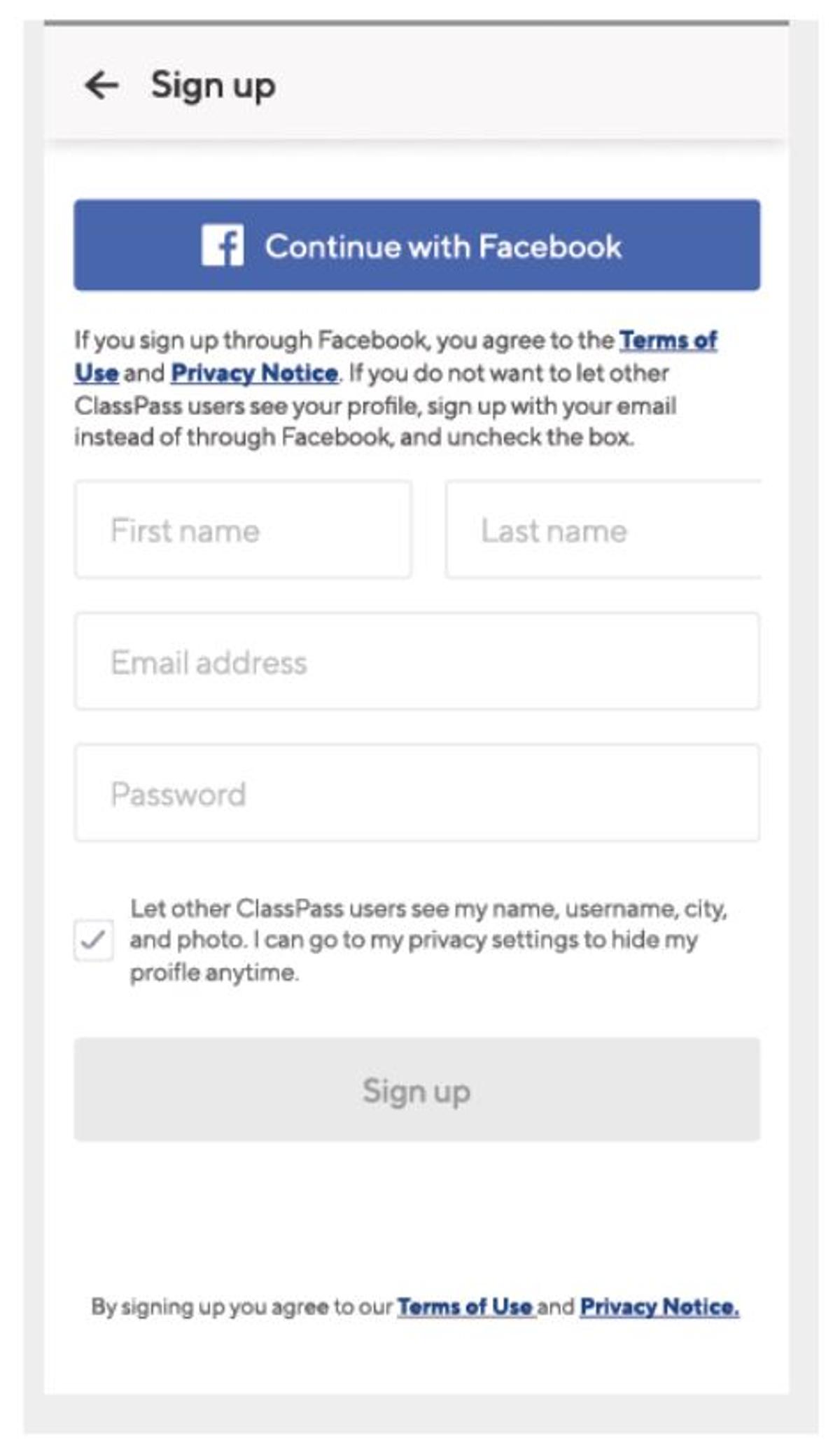
Remember When the Ninth Circuit Rejected Classpass’ TOS Formation? About That…–Blackburn V. Classpass
The Northern District of California ruled that Classpass successfully formed its Terms of Use through a series of sign‑in‑wrap screens, despite the Ninth Circuit’s earlier rejection in Chabolla. The court applied the three‑part sign‑in‑wrap test—conspicuous notice, transaction context, and manifestation...

Exclusive: IManage Set to Announce Platform Evolution “as Significant as the Cloud”
iManage announced that its next‑generation platform will add an AI‑driven inference layer that supplies contextual insight for legal data. The rollout is slated for the company’s ConnectLive 2026 conference, with events in Chicago in May and London in June. CEO...

JT/DL: Leaving the Bardo
Jason Warner announced he will leave the JT/DL "bardo" to become the National Center for State Courts’ director for technology, data, and knowledge management starting in May. The new role places him at the helm of modernizing state court infrastructure,...

K&L Gates Achieves ISO 42001 Certification for AI Governance – Interview
K&L Gates has become one of the first major law firms to earn ISO/IEC 42001:2023 certification, the global standard for AI management systems. The firm’s AI Management System (AIMS) now governs tool selection, risk assessment, data‑localisation compliance, and continuous monitoring of...

Charting Change in Legal: What Firms Are Really Seeing in AI Return on Investment
The latest episode of the Charting Change in Legal podcast examines how law firms are quantifying the return on investment from generative AI. Drawing on a global study of 31 firms, host Caroline Hill and analyst Ari Kaplan reveal that...

Is AI Replacing Google for Legal Search?
In a Conroy Creative Council podcast, Pete Everitt explains that AI tools like ChatGPT are not replacing Google for legal search, but they are reshaping how users discover information. The shift emphasizes AI-generated overviews, entity mapping, and impressions over traditional...

Harvey’s Gabe Pereyra on Legal Agents + World Models
Harvey co‑founder Gabe Pereyra explains how autonomous AI agents, exemplified by the Spectre platform, are being adapted for law firms. He describes the “world model,” a unified data infrastructure that gives agents firm‑wide context while preserving ethical walls. The interview explores...

Context Is Not A Feature, It Is The System
Alex Zilberman argues that AI in legal cannot rely on isolated prompts; true value comes from embedding multi‑layered context—document, transaction, institutional, workflow, and access—into the system. He notes that most tools only capture fragments, leading to clever but unreliable outputs....

Preventing Revenue Gaps Between Case Completion and Payment
Law firms are losing cash flow as revenue sits in “lockup” for an average of 110‑140 days after a matter is completed. Delayed invoicing, unclear payment terms, and manual processing cause final invoices to age, reducing collectability. Structured billing workflows,...

Webinar: What’s the Right Data Strategy for Future AI Success?
Elite is hosting a free webinar on May 7, 2027 to explore how law firms can craft data strategies that unlock AI potential. The session highlights the pitfalls of relying on fragmented best‑of‑breed tools, which impede scaling and governance. Chief Technology Officer...

Lawyers Aren’t Losing Their Jobs to AI, They’re Losing Their Tasks
Law firms are grappling with AI not because it will replace lawyers, but because it is stripping away many of the routine tasks that have traditionally defined legal work. While AI can draft, research, and review documents faster than humans,...
Why Your Practice Management and Document Management Systems Need to Work Together
Midsize law firms often run a practice management system (PMS) and a document management system (DMS) that operate in silos, turning technology from an asset into a hidden cost. Manual data entry and duplicate workspace creation waste attorney time and...

Centerbase Launches AI-Powered Business Intelligence Tool That Gives Firms Citation-Backed Answers From Their Own Data
Centerbase, the practice‑management platform for midsized law firms, announced the limited release of Centerbase IQ, an AI‑powered business intelligence tool that answers firm‑specific questions using the firm’s own data and provides citation links to source documents. The solution leverages a...
Centerbase IQ Delivers Citation-Backed Financial and Operational Answers to Law Firms
Centerbase introduced Centerbase IQ, an AI‑powered natural language decision‑support tool embedded in its legal operating platform for midsize firms. The feature delivers instant, visual answers drawn from billing, financial, matter and productivity data, complete with source citations. By eliminating manual...
When Clients Learn to Love AI
Clients are rapidly embracing artificial intelligence, narrowing the trust gap that once favored law firms. Sophisticated businesses are deploying AI at deeper levels and faster speeds than many attorneys, forcing Big Law to confront a cultural and operational lag. The...

Expert Witness Credibility Is Destroyed by AI Opinions
The article warns that using generative AI to draft expert‑witness opinions jeopardizes a clinician’s credibility and can trigger Daubert challenges, because AI lacks licensure and accountability. It distinguishes between AI as a production tool—prohibited—and AI as a training aid that...