
The Five Barriers Blocking Legal AI Adoption (Part 1)
Legal tech analysts surveyed over 100 senior lawyers and in‑house counsel to pinpoint why AI projects falter in law firms. The research identified five recurring barriers: poor data hygiene, cultural resistance, unclear ROI, regulatory uncertainty, and integration bottlenecks. Each obstacle forces firms to delay or abandon deployments, despite growing market pressure to automate routine tasks. The article outlines a diagnostic framework to help legal teams recognize which barrier is most salient for their organization.
Data Science Is Quickly Shifting What's Best and Practicable: What Litigators and Judges Interpreting Rule 23 Should Know
The article explains how advances in data science are reshaping the legal standard of “best and practicable” under Federal Rule 23. Judges and class counsel must now assess algorithmic sampling, predictive modeling, and AI‑driven certification methods when designing class notices...

GRC News Roundup: Drata, Diligent, HICX, Ibex & More
The GRC (governance, risk, and compliance) sector saw a flurry of product launches in April. HICX introduced a Supplier Registration platform, Drata rolled out an agentic AI TPRM assessment tool and named a new chief product and technology officer, and...
We Wanted Smarter Legal Tech, but Instead Got an Expensive Dependency
Law firms accelerated AI spending in 2025, up nearly 10%, yet measurable productivity gains remain elusive. While eDiscovery AI tools have slashed per‑document review costs to as low as $0.11, most firms retain hourly billing and even raise rates, passing...

The Latest Orange Rag Product Table – Link Here
The Orange Rag March newsletter highlighted two dominant trends shaping legal technology. First, vendors such as DISCO, Consilio and Epiq are consolidating formerly separate tools—review, analytics, operations intelligence and managed services—into unified platforms, responding to client demand for fewer point...
What ABA TECHSHOW 2026’s Startup Alley Tells Us About Where Legal Tech Is Going
The 2026 ABA TechShow Startup Alley highlighted a shift from generic chat‑based legal AI to agentic AI that automates entire workflow steps. Winners such as Lawdify, TwinCounsel and Collbox demonstrated tools that ingest raw data and output litigation drafts, email‑based...

Build Your Own Copilot Legal Assistant — No Tech Skills Required
Microsoft’s Copilot Agent Builder lets law firms create custom AI assistants without any coding. By defining a name, purpose, instructions, and uploading firm‑specific documents, attorneys can build agents—such as contract reviewers or client‑communication helpers—in roughly 15 minutes. The tool is...
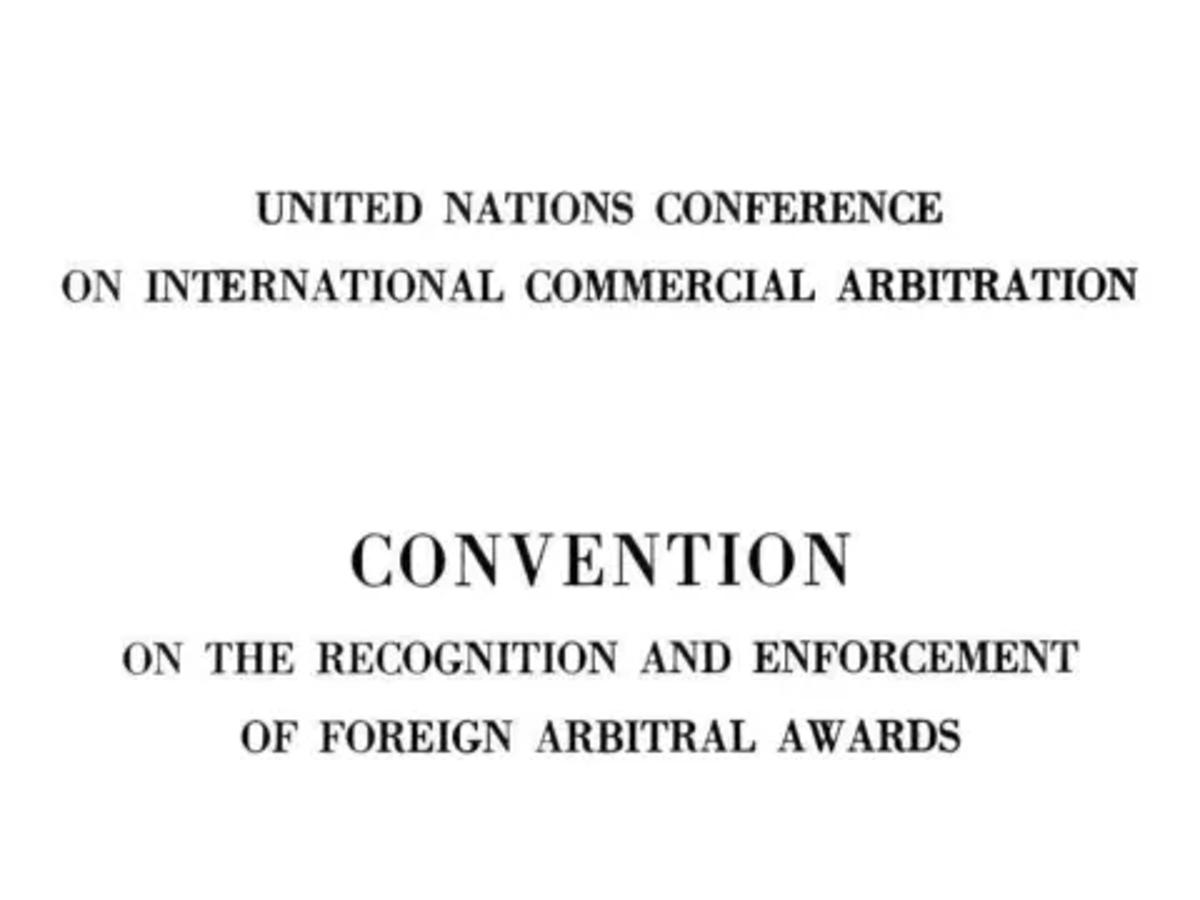
Can AI-Assisted Arbitral Awards Survive Enforcement Under the New York Convention?
The American Arbitration Association‑International Centre for Dispute Resolution launched an AI‑native pilot in November 2025 that lets an algorithm draft arbitral decisions for human review. While the pilot has not yet faced a court test, the New York Convention’s enforcement framework was...

When AI Bots Become Clients: How FantasticLawyers.com Is Discovered by Claude, ChatGPT, Perplexity Etc
FantasticLawyers.com has recently been discovered by leading AI bots such as Claude, ChatGPT, and Perplexity, highlighting a new channel for legal service discovery. The blog post details how artificial intelligence is reshaping interactive services for law firms, from automated client...
Legaltech Rundown: Littler Mendelson Appoints Chief AI Officer, Parambil Unveils Enhanced Platform Technology, and More
Littler Mendelson, one of the nation’s largest labor law firms, announced the appointment of a former Google AI lead as its first Chief AI Officer, signaling a strategic push to embed artificial intelligence across its practice. At the same time,...

MDRXLaw Launches MDRXResolve: A Smart, Efficient Alternative to Litigation for Healthcare Disputes
MDRXLaw introduced MDRXResolve, a mediation platform tailored for healthcare providers, offering a discreet, efficient alternative to litigation. The service addresses partnership, contractual, regulatory, and employee disputes, aiming to cut costs, reduce delays, and protect operational continuity. Leveraging MDRXLaw’s experience, the...

Ditching the Billable Hour: Law Firm Math, AI, and Subscriptions with Mathew Kerbis
Mathew Kerbis, founder of Subscription Attorney and co‑founder/CEO of Practi, explains how law firms can move from the traditional billable‑hour model to subscription‑based billing using AI and data analytics. He outlines the essential math lawyers need to run profitable practices,...

"The First Tell Was the File Name of the Principal Brief: 'Cocounsel Skill Results'"
The Sixth Circuit reprimanded court‑appointed attorney Michael Howe after discovering his appellate briefs were largely drafted by Westlaw's CoCounsel AI. The AI‑generated drafts contained fabricated quotations and mis‑characterized holdings from United States v. Washington and United States v. Anthony. Howe...

What Happens when Law Students Build Things
The Legal Innovation and Technology Student Association (LITSA) hosted its first Legal AI Innovation Challenge, where seven law‑student teams built functional legal‑tech prototypes in a two‑hour sprint. The winning team, Kaitlin and Andre, delivered LegalTree HAI, an MVP that combines...

UK Firm Rolls Out August Across Multiple Business Functions
Legal AI platform August has been adopted by UK law firm Harrison Drury for a broad range of business functions, not just legal work. The firm will use the technology for corporate transactions, commercial property, HR, marketing, business development, and financial...

AI, Work Product, and the Protective Order Problem: What Morgan V. V2X, Inc. Means for Every Litigator
On March 30, 2026, a Colorado magistrate judge issued the most detailed federal ruling on AI‑generated work product in litigation, holding that Rule 26(b)(3) protects AI outputs created by a pro se plaintiff. The decision rejected the argument that using...

Littler Appoints Stephanie Goutos as Inaugural Chief AI Officer
Littler, the leading U.S. employment‑law firm, has hired Stephanie Goutos as its inaugural chief artificial intelligence officer. Goutos joins from Gunderson Dettmer, where she led AI‑driven practice innovation and piloted Perplexity Enterprise. In her new role she will shape Littler’s...

Will Claude Managed Agents Impact Legal Tech?
Anthropic introduced Claude Managed Agents, a fully managed runtime that lets enterprises build and deploy autonomous AI agents within the Claude ecosystem. The platform bundles state management, tool integration, security and lifecycle orchestration, removing the need for separate infrastructure. By...

There Is No Single Place to Find the World’s Laws
Legal Data Hunter, an open‑source AI platform, is building a searchable global repository of public legal documents. In just ten weeks the project grew from 351 to 674 automated collection scripts, indexing over 18 million records from more than 100 jurisdictions....
Riley Brennan: ‘Figuring Out How to Deal With This’: How Are Courts Grappling With Disciplining AI Hallucinations?
Courts across the United States are wrestling with how to discipline attorneys who rely on artificial‑intelligence tools that produce "hallucinations"—fabricated citations or erroneous legal arguments. Recent cases show a split approach: some judges have imposed formal reprimands, while others hesitate,...

Katie Pecho, Relativity: Scaling Smarter: An Energy Legal Team’s Progression to AI-Driven Work
AES Corporation, a global energy producer, began experimenting with generative AI for its legal department in 2022 after recognizing the technology’s potential. The company teamed with Relativity to build a scalable AI platform and enlisted strategy firm PLUSnxt to design...

Grace Herman, Reveal: Reveal Backs Private Deployment with a 50% Investment Increase as Enterprises Seek Data Control
Reveal announced a 50% boost in investment for its Private Deployment (RPD) solution, adding over 35 engineering and product specialists. The move enables regulated enterprises—financial services, government, healthcare—to run Reveal’s AI‑powered document review on their own infrastructure. Consilio is also...

Chris Finley, Opus 2: AI in Litigation: Use Cases, Advice, and Technology
Law firms are increasingly embedding AI into litigation workflows, moving beyond simple task automation to strategic insight generation. Early adopters gained a competitive edge, but the advantage is narrowing as AI tools become mainstream. Chris Finley’s Opus 2 article outlines how...

I Set Up This Search Months Ago. Look What Just Came In: A Courier Route Contract
The author describes how a saved search on SAM.gov surfaced a new Air Force courier services RFQ, which he then dissected step‑by‑step. He walks readers through locating the solicitation, parsing the performance work statement, pricing sheets, and amendment documents, and...
Regulatory Software Company ViClarity Launches AI-Powered Regulation Tracker
ViClarity, a regulatory‑software specialist, unveiled an AI‑powered Regulation Tracker that continuously scans global rule changes and delivers machine‑generated summaries. The solution leverages large‑language models to translate dense legal text into concise briefs, aiming to slash manual compliance effort. It plugs...

Use of AI Does Not Eliminate All Expectations of Privacy, Says Court: EDiscovery Case Law
In Morgan v. V2X, Inc., a Colorado magistrate held that using generative AI does not automatically waive work‑product protections under Federal Rule 26(b)(3). The court affirmed the plaintiff’s right to assert work‑product privilege for AI‑generated materials but ordered him to disclose...
Skadden Execs Turned Legal Tech Advisers Talk Navigating Client Tech Demands
Former Skadden chief AI and technology officer Harris Tilevitz and ex‑CEO Eric Friedman, now advisers to Harvey, Ironclad and Litera, discussed how law firms can meet escalating client technology expectations while safeguarding data. They highlighted the shift from internal tech...
Your Client Is Talking to ChatGPT About Their Case. After 'Heppner,' That's a Discovery Problem.
Clients are turning to ChatGPT for legal advice, prompting courts to scrutinize AI‑generated communications. The recent Heppner decision clarified that chatbot interactions constitute discoverable evidence, forcing parties to preserve and produce them. Defense attorneys are now tightening discovery requests to...

Axiom’s Lawyers On Demand + Clients Get Harvey Access
Axiom, the leading alternative legal service provider with a bench of about 14,000 on‑demand lawyers, has incorporated the Harvey AI platform into its "AI Tech + Talent" portfolio. The move equips its lawyers and the 1,500 corporate legal departments it...

Justin Smith, Everlaw: Morgan V. V2X, Inc. Decision Sets Precedent on AI Disclosure in Discovery
The U.S. District Court for Colorado issued a landmark protective order in Morgan v. V2X, Inc., requiring parties to disclose any use of generative AI on confidential discovery materials. The ruling addresses data‑privacy concerns rather than the traditional focus on...

Exterro and eDiscovery Today Announce Educational Partnership to Advance eDiscovery and Data Risk Management Best Practices
Exterro announced an educational partnership with eDiscovery Today, the daily blog for e‑discovery, privacy, and AI trends. The collaboration will produce joint content and initiatives that help organizations manage data across the e‑discovery lifecycle, align legal, compliance and security functions,...

Webinar: Eudia + ServiceNow: The 10x Future of Inhouse Legal Teams
Artificial Lawyer is hosting a free webinar on April 22 at noon EST featuring Eudia’s CEO Omar Haroun and ServiceNow representative Andrew Brereton. The session, titled “Self‑Service Legal: Eudia, ServiceNow, and the 10x Future of In‑House Legal Teams,” will explore how...

Most Founders Don’t Need a Lawyer—Until They Really Do
Founders are turning to AI tools like ChatGPT to draft first‑pass contracts such as NDAs, MSAs, and employment agreements, cutting time and cost. While AI can generate standard language and explain clauses, the real risk lies in high‑stakes agreements where...
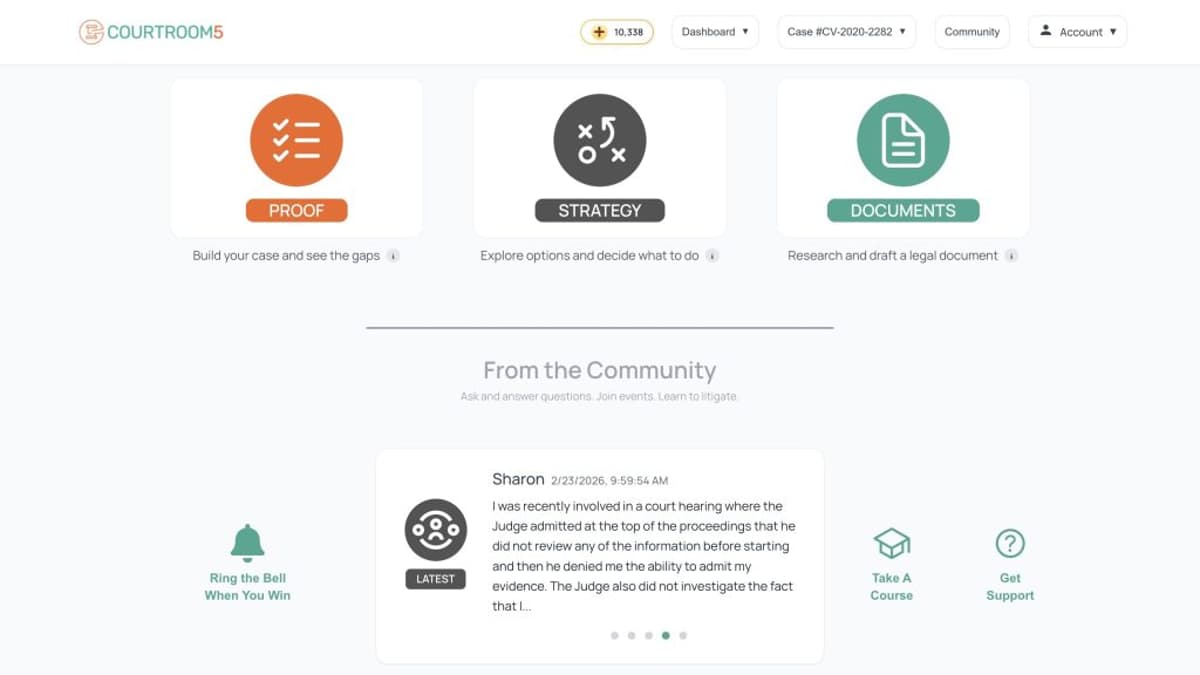
Courtroom5 Launches The LAW Accelerator, a Structured Program to Help Self-Represented Litigants Navigate Civil Court
Courtroom5 announced the launch of The LAW Accelerator, a structured program designed to guide self‑represented litigants through civil court procedures. The platform combines an interactive dashboard, document assembly, and strategy modules to deliver step‑by‑step assistance. It targets the roughly 75%...

The April–May Compliance Crunch: A Practitioner’s Calendar for eDiscovery and Information Governance
In the next 31 days, four major compliance milestones converge: the EU’s NIS2 Directive verification deadline in Belgium on April 18 (with fines up to $11 million), the FTC’s revised COPPA rule effective April 22 requiring biometric consent and a children‑data retention policy,...
A Judge Mistakes the Claude Chatbot for a Person
A Manhattan federal judge ruled that a criminal defendant’s use of Anthropic’s Claude chatbot to organize privileged defense material waived attorney‑client privilege, allowing the prosecution to view all inputs and outputs. The opinion treats the AI model as a third‑party...
Outside Counsel Selection Platform Priori Adds Agentic AI Features to RFP Offering
Priori, the SaaS platform that streamlines outside‑counsel selection, has rolled out agentic AI capabilities to its request‑for‑proposal (RFP) suite. The new features automatically draft RFPs, score incoming proposals, and recommend the best‑fit law firms based on predefined criteria. Priori says...

Making Complexity Clear: Contract Design for Multilingual, Multi-Jurisdiction Deals
Large APAC deals now routinely cross several borders, languages and legal systems, turning contracts into dense, hard‑to‑interpret documents. The article argues that intentional contract design—plain language, visual aids, bilingual layouts, and layered structures—can dramatically reduce misinterpretation. Digital platforms and AI‑driven...

Inside View: Stewart Crane on Withers’ Technology Priorities and AI in Practice
In a recent Inside View interview, Stewart Crane, global IT director at Withers, outlined the firm’s technology agenda and its pragmatic AI rollout. Withers was an early adopter of Microsoft Copilot, deploying it firm‑wide to build internal AI expertise before...
Bankruptcy and Restructuring Company Stretto Launches New Research Platform
Stretto, a specialist bankruptcy and restructuring firm, announced the launch of its Research Suite, a new platform designed to surface and compare bankruptcy documents across jurisdictions. The service aggregates court filings, DIP financing agreements, and plan documents, providing a searchable...

The Machine Isn’t the Interlocutor: EDiscovery Trends
The Sedona Conference Journal released a 20‑page critique of the U.S. v. Heppner decision, arguing that the court mistakenly treated a large‑language model as an independent interlocutor and thereby eroded attorney‑client privilege. The authors, Bridget McCormack and Shlomo Klapper, contend that AI...

Harvey Drives Legal Agent Learning Via ‘Harness Engineering’
Harvey conducted a small‑scale experiment using “harness engineering” combined with autoresearch to improve its legal AI agents. Across 12 benchmark tasks, the average success score jumped from 40.8% to 87.7%, with seven tasks surpassing 90% and one achieving 100% completion....
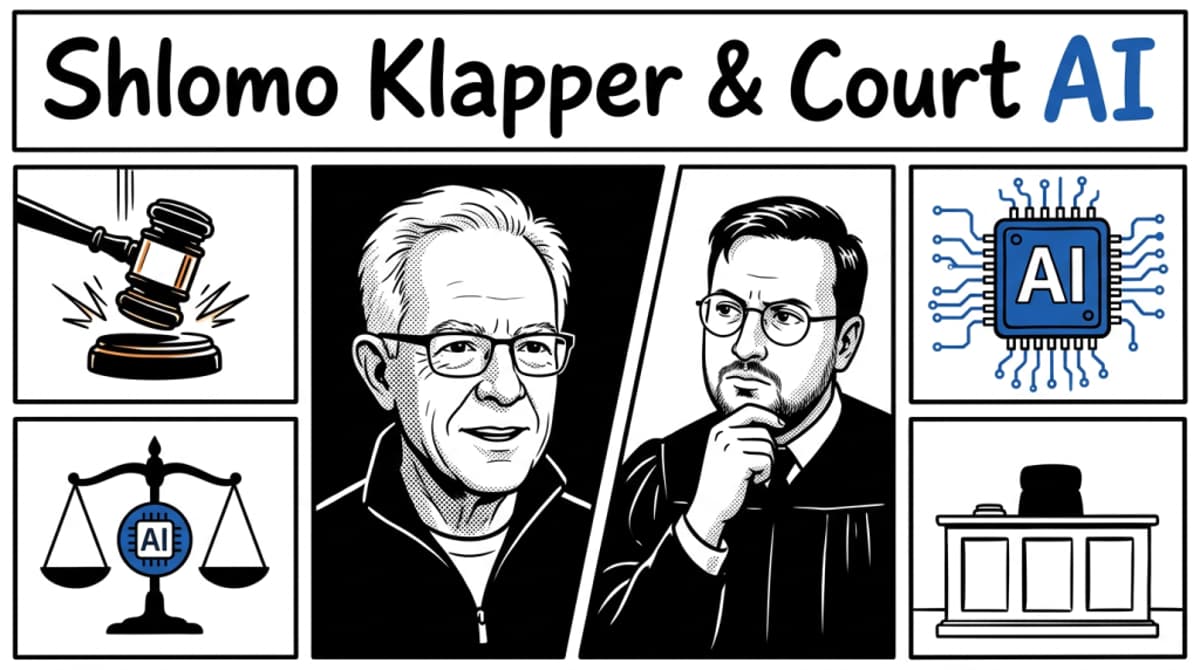
LawNext Podcast: Learned Hand’s Shlomo Klapper on Why Courts Are the Next Frontier for Legal AI
In a LawNext podcast, Shlomo Klapper, founder and CEO of Learned Hand, argues that courts represent the next major frontier for legal AI. Drawing on his experience as a litigator and appellate clerk, Klapper describes a new "reasoning engine" that...
Centerbase and Billables AI Give Midsize Law Firms Automated Time Capture and Actionable Practice Intelligence
Centerbase announced a native integration with NetDocuments' ndMAX AI, linking matter data directly to document intelligence for midsize law firms. The integration automatically extracts key contract details and writes them back into Centerbase, enabling real‑time reporting and workflow automation. It...

I Built An Agentic ‘Law Firm’, Now What?
Antti Innanen launched Lavern, an AI‑driven "law firm" that runs 66 specialist agents on a single Mac Mini. The system mimics a traditional firm’s intake, decomposition, routing, debate, escalation and synthesis workflow, but all processing stays local, preserving client privacy....

Josef Launches ‘Rapid Ingestion Engine,’ Using AI To Turn Messy Business Inputs Into Structured Legal Workflows
Australian legal‑automation platform Josef unveiled its Rapid Ingestion Engine, an AI‑driven tool that transforms unstructured business inputs—such as email threads, meeting notes, and term sheets—into the structured data required for legal workflow templates. The engine automates data extraction, classification, and...

Deepfakes And The Future Of Litigation: Are We Ready?
Deepfake technology is entering courtrooms, forcing judges and lawyers to confront fabricated video and audio evidence. The article outlines three potential judicial responses and highlights the “liar’s dividend,” where repeated exposure to fakes erodes trust in all digital proof. It...
In One Day (Mar. 31), 17 U.S. Court Decisions Noting Suspected AI Hallucinations in Court Filings
On March 31, seventeen U.S. court decisions cited suspected AI hallucinations in submitted filings, according to Damien Charlotin's AI Hallucination Cases Database. The rulings, spanning both federal and state courts, highlight that AI‑generated text can produce inaccurate or fabricated statements...

What Role Should AI Play In Judging?
Federal judges are increasingly turning to generative AI for routine tasks, with a Northwestern study finding over 60% have used tools such as ChatGPT and 22% do so daily or weekly. The technology is being employed to draft timelines, suggest...
The Two Speeds of Law Practice Technology
Law firms are grappling with a paradox: automation boosts billable efficiency, yet unchecked speed invites ethical lapses and AI‑generated errors. Recent court cases involving a DOJ attorney in North Carolina and a Mississippi firm illustrate how fabricated citations and unvetted...