
The Pitfalls of Narrow‑Mindedness
Narrow‑mindedness—rigid thinking and resistance to new ideas—undermines decision quality, stifles innovation, and creates strategic blind spots across individuals, teams, and entire organizations. The article outlines cognitive and performance costs such as biased choices, fragile solutions, and slower learning, alongside interpersonal harms like reduced collaboration and talent loss. It also highlights how incentives, social dynamics, and fear reinforce narrow thinking, leading to reputational risk and ethical lapses. Recognizing these signals is essential for leaders aiming to foster openness and long‑term success.

How a Cost Center Works: Cost Centers Vs. Profit Centers
Cost centers are support functions that do not generate revenue but are essential for a company’s operations, such as IT, HR, and customer service. They are classified as personal (people‑focused) or impersonal (equipment‑focused) and are measured by their ability to...

We Now Have a “Thought Leadership Liaison”
AutomatedBuildings.com has created a new Thought Leadership Liaison role to bridge visionary concepts with on‑the‑ground execution in smart‑building technology. The position, filled by Kelly Sinclair, focuses on three pillars—translator, connector, and curator—to make AI and portfolio autonomy insights accessible to...

Operational Excellence Mixtape - March 6, 2026
The Operational Excellence Mixtape reflects on 25 years of Agile, arguing the movement has drifted from its discovery‑focused roots toward bureaucratic rituals. It highlights a growing trend among Fortune 500 CEOs who view lean methodologies as essential foundations before layering AI...

The Seemingly Harmless Phrase that Erodes Team Trust and Kills Collaboration
The article warns that the casual “agree to disagree” habit silently damages team trust and stalls collaboration. By ending conversations prematurely, leaders leave root issues unresolved, allowing tension to fester. It introduces a four‑dimensional framework—connection, clarity, curiosity, and commitment—to turn...

AI Fundraising Hit 1,750% ROI in a Kentucky Race
An AI‑driven email campaign in a down‑ballot Kentucky race generated a 1,750% return on investment, delivering $17.50 for every dollar spent. The initiative lifted revenue per staff minute from $8.33 to $56.47 and, in a separate San Francisco effort, saved 12...

4 AI Prompts That Turn Uncertainty Into Strategic Advantage
Most organizations still build strategic plans around a single optimistic future, leaving them vulnerable when market conditions shift. The blog argues that this narrow focus is a planning flaw, not a forecasting error, and proposes AI‑driven scenario planning as a...

Zone to Win Meets Big Bet Leadership: An Independent Analysis of the Management Operating System for Navigating Transformation
John Rossman and Andy Forti released a white paper that merges Geoffrey Moore’s Zone to Win framework with the Big Bet Leadership methodology, creating an integrated management system for corporate transformation. The paper argues that traditional execution models, built for...

The Spring Thaw Is a Moment to Reset and Get Ahead
Spring’s thaw turns predictable winter discipline into a volatile testing ground for restaurants. As days lengthen, traffic spikes and stalls with weather, prompting operators to recalibrate menus, beverage programs, and staffing. The National Restaurant Association notes warmer temperatures lift dining‑out...
Meta’s New AI Unit Takes Flat Management Structures to the Extreme
Meta has launched a new applied AI unit staffed with a flat 50:1 manager‑to‑engineer ratio. The group, headed by Maher Saba and reporting to CTO Andrew Bosworth, will collaborate with the Superintelligence Lab to build a data engine that accelerates model improvement....

Order Without Authority: What a Demolished Hong Kong Slum Can Teach Us About Management
Kowloon Walled City, a one‑hectare slum that housed over 50,000 residents, existed from 1946 to 1993 without any formal government, taxes, or building codes. Despite its chaotic architecture, the community self‑organized under informal triad rules, resulting in surprisingly low ordinary...

Want to Lift Productivity in Construction? Try Digitalisation
Australia’s construction sector, especially in New South Wales, continues to lag in productivity, with over 70% of documentation still submitted as PDFs and minimal digital training. The industry’s reliance on analogue processes drives cost overruns, delays, and fragmented supply chains,...

Watch the Lean Hospitals Coach in Action — Live, Unscripted, With Your Questions
The author will host a LinkedIn Live demo on March 10 to showcase the Lean Hospitals Coach, an AI‑powered tool built around the *Lean Hospitals* book. The coach offers two query modes—Book Search with citations and Book Plus with broader Lean insights—and...

American Airlines Blasts United for Flooding Chicago O’Hare to Block Gates — The Employee Memo Isn’t Signed by CEO Robert...
American Airlines issued an internal memo, signed by its COO and chief commercial officer, accusing United Airlines of flooding Chicago O’Hare with flights to manipulate gate allocations under a unique lease provision. The memo’s omission of CEO Robert Isom raises...

Leadership Overreaction: The Hidden Cause of Organizational Failure
The article argues that leaders’ overreactions to normal variation, waste, and mistakes generate fear that silences improvement efforts. Across his four books, the author shows that tools like Lean or Kaizen succeed only when leadership responds calmly and proportionately. Overreactive...

One Tape Dispenser at a Time: Lean Lessons From GE Aerospace’s CEO Letter
GE Aerospace’s 2025 shareholder letter spotlights a simple tape‑dispenser fix that illustrates the company’s deep‑rooted lean culture. The CEO describes how frontline empowerment, respect for people, and the SQDC framework drive continuous improvement across the factory and supply chain. Small...

Partnerships Framework for Impact
Enterprises that synchronize internal skill development with strategic partnerships can accelerate digital revenue growth, cut costs, and shorten time‑to‑market. The proposed framework organizes outcomes, capability architecture, partner categories, and an operating model that blends cross‑functional squads with Centers of Enablement....
Lost in the Woods - All Things Product Podcast with Teresa Torres & Petra Wille
In the "Lost in the Woods" episode of All Things Product, Teresa Torres and Petra Wille map five common "lost person" behaviors to product team dynamics when strategy blurs or constraints are unclear. They break down freezing, chasing shortcuts, following...

🛑 Stop Grabbing the Fastest Money.
The post warns that small businesses often suffer from cash‑flow leaks rather than sudden revenue spikes, prompting owners to chase the quickest financing instead of a strategic solution. It highlights common pressure points—unexpected taxes, tighter vendor terms, late payments, and...

Healthcare in 2026: Still Faxing, Already Talking About AI
The article highlights persistent low‑tech practices in 2026 healthcare—mis‑timed pharmacy texts, imaging still sent on physical CDs, and reliance on fax—while executives chase AI. It shows that simple fixes are known but remain unfixed due to cultural and governance gaps....
![How to Improve Your M&A Process Using Agile [Must Read]](/cdn-cgi/image/width=1200,quality=75,format=auto,fit=cover/https://cdn.prod.website-files.com/5a710020b54d350001949426/5e975c0ed4e0eadb8569babe_Artboard%201-100.avif)
How to Improve Your M&A Process Using Agile [Must Read]
Kison Patel’s new book *Agile M&A* proposes a project‑management framework that brings responsiveness, collaboration, and continuous improvement to the traditionally rigid M&A process. In a recent interview, Patel explains how techniques such as backlogs, short stand‑up meetings, and cross‑functional squads...

How DealRoom Pipeline Prevents Deals From Slipping Through the Cracks
DealRoom Pipeline introduces a unified platform for M&A deal management, consolidating emails, documents, notes, and task tracking in one view. The solution offers customizable Kanban or spreadsheet‑style pipelines, allowing teams to filter deals by priority, region, or financial metrics. Integrated...

When the Money Stops Stretching
K‑12 districts across the nation are confronting post‑ESSER financial strain, prompting massive staff cuts such as Fresno Unified’s elimination of 200+ positions and Oakland’s 400‑role reduction after a pay settlement. Simultaneously, the U.S. Department of Education is reallocating grant administration...

Change Doesn’t Fail By Itself, It Fails Because People Resist It
The article argues that change initiatives fail not because ideas are flawed but because people resist. It debunks the notion that awareness and training alone drive adoption, citing research that knowledge shifts rarely change behavior. Change is a strategic conflict...

“How Do I Use Lean to Reduce Headcount?” — Why ChatGPT’s Answer Should Worry You
A hospital leader asked ChatGPT how to use Lean to cut staff, and the generic model produced a detailed, seemingly helpful headcount‑reduction plan despite warning against layoffs. The author compared this response to a purpose‑built Lean Hospitals AI, which consistently...
.jpg)
Five Crucial Actions That Build Unity And Foster Performance In The Workplace
Brad Deutser’s new book, *Belonging Rules*, argues that workplace belonging outweighs culture and compensation in driving performance. A recent study of nearly 15,000 employees shows belonging predicts engagement, satisfaction, and effort more strongly than traditional metrics. Deutser outlines five concrete...

When Community Becomes Distraction: How To Manage Social Friction In Coworking Spaces
Coworking spaces thrive on spontaneous collaboration, yet the same community can become a source of distraction. Unspoken signals—headphones, laptop orientation, and a bag on a chair—communicate members’ availability and help navigate social friction. When operators over‑schedule events during peak focus...

Fujio Cho on Standardized Work: The Foundation for Improvement, Not Control
Fujio Cho emphasized that standardized work is a learning tool, not a control mechanism. He argued that a shared, current‑best‑practice baseline makes problems visible and enables continuous improvement. When leaders treat standards as compliance checks, employees hide issues; instead, leaders...

Org Chart From Hell: ‘Too Many Tentacles for One Octopus’
Paramount Pictures has raised its bid for Warner Bros. Discovery to $31 a share, reigniting a potential takeover of the studio’s film, TV and streaming assets, including HBO Max. The board has not dismissed the offer, leaving the door open...

Missed Deadlines? 5 Leadership Moves to Restore Credibility
The article presents five leadership moves to stop missed deadlines and rebuild team credibility. It urges leaders to diagnose the real causes of delays, turn simple agreement into firm commitment, and protect focus from constant interruptions. It also stresses surfacing...

How to Encourage Employee Feedback in Exit Interviews
HR leaders at Gruns and Morning Brew stress that exit interviews should be the culmination of an ongoing relationship, not a one‑off conversation. Building trust ensures departing employees share candid insights that can still be acted upon. They recommend aggregating...

Rewiring Leadership for the New Age
In the digital era, leadership is moving from command‑and‑control to orchestrating a trustworthy ecosystem of people, machines, and processes. The article outlines an "agentic" model that distributes decision rights, adopts policy‑first delegation, and embeds transparency and ethical guardrails. Structural changes...

Lean Roundup #201 – February 2026
The February 2026 Lean Roundup aggregates ten fresh blog posts that explore how Lean thinking is evolving across leadership, strategy, and technology. Highlights include "good trouble" as a catalyst for cultural change, the discipline of Leader Standard Work, and the...

Mitsubishi Electric US Announces Structural Reorganization in the US
On February 5, 2026, Mitsubishi Electric US announced a structural reorganization that consolidates Mitsubishi Electric Automation, Inc. (MEAU) and Mitsubishi Electric Automotive America’s (MEAA) operations under Mitsubishi Electric US, Inc. (MEUS). The automation business becomes the Industrial Automation Division of...

Interesting: Open Space Events
Martin Fowler highlighted Open Space events as a self‑organizing format where participants set the agenda on the fly. The approach offers a structured yet flexible alternative to informal gatherings like Net::Beer, making it attractive for small tech meetups such as...

Merck’s Oncology Spin-Out: Organizational Design as Patent Cliff Strategy
Merck has created a standalone oncology business unit to confront the concentration risk posed by Keytruda, which now generates over half of its pharmaceutical sales and faces patent expiry around 2028. The restructuring treats organizational design as a strategic lever...
PTW/PI All-Stars Book Club – Chapter One
The PTW/PI Book Club launched its first chapter by spotlighting Michael Porter’s three seminal strategy contributions. The piece, drawn from a Harvard Business School “Celebrating Michael Porter” conference, argues Porter saved the strategy academy, bolstered the shift from planning to...

Back to Basics: 14 Risk Oversight Rules You Know (But May Be Ignoring)
Jim DeLoach’s article revisits 14 timeless risk‑oversight principles, urging leaders to refresh them with today’s digital capabilities. He stresses that avoiding risk is itself a risk, and that AI, machine learning, and real‑time data can dramatically improve early‑warning systems. The...

Leanshoring: Winning with Customers by Bringing the Business Closer
Global supply‑chain shocks and tariff volatility are prompting U.S. firms to reconsider offshoring. Jim Womack’s "leanshoring" model combines lean manufacturing with reshoring, demanding a full‑cost analysis that accounts for risk, intellectual property and skill loss. GE Appliances illustrates the approach,...

3 Tactics for Leading a Team Through Uncertainty
When a company is acquired, leaders suddenly face an uncertain landscape. The author outlines three tactics that helped steer his team through the transition: first, processing personal emotions and preparing for possible outcomes; second, grounding the team by sharing what...

From Agile to Lean Tech: Theodo’s Journey to Scalable Learning
Theodo transformed a failed client project into a catalyst for a 14‑year lean‑tech evolution, merging agile practices with lean thinking to build a learning‑focused delivery system. By embedding visibility, problem‑solving tools and shared responsibility, the firm grew from two founders...

Transforming Procurement From the Inside Out
Procurement is at a pivotal crossroads as global uncertainty, rapid technology adoption, and heightened business expectations demand greater influence. Ben Farrell, CIPS CEO, draws on his military and retail experience to argue that procurement leaders must grant teams freedom within...

NEW WEBINAR: From Systems of Engagement to Systems of Action: The Agentic CPO
On February 26, a one‑hour webcast titled “From Systems of Engagement to Systems of Action: The Agentic CPO” will explore how Agentic AI is reshaping procurement. Speakers Andrew Bartolini of Ardent Partners and Saquib Jawed of Zycus will explain the...

At What Level Shall We Set OKRs? Company? Team? Individual? (1/10)
The episode explores how organizations should tier OKRs across company, team, and individual levels, emphasizing a phased rollout that starts with top‑level objectives before expanding downward. It highlights the pitfalls of using org‑chart structures for team OKRs and presents three...
How Do We Test Our Winning Logic?
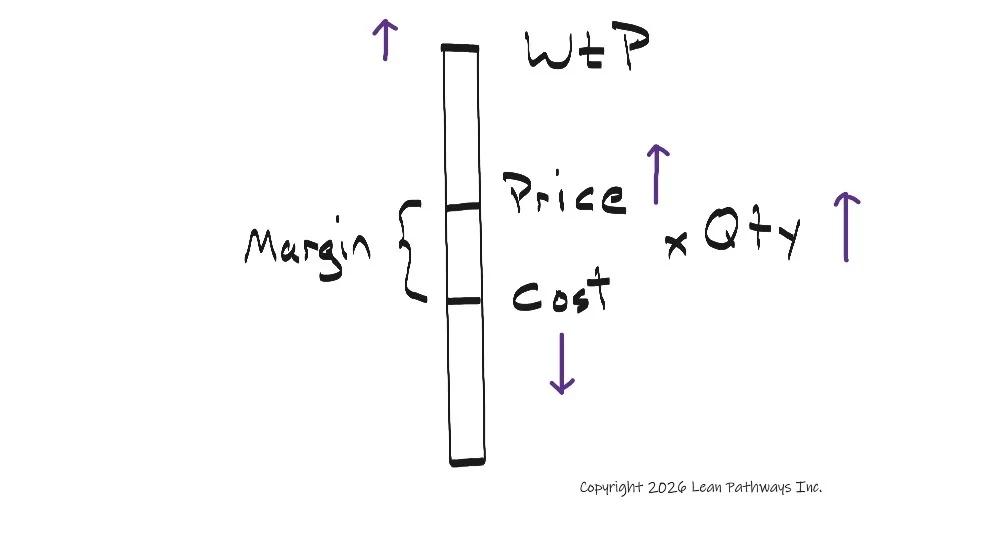
The article introduces the "Value Stick" as a pragmatic framework for testing a company’s winning logic, blending operational excellence (OpEx/Lean) with digital growth methods. It focuses on four levers—Willingness to Pay, Price, Cost, and Quantity—to assess whether a strategy can...