
News•Mar 10, 2026
How to Stay Consistent With Goals (When Motivation Keeps Failing You)
Most people know what they should do to reach goals, yet daily consistency fails because traditional approaches rely on willpower. Research shows willpower depletes and procrastination stems from emotion regulation, making motivation‑based systems ineffective. Behavioral science suggests redesigning habits as tiny, anchored actions with implementation intentions, turning consistency into a system output. Applying these principles—shrinking tasks, anchoring to existing routines, and tracking trends—enables automatic progress without heroic effort.
By Lifehack

News•Mar 10, 2026
What’s Your Chronotype? How Brain Science Can Boost Performance
A joint study by the Wharton Neuroscience Initiative and Slalom examined how individual chronotypes—natural sleep‑wake rhythms—affect creative performance. Using the Morningness‑Eveningness Questionnaire and a divergent‑thinking task, researchers found that employees generated more ideas and higher‑quality concepts when work aligned with...
By Wharton Knowledge

News•Mar 10, 2026
'My Club-Mates Keep Me Going': The 91-Year-Old Former Tour De France Podium Finisher on Staying Motivated to Ride
Shirley Hockridge, now 91, still rides weekly with her local Thursday Club in Northamptonshire. She earned a podium place in the 1957 women’s Tour de France, one of the sport’s earliest multi‑stage events for women. After raising a family and...
By Cycling Weekly

News•Mar 10, 2026
Distracted by Everything? The Bhagavad Gita Explains Why
The Bhagavad Gita teaches that a lack of commitment breeds distraction, a lesson that resonates in today’s hyper‑connected world. By urging single‑minded focus and detachment from outcomes, the text parallels modern research on multitasking’s productivity costs. The article argues that...
By YourStory

News•Mar 10, 2026
Mental Decluttering Relieves Stress and Improves Decision-Making
Therese Yeung, an accredited coach, explains that the brain fixates on unfinished tasks, creating mental clutter that drains leaders' energy. Practicing mental decluttering—whether of physical, digital, or thought spaces—provides immediate tension relief and a feeling of lightness. This clearing isn’t...
By HR Daily (Australia)

News•Mar 9, 2026
Can You Apply Kaizen at Home?
The article argues that Kaizen, traditionally a workplace continuous‑improvement methodology, can be effectively applied to household routines. It offers concrete examples such as hanging towels horizontally to halve drying time and reorganizing a fridge to eliminate inventory waste. The author...
By Philstar – Business

News•Mar 9, 2026
After Work, I Had to DoorDash to Pay for Our Motel Room. I Brought My Toddler with Me to Avoid...
Emma Miller, a 32‑year‑old single mother in Columbia, South Carolina, moved into a $60‑a‑night motel with her toddler to avoid high rent. She supplemented her $11‑hour kitchen wage by delivering for DoorDash, a gig that allowed her to work around...
By Business Insider

News•Mar 9, 2026
The Hidden Productivity Goldmine: How Bookending Your Day Transforms Your Workflow
The piece introduces "bookending"—dedicated opening and closing routines—to structure the workday and sharpen focus. It cites measurable gains, including up to a 29% sales lift for entrepreneurs who review daily performance. A step‑by‑step framework shows how even one‑minute habits, supported...
By Asian Efficiency

News•Mar 9, 2026
The Hidden Reason Life Feels Shorter Than It Is
Seneca the Younger observed that life feels short because we waste time, not because time itself is limited. The Roman Stoic argued that purposeful living, not sheer longevity, defines a life’s value. Today’s digital distractions and endless busyness echo his...
By YourStory

News•Mar 9, 2026
Gary Neville Encourages Students to Apply Class of 92 Principles to Thrive in Today’s Graduate Jobs Market
Gary Neville, co‑founder of University Academy 92, urged undergraduates to adopt the "Class of ’92" mindset of character, resilience and relentless work ethic during a UCAS Discovery Q&A. He warned that in today’s crowded graduate market, technical ability alone no longer...
By Employer News (UK)
News•Mar 9, 2026
Break Negative Thinking: 7 Habits that Build Resilience
The article outlines seven mental habits that can curb chronic negative thinking, ranging from self‑awareness to daily gratitude and mindfulness. It explains how each habit interrupts automatic pessimistic loops and replaces them with more balanced, controllable thought patterns. By practicing...
By YourStory
News•Mar 9, 2026
How to Lead a Team Decimated by Layoffs
Recent AI‑driven layoffs at Block, Citigroup and Morgan Stanley illustrate how market‑focused headcount cuts can boost share prices but leave surviving teams struggling. The article explains that rapid reductions erase informal networks, blur decision authority and damage the psychological contract,...
By Fast Company
News•Mar 9, 2026
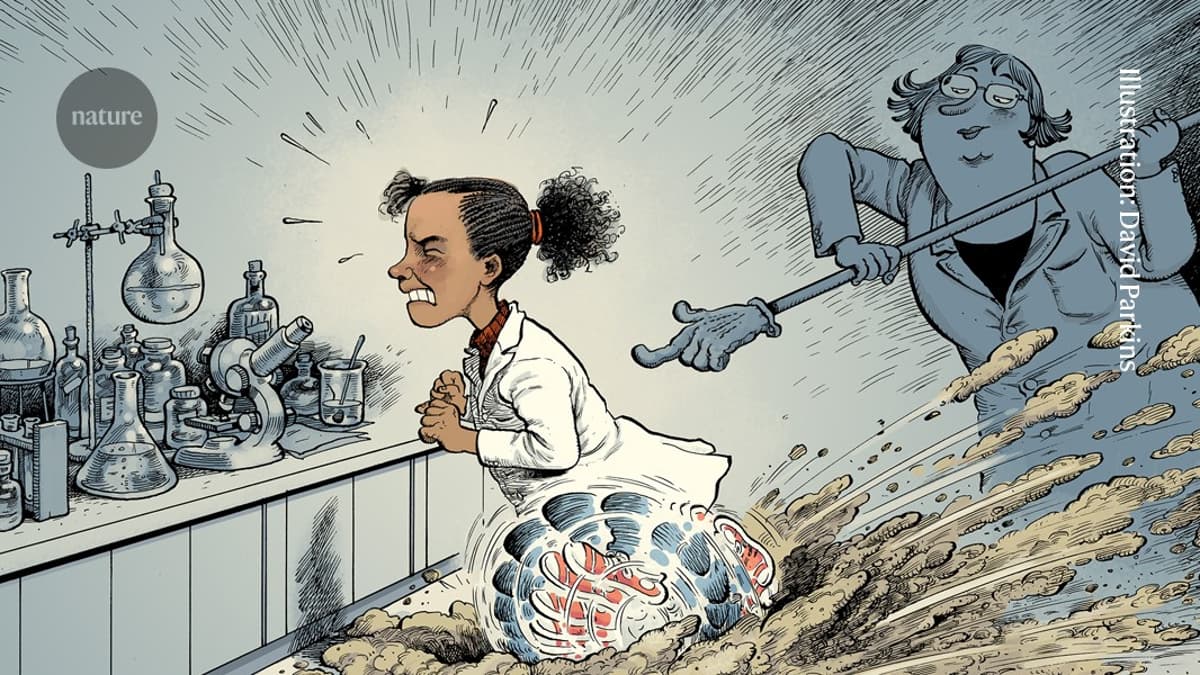
My PhD Student Is Stuck. How Do I Teach Them Perseverance and Problem Solving?
A new principal investigator seeks strategies to teach perseverance and problem‑solving to PhD students facing experimental setbacks. Experienced PIs recommend building collaborative lab cultures, pairing newcomers with senior members, normalizing failure, and setting realistic research goals. These practices aim to...
By Nature – Health Policy

News•Mar 6, 2026
Helping Employees Find “Meaning” Improves Performance and Narrows Gender Gaps
The LSE study by Oriana Bandiera and co‑authors evaluated a “Discover Your Purpose” (DYP) program among 2,976 white‑collar employees at a multinational firm. The purpose‑focused intervention, which blends self‑reflection exercises with a workshop, cut the share of low‑performing workers from...
By LSE Business Review

News•Mar 3, 2026
Dan Orlovsky: 4 Reasons You Need to Step Into Discomfort
Former NFL quarterback Dan Orlovsky argues that comfort traps individuals, especially fathers, in mediocrity. He outlines four reasons—laziness, risk avoidance, over‑reliance on others, and a lowered performance ceiling—that illustrate how staying comfortable harms health, relationships, and personal growth. By embracing...
By All Pro Dad