
Tiny Fee Differences Compound Into Massive Portfolio Losses
1% investment fee per year will lower your portfolio by ~25.8% over 30 years. 0.10% investment fee per year will lower it by only ~3% over 30 years. That 22.8 percentage point difference could cost you $$$. Fees also compound. Pay attention.

Lynch’s 10 Principles: Simple Rules Over Economic Overanalysis
Peter Lynch once said: "If you spend 14 minutes a year thinking about economics, you have just wasted 12 minutes." Here are his 10 investing principles to navigate uncertainty:

Keep Investing Simple to Achieve Long-Term Financial Goals
The key to reaching your long-term financial goals is often to keep investing simple. https://t.co/vu3RFU8Uw3

Turn 30 Into Wealth: Skill up, Save, Invest
Are you still broke at 30? Time to flip the script and build real wealth. Start here: • Grow yourself: Level up skills to boost your income. • Spend smart: Cut unnecessary fluff—every dollar counts. • Save aggressively: Aim for that...

Suze Orman: Decades of Money‑Management Expertise
Personal finance expert Suze Orman has years of experience guiding people on how to make the most of their money. https://t.co/ldmDmg2eVO

Protect Your Pension From Government Economic Incompetence
Excellent piece @John_Stepek on how to keep your pension out of the clutches of the economic incompetents of this government https://t.co/ca0Q637jre

30% Surplus Unlocks Financial Freedom and Stability
Getting to a 30% surplus is where everything starts to change in your finances. At this stage, you can handle unexpected expenses without stress, you can save money and actually leave it alone, and you can invest consistently without needing...

Start Investing $100/Month Early, Grow $6k to $93k
$6,000 invested now becomes $93,365 later. That's the difference a 5-year head start makes at $100/month. If you spend that $100, it's gone forever. If you invest it, it compounds. https://t.co/k2M6NkHfrH

Invest in Yourself First: Pay Yourself Before Bills
You pay your landlord first. You pay your network provider first. You pay everyone else first. But when last did you pay yourself? Most people invest whatever is left after spending, which is usually nothing. The Pay-Yourself-First rule flips the entire script. You invest before...

Big Bonus? Sometimes Leaving It in the Bank Wins
$40,000 bonus. Client sitting across from me asking where to invest it. I pulled out a calculator, punched in the numbers, turned the screen toward him, and said "honestly, it's not worth it. Leave it in the bank." He looked at me...

Step‑up in Basis Can Erase Capital Gains Tax
If you bought a home for $500k and it is now worth $1M when you pass away, your children generally receive a “step up in basis.” If they sell it, they may owe no capital gains tax. But if you gift...
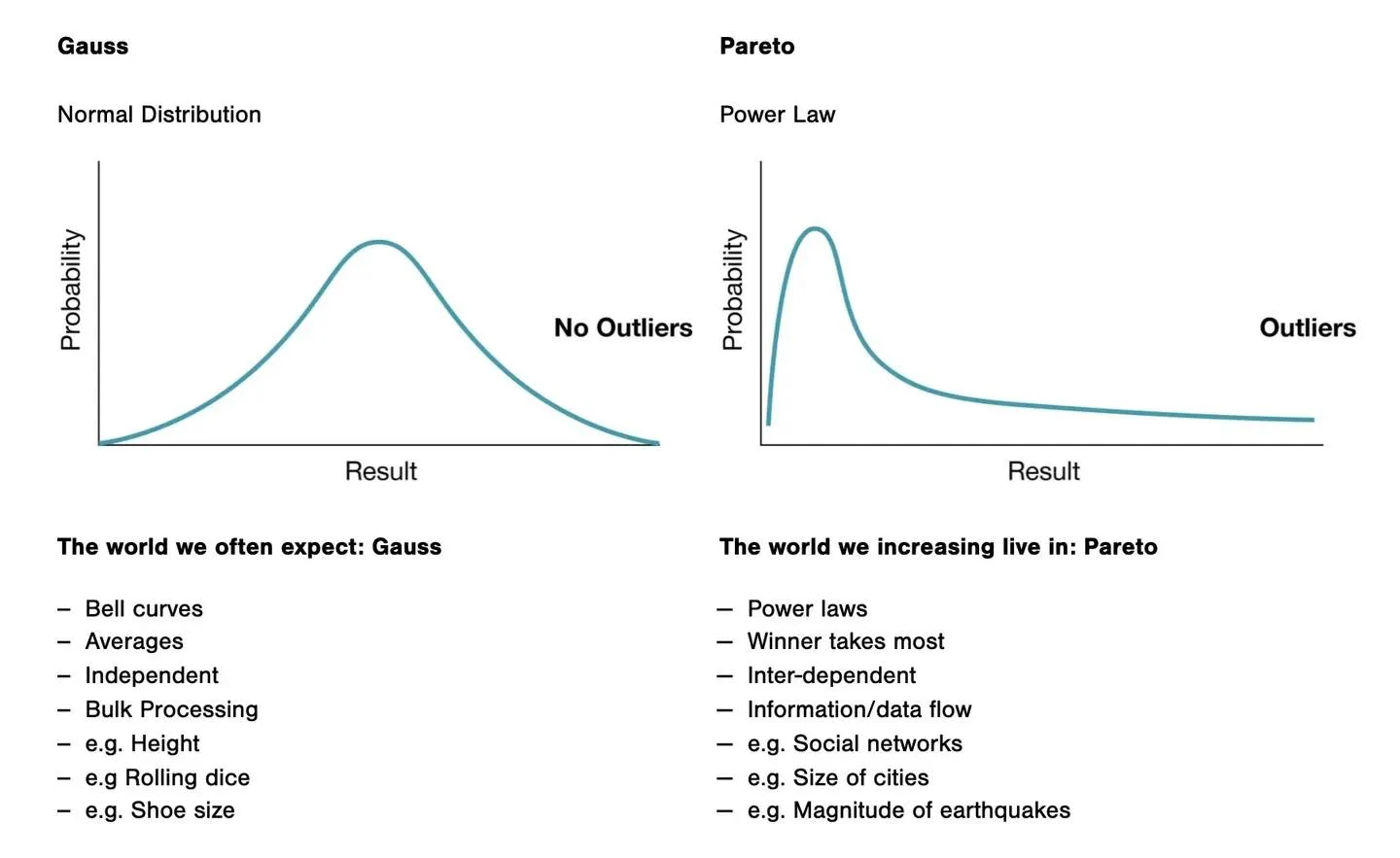
Trim the Bulk, Let Outliers Drive Returns
The 80/20 rule is just a Power Law in disguise. Often, in a portfolio: 📈 20% of your holdings will drive 80% of your returns. 📉 80% of your stress will come from 20% of your "average" bets. The secret to long-term success? Cutting...

Group Investments by Risk, Not Asset Class, for Smoother Returns
How a "total portfolio approach" that groups investments by risk and performance characteristics (rather than asset class) could lead to a smoother ride for investors (@JasonKephart | @MorningstarInc) More curated articles on investment planning this #WeekendReading: https://t.co/L80cXNYxuT

Invest Early, Retire Richer: 10 Years Beats 25
This is crazy: If you are 35 and start investing $5k/yr and stop at 60, you will have ~$431,754 (8%/yr assumption) But if you are 25, start investing $5k/yr and stop at 35, you will have ~$615,580 at 60 (8%/yr assumption) $75k less...

Stop Trimming Pennies; Tackle Overpriced Essentials First
One of the biggest mistakes people make when trying to cut back on their spending is focusing on the smallest expenses first. You're cancelling your $12 subscriptions; meanwhile, your housing is taking up 50% of your income, and your car...

Wealth Grows When Debt Funds Asset Purchases
Your parents told you to avoid debt. That advice kept them middle class. The wealthy use debt to buy assets. Learn the difference.

Weigh Mortgage Payoff versus Investing for High Earners
You’re 35, Tech Director, Seattle. $600k household income. $900k retirement $700k brokerage $300k home equity with $1.2M mortgage Pay off your mortgage or keep investing

Buying Hides Massive Hidden Costs—Compare Rent Wisely
When you buy, you'll spend hundreds of thousands of dollars on irrecoverable costs like: - Interest - Transaction fees - Maintenance - Opportunity cost But the real Q to ask: 1. How does the math work out for buying vs renting? 2. What about the non-financial...

Build a Buffer, Not Just Monthly Leftovers
Just having money left over at the end of the month is not enough. You need to have enough surplus to handle life when it happens. Your car might break down, something might come up at your child’s school, or...

Career Growth Powers Your FIRE Portfolio
Best FIRE strategy nobody talks about: 1. Improve yourself 2. Make more money 3. Invest the surplus Your career funds the portfolio.

Preserve Capital: Reallocate and Lock in Profits
It’s important to reallocate and manage your portfolio correctly as your positions grow. A lot of retail investors fail to crystallize profits. Manage your money correctly and remember the first rule is always preserve capital. Follow @thelonginvestor #investsmart #howtoinvest #stockmarkettips
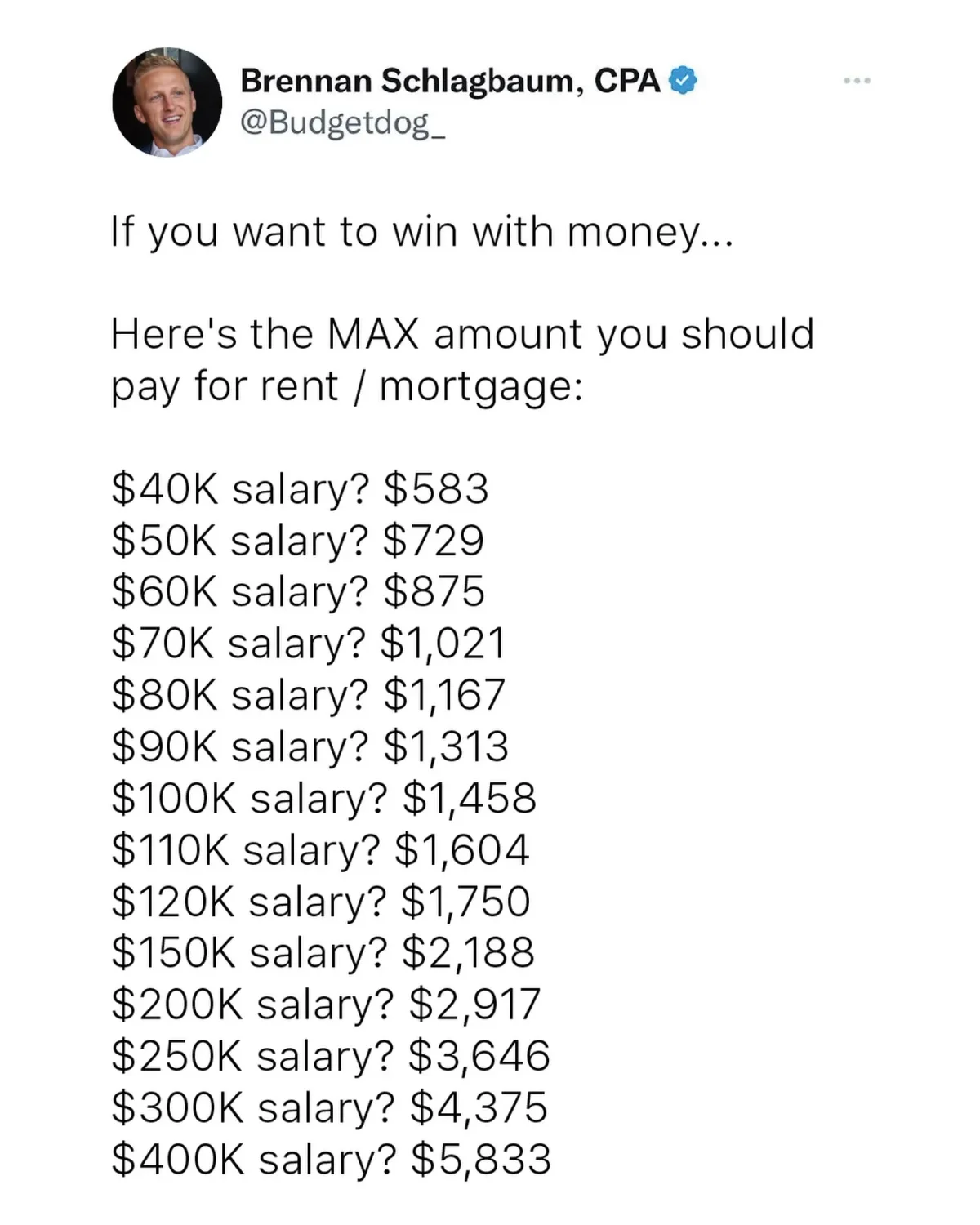
Keep Housing Costs Below 25% of Net Income
If these numbers make you uncomfortable... You’re probably overpaying 😬 The rule is simple: Your rent or mortgage should NEVER exceed 25% of your take home pay. Not gross. Overspending on housing is one of the biggest barriers to building real wealth... So if you want...

Diversify with Real Assets as Stocks and Bonds Stall
Bonds flat and stocks lower YTD. Why owning things like commodities, real and hard assets, shorter duration bonds, and managed futures in this volatile inflation 🌎 is more important than ever.

Lack of Surplus Forces You to Recycle Savings
If you are constantly sending money to your savings account and then two business days later, you have to move that money back into your checking account because something came up, that is usually not a discipline problem. Most of...

Holding, Not Overtrading, Beats Clever Market Timing
Stupid investors make more money than you. Why? Because they don’t try to outsmart the market. Most people are constantly trading in and out. Reacting to every headline and thinking they’re being clever. But my biggest win came from being "stupid": I bought Palantir at $7. Selling...

Five Years Renting Cost Him Higher Mortgage Rates
Rate were under 3% in 2021 and now over 6 What did 5 years of renting really get him
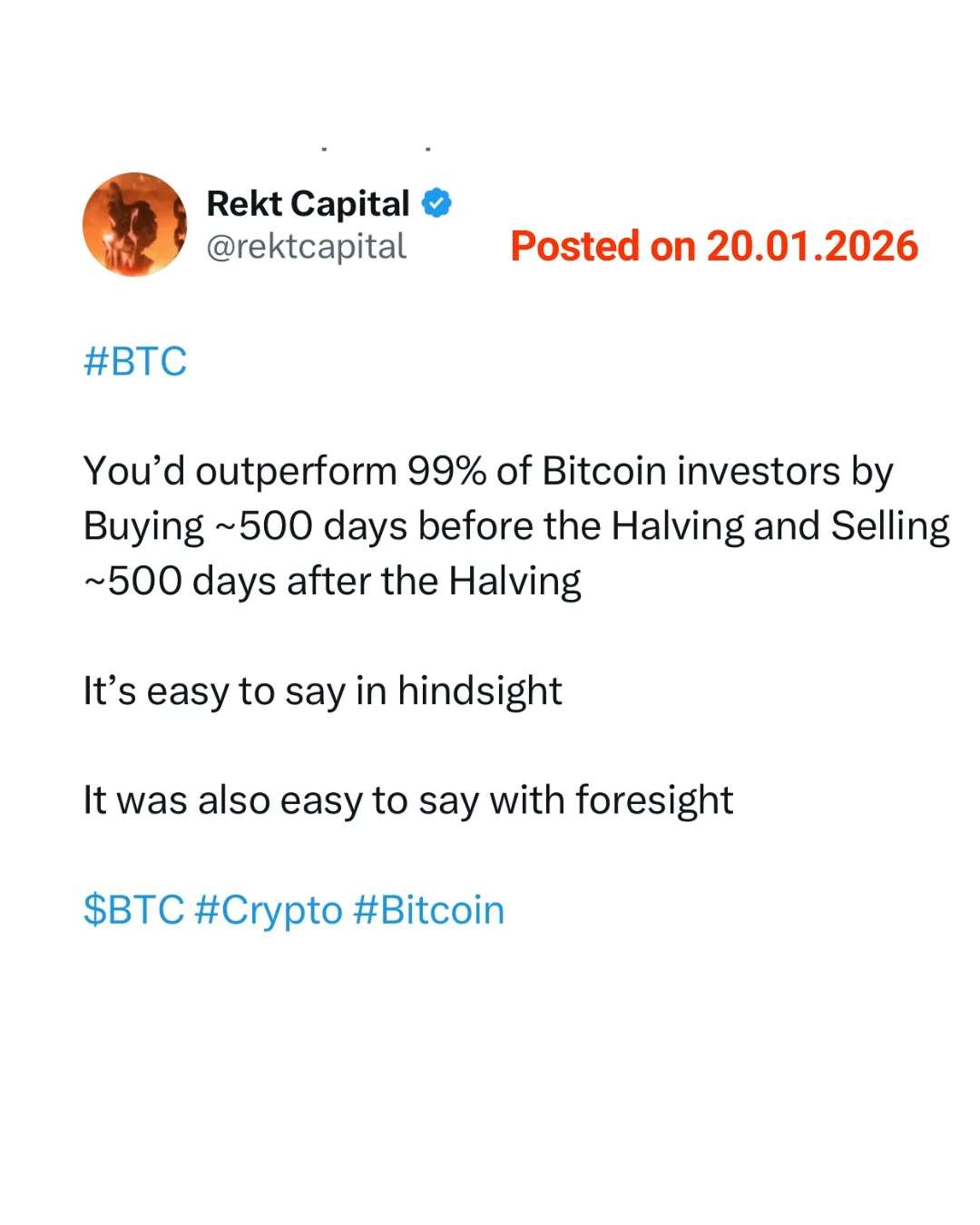
Buy 500 Days Pre‑Halving, Sell 500 Days Post‑Halving
20.01.2026 #BTC You’d outperform 99% of Bitcoin investors by Buying ~500 days before the Halving and Selling ~500 days after the Halving It’s easy to say in hindsight It was also easy to say with foresight $BTC #Crypto #Bitcoin 11.10.2023 #BTC Buying Bitcoin on a...

Block Ads, Protect Your Wallet From Unnecessary Purchases
The best money hack is becoming immune to ads trying to sell you crap you don’t need.

Most Overlook Simple Rules: Save, Invest, Avoid Debt
Simple rules: save, invest, avoid bad debt, earn more, be patient—most ignore them. Follow @chasecalhoun.realestate for more on build-to-rent and real estate investing. #realestate #investmentproperty #buildtorent

Five Essential Steps to Maximize Social Security in Your 60s
Here are five steps everyone in their 60s should take now to help ensure they make the most of Social Security. https://t.co/G4kqCF6jjT

Contribute Pre‑tax in High‑tax State, Retire Tax‑free Elsewhere
An easy tax arbitrage many people don't think about: Do a pre-tax 401(k) in a state with a high income tax vs withdrawing in a 0% tax state. Example - contribute pre-tax in CA/NY (say 10% marginal) but retire in 0% state,...

Time Horizon, Not Volatility, Determines Investment Risk
The biggest risk in investing isn’t volatility. It’s a short time horizon. Worst S&P 500 annualized returns since 1928: 1 year: -44% 5 years: -13% 10 years: -2% 20 years: +2% 30 years: +8% The longer you stay invested, the smaller the risk of a bad outcome. https://t.co/E6zeCB4Ir8

T‑CRUT Bypasses 10‑Year Rule as IRA Beneficiary
As a non-person entity, the T-CRUT is not subject to the 10-Year Rule and can be designated as the IRA beneficiary while naming the original non-spouse beneficiary as an income recipient of the trust and a charitable organization as the...

Switch to an S‑Corp, Save Up to $20K
Most coaches and creators focus on getting to $10k/month. But nobody talks about what happens after you get there. You: Hit $100k/year as a solopreneur. Congrats. The red sea parts and you finally see through the looking glass... Then... You realize you're paying 15.3% in...

Age‑Based Stock Rule Costs More Than 60/40
Most investors follow a rule nobody ever properly tested: subtract your age from 100, put the rest in stocks. A new Yale study finally ran the numbers. Following that rule costs the equivalent of 2% of lifetime consumption. A static 60/40...

Avoid These Pitfalls to Protect Your Wealth
5 ways to lose everything quickly: 1. Choose the wrong spouse. 2. Finance your lifestyle with credit card debt. 3. Put all your money in one investment. 4. Trust the wrong person. 5. Addiction (drugs, gambling...). What else?

Stay Calm in Volatile Markets with Proven Habits
The best investors stay calm when markets are volatile, and these financial habits can help you stay the course. https://t.co/hO1oDA3Gyi

Switching to Cost Plus Drugs Saves $800 Annually
My wife just moved a prescription to @mcuban @costplusdrugs and will save $800 a year over CVS/Target. That’s real money.

Small Investors Should Use Tax Wrappers for Yext Tender
$YEXT spread for an odd lot tender at low end of Dutch Auction range is now ~$50 on ~$520 deployed for ~10 day capital lock-up. This is the stuff small investors should locate within tax wrappers to maximize after tax...

Cut Hidden Bill Costs, Not Just Subscriptions
Just because it's an essential doesn't mean you should overpay for it. Most people look to their subscriptions as the first thing to go when they need to cut back, and they don't even notice the bills that are actually...

Buffett Chooses Stocks Over Real Estate for Liquidity
Investing legend Warren Buffett explains why he often prefers the stock market over real estate. Stocks can be bought or sold in seconds, while real estate deals can take months of negotiations. A powerful lesson in value investing, smart capital...

Avoid These 5 Habits to Stop Staying Broke
5 steps to guarantee you stay broke: 1. Trade time for money permanently 2. Lifestyle creep 3. Limiting or wrong beliefs about investing 4. Buying things to impress others 5. Waiting too long and loosing compound interest

60/20/20 Beats Traditional 60/40 with Gold, International
It has been my thesis for the past 5 years that the “new” 60/40 is more like a 60/20/20. To illustrate this the chart below shows that a hypothetical 60/20/20 portfolio, allocated as noted in the chart, could have sharply...

Prioritize Sustainable Returns Over Maximum Short-Term Gains
Instead of asking: "How can I earn the highest return possible?" Investors should ask: "What are the highest returns I can sustain for the LONGEST period of time without going bust." This changes entirely how you invest.

Bilt's Simple Redemption Turns 30¢ Into $1
The Best Bilt Cash Redemption Is The Most Boring — But It Turns 30 Cents Into A Dollar - View from the Wing https://t.co/z6kxNi1nO9

Step‑up Basis Wipes Out Taxes on Inherited Gains
Step up in basis is one of the most powerful tax provisions and can wipe out a lot of taxes. Say your dad bought $200k of stocks in a brokerage account that are now worth $2M. He passes them down to you...

Hold ISOs 1‑Year/2‑Year for Capital Gains
ISOs are attractive because, under the right conditions, gains from their exercise and sale can qualify for long-term capital gains treatment. However, to receive this preferential tax treatment, employees must wait to sell the employer stock until at least one...

Steady Boring Business Beats Chasing Quick‑rich Trends
Have a lot of friends who hopped around to get rich quick Tech during the run up, private credit All late, pretty much none of their equity ever materialized Better to just run a business in a boring field where you’ll get rich...

Flexibility Makes the 4% Rule Truly Foolproof
Hot take: no one has ever run out of money using the 4% Rule. Why? Because, in the real world, people are flexible. During a market crash, no one is going to increase their spending by inflation because "the rule said...
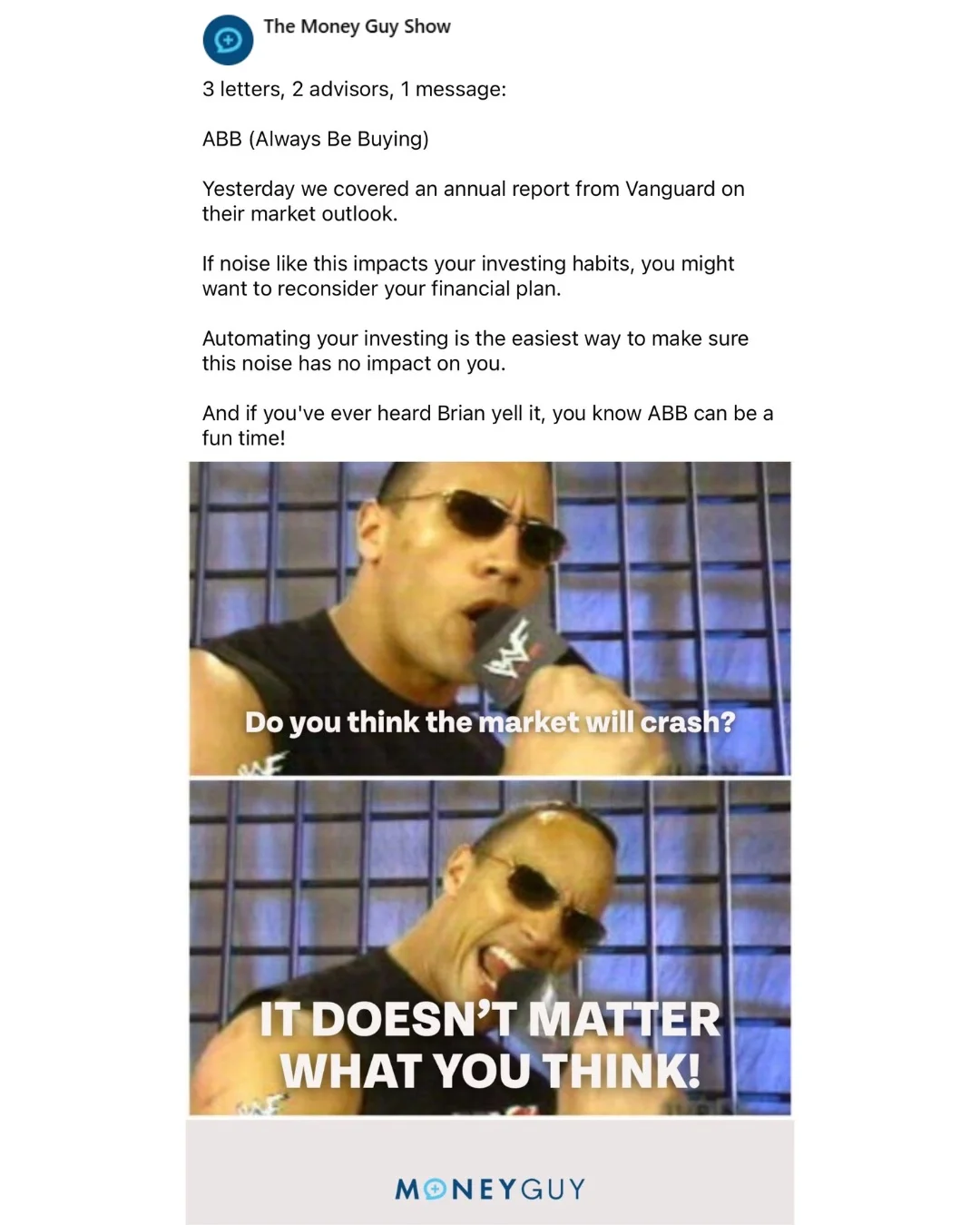
Consistent Dollar‑Cost Averaging Beats Market Timing
This circles back to investing consistently through Dollar Cost Averaging in a low-cost passive index fund that tracks the market. Remember, "Time in the Market, Beats Timing The Market." 📣 https://elmads.com/?p=4958 — The Power of Cost Averaging Investment Strategy