Today's Personal Growth Pulse

NYT launches ‘Ask the Therapist’ column to bring mental‑health advice to the masses
The New York Times introduced a weekly column called “Ask the Therapist,” written by psychotherapist and best‑selling author Lori Gottlieb. The feature invites readers to submit personal dilemmas, which Gottlieb answers with clinical insight and narrative flair. The newspaper aims to make professional mental‑health guidance accessible to a broad audience.

The Hidden Power of Talking to Strangers
Gillian Sandstrom’s new book "Once Upon a Stranger" argues that casual conversations with strangers improve personal well‑being and societal health. Research shows these interactions lift mood, add psychological richness through novelty, and expand access to diverse information. Repeated practice reduces fear of rejection and builds confidence, while brief stranger encounters boost trust and intellectual humility. In an increasingly isolated, digital world, the book offers a QUICK framework to make stranger‑talk a skill anyone can develop.

Mental Models: Essential Tools for Agribusiness Success
Mental Models for Agribusiness Leaders ◼︎◼︎◼︎ Recently, I talked with @timhammerich on The Future of Agriculture, one of my most listened to podcasts. It was a ton of fun to join Tim and talk about some of the concepts that have been...

The Hard Thing Is the Honest Thing — 7 April
The post argues that the hardest tasks are often the most honest ones, requiring us to confront discomfort rather than complexity. It explains how avoidance creates a subtle cost, eroding precision and character over time. By consistently choosing direct, truthful...

Shift Focus From Habit to Underlying Energy
To change your relationship with something (whether it’s alcohol, sugar, shopping or scrolling) instead of focusing on the behaviour, look at the energy behind the behaviour. It’s not about the ‘thing’. It’s about your relationship to the thing.

The Case for Designing Work Around Circadian Rhythms
In a recent HBR IdeaCast, professor Stefan Volk explains how human circadian rhythms—natural 24‑hour cycles that create distinct chronotypes—shape alertness, mood, and decision‑making. He argues that traditional nine‑to‑five schedules ignore these variations, causing productivity dips and heightened conflict when employees...

True Confidence Is Resilience, Not Guaranteed Victory
Nobody tells you this: Confidence is less about knowing you’ll win and more about knowing you’ll bounce back even if you don’t. Real confidence is resilience. Adaptability. Tolerance for uncertainty. Fear loses when you know failure is never final.

This Made All the Difference
Charlie Munger argues that rationality is defined by the thinking process, not the outcome. He recommends three practical habits—writing, checklists, and community engagement—to sharpen decision‑making in investing. The post frames these tools as ways to consistently outperform the market over...

How to Disagree Without Turning It Into a Fight
Julia Minson’s new book argues that disagreement is a strategic asset, not a flaw, and that turning it into conflict erodes productivity. She shows that traditional persuasion often fails, especially on emotionally charged issues, because it triggers defensive reactions. The...

Elasticity
The article frames time as an elastic resource that can be stretched through disciplined habits but never created anew. It warns that unchecked “stiffness” – attending meetings out of habit or providing unnecessary background – erodes that elasticity. By asking...

Skip OpenClaw: 50 Hours, $600, No Results
𝗜 𝗦𝗽𝗲𝗻𝘁 𝟱𝟬 𝗛𝗼𝘂𝗿𝘀 𝗮𝗻𝗱 $𝟲𝟬𝟬 𝗼𝗻 𝘁𝗵𝗲 𝗠𝗼𝘀𝘁 𝗛𝘆𝗽𝗲𝗱 𝗔𝗜 𝗧𝗼𝗼𝗹 𝗼𝗳 𝟮𝟬𝟮𝟲 Last week I was home sick with a cold. My body was begging for rest. But I’m an Enneagram 3. Threes don’t rest. We produce. So instead of...

Do One Thing Every Day That Scares You
Venture partner Linda Bain recounts how a childhood performance panic sparked a lifelong habit of embracing uncomfortable choices, ultimately guiding her from a farming town to senior roles in big pharma and biotech. She argues that the biotech sector thrives...

Episode 448: Marc Dixon Talks About Technology in Attractions, AI’s Purpose in the Industry, and Learning to Take Risks
In this episode, Marc Dixon, co‑founder and Managing Director of Study Academy USA, shares his unconventional career path from ride‑photo installations in the 1990s to senior roles at Kodak, Pixel, and various tech startups, highlighting how calculated risk‑taking propelled his...
Why "I Don't Know What To Do" Can Be The Biggest Lie We Tell Ourselves - The Emotions Diary #57
The author reveals that saying “I don’t know what to do” often serves as a self‑protective excuse, masking a deeper fear of wasting time. He introduces the Emotions Diary, a four‑step journaling practice designed to surface hidden motivations and guide...

Body Signals and Ambiguity Bias Linked to Consciousness, Time Perception and Mental Health
Two peer‑reviewed studies published this week reveal that heightened interoceptive awareness and a positive valence bias—how the brain resolves ambiguity—jointly influence conscious experience, time perception and risk for depression or anxiety. The findings suggest new pathways for personal‑growth practices that...

Four Surrey Women Over 50 Conquer 46‑Mile Arctic Trail in Sweden
Four women from Surrey, all over 50, completed a 46‑mile trek along Sweden’s King’s Trail, battling 56 mph headwinds and snowstorms. Led by ex‑SAS soldier Nick Wildman, the expedition highlights the growing demand for extreme adventure among older adults.

St. Louis Runner Mark Spewak Returns to Racing After Two Strokes, Shifts Motivation to Advocacy
Mark Spewak, a 32‑year‑old Webster Groves runner, survived two strokes in 2025 and has since rebuilt his strength, returning to distance running. His new motivation centers on raising awareness for stroke survivors rather than chasing personal bests, illustrating a profound mindset...

Neuropsychiatrist Warns High Performers That Directionless Success Threatens Brain Health
Long Island neuropsychiatrist Dr. Jeffrey DeSarbo cautioned top executives that success without clear future direction creates a hidden cognitive risk. He proposes a neuroscience‑informed bucket‑list system to restore purposeful anticipation and protect mental performance.

Mindfulness Coach Completes 57‑Mile Silent Walk From London to Cambridge
Mindfulness coach Bhupinder Sandhu walked 57 miles (92 km) from Parliament Square to Cambridge in complete silence over Easter weekend, aiming to raise awareness of mindfulness as a tool for mental health. The 15‑hour trek underscores a growing trend toward embodied...

Anthropic’s Growth Lead Credits $19 B Revenue Surge to Culture and Niche Focus
Amol Avasare, Anthropic’s head of growth, says the AI firm’s revenue climbed from a few hundred million to roughly $19 billion as a 40‑person growth team leveraged a narrow enterprise AI focus and an open culture. The interview reveals how the...

Bango: From a 300-Square-Foot Acai Shop to Leading a 'Better for You' Movement
Ryan Thorman turned a 300‑square‑foot açaí shop into Bango, a "better‑for‑you" food franchise now operating ten locations with two more under construction. The company is shifting to a franchise model that’s gaining traction along the East Coast. Thorman attributes the breakthrough...

The Founder Myth Is Wrong: The Best Leaders Fail Early, Often—And Plan for It
The article debunks the myth that successful founders never fail, arguing that early and frequent setbacks are common and valuable. It emphasizes that the real competitive edge lies in surviving failures, extracting lessons, and iterating quickly. The author shares personal...

Still Thinking Old? That’s Why You’re Falling Behind
The article argues that relying on outdated frameworks—"old maps"—prevents organizations and individuals from thriving in today’s fast‑changing environment. It illustrates how legacy companies often retrofit new technologies onto legacy models, leading to stagnation, while truly transformative firms redesign value creation...

The Reality of Being a Tech Lead
The article recounts a first‑time tech lead’s transition from an individual contributor to a facilitator who realized that a lead’s value lies in unblocking work, not in having every answer. By openly acknowledging knowledge gaps, the author built trust, leveraged...

Nothing Big Happened Today, And That’s Okay
The post reflects on days that feel uneventful, arguing that such quiet moments are not failures but essential foundations for lasting progress. It points out that modern culture rewards visible intensity, causing many to view ordinary days as disappointments. By...

Day 71 - The Return: Why Coming Back After a Break Is the Real Test
The post urges readers who paused a 70‑day growth challenge to treat the final 30 days as the true test of discipline. It frames the break as a hidden assessment of commitment and outlines three principles—recommit today, pick a single...

The People Who Always Volunteer to Go First Aren’t Brave. They Just Can’t Tolerate the Anticipation of Waiting.
The article argues that people who constantly volunteer to go first are not displaying bravery but are fleeing the discomfort of anticipation. Neuroscience shows the amygdala treats waiting as a threat, creating intense anticipatory anxiety that often outweighs the stress...

I Run a Business with My Husband. We Put Our Marriage First and Don't Let Our Egos Get in the...
Susie Moore and her husband Heath have built a thriving life‑coaching firm by treating themselves as copreneurs rather than just spouses. Their formula centers on putting the marriage ahead of any business decision, carving out crystal‑clear roles, and keeping egos...

Wait... I'm the Problem?
The post argues that modern therapy often traps clients in a cycle of validation, diagnosis, and medication, creating perpetual patients rather than fostering change. It follows a client’s realization that she herself was maintaining her stuck patterns despite multiple diagnoses...

My Anxiety Is Keeping Me Up. How Can I Get Some Sleep?
A recent Ask Well column highlights how constant news exposure and digital overload are fueling anxiety that disrupts sleep for many Americans. Experts from UC Irvine and Harvard Medical School explain that the brain isn’t wired for a nonstop stream...

Adam Grant Just Endorsed Ben Franklin’s 200-Year-Old Advice on How to Win Over Skeptics
Adam Grant and Brené Brown reconcile their long‑standing feud on the new podcast The Curiosity Shop, crediting a 200‑year‑old tactic popularized by Benjamin Franklin. The method—asking a skeptic for help—turned a hostile interaction into a collaborative opportunity, allowing Grant to secure...

5 Books That Explain Why You Keep Second-Guessing Your Money Decisions
A new roundup highlights five books that unpack why even savvy investors constantly second‑guess financial choices. The titles—ranging from Morgan Housel’s *The Psychology of Money* to Jonah Lehrer’s *How We Decide*—show that behavioral biases, mental accounting, loss aversion and brain‑based...

Why Burnout at Work Is Getting Worse in the Age of AI and Remote Work with Dr. Guy Winch
In a recent Future of Work® podcast, psychologist Dr. Guy Winch explains why burnout is worsening despite heightened corporate focus on well‑being. He links the surge to remote work’s blurred boundaries, AI‑driven anxiety, and relentless digital connectivity that spill stress...

Connect with Peers, Accept Not Being #1, Beat Imposter Syndrome
I used to struggle from imposter syndrome. Here are 2 things that helped me get over it: 1. Meet other people in your industry I remember meeting a bunch of "world-class marketing experts" at a conference. Needless to say, I was nervous. But when...
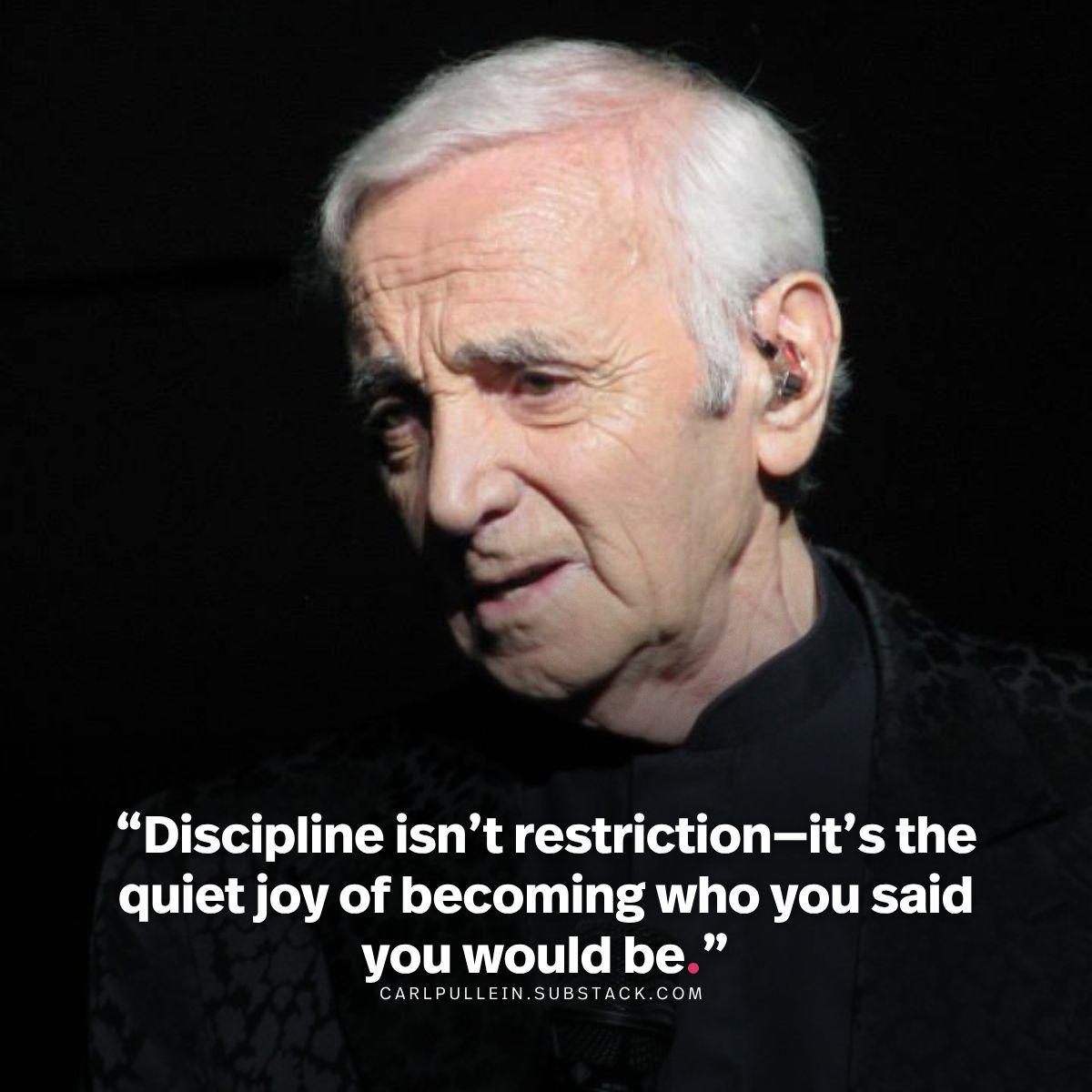
Discipline Becomes Freedom When Aligned with Your Desired Self
We often think of discipline as something heavy… something we have to force. But what if it’s not punishment at all? What if discipline is simply choosing the life that feels right—again and again—until it becomes natural? Because when your actions align with...

How To Unleash The Most Powerful Force In Business
Marcus Buckingham’s new book, *Design Love In: How To Unleash The Most Powerful Force In Business*, argues that the hidden engine of high‑performing teams is "leading lovingly." He defines this as creating experiences that make employees feel bigger, safe, and...

Your Mind Deceives Hundreds Daily—Observe the Illusion
Your mind lies to you hundreds of times a day Observe and you will see.

How To Be More Playful To Build Resilience, Navigate Challenges And Find More Joy
Piera Gelardi’s new book *The Playful Way* argues that playfulness is a mindset that boosts problem‑solving, stress management, and overall life satisfaction. The work outlines the Eight Powers of Play, from the Joyful Jester to the Curious Quester, and provides...

Practice Bridges the Gap Between Knowing and Doing
The gap between “I get it” and “I can do it” is practice. Most people never close it.

Daily Fear: Push Yourself Beyond Comfort Zones
"Do One Thing Every Day That Scares You" - debut From The Trenches blog from Linda Bain, serial biotech executive and Venture Partner at Atlas, on pushing yourself to the uncomfortable... https://t.co/eyXGovi3FX

Hypnagogic State: The Twilight Zone Between Sleep and Wakefulness Is a Creative Sweet Spot. Here’s How You Can Make It...
The hypnagogic state—a semi‑conscious twilight between sleep and wakefulness—has long fueled creative breakthroughs, from Paul McCartney’s “Yesterday” melody to Niels Bohr’s atomic model. Recent research shows participants in this state are three times more likely to uncover hidden problem‑solving rules, linking the...

Run Your Entire Business Inside Perplexity Computer
I can run my entire business with Perplexity Computer without navigating away from the app itself. Absolutely wild productivity.

Self‑mastery and Unbowed Resilience in the Face of Adversity
Two thoughts from William Ernest Henley “It matters not how strait the gate, How charged with punishments the scroll, I am the master of my fate: I am the captain of my soul.” “Under the bludgeonings of chance, My head is bloody, but unbowed.”

Nurturing Wise Attention
In today’s always‑on environment, relentless notifications and algorithm‑driven feeds hijack our attention, flooding dopamine pathways much like slot machines. Stanford researchers show these reward loops can mirror the impact of alcohol or stronger substances, while minor algorithm tweaks can shift...

Mental Pain Originates Within, Not From Others
No one can cause mental pain to you. It is caused by you and no one else but you, in reaction to something that happens around you. #SadhguruWisdom https://t.co/X7sW7kg8Ii

Building Leadership Resilience for the AI-Driven Workplace
Psychology of Work #Podcast Episode 52: Leadership resilience in the age of #AI – A conversation with Dr Marie-Hélène Pelletier @ABPsychologists https://t.co/qYS68bJiRa #HCM #HRM #HumanResources #HRTech #CHRO #FutureofHR

Mata Amritanandamayi Calls on Parents to Guard Inner Goodness Amid Negativity
On April 6, 2026, spiritual leader Mata Amritanandamayi told parents not to let negativity eclipse their inner goodness. The Times of India highlighted the advice as a timely reminder for caregivers navigating daily stress. Her message underscores a growing focus...

Joanna Macy’s Grief‑to‑Action Spirituality Fuels New Eco‑Activist Movement
Joanna Macy’s eco‑philosophy is inspiring a surge of grief‑to‑action spiritual work, as close collaborators describe how her “Work That Reconnects” helps activists transform ecological sorrow into communal resilience and climate‑focused activism.

Mindfulness Linked to Values and Emotional Intelligence in New Media Pieces
Infobae and StyleNesters each released detailed stories this week that connect mindfulness practice to personal values and emotional intelligence. The pieces feature expert commentary and practical guidance, highlighting a rising trend in spirituality coverage.

Tarot Reader Kishori Sud Maps Seven Signs of a Life Reset
Tarot reader and crystal healer Kishori Sud explains that a “forced life reset” manifests through seven distinct signs, including sudden endings, emotional release, and a newfound draw to spiritual practices. The guidance, published in Hindustan Times, offers readers a framework...

Experts Warn Over‑Protective Parenting Fuels Child Anxiety
Therapists across the U.K. and U.S. warn that the common habit of rescuing children from anxious moments actually amplifies their anxiety. They cite research and clinical experience, recommending a three‑step approach of validation, regulation and mitigation.