Today's Personal Growth Pulse

NYT launches ‘Ask the Therapist’ column to bring mental‑health advice to the masses
The New York Times introduced a weekly column called “Ask the Therapist,” written by psychotherapist and best‑selling author Lori Gottlieb. The feature invites readers to submit personal dilemmas, which Gottlieb answers with clinical insight and narrative flair. The newspaper aims to make professional mental‑health guidance accessible to a broad audience.

Pray For The Bear
The post reframes the classic “fight the bear” mentality through a feminine lens, arguing that composed confidence, discipline, and emotional intelligence replace brute aggression. The author shares personal experience of building a career without safety nets, emphasizing self‑trust and consistent execution as the core edge. She coins “Seductive Intellect” to describe a strategic yet feminine presence that grants access to elite circles. The piece ends with a tactical five‑step call to action for readers.

Silence Over Prayer: Let Life Unfold Naturally
Prayer means you are trying to tell God what to do. Meditation means you understand what a ridiculous idea it is to tell the basis of creation what to do. So you simply become silent. If you become silent on...

Your First Monday Protocol — Procrastination Crusher
The Inside the Blueprint newsletter launched its inaugural "First Monday Protocol" on May 4, 2026, delivering a "Procrastination Crusher" audio guide to paid subscribers each month. The protocol is positioned as a mini nervous‑system reset that tackles procrastination by reshaping mental patterns...
When Discipline Becomes Something You Always Feel
The piece explains how discipline evolves from a deliberate, effort‑based practice into an ingrained part of one’s identity. Over time the habit becomes a constant, quiet background pressure that can blur the line between productive structure and mental fatigue. The...

The Gift of Getting Weirder With Age
A new study led by Texas A&M psychologist Rebecca Schlegel examined how people perceive their authenticity across the lifespan. Participants aged 19 to 67 rated each decade of their lives as a "chapter" on an authenticity scale. The results show...

Your Inner Dialogue Shapes Team Energy and Outcomes
The thoughts you think when you talk to your team matter. Are you trying to convince them to care? Does it feel like a battle? Are you arguing with them in your head? Apart from being exhausting to you, that energy...

Leadership Means Responsibility, Not Just Management
In 50 years of working with CEOs across every major industry, one question comes up more than almost any other: "𝐀𝐦 𝐈 𝐥𝐞𝐚𝐝𝐢𝐧𝐠 𝐨𝐫 𝐣𝐮𝐬𝐭 𝐦𝐚𝐧𝐚𝐠𝐢𝐧𝐠?" 𝐌𝐨𝐬𝐭 𝐚𝐥𝐫𝐞𝐚𝐝𝐲 𝐤𝐧𝐨𝐰 𝐭𝐡𝐞 𝐚𝐧𝐬𝐰𝐞𝐫. 𝐓𝐡𝐞𝐲'𝐫𝐞 𝐚𝐟𝐫𝐚𝐢𝐝 𝐭𝐨 𝐚𝐜𝐭 𝐨𝐧 𝐢𝐭. My latest article in...

Why Being "Easily Understood" Is a Psychological Trap?
Modern digital platforms force individuals to condense complex identities into simple, legible profiles. The essay draws on James C. Scott’s concept of legibility, showing how algorithms demand clear, quantifiable data in resumes, dating apps, and personal branding, eroding authenticity. This...
You Start Your Day With Noise, Not Awareness
The article highlights a fleeting quiet moment that occurs right after waking, which most people lose to phone alerts, thoughts, or other inputs. It explains how the mind races ahead while the body awakens slowly, replacing awareness with mental noise....

Persistence Outshines Talent, Genius, and Education
“Nothing in the world can take the place of persistence. Talent will not; nothing is more common than unsuccessful men with talent. Genius will not; unrewarded genius is almost a proverb. Education will not; the world is full of educated...

Cultivate Agency and Healing Through Self‑Reflection Tools
The new Huberman Lab episode is out: Tools to Bolster Your Mental Health & Confidence | Dr. Paul Conti 0:00 Paul Conti 2:51 Self View; Tool: What's Going Right?; State Dependence 10:03 Sponsors: Helix Sleep & BetterHelp 12:44 Tool: Compassionate Curiosity; Falseness; Social Media 21:00...

How To Survive A Toxic Boss And Keep Your Career Intact
The article highlights the growing problem of toxic bosses in modern workplaces, noting that poor leadership drives turnover, lowers productivity, and harms employee health. It explains how to recognize true toxicity versus normal pressure, emphasizing patterns of blame‑shifting, information hoarding,...

Total Time Freedom Is Met with Disbelief
Owning 100% of your time is so rare that when people see it, they assume you're either unemployed, broke, or lying.

Discipline Is Remembering when You Forget Purpose
The post argues that discipline, not fleeting purpose, is the engine that keeps people moving when motivation wanes. While purpose ignites initial effort, it naturally ebbs due to stress, routine, or low energy. Discipline is defined as a repeatable, low‑effort...

The Splintered Mind: How Constant Switching Leaves Lasting Cognitive Residue
The post warns that even a split‑second task switch leaves a lingering attention residue that weakens subsequent focus. It explains how these tiny fragments of unfinished cognition do not vanish but accumulate, gradually fragmenting the mind. Over time, the buildup...

Times of India Details Dopamine Burnout and 10 Superfoods to Reset Brain Chemistry
The Times of India published a detailed guide on dopamine burnout, linking constant digital stimulation to reduced motivation. The piece lists ten superfoods and a step‑by‑step reset protocol, offering science‑backed ways to revive drive for personal growth.

Sophia Rosing Launches 30‑Day Simple‑System Challenge to Reinforce Sustainable Habits
Sophia Rosing, a Midwest‑based lifestyle practitioner, announced a 30‑day program encouraging people to adopt one simple, repeatable habit each day. Her message stresses consistency over intensity, positioning small systems as a remedy for the widespread struggle to maintain routines.

Your Mornings Decide More than Your Intentions
The post argues that a calm, intentional morning sets the tone for the entire day, outweighing mere good intentions. Rushed or distracted starts lead to cascading delays, while simple, repeatable actions create momentum. Consistency in the early hours is presented...

Don’t Wait for the Right Mood
The piece urges readers to stop waiting for the perfect mood before beginning a new skill and instead adopt a low‑bar, daily habit. It argues that consistency—such as a 15‑minute session—creates momentum that outweighs occasional enthusiasm. The author highlights that...

The One Thing to Do Before You Check Your Phone
The post urges readers to pause for one minute before reaching for their phone each morning. It explains that the brain is still in a low‑energy state upon waking, and the first stimulus sets the tone for the day. By...

I Asked AI to “Fix My Life”: Here Are the 5 Prompts That Actually Worked
A Substack post outlines a five‑prompt AI framework that helps solopreneurs replace ad‑hoc admin work with a systematic operating system. The first prompt, dubbed the “Shitstorm Decoder,” categorizes a brain‑dump of tasks into urgent, important, delegable, or discardable buckets and...

Long-Term Thinking over Short-Term Comfort
The post argues that most daily decisions boil down to choosing short‑term comfort or long‑term benefit. While immediate ease feels attractive, it often stalls progress, whereas consistent small actions aligned with future goals build stability, skill, and confidence. The author...

You Have 47 Seconds Before You Lose Them
The piece reveals that modern digital habits have trimmed focused attention on a single task to roughly 47 seconds, debunking the widely‑cited 8‑second myth. While the metric originates from screen‑based behavior, the same reflexes infiltrate face‑to‑face conversations, prompting listeners to...
Saying No to Protect Your Time
The post argues that saying “no” is essential for protecting limited time and maintaining personal focus. It explains how habitual agreement to requests erodes priorities and creates a cycle of overcommitment. By framing refusal as a disciplined choice rather than...

That Quiet Mental Noise You Can’t Turn Off
The piece describes a subtle, constant mental chatter that persists even in silence, fueled by today’s nonstop stream of digital inputs. It explains how the brain’s default‑mode activity stays on low‑level processing, turning unfinished thoughts into looping background noise. Attempts...

The Feminine Girl's Guide To Thriving In College
The post frames college as the pivotal period for young women to define their identity, values, and confidence. It challenges the cultural narrative that self‑discovery belongs to the mid‑20s, arguing that freshman year is the most formative. The author outlines...
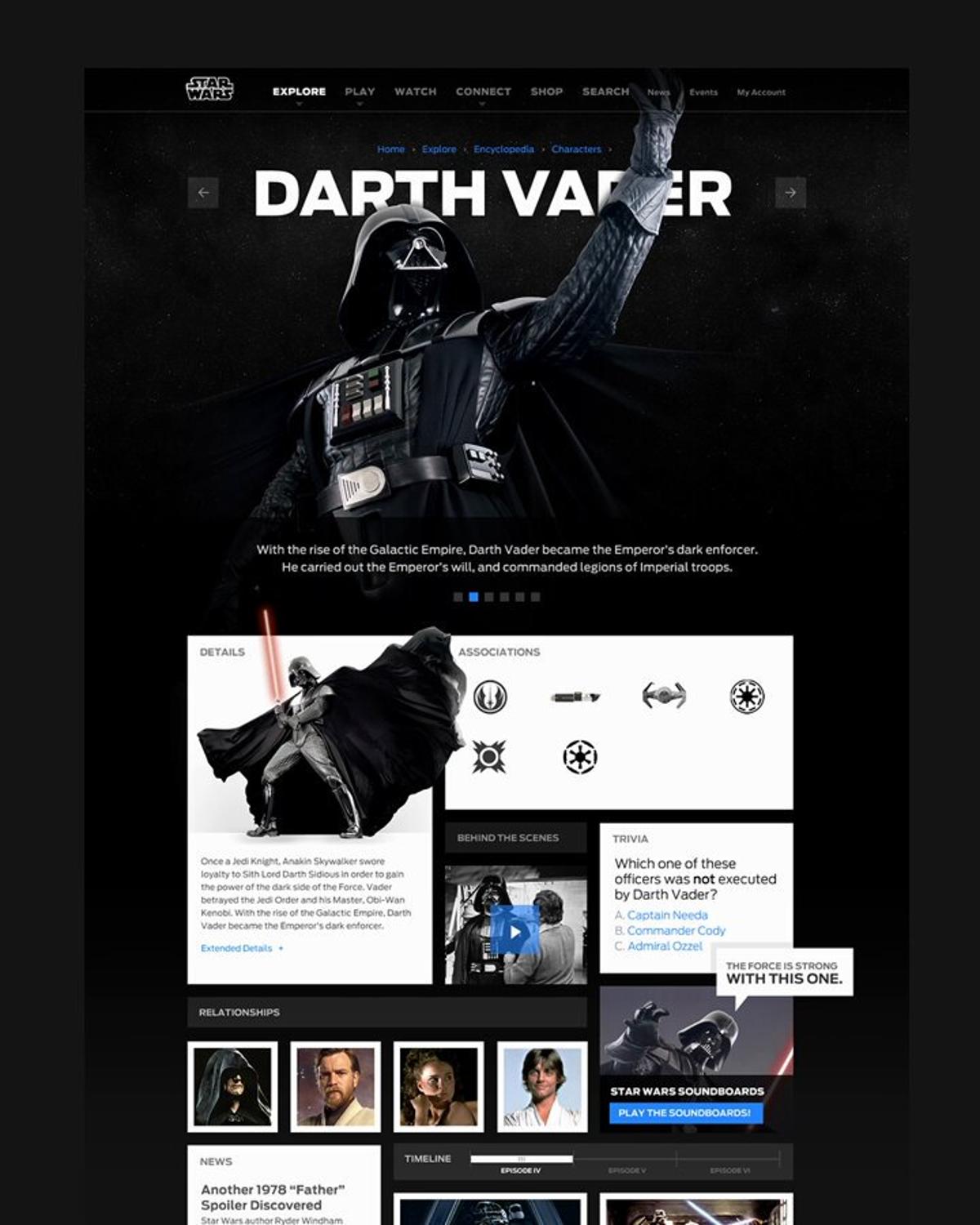
Authentic Design Wins: Embrace Your Unique Style
May the 4th be with you, from someone who almost wasn’t ready for it. 15 years ago, I art directed the redesign of the Star Wars website. What I’ve never said publicly: I almost didn’t deserve the shot. Just before that project...

Why Meaning and Growth Matter in an Engineering Workplace
MBP was named Engineering.com’s Top Workplace for Engineers 2026, highlighting its strong reputation among engineering talent. The firm emphasizes meaningful project work across sectors such as infrastructure, education, and life sciences, giving engineers a tangible impact on long‑term assets. Career...

A Simple Way to Stop Carrying Thoughts All Day
The post advises a quick mental‑unloading technique: write down unfinished thoughts, tasks, and recurring ideas. By externalizing these items, the brain no longer has to keep them active, which eases the feeling of mental crowding. The author emphasizes that the...

Your Future Is Built in Boring Moments
The post argues that genuine progress stems from ordinary, repetitive actions rather than dramatic, high‑energy moments. It emphasizes that consistency in seemingly boring tasks builds a stable foundation for future success. The author invites readers to identify a simple daily...

Your Routine Reflects Your Internal Order
The post argues that daily routines are a mirror of internal mental order, not merely a schedule. When thoughts are clear, habits stay steady; when the mind is unsettled, routines become erratic. Small adjustments to actions or to underlying priorities...

Mental Well-Being in the Newsroom
The American Press Institute launched a May Special Edition series on newsroom mental well‑being, timed with Mental Health Awareness Month. The program offers a trio of webinars and practical guides for news leaders to recognize burnout, trauma, and to build...

The Science of Social Loafing: Why Groups Kill Individual Effort (and How to Fix It)
The 1880s Ringelmann experiment revealed that individual effort drops dramatically as group size grows, a phenomenon now known as the Ringelmann Effect or social loafing. Researchers attribute the decline to motivation loss—when contributions are anonymous—and coordination loss—when synchronizing actions becomes...

Impact of Influence
Great leaders are redefining influence by moving beyond formal authority toward empathy‑driven, collaborative orchestration. In the digital‑first era, strategic influence depends on intellectual integrity, evidence‑based guidance, and a clear logic trail that earns trust. By integrating human insight with synthetic...

Pressure Shapes Strength: Keep Standing Through Inner Battles
any man reading this… I know what it feel like to lose everything and still have to show up like you good. smiling outside, fighting demons inside. but listen… pressure don’t break real ones. it builds something they can’t touch. stay solid. 👑

The Contract You Didn't Sign
The post "The Contract You Didn’t Sign" exposes how traditional masculine norms force men to suppress grief, leading to chronic over‑work and emotional isolation after a loss. It describes the hidden cost of this performance‑based coping—strained relationships, deteriorating health, and...

You Already Know the Next Step — May 4
The post argues that waiting for absolute certainty before acting is a trap. Most decisions are made with enough information to move forward, not perfect clarity. By embracing partial understanding and focusing on the immediate next step, individuals can break...

Moving Your Body Is Free, Instant Therapy
Movement is free therapy. I’ve never gone out for a long run, walk, or lift and not felt better about whatever issue I was stressing over. A lot of problems in life are solved by just moving your body.

How Americans Disagree at Work Without Burning Bridges
The Substack post reveals a paradox in U.S. workplaces: while directness is prized, most employees soften disagreement with specific phrases. It outlines three free, universally used softeners—“I see it a bit differently…”, “Help me understand…”, and “That’s fair, and…”. These...

Decentralized Teams Scale Better Than Centralized Command
Happy May the 4th! The most underrated leadership lesson in Star Wars is structural, not spiritual. The Empire ran centralized command and control. The Rebellion ran small, autonomous teams making local decisions. Half the enterprises I work with are still figuring...

Turning to Chatbots when Lonely May Exacerbate Feelings of Loneliness, Study Finds
A 12‑month longitudinal study of 2,149 adults across the United States, United Kingdom, Canada and Australia found that loneliness prompts people to seek companionship from AI chatbots, and that increased chatbot use subsequently heightens emotional isolation. Roughly 26‑30% of participants...

Quiet Progress Beats Forced Productivity on Off Days
Bad day? You’re not broken… you’re just human. Not every day is meant to be a 10/10 productivity sprint. Some days are about doing the bare minimum that still moves your life forward… and that’s more than enough. Instead of forcing 15...

8 Leadership Strategies From Top Performers
The article outlines eight leadership strategies drawn from top CEOs, emphasizing mission alignment, bottom‑up input, continuous feedback, purposeful turnover, risk‑taking, diversity, effective delegation, and conflict management. It cites data such as only 40% of employees understanding their company’s mission and...
Our Choices Are Driven by Subconscious Brain Chemistry
As with animals, many of our decision-making drivers are below the surface. An animal doesn’t “decide” to fly or hunt or sleep or fight in the way that we go about making many of our own choices of what to...

From Outside Minds to Inside Influence: Seize Every Chance
Fripp's Words of Wisdom: “I used to work on the outside of peoples’ heads, now I work on the inside, so there’s only half an inch difference.” How did I do it? By preparing for, noticing, and seizing every chance...

Unlucky People Share Five Self‑Sabotaging Habits
The unluckiest people I know all do this: • Can't let go of their past • Are highly judgemental • Are closed to change • Rarely see the funny side • Are self-absorbed.

Trade Fearlessly: Start Small, Build Confidence
I don't know who needs to hear this, but stop trading in fear and stop living in fear. If you have to, start with smaller positions to build your confidence.

Support the Gritty, Don’t Force the Unwilling
The implication of this is one I agree with. If they don't wanna play, don't force them. But if they have the grit and "rage to master", you gotta support them the best you can.

Today's Choices Shape Your Decade‑long Success
A Monday morning question for you: What are you doing today that will benefit you in a decade?

Discipline Is the Split‑second Choice, Not Endless Grind
Discipline is not the grind. It is the catch. The split second between the trigger and the response where you choose differently.