
Writer Souvankham Thammavongsa on Not Filling in What’s Missing
In a candid interview, Souvankham Thammavongsa explains that she embraces the "not‑knowing" phase of writing, producing an initial "ugly draft" before shaping the final text. She often starts each chapter of her novel Pick a Color with its opening sentence, treating chapters like poems that later expand. Thammavongsa describes herself as a "writer of absence," deliberately leaving gaps for readers to fill, and she acknowledges persistent fear of losing her love for writing. Her emphasis on restraint and minimal material mirrors the aesthetic of artists like Agnes Martin.

How I Use AI to Think Better
The author argues that AI tools, while accelerating content creation, erase the productive discomfort of the blank page that fuels original thinking. Citing William James, he explains that thinking emerges from the friction of trying to express ideas, not beforehand....

When Rest Fails - Part 2
The second installment of “When Rest Fails” introduces a practical framework for professionals stuck in chronic exhaustion despite conventional burnout remedies. It highlights the concept of “stacking micro‑wins” and offers a downloadable workbook to implement the method immediately. The post...

When the Adrenaline Fades
The author reflects on the challenge of maintaining high performance once the initial adrenaline of a book tour and high‑profile engagements fades. Drawing on experiences in the White House, the piece contrasts the glamour of high‑pressure moments with the quieter...

The Kyle Kingsbury Podcast Podcast - Episode 1 - Alex Dripchak
Kyle Kingsbury, known for his guest appearances, has launched his own podcast series, debuting with Episode 1 featuring Alex Dripchak. Dripchak, a sales director and productivity expert, joins to discuss his new book *Maximize* and share time‑management habits. The episode blends casual...

Clara Sadomba Trailblazing Zimbabwe’s Mining Industry and Empowering the Next Generation of Women
Clara Sadomba, board chair of Zimbabwe's Mining Industry Pension Fund (MIPF), outlines her top priorities: ensuring financial sustainability through diversified investments, robust risk management, and member education. She emphasizes transparency, regular reporting, and independent oversight to build confidence among miners....

What Ancient Egypt Still Teaches Today’s Leaders
After a vacation among the pyramids, the author reflects on how ancient Egypt’s leadership principles still resonate for today’s CEOs. The Egyptian concept of *ma’at*—truth, balance and order—illustrates that a leader’s duty is to create stability, fairness and lasting value,...

18 Brutal Habits To Level Up Fast
The Substack post outlines 18 brutally practical habits designed to accelerate personal growth, from mimicking successful role models to daily physical activity. It stresses rapid execution—like the 48‑hour rule—and the power of incremental improvement, such as the 1% daily compound...

The Top Leadership Development Programs 2026 List
The 2026 Top Leadership Development Programs list ranks ten elite offerings based on five performance‑driven criteria, including business impact measurement and accountability systems. Vistage tops the chart with a perfect 100 score, followed by Stanford, Harvard, INSEAD, and Wharton among...

Not Operating by the Checklist (Stacey London)
Stacey Lindsay, author of *Being 40*, joins host Elise to discuss how women confront societal checklists as they enter their forties. Drawing from her own turbulent family history—her mother’s departure and a challenging upbringing—Lindsay explores self‑authoring, forgiveness, and breaking generational...

How Should I Handle an Openly Hostile Job Interviewer?
A reader recounts a past interview where the panel was openly hostile—belittling the résumé, using aggressive facial expressions, and making demeaning remarks. Despite the abuse, the candidate was offered the job, stayed briefly, and left for a better opportunity. The...

This Is The Most Important Skill You Can Have In Life
Ryan Holiday argues that essay writing is the most vital skill for personal growth, illustrating how the discipline of crafting essays shaped his thinking and career. He recounts Eisenhower’s wartime briefing as a historic example of writing clarifying strategy under...

The Key to Working with Enneagram Fours
The post explains how Enneagram Type Four employees bring creativity, emotional depth, and a desire for meaning to the workplace. It outlines the dual pathways of healthy versus stressed Fours, showing how feelings can either foster empathy or lead to withdrawal....

Peter Duke on the Delingpod
Peter Duke returns to the Delingpod to recount his Pacific Palisades house fire, using the loss of his possessions as a springboard to critique materialism and consumer culture. He argues that media functions as a low‑cost epistemological weapon, shaping belief...
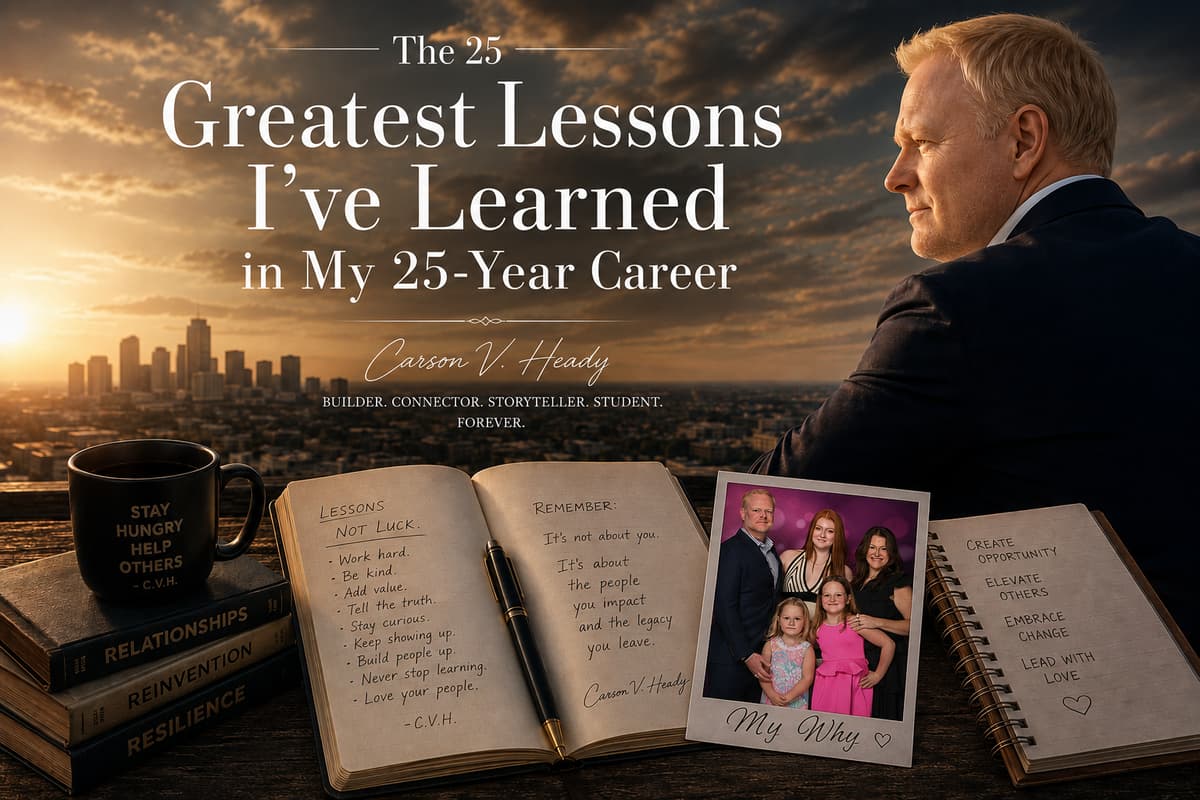
The 25 Greatest Lessons I’ve Learned in My 25-Year Career
Carson V. Heady reflects on a quarter‑century in sales, distilling 25 hard‑earned lessons that prioritize relationships, reputation, and resilience over raw talent. He argues that consistent habits, emotional intelligence, and purposeful authenticity drive long‑term success more than occasional high‑intensity pushes....

Grounding and Resourcing in Breathwork: What They Are and How to Use Them
The guide explains grounding and resourcing as essential, trauma‑informed tools for breathwork practitioners and participants. Grounding anchors the nervous system in the present, while resourcing provides a felt sense of safety and strength. The article stresses practicing these techniques while...

How to Experience More Meaning in Your Life
In a recent podcast, author Dave Evans argues that the classic question “what is the meaning of life?” is less useful than asking “how do I experience meaning right now?” He draws on his new book, *How to Live a...

Amanda Sabia, Relativity: Making Space: How Leaders Lift Others in Legal Tech
Amanda Sabia’s Relativity blog post draws a parallel between NASA’s Artemis II mission— which captured data at speeds 100,000 times faster than Apollo— and the rapid, data‑driven evolution of legal technology. She highlights how the mission’s diverse crew, especially the influx...

You Don't Have a Knowledge Problem. You Have an Execution Problem.
Samuel Valente’s post launches a 90‑day execution challenge for founders, organized into three phases—Clarity, Acquisition, and Execution. The program delivers a weekly written issue containing a framework and a mandatory mission, forcing participants to act rather than merely consume content....

Marriage as an Engine of Antifragility
The author observes that many 30‑something professionals view relationships through a self‑centric, therapy‑driven lens, valuing personal fulfillment over long‑term commitment. While they articulate boundaries and emotional intelligence well, they resist the constraints of permanence and sacrifice that marriage traditionally entails....

Do You Feel Ashamed of Your Bad Attitude?
The essay argues that society conditions us from childhood to mute criticism, irritation, and what is often dismissed as a "bad attitude." It traces how this conditioning breeds shame when honest negative emotions surface, especially in adolescence and adulthood. The...

Untapped Potential: From Eeyore to Top Performer in 1 Quarter
The article argues that sales leaders often discard high‑potential reps because they don’t fit a charismatic stereotype. By crafting a sales script in the rep’s own voice, the author turned a quiet, “Eeyore‑type” employee into a top‑5% performer within a...

How Retrieval Practice Changed My Teaching
A teacher discovered retrieval practice during a science‑of‑learning fellowship and immediately integrated low‑effort techniques—brain dumps, retrieval grids, and turn‑and‑talks—into daily lessons. The shift from lecturing to prompting students to recall information produced rapid gains in long‑term retention and classroom engagement....

Podcast: The Downsides of Freedom
Two Percent released a new podcast episode featuring bestselling author David Epstein, who argues that too much freedom can be counterproductive. Epstein illustrates how constraints drive innovation, contrasting General Magic’s collapse with Pixar’s success, and introduces a Post‑It note system...

Day 3: When to Push Back Against Self-Sabotage – and When to Listen
Day 3 of the Beneath Self‑Sabotage Challenge guides readers in distinguishing fear‑driven resistance from internal signals, using three diagnostic questions. It shows how mistaking one for the other can keep people stuck for years. The post then outlines gentle, intention‑based...

Tom Rath on Purpose, Meaning, and the Question Every Business Owner Needs to Answer
Tom Rath, Gallup researcher and bestselling author, argues that purpose isn’t a lofty philosophy but a practical daily tool for small‑business owners. He urges leaders to reserve 20‑30% of each day for work that creates long‑term value, warning that routine,...

5 Simple Ways Functional Breathing Improves Mental Clarity
Functional breathing—slow, light, nasal respiration—directly influences brain oxygenation and autonomic balance, leading to sharper focus and reduced mental fatigue. The article outlines five ways the practice improves clarity: better oxygen delivery via the Bohr effect, stress regulation through vagal activation,...

The Psychology of Play: Why Strategic Hobbies Are Essential for Brain Health
Strategic hobbies such as chess, bridge, or musical instruments engage active leisure, stimulating neuroplasticity and executive function. Research shows adults who regularly partake in mentally demanding pastimes are 75% less likely to develop dementia. These activities also lower cortisol by...

This Is How You Raise Your Self-Worth
The post outlines 27 actionable lessons for building unshakeable self‑worth, arguing that the relationship with oneself shapes every decision, boundary, and partnership. It frames self‑worth as a skill developed through awareness, deliberate choices, and unlearning limiting beliefs. The author invites...

AI and The Magic Loop
Ethan Evans and Jason Yoong of Level Up celebrate a member’s promotion at a major fintech, using their "Magic Loop" framework to illustrate career acceleration. The Magic Loop outlines five repeatable steps—excel at your core role, ask how you can...

You Don’t Need a Break, You Need a Standard — May 7
The article argues that productivity slumps stem from a lack of a fixed daily standard, not from overwork. It explains how inconsistent effort creates cycles of activity and inactivity, leading people to mistakenly seek breaks. By establishing a non‑negotiable baseline...

How to Stop the Inner Critic From Running the Room
The post reframes the inner critic as a character called "La impostora," arguing that naming the voice makes it manageable rather than silencing it. It outlines a three‑stage strategy: preparing the room before you enter, interrupting the critic mid‑speech, and...

Build an Automated Second Brain with Obsidian and Codex
Matt Wolfe outlines how to build an automated “second brain” using Obsidian, OpenAI’s Codex, and GitHub. The framework combines a markdown knowledge base, a CRM for contacts and meeting notes, and a journaling layer that leverages AI for summarization, cross‑referencing...
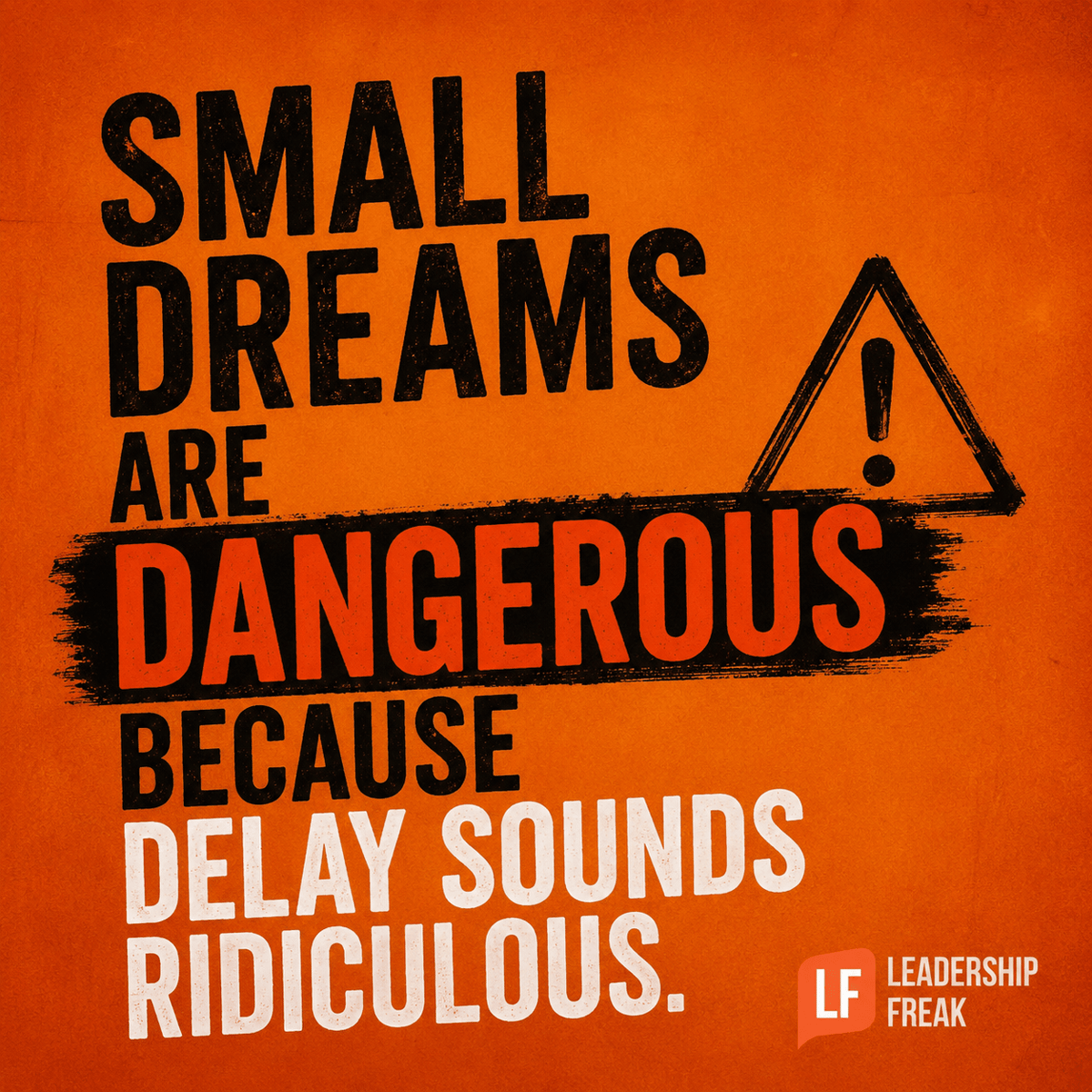
Small Dreams Are Dangerous
The article "Small Dreams Are Dangerous" argues that modest, actionable goals are more powerful than lofty, vague ambitions. It outlines five practical steps: prioritize serving others, act immediately, reject artificial wealth‑centric targets, focus on small‑scale impact, and build collaborative teams....

Why Explaining Things Makes You Understand Them Better
David R. Hamilton explains that articulating what you’ve learned forces you to spot gaps, turning fuzzy knowledge into clear insight. He cites Stanford’s Protégé Effect study, where students tasked with teaching a virtual character outperformed peers who simply studied, with...

Book Briefing: ‘Mission Ready’ by Lindy Elkins-Tanton
Lindy Elkins‑Tanton, director of the Berkeley Space Sciences Laboratory and leader of NASA’s $1.2 billion Psyche asteroid mission, has released “Mission Ready,” a guide on building high‑performing teams under pressure. Drawing from her experience steering the Psyche spacecraft, she argues that...

How Warren Buffett Trained His Mind for Wealth Using Discipline
Warren Buffett’s fortune stems from disciplined mental habits rather than flashy trading. He rigorously says no to most opportunities, focusing only on businesses within his circle of competence. A daily habit of reading hundreds of pages compounds his knowledge, while...

10 Things to Let Go of to Become a Happier Person, According to Charlie Munger
Charlie Munger’s happiness framework, drawn from Poor Charlie’s Almanack, focuses on what to discard rather than acquire. He identifies ten self‑defeating habits—including envy, victim mentality, rigid ideology, excessive debt, chronic anger, and unnecessary complexity—that erode mental clarity and freedom. By...

The Leader Who Looks Fine
The Gallup State of the Global Workplace 2026 Report, covering surveys in over 160 countries, reveals a stark gap between how senior pharma leaders rate their overall life satisfaction and how they feel day‑to‑day. While executives score high on the reflective...

How to Stay Adaptable in a Changing World
Adaptability has shifted from a valuable trait to a business imperative as automation and AI force professionals to reinvent their skill sets every few years. The Stoic Wisdoms essay highlights that intelligence can paradoxically cement belief rigidity, citing Dan Kahan’s...

The Future Of Work Has Outgrown “Good Enough” Leadership. Your 6-Part Playbook To Become An Exceptional Leader Starts Here
Effective leadership has shifted from merely meeting targets to mastering heart‑based skills amid AI, hybrid work, and a Gen Z workforce. A Harris Poll of 2,206 U.S. employees found only 30% of leaders are deemed exceptional, while 54% are merely...

Jesse Vierstra: Leading Through Work, Not Words
Jesse Vierstra grew up on a dairy farm in Idaho, learning to fix problems instantly. He founded Iron Oaks Custom Homes in 2018, personally overseeing each build and now has completed more than 50 homes. By listening to client pain...
6 May 2026 ~ 3 Good Things
Emily Gaines Demsky uses her Substack to celebrate the “3 Good Things” gratitude practice and to thank her community, while explaining why she also spends time on Instagram. She cites three reasons: showcasing visual art, speaking directly to audiences, and...

The Freedom of Constraints
The Growth Equation highlights Dave Epstein’s new book *Inside the Box*, which argues that constraints—not unlimited freedom—drive creativity and breakthrough performance. Real‑world anecdotes include a high‑school runner who won a state title using short, low‑intensity intervals after mononucleosis, and a...

You’re Not Made for This World. You’re Just Early to the Next One.
The post argues that true paradigm shifters feel out‑of‑place, often labeled disruptive or overly intense, while silently foreseeing problems that others miss. It outlines a 13‑point pattern that distinguishes these innovators from typical personalities, emphasizing their role in fixing crises...

5 Things Kane Parsons Learned Making 'Backrooms' For A24
Kane Parsons, a 20‑year‑old filmmaker, is set to become A24’s youngest feature director when the horror adaptation Backrooms opens on May 29. The project, produced by James Wan and starring Chiwetel Ejiofor, grew from Parsons’s teenage YouTube experiments to a...

The Loneliest Generation of High Performers: AI, Identity, and the Hidden Cost of Modern Success
A seasoned tech and telecom sales leader notes that while AI is boosting productivity, it is also sparking a silent crisis among high‑performing executives. The rapid adoption of generative tools has amplified burnout, anxiety, and identity doubts for those whose...

Zugunruhe: The Restless Sign that Something Needs to Change
The post introduces *zugunruhe*, a German term for the restless urge birds feel to migrate, and uses it as a metaphor for human dissatisfaction in static environments. It references nature writer Rob Macfarlane’s discussion of experiments that trapped migratory birds, highlighting...

Day 3: How to Deliver Hard Feedback in a 1:1 Meeting When You Hate Confrontation
The third installment of 16Personalities’ 5‑Day Mastering 1:1 Meetings Challenge teaches managers how to deliver hard feedback in a one‑on‑one, even if they dislike confrontation. It reframes tough conversations as an act of kindness and outlines five concrete moves to...
Become Easy to Work With
The post argues that being easy to work with outweighs sheer talent or flashiness. Small frictions—slow replies, vague updates, missed expectations—accumulate and drive collaborators away. By prioritizing clarity, responsiveness, and reliable follow‑through, individuals reduce effort for teammates and become preferred...