
Day 3: How to Deliver Hard Feedback in a 1:1 Meeting When You Hate Confrontation
The third installment of 16Personalities’ 5‑Day Mastering 1:1 Meetings Challenge teaches managers how to deliver hard feedback in a one‑on‑one, even if they dislike confrontation. It reframes tough conversations as an act of kindness and outlines five concrete moves to keep the dialogue productive. The post also highlights the need to tailor feedback to the recipient’s personality type and suggests a single action item to practice the new approach. The guidance is positioned for leaders seeking to improve performance while preserving relationships.

Become Easy to Work With
The post argues that being easy to work with outweighs sheer talent or flashiness. Small frictions—slow replies, vague updates, missed expectations—accumulate and drive collaborators away. By prioritizing clarity, responsiveness, and reliable follow‑through, individuals reduce effort for teammates and become preferred...

The Most Successful People I’ve Met Are Just Easy to Work With
The article argues that being easy to work with is a powerful career strategy that compounds over time. It illustrates the point with a best‑selling author who replied to a cold email in 11 minutes and consistently delivered value. Key...

Why Resisting Temptation Gets More Expensive With Age?
The article debunks the common belief that self‑control automatically eases with age, arguing that resisting temptation actually becomes more costly for many adults. It attributes the rising expense to three intertwined forces: biological changes that dampen reward circuitry, higher opportunity...

Day 2: What If It Isn’t Self-Sabotage?
Day 2 of the Beneath Self‑Sabotage Challenge urges readers to pause the self‑sabotage label and consider alternative explanations for missed goals. The post outlines five possible underlying causes, starting with mental overload or burnout and moving to outdated protective strategies. It...

The Emotional Cost of Being Available to Everyone
The post highlights a growing, unnamed exhaustion that comes from being constantly reachable. While productivity appears intact, attention remains fragmented and rest feels ineffective. The author argues the true cost is not lost hours but the erosion of mental continuity....

The 10 Minute Habit That Makes Your Day Easier
The post argues that most days feel hard not because of task volume but because the mind races from the moment you wake. It identifies the rapid mental pace as the true source of stress and suggests a simple, ten‑minute...

Your System Is Used to Being Interrupted
The piece highlights how modern attention patterns have shifted from sustained focus to constant interruption. Frequent notifications, fleeting thoughts, and the urge to check devices fragment work and reduce depth of concentration. Over time, this habit rewires the brain, making...

Energy Management: Sleep, Nutrition & Exercise to Maintain Attention
The post frames attention as a finite biological resource that depletes when sleep, nutrition, or movement are insufficient. It argues that even minor deficits in any of these pillars erode mental output, shifting the conversation from generic "healthy habits" to...

The Problem With Never Finishing a Thought
Modern Wisdoms highlights a growing cognitive habit: thoughts start but never reach completion, leaving the mind in perpetual motion. The piece describes how fleeting ideas jump‑start, shift, and dissolve before any clear conclusion forms. This pattern, while subtle, creates a...

The Quiet Burnout That Comes From Always Thinking About Your Life
The article highlights a subtle form of burnout that stems from relentless mental rumination rather than physical overexertion. It describes how constant self‑analysis—questioning choices, direction, and emotions—can silently sap energy even when daily tasks appear manageable. Over time, this perpetual...

I Used to Say "I Have a Bad Memory" But Now I Know It Was Just Untrained
The author discovers that a "bad memory" is often a symptom of untrained recall skills rather than a fixed flaw. Interviews with six‑time USA Memory Champion Nelson Dellis and a 2017 Neuron study show that systematic mnemonic training can double...

Retired Procrastination: Delaying Health, Calls, Decisions & Repairs
The article introduces a mature form of procrastination that masquerades as strategic timing rather than avoidance. As people age, the habit becomes quieter, prompting delays in health appointments, personal decisions, and routine repairs. The author argues that this invisible delay...

The Art of Delegation in the Age of AI
The post argues that true delegation in the AI era requires more than prompting a model; it demands structured briefings, willingness to let AI handle tasks, and rigorous review of outputs. Citing INSEAD research, only 28% of leaders receive delegation...

You Can’t Fake Belonging
The article argues that belonging is a core human drive that directly impacts performance, retention, and mental health. It cites veteran research showing social connectedness protects against PTSD and translates that insight to the workplace, where 40% of employees feel...

9 Behaviors That Make You Look Desperate And How To Snap Out Of It
The article outlines nine common behaviors that cause confident women to appear desperate, such as over‑messaging, constant validation seeking, and oversharing personal details. It explains why each cue undermines perceived confidence and offers practical alternatives to project self‑assurance. The piece...

That Nausea Always Knew
The post critiques modern manifestation culture, arguing that its promise of "believing harder" oversimplifies complex life challenges. It describes how this mindset turns external setbacks—like stagnant finances or career stalls—into internal nausea and self‑blame. By contrasting the law‑of‑attraction narrative with...
Avoiding Excuses Requires Honest Self-Awareness
The piece argues that most failures stem not from lack of ability but from habitual excuses that masquerade as legitimate reasons. When people repeatedly justify inaction—"I’m too busy" or "I’ll start tomorrow"—the rationalizations become patterns that block progress. Honest self‑awareness,...

Strengthen Long-Term Self-Control
The piece reframes self‑control as a muscle that strengthens through daily micro‑choices rather than a fixed trait. It emphasizes that consistent awareness, brief pauses, and environment design turn fleeting impulses into deliberate actions. Over time, these habits replace raw willpower,...

The Psychological Cost of Living in Constant Anticipation
The post explains how the mind’s natural tendency to anticipate the future can become a hidden source of stress when it turns into a constant habit. While occasional forward‑thinking aids planning and control, perpetual anticipation pulls attention away from the...

How to Reset Your Mind When It Feels Overloaded
The blog explains how mental overload can make the mind feel crowded and impede focus. It describes common symptoms such as racing thoughts, scattered attention, and an inability to rest. The piece then offers practical reset techniques—including micro‑breaks, mindfulness breathing,...
You’re Productive All Day but It Still Feels Like Too Much
The article describes a subtle form of burnout that masquerades as high productivity. Readers are told that even when they meet every task, stay focused, and avoid procrastination, they can still feel an unrelenting sense of overload. This “quiet burnout”...

Your Mind Never Gets a Real Break Anymore
The Balanced Wellness post argues that true mental rest is increasingly rare in today’s hyper‑connected world. Even when physical tasks are finished, the mind continues replaying past events, anticipating future duties, and clinging to unfinished details. This mental chatter prevents...

Nothing Changes Until You Do This Daily — May 6
The post argues that most people chase intensity—doing more, pushing harder—but such sporadic effort rarely sticks. True change, it says, comes from actions that are repeated daily regardless of mood or circumstance. By turning a meaningful task into a fixed,...

We Are the Red Rebelles
The post launches the “Red Rebelles” movement, positioning the second Gene Key’s feminine frequency as a catalyst for personal and societal transformation. It argues that an inner rebellion—recalibration of one’s own compass—will drive change more effectively than external protest. Practical...
Finding Meaning and Purpose in Medical Residency Training
The article argues that medical residency teaches more than clinical skills; it shapes physicians through intangible experiences like mentorship, honest communication, and sustained presence. While residents face long hours, constant evaluation, and pressure to be resilient, true meaning emerges from...
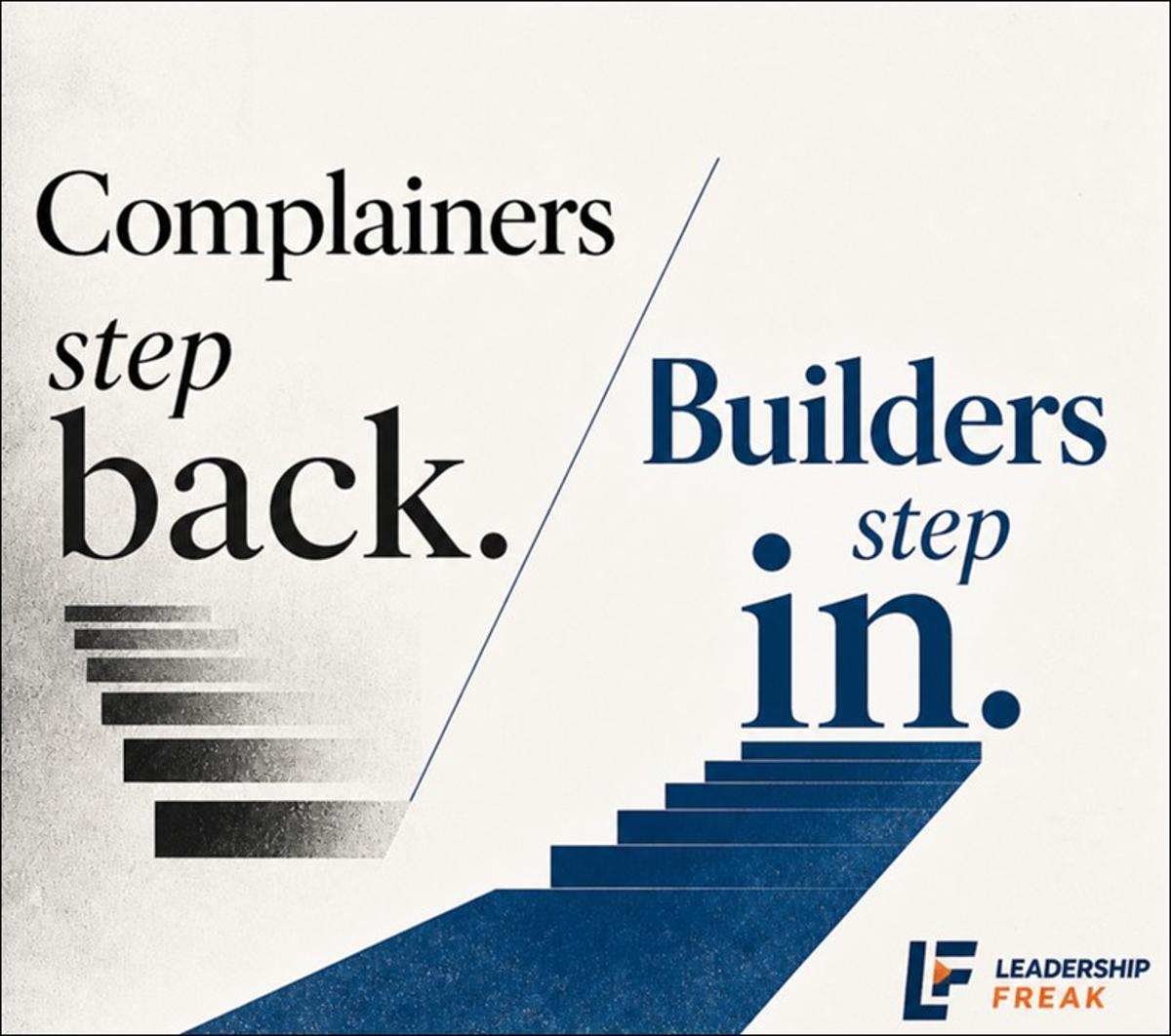
5 Kinds of Complainers
The article outlines five distinct "complainer" archetypes—Stone‑Throwers, Chronic Drainers, Victims, Perfectionists, and Fire‑Starters—and contrasts them with "builders" who seek solutions. It provides a set of probing questions designed to shift complainers toward accountability, then lists five practical tactics for leaders,...

Charlie Munger On the Power Of Silence: 5 Things You Should Keep Private For A Happy Life
Charlie Munger argued that excessive talking erodes clear thinking and personal happiness. He urged people to keep five categories private: strong opinions, wealth details, internal resentments, unexecuted plans, and half‑baked ideas. By staying silent, individuals avoid cognitive traps such as...

How to Focus When You Have Too Many Business Ideas
Consultants and coaches often hit a "messy middle" where abundant ideas trigger analysis paralysis. The article argues that this stall isn’t a flaw but a signal that personal vision and business direction have diverged. It urges leaders to revisit their...

What A Vacation Without Screens Taught Me About Burnout And The Purpose Of Time Off Work
A personal experiment of a two‑week screen‑free vacation revealed how constant digital connectivity erodes true rest. The author found that unchecked notifications keep the nervous system in low‑level alert, leading to superficial downtime and burnout. Experts cited explain that workplace...

The Difference Between a Full Life and a Crowded One
The article distinguishes a "crowded" life—filled by default commitments—from a "full" life built through intentional choices. It argues that busy schedules can feel hollow when they lack purpose, while purposeful busyness leaves a sense of satisfaction. The key difference lies...

Why Overwhelm Isn’t the Problem
Overwhelm is reframed as a natural signal of meaningful decision‑making rather than a problem to fix. In a conversation with Dr. Max McKeown, Mike Vardy explores how humans constantly loop through recognition, interpretation, and action, often unconsciously. He argues that creating...

How to Stay in the Present Moment in Everyday Life: 5 Simple Habits
The article outlines five practical habits for cultivating present‑moment awareness in daily life, ranging from single‑tasking to using a simple mental cue like “Now I am ….” It emphasizes slowing down routine actions, limiting early‑day digital consumption, and employing a...

⚡️Secret Summit⚡️RECAP
The blog post recaps a confidential "Secret Summit" held on May 6, 2026, where industry leaders gathered in a private setting to discuss emerging trends. Participants shared insights on AI‑driven finance, regulatory shifts, and showcased live demos of blockchain payment tools. The...

When Rest Fails: Part I
The post highlights a growing problem among knowledge workers: vacation time and traditional rest techniques no longer reset mental fatigue. It cites personal anecdotes of lingering exhaustion despite meditation, sleep, or digital detox. To address this, the author introduces a...

Breathwork – A Pathway to Nervous System Regulation
Breathwork leverages conscious, connected breathing to directly influence the autonomic nervous system, offering a bottom‑up method for nervous system regulation. By temporarily activating stress responses in a safe setting, it helps the nervous system reorganize from chronic hypervigilance or shutdown...

I Learned This the Hard Way...
Adam Mockler reflects on the universal nature of insecurity, noting that even seasoned professionals grapple with imposter syndrome and resistance to challenge. He observes that many senior men react poorly when questioned, masking uncertainty behind a façade of confidence. The...

30 Short Habits With a Massive Return On Life
Sifu Yik’s latest Substack post lists 30 micro‑habits that promise outsized life returns, ranging from simple morning routines to weekly digital detoxes. Each habit is paired with a brief rationale and a practical tip, encouraging readers to adopt a few...

Kierkegaard on How to Channel Anxiety Into Creativity
Søren Kierkegaard’s 1844 treatise "The Concept of Anxiety" frames anxiety as the dizzying awareness of unlimited freedom and possibility. He argues that anxiety is inseparable from the act of creating oneself and the world, acting as both a destabilizing force...

Reappraising Anxiety
Research published in the Journal of Experimental Psychology shows that reappraising pre‑performance anxiety as excitement can improve both feelings and performance. Instead of trying to calm down, individuals are encouraged to label their nervous energy as excitement, shifting from a...

With Whose Eyes Do You See Yourself ?
The May 5 2026 essay explores how self‑identity is constructed through the eyes of others, drawing on Charles Horton Cooley’s “looking‑glass self,” Jean‑Paul Sartre’s notion of the gaze, and Michel Foucault’s concept of internalized surveillance. It argues that repeated descriptions from parents,...

Having the Courage to Be Disliked
Alex’s excerpt from *The Never‑Retired Writer* argues that writers must accept being disliked to grow. He explains that negative feedback is inevitable and, when embraced, sharpens a writer’s authentic brand. Polarizing content filters out mismatched followers while attracting a loyal,...

Lessons From a Boomer for Younger Generations
In a reflective Substack post timed with Teacher Appreciation Day, veteran economist and educator Robert Reich shares advice for recent graduates navigating a volatile job market. He draws on his decades‑long experience on university campuses to highlight the emotional and...
Day 2: How to Make 1:1 Meetings Productive When There’s No Rapport (Yet)
The Day 2 post of the 5‑Day Mastering 1:1 Meetings Challenge tackles how to run productive one‑on‑ones when you lack rapport with a colleague. It delivers five concrete tips—clarifying purpose, using a structured agenda, asking open‑ended questions, sharing brief personal anecdotes,...

The Greatest Legacy For Future Generations
The newsletter revisits Kanzo Uchimura’s 1894 lecture that defines four kinds of legacy—money, business, thoughts, and a noble, courageous life—concluding that the most attainable legacy is a sincere life lived with integrity. Glasp aligns its mission with the last two...

New WorkLife Episode: How Patty Stonesifer Uses 9 Words to Make Every Decision
In a new WorkLife podcast, former Microsoft executive and Gates Foundation founder Patty Stonesifer shares the five‑word personal mission statement that has steered every major decision for three decades. She explains how the mantra—love, be loved, seek justice, keep learning,...

One Simple Tip to Learn Faster and Remember More
The post explains that brief periods of eyes‑closed rest after learning dramatically improve memory retention, rivaling the benefits of a short nap. Studies show a 15‑minute rest session can double recall of newly learned material and sustain the advantage a...

Podcast: Why Your Brain Always Wants More, and How to Fix It
The Two Percent podcast features Leidy Klotz, a UVA professor whose research reveals a pervasive bias: people favor adding solutions over subtracting, even when subtraction is optimal. Klotz’s work, highlighted in a Nature paper, shows that subtractive changes improve health,...

Your Brain Isn’t Broken. Your System Is.
The post argues that conventional productivity hacks fail for adults with ADHD because they assume consistent motivation and linear task execution. It reviews Tanvir .I’s new book *Finally Focused*, which redesigns productivity around dopamine cycles, time blindness, and executive‑function deficits....

Access Plus Environment Plus Desire Still Equals Zero If You Don't Have Accountability
The author spent $10,000 on personal training despite a free Equinox membership provided by an American Express card. He discovered that the gym’s access alone didn’t move the needle on his physique; only the accountability from a trainer did. The...