
Become an Inner Nature Writing™ Facilitator
Inner Forest School launched the Inner Nature Writing™ Facilitator Certification, a three‑month, self‑paced program that blends mindfulness, guided imagery, and expressive writing. Participants complete 35 lessons, three live Zoom sessions, and 25‑30 hours of coursework to earn a digital certification. The curriculum centers on a seven‑phase framework that moves learners from grounding to integration, and the course is priced at $797 or four $200 payments. The certification targets coaches, therapists, yoga teachers, and creatives seeking a structured yet creative modality for inner work.

In a Public Crisis, Knowing What to Prioritize (and Ignore) Is What Separates Leaders Who Execute From Those Who Stall
The article argues that effective crisis leadership hinges on disciplined attention‑allocation rather than reacting to every loud voice. It introduces a 70/25/5 rule that prioritizes regulators, board members, and key investors, then influencers, and finally the broader noise. Real‑world examples—from...

What It Takes to Become a Successful Breathwork Facilitator
Becoming a successful breathwork facilitator goes far beyond earning a certification. The author argues that a consistent personal practice, the ability to hold space without reacting, and rigorous safety training are the true foundations of a lasting practice. Online delivery,...

The Deals You Didn’t Make Are Teaching You How to Win Next Time — Use This Framework to Make It...
Business leaders often treat missed deals as failures, but systematic analysis can turn them into strategic assets. The article proposes a five‑step framework: documenting the rationale behind each “no,” auditing biases, separating product versus founder risk, demanding feedback, and tracking...
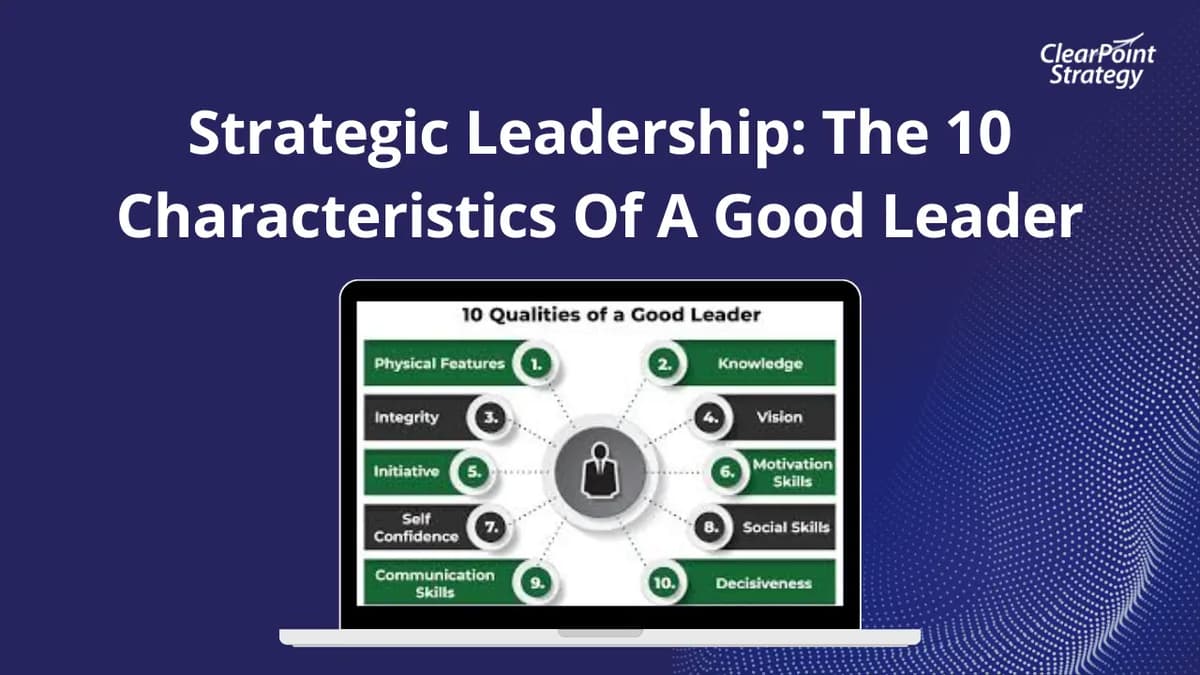
10 Strategic Leadership Traits | ClearPoint | ClearPoint Strategy Blog
The ClearPoint blog outlines ten essential traits for strategic leaders, ranging from strong communication and active listening to humility and diplomacy. It argues that strategic leadership is a learned skill that can be cultivated through deliberate practice and self‑education. Each...

You’re Allowed to Hate Failing. In Fact, It Might Be Better For You.
A recent Backpacker essay uses a Colorado windstorm to illustrate how forced positivity can backfire. Citing Northwestern studies by Lauren Eskreis‑Winkler, the piece shows that most Americans overestimate their peers’ ability to learn from failure and that merely talking about...

New Research Links Personality Traits to Confidence in Recognizing Artificial Intelligence Deception
Researchers published in F1000Research found that two HEXACO personality dimensions—honesty‑humility and agreeableness—significantly predict young adults' confidence in detecting deepfake media. Participants (200 Indonesian students, average age 22) completed personality and self‑efficacy questionnaires, revealing that higher honesty‑humility correlates with lower confidence,...

Psychology Says Good People with No Close Friends Aren’t the Difficult Ones — They’re the Ones Who Asked Too Little,...
Psychology shows that people who are consistently agreeable and give freely often end up with few close friends. They practice self‑silencing, smoothing over true feelings to avoid friction, which keeps relationships comfortable but shallow. Over‑giving creates a one‑sided dynamic where...

Feeling Overwhelmed? Indecisive? Stuck? Yoga Can Help. Here’s How.
A growing body of science links indecision and the “functional freeze” response to a physiological feedback loop involving the amygdala, vagus nerve, and the psoas muscle. Yoga can interrupt this loop by regulating breath, releasing hip tension, and sharpening focus....

20 Mindfulness Lessons I Wish I Knew at 28
The article "20 Mindfulness Lessons I Wish I Knew at 28" compiles twenty practical meditation and self‑awareness techniques ranging from breath awareness and sleep meditations to using music frequencies for emotional balance. Each lesson is linked to a detailed guide...

Psychology Says the Reason some People Become Gentler as They Age While Others Become Bitter Has Nothing to Do with...
Psychologists argue that whether people grow gentler or more bitter with age hinges on how they process non‑finite grief, not innate personality. Research by James Gross shows that habitual emotional reappraisal yields positive emotions and stronger social ties, while suppression...

The Best Exercise For Depression & Anxiety — Equals Or Exceeds Pills & Therapy (M)
A recent study found that regular exercise can be as effective as medication and psychotherapy for treating depression and anxiety, with the greatest benefits observed in emerging adults. Participants who engaged in moderate‑intensity aerobic activity for at least 150 minutes...

LinkedIn’s Chief Economic Opportunity Officer on How to Get Ahead in the Age of AI
LinkedIn’s chief economic opportunity officer Aneesh Raman co‑authored *Open to Work*, arguing that AI won’t replace engineers but will shift their focus from pure coding to client interaction, ethics, and strategic tasks. The book proposes categorizing job tasks into automatable,...

Burnt-Out Managers Are Destroying Teams. These 5 Daily Habits Reverse It
Managerial burnout is surging, with 47% of managers reporting severe stress—higher than the 37% rate among employees. Gallup research links managers to 70% of team engagement and well‑being, meaning their exhaustion ripples through entire groups. The article outlines five daily...

When Leaders Go to War, Their Psychology Goes With Them
The article examines how fragile egos, narcissism and authoritarian traits shape leaders’ decisions to go to war. Psychological research shows that such leaders often mistake self‑confidence for competence, turning military power into an extension of their personal ego. When the...

Advanced Meditation Techniques Linked to Younger Brain Age During Sleep
Researchers measured sleep EEGs of 34 long‑term meditators and found their brains appeared biologically about six years younger than their chronological age. The younger brain age was driven by high‑amplitude bursts during light sleep, despite the meditators sleeping fewer hours...

Psychology Says the Adults Most Likely to End up in Therapy Aren’t the Ones Who Had Dramatic or Obviously Painful...
Therapists report a surge in adults seeking help who grew up in seemingly "fine" households, where basic needs were met but emotional support was scarce. Psychologists label this pattern emotional neglect, a subtle yet pervasive form of childhood adversity that...

Richard Branson Says Everyone Should Read This Cult-Classic Novel—It Changed How He Made Decisions
Richard Branson credits the 1971 cult novel *The Dice Man* with shaping his early decision‑making as he launched Virgin Records in 1972. He literally rolled dice to choose which artists to sign, using the book’s chance‑based philosophy to break routine...

Envy Is Information. Most People Flinch Before They Read It.
The article reframes envy from a moral flaw to a precise emotional signal that reveals what we truly want and where we feel deficient. Psychological research distinguishes benign envy, which fuels aspiration, from malicious envy, which breeds resentment, and both...

Leading At Race Speed: Lessons From A F1 Team Principal
The article distills leadership principles from a Formula 1 team principal, emphasizing rapid decision‑making, data‑driven tactics, and relentless focus on execution. It highlights how the high‑pressure pit lane environment forces leaders to prioritize clarity, empower specialists, and iterate instantly. The piece...

The Productivity Question AI Forces Us to Ask
The article argues that AI has turned productivity tools into a relentless accelerator, creating a canyon‑wide gap between what machines can produce in an hour and what humans can achieve. This speed surge fuels a feedback loop of anxiety, as...

How to Step Out of Your Stories and Into the Present
The article explains how repetitive mental narratives—"if only" stories—trap us in dissatisfaction and isolation. By recognizing these stories as fleeting mental events, we can shift attention to the present moment, where inner peace and abundance already exist. The author advocates...

The Specific Kind of Exhaustion that Comes From Performing a Personality You Designed to Be Loved Rather than One You...
The piece argues that a distinct form of exhaustion arises when people live a performed personality crafted for external approval rather than their authentic self. Citing research on emotional labor, teacher identity, and social‑media feedback loops, it shows how this...

Don’t Drift Into Monday—Set These Six Rituals Instead
Monday sets the week’s tempo, and a disciplined six‑step ritual can turn chaos into forward momentum. Research from Wharton, cited by Adam Grant, shows structured weekly planning accelerates teams by 30% and improves cohesion. Leaders at Microsoft, McKinsey, and Peter...

The People Who Appear Calm During a Crisis Aren’t Fearless. They Learned to Process Terror on a Delay, and the...
Research on high‑stress environments shows that individuals who appear unflappable during a crisis are often suppressing their fear response. This delayed processing leaves stress hormones lingering, leading to sleep disturbances, heightened anxiety, and sensory overload weeks or months later. Studies...

Managing Up: A Skill Set That Matters Now
Managing up has become a critical capability as AI tools strip away middle‑management layers, forcing employees to influence leaders directly. The article defines upward leadership as listening to senior staff and shaping their actions to align with organizational values, mission,...

The CEO Whisperer: How Comms Leaders Become the Most Trusted Voice in the Room
Today's top communications leaders are evolving from message makers to strategic advisors embedded in C‑suite decision making. By mastering business fluency, engaging early in discussions, and listening intently, they become the trusted “CEO whisperer” who shapes outcomes, not just narratives....

Why Shark Tank’s Daymond John Says You Should Keep Your Full-Time Job When You Start Your Own Business
Daymond John advises entrepreneurs to keep their full‑time job while launching a startup, allocating roughly 20 percent of their time to the new venture. He built FUBU by working nights at Red Lobster, earning $30,000 a year and using job benefits...

Why Kendall Toole Left Peloton — & What It Taught Her About Real Strength
Kendall Toole, a former Peloton star, quit the platform last summer to escape a role that felt more like a character than herself. She launched Never Knocked Out (NKO) Club, a wellness hub that fuses cycling, boxing, Pilates, strength work,...

The Cognitive Athlete: Sustainable Peak Performance for Leaders, Thinkers and Doers, Reviewed
Clint Rahe’s new book, The Cognitive Athlete, translates elite‑sport conditioning into a systematic guide for professionals seeking sustainable mental and emotional peak performance. Drawing on his RAF training background, Rahe outlines four cognitive phases—conditioning, transition, performance and recovery—backed by neuroscience...

The Quiet Devastation of Being the Reliable One in Every Group You’ve Ever Belonged to, and How It Slowly Replaces...
The article argues that chronic dependability erodes personal identity, turning reliable individuals into mere functions within families, workplaces, and even space crews. Research from psychology, palliative care, and space‑flight analogs shows that the most dependable members suffer hidden psychological decline...

I'm a 6-Time Surrogate Who Wasn't Fulfilled in My Finance Career. I Quit to Start a Surrogacy Agency and Make...
Angela Richardson-Mook left senior finance and consulting roles, including a vice‑president position at Bank of America, to launch Alcea Surrogacy in 2019. The agency now employs 23 staff, generates roughly $5 million in annual revenue, and pays her more than her...

The Numbers Are the Numbers
Rene Schooler reflects on a recent workshop where 150 participants received a clear, step‑by‑step blueprint for action. While many left inspired, only a small fraction executed the plan consistently, illustrating that desire alone doesn’t produce results. The piece argues that...

Gen Z’s Side Hustles Can Be a Double-Edged Sword
A Harris Poll shows 57% of U.S. Gen Z respondents now run side hustles, a rate far higher than previous generations. The surge is fueled by hybrid work flexibility, social‑media marketplaces and a cultural shift that prizes choice and mental‑health awareness....

IWD Voices: Joyce Liong – ‘You Have to Keep Speaking Up Until Your Value Becomes Undeniable’
Joyce Liong, speaking for International Women’s Day, argues that women must continuously voice their contributions until their value is undeniable. She highlights that true fairness requires systematic talent processes that promote advancement based on capability and impact. Liong stresses the...

The Loneliness of Leadership and How to Reconnect with Yourself
Emma’s fast‑growing startup left her feeling isolated despite external success. She realized that loneliness is a built‑in aspect of leadership, not a personal weakness. By accepting her solitude, deliberately constructing a multi‑layered support network, and pruning echo‑chamber relationships, she reclaimed...

I'm a Chinese Product Manager Who Created 6 AI Employees on OpenClaw. I'm Working More than Ever and Am Way...
Chinese AI product manager Vivi Mengjie Xiao built six OpenClaw agents—three for work and three for personal tasks—to automate routine activities. The agents now handle 60‑70% of her operational workload, freeing her to focus on creative and strategic output. While...

Consider Fully, Act Decisively: How to Take Charge in Any Situation in Your Life
The article presents a three‑step decision framework—consider fully, plan accordingly, act decisively—using martial‑arts analogies to illustrate how timely recognition and execution of opportunities drive success. It shows that merely possessing information, like a Jiu‑Jitsu student’s techniques, is insufficient without the...

Why Human Thinking Partners Matter More Than Ever in the Age of AI
The piece argues that AI dramatically speeds idea generation but does not replace the need for human thinking partners who filter, frame, and decide. Leaders receive a flood of options from AI, yet only humans can apply context, judgment, and...

The Leadership Style That Defines C-Suite Leaders — And Is Missing Everywhere Else
Research across 23 countries using Daniel Goleman’s six leadership styles reveals a striking outlier: Pacesetting, which models standards through personal example, is the dominant style only at the C‑Suite level. At entry, mid‑level and senior tiers, Democratic, Coaching and Visionary...

The Sunlight of Awareness
Thich Nhat Hanh’s essay "The Sunlight of Awareness" reframes mindfulness as a gentle illumination rather than a battle against thoughts. He advises practitioners to shine non‑judgmental awareness on restlessness, emotions, and habits, allowing them to merge with the observing mind....

What Women Are Choosing Instead of ‘Lean in’ – and Why It Matters in the Arts
Women in the arts are moving away from the relentless "lean‑in" model toward a more intentional, sustainable pace. They are choosing to protect creative downtime, limit constant self‑promotion, and focus on depth rather than sheer output. This shift reflects a...

How to Make Your Business Antifragile
The article argues that resilience alone is no longer enough; CEOs must build antifragile firms that improve when stressed. Over‑optimizing for efficiency creates hidden single‑point dependencies that become liabilities during disruptions. Antifragility requires diversifying suppliers, customers, talent, and constantly questioning...

I Spent Three Months Waking up at 5am and Tracking Every Metric I Could Find – Sleep Quality, Word Count,...
A media founder in Saigon tried a three‑month 5 am wake‑up experiment, initially enjoying a surge in word count and focus. Over time his sleep quality fell from 82 to 61, daily output dropped to 1,400 words, and afternoon energy sank...

Why Great Organizations Never Stop Learning
Great organizations stay ahead by institutionalizing continuous learning, which the author calls the "Golden Thread." The thread ties culture, employee experience, customer experience, and business outcomes into a self‑reinforcing loop. Companies that only gather data without turning it into understanding...

Narcissistic Traits Are Linked to a Brain Area Governing Emotional Control
A study of 172 healthy adults links the size and folding of the anterior insula to both grandiose and vulnerable narcissistic traits. MRI scans showed that higher narcissism scores correspond with smaller right‑side insula volume, and for vulnerable narcissism, also...

Forget Apps. This Old-School Tool Actually Boosts Productivity
A senior manager at a fast‑growing software firm relies on a simple yellow legal pad, not sophisticated software, to track daily tasks. He writes the date, lists five priorities, and crosses each off with a Sharpie, claiming it’s the most...

10 Studies Reveal What Phones Are Doing To Our Minds (P)
People now spend three to six hours per day on smartphones, prompting a wave of research into its psychological impact. Ten recent studies reveal a nuanced picture: a Google‑partnered analysis finds little inherent harm, while other work shows moderate screen...

Why Reason Alone Doesn’t Motivate Us
Ira Bedzow argues that knowing what’s right rarely translates into action because reason alone lacks motivational force. He identifies a "motivation gap" between understanding and wanting, noting that people act on what they care about, especially when actions align with...

I’m 37 and I Finally Figured Out that Vulnerability Isn’t Saying Something Brave in a Room Full of Strangers –...
The author, a seasoned writer on vulnerability, discovers that true vulnerability is not a public performance but an intimate confession to the person who matters most. After finally admitting his fear to his wife, he realizes years of curated openness...