
Why Leaders Need “Power Skills”
Leaders are facing a widening gap as technical expertise alone no longer drives performance. The article argues that "power skills"—empathy, active listening, trust‑building—are essential to reverse declining engagement, talent loss, and stifled innovation. Practices such as empathy shadowing, listening tours, and reverse mentoring are presented as proven ways to develop these capabilities. Investing in measurable, trainable power skills can restore psychological safety and boost productivity.

Why Forgiving Ourselves Feels So Hard—And What Helps
A recent study of 80 U.S. adults examined why some people can forgive themselves after a mistake while others remain trapped in guilt. Participants described personal failures ranging from caregiving lapses to relationship betrayals, revealing that rumination and self‑condemnation hinder...

Should You Develop Your Leadership Strengths—Or Fix Your Weaknesses?
The article tackles the long‑standing debate of whether leaders should double‑down on their strengths or remediate their weaknesses. It proposes a four‑question diagnostic to map role requirements, manager expectations, personal capabilities, and development options. Based on that analysis, leaders should...

When You’re Overwhelmed, You Don’t Need a New System. You Need a Reset.
The author recounts a two‑day cabin retreat in Wimberley, Texas, where total disconnection and fasting cleared mental fog and revealed a precise work focus. This experience led to the insight that overwhelm is rooted in loss of control, not merely...

Psychology Says People Who Replay Conversations in Their Head Didn’t Develop that Habit by Accident — Most of Them Learned...
Psychologists explain that the habit of replaying conversations stems from early experiences where misspoken words triggered punishment or withdrawal. Research links adverse childhood events to heightened rumination and social anxiety, creating a feedback loop that amplifies the behavior. The brain...

Psychology Says People Who Randomly Cringe at Past Memories Have a Level of Self-Awareness that Most People Never Develop —...
The article explains that cringing at past memories is a hallmark of self‑awareness and emotional intelligence, not a mental flaw. It cites research showing involuntary negative memories serve evolutionary social‑learning functions and that vivid recollection indicates advanced cognitive processing. The...

Psychology Says People Who Stay Calm Under Pressure Aren’t Suppressing Their Emotions — They’ve Built a Relationship with Discomfort that...
A large Stanford study shows that how people regulate emotions matters more than whether they feel them. Reappraisal—reframing stress before it peaks—outperforms suppression, which merely masks the response, across health, relationship, and performance outcomes. Calm under pressure stems from a...

Psychology Says People Who Make Others Light up when They First Meet Them Have Usually Known What It Feels Like...
Recent psychological research shows that people who have felt invisible often become highly empathetic, deliberately choosing to make others feel seen. Studies from Frontiers in Psychology and the University of Colorado Boulder link past social pain to increased cognitive empathy...

7 Inspiring Books that Motivate You to Take Action Today
The article curates seven bestselling titles that help readers move from ideas to action, ranging from James Clear’s *Atomic Habits* to Eckhart Tolle’s *The Power of Now*. Each book is presented with a brief rationale—small habits, early‑morning discipline, self‑confidence, singular...

How Can We Be More Resilient? Humans Are Really Bad at Realising that We Can Bounce Back and Learn From...
Grace Lordan, LSE associate professor and author of *Think Big*, explains that resilience is a learnable, replenishable skill that helps individuals cope with adversity, from minor slights to major setbacks. She stresses the importance of recognizing and processing emotions before reframing...

There’s a Specific Kind of Person Who Can Give the Most Precise, Compassionate Advice to Everyone Around Them and Then...
Psychologist Emily Pronin’s bias‑blind‑spot research shows people readily identify others’ cognitive biases but struggle to see the same flaws in themselves. A subset of highly empathetic individuals—often consultants, mentors, or therapists—excel at diagnosing others’ patterns yet repeatedly repeat the very...

Ambitious People Get Caught in This Trap—Here’s How to Get Out
Ambitious professionals often appear confident, yet many silently lose trust in their own instincts as external metrics dominate their decision‑making. The article identifies four recurring patterns—over‑committing, ignoring internal signals, neglecting delegation, and lacking reflective practices—that erode self‑trust. By recognizing and...

Why Empathy Is the Ultimate Competitive Advantage for FMCG Leaders
Eugene Cha-Navarro, MD of CJ Foods Oceania, argues that empathy is a core competitive weapon for FMCG brands. By framing Korean dumplings as familiar to Australian shoppers, she secured shelf space at Woolworths and Coles, turning a niche product into...

4 Must-Read Books that Spark Creativity and New Ideas
Four books are highlighted as practical guides to reviving and strengthening creativity. Austin Kleon’s “Steal Like an Artist” frames originality as remixing existing ideas, while Elizabeth Gilbert’s “Big Magic” tackles fear and encourages courageous action. Michael Michalko’s “Thinkertoys” provides a...

When Teams Go Quiet: Psychological Safety in the AI Era
Startups that prioritize psychological safety capture early warning signals, preventing costly rework and technical debt. In the AI‑driven 2026 landscape, over‑reliance on algorithmic outputs can mute dissent, embedding weak solutions at scale. Founders who model uncertainty—e.g., saying “I don’t know...

Malala Yousafzai on What She’s Learned About Changing the World
Malala Yousafzai, Nobel laureate and global champion for girls’ education, delivered a candid TED2026 talk reflecting on the setbacks after the Taliban seized Afghanistan in 2021. She explained how that crisis forced her to abandon naïve optimism and adopt a...

The Courage to Not Know Yet
Tony Daloisio argues that rapid, fear‑driven decisions shrink perspective and often sacrifice long‑term value. He draws on Daniel Kahneman’s fast‑thinking research and the Quaker “Clearness Committee” to propose a slower, reflective approach called the self‑clearness process. By sitting quietly, journaling,...
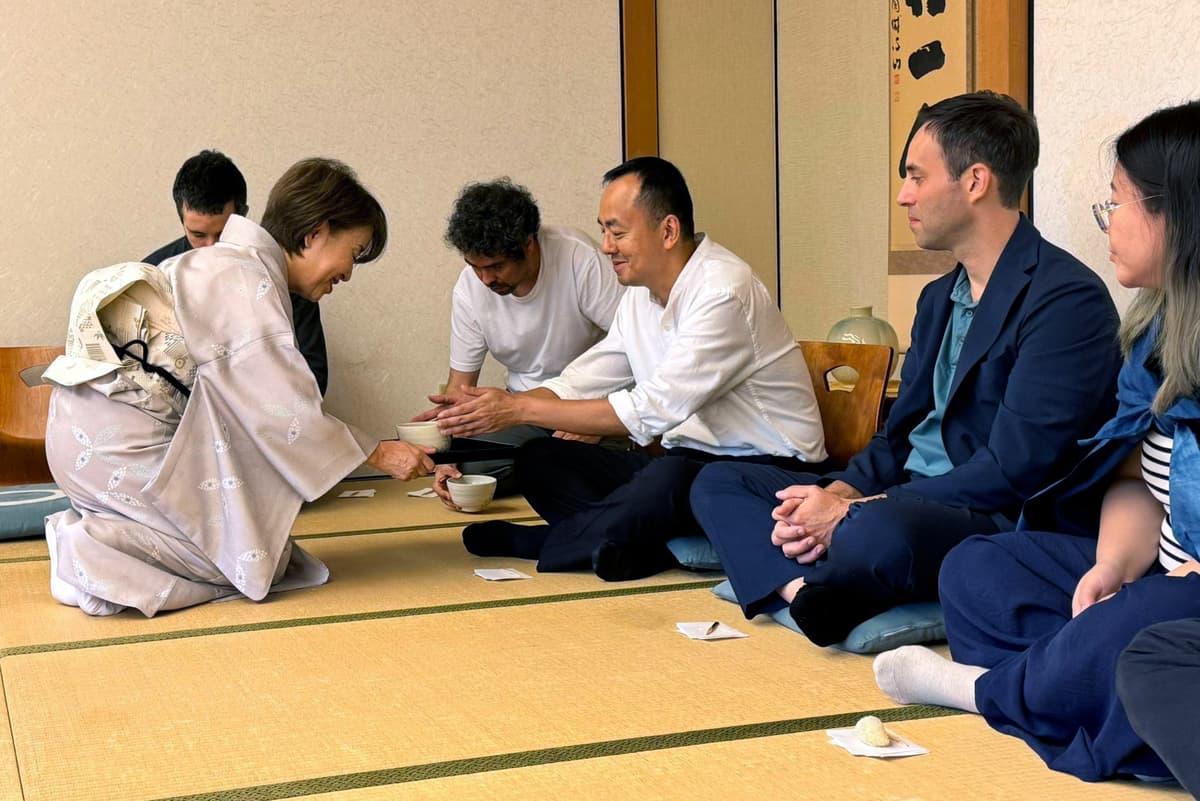
“Mindfulness Did Not Make Me Slower. It Made Me Clearer”
Stanley Ng, founder of Mindful Circle and a management‑consulting executive, credits mindfulness for improving his decision‑making and leadership under pressure. He describes how brief breath‑focused practice creates a mental pause that lets him detect narrowing perspective, stay open, and respond...

The People Who Rehearse Conversations Before They Happen Aren’t Anxious. They Learned Early that Spontaneity Had Consequences.
People who mentally rehearse conversations do so not out of anxiety but as a learned risk‑assessment system. The habit originates in childhood environments where spontaneous speech was punished, prompting a strategic “architecture” to pre‑test words. Research shows mental rehearsal improves...

Why Leaders Should Build Community, One Connection at a Time
Jerry Lee, former CEO of MG2 and now foundation director, illustrates how leadership rooted in generosity can reshape a firm’s culture. Drawing on a childhood in a Seattle grocery store that served the neighborhood, he shifted MG2 from a profit‑centric...

I Didn't Expect to Outlive My Father
Melanie Brooks reflects on outliving her father, a milestone that forces her to confront a lifelong sense of a foreshortened future. Inspired by Sara Bareilles' new song “Home,” which drew from a grief podcast featuring Stephen Colbert, she examines how...

The Mentors You’re Ignoring
The article challenges the traditional, hierarchical view of mentoring by highlighting the power of peer‑based "mirror mentors." It explains how colleagues who work alongside you can provide immediate, candid feedback that reveals the gap between intent and actual behavior. Alexis...

The People Who Keep Starting over Aren’t Lost. They Have an Unusually Honest Relationship with Outgrowing Things.
The article argues that people who repeatedly start new careers are not aimless; they possess a clear, honest awareness that they have outgrown their current roles. It contrasts cultural narratives that equate loyalty with strength with the reality that staying...

Helping Healthcare IT Teams Do More and Avoid Burnout
UVA Health’s chief technology officer, Zeb Elliott, used the HIMSS Executive Connect program to redesign how his IT department engages staff. By adopting agile sprint cycles, mental‑health check‑ins, and automation tools, the team lifted output while curbing overtime. The changes...

Executive Coaching Helps Leaders Grow Through Discomfort
UVA Health Chief Technology Officer Zeb Elliott credits executive coaching from the Healthcare Leadership Institute, delivered via HIMSS Executive Connect, for surfacing uncomfortable but honest feedback that highlighted gaps in his leadership style. The coaching program prompted Elliott to confront...

A Meditation to Create Inner Balance in the Face of Change
Susan Bauer‑Wu, a registered nurse and mindfulness researcher, shares a guided meditation designed to cultivate equanimity during periods of change. The practice walks listeners through posture, breath awareness, intention setting, and compassionate outreach, encouraging presence without attachment. By framing happiness...

Why Thinking Hard Feels Bad: The Emotional Root of Deliberation
Researchers Cédric Cortial, Jérôme Prado and Serge Caparos found that the unpleasant emotion of doubt prompts people to abandon intuitive shortcuts and engage in effortful deliberation. In two experiments using conflict‑laden syllogisms, higher self‑reported doubt correlated with increased physiological arousal...
Stop Adding. Start Subtracting. Here’s How to Do an Annual Review That Actually Works.
The article argues that traditional New Year goal‑setting fails because it focuses on adding new habits without a clear picture of the past year. By reviewing five concrete data sources—calendar, photos, journal, credit‑card statements, and social feeds—readers can reconstruct an...
LinkedIn CEO Says AI Is Boosting the Value of These 4 Soft Skills
LinkedIn CEO Ryan Roslansky told the Tools and Weapons podcast that as AI takes over routine work, four soft skills—curiosity, courage, communication, and compassion—are becoming more valuable. He argues that AI reshapes jobs into task buckets, freeing time for human‑centric...

3 Reasons Why Entrepreneurs Should Become Coaches
Entrepreneurs are uniquely positioned to become coaches as they already possess a growth mindset and experience navigating uncertainty. The global wellness market, valued at $6.3 trillion and projected to hit $9 trillion by 2028, is driving strong demand for coaching services across...

The Difference Between Being Alone and Being Lonely Is Whether You Chose the Silence. Most People Never Realize They Stopped...
In 2023 the U.S. Surgeon General declared loneliness a public‑health crisis, prompting many who normally enjoy being alone to question themselves. Psychologists stress that solitude and loneliness are distinct: solitude is neutral and restorative when chosen, while loneliness is a...

Is the Idea of Personal Strength and Resilience Being Used Against Us?
The article argues that corporations often deflect systemic discrimination and harassment by framing them as personal resilience issues, citing Google’s practice of referring complainants to counseling and Amazon’s “not Amazon material” narrative. It highlights that toxic cultures are deliberately created...

Living Joyously
Motivational speaker David Ring, who lives with cerebral palsy, recently featured on Focus on the Family’s broadcast "Living Joyously." The program, recorded at Moody Bible Institute’s Founder’s Week, has become one of the network’s most‑watched episodes and is distributed via...
Stop Collecting, Start Researching: The 4D System for AI-Powered Research
The article introduces the 4D Research System—Define, Discover, Distill, Deliver—to turn scattered information into actionable insight. It stresses that most people waste time collecting data without a clear outcome, a habit the author calls “fake work.” By defining a precise...

The Cost of AI: Signs of Brain Fry & Cognitive Debt
Recent research from BCG, UC Berkeley, and MIT reveals AI is reshaping knowledge work by adding cognitive strain rather than freeing mental capacity. A survey of 1,488 U.S. workers shows productivity peaks with three AI tools, but four or more...

Sales Target Achievement Rises 22% when Managers Build Trust Skills, Research Shows
Research by Mindtools Kineo shows that a one‑point rise in a manager’s ability to build trust on a five‑point scale correlates with a 22% increase in sales‑target achievement. The analysis of 279 managers, drawn from a global sample of 2,200, also...

I Wasn’t Ready For These Big Opportunities — But Saying ‘Yes’ Anyway Taught Me 3 Important Lessons
The author recounts three hard‑won lessons from saying yes to a high‑profile interview with Jay Shetty despite feeling unqualified. First, effort can serve as the sole credential needed to secure big opportunities. Second, embracing the task while scared accelerates skill development....
Study Finds Office Workers Productive for Under 3 Hours Daily
A Vouchercloud survey of nearly 2,000 UK office workers finds the average employee is truly productive for just 2 hours and 53 minutes each day. Seventy‑nine percent admit they are not productive throughout the entire workday, with social media, news...
How I Built an Agent Army That Saves 239 Hours a Week
A solo entrepreneur built a suite of AI agents that now automate routine tasks and save 239 hours each week—roughly the output of six full‑time employees. The agents handle email drafting, meeting follow‑ups, content research, CRM updates, daily briefings, and...

Everyone Improving Every Day
Gemba Academy argues that sustainable growth requires a cultural shift where every employee contributes to daily improvement. Leaders must move from delegating problem‑solving to empowering all staff, providing simple kaizen tools and basic Lean training. Small, consistent changes compound into...

Applications Open for European Journalist Retreat on Trauma, Resilience and Ethical Reporting
The Global Center for Journalism and Trauma, together with iMEdD's Ideas Zone, announced a four‑day retreat for European journalists in Vamvakou, Greece, from 14‑18 October 2026. The fully funded fellowship targets reporters, editors, photographers and multimedia journalists covering conflict, migration,...

Resilience and Leadership in Current Circumstances
Anouschka Menzies, co‑founder and co‑CEO of Bacchus, outlines how consistent leadership and internal resilience are essential for agencies navigating uncertain periods such as the pandemic. She stresses that agencies must act as steady partners, offering measured advice and clear communication...

How to Improve Remote Engagement in Hybrid Work
Remote engagement problems stem from underlying structural and cultural gaps rather than remote work itself. Dr. Kinga Mnich outlines a practical framework that uses six levers—belonging, operating system, autonomy, equity, growth, and well‑being—to diagnose and fix disengagement in hybrid teams....

Recruit for Attitude, Train for Skill: Are We Ready to Take This Seriously?
The article argues that rapid AI‑driven change makes traditional, experience‑focused hiring obsolete. Companies should prioritize attitude traits—curiosity, adaptability, resilience—and learning agility over static technical skills. This shift requires recruiters to redesign interview questions and managers to adopt coaching‑style leadership. Without...

5 Signs Your Team Isn’t Aligned Even if They’re All Nodding
Steve, CEO of a fast‑growth fintech, believed his leadership team was "AI‑first" aligned, but execution revealed deep mis‑alignment. Operations interpreted AI as job cuts, Marketing treated it as a slogan, and Product saw it as a decision aid, exposing a...

Lauren Cox Talks About Change Of Mindset & Adam Peaty’s Influence Ahead Of British Championships
Two years after missing the Paris Olympics, British backstroker Lauren Cox rebounded to become a European short‑course champion and set a new national record of 27.15 seconds in the 50 m backstroke. Her confidence surged after winning gold in Lublin and...
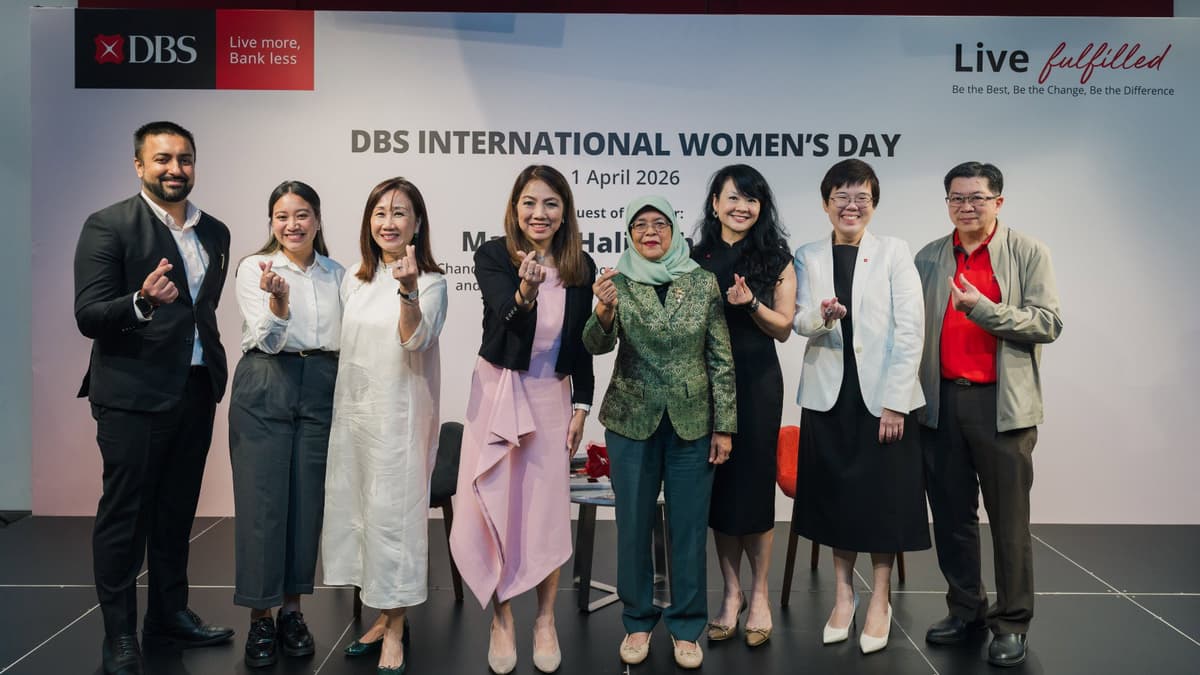
Purpose Before Position: Singapore’s First Female President Halimah Yacob on Earning Trust and Leading Through Uncertainty
Singapore’s first female President, Halimah Yacob, joined DBS CEO Tan Su Shan for a fireside chat at the bank’s International Women’s Day 2026 event. She emphasized that purpose and trust are the foundations of effective leadership, drawing on her labour‑movement...

‘You Know As Much As Anyone Else’: Jun Lee Sia’s Message To Young Women Entering Tech Industry
Jun Lee Sia, marketing leader at carsales.com.au, was honored at the 2026 Women Leading Tech Awards for spearheading the company’s most significant brand refresh in its 25‑year history. The refresh lifted brand awareness to 93%, grew the Gen Z audience by...

We Are Deeply Interconnected
The InsightLA essay "We are Deeply Interconnected" argues that quiet meditation uncovers hidden conditioning and that Dharma friendships—relationships rooted in shared mindfulness practice—amplify personal transformation. By framing human experience as a network of interdependent beings, the author likens our mental...

Axios Finish Line: Flying Lessons to Keep You Grounded
Recreational pilot Alex Fitzpatrick reflects on 300 flight hours, extracting four core habits that translate to everyday productivity. He emphasizes pre‑emptive planning, focusing on the primary task before ancillary duties, and always having contingency routes. The piece also highlights the...