Today's Quantum Pulse
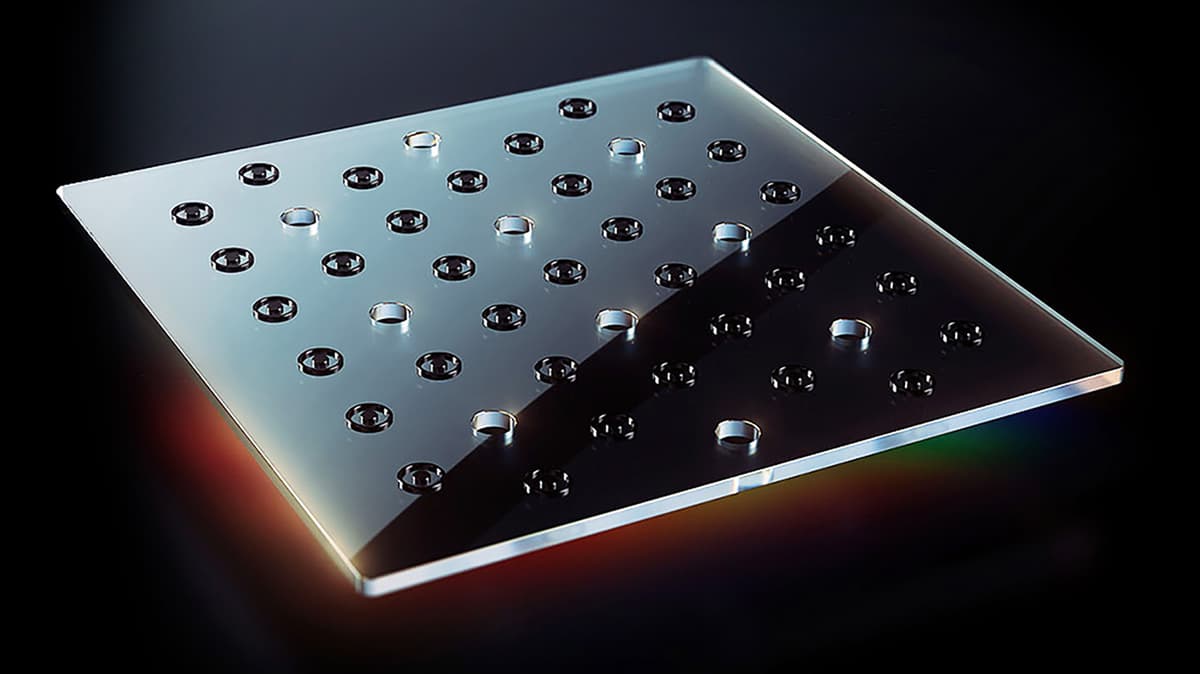
JPMorgan, OQC, and AMD team up on London quantum‑AI data center
Oxford Quantum Computing, JPMorgan Chase, and AMD announced a joint research effort to build a colocated quantum‑AI data center in London. The facility will combine OQC’s Genesis quantum processor with AMD’s AI and high‑performance computing hardware to tackle finance‑focused workloads such as portfolio optimization and quantum machine learning.

Microsoft Releases Open-Source Quantum Development Tools for Error Correction and Chemistry
Microsoft unveiled an updated, open‑source Quantum Development Kit that integrates with VS Code, GitHub Copilot, and supports Q#, OpenQASM, Qiskit, and Cirq, enabling seamless movement from local simulation to Azure cloud execution. The release highlights two new domain libraries: QDK for Chemistry, which uses classical preprocessing and chemistry‑aware algorithms to dramatically shrink circuit depth for molecular simulations, and QDK for Error Correction, offering open‑source modules for designing, validating, and debugging encoded quantum programs. Additionally, Microsoft advanced its qubit‑virtualization layer and a new quantum operating system, demonstrated on Atom Computing’s neutral‑atom hardware via the co‑developed Magne system, with full benchmarks slated for a January 26 event in Copenhagen.

Spade Demonstrates Superior Sub-Rayleigh Source Discrimination with Two Incoherent Points
Scientists have experimentally demonstrated sub‑Rayleigh source discrimination using spatial‑mode demultiplexing (SPADE) combined with a Bayesian inference framework. The approach leverages relative‑belief (RB) analysis to update prior hypotheses and provides a clear RBₖ = 1 threshold for supporting alternative source models. Experiments with...
Montana State University’s QCORE Secures $31.5 Million AFRL Contract for Quantum Infrastructure
Montana State University’s Quantum Collaborative Research and Education (QCORE) facility secured a $31.5 million contract from the Air Force Research Laboratory to expand quantum infrastructure, including test beds for superconducting and photonic quantum computers, cryogenic labs, and secure network systems. The...
Nexus Launches Global Platform for Verified Quantum and Deep-Tech Investment
Nexus unveiled a global platform, built with Global Quantum Intelligence, to connect quantum and deep‑tech startups with verified investors, adding a technical verification layer that audits claims and benchmarks performance. The service, already hosting over 45 companies and $350 million in...
SpinQ Technology Secures Hundreds of Millions of RMB in Series C Funding for Superconducting Scale-Up
SpinQ Technology announced a Series C round that raised hundreds of millions of RMB, earmarked for scaling its superconducting quantum chip line and advancing error‑correction, measurement, and control hardware toward a 100‑qubit processor. The funding supports a dual‑track strategy: exporting portable,...
Quantum Phase Space Holds Real Computational Power
I am very excited to share my latest paper from the quantum computing summer https://t.co/opr4pp9EVc In collaboration w/ Luke Coffman, @Nahuel_L_Diaz, @MartinLaroo, and the one and only Maria Schuld from @XanaduAI The punchline: quantum phase space isn’t just a pretty...

3D-Printed Surfaces Help Atoms Play Ball to Improve Quantum Sensors
Scientists at the University of Nottingham have 3D‑printed titanium alloy surfaces with intricate hexagonal and conical textures that steer gas particles away from quantum sensors. By integrating these patterns into a surface‑based vacuum pump, they achieved a 3.8‑fold increase in...

Continuous Gaussian Quantum Metrology Achieves Fundamental Precision Limits for Bosonic Systems
Scientists Yokomizo, Clerk and Ashida present a theoretical framework for continuous quantum metrology using multimode bosonic systems under Gaussian measurements. They derive analytical bounds for global and environmental quantum Fisher information, showing Heisenberg‑type scaling with mode number but only linear...

Keyfactor and IBM Consulting Launch Joint Solution to Accelerate Post-Quantum Cryptography Readiness
Keyfactor and IBM Consulting have unveiled a joint solution that streamlines post‑quantum cryptography (PQC) readiness for enterprises. The offering blends Keyfactor’s automated cryptographic discovery, PKI lifecycle management, and digital signing with IBM Consulting’s cybersecurity governance, quantum‑safe delivery frameworks, and AI‑driven...
Magnetic 'Sweet Spots' Enable Optimal Operation of Hole Spin Qubits
Researchers at the CEA‑Irig Pheliqs lab have identified specific magnetic‑field orientations, termed “sweet spots,” that render silicon hole spin qubits insensitive to electrical charge noise while preserving fast electric‑driven control. Experiments on single‑hole quantum dots demonstrated a marked increase in...

Researchers Achieve 35ms Qubit Memory Certification Via Device-Independent Quantum Tests
Researchers at Universität Siegen and Innsbruck introduced a device‑independent protocol to certify quantum memories by analyzing temporal correlations. Using a trapped‑ion processor they verified 35 ms of qubit storage, demonstrating violations of causal inequalities that cannot be explained by classical models....
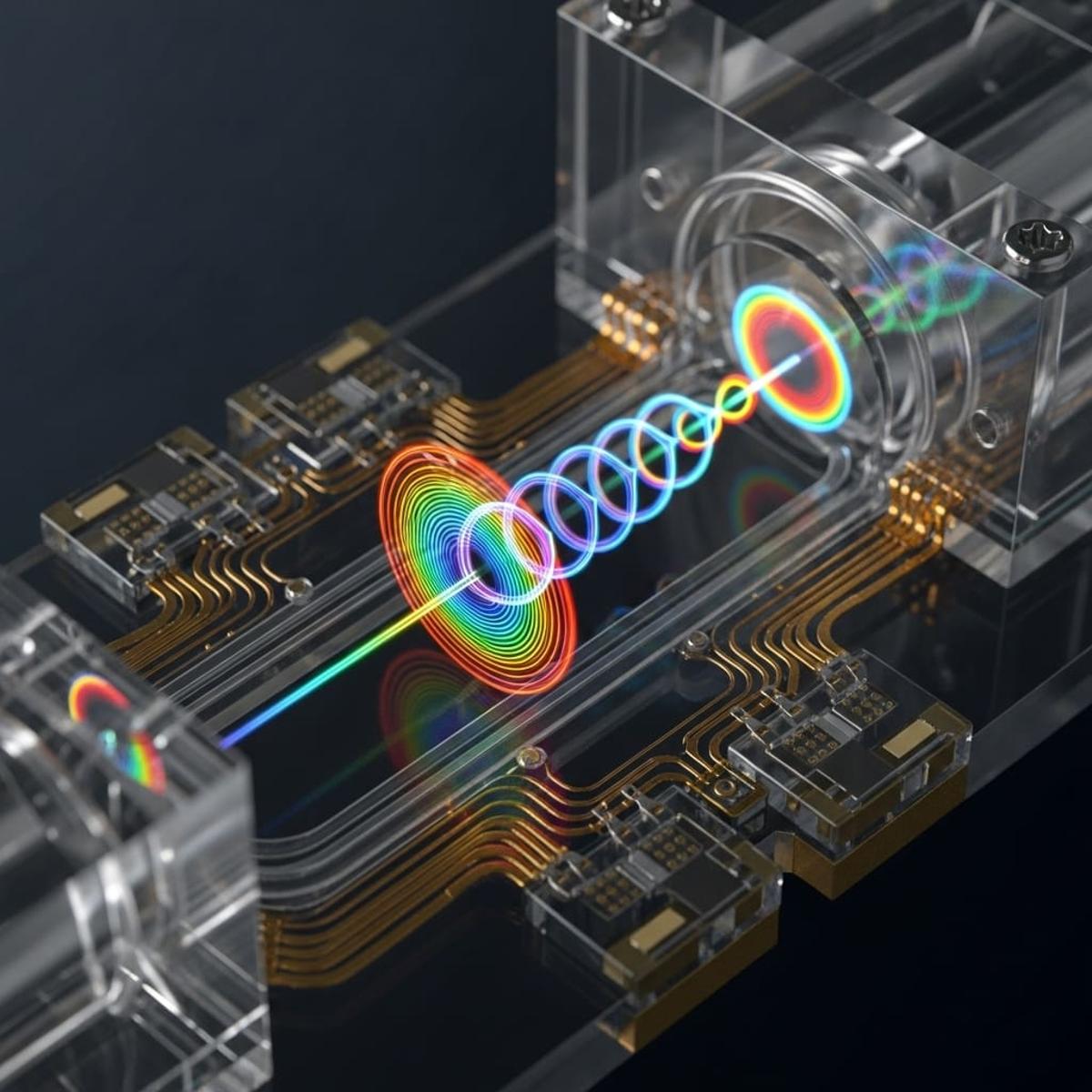
Electrical Detection Achieves Direct Readout of Optical Orbital Angular Momentum
Researchers at Peking University have demonstrated a silicon‑on‑chip photodetector that directly converts optical orbital angular momentum (OAM) into electrical currents. The device covers topological charges from –9 to +9, achieving a record‑high OAM responsivity of 226 nA W⁻¹. By employing momentum‑matched plasmonic...

MIT Leader Joins Zapata Quantum in Davos Discussions on Quantum Commercialization
Zapata Quantum CEO Sumit Kapur addressed global leaders at the World Economic Forum in Davos, stressing that quantum computing’s next phase hinges on reliable, hardware‑agnostic applications rather than hardware alone. The publicly traded pure‑play software firm highlighted its portfolio of...

Single Electrons Resolve Qubit Excitations in Coupled Trapped-Ion Quantum Computer
Researchers have demonstrated coherent coupling between free electrons and a trapped‑ion quantum computer by integrating a transmission electron microscope with a planar ion trap. Individual electrons, focused to nanometer scales, can induce qubit excitations with bit‑flip probabilities up to 0.1–1...

World Economic Forum Explores Quantum Computing’s Potential to Reduce Energy Use
The World Economic Forum highlighted quantum computing as a potential solution to the rising energy demands of data‑centres and AI workloads. By exploiting reversible quantum algorithms, the technology can theoretically bypass Landauer’s limit that forces energy loss in classical bit...

Stochastic Quantum Information Geometry Achieves Negative Interference in Single-Shot Realizations
Melo, Paraguassú, Duarte Queirós and colleagues introduce the Conditional Quantum Fisher Information (CQFI), a trajectory‑level extension of Fisher information that merges information geometry with stochastic thermodynamics. The CQFI separates into population, basis‑rotation, and a transient interference term, the latter capable of...
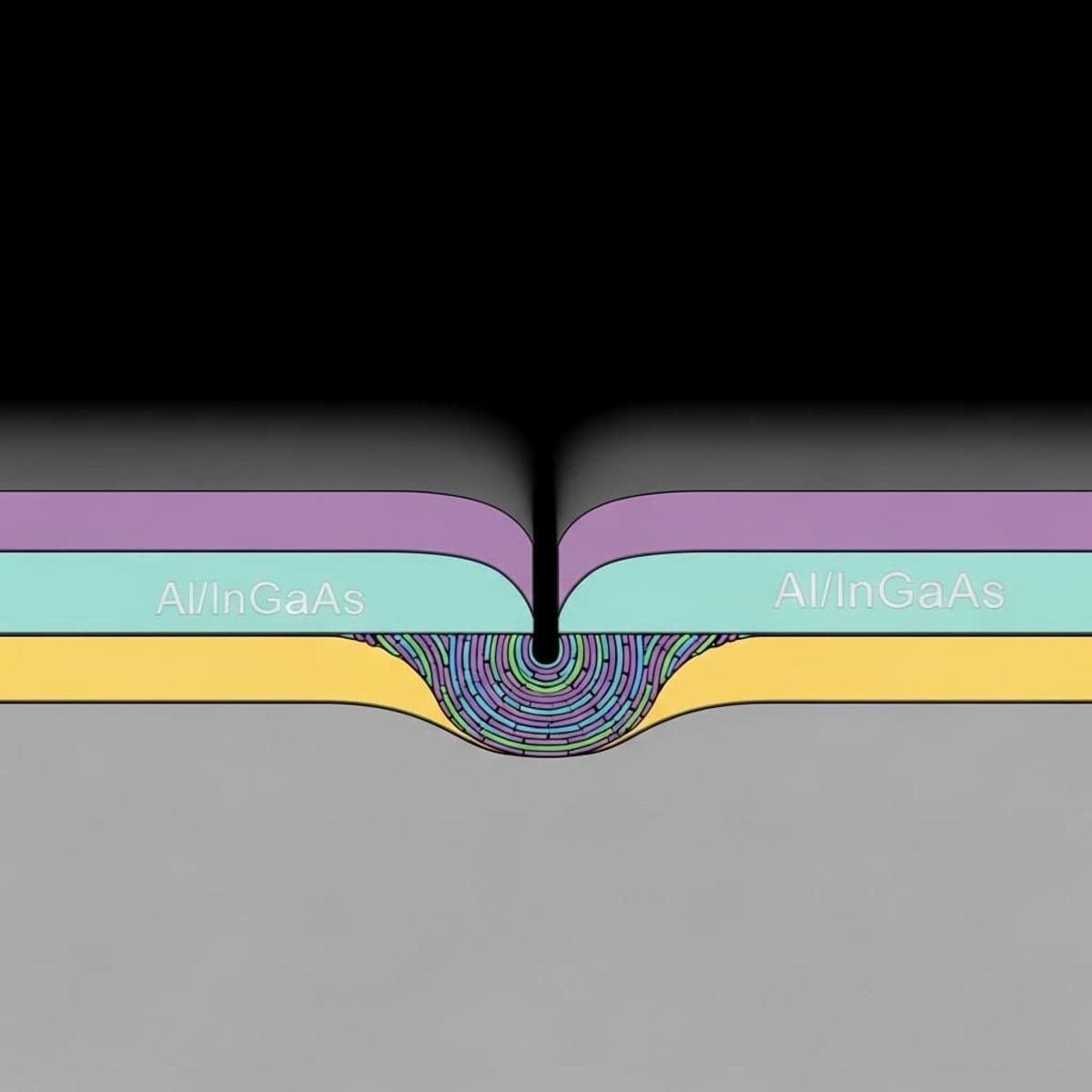
Al/Ingaas System Achieves Continuous Films with No Detectable Indium Interdiffusion
Scientists have demonstrated a robust method for growing epitaxial aluminium films on indium‑gallium arsenide (InGaAs) using molecular‑beam epitaxy at near‑room temperature. By depositing aluminium at 3 Å s⁻¹ onto a 14 °C substrate, they achieved continuous, superconducting layers with no detectable indium interdiffusion....

Neural Networks Advance Hadronic Physics Via Data-Driven Quantum Model Selection
Researchers introduced a "quantum qualifier" metric to decide when quantum‑enhanced deep neural networks (QDNNs) should replace classical deep neural networks (CDNNs) in hadronic physics analyses. Applied to deeply virtual Compton scattering data, the qualifier evaluates data complexity, noise, and dimensionality,...

Quantum Software Testing Advances Quality Assurance for Complex Systems
The authors expose the growing infeasibility of classical simulation for large‑scale quantum software and introduce a suite of software‑engineering techniques that operate directly on real quantum hardware. They advocate circuit simplification, property‑based testing, and assume‑guarantee decomposition to create scalable test...

Good Quantum Codes Achieve Unique Output Distributions for Classical Communication
Researchers Aytekin, Nomeir, Hu, and Ulukus prove that good quantum codes used for classical communication possess a unique optimal output distribution. They show that as block length grows, the empirical output distribution of such codes converges to this optimum, mirroring...

Quantum Walks on Photonic Processors Advance Universal Quantum Computation
Researchers at Quix Quantum have demonstrated leaking quantum walks on an integrated photonic processor, introducing controllable absorbing boundaries. The experiments show that homogeneous losses at a lattice edge reshape the walker’s probability distribution, with absorption strength directly influencing coherence and...

Quantum State Teleportation Advances with 2510.24325v1 Proton Systems Demonstrated
Researchers led by H. Witala have demonstrated that Bell‑state entanglement can be generated in unpolarized proton‑proton scattering and deuteron‑breakup reactions, providing a realistic route to quantum‑state teleportation among protons. Using the AV18 nucleon‑nucleon potential, they identified energy and angular regimes where...
Europe Launches €50 Million ($58.4 Million USD) ‘Photonics for Quantum’ (P4Q) Pilot Line to Industrialize Quantum Photonic Chips
Europe has launched the €50 million Photonics for Quantum (P4Q) pilot line, a joint EU and national effort coordinated by the University of Twente to industrialize quantum photonic chips for computing, sensing, and secure communications. The consortium of 29 partners will...

Localizable Entanglement Achieves Universal Scaling at Critical Measurement Probability
Researchers at IIT Madras have identified localizable entanglement (LE) as a robust order parameter for measurement‑induced phase transitions (MIPTs). Their analysis demonstrates universal finite‑size scaling of LE, with a diverging entanglement correlation length ξ_E at a critical measurement probability around...
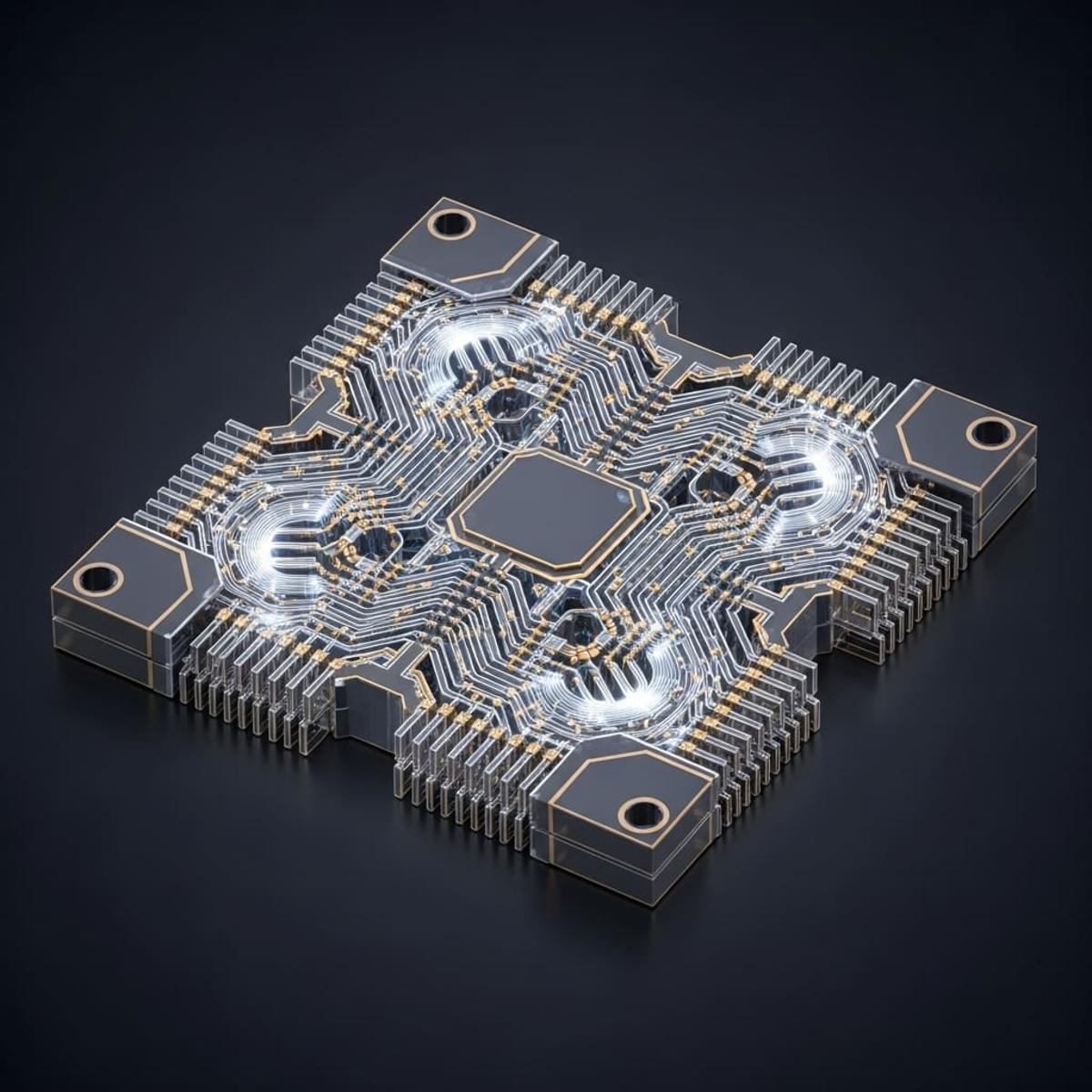
Compact Squeezed Light Source Achieves -8 dB Improvement for Quantum Technologies
Scientists at Ariel University have built an ultra‑compact, low‑cost two‑mode squeezed‑light source operating at 795 nm using four‑wave mixing in hot rubidium vapor. The modular system, driven by only 300 mW of pump power, achieves up to –8 dB of intensity‑difference squeezing at...

Locality Forces Equal Spacing in Quantum Many-Body Scar Towers of States
Physicists have proved that any complete tower of many‑body scar states that are exact eigenstates of a local Hamiltonian must exhibit equally spaced energy levels. The theorem holds for k‑local interactions on arbitrary bounded‑degree graphs, extending beyond simple lattice models...
Saudi Arabia’s KAUST Establishes National Quantum Foundry for Quantum Hardware Fabrication
The episode explains how King Abdullah University of Science and Technology (KAUST) has launched Saudi Arabia’s first shared‑access quantum foundry, a dedicated clean‑room facility for reproducible, commercial‑grade quantum hardware. It highlights the use of Process Design Kits to standardize design...

Mixing Established on Schreier Graphs, Demonstrating Ergodicity for Infinite Cayley Graphs
A team led by El‑Charles Bordenave, Cyril Letrouit and Mostafa Sabri has proved quantum mixing on large Schreier graphs that converge to infinite Cayley graphs. The proof hinges on the limiting Cayley graph having an absolutely continuous spectrum, eliminating the...

Quantum Computing Achieves Database Optimisation with Sub-5 Second Runtime Performance
Researchers at USC introduced Q2O, a quantum‑augmented query optimiser that embeds quantum annealing into PostgreSQL’s planning phase. By encoding join‑order problems as a nonlinear model solvable by low‑latency NL‑Solver hardware, Q2O delivers real‑time optimisation with sub‑5‑second runtimes. Experiments on the...
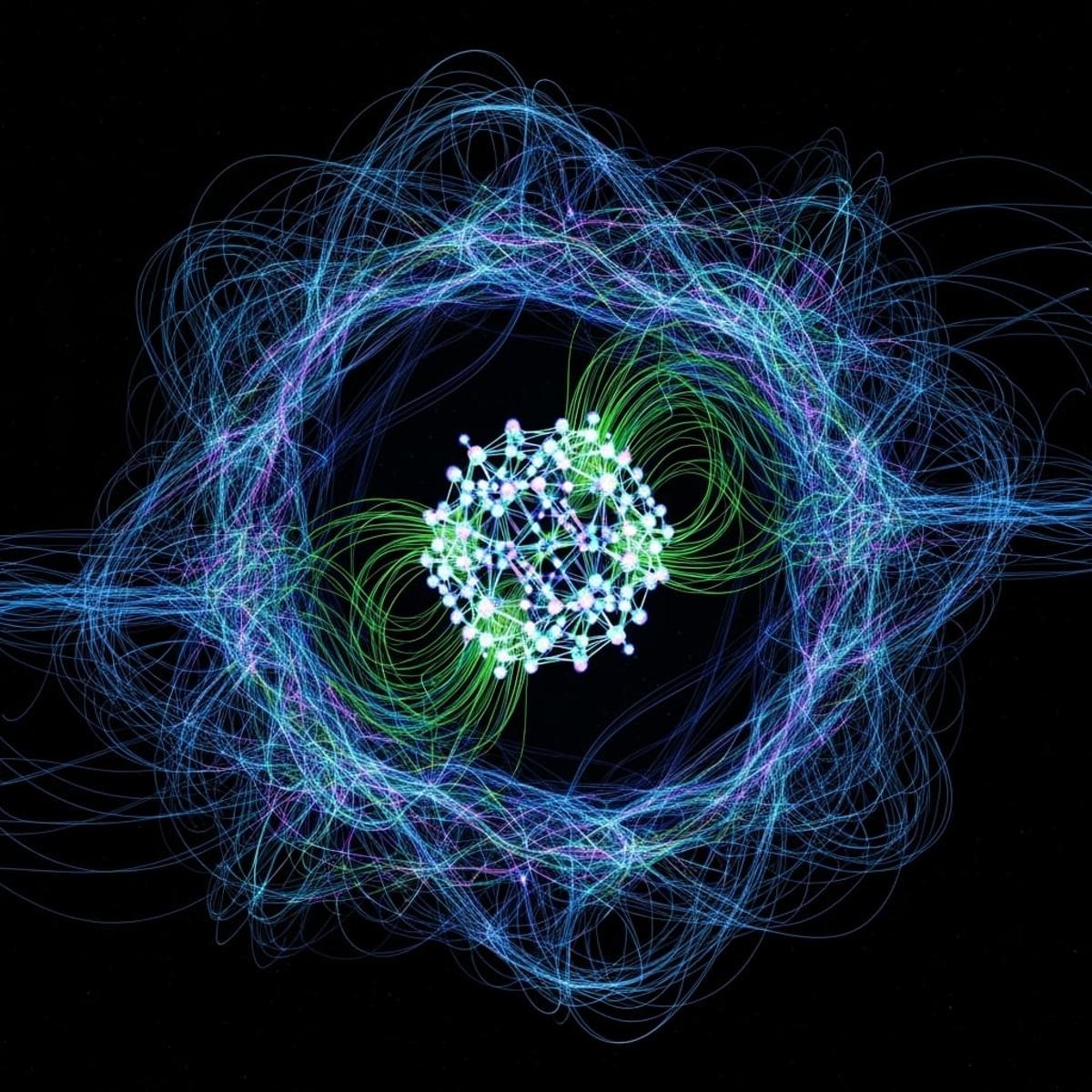
Inverse Quantum Simulation Achieves Quantum Material Design with Desired Properties
Researchers introduced an inverse quantum simulation (IQS) framework that flips traditional quantum‑material studies by starting with desired properties and working backward to a Hamiltonian. The method encodes target characteristics in a cost function, minimizes it on programmable quantum hardware, and...
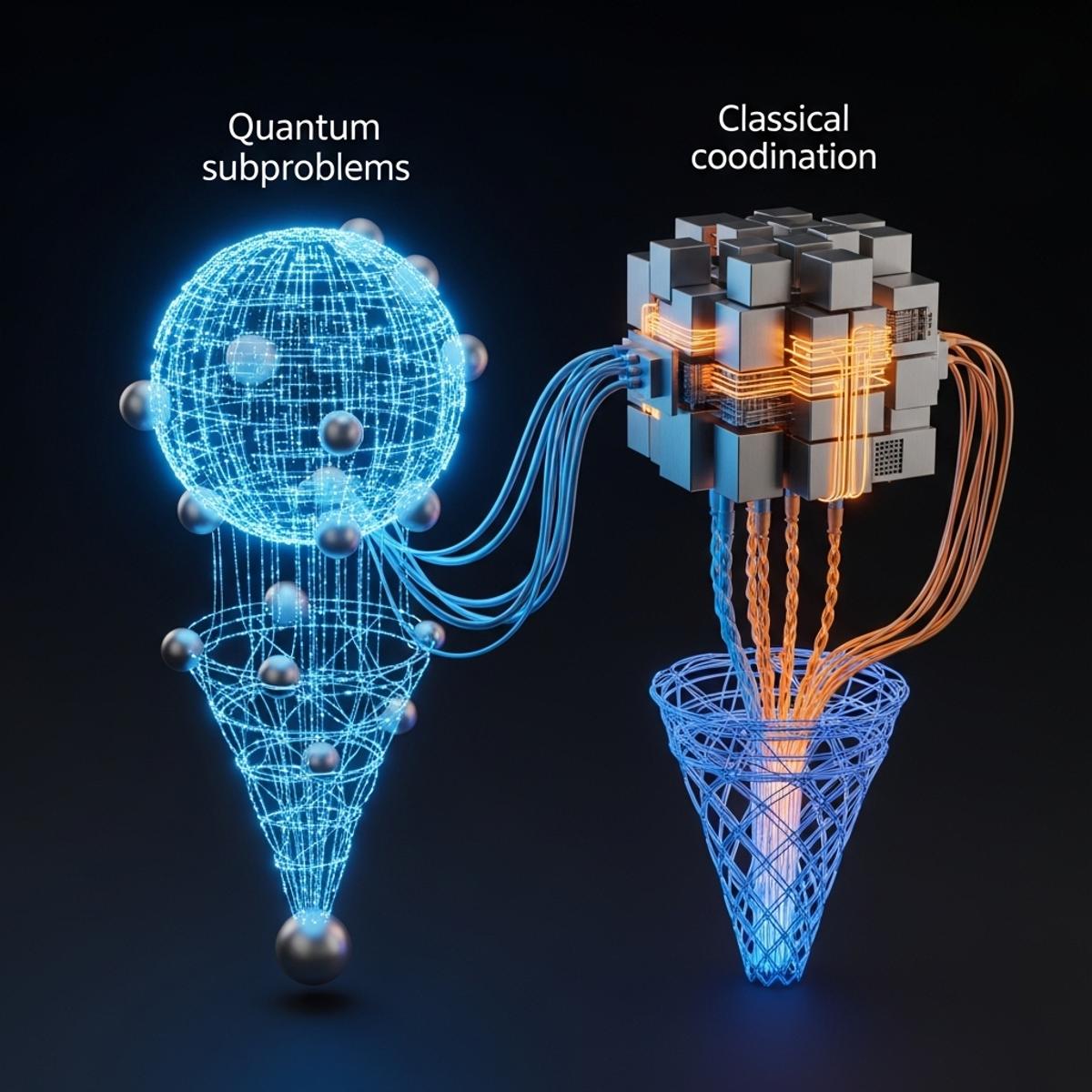
Hybrid Quantum-Classical Benders Approach Achieves Faster MILP Optimisation
Researchers have introduced a hybrid quantum‑classical Benders decomposition algorithm that reformulates the MILP master problem as a QUBO solved on a D‑Wave quantum annealer while handling subproblems classically. The approach incorporates novel embedding techniques, conservative cut‑constraint handling, and a refined...

Quantum Kernel Machine Learning Achieves Materials Discovery with Less Data
Researchers applied quantum‑kernel machine learning to autonomous materials discovery, using X‑ray diffraction patterns from a Fe‑Ga‑Pd alloy library on IonQ’s Aria trapped‑ion quantum computer. By integrating Gaussian‑process‑based active learning, the quantum model navigated the compositional phase space with far fewer...
Researchers Achieve Efficient Local Classification of Parity-Based Material Topology
Researchers Wong, Yamazaki, Siefert and collaborators introduced a numerically efficient real‑space framework for classifying topological phases of aperiodic materials. The approach combines spectral localizers with direct Pfaffian sign computation, delivering a local, energy‑resolved \(\mathbb{Z}_2\) invariant without requiring translational symmetry, bulk...
Electrons Meet Ferroelastic Walls in Strontium Titanate, Advancing Oxide Electronics
Researchers have shown that ferroelastic domain walls in strontium titanate (SrTiO₃) are active participants in electron transport, exhibiting emergent polar order, glass‑like relaxations and memory effects. Using resonant piezospectroscopy, electric‑field‑dependent optical imaging, scanning SQUID and single‑electron‑transistor microscopy, they visualized wall...
Floquet Engineering Achieves Non-Abelian Phases in Driven Quantum Wire Qubits
Researchers theoretically demonstrated that a spin qubit in a parabolic quantum wire, driven by a bichromatic field, exhibits a confinement‑tunable synthetic gauge field leading to Floquet topological phenomena. Varying the confinement strength triggers a topological Landau‑Zener transition, changing interference patterns...

Generative Adversarial Networks Achieve 98% Fidelity Resource State Generation
Researchers at IIIT Hyderabad and TATA Consultancy Services introduced a physics‑informed Generative Adversarial Network (GAN) that treats quantum resource‑state creation as an inverse‑design problem. By enforcing Hermiticity, trace‑one, and positivity during training, the GAN reliably reproduces Werner‑like and Bell‑diagonal states...

Alphasyndrome Achieves 80.6% Logical Error Rate Reduction with Novel Scheduling
Researchers introduced AlphaSyndrome, an automated framework that optimizes syndrome‑measurement scheduling for general commuting‑stabiliser quantum error‑correction codes. By leveraging Monte Carlo Tree Search and decoder feedback, the system reshapes error‑propagation pathways, achieving an average logical‑error‑rate reduction of 80.6% and up to 96.2%...

Su(2) Representation Theory Achieves 3-Dimensional Constraints in Graph Quantum Systems
A new study shows that graph‑based quantum systems lacking intrinsic geometry must encode directional information using qubits (ℂ²). By applying SU(2) representation theory, the authors prove that this minimal encoding forces a three‑dimensional Euclidean space via the Bloch sphere. The...
Using Magnetic Frustration to Probe New Quantum Possibilities
UC Santa Barbara researchers led by Stephen Wilson have shown that magnetic and bond frustration can coexist in a triangular‑lattice antiferromagnet, creating a dual‑frustrated system. By embedding lanthanide moments in a crystal that also hosts strained dimer bonds, they demonstrated that tiny...
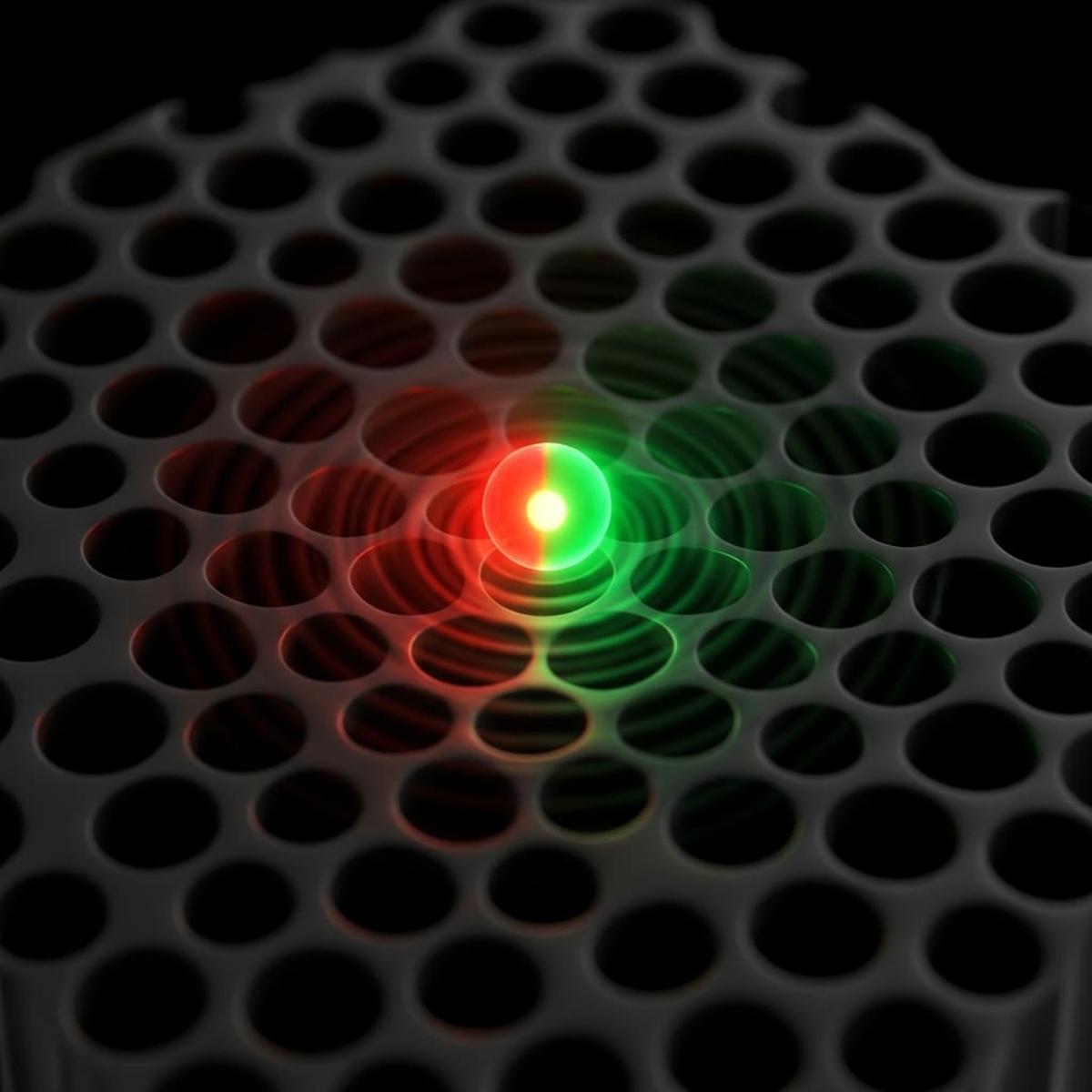
Quantum Dots Achieve 0.7 Energy Shifts Via Phononic Crystal Waveguide Coupling
Researchers from Wrocław University of Science and Technology and the University of Münster have theoretically demonstrated strong coupling between quantum dots and gigahertz phononic crystal waveguides, achieving energy shifts up to 0.7 meV. By combining k·p and configuration‑interaction modeling, they show...
Ability Engineering Technology Joins Chicago Quantum Exchange to Strengthen Infrastructure Supply Chain
Ability Engineering Technology (AET) has become a corporate partner of the Chicago Quantum Exchange to provide high‑precision cryogenic, vacuum, and pressure‑vessel hardware essential for scaling superconducting and silicon quantum processors. The partnership aims to eliminate engineering bottlenecks in moving quantum...
Gputb-2 Achieves Higher Accuracy for Electronic Structure Calculations with N^3 Scaling
Researchers from Nanjing and Bohai Universities introduced GPUTB‑2, an E(3)-equivariant neural network that learns orthogonal Hamiltonians without the O(N³) orthogonalization bottleneck of traditional LCAO methods. The model, built with only 0.35 million parameters, reduces mean absolute error on the DeePTB benchmark...

Two-Dimensional Materials Expand Options for Next-Generation Terahertz Quantum Devices
Scientists at the National University of Singapore have shown that atomic‑scale substitutional dopants in two‑dimensional transition‑metal dichalcogenides can act as stable quantum defects with terahertz‑range zero‑field splitting. High‑throughput first‑principles simulations of 50 MoS₂ and WSe₂ monolayers identified several spin‑triplet defects...

Advances Post-Quantum PKI: Defining Requirements for Secure X.509 Certificate Transition
The paper outlines a roadmap for transitioning X.509 PKI to post‑quantum cryptography, detailing required changes to certificates, CRLs, and OCSP. It evaluates leading PQ algorithm families—lattice, code, hash, multivariate, and isogeny—against NIST security levels, highlighting Kyber, Dilithium, Falcon, and SPHINCS+...

Quantum-Enabled Proteins Open a New Frontier in Biotechnology
University of Oxford engineers quantum‑enabled proteins, creating magneto‑sensitive fluorescent proteins (MFPs) that respond to magnetic and radio‑frequency fields when illuminated. Published in Nature, the study demonstrates deliberate design of quantum mechanical processes inside biomolecules, moving beyond observation of natural quantum...

Sub-Doppler Cooling Achieved with Programmable 780-Nm Laser and PZT-on-SiN Resonator
The research team demonstrated a programmable 780‑nm laser locked to a photonic‑integrated PZT‑on‑SiN resonator, achieving up to 1 GHz V⁻¹ tuning strength and 11 MHz modulation bandwidth while consuming only ~10 nW. Using this source, they performed rubidium‑87 spectroscopy and realized sub‑Doppler cooling to...

WISeKey Unveils Space-Based Quantum-Resistant Crypto Transactions at Davos 2026
WISeKey International unveiled SEALCOIN, a space‑based, quantum‑resistant crypto platform, at Davos 2026. The system uses the WISeSat low‑Earth‑orbit constellation to generate cryptographic signatures directly onboard satellites, extending blockchain transactions beyond terrestrial networks. Its native QAIT token will fuel machine‑to‑machine value exchange,...

Room-Temperature Microscopy Achieves Spatially-Resolved Coherence in Molecular Spin Thin-Films
Researchers at UNSW Sydney have demonstrated room‑temperature, optically detected coherent control of organic molecular spins combined with microscopy to map spatial coherence in pentacene‑doped p‑terphenyl thin‑films and crystals. The study reveals that thin‑films exhibit up to 7.6 % variability in magnetic‑field...

Too Much Entanglement? Quantum Networks Can Suffer From 'Selfish Routing,' Study Shows
Northwestern researchers have demonstrated that in multi‑user quantum communication networks, increasing the amount of shared entanglement can paradoxically degrade overall fidelity when each pair routes selfishly. By modeling non‑cooperative routing decisions, they showed that mixed entangled states generate a quantum...
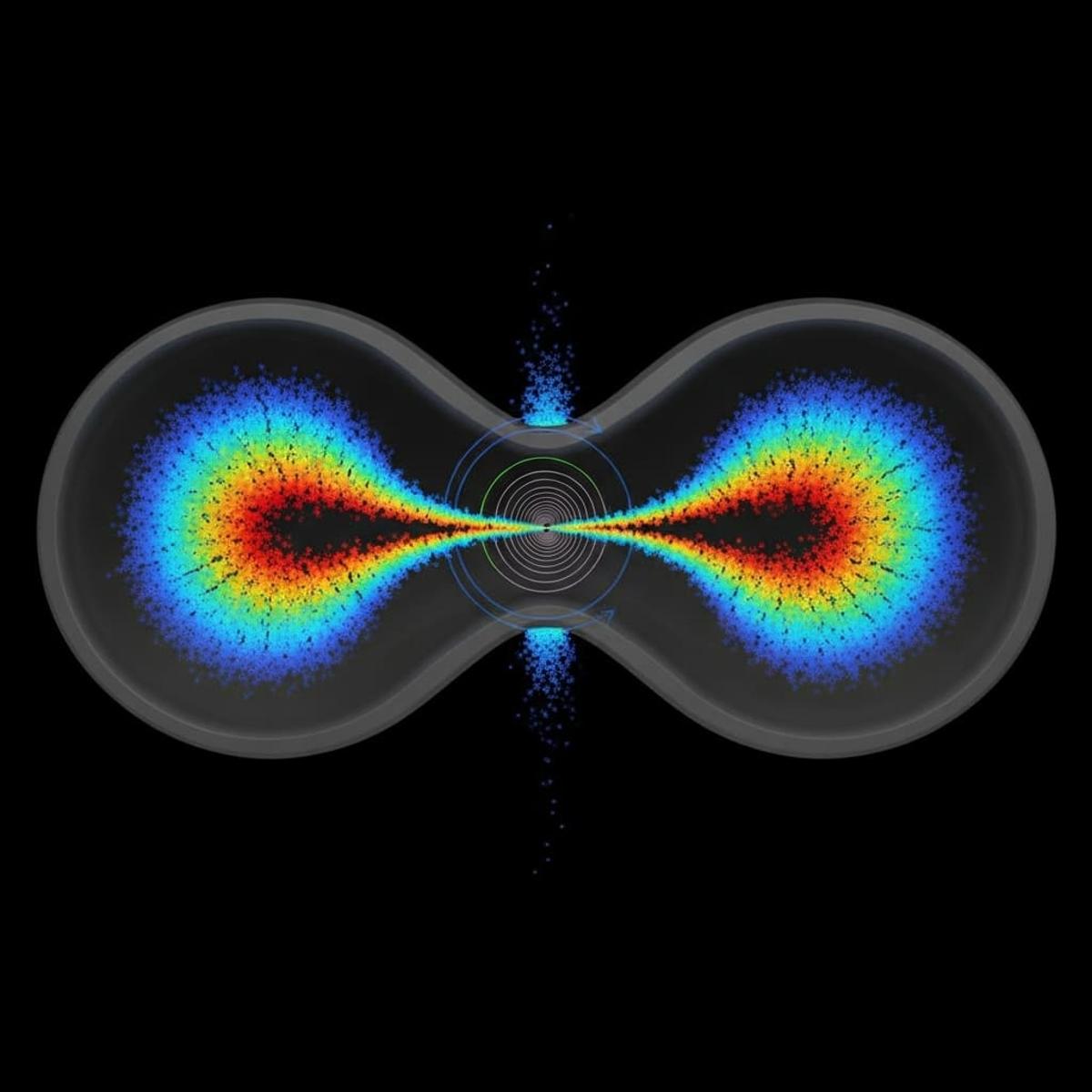
Bosonic Josephson Junctions Infer Rotation Frequency Via Modified Tunneling Dynamics
Researchers propose using a bosonic Josephson junction—ultracold atoms in a double‑well potential—as a quantum rotation sensor. Theoretical mean‑field and many‑body calculations show that rotation dramatically alters tunnelling period, momentum and angular‑momentum dynamics, enabling extraction of rotation frequency, radial displacement and...