Quantum Computing Offers Faster, More Accurate Molecular Blueprint Predictions for Better Drugs
Researchers at North Carolina State University have introduced a hybrid quantum‑classical framework that predicts electronic circular dichroism (ECD) spectra of chiral molecules using 20–24 qubit circuits. The method combines variational quantum eigensolvers with quantum equation‑of‑motion techniques and matches the accuracy of high‑level classical methods such as CCSD and CASCI. Benchmarks on twelve clinically relevant chiral drugs demonstrate near‑quantitative agreement while dramatically reducing computational cost. This work paves the way for scalable, first‑principles chiroptical predictions in pharmaceutical research.

Quantum Computing’s ‘Barren Plateaus’ Overcome with Extra Circuit Parameters
A new numerical study examines how adding extra parameters to variational quantum circuits can counteract barren‑plateau effects that stall optimization. Using a 72‑qubit superconducting processor simulator, the researchers mapped energy accuracy across ansatz depth and training epochs for a transverse‑field...

On-Chip Device Splits Light with 99.95% Accuracy, Boosting Quantum Computing Power
Researchers at Purdue and Johns Hopkins have built an on‑chip silicon pulse‑shaper that functions as a frequency beamsplitter, delivering near‑ideal Hadamard‑gate performance with fidelity above 0.9995 and a modified success probability over 0.9621. The device supports ultra‑narrow 2‑5 GHz channel spacings—a...

Random Matrix Breakthrough Unlocks New Understanding of Quantum Entanglement’s Complexity
Researchers derived a summation‑free recurrence relation for the k‑th spectral moment of the Bures‑Hall random matrix ensemble, valid for any real‑valued k. The breakthrough hinges on new Christoffel‑Darboux formulas for the ensemble’s correlation kernels, simplifying calculations that previously required cumbersome...
Exotic Superconductivity Unlocked by Manipulating Atomic Imbalance Within Materials
Researchers at Capital Normal University have shown that staggered pairing imbalance in a non‑Hermitian Kitaev chain can dramatically broaden the parameter space supporting topological superconductivity. By jointly tuning the chemical potential and the imbalance, the eigenenergy gap switches from real...
Quantum Entanglement’s Secrets Unlocked with New Model of Particle Interactions
Researchers Swann, Nahum et al. introduced a continuum‑mechanics framework to describe entanglement dynamics in noisy, interacting fermion chains. By applying a semiclassical path‑integral treatment to an effective spin‑chain representation, they obtained exact expressions for the entanglement membrane tension and operator...

Quantum ‘Stars’ Reveal Hidden Structure Within Complex Quantum States
Scientists revived Ettore Majorana’s 1932 proposal, showing that any spin‑S quantum state can be represented as a constellation of 2S points on a sphere. The study, led by L. L. Sanchez‑Soto, A. B. Klimov and A. Z. Goldberg, demonstrates how these “Majorana stars” provide geometric insight...
New 2D Material Combines Magnetism and Quantum Properties at Room Temperature
Scientists have assembled a two‑dimensional iron‑dicyanoanthracene metal‑organic framework directly on a bismuth selenide topological‑insulator surface at room temperature, revealing two distinct structural phases. Phase A conforms to a known close‑packed Fe₁DCA₃ lattice, while Phase B displays a larger, previously unreported unit cell...
Quantum Networks Share ‘Spooky Action’ Across Multiple Connections Simultaneously
Researchers have derived an analytical expression for bipartite quantum correlators that applies to arbitrary measurement settings and weak‑measurement strengths, streamlining calculations in generalized star‑network topologies. Using this tool they demonstrated simultaneous violations of network‑nonlocality Bell inequalities in both (2, 2, 6) and...
Hawking Radiation Destroys Quantum Links in Three-Part Systems, Study Reveals
A recent theoretical study examines tripartite quantum steering—an advanced form of quantum correlation—among three parties situated near a Schwarzschild black hole. By modeling Alice, Bob and Charlie sharing a GHZ state, the researchers classify all six steering configurations and analyze...

Quantum Computers’ Data Bottleneck Eased with New Loading Technique
Researchers at Nanyang Technological University introduced AQER, an Approximate Quantum Encoder with Entanglement Reduction, to address the data‑loading bottleneck in digital quantum computers. By reformulating existing approximate quantum loaders into a unified framework, they derived linear error bounds tied to...

New Algorithms Unlock Faster Sampling of Complex Systems with Tensor Networks
Researchers at Lawrence Berkeley and Oak Ridge National Laboratories have unveiled two new algorithms—independent sampling and greedy search—for efficiently sampling two‑dimensional isometric tensor network states (isoTNS). Both methods extend 1D tensor‑network sampling techniques to 2D while preserving polynomial scaling with...

Quantum Kernels Unlock Complex Data Processing for Near-Term Quantum Computers
Researchers from LMU Munich unveiled Quantum Generator Kernels (QGKs), a novel generator‑based approach that compresses and embeds large datasets into the limited qubit space of NISQ devices. QGKs replace static gate‑based embeddings with Variational Generator Groups (VGGs), employing learnable Hamiltonian‑driven...

Half the Qubits, Same Accuracy: Quantum Chemistry Leaps Forward
Researchers introduced half‑qubit Sampled Quantum Diagonalization (HSQD) that halves qubit requirements while preserving accuracy. Demonstrated on nitrogen dissociation (10e, 26o) with 40% fewer measurements and on iron‑sulfur clusters up to (54e, 36o). The HCI‑enhanced version (HCI‑HSQD) yields sub‑millihartree precision, reduces energy errors...
Quantum Systems Maintain Order Even As They Appear to Randomise, Physicists Confirm
Physicists Yuke Zhang and Pengfei Zhang present a systematic finite‑size scaling analysis of the full eigenstate thermalization hypothesis (full ETH) in quantum spin chains. By decomposing corrections into polynomial energy‑fluctuation terms and exponentially decaying window‑fluctuation terms, they resolve previously observed...

Quantum Algorithm Swiftly Unlocks Energy States for Next-Generation Technologies
Researchers from the University of Melbourne and Data61 unveiled the Quantum Jacobi‑Davidson (QJD) algorithm and its Sample‑Based variant (SBQJD) for ground‑state energy estimation. Simulations on 8‑, 10‑, and 12‑qubit systems showed markedly faster convergence and fewer Pauli measurements than the Quantum...

Quantum ‘Birthmark’ Reveals Systems Never Fully Forget Their Origins
Scientists at Harvard and Tampere University have identified a universal "quantum birthmark" that preserves a system's initial conditions even in fully chaotic quantum dynamics. The effect appears as an enhanced long‑time return probability, meaning non‑stationary states revisit their origins more...

Quantum Error Correction Takes a Leap Forward with New Code Designs
Researchers have introduced a framework linking algebraic properties of CSS qLDPC codes to constant‑depth magic‑state fountains. By defining “magic‑friendly triples” of logical X operators with pairwise orthogonality and odd triple overlap, they prove that families containing Ω(n^{1+γ}) such triples enable...

Rail Vision Ltd. Subsidiary, Quantum Transportation, Unveils Transformer Neural Decoder with Enhanced Error Suppression Capabilities
Quantum Transportation, a subsidiary of Rail Vision Ltd., unveiled a transformer‑based neural decoder called the Deep Quantum Error Correction Transformer (DQECCT) on February 5, 2026. The code‑agnostic system outperforms classical algorithms such as Minimum‑Weight Perfect Matching in simulations, delivering higher decoding accuracy...
Quantum Simulations Become Twice As Efficient with New Error-Correction Technique
Researchers at Yonsei University and the Korea Institute for Advanced Study unveiled a dual‑channel multi‑product formula that dramatically improves Trotter error scaling in product‑formula quantum simulations. The method halves the circuit depth required for a target precision, cutting the number...

Quantum Computing’s Entanglement Costs Finally Quantified for Key Operations
Researchers Richard Cleve and Alex May introduced two universal lower‑bound techniques that quantify the entanglement cost of non‑local quantum computation. Their methods yield the first non‑trivial bounds for Haar‑random two‑qubit unitaries and for widely used gates such as CNOT, DCNOT,...
AI Pinpoints Quantum States with Unprecedented Accuracy From Noisy Signals
Researchers at Tohoku, NIMS and Osaka Universities introduced a U‑Net‑based segmentation model to analyse spin‑readout signals from semiconductor qubits. The fully convolutional architecture handles variable‑length traces and delivers point‑wise transition probabilities, outperforming traditional thresholding in noisy environments. Evaluations on simulated...
New Encryption Method Withstands Attacks From Both Computers and Artificial Intelligence
Researchers introduced Eidolon, a post‑quantum digital signature scheme built on the NP‑complete k‑colourability problem. By extending zero‑knowledge protocols and using Merkle‑tree commitments, the scheme compresses signatures from O(t n) to O(t log n). Empirical tests against integer‑linear‑programming, DSatur, and a custom graph neural...

Quantum Error Correction Gets a Speed Boost for Future Computers
Researchers at Fujitsu’s Quantum Laboratory have introduced early‑stopping techniques—bounded‑cluster gap and extra‑cluster gap—to accelerate soft‑output evaluation in cluster‑based quantum error‑correction decoders. The bounded‑cluster gap reduces computational scaling from O(d²·⁸⁸) to roughly O(d²·³¹), while the extra‑cluster gap integrates seamlessly with existing...

Quantum Computing Speeds up Genome Mapping, Unlocking Faster Disease Diagnosis
Researchers from IIT and IBM have unveiled a hybrid quantum‑classical workflow that accelerates de novo genome assembly by reformulating Hamiltonian and Eulerian path problems as a Higher‑Order Binary Optimisation (HOBO) task solved with the Variational Quantum Eigensolver (VQE). The approach integrates...
Quantum Simulation Cuts Error in Complex Materials Modelling to Below 1 Per Cent
Researchers at Louisiana State University introduced a symmetry‑adapted variational quantum eigensolver (VQE) to solve the Anderson Impurity Model within dynamical mean‑field theory. Using a four‑site bath discretization, the method delivered ground‑state energies with relative errors below 0.01 % while employing only...

Physics-Inspired AI Forecasts 3D Changes with Unprecedented Stability
A team from Innsbruck universities unveiled a physics‑guided neural network that borrows the Schrödinger equation to forecast four‑dimensional (3‑D + time) phenomena. The model learns voxel‑wise amplitude, phase and potential fields, forming a complex‑valued wavefunction that is evolved with a differentiable time‑stepper....

Quantum-Inspired AI Distils Complex Data, Boosting Fusion Energy Research
Researchers from Beijing University of Posts and Telecommunications and the Chinese Academy of Sciences have introduced a physics‑informed framework that couples Koopman operator theory with quantum machine learning to compress high‑dimensional tokamak diagnostic data for NISQ processors. Validated on 4,763...

Visual Tool Unlocks Quantum Computing for Engineers and Students Alike
Researchers at Gebze Technical University introduced QuVI, an open‑source quantum circuit simulator built inside NI LabVIEW. The toolkit replaces text‑based quantum code with a visual dataflow interface that maps block diagrams directly to Bloch‑sphere representations. By leveraging LabVIEW queues, QuVI...

New Technique Swiftly Unlocks Key Values for Stronger, More Resilient Materials
Researchers at Chongqing Normal University unveiled the Memory Gradient Method (MGM), a novel algorithm that computes extreme M‑eigenvalues of fourth‑order hierarchically symmetric tensors by recasting the problem as a series of unconstrained optimisation tasks with a shift parameter. The approach...

AI ‘Quorum’ Speeds up Decisions and Boosts Prediction Accuracy to 70.60%
Researchers introduced SQUAD (Scalable Quorum Adaptive Decisions), a novel inference framework that merges early‑exit networks with distributed ensemble learning. Instead of relying on single‑model confidence thresholds, SQUAD uses a quorum‑based voting system that halts computation once a statistically significant consensus...

Quantum Industry Canada Backs 2026 Year of Quantum Security Initiative
Quantum Industry Canada (QIC) has officially joined the global 2026 Year of Quantum Security (YQS2026) initiative, aligning Canada with an international effort to protect digital infrastructure against emerging quantum threats. The program will bring together government, industry, finance and academia...

Deep Photonic Neuromorphic Networks Demonstrate Unsupervised Hebbian Learning Online
University of Texas at Dallas researchers unveiled a fully optical deep photonic neuromorphic network that learns unsupervised, online Hebbian updates using phase‑change material synapses. The system bypasses electronic‑optical‑electronic conversions, delivering 100 % accuracy on a non‑trivial letter‑recognition task on a commercial...

Quantum Signatures Bypass Tricky Quantum Memory with Classical Computing Power
Researchers unveiled a quantum‑digital‑signature protocol that uses classical shadows of random quantum circuits as public keys, eliminating the need for fragile quantum memory. An enhanced state‑certification primitive improves noise tolerance and cuts sample complexity, enabling a proof‑of‑principle signature on a...

Quantum Entanglement Boosts Computer Coordination, Bypassing Speed Limits of Distance
Researchers at Delft Networks and QuTech have shown that shared quantum entanglement can be used to coordinate decisions in distributed systems without any real‑time communication. Their analytical model of a dual‑work optimisation problem proves that entanglement‑assisted routing achieves a Pareto‑superior...
Shows QSVM Generalisation Bounds Under Local Depolarising Noise for NISQ Devices
Researchers Govender and Sinayskiy derived analytical upper and lower bounds on the generalisation performance of quantum kernel‑assisted support vector machines (QSVMs) under local depolarising noise. Their work shows that noise erodes the QSVM margin, a key predictor of how well...

Molecular Clusters Unlock 30 Years of Progress Towards Nanoelectronics
A new review consolidates three decades of experimental work on polyoxometalates (POMs), detailing how their structural variations influence electron transport from thin films to single‑molecule junctions. The authors correlate POM composition, redox states, and electrode linkages with device performance, highlighting...

Quantum Reality Redefined: New Theory Unifies Particle and Light Wave Behaviour
Researchers have reformulated the classical Hamilton‑Jacobi equation as a wave equation, extending de Broglie’s wave‑particle duality to any square‑integrable function. This mathematical bridge yields the Schrödinger equation directly from classical mechanics and shows that many quantum‑mechanical tools—eigenvalue problems, energy‑state expansions—have classical...
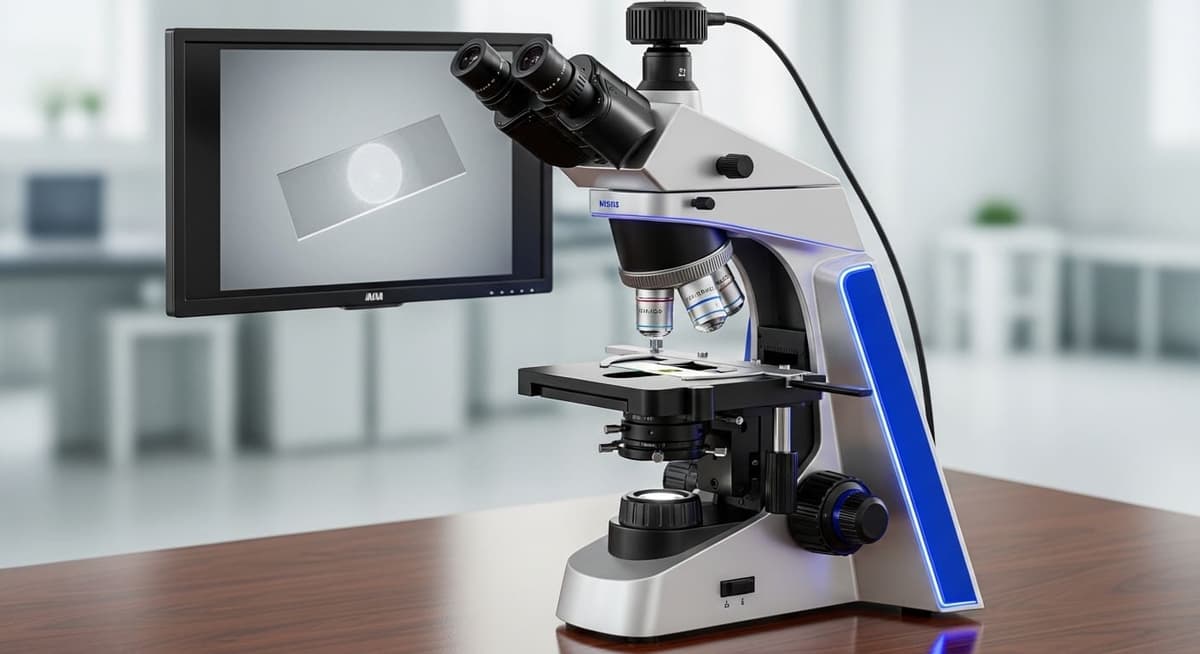
Quantum Computer Flaws Mapped with New Roughness Model for Stable Processing
Researchers at Nanoacademic Technologies and McGill University have introduced a quantitative model linking interface roughness to variability in Josephson junctions, a core component of superconducting qubits. By treating Al/AlO interface roughness as a Gaussian random field and applying the Ambegaokar‑Baratoff...

Superconducting Circuits Gain Fine Control with ‘Steering’ Wires for Better Performance
Researchers have introduced a supercurrent‑engineering technique that uses side control wires to sculpt the current density in superconducting thin‑film strips, eliminating edge crowding. By solving the London and Ginzburg‑Landau equations, they demonstrated inverted profiles with edge dips that suppress vortex...

Shows Kibble-Zurek Scaling in Polariton Condensates with Hundreds of Vortex Realizations
Researchers performed single‑shot interferometric measurements on a room‑temperature polariton condensate, capturing hundreds of stochastic vortex realizations. They found the average vortex number scales with pump power following the Kibble‑Zurek freeze‑out prediction for driven‑dissipative systems. Spectral analysis of vortex‑laden states revealed...

Researchers Reveal Faster Enumeration of Hadamard Matrices up to Order
Researchers Bennett, Bright, Nayak and Colinot introduced a dramatically faster enumeration algorithm for quaternionic perfect sequences, extending exhaustive searches for Williamson‑type Hadamard matrices up to order 21—well beyond the previous ceiling of order 13. By exploiting the fact that circulant blocks in...

Shows Orders of Magnitude Runtime Reduction in Quantum Error Mitigation
Researchers led by Raam Uzdin at The Hebrew University have unveiled a quantum error mitigation framework that slashes runtime overhead by orders of magnitude. The method blends virtual noise scaling with a layered architecture, dramatically outpacing traditional zero‑noise extrapolation. Experiments...
Shows Second Law Dynamics of Infinite Quantum Systems with Maximal Entropy Rise
Physicists Walter F. Wreszinski and collaborators have proved a deterministic theorem showing that infinite‑dimensional spin systems evolve toward increasing mean entropy, ultimately reaching a maximal value. By extending the notion of adiabatic transformation to sudden interactions, they formalize the second law for...

Quantum Processor Reveals Rényi-2 Entanglement and Symmetries in Random States
A team from Zhejiang University and SISSA used a superconducting quantum processor to generate approximate Haar‑random states via low‑depth Floquet circuits. By applying a few periodic driving cycles to product states of up to 11 qubits, they created k‑design ensembles...

Shows Noise-Assisted Metastability Drives Lévy Flights and Quantum Escape Dynamics
Researchers present a unifying theoretical framework showing that noise, especially Lévy‑type non‑Gaussian fluctuations, can actively stabilise metastable states in both classical and quantum systems. They derive exact mean residence‑time formulas for particles in smooth potentials, confirming that Lévy noise extends...

Terahertz Microscope Reveals the Motion of Superconducting Electrons
MIT physicists have built a terahertz microscope that squeezes THz light to micron‑scale spots using spintronic emitters and a Bragg mirror, overcoming the diffraction limit. The instrument captured the first direct image of a superfluid plasmon—collective terahertz‑frequency jiggles of superconducting...

Uncovering Hidden Quantum Landscapes
Scientists at the Weizmann Institute have unveiled the Atomic Single Electron Transistor (Atomic SET), a scanning microscope that uses a single atom as a quantum sensor. The device achieves roughly one‑nanometer spatial resolution—about 100 × better than existing probes—and can detect...

Quantum-Inspired Reinforcement Learning Shows Carbon Reduction for AIoT Supply Chains
Researchers introduced a quantum-inspired reinforcement‑learning framework that optimises AIoT‑driven supply chains while cutting carbon emissions, improving inventory control, and enhancing cybersecurity. By modelling the supply network as a controllable spin‑chain, the system balances fidelity, security, and emissions within a multi‑objective...

Shows Four-Partite Star Networks Distinguished by New Multipartite Entanglement Measure
Researchers from Shijiazhuang Tiedao University and Shaanxi Normal University have introduced a thermodynamic‑based family of multipartite entanglement measures called ergotropic‑gap concentratable entanglement. The measure satisfies key axioms such as continuity, majorization monotonicity and monogamy, and can reliably distinguish GHZ from...