
Quantum Delta’s QuantWare Launches Foundry Services to Lower Quantum Chip Barriers
QuantWare, the Delft‑based spin‑out of TU Delft/QuTech, launched its Foundry Services on December 1, 2022, offering third‑party access to its superconducting quantum‑chip fabrication line. The service provides external designers with industry‑leading processes, cutting the cost of quantum hardware to roughly one‑tenth of competing solutions. By commercialising excess fab capacity, QuantWare aims to democratise quantum chip production and accelerate research without the need for in‑house clean‑rooms. The move also positions the company to supply large‑scale processors as the market matures.

Grainger Illinois PQN Awarded Prize at UN International Year of Quantum Science & Technology Closing
The Public Quantum Network (PQN) received the inaugural Continental Quantum City Prize for North & Central America at the United Nations International Year of Quantum Science and Technology closing ceremony. Launched in November 2023 at Urbana’s Free Library, PQN is...
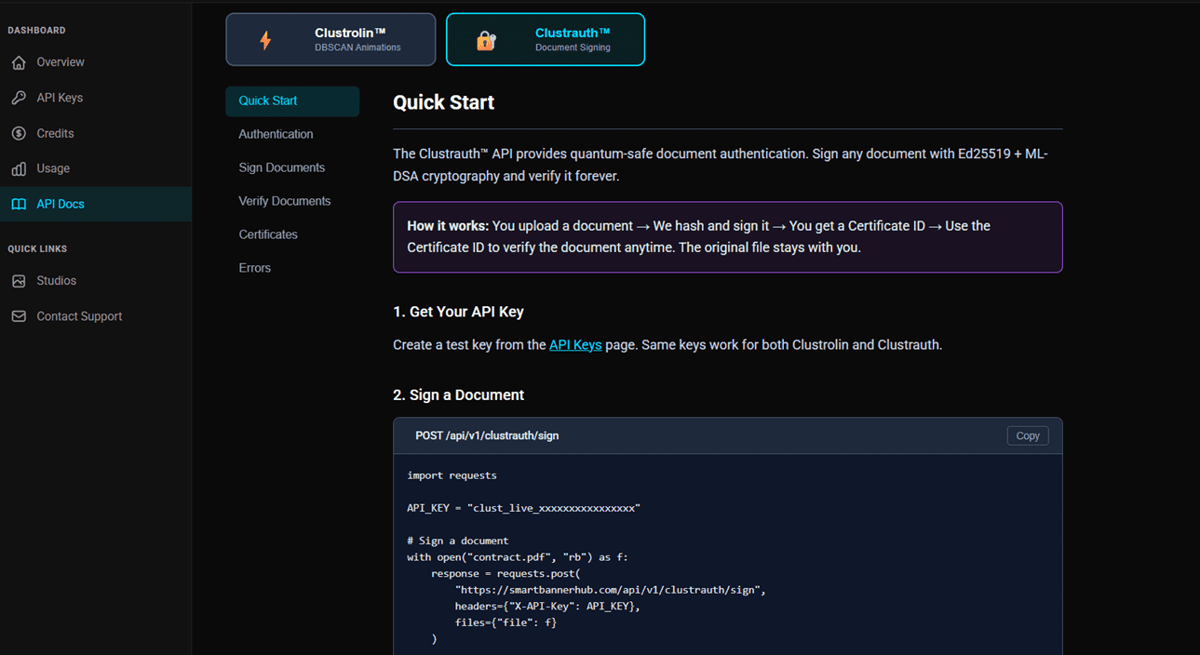
Clustrauth API by Smart Banner Hub Offers Quantum-Safe Document Authentication with Flexible Pricing
Smart Banner Hub introduced the Clustrauth API, a REST service that provides NIST FIPS 204‑compliant, quantum‑safe document signing using a hybrid Ed25519 and ML‑DSA signature scheme. The API allows developers to sign files up to 50 MB with three lines of code...

CO.LAB Receives LaunchTN Grant to Cultivate Quantum Commercialization Pathways Across Tennessee
CO.LAB secured a $1.2 million Launch Tennessee grant to launch the Quantum Activation Series, a statewide effort that begins March 12 at the University of Tennessee‑Chattanooga. The program will convene researchers, entrepreneurs and industry leaders to accelerate the commercialization of quantum research...

NSF Invests Up To $100 Million Over Five Years in National Quantum Research Network
The National Science Foundation announced a $100 million, five‑year National Quantum and Nanotechnology Infrastructure (NQNI) program. The initiative will establish up to 16 open‑access research sites offering advanced fabrication and characterization tools for quantum information science, biotechnology, AI, and semiconductor development....

Dr. Christian Weedbrook and Bill Fradin on Xanadu’s $3.1B Quantum SPAC Deal (CHAC)
Xanadu, the Canadian quantum‑computing startup, announced a $3.1 billion business combination with Crane Harbor Acquisition Corp., a special‑purpose acquisition company listed on NASDAQ. The deal, disclosed in November, positions Xanadu as one of the few quantum firms to go public via...

Quantum Light Conversion Mapped with Unprecedented Precision Using New Technique
Researchers at the University of Bath introduced two‑tone tomography, a novel interferometric method that fully characterises quantum frequency converters. By probing devices with a bichromatic signal and analysing spectral interference, the technique reconstructs the complete complex spectral transfer function—including both...

Quantum AI Shortcut Could Speed up Language Models with Reduced Complexity
Researchers introduced Quantum Attention by Overlap Interference (QSA), a variational quantum implementation of self‑attention that encodes non‑linearity through quantum‑state overlap interference. By expressing the Rényi‑1/2 cross‑entropy loss as an observable, QSA eliminates the costly decoding step required in conventional quantum...
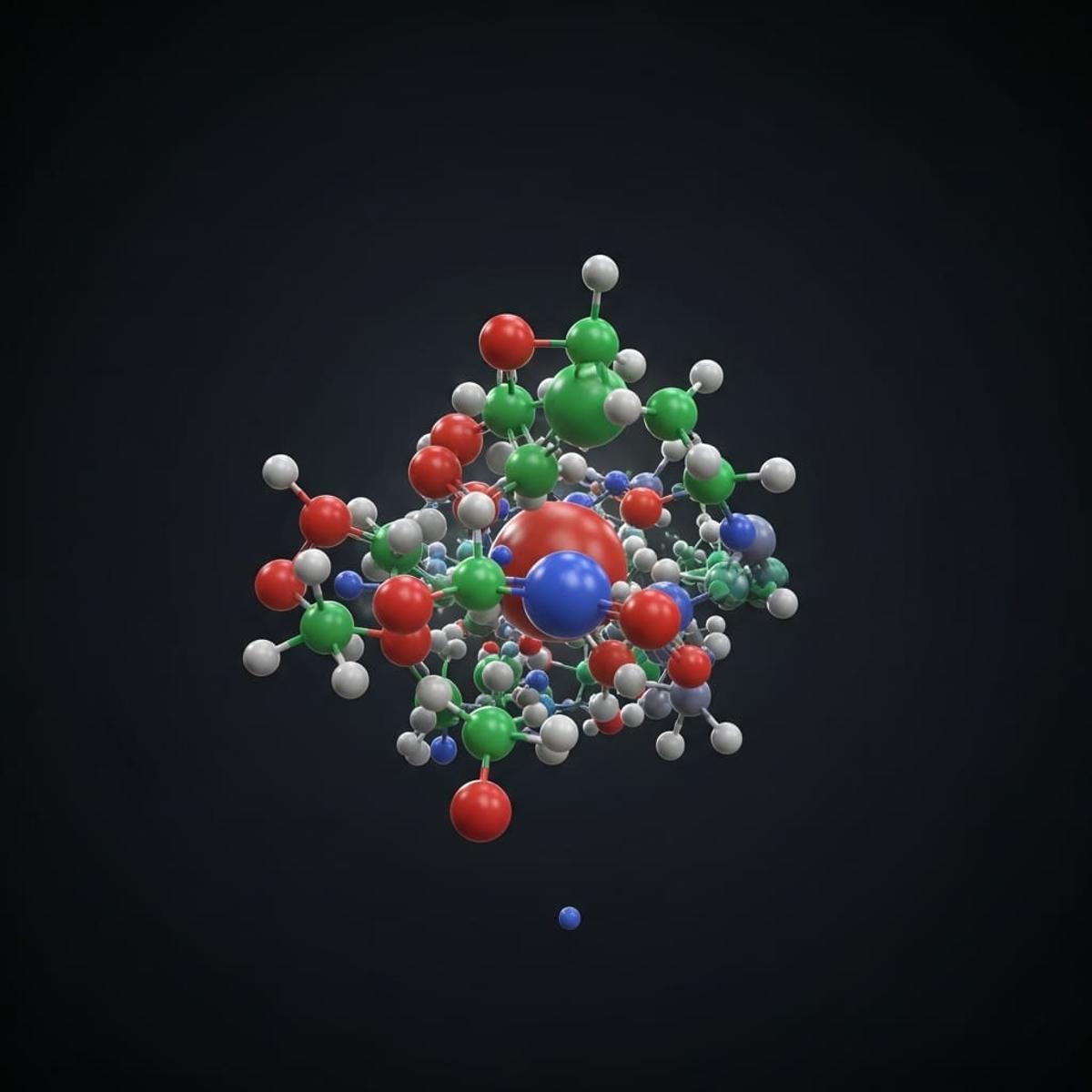
New Technique Unlocks Key to Simulating Complex Molecular Behaviour Accurately
Researchers introduced the ensemble ADAPT‑VQA, a purification‑based algorithm that determines ensemble N‑representability of p‑body reduced density matrices by embedding ensembles into pure states on an extended Hilbert space. The method iteratively applies unitary transformations to minimise the Hilbert‑Schmidt distance between...

Quantum Communication Secured by Choosing Measurement Basis Offers Ultimate Privacy
Researchers have unveiled a one‑way quantum secure direct communication (QSDC) protocol that hides the secret in the choice of measurement basis—computational or Hadamard—rather than a pre‑shared key. Using finite ensembles of entangled EPR pairs and a public authenticated channel, the...

Quantum Compilation Speeds up 100x, Bringing Practical Quantum Computers Closer
Researchers introduced QASMTrans, a C++‑based quantum compilation framework that delivers over 100× faster transpilation than leading tools such as Qiskit, with speedups reported up to 171× on certain circuits. The system preserves comparable circuit fidelity—within 1% of Qiskit’s O3 level—while...

Quantum Entanglement’s ‘No Signalling’ Rule Bends, but Doesn’t Break
Researchers have built relaxed no‑signalling models that permit a quantifiable signalling budget, enabling non‑classicality tests even when experimental data deviates from perfect no‑signalling. By extending local hidden‑variable and local hidden‑state frameworks, they derived corrected Bell and steering inequalities that remain...

AI Collaborator Unlocks Quantum Chemistry for All Researchers
University of Toronto researchers unveiled El Agente Quntur, a hierarchical multi‑agent AI that acts as a research collaborator for quantum‑chemical simulations. The system reasons over ORCA 6.0 documentation and scientific literature, planning, executing and analysing calculations ranging from geometry optimisations to excited‑state studies....

Quantum Computation Simplified: New Method Cuts Complexity of Building Quantum Circuits
Researchers from Barcelona Supercomputing Center, Los Alamos National Laboratory and Alice & Bob have introduced a new compilation technique that builds any matchgate unitary using only matchgate gates, supplemented by a single T‑type phase gate. By proving that the matchgate‑Clifford group plus...
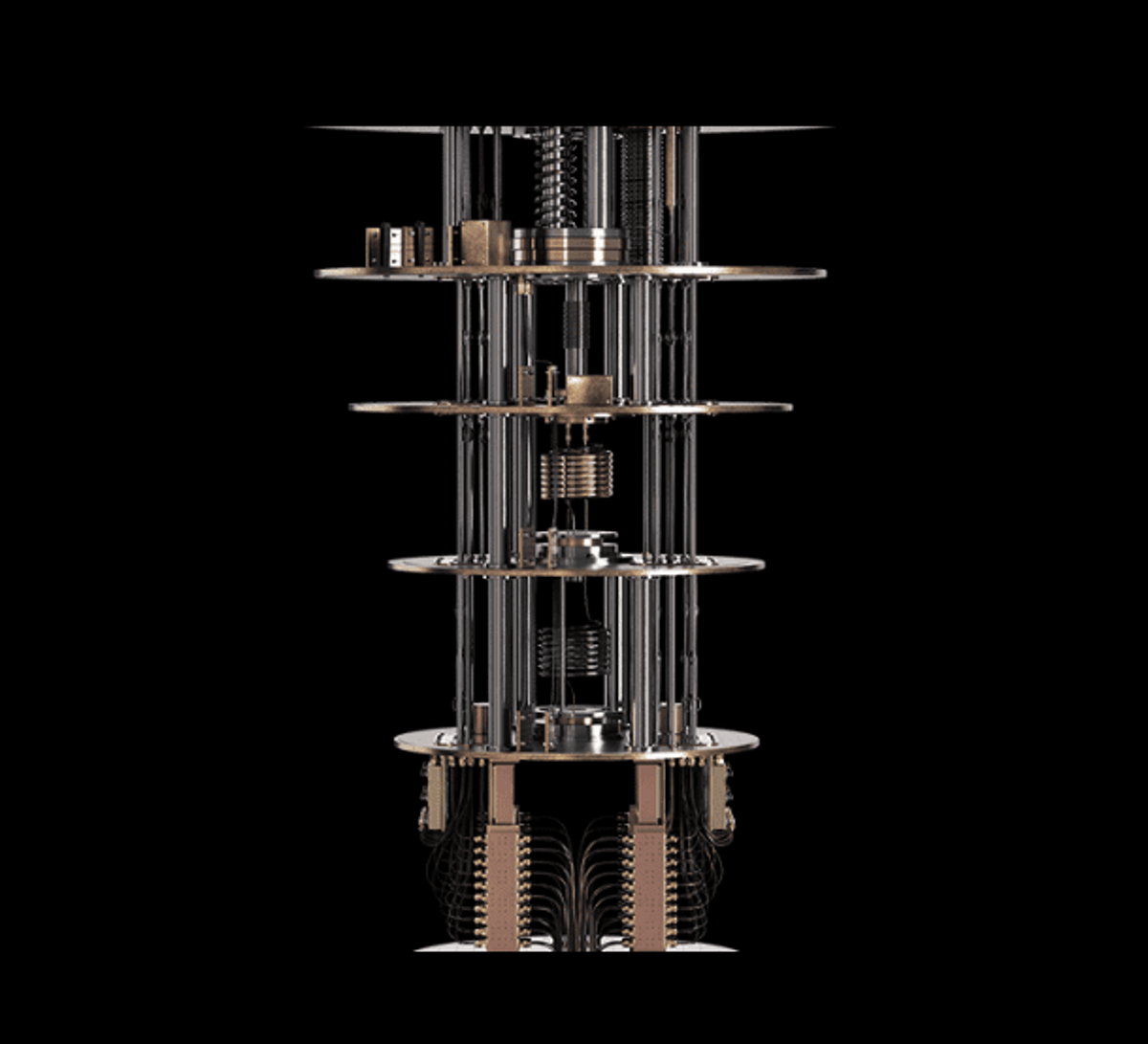
OQC Demonstrates Quantum Algorithm on Toshiko System, Boosting Defence Network Resilience
OQC and QinetiQ have demonstrated a quantum‑based solution that identifies critical vulnerabilities in Mobile Ad‑Hoc Networks used for military and emergency communications. By running QinetiQ’s Quantum Approximation Optimisation Algorithm on OQC’s Toshiko processor, the collaboration pinpointed nodes whose failure would...

Post-Quantum Encryption Bypasses Digital Certificates for Faster, More Secure 5G Networks
Researchers have introduced a post‑quantum identity‑based encryption framework that eliminates X.509 certificates for TLS in 5G core networks and Kubernetes environments. By deriving public keys from identity strings and employing lattice‑based primitives such as ML‑KEM and Module‑NTRU, the scheme offers...

Dr. Malo Cadoret Joins Q-CTRL to Accelerate Development of GPS-Independent Navigation
Q‑CTRL announced the appointment of Dr. Malo Cadoret as Principal Scientist to lead its quantum sensing division. Cadoret, a leading expert in quantum gravimetry, brings experience deploying mobile quantum gravimeters on aircraft and sea vessels. His hire is expected to...

New Algorithm Rapidly Generates ‘Hard’ Curves Boosting Cryptographic Security Protocols
Researchers from the University of Waterloo unveiled the first provable polynomial‑time algorithm to sample random supersingular elliptic curves with unknown endomorphism rings, eliminating the need for a trusted setup. The method runs in O(log⁴ p) gate complexity and improves to O(log¹³ p)...

Quantum Simulations Take a Leap Forward with Superconducting Circuits
The doctoral research demonstrates that large‑scale digital quantum simulations are feasible on superconducting circuits by leveraging qudit‑based hardware, informationally‑complete (IC) measurements, and advanced error‑mitigation techniques. A universal qudit gate set for transmons reduces circuit depth, while IC measurements lower the...
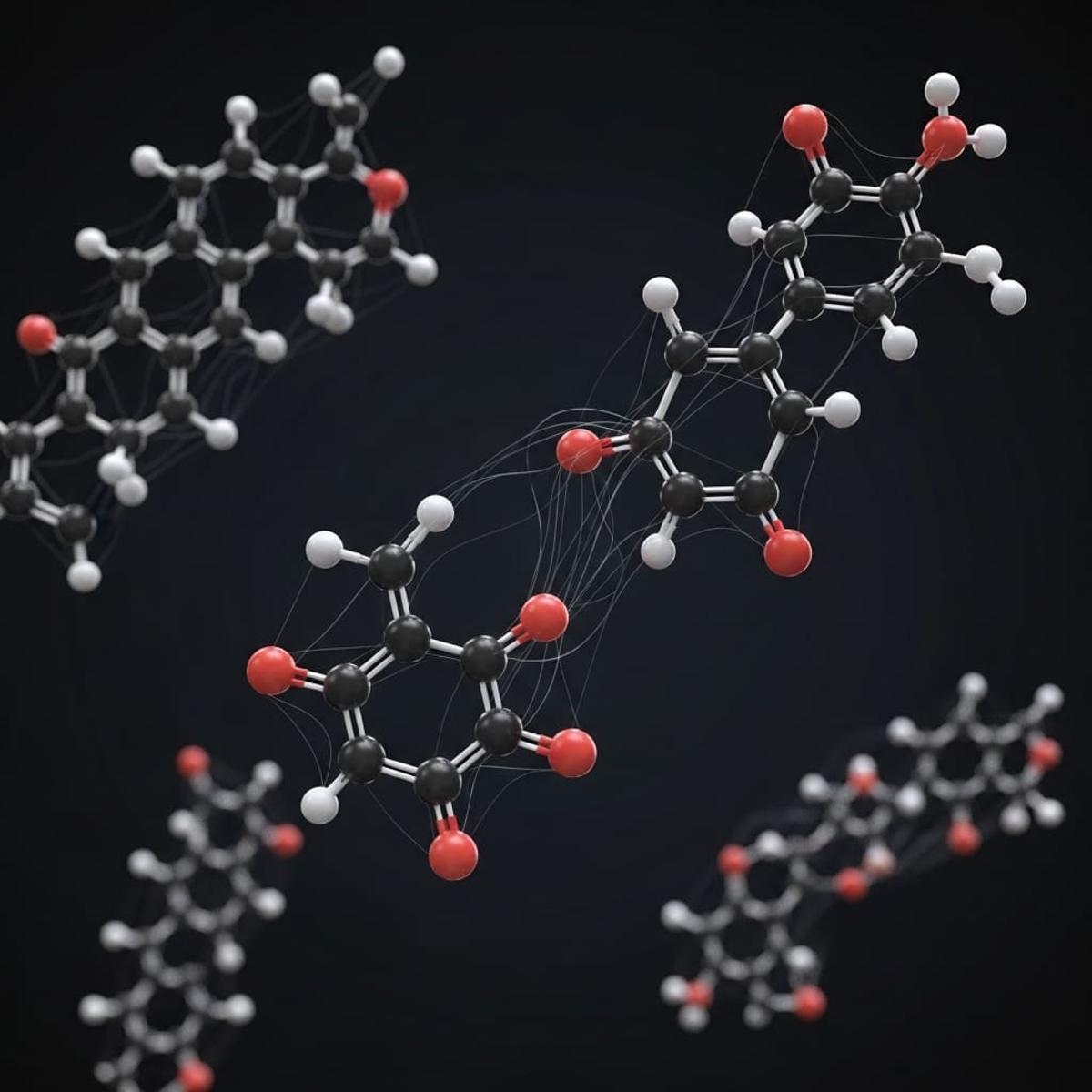
Complex Chemical Calculations Made 25% Cheaper with New Quantum Technique
Researchers at Brown University introduced an active‑space partitioning scheme that couples a truncated UCCSD(4) treatment inside a selected orbital space with MP2 handling of external excitations. Two formulations—composite and interacting—were benchmarked on GW100 geometries, a metaphosphate hydrolysis reaction, and ethylene...

Twisted Quantum Codes Boost Error Correction and Extend Computing Potential
Researchers have introduced finite‑length qudit low‑density parity‑check (LDPC) codes built on two‑dimensional tori with twisted boundary conditions. By applying a bivariate‑bicycle framework and algebraic techniques, the twisted‑torus constructions consistently deliver larger code distances than untwisted or previously reported twisted qubit...
Simulating Heat with Quantum Particles Unlocks New Materials Science Possibilities
Researchers at EPFL and Algorithmiq have unveiled a propagation‑based technique that uses Pauli and Majorana operators to perform imaginary‑time evolution for thermal‑state simulation. By exploiting the natural sparsity of high‑temperature states in these operator bases, the method starts from the...

Quantum Technique Solves Complex Equations in Consistent Time, Unlike Rivals
Researchers benchmarked quantum‑inspired Tensor Network (QTN), Hydrodynamic Schrödinger Equation (HSE), and Physics‑Informed Neural Networks (PINN) against classical GMRES and spectral solvers for the 1‑D Burgers’ equation. The QTN solver delivered a record‑low L₂ error of 10⁻⁷ and showed near‑constant runtime...
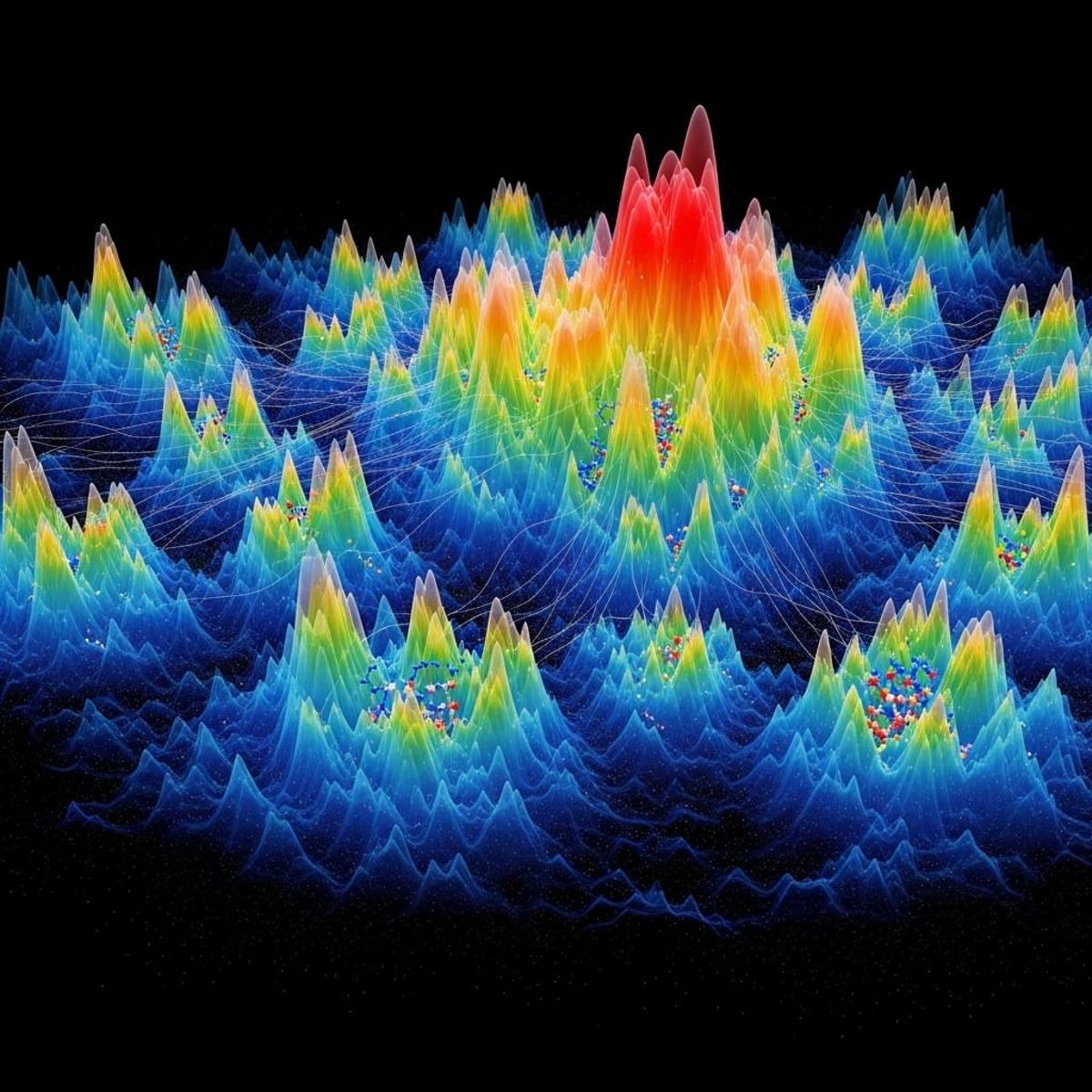
Artificial Neurons Ditch Magnetic Fields for More Powerful, Scalable Computing
Researchers at NTU and IIT Roorkee have demonstrated a spintronic artificial neuron that operates without external magnetic fields, using a ruthenium‑dioxide altermagnet coupled to a synthetic antiferromagnet. The device exploits out‑of‑plane spin‑splitting torque and built‑in exchange coupling to achieve intrinsic...

Material Shifts State on Demand, Paving the Way for Controllable Quantum Devices
Scientists at Princeton, Nanyang Technological University and the University of Arkansas have demonstrated a reversible, structurally driven topological phase transition in the layered material GdPS by incrementally dosing potassium on its surface. ARPES measurements combined with first‑principles calculations reveal a...

Chemical Simulations Boosted with New Technique Achieving 94% Efficiency
Researchers at Qingdao Institute and Shandong University introduced a unified MPI parallelisation framework for wave‑function methods, demonstrated with the iCIPT2 algorithm. By abstracting each computational step into a dynamically‑scheduled loop and using a ghost‑process model, the template achieved up to...
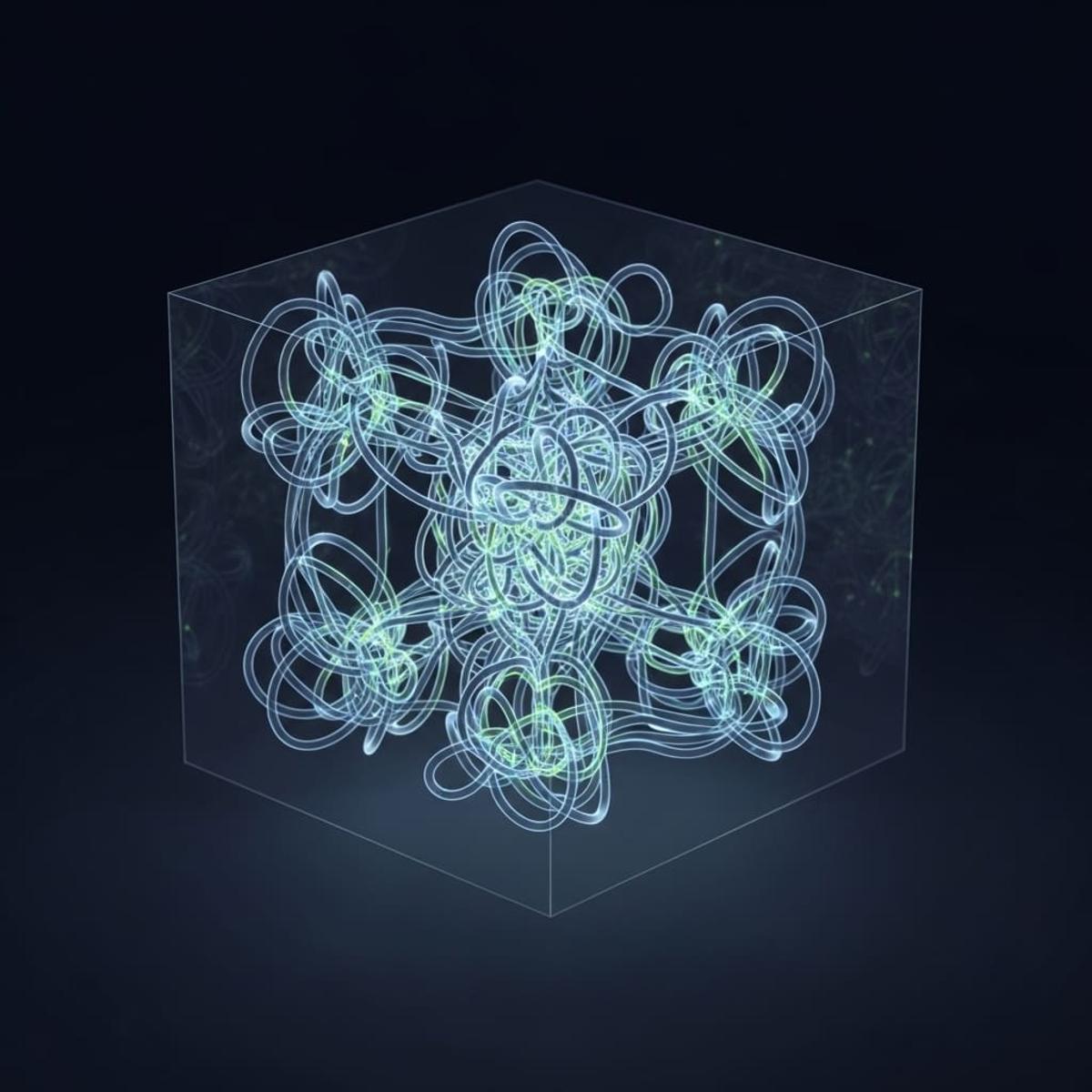
New Material Hosts ‘Majorana’ Particles for Robust Quantum Computing Networks
Researchers have demonstrated higher‑order topological superconductivity in a monolayer MnXPb₂–Pb heterostructure, producing Majorana zero‑mode corner states. First‑principles calculations and an effective boundary theory confirm robust localisation of these modes in a triangular geometry. Crucially, the study shows that electrical gating...

Hybrid Light-Matter Particles Unlock Potential for Terahertz Quantum Technology
Researchers have theoretically predicted ferron‑polaritons—hybrid quasiparticles formed by coupling ferroelectric excitations (ferrons) with superconducting Swihart photons—in superconductor/ferroelectric/superconductor trilayers. The interaction reaches the ultrastrong‑coupling regime, producing a terahertz‑range spectral gap that is orders of magnitude larger than gaps observed in magnetic...

Entangled Qubits Overcome Limits to Precision Measurement of Unknown Rotations
Scientists at Northeast Normal University have extended an entanglement‑based quantum metrology technique to large‑spin probes, achieving optimal Fisher information without prior knowledge of the rotation axis. By entangling the probe with an ancilla qubit and employing post‑selection, they reach a...

Faster Quantum Simulations Unlock New Materials and Drug Discoveries
Researchers introduced a high‑order quadrature technique that upgrades matrix product state (MPS) simulations of time‑dependent quantum many‑body systems to second‑order convergence. By replacing the instantaneous Hamiltonian with a Simpson‑rule averaged Hamiltonian, the method cuts average error by up to 1,000×...

Quantum Computation’s Light-Matter Link Mapped with Unprecedented Accuracy
Researchers solved the full Hamiltonian dynamics of a solid‑state spin‑photon interface, deriving exact fidelities for three key quantum protocols: photon‑number superposition generation, a controlled photon‑photon gate, and photonic cluster‑state production. By modeling multi‑mode light fields and incorporating spin hyperfine interactions,...

Quantum Measurements Force Spin Chains to Develop Long-Range Connections
Researchers at the University of British Columbia demonstrated that on‑site charge measurements on infinite quantum spin chains in a symmetry‑protected topological (SPT) phase trigger a transition from short‑range to long‑range entanglement. By preparing the initial state with a quantum cellular...

Quantum-Proof Software Tools Tackle Looming Cyber Threats with Novel Adaptation Framework
Scientists warn that quantum computers threaten today’s cryptographic defenses, and simply swapping libraries will not suffice. Researchers led by Lei Zhang propose a new discipline—Quantum‑Safe Software Engineering—and introduce the Automated Quantum‑Safe Adaptation (AQuA) framework. AQuA’s three‑pillar approach tackles PQC‑aware detection,...

Quantum Cryptography’s Arithmetic Boost Promises More Secure Communications Networks
Researchers present Arithmetic Reconciliation, a low‑complexity protocol for continuous‑variable quantum key distribution (CVQKD) that boosts reconciliation efficiency at low signal‑to‑noise ratios. Simulations using LDPC codes show key‑sequence matching rates of 0.83–0.92 and quantization efficiencies above 95%, even at SNRs as...
Quantum Networks’ Errors Tackled with New Noise-Reduction Technique
Researchers examined Zero‑Noise Extrapolation (ZNE) for error mitigation in distributed quantum computers, comparing a global approach applied before circuit partitioning with a local approach applied to each sub‑circuit. Simulations across 2‑6 QPUs using GHZ, Deutsch‑Jozsa and W‑state benchmarks showed global...

AI Predicts Quantum System Behaviour for Faster, More Reliable Control
Researchers Zhong, Wang et al. introduced an optimal‑control framework that couples long short‑term memory (LSTM) neural networks with the Adam optimizer to predict open‑quantum‑system dynamics, eliminating costly numerical simulations. The method was applied to a two‑level system undergoing adiabatic speedup,...

Quantum Teleportation Between Cities Moves Closer with New Hardware Blueprint
Scientists at Delft University of Technology have produced a hardware‑focused optimisation framework for intercity quantum teleportation, deriving closed‑form expressions for fidelity and rate under simplified noise models. Simulations on the NetSquid platform validate the formulas, showing that current trapped‑ion processors...

New Probability Theory Bridges Quantum Computing and Classical Randomness
Researchers Antonio Falcó and Hermann G. Matthies introduce an algebraic probability framework that starts from algebras of random variables and a linear expectation functional, bypassing traditional measure‑theoretic constructs. By restricting to finite‑dimensional algebras, they avoid analytic hurdles while capturing both...

Quantum States Defy Time’s Arrow with Unprecedented Sensitivity for Measurement Devices
Researchers have unveiled a scalable method to generate Schrödinger‑cat states using a brief sequence of twist‑and‑turn pulses. The technique reduces the required shearing strength proportionally to 1/√N, allowing larger atom ensembles to be entangled with weaker interactions. By integrating a...

Quantum Computers’ Resilience to Radiation Errors Is Now Accurately Modelled
Researchers led by Baity, Nayak, and Varshney have introduced a computational model that accurately simulates radiation‑induced errors in superconducting quantum processors. By coupling Geant4/G4CMP quasiparticle‑density calculations with quantum error‑correction (QEC) simulations of a [[9,1,3]] surface code, the model quantifies how...
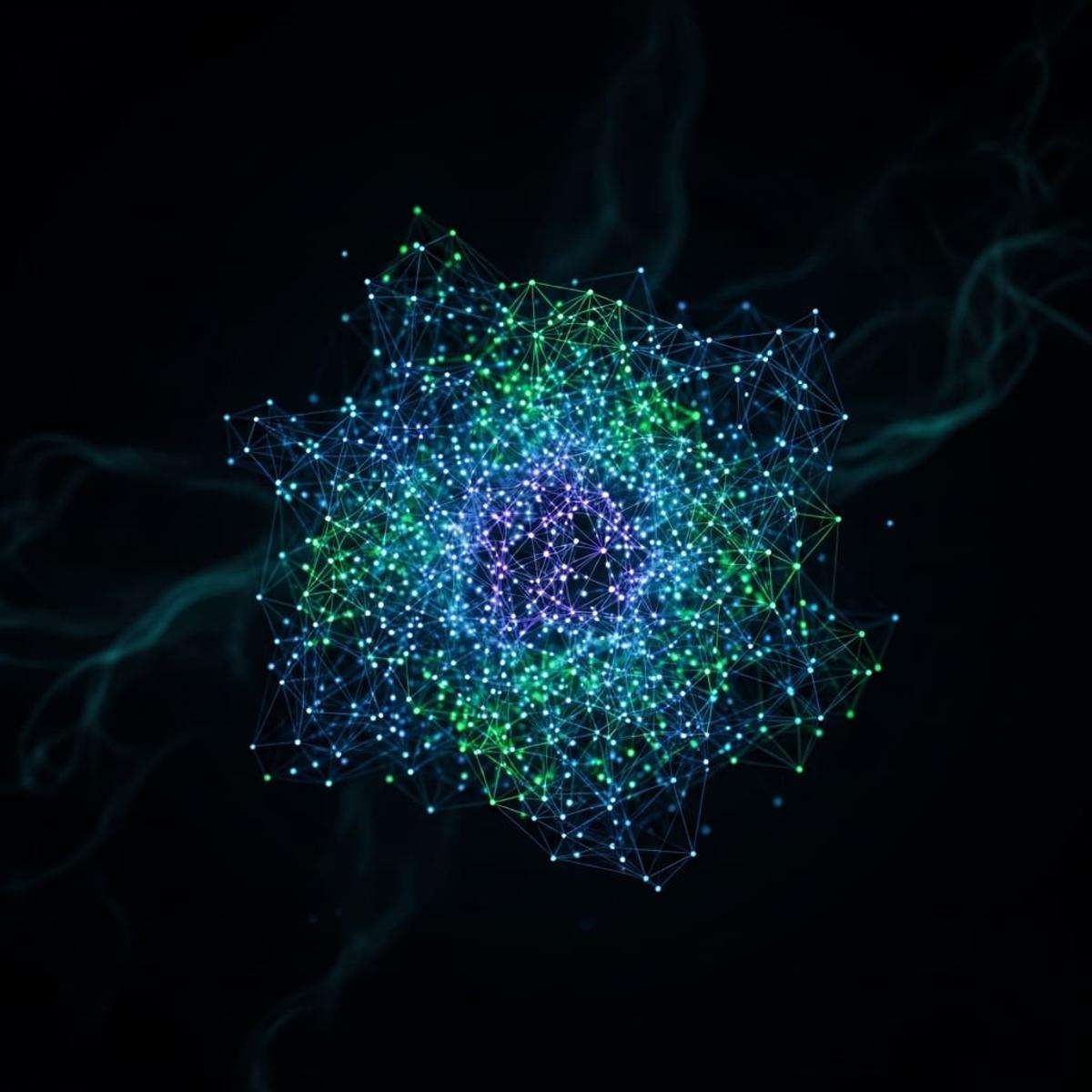
AI Health Models Leak Patient Data Despite Privacy Safeguards, Research Reveals
Researchers unveiled a quantum‑inspired tensor‑train defence that safeguards clinical prediction models from privacy attacks while retaining predictive accuracy and interpretability. Experiments on logistic‑regression and shallow neural‑network models, including the public LORIS immunotherapy predictor, showed severe data leakage under white‑box access...
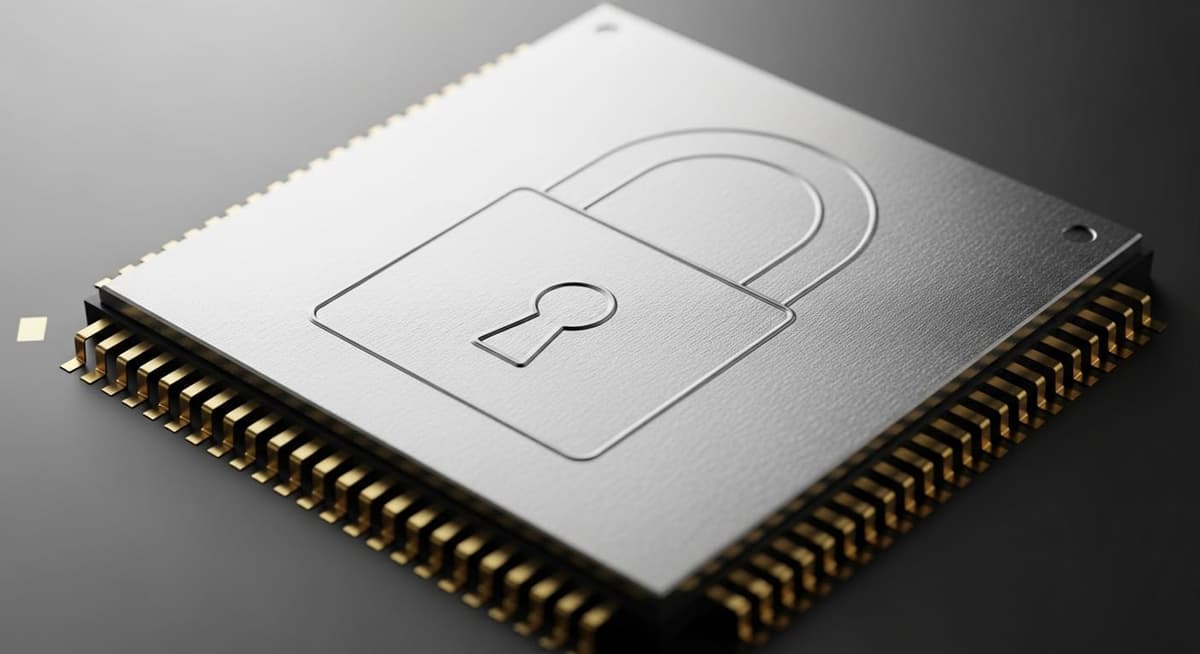
Reliance Global Group to Acquire Majority Stake in Post-Quantum Cybersecurity Firm Enquantum for $2.125M
Reliance Global Group announced a definitive agreement to acquire a 51% controlling interest in post‑quantum cryptography firm Enquantum Ltd. for $2.125 million, payable over ten months in milestone‑linked tranches. The acquisition will be executed through Reliance’s EZRA International Group subsidiary, with...

Leclercq American Capital Backs SandboxAQ’s Quantum-AI Platform for Cybersecurity & Advanced Simulation
Leclercq American Capital announced an equity investment in SandboxAQ, a quantum‑AI platform that blends artificial intelligence with emerging quantum technologies. SandboxAQ’s B2B suite focuses on post‑quantum cybersecurity, advanced simulation, and next‑generation sensing, aiming to protect critical infrastructure and accelerate research...

Infleqtion Advances $6.2M ARPA-E Quantum Grid Optimization Program
Infleqtion has begun executing a $6.2 million ARPA‑E contract under the ENCODE program to develop quantum computing solutions for energy‑grid optimization. The project, the first DOE initiative focused on quantum‑enhanced grid management, partners with Argonne National Laboratory, NREL, EPRI and ComEd....

Quantum Computing Speed-Up Achieved with New State Preparation Technique
Researchers Giacomo Belli and Michele Amoretti introduced an algebraic reduction that separates real and imaginary components of a target quantum state, enabling each uniformly controlled gate to be implemented with a single operator. The method cuts circuit depth, total gate...
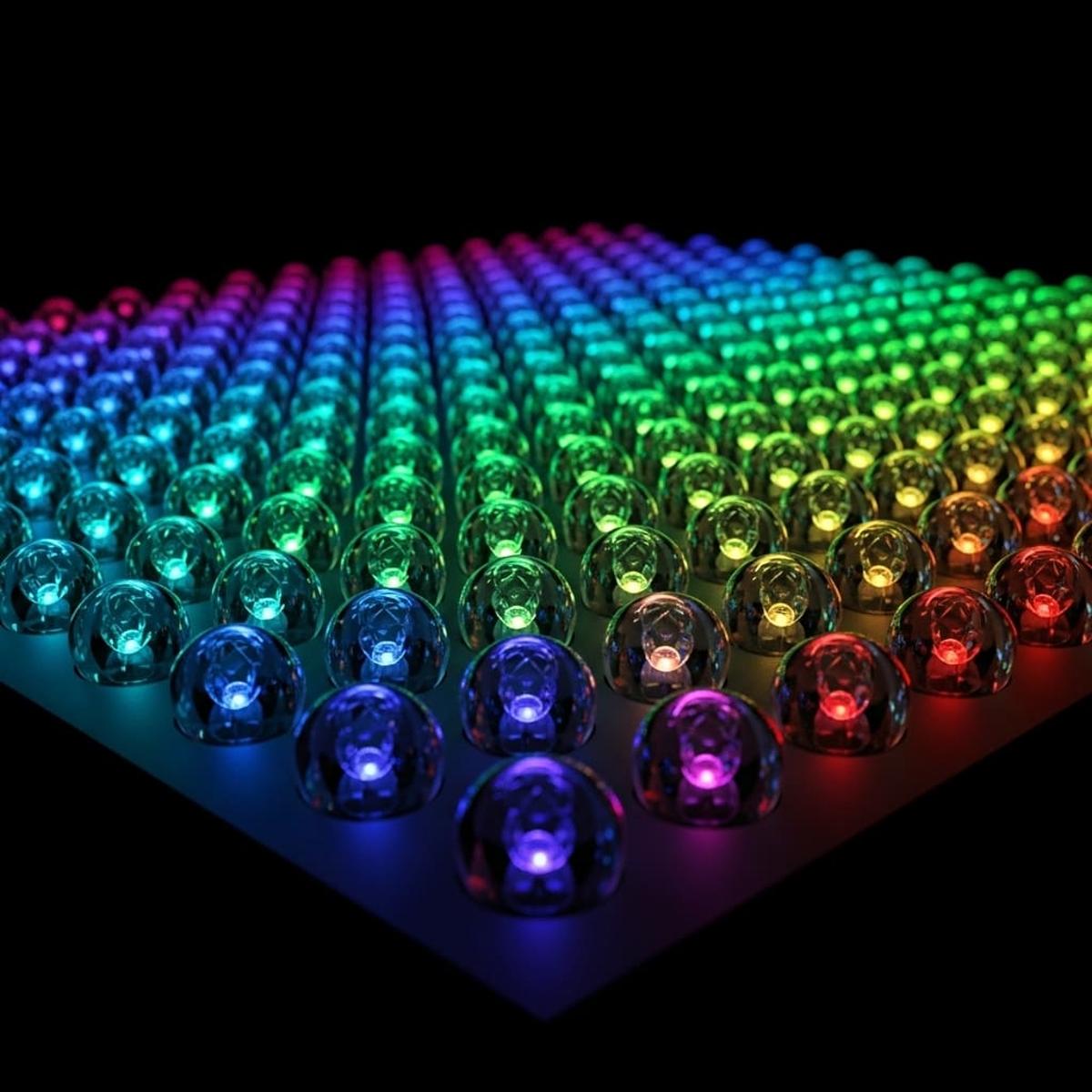
Hundreds of Miniature Light Traps Built for Future Quantum Technologies
Stanford researchers unveiled a 600‑site cavity‑array microscope that achieves an average finesse of 114 ± 17 and single‑atom cooperativity exceeding ten. The platform hosts 603 individually controlled cavities, with 537 of them mutually degenerate within the readout‑optimized linewidth and a 140 µm field‑of‑view...
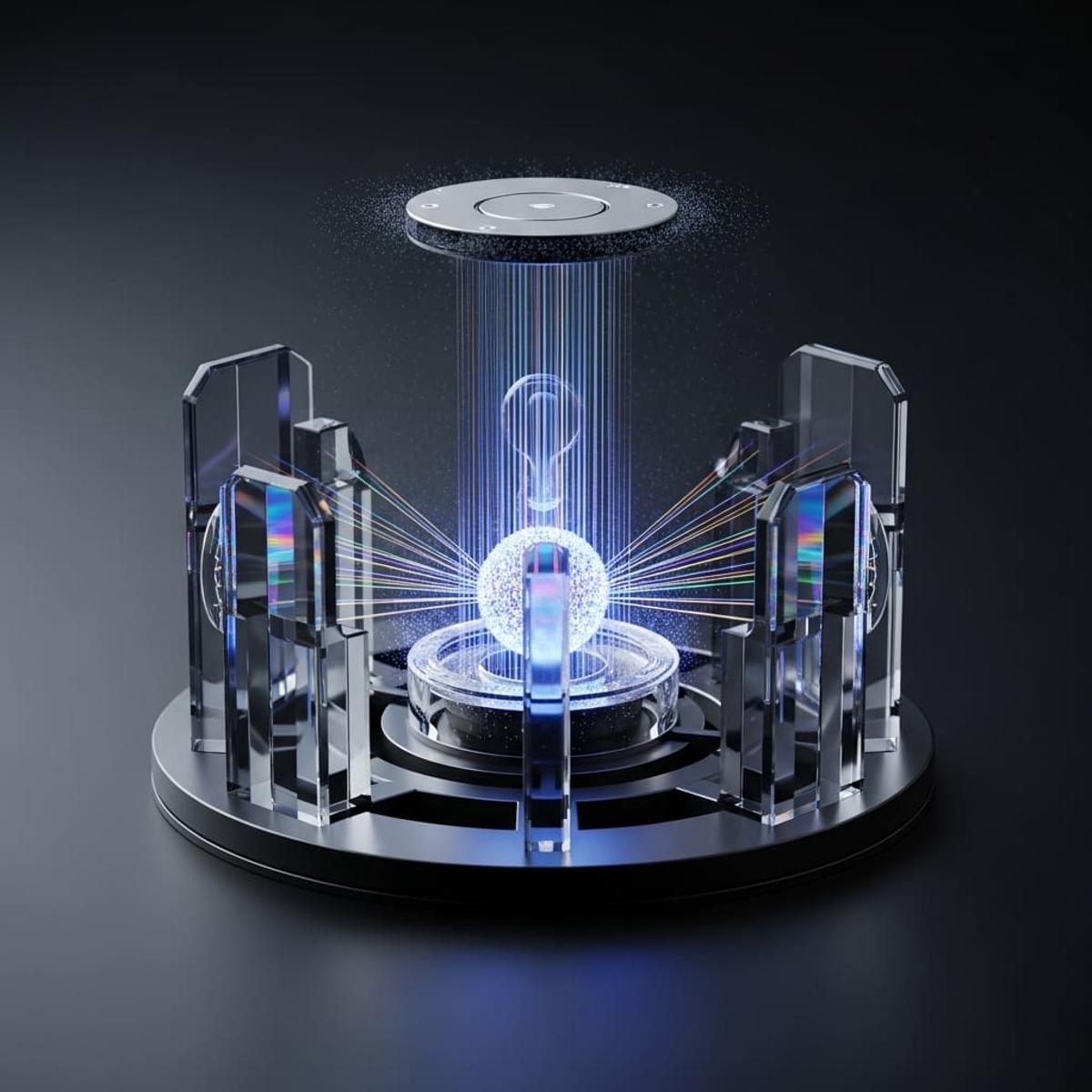
Quantum Device Generates Perfect Coin Flips and Unhackable Random Numbers
Researchers at Fermilab and the SQMS Center have experimentally realized a quantum Bernoulli factory on a 72‑qubit superconducting processor. By using entanglement‑assisted Bell‑basis measurements, they generated an exact fair coin, the Bernoulli‑doubling primitive f(p)=2p, and the function f(p)=4p(1‑p) with constant...

Diamond Quantum Sensors Detect Immune Cell Inflammation Through Electric Charge Shifts
Researchers at the University of Chicago and the University of Iowa have demonstrated that diamond nanoprobes containing nitrogen‑vacancy (NV) centers can detect inflammation in individual macrophages by measuring electric‑field‑induced shifts in the zero‑field splitting (ZFS) parameter. By introducing a secondary...

Quantum Networks Overcome Fragility to Synchronise Learning Across Distances
Researchers have introduced Consensus‑Entanglement‑Aware Scheduling (CEAS), a framework that jointly optimizes consensus protocols and entanglement allocation for distributed quantum neural networks. By weighting model updates with fidelity estimates and treating Bell pairs as a schedulable resource, CEAS achieves theoretical convergence...

Interactions Weaken Precision of Electrical Current in Novel Hybrid Materials
Researchers Sobrino, Taddei, Fazio and colleagues analyzed Andreev‑mediated transport in normal‑superconducting quantum‑dot hybrids, showing that Coulomb interactions renormalize resonant conditions and suppress superconducting coherence. Their real‑time diagrammatic master‑equation approach revealed a marked reduction in current precision, even though average currents...