
FIU Develops Encryption to Thwart Future Quantum Computer Hacks
Florida International University researchers unveiled a quantum‑safe encryption system that merges quantum cryptography with secure internet transmission, creating a digital lockbox that only authorized users can unlock. Laboratory tests show the FIU method outperforms comparable advanced encryption techniques by 10‑15 percent. The project, funded by the U.S. Army Research Office and published in IEEE Transactions on Consumer Electronics, aims to protect financial, governmental, and healthcare data from future quantum attacks. Collaboration with QNU Labs seeks to commercialize the technology for video and real‑time streaming encryption.

Huawei Launches Xinghe Solution for Cost-Effective, Quantum-Secure WANs
Huawei unveiled the Xinghe Intelligent Traffic‑Encryption Integration Solution at MWC Barcelona 2026, embedding a built‑in Quantum Key Distribution (QKD) board into its NetEngine 8000E router series. The technology uses a high‑precision noise‑reduction algorithm to allow quantum, negotiation and data channels to...
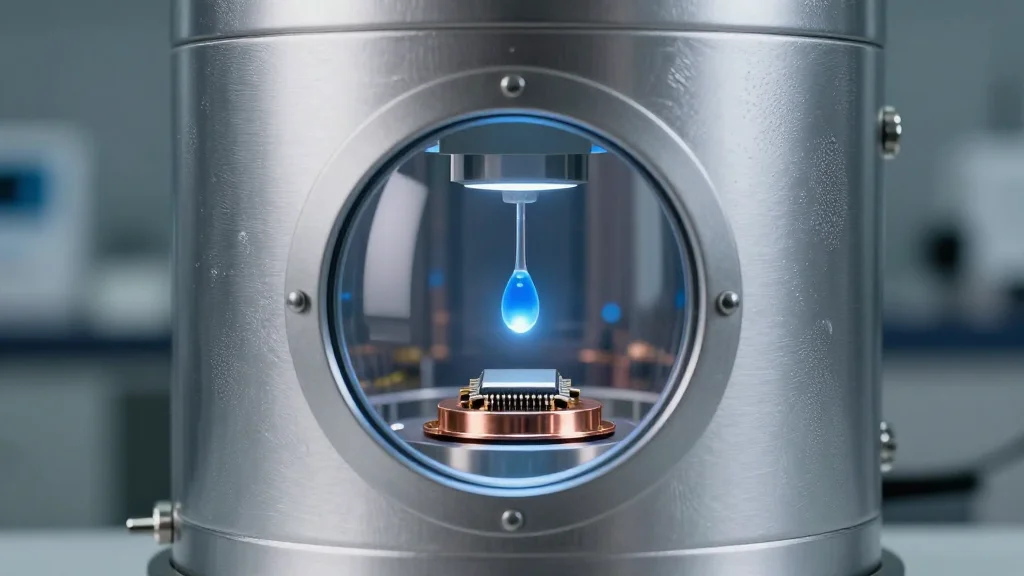
Fermilab and MIT Lincoln Laboratory Demonstrate Cryoelectronic Control of Ion-Trap Qubits
Researchers at Fermilab and MIT Lincoln Laboratory successfully trapped and manipulated ions using in‑vacuum cryoelectronic ASICs, demonstrating low‑power control with reduced thermal noise. The proof‑of‑principle experiment moved and held individual ions, proving that cryogenic electronics can replace some room‑temperature wiring....

Nuclear Spins Controlled for Better Quantum Error Correction
Researchers at Kyoto University and partners demonstrated spin‑cat qubits encoded in ¹⁷³Yb atoms within an optical tweezer array, achieving a single‑qubit Clifford gate fidelity of 0.961 ± 0.005. The study revealed a predictable bias toward dephasing errors that grows with the encoded...

Junction Ageing Affects Superconducting Processor
Researchers at NUS and NTU have mapped the aging of Josephson junctions over three months, showing a logarithmic degradation curve that varies with storage environment. Ambient air storage accelerates aging, while nitrogen or vacuum storage slows it. Thermal annealing behaves...

Models Represent XOR with 100% Accuracy
Researchers Miras Seilkhan and Adilbek Taizhanov compared a two‑qubit variational quantum classifier (VQC) against logistic regression and a multilayer perceptron on synthetic XOR data. A depth‑2 quantum circuit achieved perfect test accuracy, matching the classical neural network, while a depth‑1...

Nanophotonics Boost Quantum Emitter Links on a Chip
Researchers at the University of Southern Denmark and collaborators have unveiled an integrated nanophotonic platform that uses surface‑plasmon‑polariton (SPP) interference to mediate long‑range interactions between solid‑state quantum emitters on a chip. The design achieves a peak concurrence of 0.493, approaching...
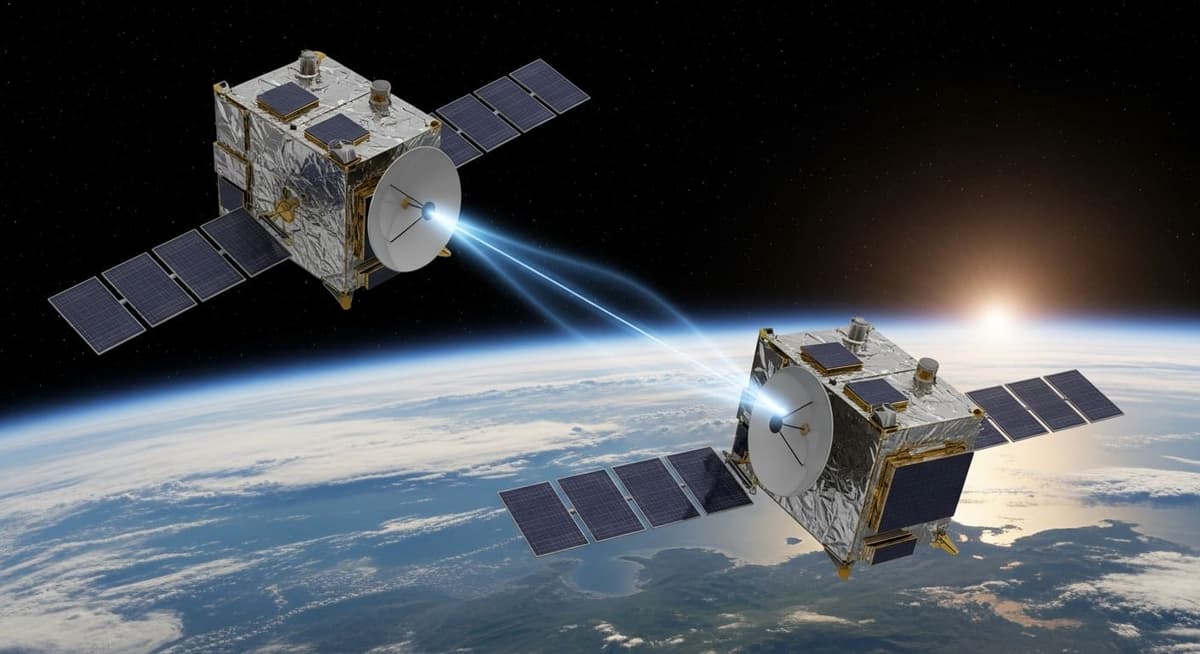
Satellite Networks Minimise Data ‘Freshness’ Delay in Age of Entanglement
Researchers introduced the Age of Entanglement (AoE) metric to quantify the freshness of bipartite entanglement in satellite‑assisted quantum repeater chains. They modeled intermittent satellite‑ground links as a two‑state Markov chain and cast AoE minimisation as an infinite‑horizon Markov decision process,...

Solid-State Qubits Share States Via Spin Chains
Researchers from Russia propose a photon‑free quantum teleportation protocol using a spin‑1/2 chain governed by an engineered XX‑Hamiltonian. By imposing symmetric coupling constants, the chain can generate a maximally entangled Bell state between its end qubits with a 50 % probability...

Quantum Networks Boost Job Handling with New Scheduling Strategy
Researchers at Tyndall National Institute and University of Parma have introduced a suite of scheduling strategies for distributed quantum computing, evaluated through an integrated quantum‑network simulation framework. Their simulations show that an “EPR scheduler with node selection” consistently delivers the...

Quantum-Secure Cloud Computing: The Next Frontier in Enterprise Data Protection
A consortium of leading tech firms and universities launched a quantum‑secure cloud computing framework that embeds post‑quantum cryptography into existing cloud stacks. The hybrid model delivers lattice‑based encryption and dynamic key management while adding less than 5% latency. Early pilots...
Quantum Computing Breakthrough: First Scalable Error-Corrected Qubits Announced by IBM
IBM announced the first scalable error‑corrected qubits, overcoming decoherence with a topological design and dynamic correction algorithm. The new system reduces error rates by over 50% and achieves a quantum volume ten times greater than existing machines, while adding qubits...
The Energy Singularity: How AI, Quantum Computing, and Decentralized Grids Will Redefine Sustainability by 2035
The article outlines an emerging "Energy Singularity" where AI, quantum computing, and decentralized grids converge to reshape global energy by 2035. AI-driven predictive management promises up to 40% consumption cuts and real‑time outage prevention. Quantum computers are expected to unlock...

Sophus Technology to Showcase Quantum Solver Delivering Faster Optimization
Sophus Technology will unveil its Quantum Solver in a March 10 webinar, promising optimization speeds 50‑to‑100 times faster than current solvers. The quantum‑inspired platform enables full‑fidelity supply‑chain models, eliminating the need for simplifications that compromise accuracy. By handling daily production planning and...

SEALSQ Expands Japan Presence to Support 2035 Quantum Security Mandate
SEALSQ Corp is expanding its footprint in Japan by showcasing its production‑ready QS7001 secure System‑on‑Chip and QVault Trusted Platform Module at two March 2026 industry events. The move backs Japan’s National Cyber Command Office mandate to transition all government and critical‑infrastructure...

Quantum eMotion Strengthens Cybersecurity Strategy with SecureKey Platform Acquisition
Quantum eMotion Corp. announced the acquisition of SKV Technology Inc., securing the SecureKey platform and its memory‑less cryptographic suite. The deal merges QeM’s Sentry‑Q quantum‑grade entropy layer with SecureKey’s hardware‑integrated enforcement, delivering a full‑stack, quantum‑resilient security architecture from cloud to...

QuTech Aims to Overcome Entanglement Decay with New Solid-State Quantum Devices
QuTech researcher Tim Taminiau secured an NWO Vici grant to develop solid‑state quantum network devices that keep entanglement continuously available. The project will use silicon‑vacancy (VSi) spin qubits in silicon carbide (SiC) to build multi‑node nodes that combine a fast...
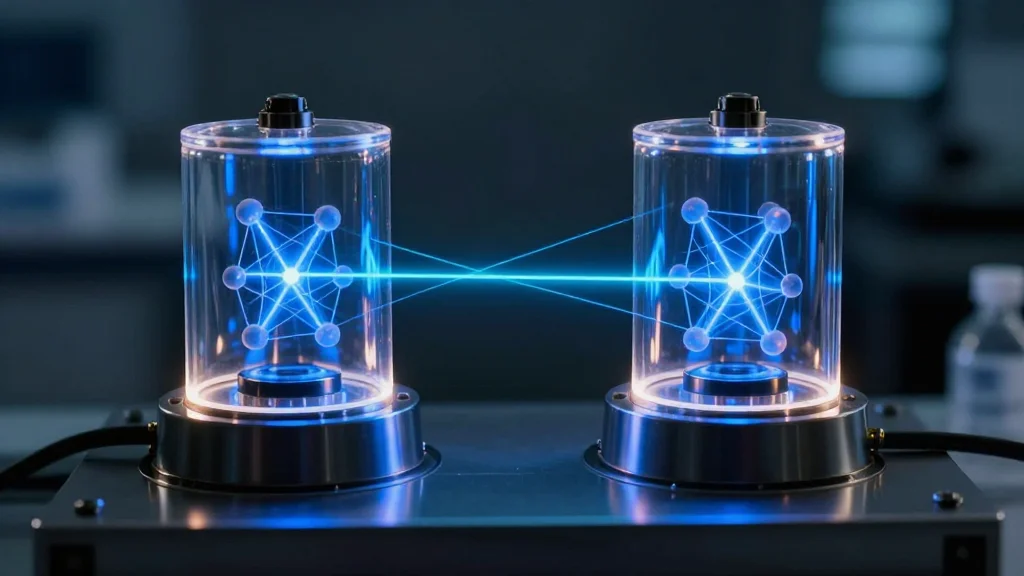
Welinq and Pasqal Accelerate Networked Quantum Computing with Neutral-Atom Tech
Welinq and Pasqal have deepened their partnership to accelerate networked quantum computing using neutral‑atom processors. Backed by a €4 million InterQo grant from Île‑de‑France Region and BPI France, the two firms will integrate photonic interconnects into Pasqal’s QPUs and deploy Welinq’s...

Vitalik Buterin Lays Out Quantum Defense Plan for Ethereum
Ethereum co‑founder Vitalik Buterin announced a comprehensive “quantum roadmap” to protect the network from future quantum‑computing attacks. He identified vulnerabilities in validator and wallet signatures, data availability, and certain zero‑knowledge proofs. The plan recommends swapping current signature schemes for hash‑based, quantum‑resistant...

Planqc Recognized as Key Player in Europe’s Quantum Computing Ecosystem
A new BCG and UnternehmerTUM report crowns planqc as a leading European player in neutral‑atom quantum computing. The analysis projects quantum technologies could generate $450‑850 billion in global economic value by 2040, underscoring Europe’s need for industrial‑scale, sovereign solutions. It stresses...
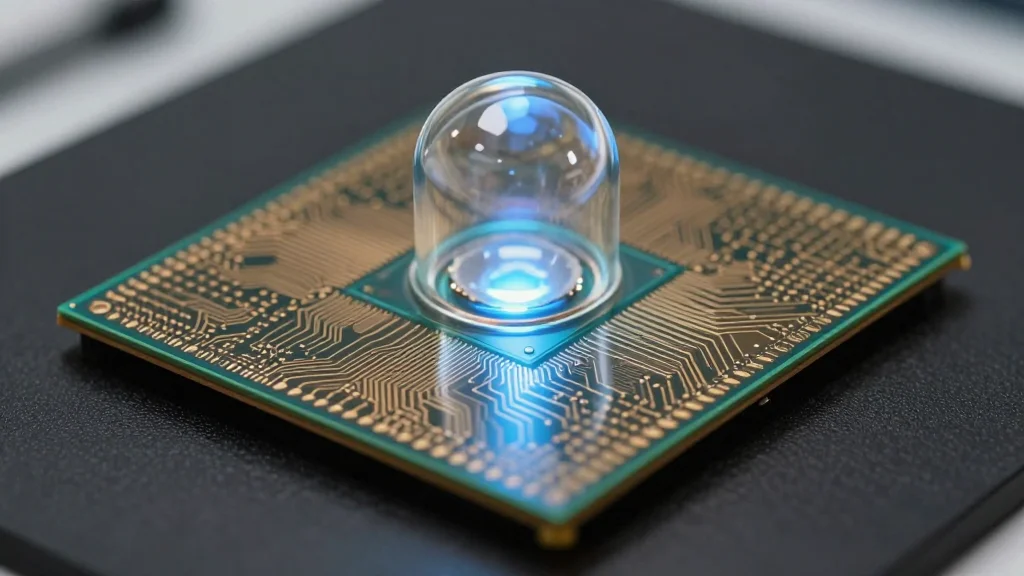
Xanadu and Mitsubishi Chemical Detail Quantum Algorithms for EUV Semiconductor Research
Xanadu Quantum Technologies and Mitsubishi Chemical have published a pre‑print detailing quantum simulation algorithms aimed at improving extreme ultraviolet (EUV) lithography, a key step in advanced semiconductor manufacturing. The approach models the quantum‑driven radiation‑induced blur that limits pattern fidelity, using...

Quantum Simulation Reveals Curved Spacetime on 80 Qubits
Researchers used IBM's 80‑qubit Heron processor to simulate curved spacetime dynamics in a spin‑XXZ chain. By engineering spatially varying couplings, they observed distorted light‑cone propagation and horizon‑induced freezing after a quench, with clear signals persisting for up to 20 Trotter...
AI Resilience Checks Boosted by Quantum Computing Ideas
Researchers at UC Santa Barbara introduced an Ising‑ and quantum‑inspired framework that recasts binary neural network (BNN) robustness verification as a Quadratic Unconstrained Boolean Optimisation (QUBO) problem. Using a free‑energy‑machine (FEM) solver they verified the entire binarized MNIST test set...

AI Designs Better Drug Candidates with Quantum Aid
Researchers from Japan Tobacco and D‑Wave have unveiled a hybrid framework that merges deep generative models with quantum annealing to design drug‑like molecules. The system introduces a Neural Hash Function that enables binarisation for quantum processing while preserving gradient flow....

Hedge Funds Push Into Quantum Computing:
Hedge funds are increasing exposure to publicly traded quantum computing firms such as IonQ, Rigetti and D‑Wave, moving the technology from venture‑capital niches to institutional portfolios. They employ structured, risk‑managed strategies—pairing longs with shorts, using options, and limiting volatility—to capture...

Light-Based System Recalls Past Data Without Training
Researchers led by Çağın Ekici have built a programmable linear‑optical quantum reservoir that leverages measurement‑conditioned feedback to process time‑series data without training internal weights. The system uses a reconfigurable interferometer mesh where only a subset of phases is updated each...

Podcast REPLAY: D-Wave (QBTS), SPACs, and the Quantum Revival
Quantum computing has become a top‑performing de‑SPAC sector, driven by SPAC listings that fast‑tracked capital to the industry. After a bearish period in 2021‑22, recent hardware and algorithmic breakthroughs revived investor enthusiasm. The podcast revisits a February 2025 interview with D‑Wave...
QEC4QEA to Support Development of Quantum-Enhanced Applications Across Europe
QEC4QEA, a new Quantum Excellence Centre funded by EuroHPC JU and Horizon Europe, receives roughly €4.9 million to accelerate quantum‑enhanced application development across Europe. The centre links end‑users with quantum developers, experts and computing providers, offering guidance, tools, training and hybrid quantum‑HPC resources....
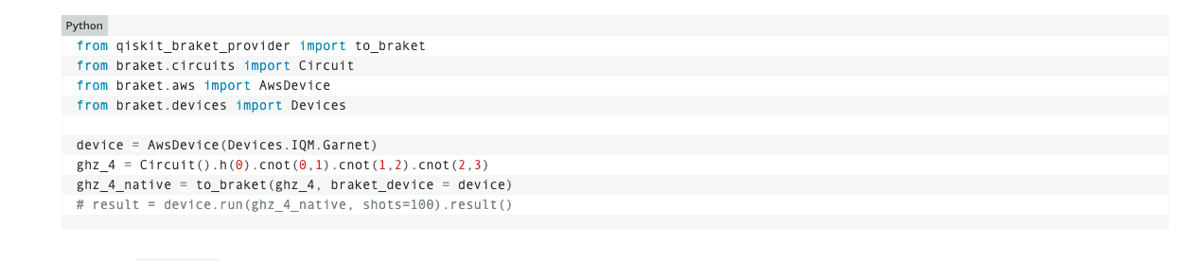
AWS Quantum Technologies Releases Qiskit-Braket Provider v0.11, Now Compatible with Qiskit 2.0
AWS Quantum Technologies launched Qiskit‑Braket provider version 0.11, adding BraketEstimator and BraketSampler primitives and full support for Qiskit 2.0 while retaining backward compatibility to v0.34.2. The update introduces a versatile `to_braket` function that compiles circuits from Qiskit, OpenQASM 3, and native Braket inputs...

Reliance Global Group Launches Scale51 with Acquisition of Quantum-Resilient Encryption Firm Enquantum
Reliance Global Group announced the acquisition of Enquantum Ltd., marking the first platform investment under its Scale51 operating model. Enquantum brings FPGA‑based, hardware‑accelerated quantum‑resilient encryption, including a 2025 patent for terabit‑scale communications. The deal aligns with a projected $300 billion annual...

4colors Research & Partners Secure Funding to Tackle Aircraft Loading with Quantum Computing
A consortium led by 4colors Research, together with Airbus, DNV, NQCC and ORCA Computing, has received an NQCC SparQ grant to develop a hybrid classical‑quantum solution for aircraft cargo loading. The project, titled “Quantum‑Accelerated Mixed‑Integer Optimisation for Aircraft Loading,” will...

Coinbase CEO Says Potential Quantum Computing Threats Are “Solvable”
Coinbase has created a quantum‑computing advisory board to assess and mitigate future threats to blockchain security. CEO Brian Armstrong told CNBC the quantum risk is “solvable” and that Coinbase is already “front‑footed” in developing post‑quantum cryptography solutions. The board will...

New Quantum Algorithms Deliver Speed-Ups Without Sacrificing Predictability
Researchers Aaronson, Gur and Li introduced a systematic study of pseudo‑deterministic quantum algorithms, a class that returns a canonical solution with high probability. Their paper demonstrates an exponential speed‑up for the Quantum‑Locked Estimation problem compared with classical pseudo‑deterministic methods, and...

Bloomberg Reports: Quantum Startup Pasqal Seeks €200 Million to Fuel Growth
French quantum computing startup Pasqal announced it is in talks to raise €200 million, valuing the company at over $1 billion pre‑money. The round, led by undisclosed investors, would fund the expansion of its neutral‑atom quantum processors and full‑stack hardware‑software platform. Co‑founder...

Coherent Emitters Unlock Brighter, Correlated Light Sources
Researchers at The Chinese University of Hong Kong have demonstrated squeezed superradiant lasing in a quantum many‑body system by coupling a cavity to interacting spin‑½ emitters modeled with the Lipkin‑Meshkov‑Glick Hamiltonian. Their analysis shows that spin‑squeezing generated through coherent all‑to‑all...

Entanglement Boosts Machine Learning of Quantum Systems
Researchers at Universitat Autònoma de Barcelona introduced an entanglement‑assisted learning strategy for quantum generative adversarial networks (QGANs). By coupling a randomly initialized auxiliary qubit during training, the method overcomes plateaus and local minima that limit QGAN scalability. In a 72‑qubit...

Quantum 'Ghost Imaging' Paves Way for Nanoscale Images at Lower X-Ray Dose
Researchers at Brookhaven National Laboratory’s NSLS‑II have demonstrated quantum‑inspired ghost imaging using entangled X‑ray photon pairs. By correlating a photon that passes through a sample with its untouched partner, they produced high‑resolution images of a tungsten cat and a cardamom...
NSF CISE: Making Quantum Computers Resilient to Adversarial Attacks
Researchers at Rice University and Johns Hopkins, funded by multiple NSF CISE grants, introduced a new adversarial state corruption model and accompanying algorithms that enable quantum computers to operate despite noisy or malicious disturbances. The framework assumes attackers can tamper...

Qunnect and Cisco Demonstrate Metro-Scale, High-Speed Quantum Entanglement Swapping Over Commercial Fiber
Qunnect and Cisco have demonstrated metro‑scale quantum entanglement swapping over 17.6 km of commercial fiber in New York City, achieving record rates of 1.7 million local pairs and 5,400 pairs per hour across deployed fiber. The system maintained over 99 % polarization fidelity...

Aliro Raises $15M to Advance Physics-Based Network Security
Aliro announced a $15 million oversubscribed funding round led by Gutbrain Ventures, with participation from Cisco Investments, Argon Ventures, and Wonderstone Ventures. The Boston‑based startup is commercializing a physics‑based network security platform that uses quantum entanglement to replace cryptographic assumptions with...

Quantum Computer Flaws Pinpointed Using Novel Energy Decay Spectroscopy Technique
Scientists at the SQMS Center and Fermilab unveiled a fixed‑frequency energy‑decay spectroscopy method that characterises two‑level system (TLS) defects in superconducting transmon qubits without tuning the qubit frequency. By repeatedly preparing the second excited state and analysing correlated decay of...

Faster Quantum Calculations Unlock Efficient Molecular Ground State Preparation
Researchers at the German Aerospace Center and Ruhr University Bochum introduced a protocol that merges the ExcitationSolve optimizer with energy‑sorting and one‑variational‑parameter couple‑exchange (OVP‑CEO) operators to streamline variational quantum eigensolver (VQE) ground‑state preparation. The method selects all relevant operators in...

New Optimisation Methods Tackle Complex Logistical and Network Challenges
Researchers at Karlsruhe Institute of Technology introduced Quadratic Unconstrained Binary Optimisation (QUBO) formulations for core location‑science problems such as the p‑Median and Fixed‑Charge Facility Location problems. They derived a tight bound for the penalty parameter, guaranteeing equivalence between the QUBO...

Researchers Reveal Magnetism with Quantum Potential
Researchers at Oak Ridge National Laboratory discovered that a tantalum‑tungsten‑selenium (TaWSe2) crystal self‑organizes into triangular clusters of ten atoms, contrary to the expected random distribution. The clustered arrangement creates localized strain that triggers a magnetic transition when the material is...
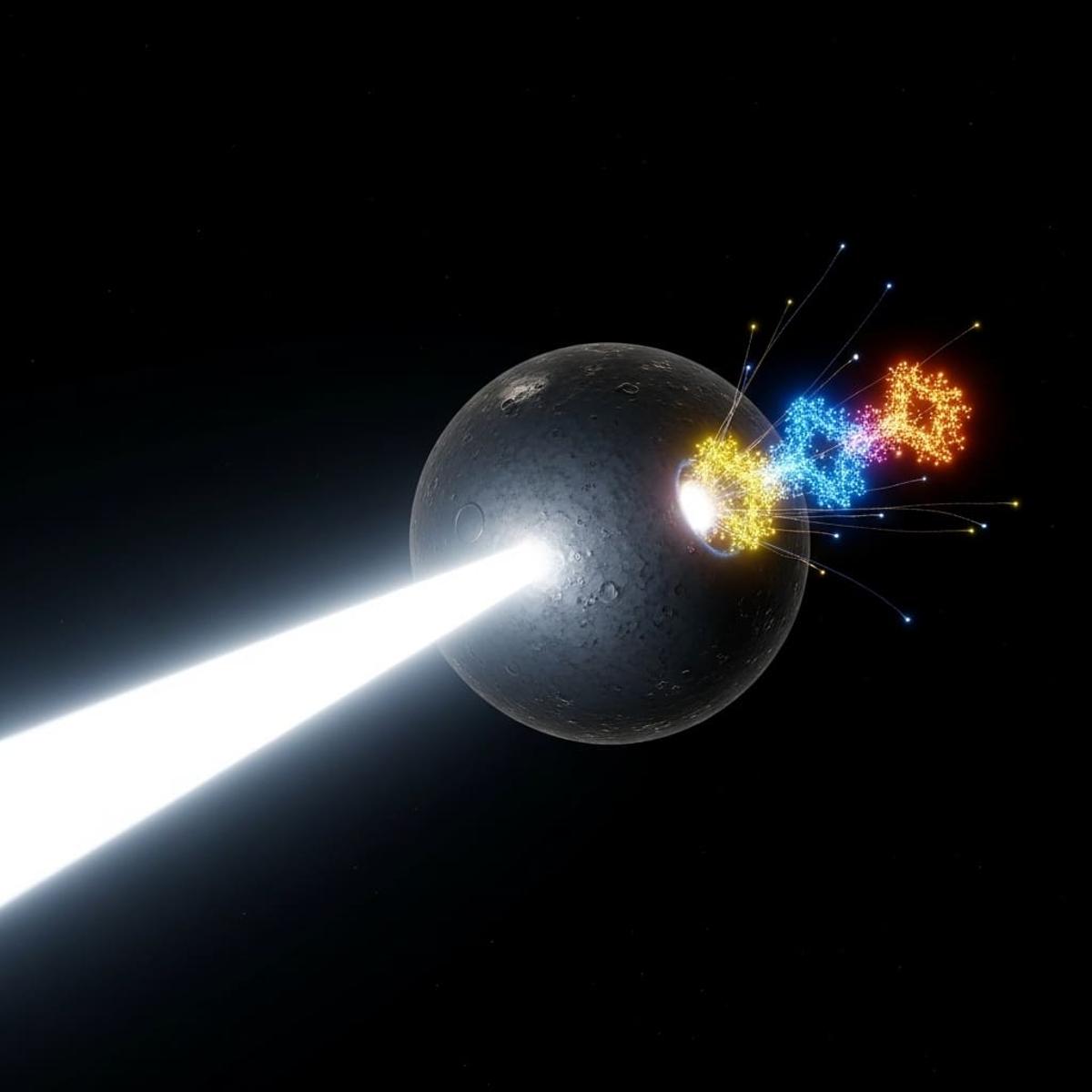
Light-Matter Coupling Creates New Quasiparticles for Advanced Physics Exploration
Researchers have demonstrated strong coupling of electrically tunable dipolar excitons in a gated bilayer MoS₂ device integrated with a one‑dimensional photonic crystal. The hybrid system creates composite polariton quasiparticles, with three distinct polariton branches observed as the applied electric field...

New Materials Exhibit Superconductivity After Surface Functionalisation with Common Elements
A first‑principles screening of 128 out‑of‑plane ordered double‑transition‑metal MXenes identified 32 compounds that are mechanically, dynamically and thermodynamically stable and predicted to be superconductors. Transition temperatures range from 0.1 K to a record 52 K, with Mo₂ScN₂O₂ delivering the highest T₍c₎ and...

Is Quantum Technology the Next Great Alternative Asset?
The article evaluates quantum technology as an emerging alternative asset, emphasizing public‑market exposure over private‑equity deals. It notes that pure‑play quantum stocks such as D‑Wave, Rigetti, IonQ and Quantum Computing Inc. exhibit high volatility and limited near‑term cash flows, while...

Neural Networks Boost Accuracy of Quantum Simulations for Complex Materials
Researchers at ETH Zürich have introduced a neural‑based selected configuration (NQS‑SC) method that outperforms the traditional NQS‑VMC approach for electronic structure calculations. In benchmark tests on molecules with strong static correlation, NQS‑SC reduced ground‑state energies by an average of 0.027 Hartree...

Atoms and Molecules Combined Unlock Faster Quantum Entanglement Generation
Researchers have unveiled a hybrid quantum platform that pairs polar molecules with neutral‑atom Rydberg ancillae to achieve fast, high‑fidelity entanglement. By exploiting a resonant dipole‑dipole exchange between molecular rotations and atomic Rydberg transitions, the scheme delivers a controlled‑phase gate operating...
Crypto-Procrastination: The Dangerous Delay in Preparing for Post-Quantum Data Security
A Citi Institute report warns that a quantum‑enabled cyberattack on a top U.S. bank could jeopardize $2‑3.3 trillion of GDP, turning quantum computing from theory into an operational emergency. The article highlights the “harvest now, decrypt later” (HNDL) threat, where adversaries...