
NQCC Announces UK’s £2 Billion Quantum Computing Investment
The UK government has announced a £2 billion ProQure procurement programme to accelerate quantum computing development. The initiative will solicit proposals from companies to deliver prototype quantum processors, with the most promising designs scaling into the national computing infrastructure. Building on more than £1 billion of private investment in UK quantum start‑ups, the programme also earmarks an additional £1 billion for platform procurement through 2031. The National Quantum Computing Centre will lead benchmarking and user‑readiness efforts through its Testbed and SparQ programmes.

AI Cuts Quantum Computing Steps for Complex 144-Qubit Codes
Researchers at University College London and Quantinuum introduced QuSynth, an AI‑driven method that converts graph representations of stabilizer states into quantum circuits with far fewer operations. By integrating reinforcement learning and Monte Carlo tree search, the technique reduces two‑qubit gate counts...

Quantum Computers Now Account for Realistic Error Types
Researchers at Sandia National Laboratories introduced a detector error model (DEM) that translates realistic coherent and non‑Pauli noise into a compact probabilistic framework. The technique enables Monte Carlo estimation of logical error rates and supports noise‑adapted decoding for fault‑tolerant quantum circuits....

Planqc Partners with University and Industry to Tackle Complex Industrial Problems
planqc, Saarland University, BMW and Infineon have secured €2.3 million from the German Federal Ministry to launch the QIAPO project, a hybrid quantum‑classical effort aimed at industrial optimization. The initiative will use planqc’s neutral‑atom quantum computer to pre‑process complex problems in...
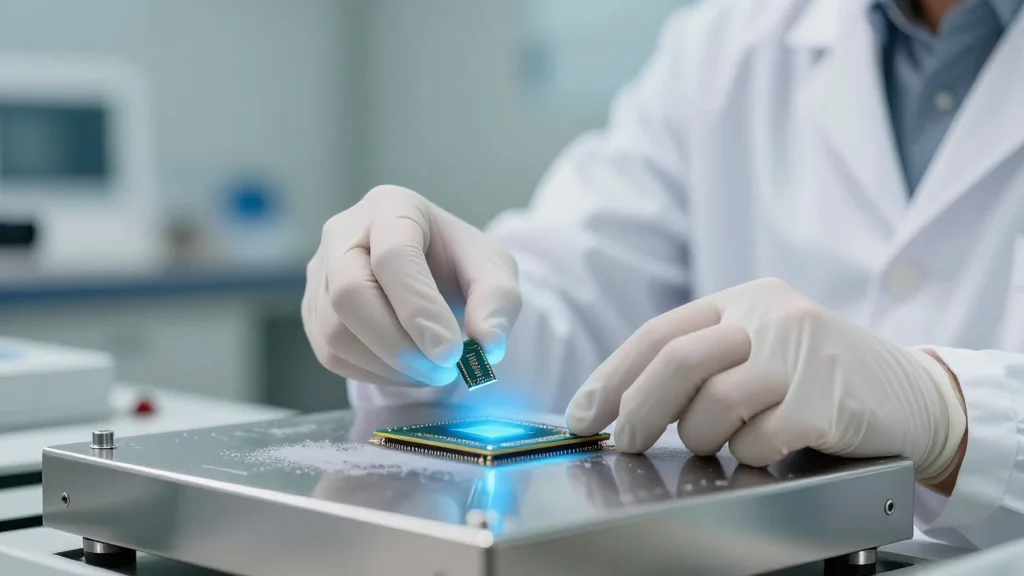
Canada’s NRC Allocates C$161M to Quantum Tech Within Broader C$900M Defense Plan
Canada’s National Research Council (NRC) is earmarking C$161 million over five years for quantum‑technology research as part of a broader C$900 million Defence Industrial Strategy. The funding targets quantum sensing, internetworking, and quantum‑safe communications, while C$28 million is set aside for biomedical counter‑measures...
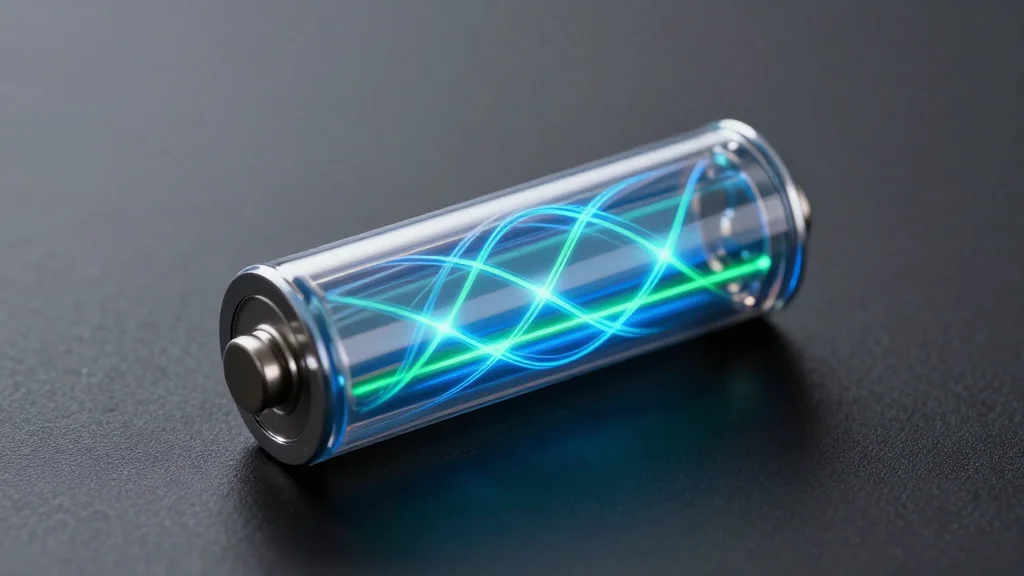
Xanadu Introduces Quantum Algorithm for Battery Materials Simulation and Analysis
Xanadu Quantum Technologies, together with the University of Toronto and the National Research Council of Canada, unveiled a fault‑tolerant quantum algorithm that simulates resonant inelastic X‑ray scattering (RIXS) for lithium‑rich cathode materials. The pre‑print demonstrates that the method can model...
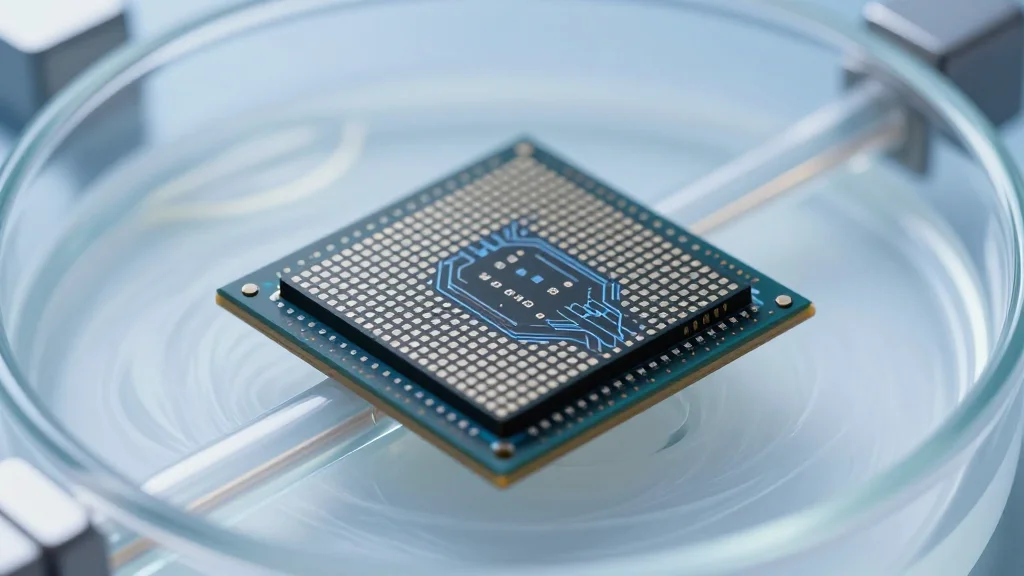
SEEQC Reports 1st Quantum Computer with Integrated Qubit Control on a Chip at Millikelvin Temperatures
SEEQC announced the first full‑stack quantum computer that integrates superconducting digital control circuitry directly on a chip operating at 10 millikelvin. The five‑qubit processor, paired with a separate SFQ control chip, achieved single‑qubit gate fidelities above 99.5% and demonstrated nanowatt‑scale power...

Hybrid Quantum Computing Boosts Atom Simulations
Jihyeon Park and colleagues introduced CANOE, a Classically Assisted Non‑Orthogonal Eigensolver that distributes the computational load between quantum and classical hardware. By combining a few highly entangled quantum basis states with a large pool of classical determinants, the method reaches...

Planned Cities Optimise Quantum Algorithms More Reliably Than Organic Layouts
Researchers led by Abdul Sami Rao examined street networks from Islamabad and Lyari, showing that planned grid topologies dramatically improve the Approximate Optimisation Algorithm (QAOA) at shallow depth p=1. Islamabad’s layout achieved 95% reliable convergence on the minimum vertex cover...

Pasqal Integrates NVIDIA CUDA-Q with QRMI for Slurm-Native Hybrid HPC-Quantum Workflows
Pasqal announced the integration of NVIDIA’s open‑source CUDA‑Q platform with its Quantum Resource Management Interface (QRMI), allowing quantum workloads to be scheduled through standard Slurm job queues. The coupling makes Pasqal’s neutral‑atom QPUs appear as native accelerators alongside CPUs and...
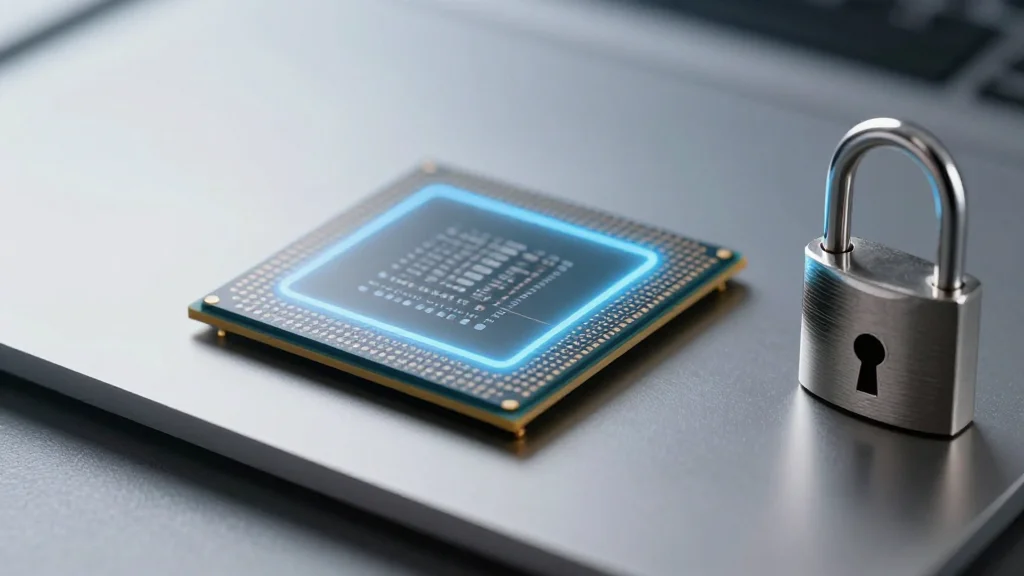
Possible New Result in Quantum Factorization
A new preprint claims a theoretical speedup for quantum factoring of large integers. Bruce Schneier, noting his lack of expertise, expresses skepticism about the result’s validity. If the claim holds, it would represent an improvement over Shor’s algorithm. The announcement...

Quantum Computing Offers Potential for Smarter, Optimised Transport Networks
Lachlan Oberg and colleagues at Queensland University of Technology conducted a systematic review of 103 Scopus‑indexed studies on quantum computing for transport. The analysis identifies Quadratic Unconstrained Binary Optimisation (QUBO) as the dominant modelling approach, linking quantum annealers and hybrid...

Quantum Computing Model Simplifies Complex Simulations with Spin Particles. New Research From Parity Quantum Computing And NEC
Researchers at Parity Quantum Computing and NEC introduced a spin‑1/2 model that replaces the exponential photon‑state basis of Kerr parametric oscillator (KPO) quantum annealers with just two states per oscillator. The projection technique accurately reproduces experiments using up to ten...

Bain & Company and IBM Address Emerging Cybersecurity Risks for Clients
Bain & Company and IBM have formed a strategic alliance to help private‑equity and corporate clients prepare for the post‑quantum cryptography (PQC) era. The partnership blends IBM Consulting’s quantum‑safe transformation expertise with Bain’s due‑diligence capabilities to assess and remediate emerging...

Faster Qubit Readings Now Avoid Unwanted Energy State Changes
Google Quantum AI researchers have added an inductive shunt to transmon qubits, eliminating offset‑charge sensitivity that caused measurement‑induced state transitions (MIST). The shunt provides an alternate current path, allowing dispersive readout without large detuning or extensive calibration. Tests at 10 mK...

Entanglement Aids Robust State Transfer Via Noisy Analogue Channels
Researchers at Aalto University and partners introduced a hybrid quantum communication protocol that merges quantum teleportation with analogue feedforward transmission. The method achieves a 3 dB fidelity gain over conventional teleportation when entanglement resources are limited and the channel preserves entanglement....

Quantum Simulation Reveals How Disorder Drives System Thermalisation
Researchers at Phasecraft Ltd and Virginia Tech used IBM’s Nighthawk superconducting processor to simulate a 10 × 10 qubit disordered Heisenberg Floquet model. They introduced a collision‑entropy metric that quantifies ergodicity within spatial patches, revealing a hierarchy where smaller regions become ergodic...

Quantum Purification Boosts Fidelity and Cuts Error Rates in Computations
Researchers at NYU Shanghai introduced Purification Quantum Error Correction (PQEC), a technique that leverages the SWAP test to purify noisy quantum states without prior knowledge or post‑selection. The method achieves a 75% error‑threshold for depolarizing noise across any register size...
Kvantify Advances Hybrid Quantum-Classical Software for Drug Discovery
Kvantify closed a €7 million second‑stage funding round to accelerate its hybrid quantum‑classical software stack for drug discovery, building on a $10.8 million seed round and earlier EU Innovation Council support. The company’s Qrunch platform integrates conventional chemistry methods with proprietary FAST‑VQE...

Quantum Method Processes Problems in Parallel, Cutting Solution Time by 20%
Researchers at Tokyo University of Agriculture and Technology introduced multi‑tasking quantum annealing (MTQA), a method that runs multiple combinatorial optimisation problems simultaneously on a single quantum annealer. By embedding distinct problem graphs into separate regions and using idle qubits, MTQA...

Precision Measurement Now Underpins Industrial Technology Development
Researchers at Japan's AIST and NMIJ have released a strategic review outlining how precision metrology will become the backbone of quantum‑technology industrialisation. By establishing traceable electrical standards linked to fundamental SI constants, the framework aims to enable automated, large‑scale verification...

Binary Optimisation Networks Unlock Efficient Permutation Calculations
Researchers introduced a sparse QUBO formulation for permutation problems that leverages oblivious compare‑exchange networks, cutting the variable count from quadratic to O(n log₂ n). The new encoding supports unbiased sampling of permutations as well as algebraic operations such as multiplication and inversion....

Quantum Annealing Work Shows Hydrogen Storage Unlocks Better Power Grids
Researchers from multiple universities have introduced a quantum‑annealing‑based power allocation framework that optimises energy scheduling across large residential hydrogen microgrids. The hierarchical model predictive control splits decisions into a day‑ahead startup/shutdown plan and a short‑term real‑time refinement, dramatically reducing computational...

Quantum Bits Maintain Stable Response Even with Multiple Drives Applied
A UCLA‑Princeton team demonstrated that Loss‑DiVincenzo single‑spin qubits in a three‑qubit processor exhibit a strictly linear relationship between microwave drive amplitude and Rabi frequency, even when all qubits are driven simultaneously. The study resolved earlier reports of non‑linearities, showing frequency...

Quantum-Resistant Cryptography: The Silent Revolution Redefining Digital Security
NIST has finalized the first quantum‑safe encryption standards, adopting CRYSTALS‑Kyber for encryption and CRYSTALS‑Dilithium for digital signatures. The decision ends a six‑year global competition and sets a unified baseline for post‑quantum security. Major tech companies are already testing the algorithms,...
DARPA Expands Quantum Benchmarking Initiative with New Stage A Call for Participants
DARPA’s Quantum Benchmarking Initiative (QBI) has launched a new Stage A Quantum Benchmarking Initiative Topic (QBIT), inviting organizations not yet funded to submit system concepts for utility‑scale quantum computing. The solicitation targets distinct, untested architectures and offers a six‑month evaluation period,...

Xanadu and AMD Accelerate Quantum Computing for Aerospace and Engineering
Xanadu Quantum Technologies and AMD announced a hybrid quantum‑classical demonstration that runs a 256×256 computational fluid dynamics (CFD) model on AMD DevCloud using Xanadu’s PennyLane software. The workflow employed 20 qubits and roughly 35 million quantum gates, while a single AMD...
IonQ and ARLIS Partner to Establish Zero Trust Security Framework for Mission-Critical Quantum Architectures
IonQ announced a partnership with the Air Force‑sponsored ARLIS laboratory to launch SEQCURE, a program that will design a Zero Trust Architecture (ZTA) for mission‑critical quantum systems. The effort will map current commercial quantum security practices to NIST SP800‑207 standards,...
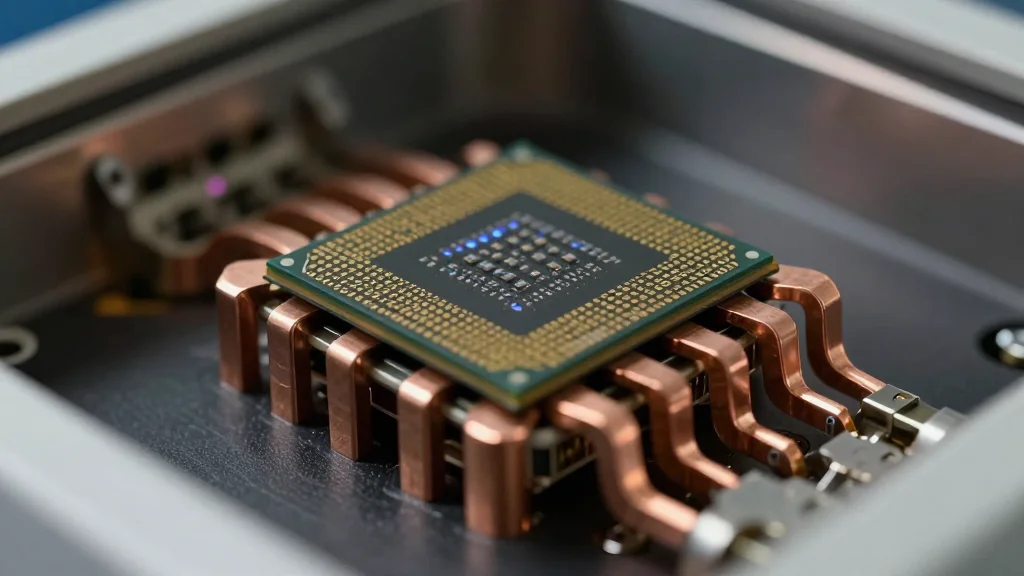
Zurich Instruments Launches ZQCS Platform for Large-Scale Quantum Computer Control
Zurich Instruments unveiled the ZQCS Quantum Control System, a next‑generation platform built on a modular AdvancedTCA architecture that delivers more than a thousand channels per 19‑inch rack. The system combines a first‑Nyquist‑zone direct‑RF front end, deterministic real‑time networking, and programmable...

University of Twente Researchers Reduce Photonic Qubit Costs with Photon Filtering
University of Twente researchers, led by PhD candidate Frank Somhorst, have devised a photon‑filtering technique that merges multiple imperfect photons into a single, higher‑quality photon. The method promises up to a four‑fold reduction in the number of photons required for each...

Canada Quantum Computing Companies 2026
Canada’s quantum sector reaches a pivotal moment in 2026 as Xanadu clears its final SEC filing, paving the way for a $3.6 billion SPAC merger that would make it the world’s first publicly traded pure‑play photonic quantum computer. The company joins...

Rigetti Computing Reports 2025 Financial Results and Technical Progress
Rigetti Computing announced that its prototype platform achieved 99.9% two‑qubit gate fidelity at a 28 ns gate speed, marking a key technical milestone. For 2025 the company generated $7.1 million in revenue but posted a GAAP net loss of $216.2 million, while holding...

MAHE Advances India’s National Quantum Mission with New Hub
Manipal Academy of Higher Education has launched Quantum‑Hub@MAHE at its Manipal Institute of Technology in Bengaluru, creating a university‑led ecosystem to support India’s National Quantum Mission. The hub opens with a 25‑qubit dilution refrigeration system and an open‑architecture approach that...

Quantum-Safe Security: What CISOs Need to Know Now (Before It’s Too Late)
Quantum computing threatens to break today’s asymmetric encryption, making current data protection obsolete. The most immediate risk is a “harvest now, decrypt later” attack, where adversaries steal data today and decrypt it once quantum capabilities mature. Experts estimate viable quantum...

Next Gen Spotlights: Preparing for a Post-Quantum World – Q&A with Cavero Quantum
Cavero Quantum, a University of Leeds spin‑out, has developed post‑quantum cryptography and password‑less authentication that can run on ultra‑constrained devices such as SIM cards. Backed by the UK government’s CyberASAP programme, the startup moved from a funded demo to real‑world...

Xanadu Highlights Path to Public Listing, Scalable Quantum Computing
Xanadu Quantum Technologies announced its plan to go public via a business combination with Crane Harbor Acquisition Corp, valuing the company at roughly $3.1 billion and leaving it with about $455 million in net cash. The firm showcased Aurora, its first networked,...

MicroCloud Hologram Advances Deployable Quantum Recurrent Neural Network Technology
MicroCloud Hologram Inc. (HOLO) announced a Quantum Recurrent Neural Network (QRNN) built around a novel Quantum Recurrent Block (QRB) architecture designed for noisy intermediate‑scale quantum (NISQ) devices. The QRB acts as a modular, repeatable subcircuit that drastically reduces coherent‑time consumption,...

DOE Advances Domestic Capabilities for Producing Quantum Materials
The Department of Energy announced that Pacific Northwest National Laboratory has built systems to turn commercially sourced isotopically enriched silicon and germanium into high‑purity silane (SiH₄) and germane (GeH₄) gases. These precursor gases are essential for quantum information science and...
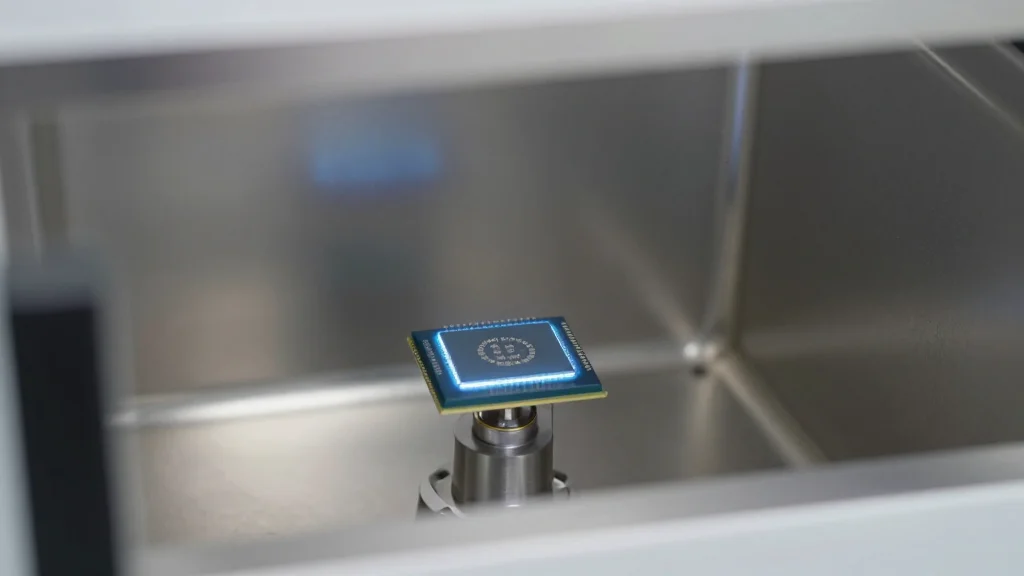
Quantum Elements Reports Record Logical Qubit Fidelity in Nature Communications Study
Quantum Elements, together with USC, IBM and RWTH Aachen, published a Nature Communications paper showing the highest‑fidelity entangled logical qubits on a 127‑qubit superconducting processor. By merging quantum error detection with a novel logical dynamical decoupling (LDD) technique, the team...

Keyfactor Advances Automation for Modern Digital Trust Environments
Keyfactor unveiled a suite of automation tools that modernize public key infrastructure, certificate lifecycle management, and digital signing. The enhancements address shrinking TLS certificate lifespans, tighter compliance mandates, and the emerging threat of quantum‑computing attacks. New hybrid cryptographic models let...
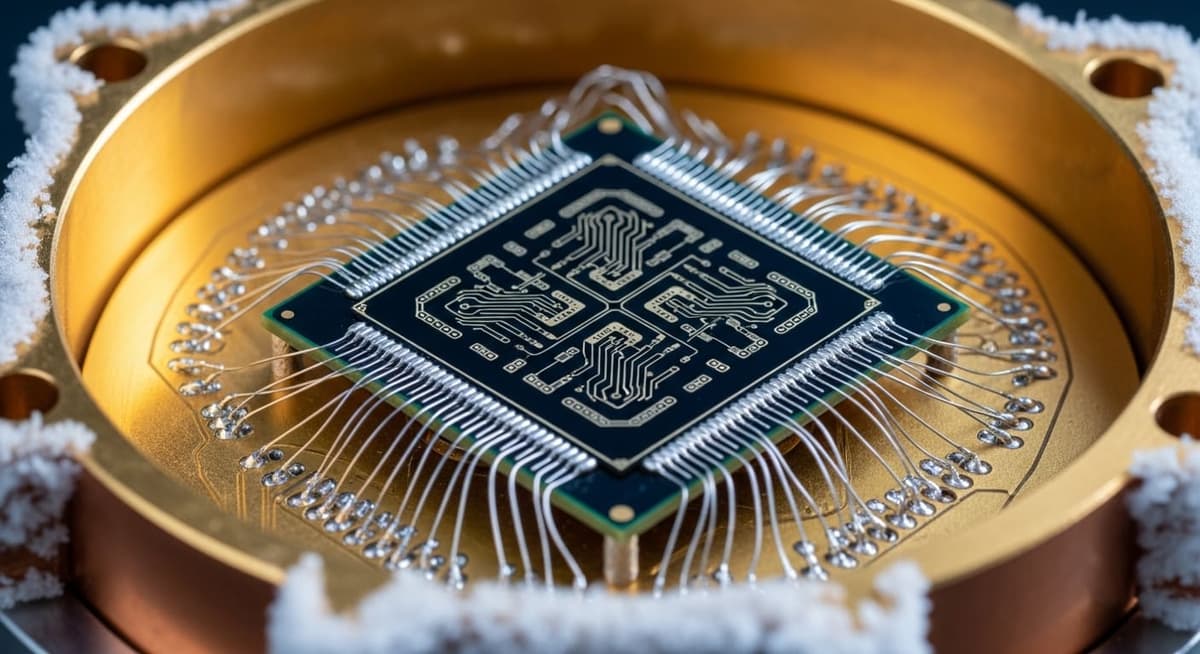
Origin Quantum Computing Achieves High-Accuracy Flux Crosstalk Compensation in Superconducting Qubits
Origin Quantum Computing, in partnership with USTC, unveiled a spin‑echo‑based method that separates quantum and magnetic flux crosstalk in superconducting qubits. The technique, combined with a learning‑driven high‑parallelism measurement scheme, stabilizes frequency‑shift fluctuations to a 20 kHz noise floor. After compensation,...
Fireside Chat with dMY Squared Technology Chairman, Horizon Quantum CEO & CFO, Mar 9 at 1:15PM ET
IPO Edge will host a 45‑minute fireside chat on March 9 featuring dMY Squared Technology Chairman Harry You and Horizon Quantum CEO Dr. Joe Fitzsimons. The session will detail the recently completed business combination that makes Horizon Quantum the first publicly...
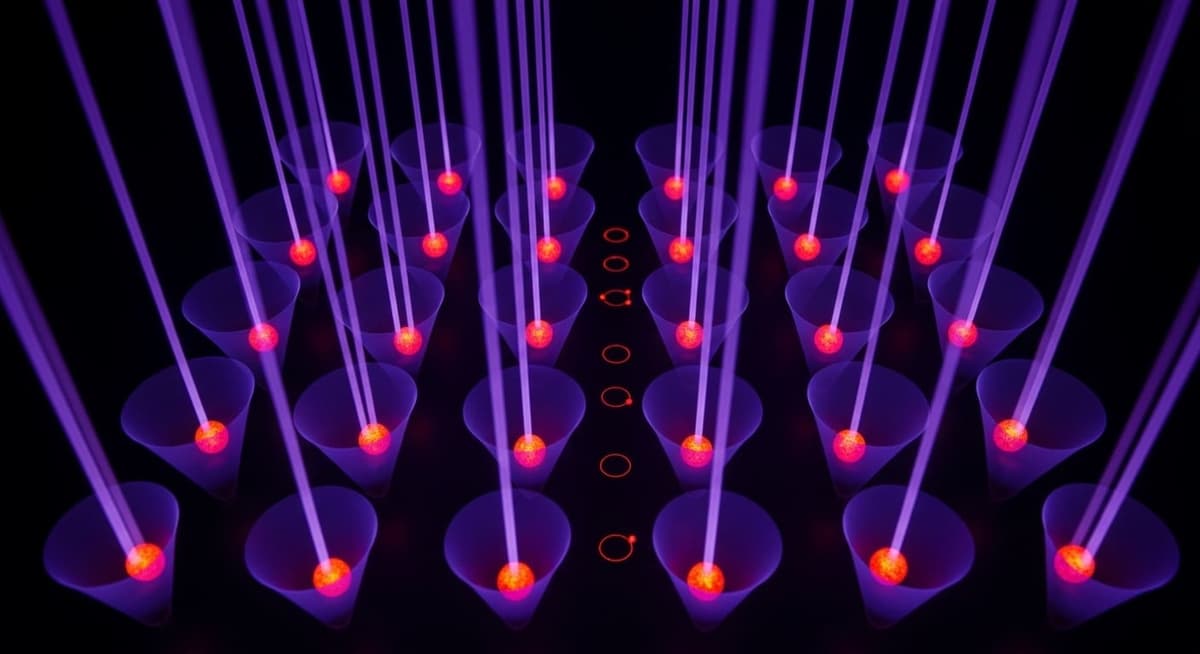
University of Toronto Centre Awards Bell Prize for Neutral Atom Research
The University of Toronto’s Centre for Quantum Information and Quantum Control awarded the ninth John Stewart Bell Prize to Mikhail D. Lukin, Antoine Browaeys, and Mark Saffman for pioneering neutral‑atom quantum computing. Their work demonstrated reconfigurable optical‑tweezer arrays that can...

Thales Validates Post-Quantum Cryptography on Live Networks, Enabling Ongoing Protection
Thales demonstrated live‑network post‑quantum cryptography for 5G, remotely updating SIM and eSIM cards with quantum‑safe algorithms. The "crypto agility" approach eliminates the need for massive hardware swaps, enabling instant security upgrades across existing devices. The trial underscores Thales’ role in...

NQCC SparQ Access Programme Supports Academic Research with Quantum Resources
The National Quantum Computing Centre (NQCC) has launched the SparQ Access programme, granting UK academia access to more than 20 quantum computing platforms, including Azure Quantum, Rigetti, IonQ, IBM Quantum and various simulators. Applications for the May‑July 2026 window are...

Three or More Parties Now Securely Share Encryption Keys Via Quantum Links
Researchers from the University of York propose a holistic framework for multiparty quantum key agreement (MQKA) that classifies protocols along three axes—network architecture, quantum resources, and security model. By mapping existing schemes onto this design space, they demonstrate error‑rate reductions...
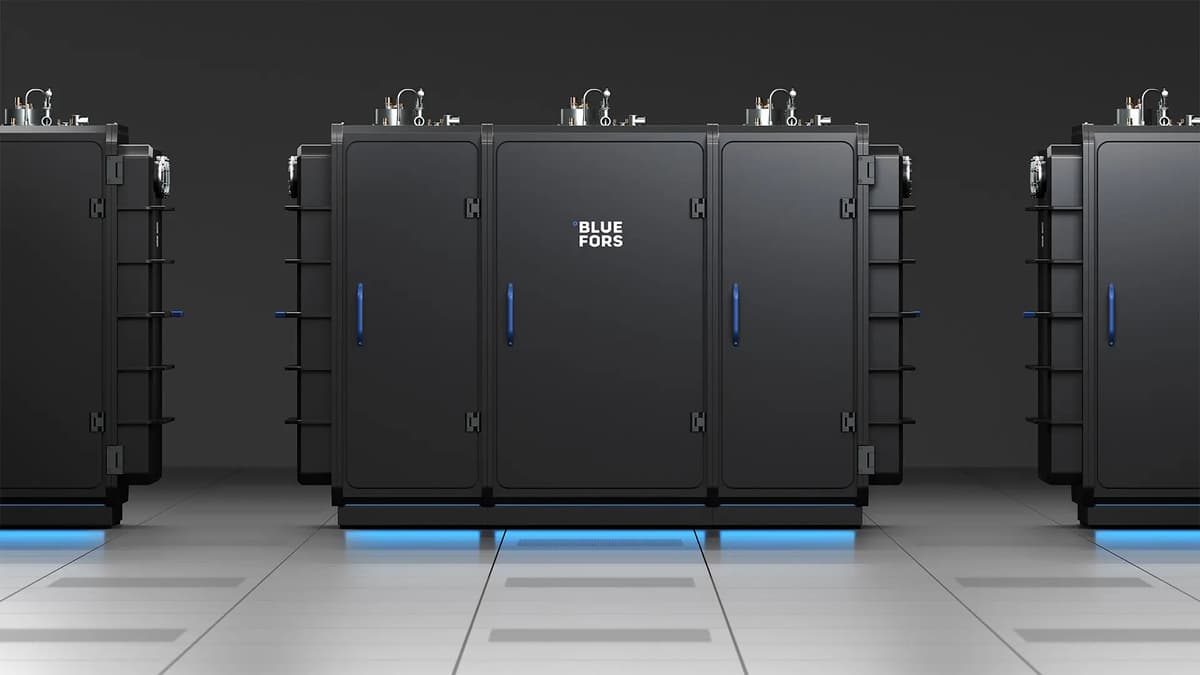
Bluefors Introduces Expandable Platform Supporting High Qubit Count Quantum Hardware
Bluefors unveiled its Modular Cryogenic Platform, an expandable vacuum‑chamber system designed to meet the scaling demands of quantum computers. The architecture lets users add modules incrementally, increasing cooling capacity and qubit density without replacing the entire infrastructure. Each module supports...
University of Turku Researchers Detail Multiple Forms of Quantum Memory
University of Turku researchers have shown that quantum memory depends on whether one examines the system’s state evolution (Schrödinger picture) or its observable dynamics (Heisenberg picture). Their experiments reveal that some memory effects are detectable only in one framework, making...

Illinois Quantum and Microelectronics Park Facilitates Immediate Ecosystem Entry for Future Tenants
The Illinois Quantum and Microelectronics Park (IQMP) launched an On‑Ramp program that places temporary, fully equipped labs in partner facilities to let future tenants start work immediately. Partner sites—mHUB, the UChicago Science Incubator at Hyde Park Labs, and the Discovery Partners Institute—provide...

BTQ Technologies Added to WisdomTree Quantum Computing Fund
BTQ Technologies Corp. has been added to the WisdomTree Quantum Computing Fund (WQTM), a U.S.-listed ETF that targets pure‑play quantum hardware, software and infrastructure firms. The fund, launched in October 2025, manages roughly $26.4 million as of February 27 2026. BTQ’s inclusion highlights its...