
Alice & Bob Secures €130M Funding, Employs 200+ People
Alice & Bob, the Paris‑Boston quantum‑computing firm, announced a refreshed brand identity as it transitions from a research startup to a deep‑tech company. The company secured €130 million (about $140 million) in new funding and now employs more than 200 staff. Its cat‑qubit architecture claims to cut hardware requirements by up to 200 times, positioning the firm for commercial‑grade fault‑tolerant quantum computers. The rebrand is intended to sharpen market visibility and attract talent, partners, and long‑term investors.

Rigetti Announces General Availability of 108-Qubit System
Rigetti Computing has made its 108‑qubit Cepheus‑1‑108Q system generally available through its Quantum Cloud Services platform and Amazon Braket. The modular chiplet‑based architecture stitches together twelve 9‑qubit chiplets, delivering a median two‑qubit gate fidelity of 99.1% with ~60 ns gate times...

IQM Lands World-First Private Enterprise Quantum Sale with 54-Qubit System
IQM Quantum Computers announced the sale of its 54‑qubit Radiance system to Poland’s Galaxy Systemy Informatyczne, marking the world’s first quantum computer purchased by a private enterprise. The on‑site installation, scheduled for the fourth quarter of 2026, will become Poland’s...

QCNNs Classically Simulable Up To 1024 Qubits
Researchers led by Pablo Bermejo have shown that quantum convolutional neural networks (QCNNs) can be faithfully simulated on classical hardware for systems as large as 1,024 qubits. The study attributes the apparent quantum advantage to QCNNs processing only low‑bodyness, or local,...

Inspira Targets Connectivity Bottleneck in Quantum Systems with 3D Architecture
Inspira Technologies is pivoting into quantum computing with a 3‑dimensional additive manufactured electronics (AME) architecture aimed at solving connectivity bottlenecks inside dilution cryostats. The company has invested over $200 million in the AME platform and has already demonstrated proof‑of‑concept integration with...

Citi Research Explores Quantum Innovation for National Security and Infrastructure
Citi Research is spotlighting quantum technologies as a strategic asset for national security and critical infrastructure. In a recent podcast, Infleqtion CEO Matthew Kinsella said quantum computing is closing the gap to practical use, while quantum sensing already delivers superior...

Quantum Zeitgeist Weekly Digest
The weekly Quantum Zeitgeist Digest highlights a surge of breakthroughs aimed at scaling fault‑tolerant quantum computers. QuEra released Tsim, a GPU‑accelerated simulator that handles circuits with over 80 physical qubits, while IBM and the University of Sydney unveiled an error‑correction...

ESP32-S3 Gets Post-Quantum Encryption with Aethyr Edge Node Open-Source Firmware
Aethyr Research has released open‑source firmware for ESP32‑S3 that adds post‑quantum encryption using ML‑KEM‑768, BLAKE3, and XChaCha20‑Poly1305. The firmware boots in 2.1 seconds and completes a full PQC handshake in 35 ms, with an 833 KB flash footprint and 157 KB free SRAM. It...

University of Maryland and Los Alamos National Laboratory Enhance Quantum Phase Estimation with Tapering Functions
Researchers at the University of Maryland and Los Alamos National Laboratory introduced tapered quantum phase estimation (tQPE), a method that reshapes the initial ancilla state using discrete prolate spheroidal sequences. By optimizing these starting conditions, tQPE lifts the baseline success...

Quantum Circuits Reveal Hidden Entanglement Changes with New Entropy Measures
Researchers at Seoul National University have introduced a new framework for analyzing the full distribution of entanglement entropy in hybrid quantum circuits that combine random Clifford gates with measurements. By calculating higher‑order moments such as variance, skewness, and the index...
Google Expands Quantum Efforts to Include Neutral Atom Systems
Google Quantum AI announced a new neutral‑atom quantum computing program, expanding beyond its traditional superconducting qubit focus. The initiative, led by Adam Kaufman in Boulder, Colorado, will pursue quantum error correction, modeling and simulation, and experimental hardware development. It follows...

A Quantum Apocalypse Is Coming for the Internet
Google’s quantum research team released a white paper showing it can break 256‑bit elliptic‑curve cryptography using roughly 20 times fewer physical qubits than previously estimated. The breakthrough threatens the cryptographic foundations of most blockchains and many internet security protocols. The article...

Quantum Optimisation Cuts Measurement Needs with New Bayesian Approach
Researchers Siran Zhang and Shuming Cheng at Tongji University introduced a resource‑efficient Quantum Approximate Optimisation Algorithm (QAOA) that targets the cut value of the most probable bitstring and incorporates Bayesian optimisation with adaptive shot allocation. Tested on 3‑regular MaxCut instances,...

Quantum Data Protection Adapts to Varied Hardware Structures
University of Illinois Chicago researchers Himanshu Dongre and Lane G. Gunderman introduce mixed‑register stabilizer codes that exploit coprime local dimensions. By leveraging qudits and heterogeneous quantum registers, the approach can theoretically slash the number of error‑correction registers by up to...

EPB Joins Southeastern Quantum Collaborative to Expand Regional Innovation
EPB has become a founding member of the Southeastern Quantum Collaborative, leveraging its 2023 launch of the nation’s first commercial quantum network and the upcoming EPB Quantum Center. The network now incorporates an IonQ Forte Enterprise computer, delivering both quantum‑secure...

Researchers Publish Findings on Practical Blind Quantum Computation
Researchers at Xiangtan University and the University of Oxford have unveiled a new blind quantum computation (BQC) model that operates only on adjacent qubits, removing the need for complex SWAP gates. The approach, built on a parity quantum computing framework,...

Bitcoin's Cryptography Could Crack By 2032, New Study Claims
A new study claims the quantum computing power needed to break Bitcoin’s cryptography is up to 95% lower than earlier estimates, potentially moving the feared "Q‑Day" to as early as 2032. The research challenges the industry’s long‑standing belief that decades...

QuTech Chairs Conference Focused on Scaling Spin Qubit Systems
QuTech will chair Spin Qubit 7, the seventh International Conference on Spin‑Based Quantum Information Processing, held at TU Delft from July 13‑17, 2026. The five‑day event gathers 45 leading speakers and more than 12 sponsors to showcase the latest in semiconductor spin‑qubit...

Viewbix’s Nuclear Quantum Progresses to Industry Engagement for Quantum Algorithms
Viewbix Inc., through its Quantum X Labs subsidiary, announced that portfolio company Nuclear Quantum is moving from pure algorithm development to active industry collaboration. The firm will embed its quantum‑based simulation engine into existing nuclear engineering platforms, tackling the long‑standing...
Google Quantum AI Opens Willow Early Access Program for Research Proposals
Google Quantum AI has launched the Willow Early Access Program, inviting researchers to submit proposals for experiments on its cutting‑edge Willow quantum processor. The program’s submission deadline is May 15, 2026, with selection notifications by July 1, 2026. Accepted teams will gain...

QCi Quantum Optimization Machine Placed on Quantum Corridor Network
Quantum Computing Inc. has installed its Dirac-3 quantum optimization machine at the Digital Crossroad Data Center in Hammond, Indiana, making it the first commercial data‑center deployment of the system. The machine connects to Quantum Corridor’s inter‑state fiber network via a...

VRadar Security Achieves Patent-Pending Status for Quantum-Resistant System
Vietnamese engineer Nguyen Xuan Dong has obtained patent‑pending status for VRadar, a cloud‑native Security Operations Center that incorporates NIST‑approved post‑quantum cryptography. Built alone in eight months with AI assistance, the platform processes 1.35 million alerts in 34 days and resolves 91 %...

Quantum Simulators Harbour Hidden Bugs, New Research Confirms
An empirical study by LSU examined 394 confirmed bugs across twelve open‑source quantum simulators, revealing a far higher defect rate than previously assumed. The research shows that 60 % of failures stem from classical infrastructure such as memory management, while only...

Quantum Computing Speeds Fluid Dynamics Simulations for Industry Designs
Researchers at Germany's DLR have combined a refined quantum linear system solver—an eigenvalue‑free variant of the Harrow‑Hassidim‑Lloyd algorithm—with Newton's method to tackle nonlinear PDEs such as the Navier‑Stokes equations. The hybrid quantum‑classical approach promises exponential speedups for solving the large...

Quantum Computing Boosts Machine Learning Forecast Efficiency
Researchers at Kazan Federal University introduced a quantum algorithm that leverages Quantum Amplitude Estimation to evaluate Random Forest regression models. The method reduces query complexity from the classical O(n·h) to O(t·h·(ymax‑ymin)), dramatically lowering the number of tree evaluations needed. Initial...

Quantum Models Now Simulate Complex Processes with Far Simpler Circuits
Researchers at Nanyang Technological University introduced quantum sequence models that use recurrent quantum circuits to generate coherent superpositions of stochastic processes. The new architecture achieves linear scaling of circuit complexity with simulation time, a stark contrast to the exponential growth...

Entangled Light Sustains Quantum Links Across Any Distance in New System
Researchers led by Sugar Singh Meena have devised a theoretical protocol that uses spontaneous parametric down‑conversion in circular arrays of nonlinear waveguides to generate multipartite continuous‑variable entanglement. The analytical solution proves full inseparability for any array whose number of waveguides...

Quantum Calculations Become Far Simpler with New Operator Weighting Method
Researchers led by Jialiang Tang introduced a weighted nested‑commutator (WNC) ansatz to approximate adiabatic gauge potentials using only local operators. The method expands the variational space, allowing more efficient optimization than traditional nested‑commutator approaches. Numerical tests showed dramatically faster preparation...

Complex Systems’ Long-Term Behaviour Now Accurately and Efficiently Simulated
Researchers from UC Berkeley, University of Michigan, Flatiron Institute and Lawrence Berkeley National Lab proved that simulating non‑Markovian Gaussian baths scales logarithmically with the inverse error tolerance, not with simulation length. The new bound O(log₂(1/(ω_c ε))) holds for zero‑temperature super‑Ohmic...

Xanadu Becomes 1st Pure-Play Photonic Quantum Computing Company to Go Public
Xanadu Quantum Technologies went public on Nasdaq and the Toronto Stock Exchange, raising $302 million in gross IPO proceeds. The listing also unlocks up to $288 million in Canadian federal and provincial funding and an additional $17 million from the Canadian Quantum Champions...
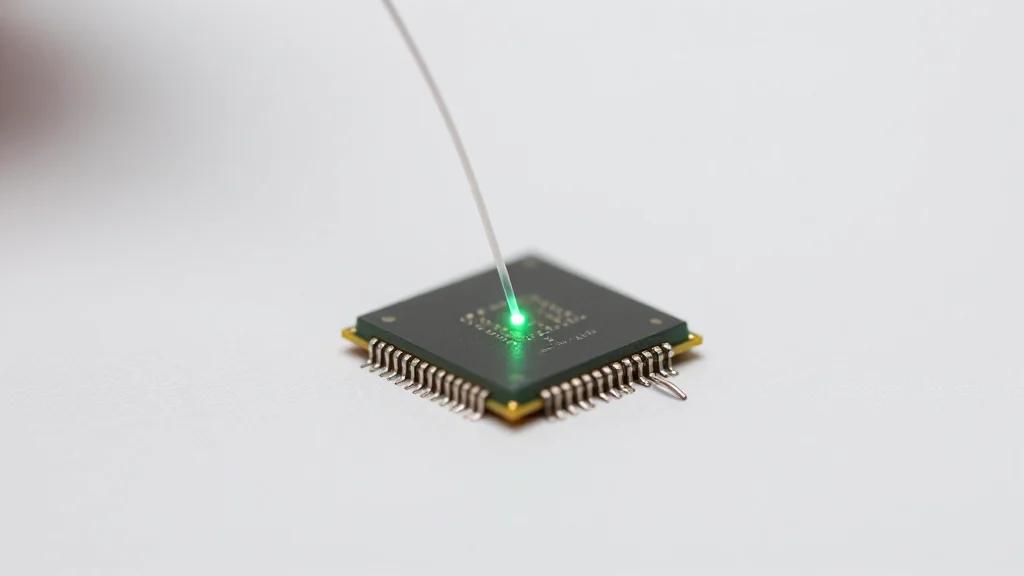
Electrically and Optically Controlled Silicon-Based Quantum Device Created by Simon Fraser University (SFU) Physicists
Simon Fraser University physicists, together with Photonic Inc., have demonstrated a silicon‑based quantum device that can be controlled both optically and electrically. The new diode nanocavity structure produces the first electrically‑injected single‑photon source using silicon T‑centre qubits, as reported in...

Fujitsu and University of Osaka Develop New Tech for Chemical Material Energy Calculations on Early-FTQC Quantum Computers
Fujitsu and the University of Osaka have unveiled a new technology that couples the third version of Fujitsu’s STAR quantum architecture with a novel molecular model optimization technique. The combined approach dramatically lowers the quantum resources needed for chemical energy...

QC Ware and CQE to Co-Host Q2B X Chicago Quantum Summit
QC Ware and the Chicago Quantum Exchange are co‑hosting the Q2B26 × Chicago Quantum Summit from December 8‑10, 2026, at the Marriott Marquis and McCormick Place. The event merges Q2B’s business‑focused agenda with the Summit’s research and economic‑development emphasis, creating a full‑stack quantum...

Continuous-Variable Quantum Compiler for Optical Phase Learning
Researchers have built a continuous‑variable quantum compiler that learns optical phase operations using two‑mode squeezed light. By digitizing the analog process into a sequence of native gates, the system creates a quantum digital twin that delivers a 5.4‑fold boost in...

Quantum-Resistant Cryptography Breakthrough: The Race to Secure Our Digital Future
Researchers at the Global Quantum Security Institute unveiled ShieldQ, a new lattice‑based cryptographic algorithm designed to resist attacks from both classical and quantum computers. The open‑source solution promises only a 15% performance overhead, making it viable for existing financial, cloud...

Atoms Linked to Light on a Nanofiber Promise Scalable Quantum Tech
Researchers at Waseda University and NICT have demonstrated a quantum interface that couples photons traveling in a 310 nm optical nanofiber to an array of about 155 individually addressable cesium atoms. The system achieves single‑atom trapping verified by photon‑correlation measurements with...

Neural Networks Simplify Quantum Error Correction, Reducing Decoding Complexity
Researchers at Germany's DLR have introduced a neural belief‑matching decoder for the toric quantum error‑correction code that dramatically lowers decoding complexity. By embedding a convolutional neural network within the belief‑propagation framework, the method reduces calls to the costly minimum‑weight perfect...

Quantum Matters: D-Wave Explores Real-World Applications of Quantum Technology In A Podcast
D‑Wave, the pioneer commercial quantum computing firm, has launched the "Quantum Matters" podcast to spotlight real‑world quantum applications. Each episode features researchers, academics, and industry leaders discussing how quantum solutions are solving complex problems in sectors such as automotive manufacturing...

Quantum Data Storage Gains Stability with Fibre Optic Error Correction
Researchers at the Technical University of Denmark have quantitatively analysed an all‑optical quantum memory that stores a qubit in a fibre loop and stabilises it via teleportation‑based error correction. By optimising the syndrome decoder, they predict logical infidelity below 1 %...

Atoms Read Multiple Times Boost Quantum Computer Accuracy
Researchers at Caltech have demonstrated a suite of tools that enable repeated, high‑fidelity readout of neutral‑atom qubits using ancilla atoms, achieving 0.98 measurement fidelity after four cycles. The approach includes coherence‑preserving atom‑loss detection and a circuit‑based algorithmic cooling method that...

Rigetti Computing Develops Qubit-Efficient Algorithm for Combinatorial Optimization
Rigetti Computing secured a DARPA contract to advance quantum algorithms for optimization and unveiled a qubit‑efficient method that maps candidate solutions onto entangled wave functions, dramatically reducing the qubit count needed. The technique extends the quantum approximate optimization ansatz and...

Quantum Algorithms Optimise Highway Vehicle Pairings for Fuel Savings
Researchers at Volkswagen and Jülich Supercomputing Centre have introduced a Quadratic Unconstrained Binary Optimisation (QUBO) formulation to standardise the vehicle platooning problem. The study benchmarks classical heuristics—simulated annealing and tabu search—against quantum approaches such as quantum annealing and QAOA, showing...

Quantum Computers Gain Speed with Network Achieving 100ps Synchronisation
Researchers at Fermilab and Stanford introduced XCOM, a full‑mesh network that synchronises Quantum Instrumentation Control Kit (QICK) boards to within 100 picoseconds and delivers sub‑185 nanosecond latency for deterministic data exchange. The system maintains long‑term stability without drift, supports up to five...

NQCC Announces UK’s £2 Billion Quantum Computing Investment
The UK government has announced a £2 billion ProQure procurement programme to accelerate quantum computing development. The initiative will solicit proposals from companies to deliver prototype quantum processors, with the most promising designs scaling into the national computing infrastructure. Building on...

AI Cuts Quantum Computing Steps for Complex 144-Qubit Codes
Researchers at University College London and Quantinuum introduced QuSynth, an AI‑driven method that converts graph representations of stabilizer states into quantum circuits with far fewer operations. By integrating reinforcement learning and Monte Carlo tree search, the technique reduces two‑qubit gate counts...

Quantum Computers Now Account for Realistic Error Types
Researchers at Sandia National Laboratories introduced a detector error model (DEM) that translates realistic coherent and non‑Pauli noise into a compact probabilistic framework. The technique enables Monte Carlo estimation of logical error rates and supports noise‑adapted decoding for fault‑tolerant quantum circuits....

Planqc Partners with University and Industry to Tackle Complex Industrial Problems
planqc, Saarland University, BMW and Infineon have secured €2.3 million from the German Federal Ministry to launch the QIAPO project, a hybrid quantum‑classical effort aimed at industrial optimization. The initiative will use planqc’s neutral‑atom quantum computer to pre‑process complex problems in...
Canada’s NRC Allocates C$161M to Quantum Tech Within Broader C$900M Defense Plan
Canada’s National Research Council (NRC) is earmarking C$161 million over five years for quantum‑technology research as part of a broader C$900 million Defence Industrial Strategy. The funding targets quantum sensing, internetworking, and quantum‑safe communications, while C$28 million is set aside for biomedical counter‑measures...
Xanadu Introduces Quantum Algorithm for Battery Materials Simulation and Analysis
Xanadu Quantum Technologies, together with the University of Toronto and the National Research Council of Canada, unveiled a fault‑tolerant quantum algorithm that simulates resonant inelastic X‑ray scattering (RIXS) for lithium‑rich cathode materials. The pre‑print demonstrates that the method can model...

SEEQC Reports 1st Quantum Computer with Integrated Qubit Control on a Chip at Millikelvin Temperatures
SEEQC announced the first full‑stack quantum computer that integrates superconducting digital control circuitry directly on a chip operating at 10 millikelvin. The five‑qubit processor, paired with a separate SFQ control chip, achieved single‑qubit gate fidelities above 99.5% and demonstrated nanowatt‑scale power...