
Carried Interest: What Most Investors Get Wrong About This "Loophole"
The episode dives into carried interest, tracing its roots from 16th‑century ship captains to today’s real‑estate syndications. Host Nathan Sosa explains how the profit‑share mechanism works, why it’s called a “carry,” and its relevance for general partners (GPs) and limited partners (LPs). He outlines the typical waterfall: LPs receive an 8% preferred return, then capital is returned, after which a 70/30 split allocates the GP’s promote. Because the underlying gain is treated as Section 1231 capital, the carry is taxed at the 20% long‑term rate, versus up to 37% on management fees. The 2017 Tax Cuts and Jobs Act added a three‑year holding period (Section 1061) to qualify for this treatment. Sosa illustrates the math with a $10 million purchase, $3 million equity, and a $500 k GP stake, showing a $270 k carry that saves roughly $340 k in taxes. He also references historical anecdotes—13‑year‑old ship captains—and notes that despite recurring congressional proposals, the loophole remains intact. For investors and sponsors, understanding carried interest is crucial for structuring deals, forecasting after‑tax returns, and anticipating potential legislative shifts that could alter the tax advantage.
The Truth About Series LLCs In Florida (90% Of Investors Get This Wrong)
The video examines Florida’s newly adopted series LLC statute, warning investors that the apparent convenience of housing multiple properties under a single entity is offset by significant legal and financial drawbacks. While other states let owners create internal “cells” without...
🏢 Failed Business Purchases and Start Ups — Enrolled Agent Exam | EA Part 2 Businesses
The video explains how tax law treats expenses incurred when a prospective business never materializes, drawing a clear line between casual research and a bona‑fide attempt to acquire or start a venture. In the initial “window‑shopping” phase, all costs—travel, industry reports,...
Unresolved Issues Under Section 2801
The video focuses on lingering ambiguities in Section 2801, which governs gifts and bequests for U.S. taxpayers with international connections. Paula Flurry, a tax and immigration lawyer licensed in Portugal and Brazil, outlines the regulatory gaps that still perplex practitioners. Key...

How the Rich Avoid Taxes
The video explains how Elon Musk, like many ultra‑rich executives, avoids income taxes by forgoing a traditional salary and receiving compensation solely in Tesla stock grants. Because the stock is treated as an asset rather than earned income, its appreciation...

The Missing Piece in Your TikTok Tax Strategy
In this episode of the Jeff Trapp Podcast, the host warns that most entrepreneurs treat taxes as a once‑a‑year event and rely on TikTok or AI snippets, missing the “missing piece” – proactive, year‑round tax strategy. He explains that waiting until...

The Third Pillar of Wealth | the Advisory
In the latest Advisory episode, Ashley Tilson of Spectrum Wealth Partners explains a growing “third pillar” of wealth—debt‑recycling strategies that let Australians move beyond the traditional reliance on mortgage repayment and superannuation. Tilson outlines how borrowers restructure their home loan into...
Tax Q&A: What Business Owners Are Actually Asking Right Now
The episode is a listener‑driven Q&A where the host tackles real‑world tax dilemmas faced by small‑business owners, ranging from exotic marketing expenses to entity elections and loss deductions. Key insights include: gold‑plated business cards are deductible only if truly ordinary‑necessary, and...
4 Things Farmers Should Know About A Lesser-Known Tax Deduction
The video spotlights the residual soil fertility deduction, a little‑known tax break that can exceed $1,000 per acre for qualifying farmland, and urges producers to consider it before the April 15 filing deadline. Host Margy Eckelcamp explains four critical points: the...

Brandy Maben: Put SpaceX in Your Roth? Here's How the Wealthy Do It #Roth
Brandy Maben explains how both novice and affluent investors can leverage Roth accounts to maximize tax‑efficient growth. She advises young earners to allocate roughly half of their 401(k) contributions to a traditional pre‑tax option and the other half to the...
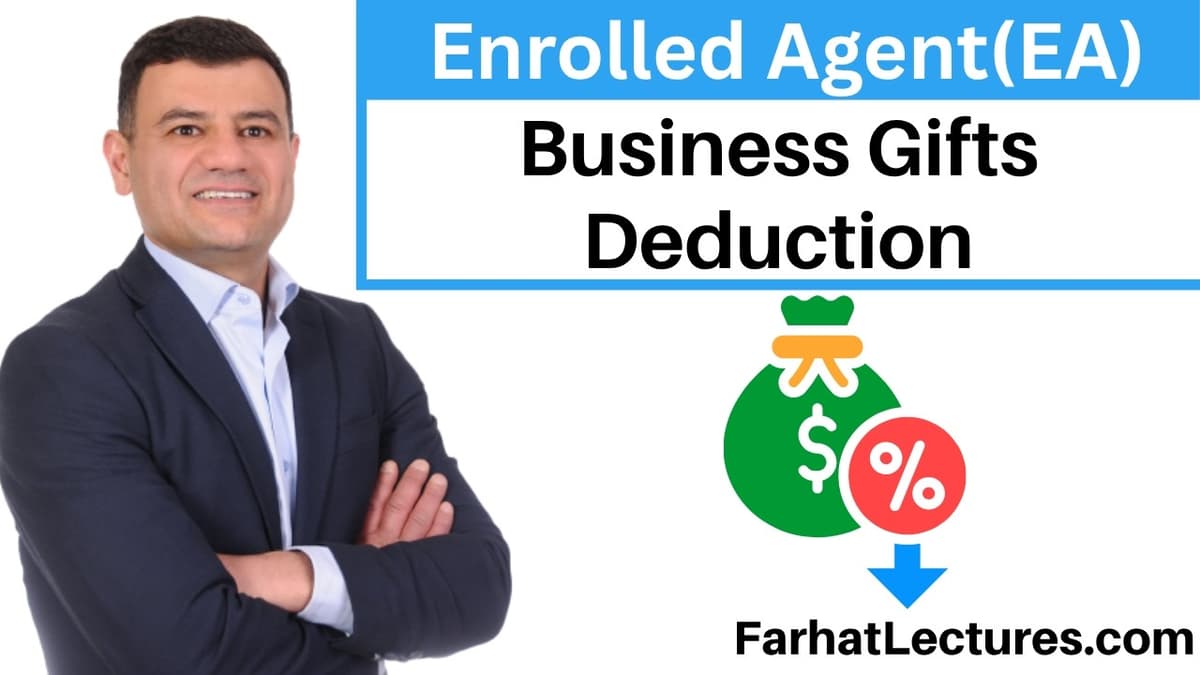
🎁 Business Gifts Deduction — Enrolled Agent Exam
The video explains IRS rules governing deductibility of business gifts for professionals preparing for the Enrolled Agent exam. Core rule: $25 per recipient per year, applies to all gifts regardless of total amount. Incidental expenses (packaging, shipping, engraving) are deductible beyond...
LLC vs S-Corp: Which One Actually Saves Money
The video explains why a simple LLC structure does not lower a small‑business owner’s tax burden and why electing S‑corporation status can be a game‑changer. Mark J. Kohler, CPA and attorney, argues that without an S‑corp election, owners still owe...
I'm Hosting a Free 2-Hour Business Bootcamp (And You Need to Be There)
Mark J. Kohler, CPA and attorney, is hosting a free two‑hour business bootcamp on April 14 from 3‑5 p.m. PT, aimed at entrepreneurs who need clarity on legal entity selection, tax deductions, privacy, asset protection, and retirement‑account choices. During the live session...
That Tax Strategy You Saw on Instagram Might Not Be What You Think 👀
The video cautions viewers that tax schemes popular on Instagram, such as the so‑called 643B trust, often ignore the legal nuances and can expose users to serious risk if not executed correctly. The presenter stresses that the difference between a concept...
📝 Qualified Joint Venture (QJV) MCQ — Enrolled Agent Course
The video walks through a multiple‑choice question about whether a married couple can elect a Qualified Joint Venture (QJV) for their jointly‑owned retail boutique. The presenter notes that both David and Sarah co‑own the business, but only David materially participates while...
📈 Entity Classification & "Check-the-Box" Rules — Enrolled Agent Course
Professor Farhat explains how LLCs can elect federal tax classification under the check‑the‑box rules, covering default treatment for single‑member and multi‑member entities and the forms required to change status. A single‑member LLC is a disregarded entity by default, reporting on Schedule C,...

Are You Missing Out on Tax Credits?
The video spotlights how many Canadians fail to claim all available tax credits as the filing deadline looms, featuring Jamie Golombek, managing director of tax and estate planning at CIBC Private Wealth. Golombek explains the most widely used credit—the basic personal...

Stop Putting Everything in Your 401k | Brandy Maben
The discussion centers on why investors should avoid over‑reliance on 401(k) plans and instead spread savings across taxable, tax‑deferred, and tax‑free buckets. Brandy Maben of Windrock Wealth Management explains that a one‑third‑to‑one‑third‑to‑one‑third rule helps mitigate future tax‑rate volatility, provides liquidity,...

How To Make Meal Deductions Audit Proof
The video explains how entrepreneurs and employees can substantiate meal‑related expenses to survive IRS scrutiny. It breaks down deduction rates—groceries while staying in a residence hotel or Airbnb are 50% deductible, event‑wide groceries are 100% deductible, and client meals remain at...

SMSFs and the Compensation Scheme of Last Resort | the Advisory
The advisory discusses Treasury's proposal to involve self‑managed super funds (SMSFs) in a compensation scheme of last resort, and related regulatory changes such as the upcoming “payday super” rule. Key points include potential mandatory contributions from SMSFs, an opt‑in/opt‑out mechanism that...

Why Unprepared Heirs Risk Huge Tax Hits | the Advisory
The advisory panel highlighted Australia’s looming $5.4 trillion wealth transfer as baby boomers die, stressing that the shift will dwarf even compulsory superannuation in dollar terms. Ryan Watson of Tribeca Financial explained that most of the wealth is tied up in residential...

How Family Offices Approach ETFs with Zach Wainwright and Ron Diamond
The video features Zach Wainwright explaining why ETFs are becoming a core tool for family offices seeking tax‑efficient investing, set against a backdrop of growing interest from billion‑dollar families. Wainwright outlines how ETFs generate “tax alpha” by using in‑kind creations and...

How The Wealthy Protect Assets For Decades: Family Holding Company
The video explains how a family holding company— a parent legal entity that merely owns other operating LLCs— serves as the cornerstone of wealth preservation and intergenerational transfer for affluent families. By consolidating real‑estate, operating businesses, and brokerage accounts under a...
Webinar Preview: Requirements and Benefits of Qualified Small Business Stock
The NATP webinar focuses on the revised Section 1202 rules governing Qualified Small Business Stock (QSBS), outlining how the new tiered gain exclusion and extended holding‑period requirements reshape tax planning for entrepreneurs and advisors. Speakers detail that gains are now excluded...

Ireland’s New Investment Scheme Explained
The episode focuses on Ireland’s upcoming retail‑investment scheme, a government‑backed savings account expected to roll out in early 2025. Designed to address the €170 billion sitting in near‑zero‑interest current accounts, the plan aims to redirect household cash into stocks, bonds,...

How Can UK Investors Build a Tax-Free Investment Portfolio | FT #shorts
The video explains that UK residents can use stocks‑and‑shares Individual Savings Accounts (ISAs) to shelter investments from tax, offering a straightforward way to build a tax‑free portfolio. Each adult may contribute up to £20,000 per year, split between cash and equities....

How To Leave Your HOUSE To Your KIDS
The video warns homeowners that the seemingly simple act of putting children on the deed can create tax and family problems. It walks through common shortcuts—gift during life, joint tenancy, transfer‑on‑death deed—and explains why each can backfire. Giving the house outright...
Understanding Covered Gifts and Bequests
The video explains Section 2801’s treatment of covered gifts and subsequent covered bequests, clarifying that the tax code explicitly bars double taxation on the same asset. The final regulations mandate that the value of a covered bequest excludes any portion...

The Truth About Tax Extensions (You’re Probably Doing It Wrong)
The Taxmart REI podcast episode tackles the stigma surrounding tax extensions, explaining that an extension merely postpones the filing deadline to October 15, not the payment deadline, and why many real‑estate investors should consider it. Hosts Nate Sosa and Justin Shore...
📝 Other Itemized Deductions OBBBA MCQ — Taxation Course | CPA Exam REG | EA Course
The video dissects a multiple‑choice question about the upcoming changes to itemized deductions under the so‑called “one big beautiful bill,” which takes effect in 2026. It clarifies which statements about the new tax regime are correct, guiding CPA and EA...

Webinar Preview: Optimizing the 121 Exclusion for Clients
The NATP webinar delves into the nuances of Section 121, the primary‑residence capital‑gain exclusion, guiding tax professionals beyond basic definitions toward confident application. It revisits the core ownership and use tests, emphasizing the two‑year ownership and use requirements and the...

These IRS Number Changes Could Affect Your Taxes in 2026
The video breaks down the 2026 IRS‑adjusted tax numbers that matter most to small‑business owners, from the standard deduction to mileage rates, and explains how these inflation‑driven changes can be turned into planning opportunities. Key figures include a $16,100 single and...

Why Does My Tax Return Ask About Income Contingent Student Loans?
The video explains why self‑assessment tax returns now include a question about Income‑Contingent Student Loans (ICSL). It clarifies which loans fall under the post‑1998 scheme and outlines when repayment obligations commence, depending on study mode and course completion dates. Key points...

One Big Beautiful Bill: Business Tax Provisions
The Internal Revenue Service hosted a two‑hour webinar titled “Understanding the One Big Beautiful Bill: Business Tax Provisions,” led by stakeholder liaison Christopher Green and senior liaison Richard Furlong. The session aimed to unpack the major business‑tax changes enacted by...

SECURE Act Changed Who Inherits Your IRA — Is Your Heir in First Class or Basic Economy?
The video explains how the SECURE Act has fundamentally altered the rules governing inherited IRAs, likening the new landscape to the tiered seating on modern airline flights. Where once most heirs could stretch required minimum distributions over their life expectancy,...

Financial Advisors React to the BEST and WORST Tax Advice
The video brings together several financial advisors who riff on what constitutes good versus bad tax advice, ranging from everyday W‑4 withholding tweaks to sophisticated real‑estate‑centric wealth strategies. They argue the most reliable way to set withholding is to run a...

Mileage Deduction vs Actual Expenses: Which Saves More #taxes #deductions #taxhacks
The video explains how self‑employed professionals can deduct vehicle costs, emphasizing that only the business‑use portion qualifies and that taxpayers have two distinct methods to claim those expenses. The standard mileage deduction offers a flat rate—currently 72.5 cents per mile—making it easy...

Never Commit This Double Dip Tax Move
The video warns against “double‑dip” tax strategy where employees claim a work‑related expense both on a company reimbursement and as a personal tax deduction. It explains that under an accountable plan the employee must substantiate the expense, receive reimbursement, and return...

Disguised Sales in Real Estate: How Refinances Can Trigger Taxes (Avoid This!)
The episode tackles a subtle but costly tax pitfall in real‑estate partnerships: the "disguised sale" that can arise when a general partner contributes property and then receives cash‑out refinancing proceeds or other distributions shortly thereafter. While cash‑out loans are generally...