
The Agentic Evolution: Autonomous Finance Is Here with Anant Kale
The conversation spotlights a paradigm shift from AI‑assisted finance to fully autonomous, or “Agentic,” finance, championed by AppZen’s founder Anant Kale. Kale describes AI moving beyond simple alerts to actually reasoning, auditing, and handling global tax compliance. AppZen’s platform acts as a corporate nervous system, automating expense verification and compliance tasks that traditionally required human oversight. The discussion frames this evolution as a biological‑level transformation for enterprises, where “close enough” is no longer acceptable for financial ledgers.

AI Assistant, eSignature, Subservicing, AI Adoption Products; VA Servicing and Loss Mit Update
The mortgage industry is accelerating AI adoption, highlighted by JazzX’s partnership with Palantir and a forthcoming webinar on turning pilots into production. Lenders are also expanding product suites, with Pennymac TPO’s new non‑QM offerings and Cenlar’s intelligent voice assistant improving...

Anthropic Just Passed OpenAI in Revenue. Spending 4x Less
Anthropic’s annualized revenue (ARR) has surged past $30 billion, eclipsing OpenAI’s $25 billion run‑rate. The company achieved 30‑times growth in 15 months, driven by a rapid expansion of enterprise contracts—over 1,000 firms now spend $1 million plus each year. Anthropic’s compute spend is roughly one‑quarter...

Block Launches Managerbot, a Proactive AI Agent for Square Sellers that Manages Inventory, Scheduling, and Marketing Autonomously
Block unveiled Managerbot, an AI‑driven agent built into Square that continuously monitors merchant performance and recommends actions for inventory forecasting, staff scheduling, and marketing campaigns. Unlike Square’s prior reactive chatbot, Managerbot operates proactively, suggesting changes before sellers request them. The...

What I Learned About the Future of Search and AI From Sundar Pichai’s Latest Interview
In a recent interview, Sundar Pichai outlined how Google envisions search evolving into an "agent manager" that orchestrates multiple AI tasks rather than merely returning links. He revealed that Google’s internal AI workflow platform, Antigravity—branded Jet Ski inside the company—is already...

Google Says Page Weight Is Not a Reliable SEO Metric because Raw Size Doesn’t Reveal Whether Data Is Useful or...
Google’s search quality engineers Gary Illyes and Martin Splitt said that raw page weight is a poor SEO metric because much of the increase in median page size—from 845 KB in 2015 to 2.3 MB in July 2025—comes from structured data, metadata,...

‘Ultra’
Apple is reportedly preparing its first foldable iPhone under the “iPhone Ultra” moniker, according to Chinese leaker Digital Chat Station. The book‑style device is projected to retail between $2,000 and $2,500, positioning it at the top of the premium smartphone...

Raptor Lake Still Big Part of Intel’s Plan in 2026 – DDR4 Options Available
Intel’s Raptor Lake CPUs will stay in production through at least 2026, with the company emphasizing their continued relevance despite newer hardware releases. The firm also announced motherboard options that can accommodate both DDR4 and DDR5 memory, giving builders a...

Advanced Deep Learning Interview Questions #17 - The Per-Step Update Trap
In a DeepMind senior ML engineer interview, candidates are asked why a custom 1D convolutional layer fails to learn translation invariance despite correct forward and chain‑rule calculations. The hidden issue is neglecting to aggregate the gradients computed at each time...
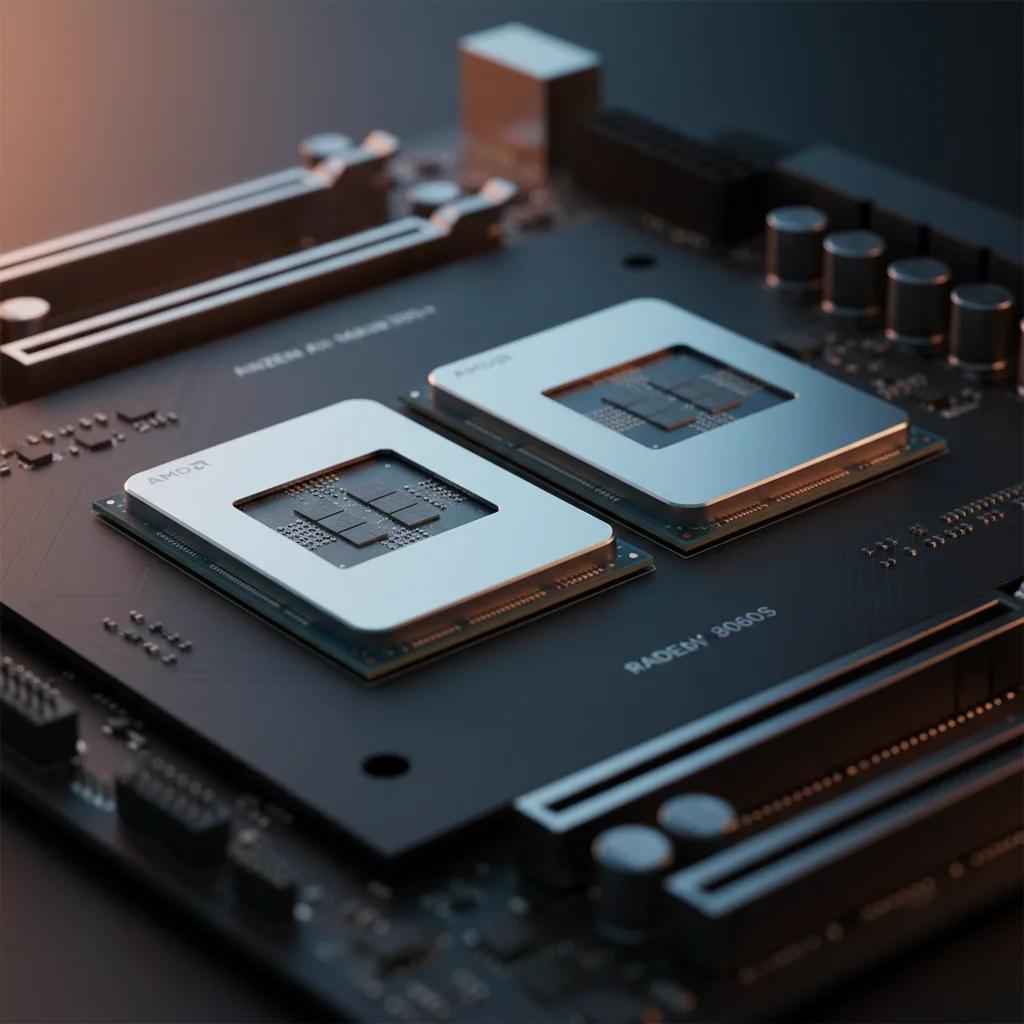
Ubuntu 26.04 Provides More Performance For AMD Ryzen AI Max "Strix Halo"
Ubuntu 26.04 brings significant performance gains to AMD’s Ryzen AI Max+ 395 “Strix Halo” APUs compared with the prior Ubuntu 25.04 release. The new distribution runs the Linux 7.0 kernel and GCC 15.2, delivering double‑digit CPU speedups and noticeable Radeon 8060S GPU improvements on the same Framework...

Snailing Colorectal Cancer Drug Delivery, Once and for All
University of Manchester researchers have secured roughly $1.27 million from UKRI to develop snail‑inspired soft‑robotic carriers for colorectal cancer drugs. The project aims to create centimeter‑scale, peptide‑based robots that travel through the gastrointestinal tract and release protein kinase inhibitors directly at...

Are Musk and Bezos Turning the Sky Into a Landfill?
Elon Musk’s SpaceX and Jeff Bezos’s Blue Origin have jointly filed to launch roughly 1.1 million satellites, dwarfing today’s constellations and aiming to create orbital AI data centers. A recent German‑British study detected a ten‑fold lithium spike 60 miles up after a...

Anthropic Plans $1B Venture with Major PE Firms to Sell and Deploy AI Tools Across Their Portfolio Companies
Anthropic is negotiating a $200 million investment as part of a broader $1 billion fundraising round with private‑equity giants General Atlantic, Blackstone and Hellman & Friedman. The capital will launch a new consulting arm that embeds the Claude AI suite into the...

You Already Assess Risk for a Living. Do It for Your Own Agency
Insurance agencies are facing new cybersecurity mandates from carriers and regulators, who now require multi‑factor authentication, email threat protection, endpoint security, and a written security plan. The blog argues that agencies already perform risk assessments for clients and can apply...

Lenovo Legion Go 2 Now Costs Nearly 50% More, and You Already Know the Reason Why
Lenovo has abruptly increased U.S. pricing for its Legion Go 2 handheld, with the top‑end Ryzen Z2 Extreme model climbing from $1,349.99 to $1,999.99 – a near 48% jump. The base configuration with a Ryzen Z2 chip and 16 GB RAM...

Tokenmaxxing: When Compute Activity Masquerades as Productivity
The article warns that many firms are treating raw token counts as a proxy for AI productivity, a practice the author dubs “tokenmaxxing.” By tracking every token generated by large language models, companies create a vanity metric that rewards higher...

Broadcom Signs Expanded Deals with Google and Anthropic, Giving the AI Startup Access to 3.5 Gigawatts of Compute Capacity
Broadcom will manufacture future generations of Google’s AI chips and has expanded its agreement with Anthropic, granting the startup access to roughly 3.5 gigawatts of Google Tensor Processing Unit compute, up from 1 GW. Anthropic disclosed annualized revenue now exceeds $30 billion,...

Artemis II Photos
NASA has added a new Flickr album featuring photos from the Artemis II mission, the first crewed test flight of Orion and the Space Launch System. The collection includes “Earthset,” a visual homage to Apollo 8’s Earthrise, and a striking image of...

☕🤖Tutorial: Stop Scrolling Job Boards. Let Claude Find the Right Job For You
The post walks readers through building an AI‑powered Job Hunter using Claude, Anthropic’s large language model. In Phase 1 Claude evaluates a candidate’s résumé, highlights strengths, identifies gaps, and suggests optimal job titles and hidden‑gem roles. Phase 2 connects Claude to live...

Yokogawa and ANYbotics to Integrate Robotics Software with Inspection Robots
Yokogawa Electric and ANYbotics are integrating Yokogawa’s OpreX Robot Management Core software with ANYbotics’ four‑legged ANYmal inspection robots, including the explosion‑proof ANYmal X. The unified platform will allow autonomous inspections of hazardous zones in oil & gas, power and metals facilities,...

The Imaginary of Informed Consent: Rethinking Approaches to Data Use for AI in Healthcare
The article examines how India’s Digital Personal Data Protection Act 2023 relies on informed consent to legitimize health data use for AI, but this model struggles with the complex, secondary purposes of AI training. It outlines three consent challenges: multiple...

Copay Funds Are Being Misused at the Pharmacy. Now There’s a Way to Stop It in Real Time
Pharmaceutical manufacturers rely on copay assistance programs to boost patient access and drug utilization, but misuse at the pharmacy level is eroding billions in spend. ConnectiveRx’s ShieldRx platform intervenes at the moment a claim is submitted, using AI‑driven analytics to...

Perplexity Launches Computer for Taxes to Draft, Review, and Optimize U.S. Federal Tax Returns Using Loadable AI Tax Modules
Perplexity has expanded its Computer AI platform with dedicated tax modules that can automatically draft U.S. federal tax returns on official IRS forms, review professionally prepared returns for errors, and create custom tools for complex scenarios such as rental portfolio...
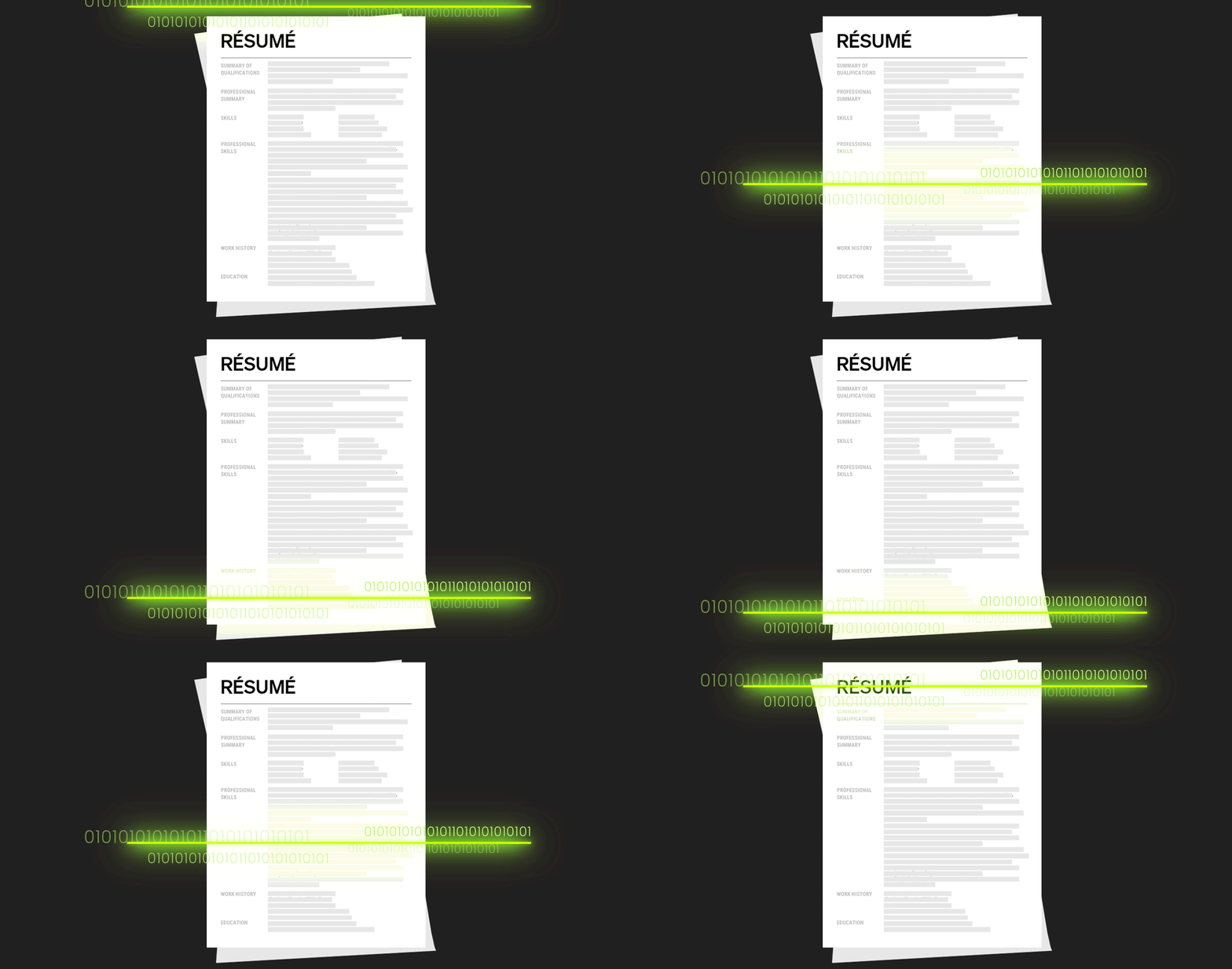
Overwhelmed by Applications, Recruiters Turn to AI Pre-Screening Tools to Winnow Down Applications
Recruiters are drowning in applications as hiring slows, with 72% of global firms still reporting a talent shortage. Two‑thirds of talent‑acquisition professionals say they received more candidates per role last year, yet 46% say candidate quality has declined. In response,...
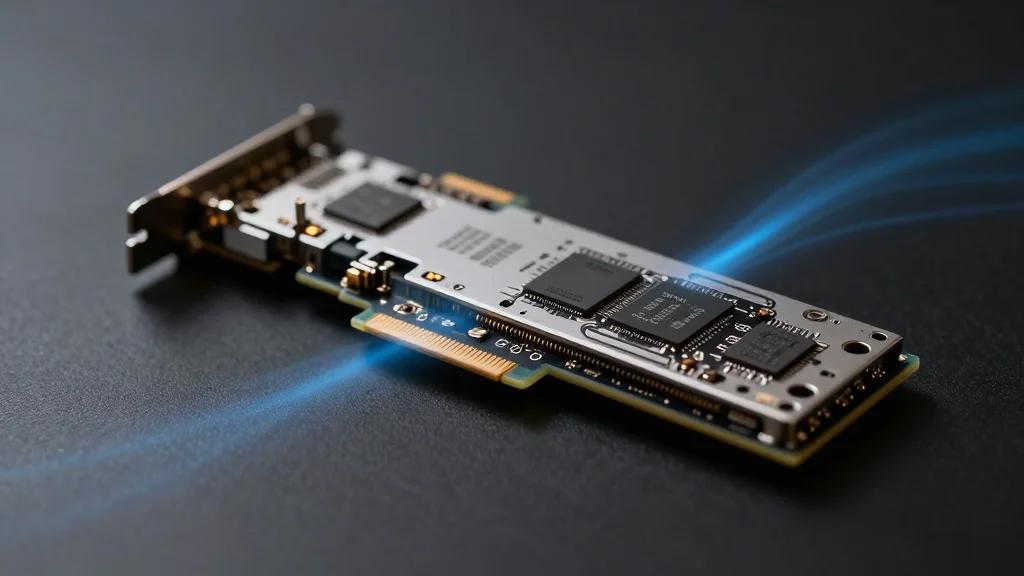
Intel QAT Driver With Linux 7.1 Adding Zstd Offload Support
Intel’s QuickAssist (QAT) driver for the Linux 7.1 kernel now supports Zstandard (Zstd) offloading across Gen 4, Gen 5, and Gen 6 accelerators. Gen 4/5 offload compression only for buffers 8 KB‑512 KB, while Gen 6 offloads both compression and decompression with no size ceiling but falls...
Save $100 on the Asus ROG Xbox Ally Handheld From Amazon with This Surprise Discount
Amazon has reduced the price of the Asus ROG Xbox Ally handheld to $499.99, a $100 discount from its $599.99 MSRP on Microsoft’s store, where it remains out of stock. The device features AMD’s Ryzen Z2 A processor, 16GB of...

State of Tuesday: WHITEY ON THE MOON
Victor Glover, the Black astronaut piloting NASA’s Artemis II mission, publicly invoked Christian teachings while the crew passed behind the Moon. His remarks sparked immediate praise from conservative circles, while liberal commentators highlighted NASA’s broader diversity agenda. The post ties Glover’s...

I Audited 6 Hydrogen Vendor Claims. Three Are False, One Exceeds the Laws of Thermodynamics.
A recent audit of six hydrogen vendor claims revealed three outright false statements, one that only holds in specific U.S. geographies, one conditionally achievable, and a 95% efficiency claim that violates thermodynamic limits. The analysis contextualizes these exaggerations against a...
![[OFC 2026] Part 3 of 5: Packaging: Glass Substrates to 3D Hybrid Bonding](/cdn-cgi/image/width=1200,quality=75,format=auto,fit=cover/https://substackcdn.com/image/fetch/$s_!FG3y!,w_256,c_limit,f_auto,q_auto:good,fl_progressive:steep/https%3A%2F%2Fsubstack-post-media.s3.amazonaws.com%2Fpublic%2Fimages%2F3201360a-f898-4593-8267-8cfc0766cc04_1280x1280.png)
[OFC 2026] Part 3 of 5: Packaging: Glass Substrates to 3D Hybrid Bonding
The OFC 2026 session highlighted that AI‑driven data centers are now limited by packaging rather than raw silicon speed. Co‑Packaged Optics (CPO) aims to overcome this bottleneck by integrating optical engines directly into switch packages, but the choice of substrate...

From DARPA RACER to the Battlefield
Overland AI, co‑founded by Greg Okopal, grew from a DARPA RACER project at the University of Washington to a $100 million‑funded defense tech company. The startup now supplies its flagship autonomous vehicle, the Ultra, to the U.S. 82nd Airborne for last‑mile...

TikTok and HubSpot Launch Native Integration to Manage Paid and Organic TikTok Campaigns Alongside CRM Data in One Place
TikTok and HubSpot have deepened their partnership by launching a native integration that embeds TikTok’s ad management, lead generation, and organic content tools directly within HubSpot’s Marketing Hub. Marketers can now run paid campaigns, build audiences from CRM data, enable...

SEO vs "GEO" / AEO: Stop Choosing Sides!
Generative Engine Optimization (GEO) is gaining buzz, but it rests on traditional SEO fundamentals. Search engines still power large language models, so without SEO‑optimized URLs, LLMs can’t retrieve brand content. Core SEO tactics—keyword research, content optimization, site architecture, and link...
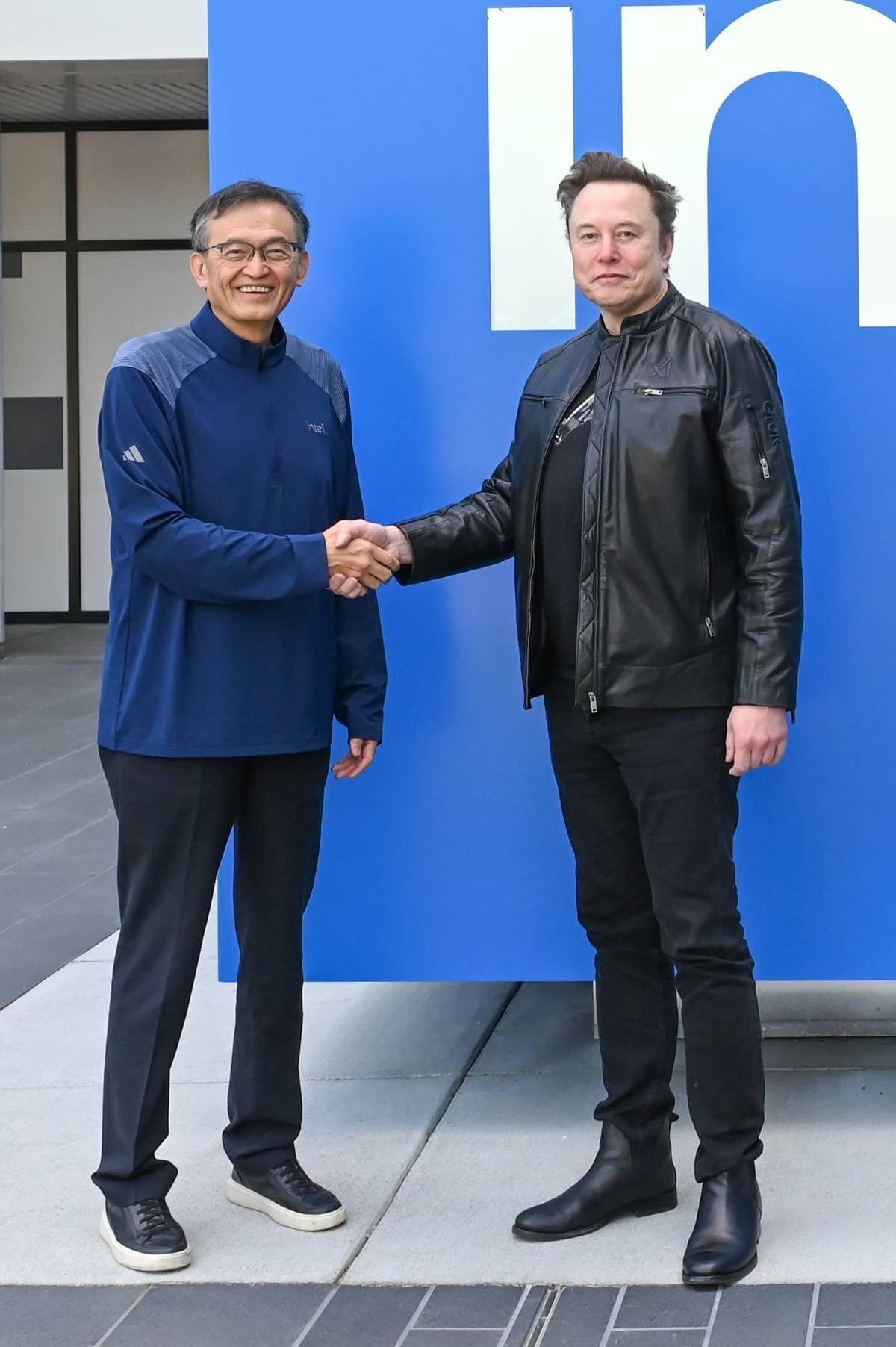
Intel Partners with Tesla and SpaceX on Terafab
Intel announced a partnership with Tesla, SpaceX, and xAI to create the Terafab joint venture, a massive vertically integrated semiconductor facility in Austin, Texas. The fab aims to deliver about 1 terawatt of AI compute per year, supporting billions of...

Inside View: Stewart Crane on Withers’ Technology Priorities and AI in Practice
In a recent Inside View interview, Stewart Crane, global IT director at Withers, outlined the firm’s technology agenda and its pragmatic AI rollout. Withers was an early adopter of Microsoft Copilot, deploying it firm‑wide to build internal AI expertise before...

The True Cost of Doing Nothing
The post argues that the real expense for B2B founders is not the $950 monthly fee for an AI prospecting system, but the revenue lost from missed client conversations. A typical deal worth $25,000 can disappear when prospecting is inconsistent,...

MCPs vs APIs in a Production Enrichment Pipeline
Rick Koleta’s GTM Vault episode shows how Skyp’s enrichment pipeline combines Claude Code’s plan mode with the Apollo API to deliver high‑quality leads at roughly fifty cents each. The build demonstrates that while MCP connectors (Gmail, Stripe, Grain, Slack) provide...

Exploring the Upcoming OSDU® Data Platform Standard Version 1.0
The Open Group OSDU Forum is set to launch OSDU Data Platform Standard Version 1.0, a stable subset of the platform’s capabilities that defines consistent API behavior. The standard provides detailed guidelines for services such as secure access, search, and file...

Wegovy HD Now Available in the U.S.
Novo Nordisk launched Wegovy HD, a 7.2 mg semaglutide injection, across the United States. Clinical data from the Phase III Step Up trial showed an average 21% weight loss under ideal conditions and 19% in real‑world adherence, with nearly one‑third achieving ≥25% loss....

The Campaign That Built 621 Superfans for Under $1,000
An independent artist leveraged a low‑budget "Fandom Funnel" to identify 621 superfans while spending less than $1,000. The effort produced a sold‑out listening‑party show in four hours, generated $1,100 in merchandise sales, and drove a 160% increase in the direct‑email...

7 Steps to Mastering Retrieval-Augmented Generation
Retrieval‑augmented generation (RAG) enhances large language models by coupling them with external knowledge bases, addressing hallucinations and outdated information. The article outlines seven essential steps—from data selection and cleaning, through chunking, embedding, and vector‑store population, to query vectorization, context retrieval,...

PracticePanther Launches PantherAccounting Plus, a Native Trust and Operating Accounting Suite for Law Firms
PracticePanther, part of Paradigm, launched PantherAccounting Plus, a native trust and operating accounting suite fully integrated into its cloud‑based legal practice management platform. The module lets law firms manage client retainers, month‑end reconciliations and year‑end tax reporting without leaving the...

TNO155
TNO155, also known as batoprotafib, is an oral, allosteric SHP2 inhibitor that stabilizes the phosphatase in its inactive conformation. Developed by Novartis in Cambridge, MA, it emerged from a 1.5 million‑compound high‑throughput screen combined with structure‑based drug design, becoming the first...

Major Outage Cripples Russian Banking Apps and Metro Payments Nationwide
A widespread technical failure on April 3 crippled the mobile and ATM services of Russia’s largest banks, including Sberbank, VTB, Alfa‑Bank, T‑Bank and Gazprombank. Customers across major regions were unable to make card payments, withdraw cash or access mobile banking for...

Linux's Second-In-Command Turns To New Fuzzing Tools For Uncovering Kernel Bugs
Linux stable kernel maintainer Greg Kroah‑Hartman has introduced a new fuzzing suite called gregkh_clanker_t1000 to hunt for kernel defects. The tool was first exercised on the ksmbd/SMB code and quickly expanded to patches affecting USB, HID, F2FS, LoongArch, Wi‑Fi, LEDs and...

Claude Code Pattern 6: Context Management at Scale
The Claude Code harness introduces a layered context‑management system to keep long‑running AI agents within the model's finite token window, typically around 200,000 tokens. It reserves up to 20,000 tokens for auto‑generated summaries and monitors usage with multiple thresholds that...

Virtual Stages, AI, and the Creator Economy: Cannes Film Market Massively Scales Up Its Innovation Hub
The Cannes Film Market (Marché du Film) is expanding its Innovation Hub for the May 12‑20 edition, adding virtual stages that let filmmakers pitch projects to global buyers without traveling. AI‑driven matchmaking and analytics tools will pair content with the most...

The Key to Building a Personal Brand Is to Talk About It
The post argues that the fastest way to build an unforgettable personal brand is through live speaking, not just more written content. It cites Steven Bartlett’s rise, where relentless speaking engagements generated the bulk of his client pipeline and revenue....

Anthropic's Annualized Revenue Tops OpenAI, Secures Major AI Chip Deal
Anthropic announced that its annualized revenue (ARR) now exceeds $30 billion, overtaking OpenAI’s $25 billion run rate. The surge represents roughly $21 billion of new revenue in just over three months, propelling ARR from about $9 billion at the end of 2025 to a...

Lest We "Off" Ourselves (Cautionary Examples)
Investigative videos reveal that wellness influencers Mark Hyman and Jordan Peterson suffered severe sepsis after undergoing experimental stem‑cell and regenerative‑medicine procedures at Dr. Adil Khan’s unregulated clinics. The series links spinal injections and intravenous therapies to bacterial infections, highlighting the...

DominKnow Webinar: Build Cohesive Learning Visuals with AI
The dominKnow webinar hosted by Christy Tucker shows how instructional designers can use AI tools like Midjourney and Nano Banana to create cohesive, brand‑aligned visuals for e‑learning courses. A repeatable prompting framework is demonstrated, enabling consistent character styles, matching brand...