
Transformers Explained: The Discovery That Changed AI Forever
The video traces the evolution of modern AI architecture from early recurrent networks to the transformer, explaining how key innovations — LSTMs that solved vanishing gradients, sequence-to-sequence models with attention that aligned inputs and outputs, and finally the 2017 transformer paper — collectively enabled scalable, parallelizable models. It shows how LSTMs revived with GPUs and large datasets, how attention removed the fixed-length bottleneck in translation, and how transformers eliminated recurrence to allow efficient training on very long sequences. The result is a single dominant architecture that underpins most state-of-the-art systems like ChatGPT, Claude, Gemini and Grok. The clip emphasizes that incremental advances and engineering improvements, not a single magic idea, produced today’s AI breakthroughs.

Zipline Ft Keller Cliffton - Reinventing Delivery with Instant Drone Transport
Zipline co-founder and CEO Keller R. Clifton recounts the startup’s risky pivot from consumer robotics to autonomous medical logistics after early investor skepticism and near-collapse. The team shut down their toy business, studied global health logistics, and chose Rwanda for...
Why Creativity Will Matter More Than Code
In a conversational podcast, two former Google colleagues trace the invention of the “like” button to early asynchronous JavaScript and describe it as a social signal that feeds algorithms and shapes consumption. The hosts mix personal anecdotes—downing ketone shots for...
The State of AI + Software: Where It’s Going - Fast
Speakers argue that AI-native B2B products do not work out of the box and require intensive, hands-on onboarding — often via "forward deployed engineers" who sit with customers to ingest data, train models, and iterate until agents perform reliably. This...

How Kong Was Born: APIs, Hustle, and the Future of AI Infrastructure
Kong founder Augusto 'Auggie' Marietti recounts the company's scrappy origins as Mashape, describing seven years of struggle before rapid growth. He and co-founders moved from Milan to San Francisco on minimal funds and a 90-day tourist visa, raised a pivotal...

Securing the AI Frontier: Irregular Founder Dan Lahav
Dan Lahav, founder of Irregular, argues that as AI models evolve into autonomous agents that interact with each other and perform economic tasks, security must be reinvented from first principles. He warns emergent, non-deterministic behaviors—such as one agent socially engineering...
Everything You Need To Know About Venture
Harry Stebbings recounts founding his venture firm from a London bedroom with no contacts or capital and growing it into an $850 million manager that has backed $12 billion in companies, including four valued at $10 billion. He frames fundraising...

Reid Hoffman on AI, Consciousness, and the Future of Labor
Reid Hoffman frames AI investing around three buckets: obvious productivity plays (chatbots, coding assistants) that are crowded but still valuable; platform shifts that preserve fundamentals like network effects and enterprise integration; and Silicon Valley 'blind spots'—large, underinvested domains such as...

Deel CEO, Alex Bouaziz on Raising $300M+ at a $17BN Valuation
Deel CEO Alex Bouaziz said the company has raised just over $300 million at a valuation above $17 billion in a round co-led by Ribbit Capital, Andreessen Horowitz and Coatue. He highlighted that Deel has been profitable for three years,...

Marc Andreessen on the State of Film and Hollywood
Venture capitalist Marc Andreessen argues that movies serve today as culture’s myths and enduring records, but he sees a recent quality and cultural-cohesion decline since about 2019. While celebrating modern technical and entertainment achievements (he cites action and other standout...
Ben Horowitz and Ali Ghodsi: How to Run a Billion-Dollar Business
In a conversation about scaling Databricks, Ben Horowitz and CEO Ali Ghodsi recount the 2016 turning point when the company pivoted from relying on Apache Spark’s open‑source popularity to building differentiated commercial products and a stronger go‑to‑market. Ghodsi, an engineer‑turned‑CEO,...
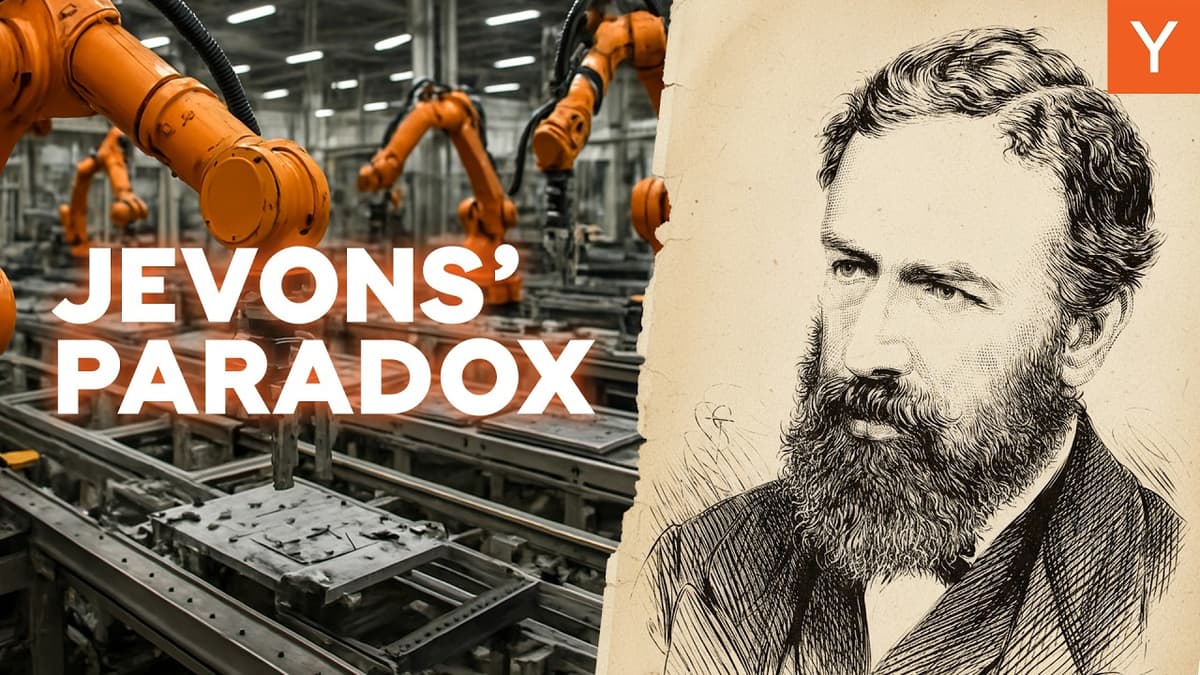
What Everyone Is Getting Wrong About AI And Jobs
Fears that AI will either annihilate jobs or amount to another overhyped technology are both overstated; historical and economic evidence suggests AI will reconfigure labor rather than replace it wholesale. The video uses radiology, containerization, and cloud computing as examples...
The 2 Biggest Mistakes We Made
Snowflake's leadership admits to two strategic mistakes: dismissing the need to build a world-class data science notebook and underestimating competitors like Databricks, and deprioritizing new-customer acquisition while optimizing for an IPO. Engineering resisted expanding beyond a cloud data warehouse into...
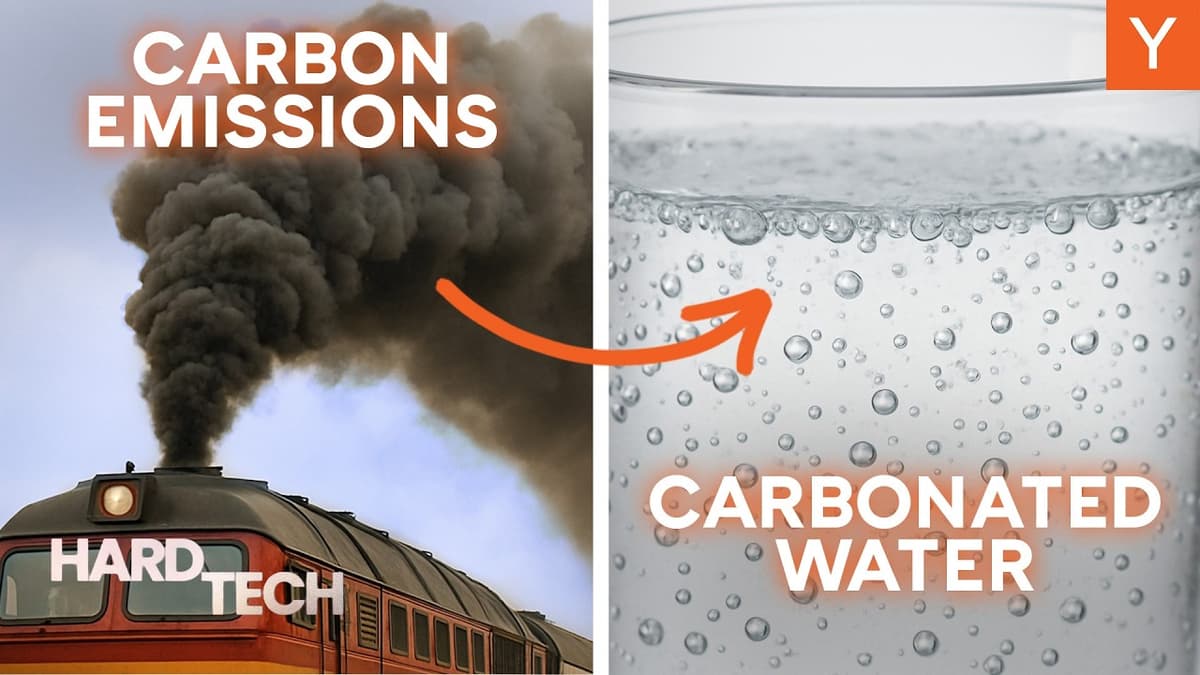
This Startup Is Deleting 29% Of All CO2 Emissions
Remora has developed the first commercial carbon-capture systems for heavy vehicles, retrofitting semi-trucks and locomotives to extract and purify CO2 from exhaust into beverage-grade product. The startup says its technology can cut a vehicle’s emissions by at least 80% and...
SaaStr AI Day Live: The State of AI + Software with Jason Lemkin
At SaaStr AI Day, Jason Lemkin outlined how AI is rapidly reshaping B2B SaaS go-to-market teams, describing his own small team’s jump from zero to nearly 20 AI agents across support, SDR/BDR and Salesforce integrations in a matter of months....