
Kids Saver: Securing AUM in the Great Wealth Transfer
The article highlights the imminent multitrillion‑dollar wealth transfer from Baby Boomers to younger generations and warns that wealth managers risk losing assets under management (AUM) if they fail to engage heirs. Kidbrooke proposes a "kids saver" framework that turns a simple deposit account into a goal‑based, interactive planning tool. The platform models contributions, risk, and time horizons in real time, giving advisers visual analytics and families educational insights. By embedding this low‑friction solution, firms can nurture early relationships and protect future AUM.

Lyn Alden Tips Bitcoin Outperforming Gold over Next ‘Two to Three Years’
Lyn Alden, a macroeconomist, predicts Bitcoin will outperform gold through 2029, despite gold’s recent all‑time high and euphoric sentiment. She characterizes gold’s rally as not a bubble and notes Bitcoin’s price is down 44% from its October peak, facing extreme...

The Debt Snowball Vs. Avalanche: Which One Actually Gets You Out of Credit Card Debt Faster?
The debt snowball and debt avalanche are two common repayment strategies for credit‑card debt. Snowball focuses on eliminating the smallest balances first, while avalanche targets the highest‑interest balances. The article illustrates both methods with a $20,000 three‑card example, showing that...

ETF Roundup: 3 New ETF Launches in February to Watch
February 2026 saw over 50 new ETF launches, highlighted by three niche funds. VanEck introduced the Communication Services TruSector ETF (TRUC) with a 14‑basis‑point fee, actively selecting leading media and telecom firms. ALPS launched the SMR, Nuclear & Technology ETF...

Chris Davis on Navigating AI & Index Concentration
Chris Davis warned advisors that soaring valuations and mega‑cap concentration mask hidden risk, urging a shift from short‑term market calls to durable working assumptions. He outlined a five‑category AI framework—platform winners, enablers, users, indifferent firms, and the walking dead—to guide...
The Suze Orman Rule You Should Probably Break
Suze Orman advises cutting up all credit cards when you’re in debt to force reliance on cash and stop accruing high‑interest balances. The article argues that this blanket rule can backfire, as eliminating cards may damage credit scores, erase rewards,...

Leverage Broadcom Guidance Beat and Nvidia OpenAI Strategy
Broadcom posted a fiscal Q1 earnings beat with $2.05 EPS and $19.31 billion revenue, then raised Q2 guidance to about $22 billion, surpassing analyst forecasts. Nvidia announced a $30 billion investment in OpenAI, likely its last pre‑IPO funding, reinforcing its hardware dominance in...

IRS Proposes Rules for Electronic 1099-A Statements
The IRS and Treasury have issued proposed regulations allowing cryptocurrency brokers to deliver the new Form 1099‑DA electronically starting Jan. 1, 2027. Brokers would need customer consent and must meet enhanced electronic notice and access requirements, but they would no longer have to...

How Vibe Coding Is Filling the White Spaces in Advisor Tech Stacks
Vibe coding lets financial advisors generate custom applications by prompting AI models, bypassing traditional programming. Tim Witham’s $100‑per‑month Claude subscription produced a portfolio‑analysis tool that replaces YCharts and adds thousands of dollars in value. Advisors like Shaun Melby are building...

What Is the Credit for Other Dependents?
The Credit for Other Dependents (ODC) provides a $500 nonrefundable tax credit for each qualifying dependent age 17 or older, including adult children, elderly parents, and other relatives who meet IRS support and residency tests. The credit is claimed on...

What the Iran War Market Turmoil Means for Those Nearing Retirement
The escalating conflict in Iran has jolted markets, prompting a sharp S&P 500 swing and renewed inflation worries. Financial advisors warn that while long‑term investors can stay the course, those approaching retirement should treat the volatility as a signal to review...

SEC Is Pushing Back Against New Wave of High-Leverage ETF Plans
The U.S. Securities and Exchange Commission has warned leveraged‑ETF issuers to pause the effective dates of new high‑leverage funds, citing concerns over compliance with Rule 18f‑4. The agency’s Division of Investment Management used a brief group call to signal that proposed...

3 Solar Stocks to Watch Amid Policy and Tariff Headwinds
U.S. solar demand stays robust as utilities, businesses and households adopt solar‑plus‑storage solutions, but the sector now faces near‑term policy and tariff headwinds. The One Big Beautiful Bill Act curtails Inflation Reduction Act tax credits and adds Foreign Entity of Concern rules, creating procurement...

Garry Marr: Why Your House Is Still Costing You, Even if You've Paid It Off
Garry Marr argues that a paid‑off Canadian home still costs money because the equity tied up could earn a risk‑free return, while owners also face maintenance, taxes and opportunity costs. The Greater Toronto Area saw average resale prices fall 4.7%...

How Is the Estate Taxed when the Last Spouse Dies?
When a Canadian spouse dies, most assets transfer to the surviving partner through a spousal rollover, deferring capital‑gain tax until the survivor either sells the assets or dies. The deceased’s original cost base carries over, so no gain is realized...

Bear of the Day: Autohome (ATHM)
Autohome (ATHM) is confronting structural headwinds as its revenue has slipped roughly 30% from the 2020 peak and analyst earnings forecasts continue to be trimmed. The slowdown in China’s automotive market and heightened competition among online auto platforms have eroded...

Buy These 3 Top-Ranked Putnam Mutual Funds for Steady Gains
Putnam Investments, now owned by Franklin Resources after a 2024 acquisition, manages roughly $162.3 billion in assets. The firm’s three Zacks‑ranked mutual funds—Putnam U.S. Research (PLJMX), Strategic Intermediate Municipal Fund (PPNAX) and Core Bond Fund (PTREX)—have posted strong three‑year returns of...

Bond Traders See Increasing Chance Of No Fed Cuts This Year
Bond options traders are increasingly betting the Federal Reserve will not cut rates this year. The probability of a no‑cut scenario rose to 25% by Wednesday, up from 17% before the Iran‑Israel conflict escalated. Higher oil prices from the Middle‑East...

From Tesla to Your 401(k): How to Invest in the Elon Musk Stock Without Wrecking Your Retirement
Tesla’s meteoric rise has sparked FOMO, but piling into the stock isn’t prudent for retirement savers. A diversified, long‑term portfolio—often an S&P 500 index fund—already provides indirect exposure to Musk’s companies. Investors should audit their holdings, cap any single‑stock position (commonly...

Trump Says ‘401(k)s Are Way up’ — but Workers Are Tapping Them at Record Rates
President Donald Trump highlighted that 401(k) balances have risen, a claim supported by Fidelity data showing an 11% jump to $146,400 in 2025. However, the same year saw record‑high hardship withdrawals and a rise in 401(k) loans, signaling underlying financial...

Ohio Expensing Conformity Will Boost Innovation and Competitiveness
Ohio’s Senate Bill 9, pending Governor DeWine’s signature, will update the state’s static conformity date to align with federal tax changes enacted after March 7, 2025, including the One Big Beautiful Bill Act’s restoration of immediate first‑year expensing for research and experimentation (R&E) under Section 174. Because...

The Sneaky Social Security Scams Targeting Retirees in 2026 — And the One Rule That Keeps You Safe
In 2026, scammers are increasingly targeting retirees by masquerading as Social Security Administration representatives through phone calls, texts, letters, and social media. They use caller ID spoofing and official‑looking logos to pressure victims into paying fees or revealing personal data....

The Average 401(k) Balance Grew 11% in 2025: Why This Rally Is Lowering Default Risks for Homeowners
Fidelity’s analysis of nearly 25 million 401(k) accounts shows the average balance jumped 11 percent in 2025 to $146,100, marking a third straight year of double‑digit growth. The median balance stays modest at $34,400, but accounts with $1 million or more rose to...

The Best Playbook for Investing During a War Is Usually Doing Nothing
The New York Times argues that the best response to the Iran‑Israel conflict‑driven market turbulence is to stay the course. While short‑term speculation in energy, defense stocks, gold or Treasuries can appear tempting, academic research shows that most investors achieve better...

Tax Strategies Every High-Net-Worth Advisor Should Know
In a recent LPL Financial and VettaFi webcast, experts urged advisors to adopt a "tax‑first" mindset, shifting from reactive compliance to proactive, multi‑year planning. They highlighted that capital‑gains and income taxes now outweigh estate‑tax concerns for many high‑net‑worth families. The...

2 Communication Stocks Likely to Gain From Strong Industry Prospects
The Zacks Communication‑Infrastructure outlook highlights a 60.2% one‑year price gain, driven by accelerating fiber densification and 5G rollouts. While high capex, raw‑material inflation and geopolitical tensions pose risks, the sector’s EV/EBITDA of 4.23× remains far below broader market multiples. IHS...

3 Oil & Gas Drilling Stocks Backed by Strong 2026 EPS Growth
Zacks’ latest industry overview highlights three oil‑and‑gas drilling companies—Noble Corporation, Nabors Industries and Transocean—with projected 2026 EPS growth ranging from 48.6% to 400%. Despite a bearish Zacks Industry Rank and a 74% drop in 2026 earnings estimates, the sector has...
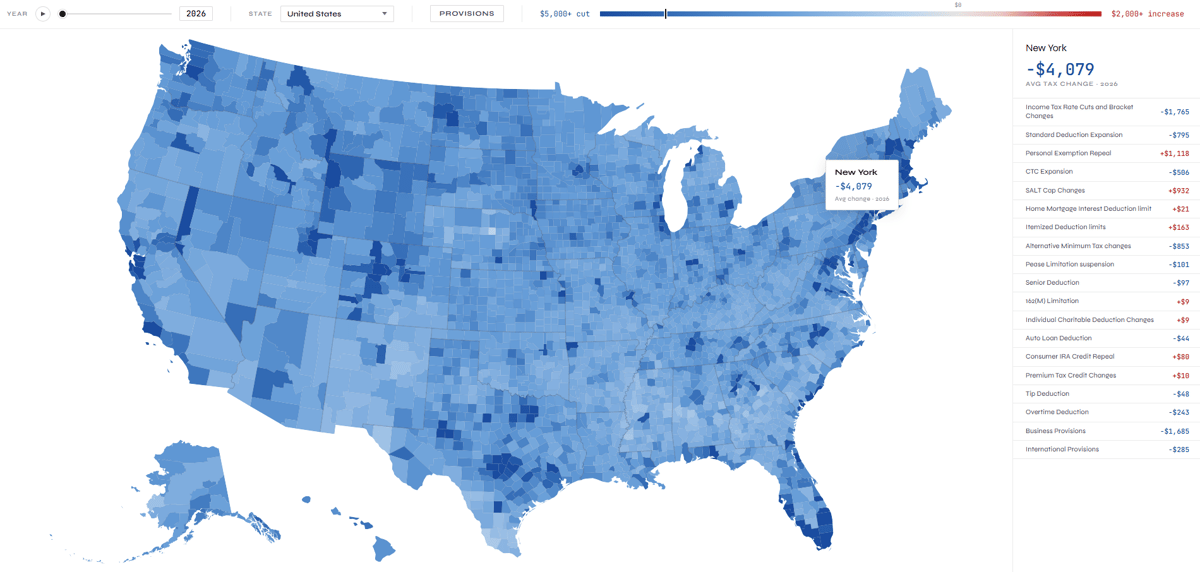
Where OBBBA Delivers the Biggest Tax Cuts
The One Big Beautiful Bill Act (OBBBA) is projected to deliver an average $3,813 tax cut per filer in 2026, with the bulk coming from individual deductions and business provisions. County‑level analysis by the Tax Foundation shows stark geographic variation,...
Sanders, Khanna Introduce Wealth Tax Bill Targeting Billionaires
Senators Bernie Sanders and Rep. Ro Khanna introduced the Make Billionaires Pay Their Fair Share Act, proposing a 5 percent annual wealth tax on the 938 U.S. billionaires who hold $8.2 trillion collectively. The tax would raise about $4.4 trillion, funding $3,000 direct payments...

U.S.-Iran Attacks, Trump Tariffs: Where Should Investors Draw The Line?
U.S.–Iran hostilities and renewed Trump tariff threats pushed the S&P 500, Nasdaq and Dow below their 50‑day moving averages, deepening market volatility. The IBD Breakout Opportunities ETF (BOUT) gapped down, testing its 10‑week average, while individual breakout candidates like Ubiquiti, Motorola...

Don’t “Avoid Probate”: Reframing Estate Planning Success Around Managing (Not Escaping) The Probate Process
Estate planners often market "avoiding probate" as the ultimate goal, but probate is a statutory process that provides essential legal authority and asset verification. Even well‑structured plans can encounter probate due to post‑plan asset acquisitions, digital holdings, or out‑of‑state property....

Mortgage Renewal Headwinds Near a ‘Turning Point’ for Pandemic Buyers, Report Says
TD Bank’s latest report signals that the mortgage renewal shock for pandemic‑era borrowers is easing. The household debt‑service ratio dropped to 14.6% in Q3 2025, aided by nearly eight‑percent disposable‑income growth in 2024 and 4.7% in 2025. Homeowners are lengthening amortizations,...

DHS: Dividend ETF With Balanced Portfolio, But Average Results
The WisdomTree U.S. High Dividend Fund (DHS) holds 322 dividend‑paying U.S. stocks and delivers a 3.43% yield. Its portfolio is weighted toward financials, consumer staples, healthcare and energy while underweighting technology. Compared with the Russell 3000 benchmark, DHS trails in total...

Rethinking Biotech’s Valley of Death as Federal Grants and Family Offices Step In
Federal budget approvals for 2026 dramatically increase nondilutive capital for biotech, raising NIH funding to $49 billion and expanding programs like CDMRP and ARPA‑H. Seed‑stage companies are responding, with 38 % planning to rely on grants and other non‑equity sources. Simultaneously, mission‑driven...

What Are SAFE Investments? (Simple Agreement for Future Equity)
The Simple Agreement for Future Equity (SAFE) lets early‑stage investors fund startups now and receive equity later, typically when a priced round occurs. Introduced by Y Combinator in 2013, SAFEs replace costly, time‑intensive convertible notes with a streamlined contract that omits...

Apollo's Zito Sees Private Credit Pain Lasting Up To 18 Months
Apollo Global Management co‑president John Zito warned that the private‑credit market’s turbulence could persist for the next 12 to 18 months. While acknowledging a wave of fund withdrawals, he downplayed them as a systemic problem. Zito highlighted a widespread misunderstanding...

Ares CEO Says UBS Call on 15% Private Debt Default ‘Absolutely Wrong’
Ares Management CEO Mike Arougheti dismissed UBS analysts' worst‑case projection that private‑credit defaults could hit 15%, labeling it irresponsible. UBS warned the scenario could materialize if artificial‑intelligence disruption spikes borrower distress, but otherwise expects defaults to rise about 5% before...

How Advisors Can Better Serve Neurodivergent Clients
Financial advisors are increasingly recognizing that neurodivergent clients—those with autism, ADHD, dyslexia and related conditions—require communication and process adaptations that differ from traditional models. Practitioners like Korinne Sugasawara, who is neurodivergent herself, have built firms around explicit affirmations and sensory‑friendly...

Equity ETFs Added $110 Billion in February – See the Leading ETFs
Equity exchange‑traded funds recorded $110 billion of net inflows in February, according to FactSet data. Vanguard’s S&P 500 ETF (VOO) topped the list with $17 billion, followed by Invesco’s equal‑weight S&P 500 ETF (RSP) at $5.6 billion. Other top performers included Vanguard’s international (VXUS) and...

Direct Indexing Is Not New, but It Has Become Newly Essential
Direct indexing, once a niche tool for the ultra‑wealthy, is now becoming a core component of portfolio construction thanks to advances in technology and lower operational costs. Continuous monitoring enables advisors to make incremental, tax‑loss harvesting adjustments throughout the year...

How Far Does $100,000 Go in U.S. Cities? 2026 Study
SmartAsset’s 2026 study evaluates the real purchasing power of a $100,000 salary across 69 large U.S. cities after accounting for federal, state, local taxes and cost‑of‑living premiums. The average adjusted value rose modestly from $71,669 to $72,444, indicating a slight...

Fidelity Rolls Out Private Markets Model Portfolios with Alts Education for Advisors
Fidelity introduced two new model‑portfolio suites that embed private equity, private credit and private real‑estate assets, targeting RIAs and broker‑dealers. The portfolios, available through Envestnet, require a $100,000 minimum and combine active, passive and ETF strategies with third‑party managers. Alongside...

The Guardian View on Rachel Reeves’s Spring Statement: Stability Cannot Mean Sacrificing Living Standards | Editorial
Rachel Reeves’s spring statement reaffirmed a commitment to fiscal discipline, citing OBR projections that borrowing will fall and fiscal headroom has increased. The editorial warns that the UK’s exposure to soaring oil and gas prices from the Gulf conflict could...

Stocks in Turmoil, but Attractive Setups Emerge (META, GOOGL, AMZN)
Market volatility driven by Middle‑East tensions has pushed equities lower across regions, but the pullback has created attractive entry points for high‑quality mega‑cap tech. The author highlights Alphabet, Meta Platforms, and Amazon as the most compelling opportunities within the Magnificent...

Stop Payment Fraud Before It Starts
Automated bank account verification protects AP departments from payment fraud. Fraudsters now use AI‑generated emails and deep‑fake audio to hijack bank‑change requests, leading to costly losses. Real‑time verification confirms account ownership, status, and matches supplier data while creating an immutable...

Private Debt: Are We Seeing Cracks or Is There Still Opportunity?
The 2025 bankruptcies of subprime auto lender Tricolor Holdings and auto‑parts maker First Brands sparked heightened regulatory scrutiny of private credit, raising fears of systemic fraud. However, senior‑secured, first‑lien loans—backed by tangible collateral—remained largely insulated from the fallout, delivering strong...

How The Tax Code Got So Complicated
The U.S. tax code has ballooned to over 70,000 pages since the 1913 16th Amendment, growing through countless piecemeal credits, deductions, and temporary measures. This complexity forces Americans to spend an estimated 7.1 billion hours and $388 billion in lost productivity each...

Robinhood Moves Into Wealth Management with Advisor Network Launch
Robinhood announced the launch of its Advisor Network, a marketplace that links eligible high‑net‑worth users with independent Registered Investment Advisors. The service targets investors holding at least $250,000 and requires participating advisory firms to manage a minimum of $500 million in...

Northern Trust: Illiquidity Is a Feature Not a Bug
Northern Trust’s Lynne Kostakis argues that illiquidity in private‑market investments is intentional, not a flaw, and can enhance long‑term returns. She outlines the investor profile best suited for such assets, emphasizing multi‑year horizons, high risk tolerance, and diversification. The firm...

Poor Coordination Can Cost Couples an Average $14,000 in Retirement Wealth, Research Finds
New research in the American Economic Review shows couples who fail to coordinate retirement contributions lose significant wealth. By directing contributions to the spouse with the highest employer match, an average couple could add $750 per year and avoid a...