
Is Spring Fever Compelling You to Refresh Your Portfolio? 3 Ways You Could Be Acting Impulsively
Spring’s sense of renewal often tempts investors to “refresh” portfolios, but the season can also amplify behavioral traps. Overconfidence, recency bias, herding, and loss aversion may push investors toward concentrated bets, chase hot themes, or sell winners prematurely. The article outlines three specific pitfalls and stresses that disciplined, long‑term financial planning should guide any portfolio adjustments. It recommends concrete safeguards—written allocation rules, scheduled rebalancing, and liquidity buffers—to keep emotions from dictating trades.

Seniors, Choose Wisely. The Best and Worst States for Retirement Could Not Be More Different
WalletHub’s 2026 Retirement Rankings evaluated all 50 states across 46 metrics, weighing affordability, quality of life, and health care. Wyoming, Florida, and South Dakota emerged as the top three states, each scoring above 58 points thanks to low taxes, robust...

Passive Income Ideas for More Cash Flow
The article outlines four realistic passive‑income streams—real‑estate rentals, blogging with affiliate marketing, downloadable digital products, and online courses—highlighting how each can evolve from active setup to low‑maintenance cash flow. It notes that 53% of Americans now have at least one...

Mini Bags Are in Fashion – Are They a Good Investment or Just a Fad?
Hermès’ leather‑goods division posted a 9.4% revenue increase while its ready‑to‑wear line stayed flat, underscoring the brand’s reliance on iconic handbags. Demand for Birkin and Kelly mini bags remains strong, yet secondary‑market premiums have slipped from their 2022 highs as...

Zerodha’s Nithin Kamath Flags ULIP, Endowment Traps; Says Health Policies Remain Complex
Nithin Kamath of Zerodha warned Indian investors that they continue to buy Unit‑Linked Insurance Plans (ULIPs) and traditional endowment policies despite widespread expert criticism. He emphasized that information is now readily available through online comparisons and AI tools, yet sales of...

Should You Pay Your Tax Instalment Payments?
Canadian taxpayers who owe $3,000 CAD (≈$2,200 USD) or more in two consecutive years must make quarterly income‑tax instalments, with Québec’s threshold lower at $1,800 CAD (≈$1,300 USD) because of its dual filing system. The CRA bases March and June instalments on the tax...

Already Have Life Insurance? Why an ILIT May Be Worth It
Estate planning now faces state-level estate taxes, especially in New York where the exemption is $7.35 million and a 5% overage triggers tax on the entire estate. Life‑insurance death benefits are generally includable in the decedent’s gross estate under IRC 2042, potentially...

FRDM Is A Strategy On EMs That Almost Doubles The Return
The Freedom 100 Emerging Markets ETF (FRDM) uses a semi‑quantitative, freedom‑weighted selection process that yields a 79% active‑share portfolio versus the MSCI EM benchmark. This concentrated approach has delivered returns at least 1.64 times higher than the top passive EM...

Hamilton ETFs Launches Two New YIELD MAXIMIZER™ ETFs
Hamilton Capital Partners announced the launch of two Yield Maximizer™ ETFs—CMAX, a Canadian equity fund, and IMAX, an international equity fund—both designed to deliver monthly income through covered‑call strategies. The initial unit offerings have closed and the funds will begin...

Down Payment for Investment Property: How Much and Requirements
Investment property purchases typically require larger down payments than primary homes, with lenders often demanding 15%‑25% of the purchase price. Single‑unit rentals may qualify with as little as 15%, but 20% or more is common to secure better rates and...

Small-Cap Awakening Sparks This Momentum ETF
Invesco’s S&P SmallCap Momentum ETF (XSMO) offers exposure to small‑cap stocks with strong price momentum, tracking the S&P SmallCap 600 Momentum Index. The $2.77 billion fund holds 114 stocks, weighting each under 3.9% and rebalancing semi‑annually with a 20% buffer to...

Scotland’s ‘Sure Thing’ an Investment Lesson - Nick Stewart
In 1698 Scotland poured roughly £400,000—about NZ$28 billion (≈US$16.8 billion) or £12 billion (≈US$15 billion)—into the Darien colony, a venture that collapsed with 2,000 deaths and total loss of capital. The failure forced the Scottish Parliament to accept the 1707 Acts of Union, receiving...

S&P Persistence Scorecard Reveals Universal Struggles for Active Strategies
The S&P Persistence Scorecard shows that fewer than 1 % of U.S. equity mutual funds and ETFs remain in the top quartile for five consecutive years, underscoring the rarity of durable outperformance. Even top‑tier active managers experience mean‑reverting returns, with mid‑cap...

Exchange 2026: How ETFs Are Democratizing the CLO Market
Collateralized loan obligations (CLOs), a roughly $1 trillion market, are moving beyond institutional walls thanks to exchange‑traded funds. Tim Wickstrom of Reckoner Capital highlighted that CLO ETFs provide retail investors with floating‑rate exposure, higher yield potential and minimal duration risk. The...

Tax Benefits for Students: Rules, Credits and Deductions
The article outlines the main federal education tax breaks—American Opportunity Tax Credit (AOTC), Lifetime Learning Credit (LLC), student‑loan‑interest deduction, and tax‑advantaged savings vehicles such as 529 and Coverdell accounts. AOTC can deliver up to $2,500 per student with a refundable...

Private Equity Outlook: What Matters for Long-Term Investors
Vanguard’s private‑equity outlook emphasizes disciplined manager selection, diversification, and cost awareness as the keys to unlocking high‑single‑digit net returns over the next decade. While elevated borrowing costs and a slowdown in exits create short‑term headwinds, secondary‑market activity is rising, offering...

3 Solid Mutual Funds to Grab on Surge Semiconductor Sales
Semiconductor sales surged in Q1 2026, reaching $298.5 billion—a 25% quarter‑over‑quarter gain and a 79% year‑over‑year jump to $99.5 billion in March. The AI boom is driving unprecedented demand across logic, memory, automotive and emerging 6G and IoT applications, pushing industry revenue...
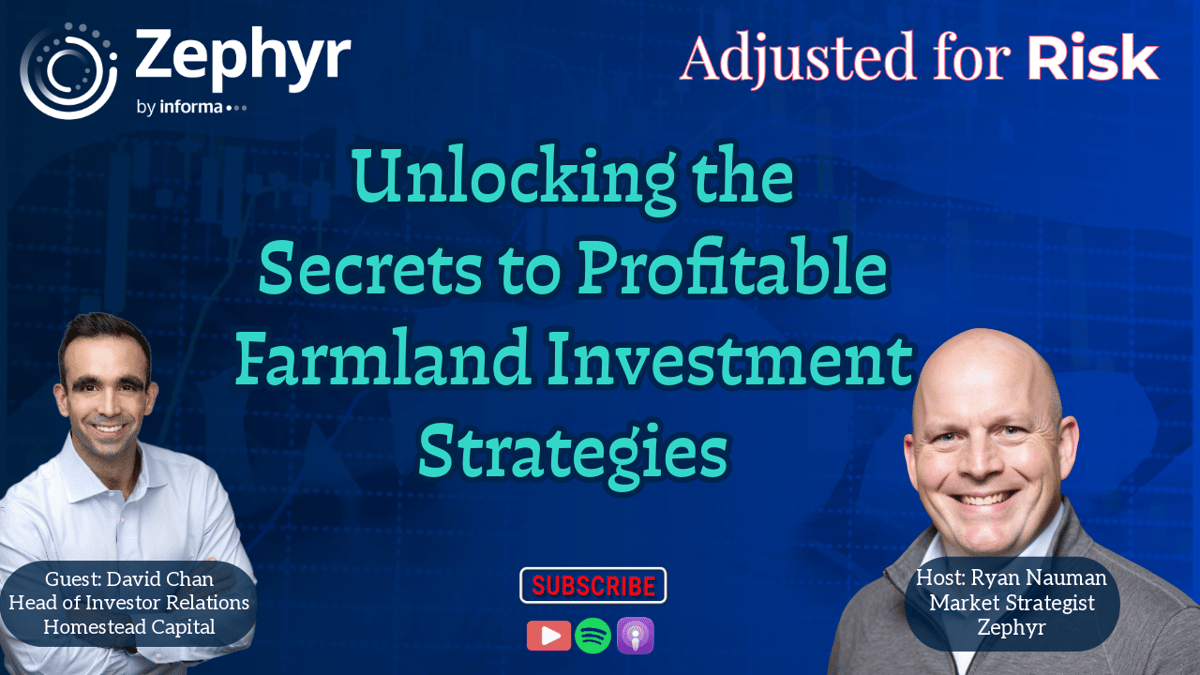
Zephyr's Adjusted for Risk: Unlocking the Secrets to Profitable Farmland Investment Strategies
Homestead Capital’s head of investor relations, David Chan, discussed the firm’s dual approach to U.S. farmland investing—direct equity ownership and a newer credit line that lends to farmers. The podcast highlighted key return drivers such as durable lease income, land...

Hostile Takeover: Examples and Strategies for Investors
Hostile takeovers let acquirers seize control of a target without board approval, typically by offering shareholders a premium of 20%‑50% above market. Strategies include tender offers, proxy fights, bear hugs, toehold accumulation, and activist‑investor tactics, each with distinct cost and...

Why Unconstrained Bonds Matter Now for Asia’s Wealth Investors
BNP Paribas Asset Management’s global absolute‑return bond strategy is positioned as a core, evergreen solution for Asian wealth investors facing heightened market volatility and geopolitical uncertainty. The unconstrained mandate targets a soft 12‑month drawdown ceiling of ‑2.5 % while seeking positive returns in...

Pathway to Independence: Why a Wealth Manager Covering Taiwan Chose External Asset Management
Wealth manager Don Toh left major private banks to join Swiss‑Asia Financial Services as an external asset manager (EAM) in Singapore. He cites the need for unbiased, client‑first advice that traditional banks struggle to provide. Swiss‑Asia, licensed by the MAS,...

When Do You Need a Corporate Trustee: Uses, Costs and Examples
A corporate trustee is a bank or trust company that administers a trust, offering professional expertise, regulatory oversight, and long‑term continuity. Unlike family members, these institutions charge annual fees—typically 1% to 2% of assets, with minimums around $3,500—while providing investment,...

The Key for Improving Access to Alternatives: Managed Models Within a Centralized Trading System
The article argues that managed models embedded in a centralized trading system are the key to unlocking broader access to alternative investments for financial advisors. By consolidating trade execution, compliance, and account management, platforms can integrate alternatives into model portfolios...

States Crack Down on Tax Break for Wealthy Investors
The One Big Beautiful Bill Act expanded the federal qualified small‑business stock (QSBS) exemption to $15 million and raised the asset threshold to $75 million. Maine and Oregon have now decoupled from the federal exemption, imposing state income tax on QSBS gains...

Fees for Financial Advice Are Climbing. A New Study Finds It’s Worth the Cost
New research from the TIAA Institute confirms that households employing financial advisors hold an average net worth of $800,000, more than double the $388,000 of those who go solo, and exhibit stronger saving habits. A separate Envestnet MoneyGuide study shows...

Worried Inflation Is Back? Why Active Fixed Income Wins
March’s CPI rose 0.9% month‑over‑month, lifting annual inflation to 3.3% as energy costs surged 10.9% amid Middle‑East tensions. The unexpected stickiness may force the Federal Reserve to reconsider its rate‑cut path, creating headwinds for traditional bond portfolios. Active fixed‑income ETFs,...

With Fixed Income, It’s Time to Think About Outcomes
Passive bond ETFs tied to the Bloomberg U.S. Aggregate Index have long been the go‑to for risk‑averse investors, but their static composition leaves out key segments such as floating‑rate debt and non‑agency credits. Janus Henderson argues that the index’s heavy...

How to Add Gold to a Retirement Portfolio Using the Bucket Strategy
The three‑bucket retirement strategy divides assets into short‑term cash, medium‑term income, and long‑term growth holdings. Adding gold is recommended for the third bucket, where it can act as an inflation hedge and diversify against stock volatility. Experts advise beginners to...

Buy 3 PIMCO Mutual Funds Poised for Excellent Returns
Pacific Investment Management Company (PIMCO), with $2.27 trillion in assets under management and over 3,200 employees, has three mutual funds that Zacks rates #1 Strong Buy. The PIMCO RAE US Small (PMJAX) posted a 15.7% three‑year annualized return, focusing on U.S....

Mercer Says DC Plan Innovations Could Accelerate Retirement Timelines for Canadians
Mercer Canada’s 2026 Retirement Readiness Barometer finds that flexible defined‑contribution (DC) plans, greater exposure to alternative assets, and Variable Payment Life Annuities (VPLAs) can move a typical 30‑year‑old’s retirement readiness from age 69 to 66. In the study, a worker...

Want to Make Better Investment Decisions? Use This 8-Question Checklist, From a Financial Planner
Financial planner advocates swapping certainty for probability in investment decisions. Citing Kahneman’s System 1/System 2 model, the article shows how biases like confirmation, anchoring and overconfidence lead to fragile choices. By assigning odds to multiple scenarios, investors can better manage risk and...

Wealthy Homeowners Want Frictionless Ways to Tap Into Home Equity — and the Market Is Providing Them
Homeowners in the mass‑affluent segment sit on a historic $35 trillion of equity, yet traditional loans burden them with lengthy underwriting and income verification. Recent data show the average mortgaged homeowner holds about $299,000 in equity, and nearly half of mortgaged...

‘The S&P 500 Seems to Be Doing Particularly Well’: I’m 66. Is This a Good Time to Invest $100,000 in...
A 66‑year‑old investor with a debt‑free home asks if $100,000 should be placed in S&P 500 index funds for a 5‑7‑year horizon. She already holds 50% of her portfolio in the index and worries about a potential 40% market decline, which...

Protecting and Growing Your Wealth: The Essentials You Can’t Ignore
The article outlines a step‑by‑step framework for protecting and growing personal wealth, beginning with a solid financial foundation of budgeting, emergency savings, and debt reduction. It then details preservation tactics such as legal structures, insurance, and tax‑efficient strategies, followed by...

What Happens to an RESP when a Family Moves to the U.S.?
A Canadian family moved from Vancouver to California, leaving their child Rhodes as the RESP beneficiary. Because Rhodes is now a U.S. resident, any new contributions to the RESP no longer qualify for the Canada Education Savings Grant (CESG). Existing...

Do You Actually Need a Financial Advisor in Your 30s and 40s?
The article explains that hiring a financial advisor in your 30s or 40s depends more on financial complexity than age. Simple, steady incomes and long investment horizons often don’t justify the cost, while major life changes, rapid income growth, or...

Rob Gardner: Sir David Attenborough and the 100-Year Client
Sir David Attenborough’s 100th birthday underscores the need for truly long‑term financial planning. Advisors must now factor physical climate and nature risks—flooding, drought, ecosystem decline—into retirement and investment strategies. The UK Environment Agency flags over six million properties at flood risk,...

An Income Tax Play for Professional Athletes
The article examines how state "jock taxes" hit professional athletes when they change teams via free agency or trades. It outlines the historical rise of these taxes, from California’s 1991 lawsuit to Washington’s 9.9% millionaire levy on a single duty...

No AI, Poor Returns Drive Indian Investors to Foreign Markets
Indian investors, traditionally concentrated in domestic equities, are increasingly allocating capital to overseas markets. A prolonged period of weaker relative returns at home, combined with a lack of AI-driven investment tools, has eroded confidence in local assets. The shift follows...

Even if You’re Not Cash-Rich, Your Home Equity Could Help Your Kid Buy a House
Parents are increasingly turning to home‑equity products to help their children afford a first home, with 74% of parents saying they plan or are already budgeting for such assistance. The main tools are home‑equity loans, HELOCs, and cash‑out refinances, each...
PWRD: Solving the $5 Trillion Power Constraint
The TCW Transform Systems ETF (PWRD) has attracted over $1.5 billion in assets by targeting the United States’ aging power‑grid infrastructure rather than speculative clean‑tech startups. The fund posted a 20.7% year‑to‑date gain and saw $332.75 million of net inflows, reflecting investor...

These 3 Dividend Paying Tech Stocks Offer AI Exposure
Technology investors seeking income can now look to three AI‑linked dividend payers: Taiwan Semiconductor (TSM), Broadcom (AVGO) and NVIDIA (NVDA). TSM offers a 0.7% yield with a 15.4% five‑year dividend growth rate, while Broadcom provides a 0.6% yield and 13.1%...

Mark Convinced His Mom to Seek Financial Advice. What Are Important Questions to Ask?
Mark helped his 58‑year‑old mother schedule a meeting with a financial adviser to discuss retiring this year. The couple, who own a paid‑off home, earn $81,400 USD (CAD $110k) from the mother’s job, have about $185,000 USD (CAD $250k) in ETF savings, and will...

Five Smart Things You Can Do with Your Tax Refund
Millions of Americans receive a tax refund each spring, yet 90% spend it within eleven days. Financial advisors argue that the week after the refund arrives is a high‑leverage moment to make strategic moves. They recommend five smart options: bolstering...

Why the DOE’s Newest Initiative Demands a Full-Spectrum Nuclear ETF
The U.S. Department of Energy unveiled the Nuclear Fuel DPA Consortium 3‑33, a Defense Production Act‑backed program that will secure three domestic suppliers for key nuclear fuel stages by 2033. The initiative aims to create a cost‑competitive, home‑grown supply chain...

Iran War Market Jitters Offer Silver Lining for Investors
The Iran‑war‑induced market swing has been modest compared with past crises, with the S&P 500 dropping about 9% from its late‑January peak before climbing to fresh all‑time highs. The VIX spiked to its highest level since April 2025, underscoring heightened investor anxiety....

Income, Repriced: Where Advisors Are Looking Now
Institutional investors are increasingly allocating capital to private real‑estate assets as a source of income tied to tangible constraints, notably Canada’s chronic housing shortage. Pier 4, a Canadian multifamily trust, is positioning itself to capture rental demand in secondary markets where...

Advisors Eye Gaps in 'Financially Solo' Clients as Nearly Half of Americans Are Single
Nearly half of American adults are single, prompting advisors to craft plans for “financially solo” clients. Ameriprise’s study of 3,000 singles—average age 65 with $700,000 in assets—found 75% expect to stay unpartnered long term. While 54% of solo women aim...

Goldman Sachs’ 2025 Retirement Investing Report: 3 Takeaways
Goldman Sachs’ Retirement Survey & Insights Report 2025 reveals that retirement costs have surged to 29% of household income, up from 21% in 2000, with homeownership now consuming 51% of earnings. Inflation-driven expenses have pushed 58% of respondents to fear...

Defensive and Record-High Cash-Like Funds Top Sales as Investors Boost ISA Contributions
Investors in the UK shifted toward defensive, cash‑like vehicles in March, with short‑term money‑market funds pulling a record £2 bn (~$2.5 bn). Mixed‑asset and absolute‑return funds also saw strong inflows, while equity and bond funds recorded net outflows of £1.3 bn and £97 m...