Today's AI Pulse
Odyssey lands $310M Series B, valued at $1.45B
Odyssey announced a $310 million Series B round that values the AI lab at $1.45 billion. The round was led by Natural Capital and included backers such as Amazon, AMD Ventures, GV, EQT and IQT. In parallel, Odyssey struck a preferred‑cloud deal with AWS to use Trainium silicon for large‑scale model training.
Also developing:

Art Schools Grapple with AI
Canadian art and design schools are cautiously adopting artificial intelligence, crafting ethical guidelines while confronting the risk that AI could displace entry‑level creative jobs. OCAD University has instituted policies to protect student intellectual property and embeds AI literacy across curricula, urging faculty to teach critical perspectives. Parallel initiatives at Emily Carr and Concordia explore generative‑AI research, residency programs, and collaborative tool training. A federal heritage committee report recommends funding safeguards for human‑creative work and a national AI‑literacy strategy to support the sector.
![[EBook] The Simplest Path to Achieve Value with AI](https://hixhlmpcokxhartfkpyi.supabase.co/storage/v1/object/public/images/thumbnails/335288eedb21c62abdd383d76ec4d443.webp)
[EBook] The Simplest Path to Achieve Value with AI
Infor, the enterprise software provider, is promoting a new eBook titled "The Simplest Path to Achieve Value with AI." The guide addresses the fact that 62% of organizations were still stuck in experimental AI phases in 2025, offering a roadmap...

IntellectAI Powers Excess Casualty Launch in 15 Weeks
A national property‑and‑casualty carrier partnered with IntellectAI to launch a fully functional underwriting platform for non‑admitted excess casualty in just 15 weeks. The solution had to support five lines of business, integrate VIN verification and OFAC screening, and automatically enrich...

Tesla FSD Reverses to Create Space for Driver
This was unexpected. Tesla's FSD waits to see what my father in-law was going to do. Then when it realizes there isn't enough space for him to back out, the system goes into reverse to give him room before driving...

Measuring AI-Enabled Success: 3 KPIs CIOs Should Track
CIOs must move beyond traditional gatekeeping and create secure, pre‑approved AI pathways that embed security controls directly into workflows. To gauge success, three KPIs are essential: time from idea to production, employee adoption of approved AI tools, and the rate...

How This Travel Company's AI Rollout Drove a 73% Satisfaction Boost: A 5-Step Playbook for Your Business
Booking.com transformed its partner‑to‑guest communication with an agentic AI system called Smart Messenger, cutting response times from minutes to seconds. By building a Snowflake‑based data platform that incorporates ThoughtSpot, Airflow, Immuta, Arize and open‑source LangGraph, the company staged a two‑phase...

Will AI Make You Stupid?
In this episode, the hosts explore how constant reliance on AI for tasks like copy‑pasting, answering, and outsourcing can boost productivity while potentially dulling our own thinking skills. They discuss the paradox that AI can make us more efficient yet...

Building an Agentic AI Strategy that Pays Off - without Risking Business Failure
Agentic AI promises up to $3 trillion in annual productivity gains, yet Gartner predicts over 40% of projects will be canceled by 2027 because of cost overruns and unclear value. Only about 13% of vendors truly deliver autonomous agents, and token‑based...

AI Delivers $30K Research Insights for $500/Hour
Market research firms charge $30,000 for insights I get from Claude in 30 minutes. Here are the 7 prompts that turn AI into your $500/hour research analyst:

Weekly Briefing: 92,000 Tech Workers Are Funding the AI Buildout, the 4-Day Work Week Is a Lie, One Agent Wiped...
In 2026, more than 92,000 tech workers were laid off as firms like Meta, Microsoft and Oracle divert payroll to fund an estimated $670 billion AI infrastructure push. The hype around a four‑day work week is challenged by data showing only...

OpenAI Raises over $4 Billion for New Enterprise Deployment Venture
OpenAI has secured more than $4 billion to launch a new joint venture, The Deployment Company, with 19 investors such as TPG, Brookfield Asset Management, Advent and Bain Capital. The startup will receive an initial $500 million from OpenAI, with an option...

Deals and Cashback Move Into ChatGPT Conversations
Minty has introduced an AI‑powered shopping companion that plugs into ChatGPT, surfacing deals and cashback offers directly within the conversation. The company says 70% of U.S. shoppers already turn to AI for discounts and has signed more than 10,000 brands...

The CIO Remit: Treat GenAI as a Mission-Critical Enterprise App
Generative AI has moved from pilot projects to a mission‑critical status, with 96% of enterprise IT leaders ranking it alongside ERP and CRM systems. A Foundry survey of 300 CIOs shows two‑thirds already embedding GenAI into SaaS applications and core...

13 Free AI Trading Bots for Beginners in 2026: Features and Use Cases
In 2026, free AI crypto trading bots are gaining traction as beginners seek automated solutions to mitigate late entries, panic selling, and overtrading. The article ranks 13 platforms, highlighting MoneyFlare’s fully managed AI service, exchange‑embedded bots from Binance, Pionex, OKX,...

Opaque Buys Post-Quantum Cryptographic AI Tech From Abu Dhabi’s TII
Opaque Systems Inc. announced the acquisition of advanced cryptographic AI technologies from Abu Dhabi’s Technology Innovation Institute. The deal adds multiparty computation, fully homomorphic encryption, and post‑quantum cryptographic safeguards to Opaque’s confidential AI platform, covering training, fine‑tuning, inference and agent...

How AI Will Reshape Computer Systems by 2035: A Jeffersonian Dinner in San Francisco About Our 10,000x Future
The Computing Research Association’s Industry Salon gathered 20 AI and systems leaders in San Francisco on April 16, 2026 to envision computer systems in 2035. Participants, including Jeff Dean, Dave Patterson and academic pioneers, projected a 10,000‑fold increase in global...
IBM Introduces Bob Premium Package for Z to Modernize Mainframe Applications
IBM announced the IBM Bob Premium Package for Z, an AI‑enhanced extension of its watsonx Code Assistant tailored for mainframe development, now available in a no‑cost private technical preview. The package embeds deep Z‑specific language and middleware knowledge into an integrated IDE,...

Supporting Startups that Are Shaping the Future of Energy
Global electricity demand is expected to grow 50% in the next five years, prompting a need for smarter, AI‑enabled grids. Google announced the second‑year Google for Startups Accelerator, an equity‑free program running September through November that offers cloud infrastructure, AI...
IBM and Google Cloud Partner to Accelerate Enterprise AI and Hybrid Cloud Modernization
IBM is deepening its partnership with Google Cloud to fuse AI and hybrid‑cloud capabilities. New services such as IBM watsonx.data, HashiCorp Terraform, Confluent Cloud, Red Hat OpenShift, and the Lightspeed Agent are now available through the Google Cloud Marketplace, simplifying...
EDB Offers New Paradigm to Slash Data Center Emissions
EnterpriseDB unveiled EDB PG AI, a suite of performance efficiencies that target the data layer of AI workloads. The platform reduces data‑center power use by shrinking infrastructure footprints and optimizing vector indexing, search, and retrieval operations. By measuring "intelligence per watt," EDB...
BMC Amplifies AI-Powered Mainframe Solutions
BMC Software unveiled a suite of AI‑embedded mainframe tools, including the zAdviser Enterprise Application Analysis platform and the AMI Assistant knowledge chatbot. The new solutions combine source‑code analysis, telemetry and productivity data into AI‑generated reports that surface risk, complexity and...

Exclusive: Metalenz Has Figured Out a Way to Make Face ID Invisible
Metalenz, a Boston optics startup, unveiled Polar ID, an under‑display facial‑authentication system that leverages nanostructured metasurface lenses to capture polarization data. The technology can tell a real human face apart from high‑quality 3D masks, offering security comparable to Apple’s TrueDepth system...

Agentic AI Tackles RTL Verification’s Productivity Gap
Agentic AI is emerging as a solution to the productivity gap in RTL verification, shifting focus from raw simulation speed to coordinated workflow intelligence. By embedding AI agents directly into verification engines, the technology can observe state, plan bounded actions,...

Why Your Agentic AI Pentester Is Probably Just a Fancy Scanner
Ridge Security benchmarked three agentic AI pentesting platforms—RidgeGen, Shannon and Strix—against the OWASP Juice Shop. Using the same Gemini 3 Flash model, RidgeGen produced 55 fully verified findings with zero hallucinations, while Shannon generated 27 findings of which 63% were...

AI Deepfakes Are Moving Into Commercial Real Estate Operations
Artificial intelligence‑generated deepfakes are amplifying business email compromise schemes, now targeting commercial real‑estate operations. The FBI attributes over $2.9 billion in losses to BEC, and AI voice cloning is making vendor invoices, escrow wires and vacancy transitions vulnerable. Fraudsters start with...

New AI Tools Move Toward Easier 3D Design
Anthropic unveiled a suite of Claude "connectors" that link its large‑language model to leading 3D design platforms such as Autodesk Fusion, Blender and SketchUp. The integration lets users issue natural‑language prompts that generate or modify geometry, effectively creating a text‑to‑3D...
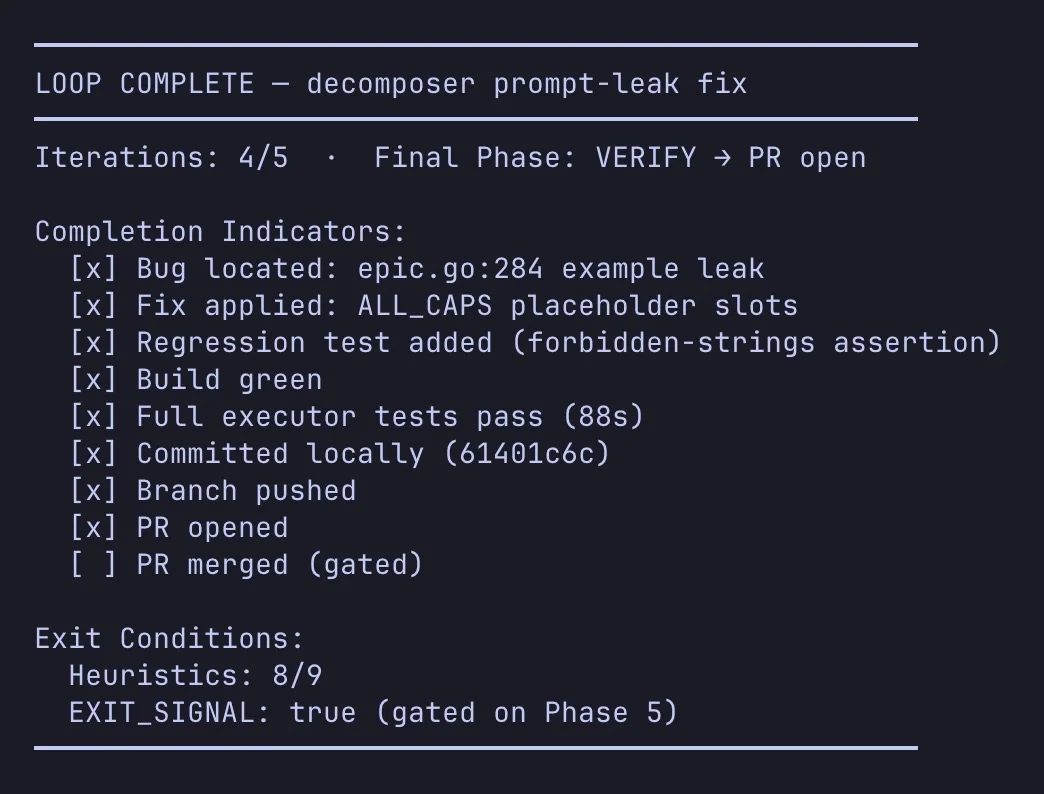
Navigator: Looping LLMs Into Convergent Senior‑Dev Performance
Loop is the whole game with LLMs. Navigator is a Claude Code plugin that loops research and execution until it actually converges, instead of bailing after one pass. I’ve been running it daily since 2025 – feels like a focused senior dev...

Our Vision for Building an Open Ecosystem for the Agent Era
HubSpot announced an open, agent‑ready platform that exposes both its data layer—contacts, deals, tickets, and activity—and a new intelligence layer that delivers pre‑computed risk scores and benchmarks drawn from over 280,000 customers. The move lets third‑party AI agents run on...

Nokia Bets Big on AI-Driven Network Infrastructure, Sees Double-Digit Growth
Nokia is pivoting from its mobile legacy to an AI‑driven network‑infrastructure business, forecasting double‑digit growth this year. The company unveiled its autonomous network fabric, a suite that blends AI, security and automation for rapid service rollout. In India, Nokia is...

Inconsistent AI Answers Elevate Need for Human Judgment
I’m coming to the conclusion that the biggest challenge for Enterprise AI, and AI in general , as of now, is that it’s still impossible to make sure that everyone gets the same answer to the same question, every time....

The Week Ahead in AI: AI Facial Recognition Warning in UK, China Court Weighs in on AI Layoffs, AI’s Oscar...
AI oversight is tightening as Britain’s watchdog warns facial‑recognition use outpaces regulation, while a Chinese court rejects AI‑driven layoffs, setting a labor‑rights precedent. The Academy also barred AI‑generated performances from Oscar eligibility, reinforcing human‑creativity standards. Meanwhile, investors eye a busy...

Building AI Data Centers Is Becoming a Stress Test for Banks
U.S. banks are feeling the strain of financing the rapid build‑out of AI data centers, with loan commitments reaching tens of billions of dollars. A $38 billion package backing Oracle‑linked facilities in Texas and Wisconsin has pushed institutions such as JPMorgan...

AI's Lack of Consciousness Highlights Human Cognitive Risk
🚨AI Won’t Be Conscious, But That’s Not the Problem The real threat isn’t in the machine. It’s in the mind using it. Building directly on @anilkseth's powerful #TED2026 framework—consciousness stays human, but what happens to our cognition? “Fluency without understanding is still just...

Ondaro Appoints Ben Durham‑Kilcullen as First Chief AI Officer
Ondaro announced the hiring of Ben Durham‑Kilcullen as its first Chief AI Officer. The move is aimed at scaling AI across client engagements and tightening governance as enterprises move beyond pilot projects. The appointment signals a strategic shift for ServiceNow...

LLM System Design Interview #41 - The Latent Attention Trap
In a DeepSeek senior LLM engineer interview, candidates are asked how to remove the inference‑time cost of the up‑projection matrix used in Multi‑Head Latent Attention. The correct answer leverages the associative property of matrix multiplication to pre‑compute and fuse the...

Accenture Deploys Microsoft Copilot to 743,000 Staff, Claiming 15‑Fold Speed Gains
Accenture has begun a global rollout of Microsoft 365 Copilot to 743,000 employees, saying the AI assistant is already delivering up to 15‑times faster task completion for most users. The deployment is the largest single‑seat win for Microsoft and signals...
Context, Not Models, Drives Generative BI Success
Generative BI doesn’t fail because of models. It fails because of missing context. OpenBI solves that. → one standard → any platform → governed outputs From answers to certified BI assets. That’s the real shift ⚡ 📌 Part 4/4 on Generative BI https://t.co/rzlsMalE4X 🚀 Meet Databreeze at AI Week Milano (May...

Darrow AI Launches ERISA‑Focused Risk Analytics Platform for Law Firms and Investors
Darrow AI rolled out an AI‑driven risk intelligence platform that analyzes data from more than 200,000 plan sponsors and $6 trillion in assets to flag hidden ERISA, privacy and financial‑services violations. The company used webinars and thought‑leadership content to market the...

HONO Launches Zero‑UI HR Platform, Ditching Dashboards for Conversational AI
Enterprise software company HONO introduced a headless, Zero‑UI HRMS that replaces traditional dashboards with natural‑language interactions on existing collaboration tools. The platform leverages Anthropic’s Model Context Protocol to pull real‑time data from enterprise systems, aiming to let AI execute HR...

Mindset, Not Technology, Drives AI Adoption Gap
AI adoption at work is not evenly distributed. It’s a mindset divide. Some workers embrace it to move faster and expand what they can do, while others avoid it due to trust, relevance or fear of change. The gap will matter. In...

Retracted Study Undermines AI Education Claims, RCTs Prevail
My surprise here seems warranted, this paper was retracted (There are other peer-reviewed meta-analyses of the impact of AI on education finding positive effects, like: https://t.co/bLHHelTLCs though the best evidence of AI helping is from RCTs of interventions with AI tutors)...

Autonomous Corporations Already Trade, Manage, and Invest without Humans
We're watching the birth of autonomous corporations in real time AI agents are already: • Trading tokens • Managing treasuries • Deploying capital • Optimizing yield • Executing strategies All without human intervention The zero human company isn't a thought experiment anymore It's a working prototype

Cross‑design Robots Can Now Share Learned Skills Instantly
Robots With Different Designs Can Now Share Skills 🤖 ↔ 🤖 💬 Abilities taught to one robot don't usually work on another. With a new approach, it's one and done. https://t.co/sUQs1Qw4ZR https://t.co/oGEOmJtScF

AI Becomes First Stop Before Doctors in Healthcare
People are starting to turn to AI before they turn to doctors. For many, tools like ChatGPT have become the first stop for symptoms, questions and reassurance. The shift is behavioral. Access is replacing authority as the starting point in healthcare. https://t.co/0cbKUaeE2z...
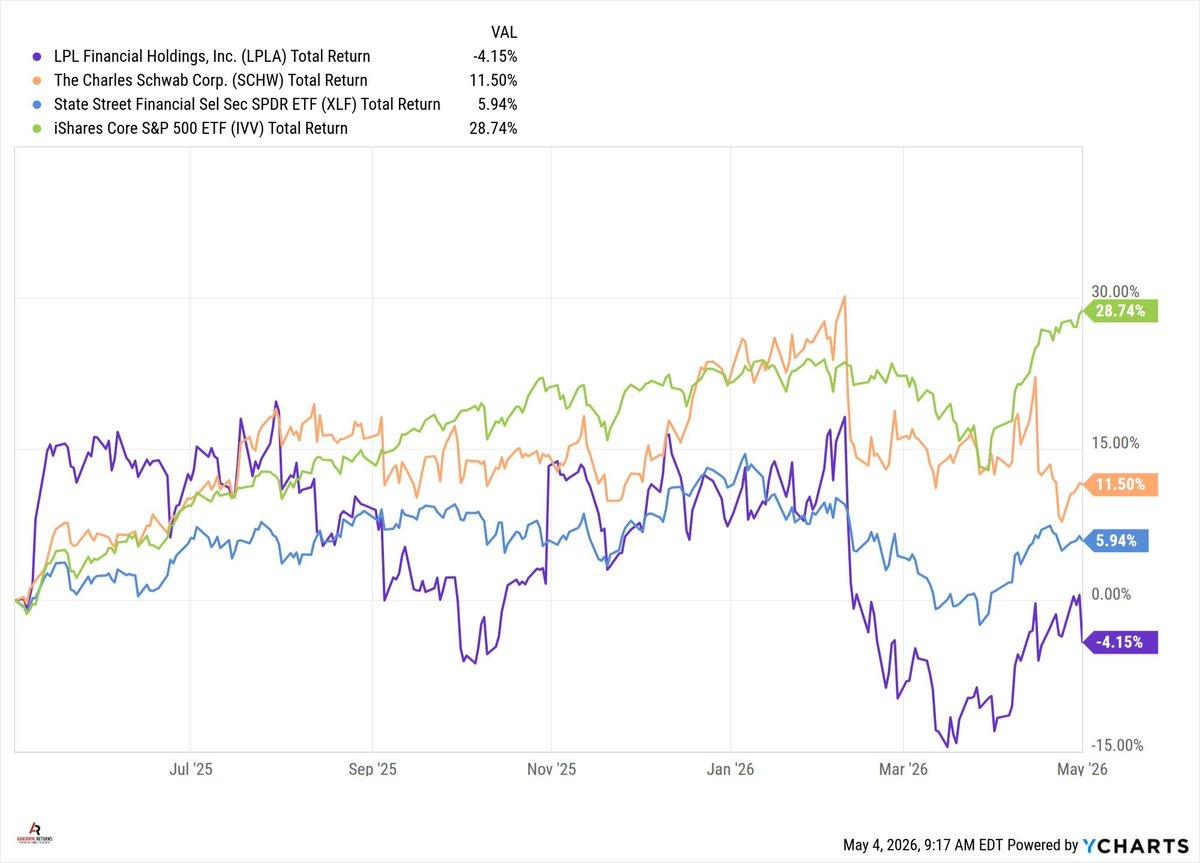
AI Advisers Surge in Demand Amid Stock Concentration
🆕 Adviser links: customer demand for AI advisers, supporting early career advisers, and the concentrated stock calculus. https://t.co/LNrRGAX3Em chart: https://t.co/JTu8SCqvgj https://t.co/fMQeMllv0t

Fragmentation Threatens AI's Impact in HR
The Real Risk to #AI in #HR Is Fragmentation https://t.co/s8CvaGlaI8 by @laraalbert > some good statistics here and not just for AI, but for #payroll and other business processes. #EnSw #HRTech #HCM #SAP #SuccessFactors
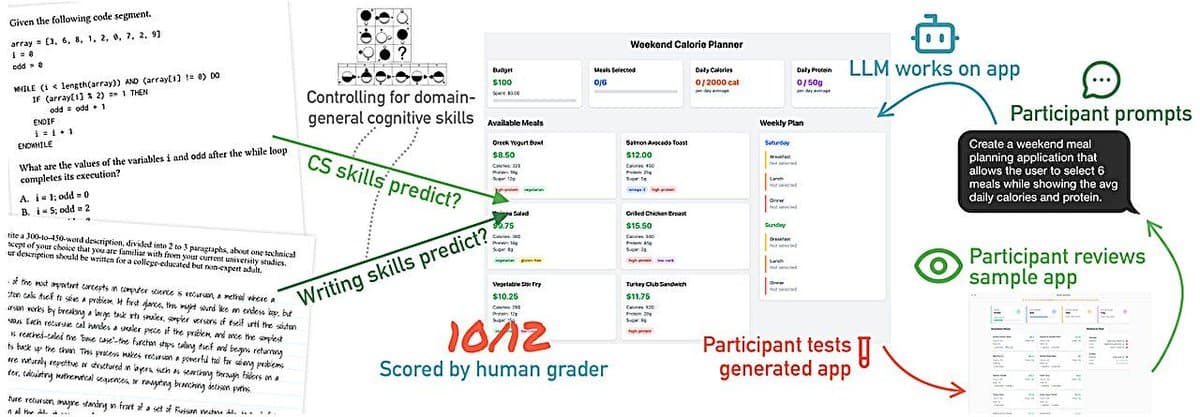
Essential Skills for Successful AI Programming
What skills do people need to successfully program with #AI? by Christoph Elhardt @TechXplore_com Learn more: https://t.co/za37iN60wn #ArtificialIntelligence #ML #MachineLearning https://t.co/xm3tOZtPa9

Bajaj Finance AI Handles 30% Calls, Cuts Costs by Third
During its earnings call, Bajaj Finance said that 30% of its outbound calls are now handled by AI agents. Plus, AI is saving 1/3 of the cost of call centers https://t.co/sILm3EM9W3

Beyond Hype: Real Progress Lies in Data Infrastructure
Sam Altman and OpenAI dominate this week's signals. But here's what's building quietly underneath: Machine Learning. Data Management. Data Analysis. The headlines fight. The infrastructure strengthens. That's where the actual work is getting done.

AI Natives Disrupt, Incumbents Cling to Turf
AI Native vs Innovator’s AI Dilemma. Big tries to protect their turf. AI Native is non stop to disintermediate that turf