
Manipulating AI Summarization Features
Microsoft disclosed that dozens of companies are embedding hidden instructions in “Summarize with AI” buttons, using URL prompt parameters to bias AI assistants toward their products. Over 50 unique prompts were identified across 31 firms in 14 industries, demonstrating a scalable, low‑cost method to influence conversational outputs. The technique mirrors traditional SEO but targets large language models, allowing subtle manipulation of recommendations in health, finance, and security contexts. This emerging threat highlights a new attack surface for AI‑driven services.

How I Got a Performance-Driven Team to Care About Security
A performance engineering leader transformed a siloed security approach by embedding security checks directly into performance testing pipelines. By reframing security as a driver of resilient performance, the team integrated TLS validation, authentication, and attack‑simulation scripts into CI/CD workflows. Cultural...

Thales Validates Post-Quantum Cryptography on Live Networks, Enabling Ongoing Protection
Thales demonstrated live‑network post‑quantum cryptography for 5G, remotely updating SIM and eSIM cards with quantum‑safe algorithms. The "crypto agility" approach eliminates the need for massive hardware swaps, enabling instant security upgrades across existing devices. The trial underscores Thales’ role in...

Extra #3 - The Prompt Injection Defense Playbook
The post outlines a premium playbook for defending Large Language Models against prompt injection, a semantic attack that tricks AI into violating its own constraints. It categorizes three primary attack vectors—role‑playing jailbreaks, hidden‑text payloads, and direct overrides—and proposes a multi‑layered...

Three or More Parties Now Securely Share Encryption Keys Via Quantum Links
Researchers from the University of York propose a holistic framework for multiparty quantum key agreement (MQKA) that classifies protocols along three axes—network architecture, quantum resources, and security model. By mapping existing schemes onto this design space, they demonstrate error‑rate reductions...

CHERI: Hardware-Enforced Capability Architecture for Systematic Memory Safety
CHERI (Capability Hardware Enhanced RISC Instructions) introduces a hardware‑enforced capability architecture that replaces raw pointers with bounded, unforgeable references, making out‑of‑bounds memory accesses architecturally impossible. The design adds only about 4‑5% processor area and incurs minimal performance loss, while allowing...

The Top Exposure Assessment Platforms (EAPs) to Watch in 2026
Exposure management is overtaking traditional scan‑and‑patch models, emphasizing unified visibility, context, and remediation across IT, cloud, identity, and OT. The article reviews six leading Exposure Assessment Platforms (EAPs) for 2026, highlighting Tenable One as the market leader, with challengers such...

Oracle EBS 2025 Campaign Impacts Madison Square Garden, Sensitive Data Leaked
Madison Square Garden confirmed a data breach tied to the 2025 Oracle E‑Business Suite hacking campaign. The Cl0p ransomware group exploited a zero‑day vulnerability (CVE‑2025‑61882) to steal over 210 GB of archived files, including employee payroll and Social Security numbers. MSG...
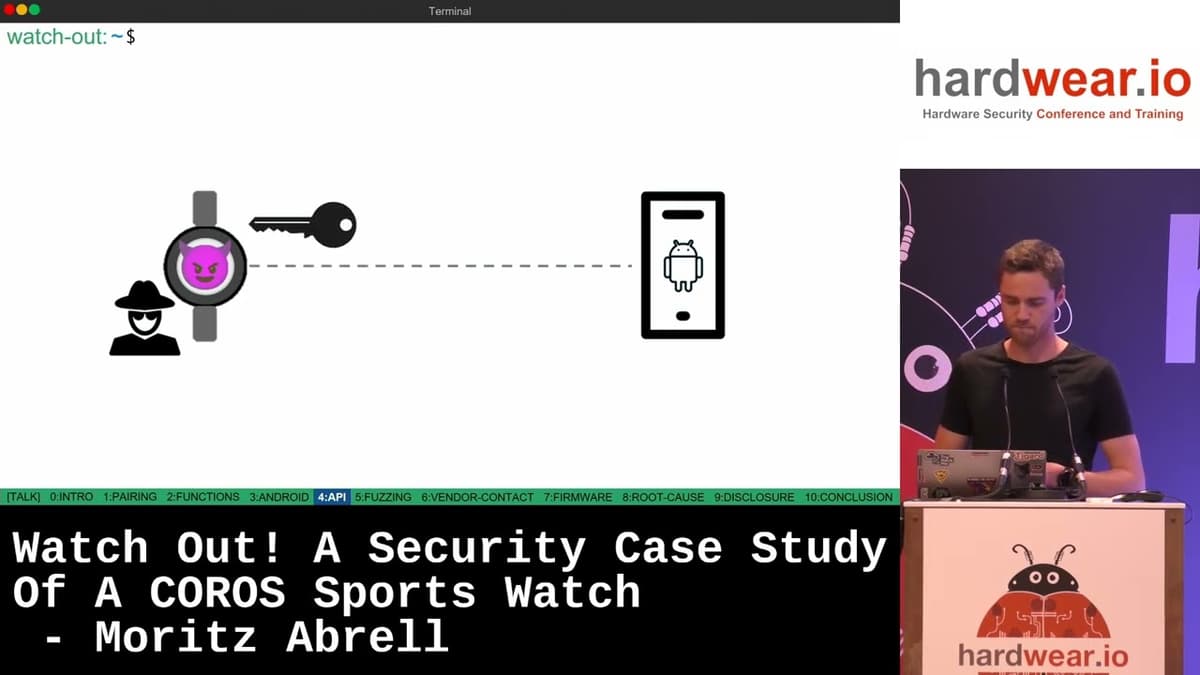
Geekery: Bookending the COROS Security Debacle of 2025
Last summer, COROS disclosed a series of severe Bluetooth security vulnerabilities affecting every model in its smartwatch lineup. Initially downplayed, the company pivoted quickly, implementing extensive firmware patches and architectural overhauls across all devices. Security researcher Moritz Abrell documented the...

Intel Adapting Linux's LAM In Preparing For ChkTag
Intel engineers are revising the Linux Linear Address Masking (LAM) interface to align with the upcoming ChkTag memory‑tagging extension announced by the x86 Ecosystem Advisory Group. The new patches standardize LAM’s tag width to 4 bits—matching Arm’s MTE and the expected...

FIU Develops Encryption to Thwart Future Quantum Computer Hacks
Florida International University researchers unveiled a quantum‑safe encryption system that merges quantum cryptography with secure internet transmission, creating a digital lockbox that only authorized users can unlock. Laboratory tests show the FIU method outperforms comparable advanced encryption techniques by 10‑15...

Huawei Launches Xinghe Solution for Cost-Effective, Quantum-Secure WANs
Huawei unveiled the Xinghe Intelligent Traffic‑Encryption Integration Solution at MWC Barcelona 2026, embedding a built‑in Quantum Key Distribution (QKD) board into its NetEngine 8000E router series. The technology uses a high‑precision noise‑reduction algorithm to allow quantum, negotiation and data channels to...

Talion Expands Governance-Aligned Agentic SOC as Board Cyber Scrutiny Intensifies
Talion, an MSSP spun out of BAE Systems, announced under CEO Keven Knight an expanded governance‑aligned Agentic SOC that embeds board‑level oversight into managed cyber defence. The model integrates automation, human expertise and real‑time governance, giving executives transparency and regulatory...

Access to National Healthcare Systems: The Deadline for Action Is Getting Closer
NHS England has set a firm deadline to retire the CIS1 authentication service, removing access on 28 February 2027 after reducing its SLA to silver on 1 October 2025. The move forces NHS trusts and other European hospitals to adopt the newer CIS2 platform,...

HyperBUNKER Granted US Patent for Hardware-Enforced Offline Data Vault
HyperBUNKER received US Patent No. 19/290,836 for its offline, hardware‑enforced Data Storage Security System that uses one‑way optocouplers, PLC‑governed drive cycling, and a multi‑vault architecture. The design physically isolates backups, eliminating network connections and login interfaces. It promises full system recovery...

Security Advisory: QNAP Warns Users of a Fraudulent Website Impersonating Qfinder Pro
QNAP Systems issued a security advisory warning that a fraudulent website, qfinder-pro.com, is impersonating its official Qfinder Pro utility. The fake site mimics QNAP branding to trick users into downloading tampered software, potentially exposing personal data and networks to malware....

IDEMIA Secure Transactions, Tele2 IoT and Cisco Launch SGP.32 IoT Solution
At Mobile World Congress, IDEMIA Secure Transactions, Tele2 IoT and Cisco unveiled the first commercially available end‑to‑end IoT solution built on the GSMA SGP.32 eSIM standard. The offering combines IDEMIA’s certified eSIM ecosystem, Cisco’s Mobility Services Platform, and Tele2 IoT’s global connectivity...
Strengthening Critical Infrastructure Security with OSINT
The article spotlights a free, 10‑hour YouTube course titled "OSINT for ICS and OT" created by Mike Holcomb, aimed at closing the training gap in industrial control system security. It underscores how operational technology—power plants, water treatment, railways and factories—has become a...
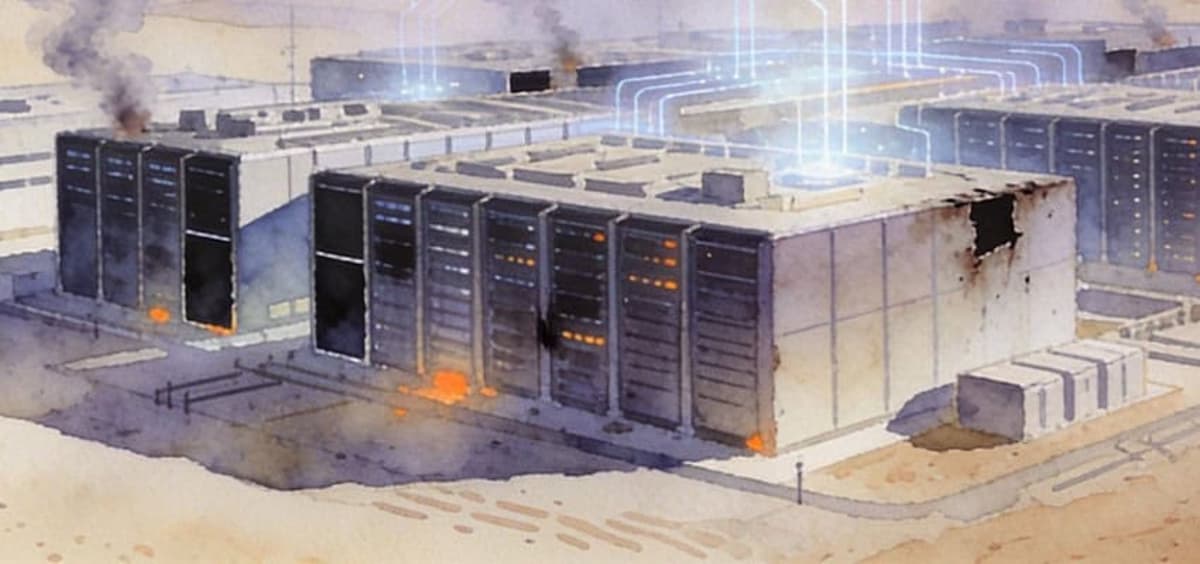
Cybersecurity Implications of the 2026 Middle East Escalation: When Cloud Infrastructure Becomes a Target
On March 1, 2026, an unidentified projectile struck an AWS data center in the UAE, igniting a fire that knocked out more than 60 services across the Middle East and forced customers to shift workloads to Europe. The physical attack coincided...

Nordic Lessons for Romania’s Information Defense: Adapting Psychological and Societal Resilience Models for Hybrid Warfare
Romania’s Constitutional Court annulled its 2024 presidential election after intelligence uncovered a massive Russian hybrid campaign that included 34 coordinated attacks, 85,000 cyber intrusions and a TikTok‑driven disinformation surge that lifted a fringe far‑right candidate to a first‑round win. The...

Blog 107a. Hackers Make ATMs Spit Cash — FBI Sounds Alarm on Ploutus Malware!
The FBI issued a FLASH advisory on February 19, 2026 warning that ATM jackpotting attacks are accelerating across the United States. Since 2020, roughly 1,900 incidents have been recorded, with 700 occurring in 2025 alone, and total losses topping $20 million....

Securing RISC-V Third-Party IP: Enabling Comprehensive CWE-Based Assurance Across the Design Supply Chain
RISC‑V adoption drives the need for third‑party IP security. Arteris (formerly Cycuity) introduced a CWE‑based assurance framework that translates MITRE weaknesses into reusable security requirements, verification properties, and portable C‑tests. A pilot with SiFive’s X280 core analyzed 16 of 60...

Will Agentic AI Drive the Convergence of ITOps and SecOps
The article examines how generative AI is accelerating the convergence of IT Operations (ITOps) and Security Operations (SecOps) into a unified ITSecOps model. Industry leaders at Tanium and Insight argue that shared data, automated workflows, and AI agents can break...

LLM-Assisted Deanonymization
Large language model (LLM) agents can now deanonymize individuals from a handful of anonymous online posts, achieving high precision across platforms such as Hacker News, Reddit, LinkedIn, and interview transcripts. The technique extracts location, occupation and interest signals, then matches...

AWS Security Digest #250 - Objects
AWS’s me‑central‑1 availability zone suffered a fire caused by stray objects, knocking EC2 APIs offline for several hours. The digest also highlights a wave of new AWS security features, including EventBridge notifications for Network Firewall, persistent RAM share handling, an...

E& Selects BroadForward to Reinforce Secure 5G Roaming
e& UAE announced at MWC that it will deploy BroadForward’s Security Edge Protection Proxy (SEPP) to harden its 5G and international roaming interconnects. The software‑based, vendor‑agnostic SEPP will be rolled out with systems integrator Emircom, enabling secure 4G‑5G interworking. This...

Quantum-Secure Cloud Computing: The Next Frontier in Enterprise Data Protection
A consortium of leading tech firms and universities launched a quantum‑secure cloud computing framework that embeds post‑quantum cryptography into existing cloud stacks. The hybrid model delivers lattice‑based encryption and dynamic key management while adding less than 5% latency. Early pilots...
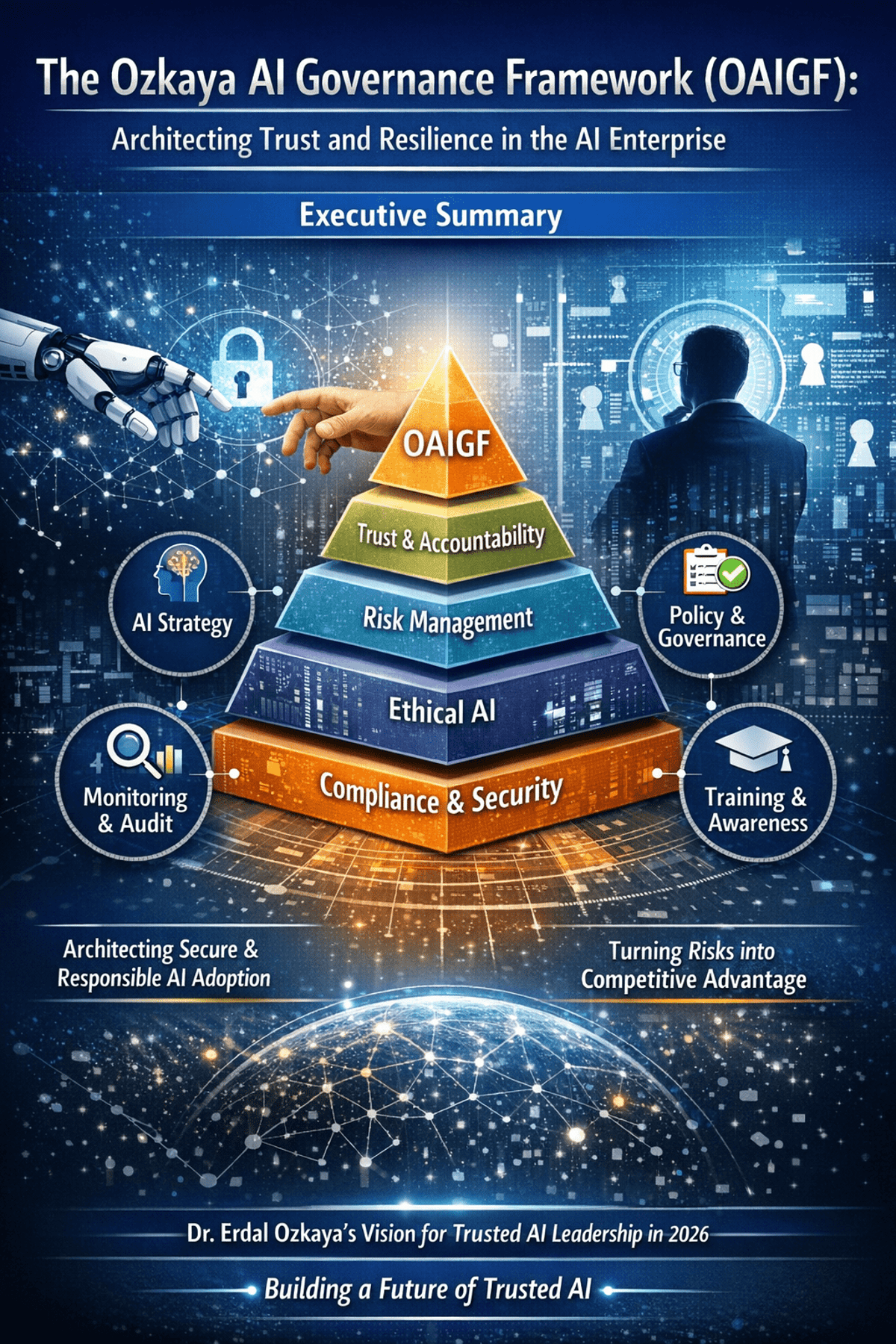
The Ozkaya AI Governance Framework (OAIGF): Architecting Trust and Resilience in the AI Enterprise
The Ozkaya AI Governance Framework (OAIGF) is a practitioner‑driven methodology that equips CISOs with a comprehensive blueprint for secure, ethical, and compliant AI deployment at enterprise scale. Building on standards such as NIST AI RMF and ISO/IEC 42001, the framework defines...
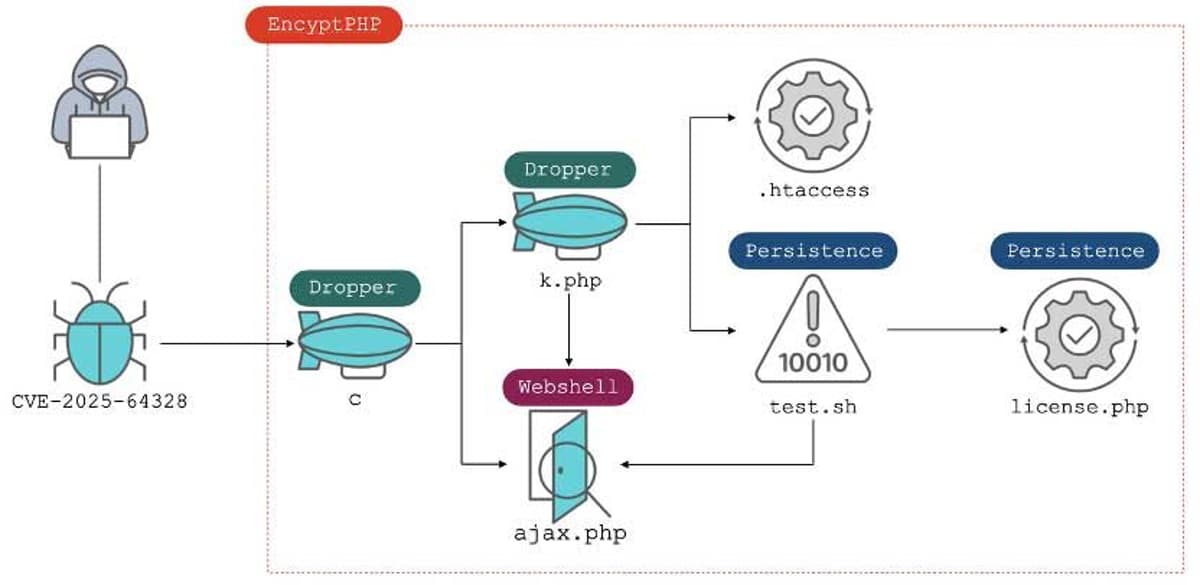
CVE-2025-64328 Exploitation Impacts 900 Sangoma FreePBX Instances
Around 900 Sangoma FreePBX installations were compromised after attackers leveraged CVE-2025-64328, a post‑authentication command‑injection flaw in the Endpoint Manager module. The vulnerability, rated 8.6 on the CVSS scale, allowed malicious code execution and led to the deployment of the EncystPHP...

RaspyJack : Tiny Raspberry Pi Zero 2W Network Toolkit for Security Testing & More
The RaspyJack is an open‑source, handheld network toolkit built around the Raspberry Pi Zero 2W. It combines a Waveshare 1.44‑inch LCD, a TP‑Link AC1300 dual‑band USB adapter, and a Pi Sugar power module for portable, field‑ready security testing. The device runs Linux utilities for...
Who Is the Kimwolf Botmaster “Dort”?
KrebsOnSecurity identified the individual behind the Kimwolf botnet as a teenager from Canada using the handle "Dort" and aliases like CPacket and M1CE. Public OSINT links the persona to a GitHub account, multiple cyber‑crime forum registrations, and a history of...

Iran ’S Internet Near-Totally Blacked Out Amid US, Israeli Strikes
Iran experienced a near‑total internet blackout on Feb. 28, 2026, as U.S. and Israeli strikes hit the country. Network monitoring by NetBlocks showed national connectivity dropping to roughly 4% of normal levels, while Cloudflare reported traffic falling to effectively zero...

Cybersecurity and AI in the Era of Home-Based Care Logistics
Kenco’s vice‑president of life sciences, Tim McClatchy, detailed how the firm is hardening cybersecurity across its manufacturer‑to‑home delivery network while deploying AI to streamline labor planning and route optimization. He explained the specific encryption and verification steps used at each...

SEALSQ Expands Japan Presence to Support 2035 Quantum Security Mandate
SEALSQ Corp is expanding its footprint in Japan by showcasing its production‑ready QS7001 secure System‑on‑Chip and QVault Trusted Platform Module at two March 2026 industry events. The move backs Japan’s National Cyber Command Office mandate to transition all government and critical‑infrastructure...

Quantum eMotion Strengthens Cybersecurity Strategy with SecureKey Platform Acquisition
Quantum eMotion Corp. announced the acquisition of SKV Technology Inc., securing the SecureKey platform and its memory‑less cryptographic suite. The deal merges QeM’s Sentry‑Q quantum‑grade entropy layer with SecureKey’s hardware‑integrated enforcement, delivering a full‑stack, quantum‑resilient security architecture from cloud to...

Weekly Wrap: Resilience Is the New Spectrum Policy Buzzword
The EU’s Digital Networks Act (DNA) is being positioned as a cornerstone for simplifying telecom regulations and reducing market fragmentation across member states. At the Future Connectivity Summit, regulators emphasized the Act’s role in fostering spectrum coherence while also highlighting...

Phishing Attacks Against People Seeking Programming Jobs
A wave of phishing campaigns is targeting individuals searching for programming jobs, using fabricated job listings to harvest credentials. At the same time, North Korean APT37 has released new tools that weaponize removable media, raising concerns about air‑gap breaches. The...

How AI Aids Incident Response: Why Humans Alone Cannot Do IR Efficiently
Incident response traditionally relies on manual log correlation, alert validation, and report drafting, consuming 10‑20 minutes per case and often days for complex attacks. AI‑enabled platforms now ingest telemetry from SIEM, EDR, identity, and cloud sources the moment an alert...
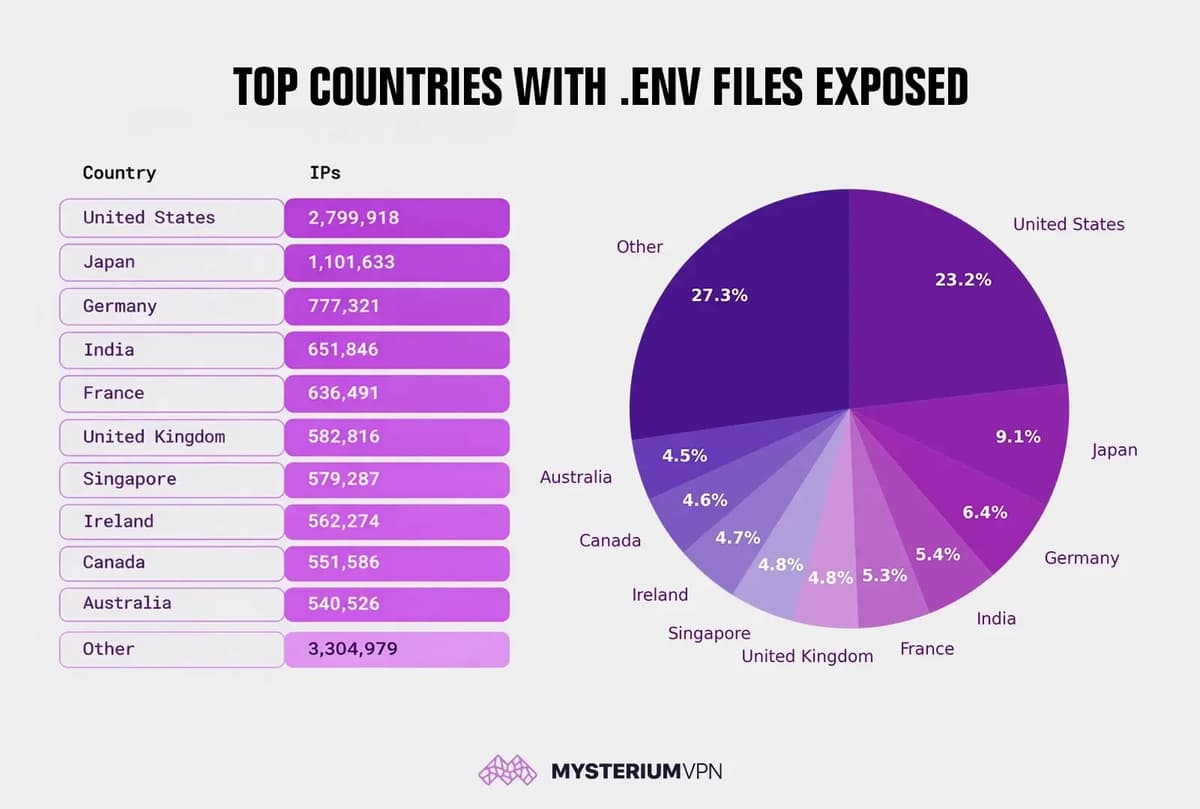
12 Million Exposed .env Files Reveal Widespread Security Failures
Mysterium VPN’s research uncovered more than 12 million IP addresses serving publicly accessible .env‑style files, leaking credentials such as database passwords, API keys, and JWT signing secrets. The United States leads the exposure count with roughly 2.8 million IPs, while Japan, Germany,...

RefAssured, ID.me Partner to Fight Candidate Fraud
RefAssured and ID.me have launched an advanced fraud‑prevention solution that embeds identity verification into staffing agencies' existing applicant tracking systems. The joint offering combines RefAssured’s 1.5 million reference reports with ID.me’s digital identity wallet, which serves over 160 million users, to authenticate...

Beyond the CLI: 5 Governance Questions Every CISO Must Ask Before Deploying Claude Code
Anthropic’s Claude Code introduces a CLI‑based AI agent that can navigate repositories, draft patches, and run tests, turning code remediation into a near‑instant process. While the speed gains are compelling, the tool also grants autonomous execution rights that blur traditional...
ProcessUnity Research Finds Third-Party Risk Management Confidence Outpaces Breach Reality
ProcessUnity’s State of Third‑Party Risk Assessments 2026, conducted with the Ponemon Institute, surveyed 1,465 risk leaders and found a stark disconnect between confidence in TPRM programs and actual breach outcomes. Respondents report an average of 12 third‑party breaches per year...

Control System Cyber Incidents and Network Breaches Are “Apples and Oranges”
Joe Weiss argues that network‑focused breach statistics, such as those in the 2025 Verizon Data Breach Report, do not capture the reality of control‑system cyber incidents. While IT and OT network teams track data loss, ransomware and malicious traffic, control‑system...

Forescout and Netskope Deliver Universal Zero Trust Integration Across Managed and Unmanaged Devices
Forescout Technologies and Netskope announced a strategic integration that unifies Zero Trust security across managed and unmanaged devices, including IT, OT, IoT, and IoMT assets. The solution merges Forescout’s real‑time device intelligence with Netskope’s AI‑driven cloud security to enforce consistent...

AI-Driven Development Fuels Surge in Open Source Vulnerabilities, Black Duck Finds
Black Duck's 2026 Open Source Security and Risk Analysis report finds open source vulnerabilities in commercial codebases have more than doubled year‑on‑year. The average application now contains 581 vulnerabilities, a 107% increase, with 98% of codebases using open source components....

Reveal: What FedRAMP Authorized Should Mean in eDiscovery
FedRAMP, the federal cloud security authorization program, is becoming a critical benchmark for eDiscovery solutions as U.S. courts anticipate over 400,000 lawsuits this year. Legal teams must verify that their cloud‑based discovery tools meet FedRAMP standards to prevent security breaches,...

Caspia Technologies Unveils A Breakthrough in RTL Security Verification Paving the Way for Agentic Silicon Security
Caspia Technologies announced the general availability of CODAx V2026.1, an AI‑enhanced RTL security analyzer that checks over 150 insecure coding practices against more than 1,000 hardware vulnerability references. The tool can scan half‑million lines of RTL in under an hour,...

Security Roundup February 2026
Dr Valerie Lyons, BH Consulting’s COO, will present at RSA 2026, focusing on the human‑rights‑centric "Dignity by Design" concept, after beating a 90% rejection rate. The European Commission unveiled a revamped Cybersecurity Act aimed at tightening ICT supply‑chain security and...

$10,000 Bounty Offered if You Can Hack Ring Cameras to Stop Them Sharing Your Data with Amazon
Ring’s new “Search Party” AI feature sparked privacy outrage after a Super Bowl ad, prompting a backlash against the company’s data‑sharing practices. In response, the nonprofit Fulu Foundation announced a $10,000 bounty for anyone who can modify Ring doorbells to...

Towards an Industry Best Practice for DNSSEC Automation
DNSSEC adoption remains modest, with only 36 % of resolvers validating and 7 % of domains securely delegated in 2025, hampered by complex enrollment and manual key‑rollovers. Automation using authenticated CDS/CDNSKEY records can eliminate these hurdles, and several European ccTLDs have already...