
Early Edition: May 1, 2026
Iran’s Supreme Leader vowed to protect the nation’s nuclear and missile capabilities, and a cease‑fire has temporarily paused the U.S. 60‑day war‑authorization clock. Hezbollah has escalated attacks on Israeli forces using explosive drones steered via fiber‑optic cables, challenging Israel’s electronic defenses. In Gaza, more than 90% of water infrastructure remains destroyed, leaving residents with severe shortages. Russia has increased oil shipments to Syria by 75% to roughly 60,000 barrels per day, and Elon Musk testified that xAI used OpenAI‑derived outputs to train its Grok model.

Why an Insurgency in Mali Matters in Moscow
Mali’s military junta is facing a coordinated insurgency as al‑Qaeda affiliate JNIM joined forces with long‑standing Tuareg separatists to attack Bamako, Gao, Kidal, Sévaré and Kati on April 25. The attacks killed Defence Minister General Sadio Camara, a key architect of...

Asia Daily: May 1, 2026
The U.S. Federal Communications Commission voted to expand its China tech crackdown, barring Chinese labs from testing electronics for the U.S. market and moving to restrict China Mobile, China Telecom and China Unicom from operating U.S. data centers. In Beijing,...

Scotland at Centre of Inaugural Defence Procurement Summit
Scotland will host the inaugural DPRTE Scottish Defence Procurement & Supply Chain Summit in Glasgow on 20 May 2026, bringing together the Ministry of Defence, prime contractors and SMEs to tap into the region’s growing defence spend. The country processes roughly £2 bn...
Iran War: Trump Mulls Kinetic Options, Mojtaba Warns, US Consumers Suffer
President Trump received a CENTCOM briefing outlining possible kinetic options against Iran, amid growing pressure from his inner circle and Zionist advocates for limited air strikes. While he previously favored maintaining a naval blockade of the Strait of Hormuz, the...

This Week in Africa
Jihadist groups Jama’at Nusrat al‑Islam wal‑Muslimin (JNIM) and the Tuareg‑led Azawad Liberation Front (FLA) carried out coordinated attacks across Mali, killing Defense Minister Sadio Camara in the deadliest wave in over a decade. The assaults exposed the fragility of the military...
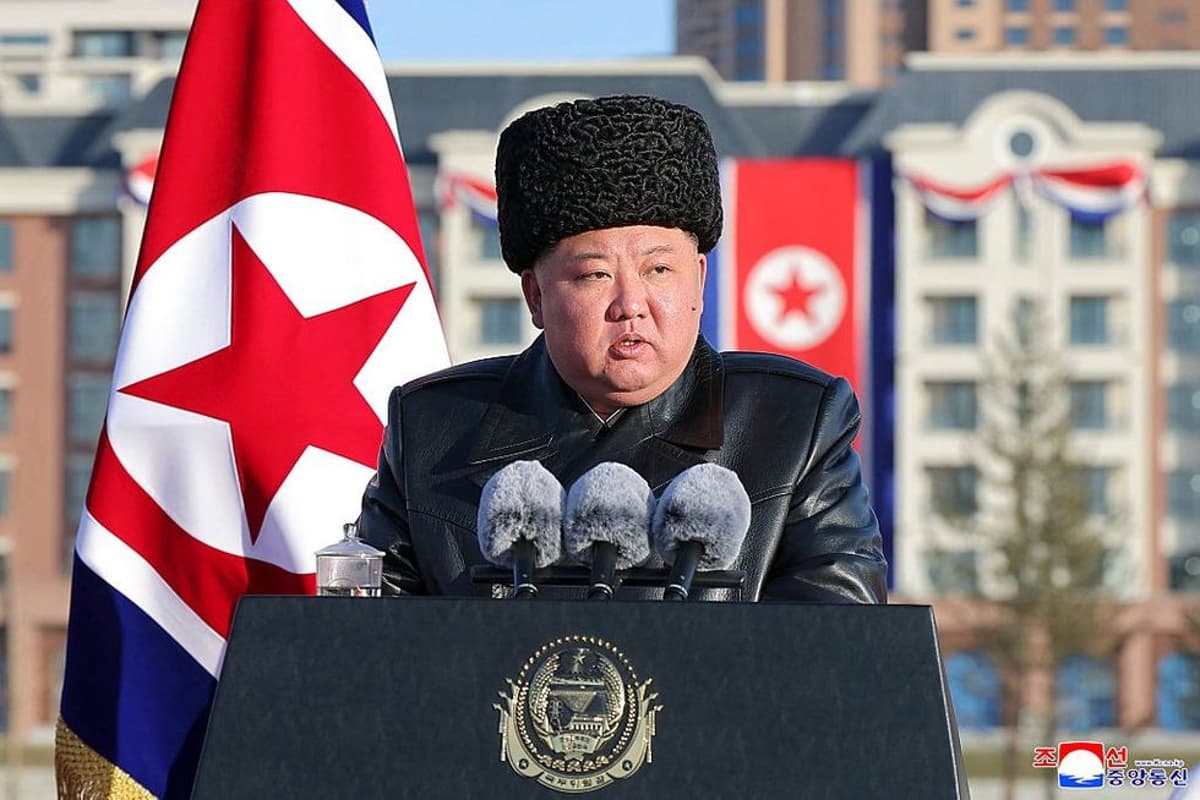
That Other Nuclear Nightmare: North Korea Sounds New Alarms
Satellite imagery analyzed by the IAEA and CSIS shows heightened activity at North Korea’s Yongbyon complex, including a new light‑water reactor and a second uranium enrichment facility that is essentially complete. The plant will enable Pyongyang to increase enriched‑uranium output,...

Why Abu Dhabi Walked Away From OPEC After Nearly 60 Years
Abu Dhabi announced it will leave OPEC after nearly six decades, citing a "pure policy change" driven by market fundamentals. The move ends a chronic quota dispute that costs the UAE more than $50 billion in foregone revenue as ADNOC expands...

Inside China’s Embassy in Kyiv as War Broke Out
Chinese Embassy Counselor Ding Jianwei recounts how the Kyiv mission prepared emergency protocols in late 2021 and, on the night of 24 February 2022, activated a rapid‑response plan as Russia launched its full‑scale invasion. The embassy kept its flag flying while most...

Deep Dive: AI Is Reshaping Military Decisions on the Battlefield
A new study proposes an AI‑driven decision‑support system that automates battlefield image classification, dramatically cutting the lag between data collection and actionable intelligence. Researchers built a hybrid CNN‑LSTM model that fuses spatial and temporal cues, training it on 7,747 images...

Royal Navy Team Warns of Humanitarian Crisis as Mariners Trapped by Dual Blockade in the Gulf
The Royal Navy’s monitoring team reports the Strait of Hormuz has collapsed from roughly 130 daily transits to fewer than 10, creating the deepest maritime disruption since World War II. Iran’s IRGC has mined the strait and attacked vessels, while the...

UK National Threat Level Increased to Severe Following Anti-Semitic Terror Attack Claimed by Iran-Linked Islamist Group and Perpetrated by Somali...
The UK raised its national terrorism threat level to SEVERE on 30 April 2026 after an anti‑Semitic stabbing in Golders Green, London, claimed by the Iran‑linked group Harakat Ashab al‑Yamin al‑Islamia. Two Jewish men were injured and the Somali‑born attacker was tasered...
Polish General: Russia Already at War with Poland; Russia Can Be Defeated
Polish Lieutenant General Krzysztof Krol warned that Russia is already waging a hybrid war against Poland, targeting rail infrastructure, cyber systems and civilian society. He argued that such attacks could justify invoking NATO’s Article 5 collective‑defence clause. Krol called on the...

One of the Best Articles by Ritter: "A New Middle Eastern Power Paradigm;Iran Won the War. There Are Consequences for...
The blog argues that Iran’s surprise victory on February 28 gave it de‑facto control of the Strait of Hormuz, halting oil shipments and exposing the limits of U.S. power in the Gulf. The United States, Israel and Gulf Arab allies failed...

Scotland Needs More Workers to Build Ships Say Lib Dems
Scottish Liberal Democrat leader Cole Hamilton warned that Scotland lacks a skilled workforce to meet future defence procurement, calling for defence to become central to the nation’s industrial strategy. He cited Babcock’s Rosyth shipyard hiring 300 Filipino welders as evidence...

Is Time Running Out for Putin?
The post argues that keeping Ukraine in the fight is itself a viable strategy, even though Europe lacks a clear "theory of victory" for Kyiv. It notes that Russia’s war has made little headway since September 2022 despite massive resource...

Trump’s Neo-Reagan Doctrine Is Rolling Back Russian Influence Across The World
The article argues that President Trump is reviving a Reagan‑style “rollback” strategy, now aimed at eroding Russian influence in a dozen countries from Venezuela to Belarus. By securing a U.S.–controlled trade corridor in Venezuela, a critical minerals deal with Kazakhstan,...

The Limits of China’s NCO Corps and Future Warfare
China’s People’s Liberation Army has dramatically upgraded its noncommissioned officer (NCO) corps, expanding technical training and professional pathways to support sophisticated weapons systems. Yet decision‑making authority remains tightly held by officers and embedded party structures, preserving a centralized command culture....

How China’s Fear of Secondary Sanctions Pushed Moscow Into Leveraging Stablecoins to Reshape Financial Warfare
Russia’s central bank plans to launch a digital ruble in September 2026, but private stablecoins have already become the primary tool for evading Western sanctions. The A7A5 stablecoin, launched in January 2025 and pegged to the ruble, has processed over...

The Hidden Subsidy of the Citizen Soldier
The article argues that the U.S. National Guard and Reserve—often called citizen soldiers—are the hidden subsidy financing today’s wars, shouldering a disproportionate share of deployments, combat casualties and community costs. Data show they comprised roughly 45% of the deployed force...

What Will China-Gulf Relations Look Like After the War?
After the recent Middle East conflict, China has intensified its diplomatic outreach to the Gulf, unveiling a China‑Pakistan five‑point peace plan, vetoing Bahrain’s UN resolution on Hormuz, and presenting a new four‑point strategy during the Abu Dhabi crown prince’s visit...

Aircraft Carrier Strike Group To Leave Middle East, Reducing Footprint Amid Iran War
The U.S. Navy announced that the aircraft carrier USS Gerald R. Ford will leave the Middle East in the coming days, ending a record 300‑day wartime deployment that spanned the Caribbean, Europe, and the Persian Gulf. Its departure reduces the U.S. carrier presence...

Diversion and Resale: Estimating Compute Smuggling to China
Epoch AI’s new report estimates that between 290,000 and 1.6 million Nvidia H100‑equivalent chips were smuggled into China by the end of 2025, with a median of 660,000 chips – roughly 3% of the world’s AI compute stockpile. The analysis draws...

US PREPARES FOR NEW STRIKES ON IRAN
President Trump was briefed by CENTCOM on a new set of short, powerful strikes against Iran, approving the plan to pressure Tehran over its nuclear program. The administration estimates the ongoing conflict has already cost $25 billion, with independent analysts warning...

Trump’s Second Iran War Becomes Illegal May 1
The Substack post warns that a second U.S. war with Iran under President Trump could become illegal after May 1 if Congress does not grant formal authorization. It cites escalating rhetoric, recent military posturing, and the looming expiration of emergency war‑powers...

ReAct: Reflection Attack Mitigation for Asymmetric Routing
ReAct is a new mitigation framework for amplified reflection DDoS attacks that works even when traffic follows asymmetric routes. It leverages programmable data‑plane devices such as Intel Tofino switches and Nvidia Bluefield‑3 smart NICs to match request and response transaction IDs using...

SBIR/STTR Is Back and the Department of War Is Wasting No Time
The Small Business Innovation and Economic Security Act, signed on April 20, 2026, restores SBIR/STTR authority through September 2031 after a six‑month funding freeze. The Department of War quickly issued over 90 solicitation topics and introduced the Accelerated Research for...
OMB Continues Push for Commercial Products and Services
On April 17, 2026 the Office of Management and Budget issued memorandum M-26-12 to reinforce President Trump’s 2025 Executive Order 14271, urging agencies to prioritize commercially available products and services. OMB found that more than two‑thirds of FY 2024 federal contract...
Arizona State University Wins Federal Contract to Offer War and Strategy Degree to Government Leaders
Arizona State University secured a Department of Defense contract to launch a master’s degree in war and strategy, beginning this fall in Washington, D.C. The program will admit up to 24 students annually, all nominated by the DoD, and targets...

On the Next TGS Live: Shadi Hamid, Daniel Bessner & Andrew Day on American Power
The Glenn Show will host a live TGS Live stream on May 1 at 2 PM EDT featuring political scientist Shadi Hamid, historian Daniel Bessner, and American Conservative senior editor Andrew Day. The three guests will debate the uses and abuses of American military power, with Hamid...

'Piracy': Israel Kidnaps Nearly 200 Peace Activists Aboard Flotilla 600 Miles Away From Gaza
Israeli naval forces intercepted the Global Sumud Flotilla on Wednesday night, boarding 22 vessels and detaining 179 activists roughly 600 miles from Gaza in international waters near Greece. The operation marks the furthest‑away seizure of a Gaza‑bound aid flotilla to...
Time to Damn the Iron River
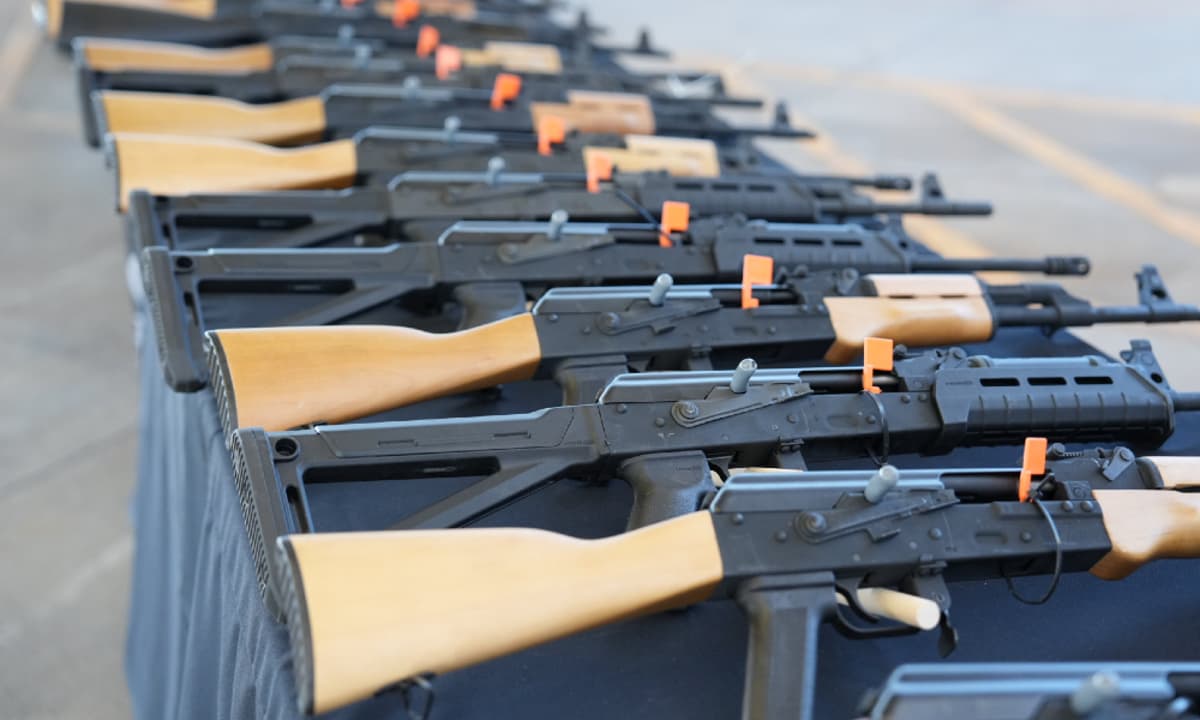
Washington’s anti‑cartel strategy focuses on designations and strike authority, but the real leverage point is the steady flow of U.S.-sourced firearms into Mexico. Data consistently trace large volumes of recovered rifles and .50‑caliber weapons to American origin points, fueling cartel...
Britain’s Antisemitism Crisis Is Now a National Security Threat
Two Jewish men were stabbed in Golders Green, a central London Jewish district, intensifying a wave of antisemitic violence that has hit the UK, Australia, the United States and Europe. Police identified the suspect as Esse Suleiman, a British‑Somali national, with a...

Challenging a CICA Stay Override? The Federal Circuit Confirms You Don’t Need to Prove Irreparable Harm
The Federal Circuit affirmed that a disappointed bidder challenging a government override of a Competition in Contracting Act (CICA) stay need only show the override was arbitrary and capricious, rejecting the requirement to satisfy the traditional four‑factor preliminary injunction test....

When the World Order Turns Upside Down – Where Does the Nordics Stand?
The article argues that the post‑Cold‑War world order anchored by the United States and the dollar is unraveling, giving way to a multipolar system led by China, Russia and an expanding BRICS bloc. In this new landscape, the Nordics—traditionally beneficiaries...

MTU Aero Engines Posts Q1 Gains, Sees Continued Strength Despite Geopolitical Pressures
MTU Aero Engines reported a 7% rise in Q1 adjusted revenue to €2.2 bn ($2.4 bn) and a 6% increase in operating profit to €320 mn ($349 mn). The company’s order backlog expanded to €31.6 bn ($34.5 bn), effectively selling out production for three years, while...

U.S. May Deploy Hypersonic Missiles Against Iran as Centcom Set to Brief Trump on New Military Options
U.S. Central Command has requested deployment of the Army’s Dark Eagle hypersonic missile to the Middle East for potential strikes against Iran’s deep‑located ballistic‑missile launchers. The LRHW boasts a reported range of over 1,725 miles and speeds exceeding Mach 5, but...

Google’s Pentagon Deal Blindsided Its Own AI Researchers
Google announced a classified AI contract with the Pentagon that lets the department use its models for any lawful government purpose. The deal was revealed without prior notice, catching more than 600 Google employees off guard and prompting a massive...

The Global Questions Series - Number 29: A New Nuclear Architecture
The current nuclear architecture is fragmenting as alliance trust erodes and arms‑control treaties lapse, while an expanding roster of threshold and opaque states adds uncertainty. Modern conflicts are increasingly fought below the nuclear threshold, using cyber and infrastructure attacks that...

Daily Memo: Europe’s Latest Defense Initiative
Ten European nations have signed a statement of intent to launch the Northern Navies Initiative, a joint naval force designed to counter maritime threats in the North Atlantic and Baltic regions. The participating countries—Britain, Denmark, Finland, Iceland, Norway, Sweden, the...

Webinar Announcement: The SBA Mentor Protégé Program, May 5, 2026 Hosted by Washington DC APEX Accelerators
On May 5 2026, Washington DC APEX Accelerators will host a webinar on the U.S. Small Business Administration’s Mentor‑Protégé Program. The session will detail eligibility criteria for small businesses—including SDVOSB, WOSB, HUBZone, 8(a) and SDB firms—and explain how the program allows the formation of...
The Pitfalls of Offensive Counterproliferation
The article argues that offensive counterproliferation (CP) campaigns by the United States and Israel in Iraq, Syria and Iran have produced limited tangible results and often reinforced the targeted states’ resolve to pursue nuclear capabilities. While the 1981 Osirak strike...
Vance Reportedly Questions Pentagon's Rosy Assessment of Iran War
Vice President JD Vance is reportedly questioning the Pentagon’s upbeat assessment of the U.S. military’s campaign against Iran. Internal reports indicate the service has burned through roughly half of its Patriot interceptor inventory and other advanced munitions in the first...
Asia Daily: April 30, 2026
The upcoming Trump‑Xi summit is set to place Taiwan at the top of the agenda, testing whether Washington will adjust its long‑standing policy in exchange for Chinese economic concessions. In Washington, lawmakers have declared China the United States' primary rival...

US To Deploy Dark Eagle Hypersonic Missile For The First Time To Strike Iran
The U.S. Central Command has requested approval to deploy the Lockheed‑Martin Dark Eagle hypersonic missile to the Middle East, marking the first combat use of a U.S. hypersonic weapon. The missile’s estimated 2,775 km range far exceeds the 480 km reach of...

Monthly Drone Report – April 30, 2026
The April 30 2026 Monthly Drone Report notes a rapid surge in low‑cost unmanned aerial systems that is compressing operational depth and expanding contested rear areas. It highlights how traditional assumptions about medical evacuation, rear‑area security, and force protection are eroding in...

2022: Russian Missiles Strike Odesa Airport
In late April 2022 Russian missiles struck Odesa International Airport, cratered its runway and rendered the facility inoperable for the foreseeable future. The attack was framed by Moscow as a precision strike on a weapons depot, while Kyiv called it...
Japan’s Evolving Security Posture
Japan announced it will lift long‑standing restrictions on arms exports, permitting lethal weapons systems to be sold to a broader set of overseas partners. The policy change is framed as a response to an increasingly challenging security environment in East...

HawkEye 360 (HAWK) IPO Deck
HawkEye 360, a provider of space‑based radio‑frequency signals intelligence, released its IPO deck on April 30, 2026 ahead of a planned public offering. The presentation outlines a target valuation of roughly $1.5 billion and a raise of about $200 million to expand its satellite constellation...

Uncertainty and Agitation
The daily Geopolitical Dispatch highlights how former President Donald Trump’s mixed remarks on Ukraine and Iran are being leveraged by Kremlin propaganda, while his comments on a possible cease‑fire could reshape U.S. defense narratives. In Tehran, the ongoing Hormuz blockade...