
Leading Digital Innovation
MIT Center for Information Systems Research reports that digital innovation succeeds when organizations deploy three complementary leader types—initiative, shared‑resource, and portfolio leaders—rather than relying on a single heroic executive or centralized unit. The briefing explains how each role contributes to moving ideas from concept to measurable impact. It highlights that many firms waste disproportionate resources under traditional models. Real‑world examples illustrate the practical benefits of this distributed leadership framework.

Harness Engineering
OpenAI’s team spent five months building a "harness" that lets AI agents maintain a production‑grade codebase exceeding one million lines, without a single line of manually typed code. The harness blends three pillars—continuous context engineering, deterministic architectural constraints, and periodic...

You're Probably Automating the Wrong Things
The commercial‑real‑estate (CRE) sector now has a structured tool called the CRE Automation Matrix, which classifies tasks by operational versus strategic nature and by verifiability. By mapping workflows onto four quadrants, the framework helps firms avoid low‑ROI automation and the...

Side-Channel Attacks Against LLMs
Recent research uncovers multiple side‑channel attacks that exploit timing, packet‑size, and speculative decoding characteristics of large language model (LLM) services. By monitoring encrypted network traffic, attackers can infer conversation topics with over 90 % precision, fingerprint specific prompts with up to...

Sovereignty-First ITSM: How Geopolitical Risk Is Reshaping Service Management in 2026
In 2026 enterprises are treating data location as a strategic risk rather than a compliance checkbox, prompting a shift toward sovereignty‑first IT service management (ITSM). Traditional cloud‑based ITSM platforms that store data in foreign jurisdictions expose organizations to sudden geopolitical...

Revisiting the Bullish Case for Agentforce in 2026
Salesforce’s Agentforce has moved from a speculative AI experiment to a revenue‑generating product, now serving 18,500 customers with 9,500 on paid plans. The platform’s ARR climbed to $540 million, a 330% year‑over‑year increase, and its customer base is expanding roughly 50%...

Odido Salesforce Hack: Up to 6M Customers’ Data at Risk
Odido, the Dutch telecom formerly known as T‑Mobile, suffered a social‑engineering breach that compromised its Salesforce instance, exposing personal data of up to six million current and former customers. Attackers phished employee credentials, impersonated the IT department, and gained unauthorized...
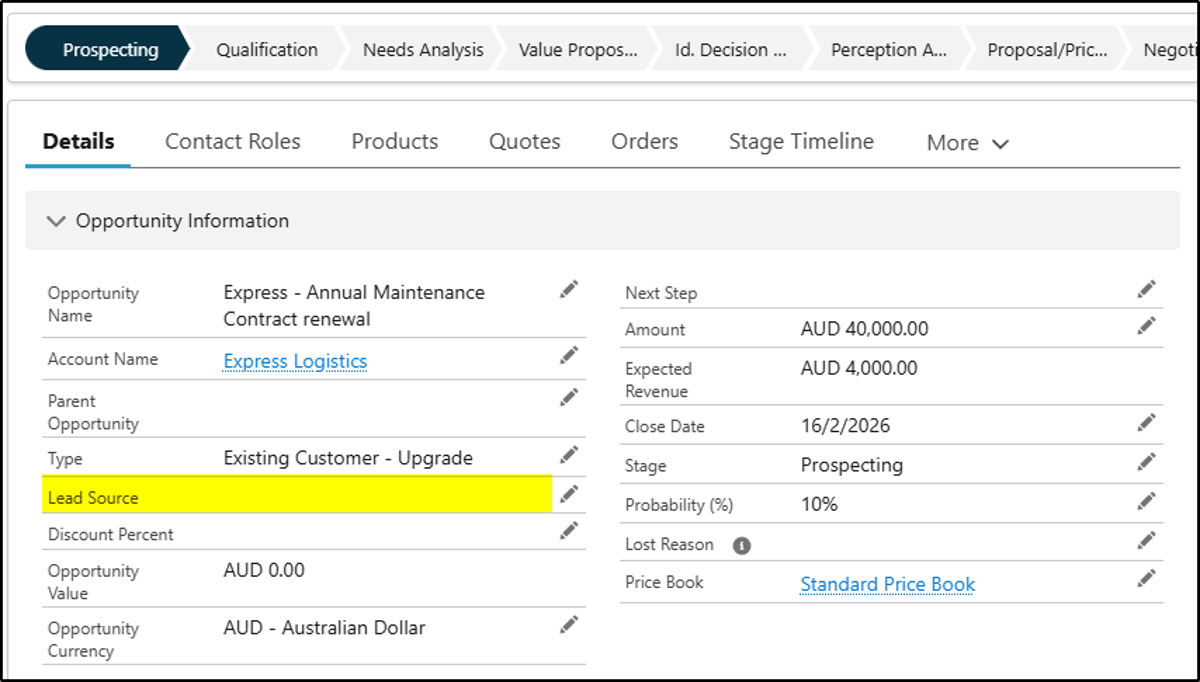
“Transient” Salesforce Validation Rules
Salesforce records such as Leads, Opportunities, and Cases are "transient," evolving through stages as more information becomes available. Traditional validation rules that require fields at creation can force sales reps to guess, compromising data quality. By incorporating the stage name...

AI Isn’t the Product. The Workflow Is.
The article argues that AI‑generated visualizations in spatial computing are merely a flashy front‑end, not the end product. While AI can compress ideation and produce stunning renders, the real challenge lies in integrating those outputs into existing GIS, CAD, and...

“It’s Slow” Is Not a Diagnosis: How to Actually Fix Dynamics 365 F&SCM Performance Issues
Dynamics 365 Finance and Supply Chain Management (F&SCM) performance problems stem from interactions across SQL databases, AOS application servers, and the Batch framework, making root‑cause diagnosis challenging. Built‑in tools like Lifecycle Services and Application Insights provide high‑level telemetry but lack...

From the Microsoft Dynamics 365 Finance and Supply Chain Management: Accounts Receivable; Feature Management; Performance After Go-Live; Frontier Firm Vision
Microsoft’s Dynamics 365 Finance and Supply Chain Management (D365 F&SCM) is highlighted for its ability to tighten accounts‑receivable cycles, offering dashboards, automation, and predictive insights that accelerate cash collection. The platform also introduces streamlined feature‑management tools that let administrators toggle new updates...
From the Microsoft Dynamics 365 Business Central Blogs: BCMCPProxy vNext; Set up, Use EFT/ACH; Install, Configure Power BI Apps; Close...
Microsoft’s Dynamics 365 Business Central ecosystem received several practical upgrades. Stefano Demiliani released BCMCPProxy vNext, a cross‑platform .NET proxy that adds browser‑based token caching for AI tool connectivity. The platform also now supports built‑in EFT/ACH processing with NACHA formats, and Microsoft published...
From the Microsoft Dynamics 365 CE/CRM Blogs: Disposition Codes; AI Invoice Approval; Save Time with Email Templates; Create Better Relationships
The latest Dynamics 365 CE/CRM blog roundup highlights four practical upgrades for customer‑service teams. Disposition codes now let agents log conversation outcomes, delivering cleaner data and actionable reporting. Multi‑stage AI invoice approval, powered by Copilot Agents, automates low‑value approvals while routing...

OpenClaw in the Clinic: A Business Plan for HIPAA-Compliant Deployment of Agentic AI at Scale in Payer and Provider Organizations
The episode dissects OpenClaw, an open‑source, agentic AI platform that can autonomously interact with files, commands, and dozens of applications, and evaluates its viability for payer and provider health organizations. It explains why the default, unsecured version violates HIPAA, outlines...

How to Design Salesforce Agent-to-Agent (A2A) Architecture
Salesforce is moving from isolated chatbots to an Agentic Swarm architecture built on the Atlas Reasoning Engine. The model introduces a generalist Orchestrator that parses intent and delegates work to narrow‑focus Specialist agents via Agent Builder and Data 360. Two core...

Bringing End-to-End AP Automation Into Dynamics 365 Business Central: What Partners Need to Know
Mekorma and Continia announced a joint solution that delivers end‑to‑end accounts payable automation directly inside Microsoft Dynamics 365 Business Central for North American customers. Continia provides OCR‑driven invoice capture, approval routing, and document management, while Mekorma adds vendor onboarding, compliance validation,...

MSDW Podcast: Understanding 2026 Tax Changes with Avalara's Scott Peterson
Avalara released its 2026 Tax Changes Report, highlighting “off the charts” growth in U.S. transaction taxes. In a sponsored MSDW podcast, Avalara VP Scott Peterson explained how federal income‑tax reforms will affect state tax structures. He noted that many states...
From the Microsoft Power Platform Blogs: Power Apps MCP; Data Change Request Architecture; Build Reusable Component Collection; Power Apps Error...
Microsoft announced a public preview of Power Apps MCP (Model Context Protocol) and a redesigned agent feed, allowing AI agents to automate routine tasks within low‑code business applications. The AI assistants can ingest emails or documents, extract key data, and...
Microsoft Dynamics Partner Roundup: New Microsoft Clients; Housing Services Win; Manufacturing Industry Lead
Microsoft Dynamics partners announced several strategic moves this week. Endeavor4 added over 60 former DataSys clients, extending its ERP support across North America. Solvares Field Service and Infinity Group secured Saxon Weald as their first joint housing customer, deploying a scheduling...

Real Results: 3 Enterprise Projects Powered by Reliable Controls Solutions
Reliable Controls showcases three enterprise building‑automation projects that demonstrate scalability, sustainability, and long‑term compatibility. In Washington, D.C., the Constitution Square portfolio leveraged backward‑compatible controls across an 11‑year build without replacing legacy devices. In Australia’s Gold Coast, integration of a 312 kW...

Where Do You Rank on Time-to-Pay, P2P, and O2C?
The episode examines how finance, credit, and treasury leaders can gauge their organization’s readiness for high‑level automation in Time‑to‑Pay, Procure‑to‑Pay, and Order‑to‑Cash, noting that over 75% agentic automation is the target within three years. It highlights findings from the North...

Keeper Commander Introduces SuperShell™
Keeper Security launched SuperShell™, a full‑screen terminal user interface for Keeper Commander, available from version 17.2.7 onward. The TUI provides a split‑view vault browser with vi‑style keyboard shortcuts, searchable panes, raw JSON inspection, and live TOTP display. Designed for developers,...

The Dangers of a CCaaS Monoculture – Interview with Paul Hughes of Mitel
In the latest Punk CX podcast, Paul Hughes of Mitel argues that hybrid CX solutions are now the enterprise default, especially for regulated firms that need both cloud and on‑premise capabilities. He warns that a CCaaS monoculture—relying on a single...

HG's Acquisition of OneStream
Hg has completed the acquisition of OneStream for $6.4 billion, paying $24 per share—a 31% premium to the prior market price. The deal positions Hg as a major player in corporate performance management (CPM) and business intelligence, leveraging its software expertise...

Three Strategies for Designing an E-Procurement System: Lessons Learned in Nuevo León, Mexico
Nuevo León’s Ministry of Administration, with the Open Contracting Partnership, launched a three‑stage e‑procurement redesign that began with a deep, collaborative diagnosis of existing processes, moved to a data‑driven functional and modular design, and concluded with a market‑engagement phase using...

Black Duck Signs MSSP Agreement with Accenture
Black Duck announced a managed security service provider (MSSP) agreement with Accenture, designating the Black Duck Polaris platform as the standard tool for Accenture’s Application Security Practice. Polaris combines static, dynamic, and software composition analysis into a single SaaS offering,...

Should You Really Vibe Code a TMS?
In this episode Adrian Gonzalez examines the modern "build vs. buy" dilemma for transportation management systems (TMS) in the age of AI‑driven vibe coding. He references Dave Clark’s rapid custom CRM build and recent market jitters over AI’s impact on...

Rethinking Identity Management: From Who Has Access to What Really Matters
Traditional Identity Governance and Administration (IGA) has focused on compliance, but 99% of granted permissions remain unused, creating “Zombie Access”. This compliance‑only approach leads to rubber‑stamping, with 58% of access reviews ineffective, exposing organizations to insider threats. Integrating data governance...

Will Oracle Offload Cerner to Fund Datacenters?
A TD Cowen note suggests Oracle could sell its health‑tech unit, formerly Cerner, to finance massive AI datacenter spend. The company faces over $500 billion in capital commitments, including a $300 billion OpenAI contract that alone may require $156 billion in capex. To free...

Creating a Top-Down and Bottom-Up Grounded Capability Model
The article argues that business capabilities are the foundation of enterprise architecture and must be captured in a grounded capability model. A successful model combines top‑down strategic direction with bottom‑up operational validation, creating a stable map that aligns strategy, value...

There Is a Lot of Knowledge and Wisdom Packed Into Speakeasy's Agent Skills
Speakeasy has released a detailed catalog of Agent Skills that codify the actions needed to generate, test, and manage SDKs and Terraform providers from OpenAPI specs. The list includes steps such as starting new projects, diagnosing failures, customizing runtime behavior,...

Where Is Governance (Guidance) Going?
The article reflects on a recent conversation with product marketer Anna Daugherty about the future of API governance, emphasizing a shift toward consumer‑first perspectives. It introduces "Spotlight rules" as the next evolution of Spectral and Vacuum linting, extending governance beyond...