
AI-Powered Longevity Science — One Gene to Reverse Aging? | Daniel Ives PhD
In this episode, Dr. Robert Lovekin talks with Dr. Daniel Ives, founder of Shift Bioscience, about moving from hypothesis‑driven aging research to data‑driven, AI‑powered approaches. Ives explains how his early focus on mitochondrial DNA mutations as the primary cause of aging was disproven by epigenetic clock data, prompting a pivot to using single‑cell aging clocks and virtual cell models to run thousands of in‑silico experiments. The discussion highlights the discovery of single genes that can rejuvenate cells without inducing pluripotency and the translation of these findings into targets for conditions like fibrosis and age‑related hearing loss.

Dr. Oliver Kharraz on the Decades-Long Journey to Make Scheduling a Doctor's Appointment Easier
In this episode, Christina Farr talks with Oliver Kharraz, CEO of Zocdoc, about the 15‑year quest to simplify doctor appointment scheduling. Kharraz explains how hidden appointment inventory and last‑minute cancellations can be leveraged as a matchmaking clearinghouse, and recounts early...
AI in Oncology Takes Off, Tackling HIV and Liver Disease, Pharma’s Recent Gains
The episode recaps highlights from the AACR conference, emphasizing that AI is moving from pre‑clinical research into clinical oncology, but adoption is hampered by low digital pathology uptake (under 10% of U.S. labs), trust issues, and infrastructure costs. It then...
How AI and Robotics Designed New Cancer Therapies
In this episode, Angus Sinclair, CSO of LabGenius Therapeutics, explains how their AI‑driven AVA platform combines high‑throughput cell‑based assays with machine learning to design non‑intuitive protein therapeutics, specifically T‑cell engagers for solid tumors. He details the challenges of targeting antigens...

Dr. Ryan Cole on Defending His Medical License and Improving Health
In this episode, Dr. Ryan Cole discusses his recent battle defending his medical license, his new role leading medical and scientific affairs at the Independent Medical Alliance, and his advocacy for free‑speech rights in medicine following a landmark Supreme Court...

Dayton Children’s Whitlock Says TEFCA Trust Model Needs Stronger Guardrails to Stop Data Misuse
In this episode, Dayton Children’s CIO J.D. Whitlock discusses the challenges of TEFCA’s trust model, highlighting how inadequate guardrails have allowed patient data to be misused for non‑clinical purposes, exemplified by the Health Gorilla lawsuit. He explains the complex governance...
UNC Health’s Moosavi Says Analytics Teams Must Deeply Understand Requests Before Moving Forward; No Place for Ticket-Taking
In this episode, UNC Health’s Chief Analytics Officer Rachani Moosavi discusses how analytics teams must deeply understand stakeholder needs before building solutions, emphasizing that analytics is not a ticket‑taking function. She shares her diverse background—from nursing aide to patient‑flow consulting...

Transforming the U.S. Department of Veterans Affairs: A Conversation with Deputy Secretary Dr. Paul Lawrence
In this hour-long interview, Deputy Secretary Dr. Paul Lawrence outlines his role as the VA’s chief operating officer and shares the department’s strategic vision to deliver world‑class health care, benefits, and memorial services to veterans. He highlights three urgent priorities:...

Can AI Help Us Finally Beat Cancer W/ Dr. Sanjay Juneja, TheOncDoc
In this episode of CareTalk, oncologist Dr. Sanjay Ganesha (TheOncDoc) discusses how advances in AI, immunotherapy, CAR‑T, and early‑detection blood tests are turning cancer from a death sentence into a manageable disease. He shares his personal journey from a vision‑loss...
[Emergency Pod] Peptides - Part 1 with Sunita Mohanty of Ultralight
In this episode of Lifers, host Christina Farr talks with Sunita Mohanty, CEO and co‑founder of Ultralight, about the booming interest in peptide therapies for wellness and longevity. Sunita explains that while peptides are gaining popularity—driven by anecdotal success, recent...

Anthropic's IPO Play, Novo Nordisk X OpenAI, and the First Brain Sensor Goes Human
The episode covers a rapid round‑up of AI‑related headlines: Apple is testing four frame designs for smart glasses that will focus on camera, call, and AI assistant functions rather than AR; Vercel’s CEO announced a surge to a $340 million ARR...

Why Genetic Diagnoses Take So Long for Kids
In this brief episode, host Catherine interviews the CEO of GeneDX about the stark delay—averaging five years—in diagnosing children with genetic diseases, despite the availability of rapid whole exome and genome sequencing that can deliver results in days. She explains...

860: Making a Mechatronic Tremor Suppression Glove for People with Parkinson's Disease - Dr. Ana Luisa Trejos
In this episode, Dr. Ana Luisa Trejos, an associate professor at Western University, discusses her work in mechatronic systems engineering, focusing on a wearable glove designed to suppress hand tremors in Parkinson’s patients. She explains how the glove integrates lightweight sensors and...

ONC’s Keane Says Government Will Strengthen TEFCA Onboarding to Address Provider Privacy Concerns
In this episode, ONC National Coordinator Tom Keen discusses recent organizational changes at ONC, the dual‑lane approach of TEFCA and CMS‑aligned networks, and how the government is strengthening TEFCA onboarding to address provider privacy concerns. He explains that ONC will...
Penn State Health’s DeFlitch & Hijjawi Say Past Lessons Can Help Guide Today’s AI Implementations
In this episode, Penn State Health’s Chief Medical Information Officer Dr. Chris DeFlich and Associate CMIO Dr. Shadi Hijawi discuss how past experiences with electronic health record (EHR) implementation can inform today’s rapid rollout of artificial intelligence (AI) tools in...

Ignite Startups: How LainaHealth Is Redesigning Healthcare Workflows for Scale with Ryan Eder |Ep253
In this episode, Ryan Eder, founder and CEO of LainaHealth, shares how his background in industrial design led to the creation of a virtual musculoskeletal and physical therapy platform that uses AI and computer‑vision to deliver personalized care at home....

The Company Helping Paralyzed People Move And Thrive Again - EP 64 Dave Marver
In this episode, Dave Marver, CEO of Onward, explains how the company’s spinal cord stimulation platform, ArcIM, combined with a minimally invasive epidural brain‑computer interface (BCI), can translate a patient’s movement intentions into real‑time leg stimulation, enabling paralyzed individuals to...

#754: Accelerating Healthcare Decisions with Agents
In this episode, AWS host Jillian Ford talks with Gigi Yuen, Chief Data & AI Officer, and Kenji Fujita, Staff AI Platform Engineer at Cohere Health about using AI agents to streamline healthcare administration. They explain how Cohere Health tackles...
The New Data Layer in MRI: Valerie and Codi Gharagouzloo, PhD, of Imaginostics on Building a One-of-a-Kind Vascular Health Platform
In this episode, Unity Stokes interviews Valerie and Cody Gargoozlu, founders of Imaginostics, about their breakthrough MRI technology that adds a new data layer to traditional scans. Their QC‑MRI platform replaces toxic gadolinium contrast with a safer agent and produces...
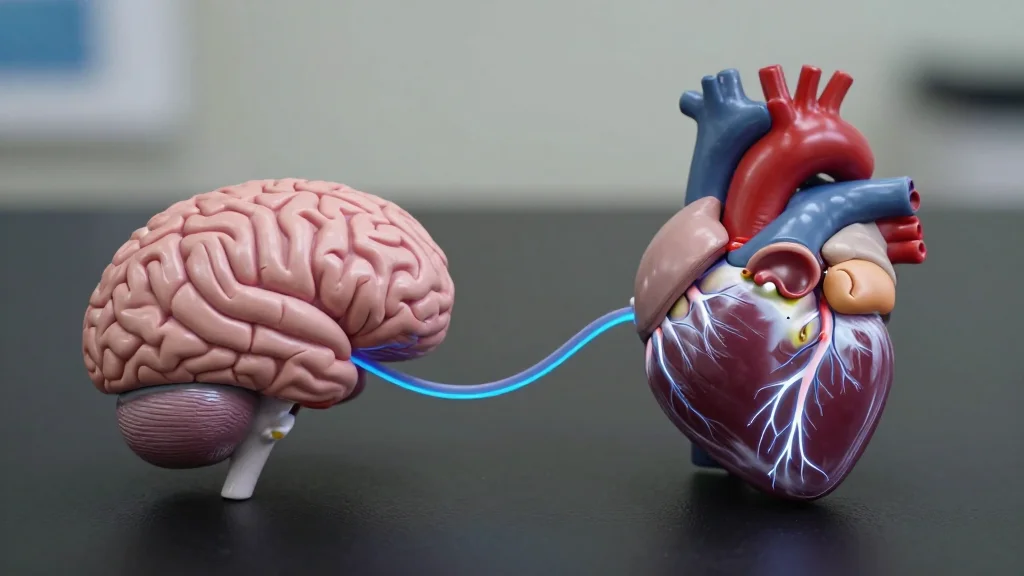
The Longevity Nerve: The Missing Link in Stress, Aging & Brain Health | Elisabetta Burchi MD
In this episode, Dr. Elisabetta Burchi explains how the vagus nerve serves as a central hub linking the brain to the heart, gut, immune system, and overall longevity. She outlines the anatomy and function of the vagus within the parasympathetic...

Decentralized Trials That Scale Globally Without Compliance Risks - with Emma Vitalini of Amgen
In this episode, Emma Vitalini, Head of Global Digital Health Technology Innovation at Amgen, discusses how AI and decentralized trial technologies are transforming patient recruitment, screening, and global trial accessibility. She explains that AI can rapidly parse unstructured genomic and...
Corewell Health’s Jarve Says Population Health Data Challenges Demand Internal Builds
In this episode, Dr. Bob Jarvie, Associate CMIO and Medical Director for Population Health Analytics at Corewell Health, explains why the health system built its own internal population health data platform instead of relying on external vendors. He highlights the...

Maro of the Minds: Kenzie Butera Davis with Jenny Fielding
In this episode, founder Kenzie Butera Davis discusses Morrow, a platform that provides early‑intervention mental‑health screening and risk detection for K‑12 students. She traces her journey from nonprofit work and accelerator experience to launching Morrow, highlighting a pivotal win at...
Health System CIOs Say EHR Downtime Resilience Requires Organization-Wide Ownership, Rehearsed Plans, and Structured Documentation
The panel explored how health systems can achieve operational resilience during EHR downtime, emphasizing that resilience is an organization‑wide capability rather than just an IT issue. CIOs Chris Akeroy (Lee Health) and Stuart James (Christus Health) highlighted the need for...
Sharp HealthCare’s Korn Says Spatial Computing Gives Clinicians Superpowers, But Demands a Strong IT Foundation
In this episode, Dr. Tommy Korn, Sharp Healthcare’s Chief Spatial Computing Officer and practicing ophthalmologist, explains how the health system is leveraging Apple Vision Pro devices to give clinicians "superpowers" through spatial computing. He outlines the dual role of his...
Is Healthcare Safe From the SaaS Bloodbath? With Omada CEO Sean Duffy and Stephanie Davis
In this episode of Lifers, host Christina Farr talks with Omada Health CEO Sean Duffy and equities analyst Stephanie Davis about whether the current SaaS market downturn, driven by AI hype and tightening valuations, threatens digital health firms. Duffy explains...
EMR Optimization: Why Ambient AI Can’t Fix a Broken EHR
The panel discussed practical approaches to EMR/EHR optimization, emphasizing that hidden workflow friction—not just software bugs—drives clinician burnout. They highlighted the need for combined quantitative analytics (e.g., usage dashboards, sentiment analysis) and qualitative methods (shadowing, listening sessions) to surface problems,...

A Brief History of AI in Healthcare W/ Lekan Wang, Partner, JSL Health Capital
In this episode, John Driscoll chats with Lekan Wang, a partner at AI‑first venture fund JSL Health Capital, about the evolution of artificial intelligence in healthcare. Wang traces his journey from early work at Palantir integrating disparate health data for...
Food as Medicine X AI: Two Pioneering Founders on the Future of Personalized Nutrition
In this episode of Startup Health Now, host Unity Stokes talks with Richard Bennett, CEO of Epicured, about how the company is turning food into a reimbursable, medically‑tailored service that builds trust and addresses social determinants of health, and with...

EP503: Let's Go From Lazy PPO Networks to Smart Collaboration With Direct-to-Employer Specialty Care, With Ryan Wells; Leo Spector, MD,...
In this episode, host Stacey Richter talks with Ryan Wells (founder of Health Here), Dr. Leo Spector (CEO of OrthoCarolina), and Adam Stavisky (benefits consultant) about the need for direct, data‑driven collaboration between self‑insured employers and specialty physicians. They explore...

The Two AI Strategies That Will Fail
In this brief episode, John discusses how healthcare executives should respond to AI disruption, emphasizing two failing strategies: the aggressive "chainsaw" approach of cutting jobs and the passive "ostrich" approach of ignoring AI. He advocates for leaders to gain hands‑on...
CTG’s Kochan Says Patient-Centric Workflow Mapping Exposes Gaps Product-Focused IT Teams Can Miss
In this HIMSS‑recorded episode, CTG healthcare solutions architect Christina Kochan, a registered nurse turned informaticist, explains how patient‑centric workflow mapping uncovers gaps that product‑focused IT teams often overlook. She stresses the importance of understanding current clinical processes, performing gap analysis,...
President of Microsoft Science Saw ChatGPT Coming (and Now He Predicts How It Will Change Healthcare) | Peter Lee
In this episode, Peter Lee, President of Microsoft Research, recounts the evolution of AI from early neural networks to today’s large language models, describing how Microsoft recognized OpenAI’s potential early on and invested heavily despite industry skepticism. He explains the...

The Skin We’re In: Microfluidics, Bubbles, and Healthcare Solutions with Prof. David Fernández Rivas
In this episode, Professor David Fernández‑Rivas discusses the role of engineers as problem‑solvers and the necessity of interdisciplinary collaboration, especially between physics, chemistry, and bioengineering. He explains microfluidics—manipulating fluids at the micrometer scale—and its parallels with microelectronics, then delves into...
Reducing Licensing Friction to Unlock Clinician Capacity with Dr. Ian Madom, CEO & Co-Founder of Mocingbird
In this episode, Dr. Ian Madome, orthopedic spine surgeon and CEO of Mockingbird, discusses the administrative burdens clinicians face around licensing, CME, and compliance, and how Mockingbird’s SaaS platform automates credential tracking for both individual providers and health system administrators....
St. James Hospital Dublin’s Giunti Says AI Transformation Starts With Literacy
In this episode, St. James Hospital Dublin’s Chief Data Officer Guido Giunti explains why AI transformation in healthcare must begin with AI and data literacy across all staff, not just technology deployment. He describes a blended top‑down and bottom‑up strategy that uses...
Penn Medicine’s Cook Says You Can’t ‘Set It and Forget It’ With Clinical AI
Dr. Tessa Cook, an associate professor and vice chair of practice transformation in radiology at Penn Medicine, discusses how her team approaches clinical AI implementation. She emphasizes a systematic, "set it and forget it" mindset is unrealistic; instead, AI tools...
Othman Laraki, Color CEO, on Surviving Three Major Pivots
In this episode, Othman Laraki, CEO of Color, recounts the company’s three major pivots—from a cancer genetics startup to its current health‑tech platform—highlighting the financial, team, and market challenges each transition entailed. He stresses that while technology and product are...

Drug Dealin Ep. 9: Using AI to Find Novel Treatment Options
In Episode 9 of Drug Dealin, hosts Kenny and Shibu demonstrate how patients can use publicly available tools like ClinicalTrials.gov and AI language models to uncover novel treatment options, focusing on a hypothetical Parkinson’s disease case inspired by a TV...

Can AI Reduce Medical Errors?
The episode discusses the alarming rate of medical errors—estimated at 800,000 to a million deaths annually—and explores how AI can help reduce these mistakes. The host highlights personal experience using AI tools like OpenEvidence, GPT, and Gemini to obtain specialist-level...

Reprogramming Cancer From Within
In this episode, Dr. Aaron Vinnie shares his journey from a leukemia survivor to a Columbia University hematology‑oncology researcher, advocating a shift from traditional cytotoxic chemotherapy to precision strategies that rewire malignant blood cells. He explains how hematologic cancers stem...
EqualityMD’s Pre-Insurance Strategy to Reduce Care Avoidance and Lower Healthcare Costs
In this episode, Unity Stokes chats with Justin Ayers, CEO of EqualityMD, about the company’s shift from a direct‑to‑consumer, membership model to a B2B/B2B2C platform that offers employers an insurance‑free telehealth solution with culturally competent clinicians and free prescriptions. Ayers...
Sana Health Clears a Major Milestone in the Fight Against Chronic Pain
In this episode, Richard Hanbury of Sana Health discusses the company’s recent FDA De Novo clearance for a novel audio‑visual neuromodulation device targeting neuropathic pain, marking the creation of a new therapeutic class. He outlines decades of research that led...

The Trust Problem With Healthcare AI
In this brief clip, host David Williams talks with Dr. Sarah Matt about the critical role of explainability in building trust for AI-driven healthcare. Dr. Matt emphasizes that patients and providers must understand how AI models make decisions to feel...
Newman Explains How Sanford Health Is Virtually Rewriting the Rural Health Playbook
Dave Newman, MD, Chief Medical Officer of Virtual Care at Sanford Health, explains how the system’s expansive virtual care program—spanning 78 specialties across 300,000 square miles—has become essential for rural patients, saving them an average of 176 miles per visit....

Will AI Replace Doctors? A Conversation with Physician & NYT Bestselling Author Dr. Bob Wachter About the Digital vs Human...
In this live conversation, Dr. Bob Wachter and Dr. Lucy McBride discuss the fragmented state of electronic medical records (EMRs) and how patients and physicians alike are overwhelmed by multiple, non‑communicating digital portals. They highlight federal efforts to create standardized, interoperable...
Sami Inkinen of Virta Health on AI-Native Healthcare and Reversing Metabolic Disease
In this fireside chat, Sami Inkinen, CEO and founder of Virta Health, explains how his personal pre‑diabetes diagnosis inspired the creation of a company that uses nutrition, technology and AI to reverse type‑2 diabetes and obesity. He describes Virta’s massive...
Health First’s Carr Weaves Tapestry for Integrated Payer-Provider Platform
In this episode, Michael Carr, VP and CIO of Health First, discusses the organization’s integrated payer‑provider platform built on Epic’s suite, including the provider rollout and the Epic Tapestry health‑plan implementation. He highlights how consolidating nine disparate systems into a...