
‘We Make People Feel Something as a Result of Our Work:’ Figma’s Chief Design Officer on How to Build Impactful...
Loredana Crisan, Figma’s chief design officer, credits her classical piano training and later sound‑engineering career for shaping her visual design instincts. After moving from Romania to San Francisco, she joined a startup, Lexy, to prototype audio interfaces before transitioning to Figma. Crisan blends neuroscience, music, and design to create experiences that evoke emotion, and she leads teams with a purpose‑progress‑community framework to combat burnout. Her cross‑disciplinary journey illustrates how diverse creative backgrounds can drive impactful technology.

Singapore’s Workforce Shake-Up Drives Demand for Neuroscience-Led Coaching to Support Professionals Through Transition
Singapore’s tech, banking and professional services sectors are shedding roughly 20,000 jobs in 2025, driven by AI adoption, cost pressures and broader business transformation. In response, neuroscience‑led performance expert Sonia Ouarti, backed by Google Cloud, is offering a free, invitation‑only...

The Fellowship That Taught Me Good Teaching Doesn’t Require Perfection
The Voices of Change writing fellowship taught the author that effective teaching thrives on vulnerability, not perfection. Through a series of personal essays—including stories about unexpected classroom moments, neurodivergence, and broader topics like AI—the fellow discovered that authentic storytelling strengthens...

Here’s How to Break the Habit of Endlessly Scrolling
The article explains how infinite scroll—a design that continuously loads content—exploits human psychology to keep users hooked, eliminating natural stopping cues and feeding dopamine‑driven cravings. It highlights that algorithmic feeds make users feel they can never be "caught up," turning...

Why Smart Leaders Do Less
Smart leaders are increasingly embracing a "do less" mindset, recognizing that constant decision‑making drains mental energy and degrades judgment. Research shows that repeated choices impair the prefrontal cortex, leading to poorer self‑control and lower decision quality. By standardizing routines, delegating...

The Hidden Power of Talking to Strangers
Gillian Sandstrom’s new book "Once Upon a Stranger" argues that casual conversations with strangers improve personal well‑being and societal health. Research shows these interactions lift mood, add psychological richness through novelty, and expand access to diverse information. Repeated practice reduces...

The Case for Designing Work Around Circadian Rhythms
In a recent HBR IdeaCast, professor Stefan Volk explains how human circadian rhythms—natural 24‑hour cycles that create distinct chronotypes—shape alertness, mood, and decision‑making. He argues that traditional nine‑to‑five schedules ignore these variations, causing productivity dips and heightened conflict when employees...
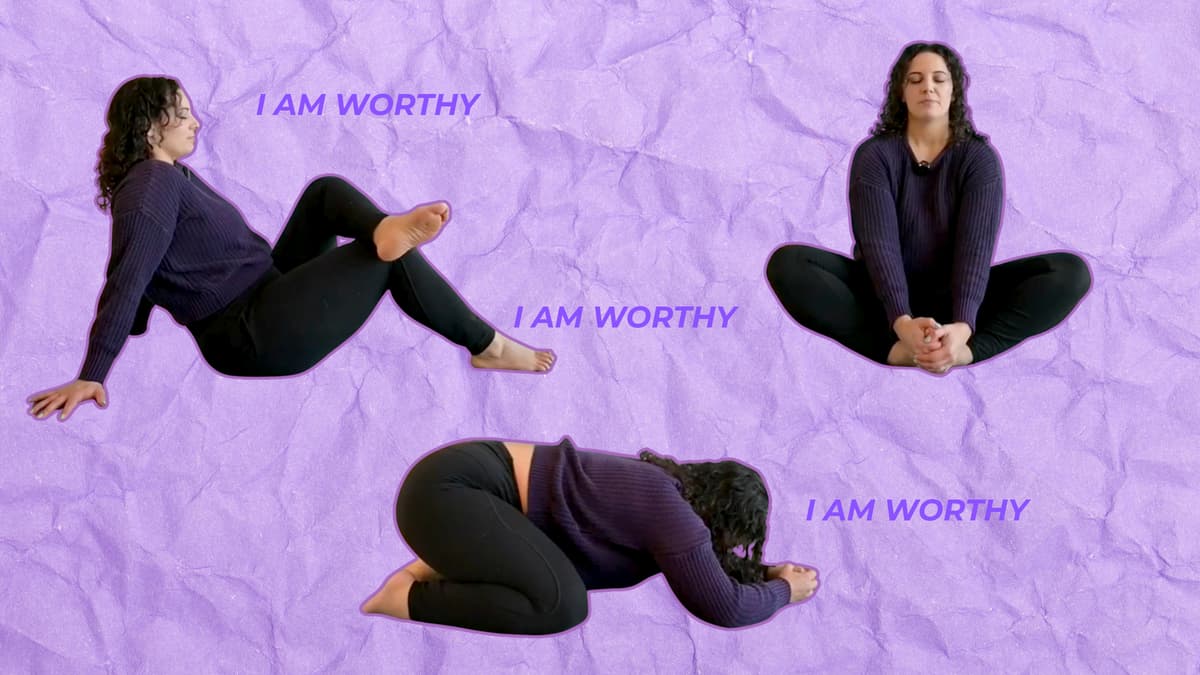
17-Minute Postive Affirmation Yoga Practice for a Quick Confidence Boost
Audriana Monteiro, a trauma‑informed yoga teacher and physiotherapist, offers a 17‑minute yoga sequence that pairs each pose with a positive affirmation. The routine targets the hips, legs, and low back, encouraging both physical stretch and mental reinforcement. Each posture is...

Do One Thing Every Day That Scares You
Venture partner Linda Bain recounts how a childhood performance panic sparked a lifelong habit of embracing uncomfortable choices, ultimately guiding her from a farming town to senior roles in big pharma and biotech. She argues that the biotech sector thrives...

Stop Wasting Time: Kill 30% of Meetings With 2 Steps
The article introduces a two‑step filter that can slash 30% of calendar meetings by demanding a clear decision or output and by distinguishing between decision‑making and information‑distribution roles. Step 1 forces organizers to state the exact decision or artifact expected, while...
:max_bytes(150000):strip_icc():format(jpeg)/VWM-GettyImages-2250267726-2bdc61cad0ab4fa68d28b2babcf07ae9.jpg)
6 Connections Between Strength Training and Emotional Resilience
The article outlines six ways strength training bolsters emotional resilience, including enhanced self‑efficacy, stress tolerance, emotional regulation, brain‑chemical shifts, mental toughness, and a growth‑oriented identity. It cites scientific studies showing how progressive overload creates mastery experiences that reinforce confidence. Regular...

How to Be an Artist
Sally Mann’s memoir *Art Work* chronicles her evolution from a teenage rebel who quit college to a globally celebrated photographer. The book blends candid letters, early‑stage photographs, and witty anecdotes, revealing how relentless practice, serendipitous encounters, and persistent rejection shaped...

Faherty’s Kerry Docherty on Losing Herself While Building the Brand
Kerry Docherty, co‑founder of the Faherty clothing brand, has released a candid memoir titled “Selfish: Unlearning, Reclaiming and Telling the Truth.” The book chronicles her evolution from a law‑trained, behind‑the‑scenes operator—handling social media, HR, legal work, and even modeling—to a...
10 Ways To Find Quiet Time
The article outlines ten practical methods for carving out quiet time to enable deep work, planning, and mental recharge. It emphasizes the challenges posed by an always‑on culture and the particular needs of introverts. Strategies range from creating off‑limits spaces...

How to Improve Your Prioritization Skills and Stop Procrastinating
Productivity coach emphasizes treating prioritization as a daily, non‑negotiable habit, likening it to learning to swim. Procrastination often stems from waiting for emergencies before prioritizing. Daily practice, verbal commitment, and mindset shifts help entrepreneurs consistently rank tasks. Implementing these habits...

Want to Change? Maybe Stop Trying So Hard.
In a guest essay, Benoit Denizet‑Lewis argues that the booming self‑improvement industry overstates personal willpower, suggesting that lasting change depends more on interpersonal dynamics and mystery than relentless self‑optimization. Drawing on decades of therapy, addiction treatment, and observations of wellness...

I’m 66 and the Most Important Relationship of My Adult Life Has Been with Solitude — Not as a Consolation...
A 66‑year‑old electrician reflects on a lifelong preference for solitude, describing how alone time has been the source of his greatest honesty, creativity, and personal growth. He recounts decades of guilt and cultural pressure to conform to social expectations, especially...

The Gifted but Entitled Perfectionist
The article examines how perfectionists often mask fear with a sense of entitlement, believing their talent guarantees effortless success and external praise. It argues that this entitlement creates stagnation, as failures are blamed on others or perceived as personal flaws....

Helping Black Women Remove the Mask
The article highlights how Black women often wear a psychological “double mask” to navigate stereotypes and survive oppressive systems. It argues that clinicians have an ethical duty to support clients in shedding these masks through therapy that uncovers authentic identity....

Your Someday Idea
The article urges professionals to stop waiting for a perfect moment and start sharing their ideas publicly. It frames personal visibility as a muscle that strengthens with consistent use, sharpening thinking and opening unexpected business opportunities. Emerging AI‑driven tools, such...

The Flow of Life
In a newly translated dialogue, journalist Irmgard Kirchner interviews longtime friend Santacitta Bhikkhuni, a former avant‑garde dancer turned Theravada monastic. The conversation frames Buddhism as a healing path that dissolves delusion and attachment, using the four vipallasa to illustrate how...

Where Do Bad Choices Come From?
The article examines why people make poor decisions, pointing to three primary drivers: unclear objectives, identity‑driven pressure, and a short‑term focus that ignores long‑term consequences. It frames choice as a function of perceived agency, noting that many fail to recognize...

3 Tips From a Cognitive Scientist on How to Beat Decision Fatigue
Decision fatigue, a form of ego depletion, erodes the mental energy needed for high‑stakes choices as the day progresses. A cognitive scientist outlines three practical tactics: calibrate effort to the decision’s importance, postpone critical choices until you’re refreshed, and adopt...

How a Humility Scholar Became More Grounded
A sociologist who spent a decade studying humility discovered its personal relevance after moving from the University of Delaware to Arizona State University. The transition exposed a clash between his publication‑centric background and ASU’s grant‑driven culture, leaving him feeling invisible...
:max_bytes(150000):strip_icc():format(jpeg)/GettyImages-162984079-56a1bd105f9b58b7d0c2278b.jpg)
7 Steps for Making a Life Plan
Verywell Mind outlines a seven‑step framework for crafting a personal life plan, beginning with an honest audit of what isn’t working and moving through values clarification, long‑term visioning, and actionable micro‑steps. The guide stresses cutting non‑essential commitments, establishing supportive structures...

The Ultimate Investment: Why Investing in Yourself Is Your Greatest Asset
The article argues that the most powerful investment is in oneself, emphasizing skill development, strategic networking, and personalized coaching. It illustrates how attending a digital‑marketing conference sparked a breakthrough for co‑host Brooks Duncan and how combining niche skills can create...

Creativity in Times of Strife Has Never Waited for Permission
Creativity does not wait for stable conditions; it persists through crises, as shown by Shakespeare’s plague‑era tragedies, Anne Frank’s diary, Picasso’s Guernica, and Sam Cooke’s civil‑rights anthem. The essay argues that modern creators in the Middle East face similar volatility...

The Psychology of Running: Why Racing a 5K Is Mentally Tougher Than Running a Half Marathon
The article explores why a 5K race feels mentally tougher than a half marathon, highlighting the pressure of sustaining sprint‑like paces from the start. Sport‑psychology expert Mike Gross explains that the mental narratives runners create generate cognitive fatigue, which in...

‘I Don’t Want to Waste My Days’: Eva Longoria on Thriving in Your 50s
Eva Longoria, 51, has transformed from a TV star into a multi‑platform entrepreneur, host, director, and philanthropist. She now balances motherhood, a CNN travel series, a Netflix comedy directorial debut, and leadership of her production firm UnbeliEVAble Entertainment, which produced...

What We Lose When Nothing Is Hard
Faisal Hoque argues that the ease provided by modern technology erodes the meaningful effort that turns information into skill and attachment. He cites a 2025 Harvard‑MIT study showing AI‑generated essays lead to poorer knowledge retention and originality. Hoque distinguishes between...

Happiness Break: Make Uncertainty Part of the Process
The latest "Happiness Break" episode features poet‑author Yrsa Daley‑Ward leading a short meditation that frames uncertainty and silence as fertile ground for personal growth. The six‑step practice guides listeners through stillness, naming doubt, and ending with self‑compassion. By blending poetic...

Who Sets Your Agenda?
Seth Godin’s April 2, 2026 essay asks who truly determines our daily agenda, highlighting that while some environments—prisons, medical school, middle school—impose strict limits, most people, especially freelancers and entrepreneurs, enjoy far greater freedom. He argues that even in constrained settings we...

Being Courageous About Change: Mindful Guidance on the Proactive Pivot
The article explains proactive pivoting—changing before a crisis forces it—by highlighting the psychological hurdle of loss aversion and the need for mindful courage. It contrasts proactive pivoting with crisis‑driven change, using a personal story of an 85‑year‑old moving from Wisconsin...

When You’re Worn Down—And Your Team Is Too
Harvard Business Review’s April 1 podcast hosted by Alison Beard and Curt Nickisch features workplace strategist Daisy Auger‑Domínguez, who shares concrete ways for managers to rediscover joy amid growing burnout. She advises leaders to reconnect with purpose, adopt a beginner’s mindset,...

7 Signs You’re the Kind of Person Who Performs Best Under Pressure but Quietly Falls Apart when Things Are Calm
The article outlines a common psychological pattern in the space sector where individuals excel during high‑stakes crises but struggle when operations become routine. It identifies seven behavioral signs, from heightened anxiety during downtime to deteriorating relationships in calm periods, and...

Recognition at Work & How to Ask for Feedback
The article argues that asking for feedback becomes more effective when employees focus on impact rather than praise. It distinguishes active feedback (direct requests) from passive cues such as thank‑you notes, urging workers to track both. By keeping a "feel‑good"...

Grief to Grit: Student Who Lost Father During SPM Scores 8As
Ahmad Khairuddin Md Nor, a Penang student, faced his father’s sudden death on the morning of a core SPM paper last November. Despite the trauma, he completed the exam, led funeral rites, and returned for later papers with school support....

April Monthly Challenge: Evening Reset
The author launches an April monthly challenge focused on an "evening reset" of shared home spaces to streamline mornings. By spending up to ten minutes each night tidying the kitchen island, dishes, and living‑room blankets while brewing coffee, the habit...

The Students Who Believe Practice Makes Perfect Get Pretty Perfect Grades
A new study in Frontiers in Education surveyed 249 Norwegian secondary students aged 15 to 19 and examined how four motivational factors—growth mindset, self‑efficacy, passion, and grit—correlated with grades in Norwegian language and physical education. The researchers found that self‑efficacy...

The Secret to Actually Finishing That Passion Project? Treat It Like You Work in a Coal Mine, Says This Best-Selling...
Emma Straub, a New York Times‑bestselling author and co‑owner of Brooklyn’s Books Are Magic, shares how she turns fleeting ideas into lasting creative work. She stresses that only ideas that feel fully formed should be pursued, and that treating writing like a...

How to Help Students Explore the Meanings of “Different”
Educators are increasingly urged to present a single narrative, discouraging exploration of difference, which coincides with rising anxiety among U.S. and U.K. youth. Sally Smith’s 1994 book *Different Is Not Bad, Different Is the World* offers classroom activities that reframe...

A Psychologist's 7-Step Practice To Find Radical Self-Acceptance
Rick Hanson, Ph.D., outlines a seven‑step practice for radical self‑acceptance that guides individuals from fragmented inner dialogue to a cohesive sense of self. The method begins with accepting pleasant, neutral, and mildly unpleasant experiences, then expands to embracing all personal...

Burnt-Out Managers Are Destroying Teams. These 5 Daily Habits Reverse It
A growing wave of manager burnout is eroding team performance, with 47% of managers reporting severe stress—higher than the 37% of employees. Research shows managers influence 70% of team engagement, meaning their exhaustion directly harms productivity and well‑being. The article...

The Difference Between People Who Actually Change Their Lives and People Who Just Talk About It Almost Always Comes Down...
The article argues that the first 90 seconds after waking are decisive for lasting behavior change. During this sleep‑inertia window the brain is low‑willpower and highly suggestible, so reaching for a phone hijacks the natural cortisol awakening response. By inserting...
:max_bytes(150000):strip_icc():format(jpeg)/GettyImages-119703849-570ee8193df78c7d9e5b1690.jpg)
The Type A Personality Quiz
The piece promotes a free Type A personality quiz that traces the concept back to 1950s cardiology research. It explains that while Type A traits can elevate stress and anxiety, they are not inherently detrimental to health. The article offers practical coping...

How to Build Self-Control, According to Psychologists
A University of Zurich study found that people with high trait self‑control prefer activities they deem meaningful—like exercise or chores—over purely pleasurable options such as napping or music. Participants given an hour of free time chose constructive tasks without needing...

Struggling to Focus? 5 Books to Improve Mental Focus
Amid growing digital distractions, a recent YourStory article highlights five books that can help professionals rebuild mental focus. The list includes Cal Newport’s *Deep Work*, James Clear’s *Atomic Habits*, Gary Keller and Jay Papasan’s *The One Thing*, Nir Eyal’s *Indistractable*,...

May 2026: Books in Brief
May 2026’s Lion’s Roar roundup spotlights a wave of new Buddhist titles, from Margaret Cullen’s *Quiet Strength* that re‑centers equanimity, to Bodhipaksa’s 28‑day habit builder *Sit*. It also features Reb Anderson’s Zen parable collection, the Hases’ partnership guide, Roy Remer’s caregiver...

How to Find Your Middle Way
The article explains the Buddhist concept of the "middle way," tracing its origins from the Buddha’s rejection of both self‑indulgence and extreme asceticism to the Mahayana Madhyamaka school’s philosophical emphasis on emptiness. It illustrates how the Buddha’s first turning of...

Who Are You in Conflict?
University of Maryland faculty Jazmin Pichardo and Beth Douthirt-Cohen guide students and staff through embodied conflict‑resolution workshops that blend somatic awareness, emotion‑naming tools, and the concept of “choosing relationship.” Their curriculum teaches participants to notice bodily signals, use emotion wheels,...