Today's Personal Finance Pulse

Young Canadians can grow wealth by automating savings despite high living costs
MoneySense advises that professionals should capture at least half of any raise and start modest contributions of $40‑$150 per paycheck. Automating transfers helps eliminate discretionary spending, while tax‑advantaged accounts such as TFSA and FHSA boost long‑term growth.

Tops and Bottoms
The article compares S&P 500 total returns from the lows and highs of the last five major bear markets. Bottom‑of‑cycle gains range from 41% after the Liberation Day sell‑off to a staggering 1,292% since the 2009 financial crisis low. Even the peaks before each downturn delivered positive returns, though more modest, from 15% to 564%. The author argues that these figures prove timing market tops or bottoms matters far less than maintaining a long‑term investment horizon.

Simple Discipline Today Funds Generations of Wealth
Don't let social media trick you... - Act broke - Dress simply - Ignore judgement - Kill debt - Stack cash flow - Invest, invest, invest - Set yourself up for life A few years of discipline can fund a few generations of wealth.

How Much of Your Income Should You Spend on Housing?
Housing typically consumes the largest share of American household budgets. Financial experts advise keeping rent, mortgage and utilities between 25% and 30% of gross income to maintain fiscal stability. The rule aligns with the U.S. government’s definition of affordable housing...

Don’t Chase Dips; Average in Small, Stay Patient
Buying the dip works until the bottom falls out. Then you are out of cash as the market continues to fall. Average in with small positions and stay patient. We aren’t going back to all-time highs tomorrow.

Market Volatility May 'Weigh Heavily' On Gen Z, Advisor Says: How Young Investors Can Adapt
Market volatility tied to the U.S.-Iran conflict has rattled many first‑time investors, especially Gen Z, who lack experience with downturns. The S&P 500 dropped more than 7% in the war’s first month, wiping a $10,000 investment down to $9,260 before it recovered...

3 Surprising (but Simple) Ways to Save Gas as Fuel Costs Skyrocket
U.S. gasoline prices have surged past $4 per gallon, the highest level since August 2022, driven by geopolitical tensions that have disrupted oil flow through the Strait of Hormuz. The American Automobile Association (AAA) links the price spike to a...

Home Addition vs Moving: Raleigh Investment Guide 2026
Raleigh’s housing market in 2026 is marked by soaring prices, limited inventory and homeowners clinging to low‑rate mortgages. Faced with high moving costs and fierce competition, many are turning to home‑addition contractors to expand their existing homes. Additions offer predictable...

What Happens to Your Social Security If Your Spouse Dies?
Losing a spouse can dramatically reshape a retiree’s income, but Social Security offers survivor benefits that can cushion the loss. A surviving spouse may begin receiving reduced benefits at age 60, with full benefits—up to 100% of the deceased partner’s...

Check Levy, Reserve Fund, and Financials Before Buying
𝗪𝗵𝗮𝘁 𝘁𝗼 𝗖𝗵𝗲𝗰𝗸 𝗕𝗲𝗳𝗼𝗿𝗲 𝗕𝘂𝘆𝗶𝗻𝗴 𝗮 𝗦𝗲𝗰𝘁𝗶𝗼𝗻𝗮𝗹 𝗧𝗶𝘁𝗹𝗲 ✅𝗟𝗲𝘃𝘆 𝗮𝗺𝗼𝘂𝗻𝘁, to confirm what the levy covers and whether the amount is realistic, not artificially lowered to attract buyers. ✅𝗥𝗲𝘀𝗲𝗿𝘃𝗲 𝗳𝘂𝗻𝗱 𝗯𝗮𝗹𝗮𝗻𝗰𝗲, to ensure the scheme holds adequate cash reserves to handle unexpected...

How to Build a Portfolio when Bonds Fail to Buffer Stocks
The long‑standing hedge of bonds against equities is losing its effectiveness as rising interest rates and flattening yield curves push bond returns lower and push equity‑bond correlation to historic highs. Investors are seeing bonds provide little downside protection for stock...

#706: Q&A: The Case for NOT Paying Off Your Student Loans
In this episode, hosts Paula Pant and former financial planner Joe Salcihai dissect a listener’s dilemma about whether to use a $20‑$25K inheritance to pay down $90K of federal student loans that are currently in forbearance and accruing 6.8% interest....

New I-Bonds Rate Projection: 4.26% APY (Variable 3.36% + Fixed .9%)
The Treasury projects a 4.26% APY for I Bonds issued May – October 2026, made up of a 3.36% variable rate and a 0.90% fixed rate. Existing bonds will earn only the variable portion, while new purchases lock in the full 4.26% for the...
Closing Cards Can Spike Utilization—Keep Them if Needed
If you close a credit card, that credit limit comes out of your utilization calculation and can push your percentage up. Before closing a card, ask yourself: Do I still use it? Am I using it responsibly? Will closing it push...

Vanguard AI Moves Advisors From Assistance to Augmentation
Vanguard's Three-Phase AI Strategy: From Efficiency to Autonomy Phase 1 (Assisting): AI handles repetitive tasks, surfaces data Phase 2 (Augmenting): AI generates insights, recommendations, scenario analysis—current deployment Phase 3 (Acting): AI executes decisions autonomously within guardrails—future state Current tool = Phase 2. Practical features:...

Washington’s Capital Gains Tax Charitable Deduction Has a Hidden Catch
Washington’s capital gains tax offers a charitable deduction, but it only applies when the donation is made to a “qualified organization” that is principally directed and managed within the state. The rule diverges from federal law, which merely requires 501(c)(3)...

Martin Lewis Warns Fathers and Couples About the ‘Three Ds’ of Financial Risk
Money‑saving expert Martin Lewis told listeners on his podcast that couples – especially those where the father handles all the money – face a hidden danger he calls the “three Ds”: death, divorce and dementia. He urged partners to create...

Emergency Funds Losing Value: Shift to High‑Yield Savings to Preserve Your Safety Net
Traditional savings accounts are delivering sub‑0.5% returns, causing emergency funds to lose purchasing power. Financial advisors recommend transferring cash to high‑yield online accounts that pay around 4% APY, a ten‑fold increase that can add $200‑$800 annually for a typical three‑to‑six‑month...

176-Year-Old Bank Stock Pays Warren Buffett $576M in Annual Dividends
Warren Buffett’s Berkshire Hathaway owns 151.6 million American Express shares, a 22.1% stake that generates about $576 million in annual dividend income. The credit‑card giant’s dividend per share rose to $3.80, a 16% increase year‑over‑year, while its payout ratio sits at roughly...

A Silent Tax Threat May Be Lurking in Your Portfolio
Investors often overlook asset location—the practice of placing investments in the most tax‑efficient account type. A Motley Fool Money discussion highlighted that holding tax‑inefficient assets like bond funds in taxable brokerage accounts can erode returns, while Roth and traditional retirement...
/file/attachments/2990/retirement-income-500_295122.jpg)
FINANCIAL WELLNESS COACH: How to Prepare Your Investment Portfolio for Retirement Income
Kenny Meiring advises anyone three years from retirement to evaluate whether a living annuity or a life annuity best fits their income needs. A life annuity typically offers about a third more monthly income for a 65‑year‑old but locks in...

Higher Bracket only Taxes Income Within that Range
I know someone who declined a promo because he thought the increase would push him into a higher tax bracket and make all his income taxed at that rate. In reality, only the income within the new tax bracket is taxed...

Start Early, Invest Patiently, Let Time Build Wealth
Building wealth starts with thinking ahead. What you invest in today will shape your future. Instead of focusing on quick wins, remember that success often comes from steady, patient moves that add up & the earlier you start, the more...

Musician G. Love Loses $424,000 to Fake Ledger App, Spotlighting Crypto Wallet Fraud
Musician G. Love saw his retirement savings of roughly $424,000 vanish after a counterfeit Ledger Live app on Apple’s Mac App Store stole 5.92 bitcoin. Blockchain investigator ZachXBT traced the funds to KuCoin, highlighting gaps in app‑store vetting and the high...

Invest $300‑$1500/Month, Grow
Investing takes time and time will pass regardless. So why not build wealth in the meantime? Here’s how much you could have in 20 years depending on how much you invest: $300/month = $206,190 $500/month = $343,650 $700/month = $481,110 $1K / month = $687,300 $1.5K/...

3 Technology Mutual Funds to Buy as the Sector Rebounds After a Slow Start
The technology sector, hampered by rising bond yields, interest‑rate uncertainty, and geopolitical tensions, posted weak returns early in 2026, dragging down tech‑focused ETFs such as XLK. Recent earnings clarity, more attractive valuations, and expectations of stabilising rates have sparked a...

3 Portfolio Fixes to Make Now for 100-Year-Plus Lifespans
Medical breakthroughs and AI‑driven therapies are extending average lifespans toward 100 years or more, forcing wealth managers to rethink traditional retirement planning that assumes a 90‑year horizon. Toews Asset Management’s Eben Burr argues that longer health spans demand higher, more...

Did AI Kill Coast FIRE?
Coast FIRE lets people quit high‑pay jobs, keep a modest side hustle, and rely on portfolio growth to fund retirement. The rise of generative AI threatens that side‑income by automating many white‑collar gig tasks, as seen in the recent 50%...

Rich vs Broke Mindset
The article contrasts a "rich" versus a "broke" mindset, outlining 14 habits that typify each approach to money, work, and personal growth. It argues that wealth is driven more by daily habits and mindset than by job title or income...

Expats Returning From Middle East Face Mortgages Hurdles in the UK
Returning expatriates from the Middle East are encountering significant obstacles when applying for UK mortgages. Lenders view the lack of recent UK credit history and foreign‑currency income as high‑risk, often steering borrowers toward specialist expat mortgage products. These niche loans...

Morningstar: 60/40 Model Beats Diversified Portfolios Over the Long Term
Morningstar’s 2026 Diversification Landscape report finds that while diversified portfolios outperformed the traditional 60/40 mix in 2025, the classic allocation delivered higher risk‑adjusted returns over 10‑ and 20‑year horizons. The test diversified portfolio, which added international stocks, multiple bond segments...

OpenAI Acquires Hiro Finance, Adding AI‑Powered Personal CFO Talent
OpenAI announced Monday that it has acquired personal‑finance AI startup Hiro Finance in an acquihire. Founder Ethan Bloch and roughly ten employees will join OpenAI as Hiro shuts down on April 20 and deletes user data by May 13. The deal underscores...

AI-Powered CFO Automates Your Finances Effortlessly
Perplexity and Plaid built your personal CFO. Beta testers are building: - Student loan repayment plans. - Subscription trackers that cancel unused service - Getting help filling their taxes with almost zero effort One guy told Computer to email his wife every time a DraftKings...

One Good Call?
A financial advisor demonstrated the value of active macro management during the 2022 bond market crash by moving a client’s portfolio into ultra‑short duration bonds and cash, thereby avoiding a 13% drawdown. The firm later rotated back into short‑ and...

Why Women Stay Broke—And How to Change It, According to Emma Grede
Emma Grede argues that women’s reluctance to discuss finances directly contributes to a persistent wealth gap. She cites data showing women’s average net worth is roughly one‑tenth that of men and that only a quarter of women regularly invest in...

How To Avoid The Pain of Estimated Tax Payments in Retirement #301
In episode 301 of Retire with Ryan, host Ryan Morrissey explains why underpayment penalties for estimated taxes are soaring—$1.3 billion in 2024, triple the 2021 amount—and how retirees can avoid them. He outlines the IRS’s safe‑harbor rules (paying 90% of the...

Timeless Value Investing Beats Every Market Shift
The market changes every decade. The principles don't. New asset classes. New technologies. New narratives. But buying below intrinsic value? Still works. Margin of safety? Still works. Patience? Still works. Ben Graham figured this out in the 1930s. Mr. Market still hasn't gotten...

Keep Cash Flow Steady by Auto‑Aligning Bills to Payday
PayAlign is an AI‑powered cash‑flow timing platform that automatically aligns users’ recurring bills with their payday. By connecting bank accounts, the service maps inflows and outflows, then shifts due dates or negotiates billing cycles to prevent overdrafts and late fees....
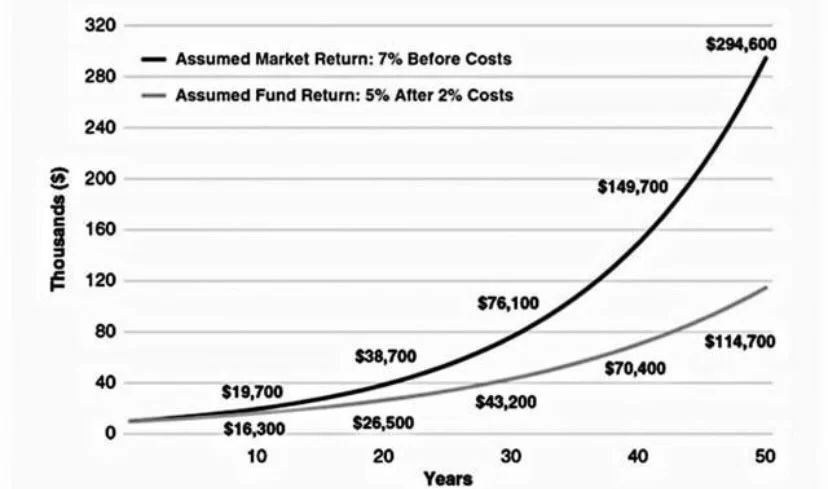
Small Fees Turn $10k Into $180k Difference
This chart shows the growth of $10k over 50 years with a 7% return vs a 7% return minus a 2% fee (high AUM, fees, etc) Difference is ~$180k on just $10k initial investment Please pay attention to fees

Cancel YouTube Premium Free Trial Before Billing
Tried the @YouTube Premium free trial for a month and aren't finding it's worth keeping? Not to worry, here's the fast and sure way to cancel service before the 💰 bill comes due: https://t.co/1AaZfLcUXn #youtube #youtubepremium https://t.co/S5rVD0f04F

Cliff Asness on Diversification: The Real Risk Investors Miss
Cliff Asness and AQR argue that a recent positive stock‑bond correlation is not a cure for diversification problems. The report warns investors against swapping bonds for assets that merely track equities, such as private credit, leveraged equity products, or Bitcoin....

Best Returns Follow Market Lows, Invest Through Fear
Every time the market feels the worst, it’s the beginning of something better. Since 1949, the S&P 500 has returned +38% on average in the year after bear market lows. The hardest time to invest is when the biggest opportunities appear. https://t.co/EQJa1ErbAB

AI Disruption Challenges the Viability of Coast FIRE
Imagine quitting your 9-5 to "coast" into retirement and then AI threatens your livelihood. Is Coast FIRE still viable in the age of AI? My latest: https://t.co/PhGFbTnVEr

Strategies to Climb the Property Ladder
Australian first‑home buyers face record‑high deposit ratios, prompting a multi‑pronged approach that leverages superannuation benefits. The government’s co‑contribution adds about $330 USD per year for low‑income earners, while the First Home Super Saver Scheme allows up to $9,900 USD in annual contributions...

Pay Yourself First: $500 Monthly Boosts Finances
Consistently depositing $500 a month into your trading account will transform your finances. Learn to pay yourself first.

Buy SPX Monthly During Market Corrections, Ignore Fear.
It’s always good to post this during a corrective move when the networks try and scare most investors out. Always put your $spx monthly inflows in! https://t.co/NxhlFQ7K3r

You Have Options If You Can’t Make Your Mortgage Payment – What to Know
Mortgage delinquencies surged 30% in 2026, reflecting job losses, inflation and other hardships. Lenders, including loanDepot, urge borrowers to notify servicers early, unlocking forbearance, payment plans, deferrals and loan modifications. Federal programs such as the Homeowners Assistance Fund remain available...

ARM's Lower Rates May Outshine 30-Year Fixed Now
What's the point of taking out a 30-year fixed mortgage right now if rates are only expected to move lower over the next five years? They made perfect sense when mortgage rates hit record lows in the 2021, but why now? Rates...

Schwab Flags Fatal Flaw in 4% Retirement Withdrawal Rule
Charles Schwab’s Center for Financial Research released a study that dismantles the long‑standing 4% withdrawal rule, citing six structural problems. The firm recommends retirees adopt a confidence‑based approach, aiming for 75%‑90% certainty rather than near‑100% safety.

Nine in Ten Older US Workers Say Inflation Is Reshaping Their Retirement Plans
A LiveCareer survey of 878 U.S. workers aged 50 and older found that 91% say inflation or tariff concerns have reshaped their retirement outlook. Three‑quarters are postponing retirement, while 61% are regularly tapping retirement accounts to meet current expenses. Healthcare...

One Rule to Retire Early and Achieve Financial Freedom
If you want to retire comfortably while you're young... There's only one rule you need to follow. How to become financially free at any age: