Today's Personal Finance Pulse

New student loan repayment options debut on July 1
Starting July 1, borrowers will be offered two new repayment plans and must choose the option that best fits their financial situation. The change aims to give borrowers more flexibility in managing loan payments.

Dividend ETFs Gain Spotlight as $10,000 Investors Seek High Returns
Analysts are pointing to dividend‑focused exchange‑traded funds as attractive vehicles for investors with $10,000 to deploy. Funds such as Schwab's U.S. Dividend Equity ETF (SCHD) and the Fullgoal Hong Kong Dividend ETF offer sector‑balanced exposure and low volatility, positioning them as potential high‑return choices amid market uncertainty.

Wealth Grows When You Trade, Read, and Complicate Less
Investing is an odd field where effort often hurts returns. The more you trade, the less you make. The more news you consume, the worse you perform. The more complex your strategy, the more likely it fails. Wealth is built...

UK Budget Overhaul on April 6 Cuts Tax Reliefs, Hits Millions of Households
The UK Treasury’s budget changes taking effect on April 6 eliminate full inheritance tax relief for AIM shares, cap agricultural property relief at £2.5 million, and raise dividend tax rates. The measures upend decades‑long planning for retirees, small‑business owners and asset‑rich families,...

Air Fryers Vs Toaster Ovens: Which Appliance Is The Bigger Hit To Your Electricity Bill?
The article compares air fryers and toaster ovens on electricity usage, noting both beat built‑in ovens but differ by model, capacity, and cooking time. Air fryers typically draw 800‑2,000 watts and may use slightly more power, yet they often cook faster...

We Want to Retire, but Our Rent Is $65k a Year. What Should We Do?
A 66‑year‑old couple earning about $162,000 USD combined faces a $43,000 USD annual rent in Sydney, while their superannuation is expected to generate roughly $45,000 USD per year. Their combined super balances of $1.36 million AUD (≈$0.9 million USD) barely cover the rent, prompting concerns about cash‑flow...

Avoid Stocks with Confusing Accounting, Buffett Advises
Warren Buffett’s investing rule is simple: if the accounting is confusing, walk away. Smart investing starts with transparency. If you can’t understand the numbers, you shouldn’t own the stock.

Before You Buy an ETF, Check These 5 Things
India’s ETF market has exploded, with passive assets swelling from roughly $34 billion in early 2021 to about $181 billion by February 2026 and investor folios climbing to 34 million. The universe now spans 314 funds across 118 indices, making careful selection essential for...
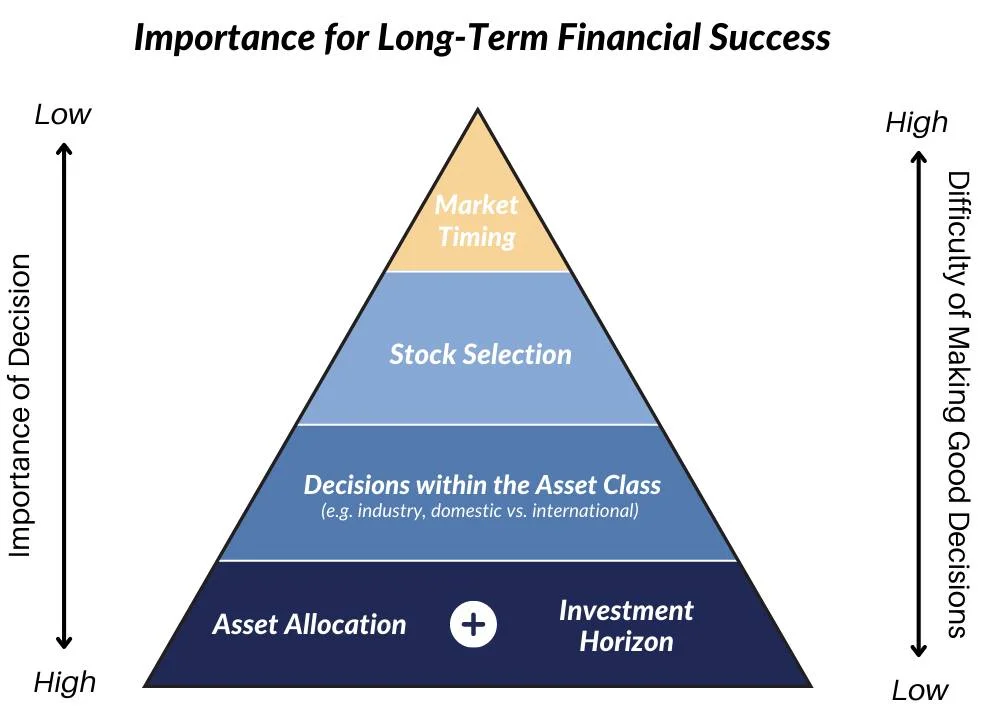
Fundamentals Beat Luck: Prioritize Allocation, Horizon, Selection
Don't mistake a "lucky" market timing trade for a "good" investment strategy. True financial success is built on a boring foundation: ✅ Proper Asset Allocation ✅ A Long Investment Horizon ✅ Superior Stock Selection That doesn't mean that timing cannot add a few percentage points...

2026 Strategies to Shield Retirement Savings From Market Downturns and Tax Hikes
Motley Fool retirement experts and CNBC’s Jim Cramer released coordinated guidance on March 27‑28, 2026, urging retirees to build a three‑to‑six‑month cash reserve, diversify across asset classes, and consider Roth conversions in low‑income years. The advice targets $1 million‑plus portfolios facing...

EEM Beats SPGM and IEFA on Returns but Carries Much Higher Fees
The iShares MSCI Emerging Markets ETF (EEM) delivered a 26.2% trailing‑12‑month return, outpacing State Street’s SPDR Portfolio MSCI Global Stock Market ETF (SPGM) and iShares Core MSCI EAFE ETF (IEFA). However, EEM’s 0.72% expense ratio is eight to ten times...
Find the Right Financial Planner for You
In this episode of Motley Fool Money, host Robert Brokamp interviews certified financial planner Hannah Moore about how listeners can locate the right financial planner for their needs. Moore explains the shift in the industry toward holistic financial planning, the...

Wealth Grows by Spending Wisely, Earning More, Investing
Insurance and trusts are not how you build wealth, it’s how you protect wealth. Focus on controlling your spending, increasing your income, and investing consistently.

Parents with Student Loans Could Fall Into Default if They Don’t Take Steps Soon
Parents with federal Parent PLUS loans must consolidate and make a payment by July 1 to keep access to income‑driven repayment plans, or lose affordable options. The deadline follows a Republican bill that also caps new borrowing at $20,000 per year...

‘What Felt Like a Great Deal Turned Into a $150 Night’: How Am I Supposed to Have Fun without Going...
Rising costs of live entertainment are forcing millennials to rethink discretionary spending, as a "free" basketball ticket can still balloon into a $150 night when parking, food and drinks are added. Financial experts recommend the 50/30/20 budgeting framework, with a...

Tax Drag Hurts: Optimize Asset Location for After‑Tax Gains
Tax drag in taxable accounts are a real drag. Ignoring asset location is straggling after-tax money.

Stay Near Target Risk, Always Own Market Beta
If you are persistently leveraged long assets above your risk target you are doing it wrong and this month is a lesson. Consider moving to your risk target If you are perma bear and always underinvested and in...

3 Signs Your Retirement Is Already in Trouble — Even If Your Account Looks Fine
The article highlights three hidden threats to a seemingly healthy retirement portfolio: excessive inflation exposure, over‑reliance on a single income stream, and unaddressed sequence‑of‑returns risk. It notes that inflation spiked to 9% in 2022, eroding cash purchasing power, and urges...

Use Sinking Funds in High‑Yield Accounts for Big Expenses
People always ask me how I plan for big expenses without blowing my budget. And my mentor taught me about sinking funds. Here’s how they work and why I keep mine in a high-yield savings account. 🧵

Build a Checking Buffer, End Overdrafts Forever
I used to be an overdraft princess until I created a buffer in my checking account. Never overdrafted again.

‘Several Hurricanes Have Come Close’: I’m 73 and Live in a Mobile Home In...
A 73‑year‑old single woman living in a 2016 double‑wide mobile home 10 miles from Florida’s Gulf Coast pays $2,400 a year for homeowner’s insurance with a $5,000 deductible that covers total loss. She is one of the few residents in...

IRS Issues Dirty Dozen Alert as AI-Powered Tax Refund Scams Surge
The Internal Revenue Service released its 2026 "Dirty Dozen" list, flagging 12 tax‑refund scams—including AI‑generated robocalls and sophisticated phishing—targeting millions of filers. The agency logged over 600 social‑media impersonators in FY 2025 and warned that the scams are more aggressive...

Prepping to Pull the Trigger
A retiree is approaching a 15% rebalance trigger as the Vanguard Developed Asia Pacific fund sits at a 14% loss. Simultaneously, a sizable after‑tax cash reserve from a business sale sits in a money‑market fund, outperforming other holdings. The investor...

Earn More, Spend Less: Beat Lifestyle Inflation
Every time your income increases, your lifestyle should not automatically follow. Most people get a raise and immediately upgrade everything. (New phone, new apartment, new outings, new everything) The income went up but the savings stayed the same. This is lifestyle inflation, and it...

Neglecting to Review Old Policies Costs More Than Bad Investments
The most expensive financial mistake people might make is NOT a bad investment... It's an unreviewed one. - A policy bought 10 years ago. - A fund set up and forgotten. - A beneficiary nomination that hasn't been updated since before the children...
:max_bytes(150000):strip_icc()/Primary-Image-how-to-buy-bitcoin-with-a-credit-card-in-2023-7500941-8f4d0a40a8ea4284b15c2a7158cc0422.jpg)
Understanding and Reducing Credit Card Interest
Credit card interest is charged only when a balance is carried past the monthly due date, with rates expressed as a variable or fixed APR that often ties to the prime rate. The daily compounding method means unpaid balances grow...

‘I Want Safe Returns’: I’m 73 with $300,000 Saved. I’m Not Interested in the Stock Market. What Should I Do?
A 73‑year‑old retiree with $300,000 seeks safe, non‑stock returns. The advice splits the portfolio into three $100,000 buckets: a liquid, high‑yield savings or money‑market layer for the next two years; a mid‑term CD or Treasury ladder for two‑to‑five years; and...

Investors Can Deploy $10,000 Into Five AI Leaders as Market Lulls
The Motley Fool's latest advisory suggests investors allocate a $10,000 portfolio across five AI‑focused companies—Nvidia, Broadcom, Taiwan Semiconductor Manufacturing, Microsoft and Nebius—while the market steadies amid geopolitical uncertainty. The picks are backed by strong revenue growth forecasts, from Nvidia's projected...

Gen Z Credit Scores Slip Amid Student‑Loan Policy Crackdown
A recent analysis shows Gen Z credit scores have slipped sharply after a federal crackdown on student‑loan collections, limiting borrowing power for millions. The decline highlights growing financial‑health challenges for the cohort and could reshape credit‑market dynamics.
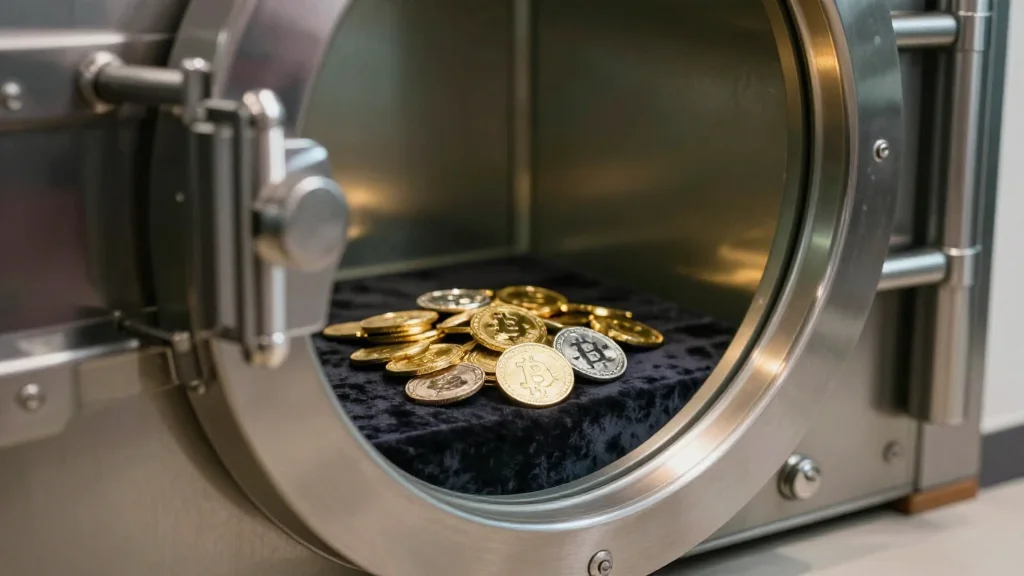
White House Clears Path for Crypto in $48.1 Trillion U.S. 401(k) Market
The White House Office of Information and Regulatory Affairs has finished reviewing the Labor Department’s proposal to allow cryptocurrency investments in 401(k) retirement plans. The move follows a 2025 executive order and could tap the $48.1 trillion U.S. pension market, signaling...

Monthly $300 S&P 500:
Invest $300/month into the S&P 500 and let time do the work: Year 5: $23,290 Year 10: $61,804 Year 15: $130,016 Year 20: $229,302 Year 25: $402,878 Year 30: $683,657 Consistency > timing. Start early. Stay consistent.

Retirement Investors Face Heightened Risk From This Error
This error can hurt any investor, but it’s especially risky for those in or nearing retirement. https://t.co/bk4v9GJCb1
:max_bytes(150000):strip_icc():format(jpeg)/GettingYourKidsTheirFirstCreditCard1-419803400b914f9bb44d997a27ccdcc2.jpg)
Teaching Kids Financial Responsibility with Credit Cards
Parents can teach financial responsibility by adding minors as authorized users on existing credit cards or by issuing low‑limit, secured cards. Early credit‑building helps teens establish a credit history, which accounts for 15% of a future credit score, while debit...

Non‑Trump Accounts Can Outgrow TAs with Greater Flexibility
While many illustrations of Trump Accounts (TAs) project how their value can grow to eye-popping levels over time, the reality is that similar (or even better) results can be achieved in other types of accounts that have far more flexibility...

Robo‑advisors Rebalance; Agentic Finance Does More
Roboadvisors rebalance your portfolio Agentic finance negotiates your mortgage, finds tax alpha, and moves capital while you sleep These are not the same category

#701: What Retirement Planning Gets Wrong with Jamie Hopkins
In this episode, host Paula Pant talks with retirement expert Jamie Hopkins about why the traditional "retirement number" and the 4% rule are misleading. Hopkins emphasizes focusing on the income needed for your desired lifestyle, accounting for changing expenses, sequence‑of‑returns...

Rental Owners: Hire a CPA, Keep More Money
Someone needs to hear this. If you own a rental property, it’s time to stop getting your taxes done at H&R Block. You’re leaving money money on the table by not hiring a cpa.
Rotate Streaming Services to Watch only What You Need
Netflix is raising their prices again. This is exactly why we rotate our streaming services each month. We sign up for Netflix when there’s actually a show we want to watch, then cancel once we’ve watched it. This way, we...

What Is an Exchange Fund? Investment Benefits and Risks
Exchange funds, also called swap funds, let high‑net‑worth investors exchange a large, concentrated stock position for a diversified basket of equities without triggering an immediate capital‑gains tax. The vehicle is a private partnership managed by banks or wealth‑management firms and...

Withdraw 8% From 7% Returns → Inevitable Depletion
I don’t need to be a millionaire for this to be true: 7 - 8 = -1 The stock market, after inflation, has returned about 7%. If you are withdrawing 8%, what does that leave you with over time? BROKE. 🍞🍞🍞🍞🍞🍞🍞 This...

Managing Long-Term Care Risk in Retirement
Long‑term care (LTC) is a high‑severity, low‑frequency risk that can derail retirement plans because Medicare and most private health policies do not cover custodial services. Median costs range from $5,000‑$6,000 per month for assisted living to over $9,000 for skilled‑nursing...

Understanding Mortgage Risks: A Guide for Homebuyers
Homebuyers face a maze of hidden mortgage risks that can turn a $300,000 loan into a costly long‑term burden. Adjustable‑rate mortgages, rising property‑tax and insurance costs, lender‑specific overlays, title defects, and undisclosed fees each add financial strain, with surveys showing...
How We Invest In a Falling Market
In this episode of Motley Fool Money, hosts Travis Hoyam, Lou Whiteman, and Andy Cross dissect the Nasdaq’s 12% drop and the broader market correction, attributing the volatility to geopolitical tensions, soaring oil prices, and uncertainty around AI spending. They...

GUT Is Good, But XLU Is Better
The Gabelli Utilities Trust (GUT) is a solid defensive option but falls short of the Utilities Select Sector SPDR Fund (XLU) in risk‑adjusted performance. While GUT offers a slightly higher yield and total return, its higher expense ratio and greater...

Beware of This Auto Dealer Trick That Can Add Thousands to Your Loan
Auto dealers often inflate the interest rate on financed vehicle purchases through a buy‑rate markup, charging a higher “sell” rate than the lender’s approved “buy” rate. The markup, hidden from buyers, can add thousands of dollars in interest over a...

Prioritize Emergency Fund, Debt, and Investing Before Trusts
I was contacted today by someone making $20/hour who is asking about setting up a trust for asset protection purposes. At that income level, focus on wealth building. The real priorities: • Build an emergency fund • Pay down high-interest debt • Invest...

Diversify, Don’t Bet All on One IPO
This story is a great example of why you should: - Diversify - Not add to losers

Wealth Management for Doctors: Services and Examples
Wealth management for doctors blends investment, tax, risk, and retirement planning to address the profession’s unique financial challenges. Physicians often start saving later, carry six‑figure student loans, and earn income through complex compensation structures, making coordinated strategies essential. Core services...
Time to Be Fearful
An investor over‑committed to oil stocks and energy ETFs after noticing falling gasoline prices, seeing his portfolio halve before a rebound restored and grew his position. The experience left him alternating between panic at losses and anxiety about missing further...

Why Surgeons Are Maxing This Overlooked 401(k) Feature Before the End of the Year
The SECURE 2.0 Act introduced a "super catch‑up" that lets workers aged 60‑63 contribute $11,250 annually to a 401(k), raising the total limit to $35,750 for 2026. Over the four‑year window this adds $15,000 more than the standard $8,000 catch‑up, a...

Uncertainty Around Social Security, Taxes, and Healthcare Is Bad for Households – and the Economy
Recent research by Greenwald Research, partnered with Jackson National Life, surveyed 1,443 near‑retirees and retirees with at least $100,000 in investable assets about policy uncertainty surrounding Social Security, Medicare, taxes and federal debt. The findings reveal that 21% of unretired...