Today's Personal Growth Pulse

NYT launches ‘Ask the Therapist’ column to bring mental‑health advice to the masses
The New York Times introduced a weekly column called “Ask the Therapist,” written by psychotherapist and best‑selling author Lori Gottlieb. The feature invites readers to submit personal dilemmas, which Gottlieb answers with clinical insight and narrative flair. The newspaper aims to make professional mental‑health guidance accessible to a broad audience.

The Emotional Power of Accountability
The post argues that accountability becomes far more powerful when another person is involved, turning a simple promise into an emotional commitment. It contrasts self‑imposed promises, which are often broken, with promises made to others, which are kept more reliably. The author suggests that this shift is not merely about discipline but about the human need for social validation. A subscription offer is included, giving readers a 20% discount on an annual plan.

Confidence Myths Debunked: It's Learned, Not Inherited
5 Common Myths About Confidence: 1. You Are Born With It. 2. You Need To Feel Confident To Take Action. 3. Confident People Are Never Insecure. 4. It Requires Being Loud Or Arrogant. 5. It Comes From Massive Success.

Embrace Interruptions: They Spark Your Best Creative Ideas
Interruptions are not the enemy of a productive day. They're often where the best creative work happens. At the studio we call them drive-bys. And rather than treating them as disruptions, we've built them in. Meetings happen with the doors open...
The Moment Life Gets Easier and You Feel Less Clear
The article describes a subtle life phase where external pressures ease and daily routines become more structured. As urgency fades, tasks feel more manageable and decisions appear simpler. Paradoxically, this calm can erode internal direction, leaving the individual feeling less...

AI Frees Time, Dissolving Work‑life Ambition Tradeoff
What will you do with the time AI frees up? I think this will be one of the most important questions of our time. And most people aren't asking it yet I'll be honest about where I've landed I rarely work past noon...

Emerging From Depression: The Unexpected Lightness
What It Felt Like to Come Back From Depression (Content note: this post includes discussion of depression, suicidality, and eating disorders.)

Breaking Routines You Worked Hard to Build
The post explores how established routines can unravel after a disruption and why the setback doesn’t erase prior progress. It emphasizes that routines are flexible, not fragile, and can be rebuilt faster than the first time. The author advises a...

Use the 5‑by‑5 Rule to Reframe Worries
When you start to worry about something, use the 5-by-5 rule. Will this matter in 5 days? In 5 hours? In 5 years? Try to put things in perspective and look at the big picture. It's hard to do. Sometimes...

Love the Process, Not the Market, for Lasting Success
You have to love the game. You have to love figuring things out. You have to love the people you are working with. You DO NOT have to love the market you're in. You need to love the machine. You...

The Secret Art of Elicitation
The blog spotlights John Nolan’s out‑of‑print 1999 book *Confidential*, which codifies the art of elicitation—extracting information through casual conversation rather than direct questioning. It recounts WWII interrogator Hanns Scharff’s misdirection technique that coaxed a pilot into revealing classified details, illustrating...
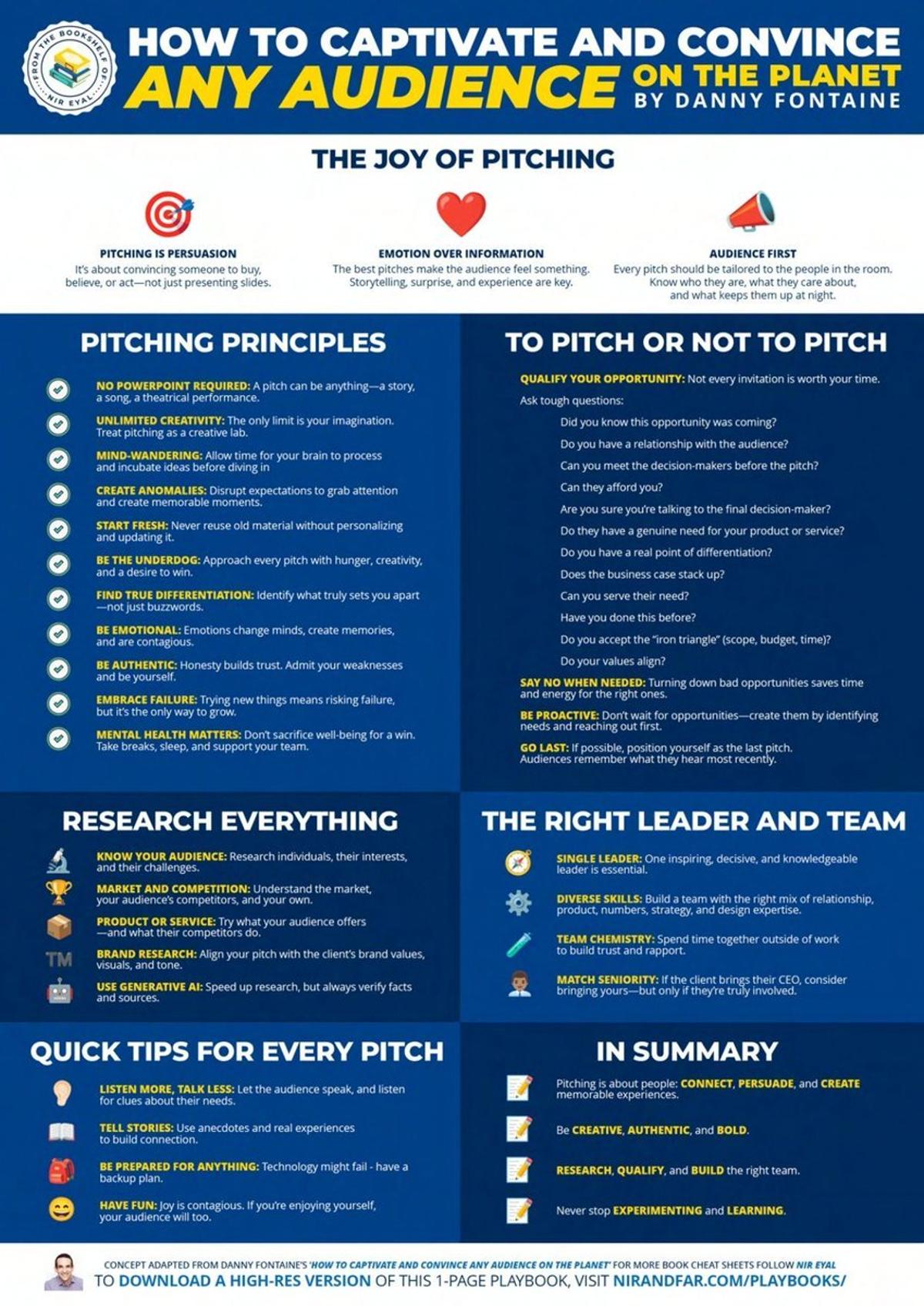
Pitching Is a Trainable Skill, Not a Fixed Trait
Loved reading @dannyfontaine's book "Pitch: How to Captivate and Convince Any Audience". I used to be terrified of pitching. During my first book tour (for my first book, Hooked), I realized that every talk I gave about the book was...

Failure Is an Option as an IT Leadership Tool
Gartner analyst Rob O'Donohue urges CIOs to adopt a “failure resume,” a documented record of career missteps that mirrors a traditional résumé. He notes that nearly half of senior leaders fear admitting failure, despite frequent costly IT mishaps such as...

Experts Warn Limiting Money Mindsets Drain Savings and Fuel Debt
Financial therapist Michele Paiva and mental‑health counselor Kiki Jacobson warned that deep‑seated money mindsets push people into costly emotional spending. Their analysis links these attitudes to eroded savings, rising debt and stalled wealth creation, urging consumers to adopt concrete pause‑and‑reflect...

Recovering Alcoholic Cycles Mount Fuji to Mark Three Years Sobriety
Phil James, a recovering alcoholic from Tunstall, is set to cycle the 3,776‑metre ascent of Japan’s Mount Fuji later this year, marking three years of sobriety. The extreme challenge doubles as a platform for mental‑health advocacy, highlighting how endurance sport...

A Prompt to Identify What You’re Avoiding
The post introduces a simple prompt that helps readers surface the one thing they’re avoiding, arguing that naming avoidance reduces its power and opens the path to disciplined action. It frames avoidance as a subtle, often logical‑sounding behavior that masks...

Set a Fixed Time and Place for Habits
A quick and easy tip for building habits that last: Pick a standard time and place to do it. It’s easier to wake up knowing “I exercise at 4 pm” than to decide each time when to fit a habit into your...

The Science of Letting Go – How to Release Negative Thinking?
The article explores the psychology behind persistent negative thoughts and offers practical strategies to release them. It emphasizes that letting go is not about erasing memories but reshaping the mind's relationship with them. Techniques include mindfulness, reframing, and disciplined mental...

Emotional Resilience in an Unstable Life: A Step-by-Step Framework
The post outlines a step‑by‑step framework for building emotional resilience amid life’s inevitable disruptions. It stresses that resilience is a skill, not a fixed trait, and can be strengthened at any age through intentional practice. The author links to a...

The Weakest Link's Drive Shapes the Whole Squadron
Research out of the US Air Force Academy found that the motivation of the least fit person in the squadron determined how much the entire squadron improved (or didn’t) on their fitness tests. Surround yourself wisely.

Loyalty to Outdated Things Masks True Financial Health
Most people aren't broke. They're just loyal to things that stopped serving them years ago.

Resilient Weekly Planning
The article outlines seven resilient weekly‑planning frameworks designed to keep productivity high amid disruptions. It highlights the 70/20/10 capacity model, win‑block‑flag triage, dependency‑first mapping, principle‑based filters, asynchronous‑first backup, a mid‑week reset, and an output‑over‑activity metric. Each framework embeds slack, prioritizes...

The Quiet Confusion of No Longer Recognizing What Motivates You
The article explores a subtle stage of personal growth where motivation wanes despite unchanged external responsibilities and goals. It describes the unsettling feeling of an internal void that replaces the usual drive, highlighting that the shift is not a loss...

Your Brain Is Still Solving Problems That No Longer Exist
The piece explains that even when external circumstances are calm, the brain’s default‑mode network keeps working on unresolved issues, creating a sense of unfinished business. It describes how this subconscious problem‑solving persists without a clear target, manifesting as mental chatter...

Blaming Time Instead of Your Choices
The post challenges the popular excuse of "not having time," arguing that time is always available but often misused. It reframes missed productivity as a series of conscious choices—scrolling, delaying, and avoiding effortful tasks. By taking ownership of those choices,...

Why Procrastination Feels Automatic And How to Interrupt It in Seconds?
The post explains why procrastination feels automatic, describing it as the brain’s quick shift from effortful tasks to low‑effort, dopamine‑driven activities. It outlines the mental trigger that initiates the habit loop and offers a seconds‑long interruption technique to break the...

The Quiet Pressure of Being Someone People Rely On
The article explores how being the go‑to person at work or in personal circles can initially feel rewarding, but over time the constant reliance creates silent pressure and risk of burnout. It highlights the shift from pride to strain as...

Realizing Discipline Shapes Who You Become
The post argues that discipline is less a forced routine and more a shaping force behind personal identity. It describes how repeated small actions gradually alter mindset, turning effort into direction. By aligning daily habits with desired self‑image, discipline becomes...
Settling Into Habits You Once Hated
The post explores how habits once resisted become normalized over time, highlighting the subtle shift from conscious objection to unconscious routine. It emphasizes that awareness of this transition enables deliberate change, suggesting that questioning ingrained behaviors can redirect adaptation. The...

Day Sixty-One: Moving Into the New
Dr. Roger McFillin’s Day 61 post, titled “Moving Into the New,” extends his daily “Day” series that blends channeled spiritual messages with personal‑development guidance. The entry emphasizes becoming a higher self and invites readers to revisit earlier installments for context. Access...

The Real Reason Your Productivity Setup Isn’t Helping Anymore
The article challenges the blind adoption of popular productivity frameworks, arguing that many—such as the Eisenhower Matrix, Two‑Minute Rule, and hyper‑scheduled calendars—can hinder rather than help when they don’t match an individual’s rhythm. It highlights emerging concepts like "Type A...

How to Convince Your Boss They Need a Coach
Senior leaders often lose candid feedback as they ascend, creating blind spots that can hinder strategy execution. Suggesting executive coaching to a boss can feel risky, but positioning it as a high‑performance tool aligned with the leader’s own challenges mitigates...

Stop Romanticising Your Potential — 10 April
The article argues that glorifying personal potential can become a self‑inflicted trap, encouraging people to linger in imagined futures instead of taking concrete action. It explains how this mindset delays urgency, lowers standards, and replaces execution with intention. By contrasting...

Drop Trivial Stress, Embrace Meaningful High‑stakes Challenges
I think there are two types of stress. Type 1 Stress is stress over meaningless things with low upside. Type 2 Stress is stress over meaningful things with high upside. I have a belief that life becomes more exciting when...

Mastering the Art of Better Decisions
Clinton Broyles argues that most life‑changing decisions feel overwhelming not because of their content but because people fixate on an ideal end state. He advises shifting focus to the next right step, treating each choice as a stepping stone toward...

Start Now: Overcome Overestimation, Avoid Inaction Costs
Most people overestimate what they need to start and underestimate what staying still is costing them. You don’t need perfect. You need to begin.

Skipping Meals Boosted My Farm’s Productivity
I stopped eating breakfast and lunch…brew a big gulp of coffee at home and roll Sure I might go golfing on a Tuesday when we’re rained out. When it’s time to get things done you have to have your ass in the...

People Who Are over 60 but Look Considerably Younger Often Share One Quality that Has Nothing to Do with Their...
People over 60 who appear younger share a common trait: they genuinely enjoy their lives. Their posture, facial expressions, and movement convey confidence, not a result of expensive skincare or strict diets. The article argues that mindset, purpose‑driven hobbies, and...

Route 101 Founder: Trust Is Everything
Russell Attwood, founder and CEO of Route 101, announced a £265 million (≈$336 million) contract with the UK Department for Work and Pensions, marking a major public‑sector win for the customer‑engagement platform. In a Founder‑in‑Five interview, Attwood highlighted trust as the cornerstone of...

The People Who Forgive Quickly Aren’t Naive. They’ve Calculated the Cost of Carrying Resentment and Decided It’s Not Worth the...
The article reframes forgiveness as a rational, economic choice rather than a moral virtue, arguing that people who let go quickly have calculated the hidden costs of resentment. It outlines the physiological toll—elevated cortisol, accelerated telomere shortening, and increased risk...

Identify Daily Energy Drains, Not Push Harder, to Beat Burnout
The first actionable move in burnout is not “How do I push harder?” It is: “What is making this day so expensive to run?” That question changes everything. It stops treating exhaustion like a character flaw and starts treating it like a...

Open‑mindedness Matters More than Being Smart
“It’s less about smart versus not smart, and more about having an open mind versus not having an open mind.” ~@arbesman

Leaning Into This Simple Quality Will Make You a Better Boss
A classic 1981 study found that 93% of Americans believe they drive better than average, illustrating the cognitive bias known as illusory superiority. The article links this bias to leadership, noting that many managers overrate their positive impact on teams....

True “Pay Your Dues” Means Learning Professionalism, Not Token Effort
What Does It Really Mean To “Pay Your Dues”? It's really about learning how to be a professional, it's worth recognizing that there IS a bad version of paying your dues. https://t.co/WMeBzgXy76 #advicers

Turn Every Conversation Into Immediate Leadership Insight
Every conversation is an opportunity but most people miss it. Listen carefully. Suspend judgment. Crystallize the learning. The best leaders don’t take minutes to learn - they do it in seconds. https://t.co/fUU3FsJbX7
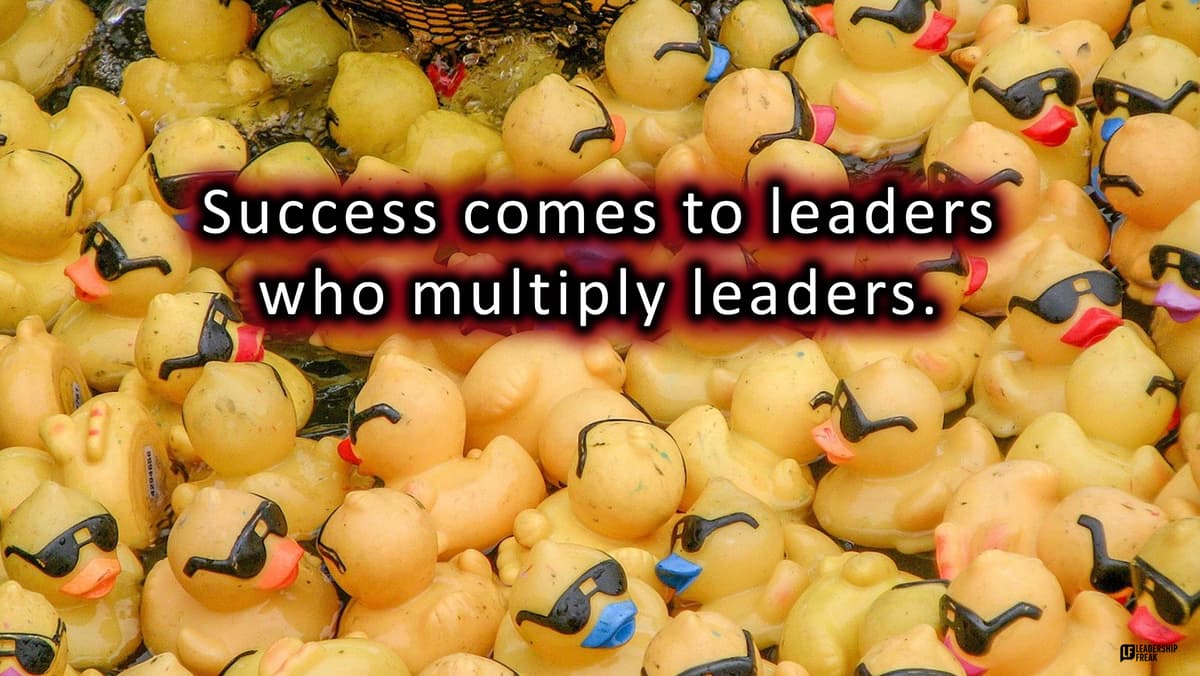
Multiply Or Die
“Multiply Or Die” contends that true leadership is measured by the ability to develop other leaders, not by exercising control. It promotes freedom over authority, urging leaders to set direction, establish boundaries, and let capable team members act independently. The...

Take a Break: Skip CPI, Play Golf
You know you don't have to write a 1000 word tweet or a new substack article on the CPI print right? Life has choices. Maybe go play or watch golf instead of jumping on the...
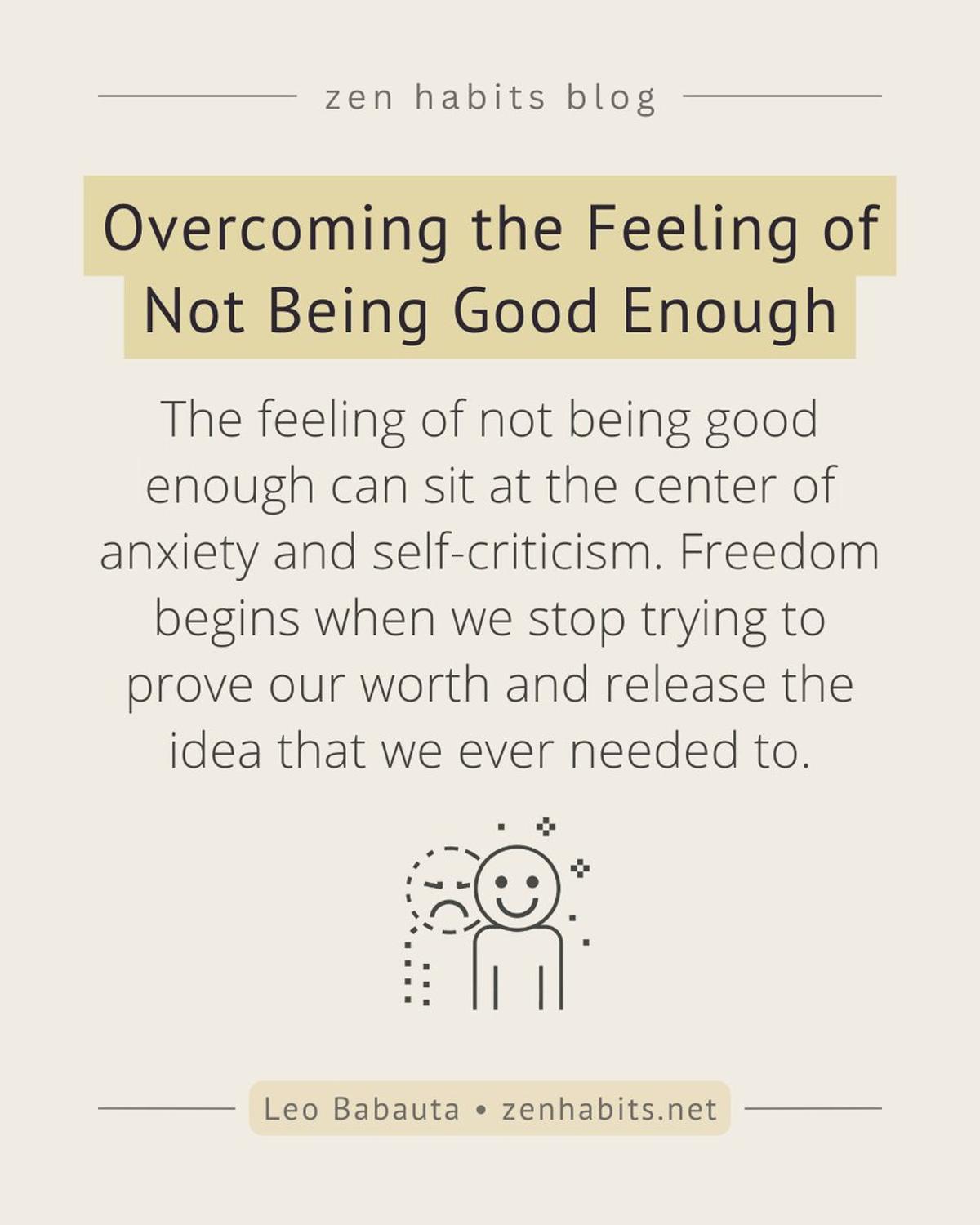
Letting Go of Proving Yourself Unlocks True Freedom
The sense of not being good enough can run in the background for years. It shows up as anxiety, defensiveness, hiding, or people-pleasing. Dropping the need to prove ourselves opens a different way of living. Read on my blog ➜ https://t.co/0DBvOuKebs https://t.co/gsHh5QiIAV

Acceptance: How to Swallow Ghosting without Physically Killing ‘the Ghost’
The article recounts a personal experience of being ghosted after a promised meeting, highlighting the emotional turmoil and the author’s struggle to find closure. It critiques the normalization of ghosting in modern dating, arguing that avoidance of conflict undermines relationship...

True Learning Shows Up in Changed Behavior
Learning is a behavioral change. “If your behavior hasn’t changed, you haven’t learned.” – @alixpasquet
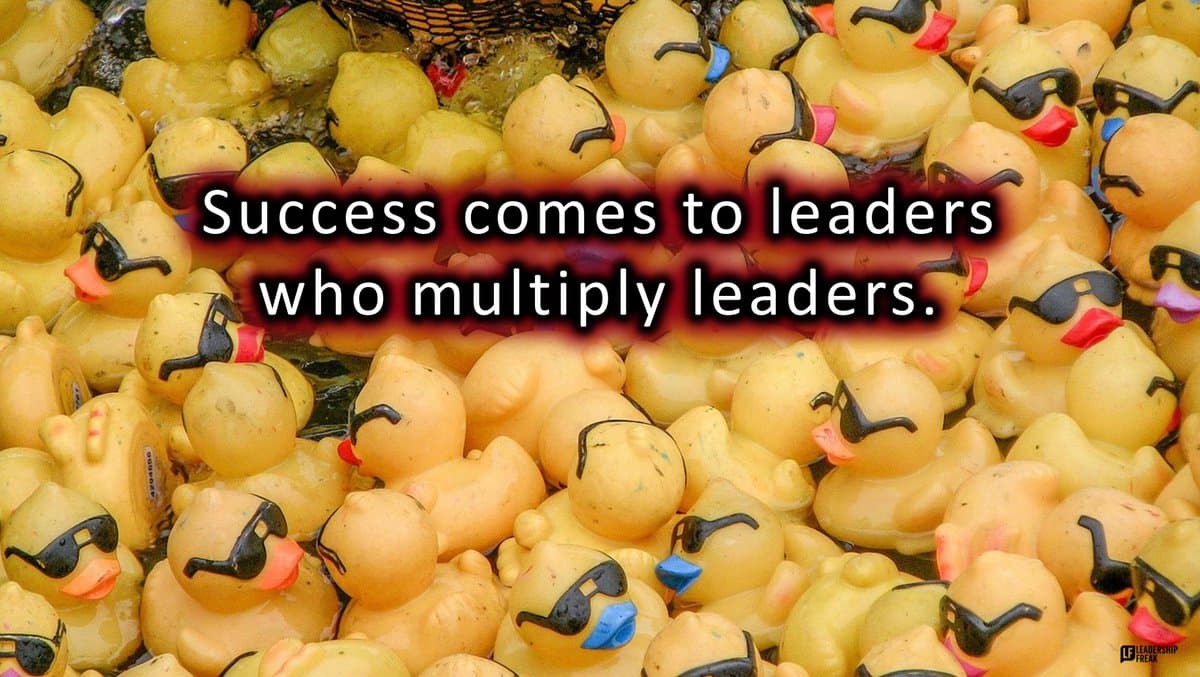
True Leadership Multiplies Leaders, Not Controls
Everyone job is to make everyone better. Success is more about freedom than control. You’re a bottleneck until others can act without permission. Provide direction. Establish boundaries. Success comes to leaders who multiply leaders. https://t.co/Jb5s5n56Nq https://t.co/Al5imcx59G