Today's Personal Growth Pulse

NYT launches ‘Ask the Therapist’ column to bring mental‑health advice to the masses
The New York Times introduced a weekly column called “Ask the Therapist,” written by psychotherapist and best‑selling author Lori Gottlieb. The feature invites readers to submit personal dilemmas, which Gottlieb answers with clinical insight and narrative flair. The newspaper aims to make professional mental‑health guidance accessible to a broad audience.
Atomic Habits Is Brilliant. And Wrong.
In this episode, the host critiques James Clear's bestseller *Atomic Habits*, arguing that while the book’s 1% daily improvement math is sound—yielding roughly a 38% gain over a year—the underlying premise is fundamentally flawed. He contends that the assumption that tiny, consistent habit changes automatically lead to massive transformation ignores real-world complexities and variability in human behavior. The host’s perspective is that the book oversimplifies personal development, and he teases a deeper, paid‑subscriber rant that expands on these criticisms.

How to Build a Routine That Your Nervous System Actually Trusts
The post argues that most routines fail not because of weak willpower but because the nervous system perceives them as stressors. When daily habits feel threatening, the body silently resists, leading to inconsistency and low motivation. By designing routines that...

How to Focus Again in a Distracted World
The Substack post "How to Focus Again in a Distracted World" argues that modern attention spans are eroded by constant phone checks and multitasking. It explains that the brain isn’t incapable of concentration; it’s been rewired by digital habits. The...
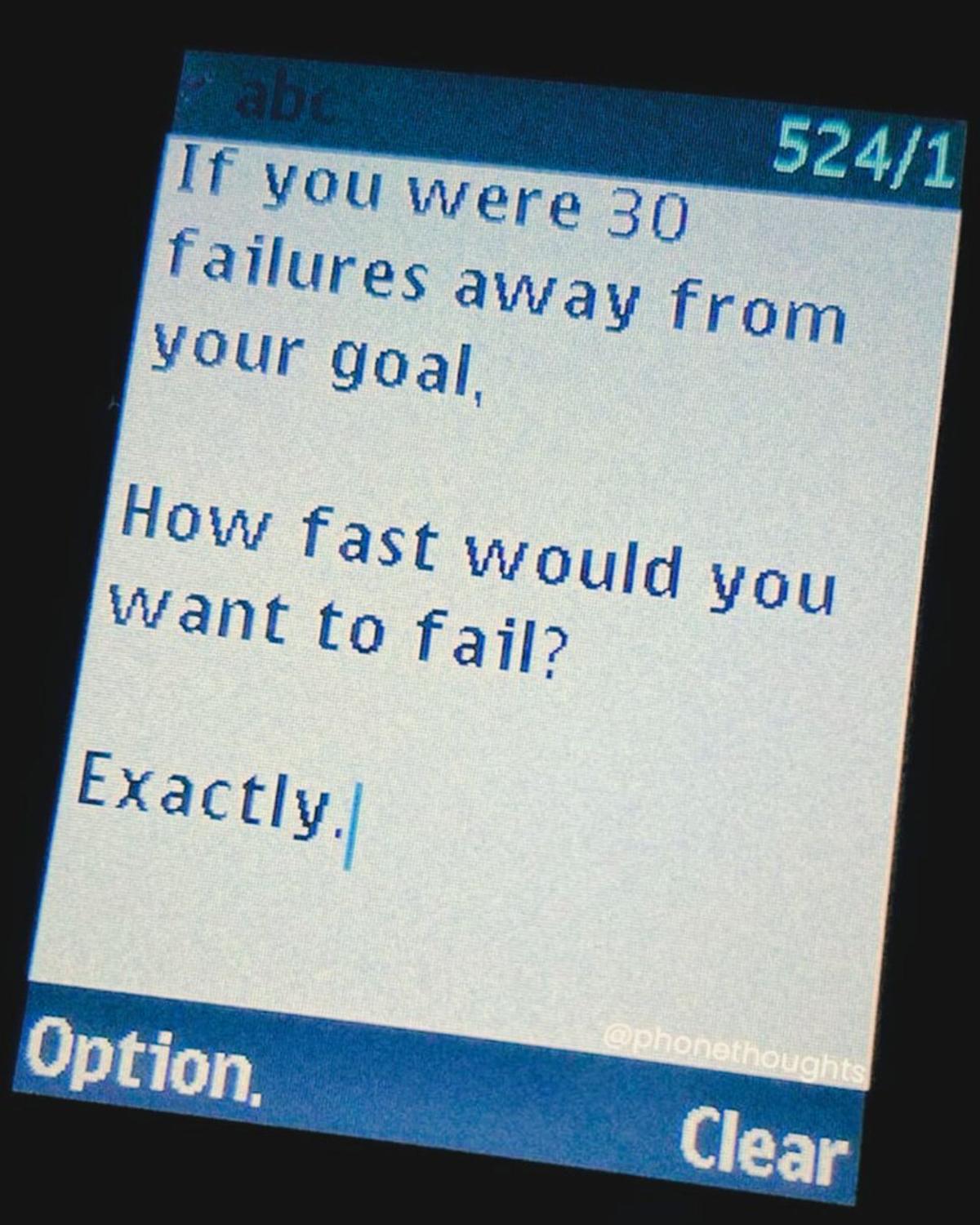
Treat Failure as Data, Not Identity, to Accelerate Learning
"Fail fast", a mentor said when I was building my first company. "Huh?" I thought. What I didn’t understand then was this: “Fail fast” wasn’t advice about giving up. It was advice about learning faster. Most people don’t avoid failure. They avoid discovering they’re...

The Runner’s World Guide to Mental Health
Runner’s World+ has released a video guide titled “The Runner’s World Guide to Mental Health,” hosted by Olympic marathoner Deena Kastor and featuring experts such as Harvard psychiatrist John Ratey, mental‑performance consultant Lennie Waite, and social‑work therapist Dwayne Brown. The...

Jewish Mindfulness Practice Yishuv Ha‑Da’at Gains Traction Amid Modern Chaos
The Jewish mindfulness concept yishuv ha‑da’at is drawing growing attention as parents turn to it for steadiness amid daily stress. Rooted in the Mussar tradition, the practice emphasizes present‑moment awareness without escaping life’s challenges, echoing broader mindfulness trends.

Discipline Creates Freedom, Not Restriction
The post reframes discipline from a perceived restriction to a catalyst for true freedom. It argues that without discipline, decisions hinge on fleeting emotions, leading to inconsistency and wasted time. By establishing routines, discipline eliminates constant choice fatigue, creating reliable...

Lloyd Blankfein Says Hard Work Beats Genius in Career Success
Former Goldman Sachs chief executive Lloyd Blankfein told CNBC that hard work and curiosity matter more than raw intelligence for career advancement. His remarks, rooted in his own rise from a Brooklyn public‑housing background to the top of a global...

Marta Kostyuk Attributes Nine-Match Streak to Therapy-Driven Mindset Shift
World No. 23 Marta Kostyuk says a years‑long therapy regimen and a radical mental shift have powered a nine‑match winning streak, a flawless 9‑0 record on clay and a push toward a maiden WTA 1000 title. Her comments highlight a...

Cynthia Erivo Shatters London Marathon PR, Credits Running for Stage Stamina
Cynthia Erivo ran the London Marathon in 3:21:40, shaving nearly 14 minutes off her previous best, and says the regimen powers her demanding one‑woman stage performance. The actress worked with Brooks coach Erika Kemp and treats runs as meditation, highlighting...

Psychology Says the People Who Keep Saying They’re Fine when They Clearly Aren’t Aren’t Lying, They Learned Somewhere Along the...
People who answer “I’m fine” when they aren’t are not deliberately lying; they are conserving the limited emotional energy required for full disclosure. Research shows that suppressing authentic feelings taxes attention, working memory, and physiological recovery, making a brief “fine”...

The 10 Minute Habit That Builds Real Discipline Daily
The article argues that true discipline stems from a tiny, repeatable action rather than marathon work sessions. By committing just ten minutes each day to a focused habit, individuals can create a reliable momentum that survives ordinary distractions. The piece...

How To Come Back To Yourself During Busy Days
The article explains why professionals often feel disconnected during hectic workdays, linking the sensation to fragmented attention rather than external circumstances. It describes how constant outward focus creates a gap between actions and awareness, leading to a sense of detachment....

Balance Strategy, Potential, and Futurism Within One Role
You have three jobs in your one job. - The Strategist: You create outcomes. Your leverage is clarity, delivering a return on investment. - The Potentialist: You know how to discover potential before it's obvious. Your leverage is experimentation, delivering...
Leaders Prioritize Global Shifts Over Daily Market Noise
This is more important than the stock market. Every day, leaders must have their finger in the wind. What is changing? What are global leaders saying? Is the shift constructive or destructive? Understanding how decisions by a few individuals shape global direction is far more important than...

The Psychological Costs of Adopting AI
Leaders are confronting a hidden cost of AI adoption: psychological debt, which erodes motivation, collaboration and increases burnout. A survey of more than 1,200 U.S. and U.K. employees identified six debt types—cognitive, autonomy, competency, relatedness, credibility and identity—each linked to...

Relax Your Jaw, Instantly Lower Stress Levels
Simple life hack: Unclench your jaw. I recently noticed how often mine was clenched throughout the day. Started consciously relaxing it every time I caught it. The effect on my nervous system and overall stress levels was surprisingly profound.

How to Actually Help Your Kid Build Grit
The Future of Education podcast with Alpha School guide Carrington explains that grit is a skill that can be trained, not an innate trait. By treating resilience like a muscle, parents are urged to start with micro‑tasks—such as a ten‑minute...

Learn Self‑Compassion, Stop Being Your Own Critic
Do you kick your own butt because you think it keeps you on your toes? Same. And it turns out we're both wrong. Doing a small event in NYC on May 17th at 92Y with my friend Allison Gilbert — talking about...

This Is the Critical Part of Work Leaders Keep Missing
Workplace leaders often focus on visible metrics like productivity and efficiency, overlooking the deeper human drivers of meaning, belonging, and identity. These spiritual needs shape employee well‑being, motivation, and discretionary effort. When ignored, organizations miss out on creativity, commitment, and...

Science Says the Most Productive People Don’t Actually Work That (Darned) Hard. Neither Should You
Research shows most people can focus 90‑120 minutes before needing a break. The article argues that long‑term output depends on durability, not short bursts of speed. It uses a factory worker example to illustrate how initial high productivity fades, reducing...

Former Buddhist Nun Paldrom Collins Publishes Memoir on Enlightenment Journey
Former Buddhist nun Paldrom Catharine Collins has released her memoir "Girl in a Box: Seeking Enlightenment as a Tibetan Buddhist Nun," chronicling her five‑year monastic experience and its lasting impact. The book aims to guide seekers across faith traditions, offering...

UAE Embraces Mental Well‑Being as New Success Metric in Workplaces
Across the United Arab Emirates, businesses and wellness leaders are redefining success by emphasizing mental health, with corporate mindfulness programmes and growing public interest in meditation. The shift reflects a broader cultural move toward balance and emotional resilience.
Identify the First Step, Then Build Everything
In strategy, the challenge isn’t knowing what to do, it’s knowing what to do first. The real leverage comes from identifying the foundation everything else builds on, especially in complex or turnaround situations. Instead of rushing to solutions, take a...

No Sleep, Still Gym: Stop Making Excuses
Slept for only 4 hours. Still at the gym this morning. The fuck is your excuse?

Bongani Khumalo’s Discipline Playbook: Leadership Lessons From a Former Captain
GQ South Africa published a profile of ex‑Bafana Bafana captain Bongani Khumalo, detailing how his early armband taught him responsibility, meticulous preparation and mental toughness. The piece offers concrete habits that readers can apply to boost discipline and leadership in...

Exploring Humanity's Need to Matter on Nonzero Podcast
On the Nonzero podcast, Robert Wright chats with Rebecca Newberger Goldstein about mattering and The Mattering Instinct. https://t.co/yNuPTJVyFh via @YouTube

Brief Mindfulness Program Cuts Stress for Physics Students, Study Finds
Researchers at the University of Pittsburgh and the University of Illinois Urbana‑Champaign showed that a short, five‑day mindfulness course significantly reduced stress markers in introductory physics students. The effect persisted for up to three months, suggesting a scalable tool for...

Psychology Suggests People Who Are Always Either Early or on Time Share a Single Trait that Quietly Governs Many Other...
Psychologists argue that punctuality is more than a scheduling habit—it serves as a reliable proxy for personal integrity. People who consistently honor even minor time commitments tend to internalize the principle that a spoken promise is a binding obligation. Over...

New Book Reveals the 5 Principles to Breathe Life Into Your Organisation
"Hope at Work: 5 Principles to Breathe Life into Your Organization" by Barbara Perry, Ph.D., and Harry Hutson, Ph.D., presents hope as a strategic tool for leaders navigating post‑pandemic uncertainty. Drawing on three decades of consulting, the book outlines five...

Barack Obama’s Former Speechwriter Says Founders Make This 1 Public Speaking Mistake. Here’s How to Avoid It
Jon Favreau, former chief speechwriter for President Barack Obama, shared on The Bossticks podcast how founders can avoid a common public‑speaking pitfall. He warns against writing speeches for the history books and urges a conversational tone that feels like talking...

Workers Who Do a ‘Sunday Reset’ May Make $25,000 More a Year
Americans are turning Sundays into a productivity ritual called the “Sunday reset,” a trend that now reaches over half of the population. The habit, popularized on TikTok and Pinterest, involves light chores, meal‑prepping, and planning to reduce anxiety before the...

How To Become Your Own Trading Coach
Psychiatrist Brett Steenbarger, a longtime SUNY Upstate faculty member, outlines a self‑coaching framework for traders in a new series and two recent books. He explains that stress, anxiety, and overtrading often arise from recurring negative self‑talk and perfectionist urges. By keeping...

3 Leadership Lessons I Learned From My Worst Bosses
Former corporate employee Mita Mallick shares three leadership lessons drawn from her worst bosses. She warns against late‑night emails, highlights how silence enables workplace bullying, and urges leaders to intervene when disengagement spreads. Each lesson includes actionable steps such as...

Run Your Business Like a Buyer Could Walk Through the Door at Any Minute, Hustle Mindset
Reece Borg’s “Hustle Mindset” urges founders to run their companies as if a buyer could walk in at any moment, shifting focus from rapid growth to robust systems. By prioritising clear processes, consistent revenue, and defined roles, entrepreneurs transform a...

Warren Buffett Explained That the Greatest Measure of Success at the End of Your Life Comes Down to 1 Word
Warren Buffett says the ultimate yardstick of a life well‑lived is how many people you love and who love you back. He argues that traditional success metrics—revenue, titles, market share—miss the single word that truly matters: love. The insight challenges...

I Was One of Lovable's First 50 Hires. Here's How I Got the Job After Initially Getting Rejected.
Mindaugas Petrutis, a non‑technical content creator, was initially rejected by AI startup Lovable but later became one of its first 50 hires. He spent months building daily AI prototypes, sharing them publicly, and solving the company’s influencer‑marketing problem during a...

Kids Need These 3 Things to Thrive in the AI Era, Futurist Peter Diamandis Says
Futurist Peter Diamandis says children must anchor themselves in three pillars—purpose, curiosity, and the right mindset—to thrive as AI reshapes education and work. He urges parents to help kids discover a "massive transformative purpose" early, using AI as a limitless...

I'm a Big Tech Executive with ADHD and Anxiety. Neurodivergence Has Its Downsides, but I've Turned My Habits Into Strengths.
Wainwright Yu, a director at a Magnificent 7 tech firm, explains how he leverages his anxiety and ADHD as strategic assets. He treats anxiety as a continuous risk‑monitoring system, running mental checklists that surface hidden threats before they materialize. His ADHD‑driven...

Art Films Can Make You More Creative
Researchers at UC Santa Barbara conducted a randomized experiment with nearly 500 participants, comparing artistic short films to humorous home‑video compilations. Viewers of the experimental art shorts scored significantly higher on tasks measuring conceptual expansion and story originality, indicating a...

Psychology Says People Who Are Warm on the Surface but Have No Close Friends Aren’t Lonely because They’re Disliked —...
Psychologists explain that people who appear warm and low‑maintenance often feel lonely because they never allow others to be needed by them. The interpersonal process model of intimacy shows that true closeness emerges from reciprocal self‑disclosure and responsiveness, not from...

Avoid Disastrous Mistakes by Inverting Your Thinking
Charlie Munger's #1 top mental model is Inversion Thinking. He realized success isn't about doing everything right. It's about avoiding the few things that can go disastrously wrong. “Invert, always invert.” https://t.co/IQI0YNxweW

7 Things You Must Sacrifice If You Want to Be Rich One Day, According to Charlie Munger
Charlie Munger argues that real wealth comes from disciplined sacrifices rather than luck or raw intelligence. He lists seven habits to abandon—envy, herd mentality, constant action, ego, self‑pity, convenience, and comfort—each of which silently erodes capital and focus. By eliminating...

Psychology Suggests People Who Still Write Things Down on Paper Instead of Their Phone Aren’t Being Old-Fashioned — They’ve Quietly...
People who continue to write notes on paper aren’t simply nostalgic; they deliberately choose a tool that outperforms digital alternatives for them. Research shows handwritten notes boost conceptual understanding and trigger broader brain connectivity compared with typing. This habit reflects...

At Nature HQ: Vivobarefoot’s Galahad Clark Is Rewriting The Rules Of Leadership
Vivobarefoot’s CEO Galahad Clark has transformed the shoe brand’s headquarters into a ten‑acre "Nature HQ" where employees grow food, hold meetings outdoors and follow a flat, ecosystem‑inspired hierarchy. The purpose‑first model has helped the company surge from roughly £30 million ($37.5 million)...

11 Ways to Be Less Deferential
In a recent conversation with rationalist writer Joe Carlsmith, the author outlines eleven practical ways to curb intellectual deference. The core advice encourages embracing one’s inevitable ignorance, voicing high‑level hypotheses, and using status dynamics to gain confidence. Other tactics include...

Rise and Shine: How Morning Sun Boosts Productivity
Morning sunlight exposure shortly after waking resets the body’s circadian clock, halting melatonin and boosting cortisol and serotonin, which enhances alertness and mood. Experts recommend 15 to 30 minutes of natural light within the first two hours of the day,...

Psychology Says People Who Maintain a Strong Memory Deep Into Retirement Share a Single Trait that Has Nothing to Do...
Recent neuroscience reviews reveal that genuine curiosity, not diet or brain‑training apps, is the single trait that helps retirees preserve sharp memory. Studies by Michiko Sakaki and Alan Castel show curiosity activates dopamine and norepinephrine pathways, sustaining the brain’s memory...

Psychology Says People Who Keep Their Cars Immaculately Clean Inside Aren’t Just Tidy, They Grew up in Households Where Chaos...
A new psychological analysis links immaculate car interiors to childhood environments marked by unpredictable chaos. The "control hypothesis" argues that adults who grew up in erratic households use the car as a private, controllable sanctuary, reinforcing a sense of safety....

How To Fail Masterclass: Part 4 - Vulnerability, Strength and What Failure Teaches You About Success
The final installment of the How To Navigate Failure Masterclass emphasizes that embracing vulnerability transforms failure into a source of strength. By openly acknowledging shame and imperfection, individuals forge authentic connections and build emotional resilience, likened to a muscle that...