
Automate Your Job
The post details how a Portland logistics broker reclaimed 15 hours a week by linking OpenClaw, an open‑source AI agent, with OpenAI’s new Codex desktop app. OpenClaw reads vendor PDFs, extracts tracking data, and hands it to Codex, which updates the inventory database via API without any coding. The author also shares a ready‑to‑use "Ruthless Dispatcher" prompt that turns chaotic inboxes into structured JSON task lists. The piece positions these tools as a low‑cost alternative to $5,000 consulting engagements for automating repetitive operations.

"Wake Up Call" With Karen Salmansohn
Karen Salmansohn hosted the inaugural Live “Wake‑Up Call,” a conversational coaching session that replaced traditional slides with real‑time dialogue. She framed herself as a “middle‑of‑life doula,” helping participants explore purpose before a crisis hits. The session introduced a backward‑to‑forward identity...

Some Reflective Questions to Assess Your Relationship with Life
Steve Pavlina invites readers to assess their relationship with Life through reflective questions and then announces a three‑day, in‑person retreat called “Open” in Las Vegas (April 28‑30). The $888 event, limited to about 150 participants, promises experiential containers that target...

What Over-Functioning Is Actually Protecting You From
The piece reframes over‑functioning as an anxiety‑management tactic rather than a pure work‑ethic or productivity signal. Employees who constantly fill gaps and exceed role expectations do so to avoid confronting doubts about belonging, competence, and promotion. When they finally stop,...

A Leadership Reset for ENFJ Personalities
A new analysis of ENFJ (Protagonist) leaders reveals that 93% believe mental‑health days improve performance, yet only 33% actually take enough time off and 48% feel guilty doing so. The piece identifies three self‑sabotaging habits: half‑rest while “off,” over‑investing in...

Rory Goss’s Accessibility Story
In January 2024, 16‑year‑old Rory Goss was diagnosed with Leber's Hereditary Optic Neuropathy, losing 95% of his vision just before A‑level exams. He turned to the accessibility suite built into his iPhone and Mac, using Zoom, VoiceOver, Follow Focus and Continuity...

What Marcus Aurelius Can Teach Us Coping with Stress
In a recent episode of “Stoicism: Philosophy as a Way of Life,” host Donald Robertson talks with Mark Forstater—producer of over 30 films including Monty Python and the Holy Grail—about his series of books on Marcus Aurelius, Seneca and Socrates. Forstater explains...

Down The Rabbit Hole: A Personal Curriculum for INTPs (Logicians)
The post introduces a “personal curriculum” framework tailored for INTP (Logician) personalities, guiding them to deepen knowledge beyond casual reading. It cites a 16Personalities survey of 15,000 respondents showing INTPs favor visual and linguistic learning equally (34% each) while kinesthetic...

How I Finally Stopped Comparing Myself to Others—And Found Real Peace of Mind
The article by Jyoti Yadav explores how chronic social comparison erodes self‑esteem and offers a personal turnaround story. It identifies social media, body image, and lifestyle envy as primary triggers. Yadav outlines seven practical steps—gratitude, limited scrolling, celebrating small wins,...

Black. Single. Mother.: The Stories We Tell Ourselves About Ourselves
Roxane Gay’s new book, *Black. Single. Mother.: The Stories We Tell Ourselves About Ourselves*, examines the internal narratives that Black single mothers navigate, blending memoir, interviews, and cultural critique. The reviewer highlights Jamilah’s raw confession of personal flaws as a...

The Meeting Presence Toolkit
The Meeting Presence Toolkit presents a repeatable system for delivering concise, confident answers in meetings. It argues that the gap is in delivery, not confidence, and recommends sending a three‑line pre‑meeting note to key stakeholders to seed ideas. This brief...

How to Learn Anything with Ai
The post introduces "Mushroom #10: Teacher," a mega‑prompt that turns AI into a personalized instructor. It argues that traditional courses are neutral and cannot adapt to a learner’s specific motivation or end‑goal. By feeding the AI a clear learning objective,...

You Are Practising Something Every Day — 16 April
The post argues that practice isn’t a formal exercise but a continuous, often unnoticed process that occurs through every daily action. Small choices—whether delaying, cutting corners, or following through—reinforce patterns that become part of one’s identity. By recognizing this hidden...

The 95-Year-Old Everyone Wants to Sit Next To
Today marks the 95th birthday of a matriarch whose life spans performing arts, entrepreneurship, and etiquette instruction. The post celebrates her magnetic presence, attributing it to meticulous personal style and a deep commitment to courteous behavior. It links her influence...

Scramble of a Q3: “Am I Loved?”
Mike Foster’s "Scramble of a Q3: Am I Loved?" explores the most common Primal Question—whether we feel loved. He explains how people who excel at making others feel seen (Q3s) often battle a hidden scramble, adopting codependent, transactional, or wounded...

Day 74 - The Unfinished Inventory: Why Your Incomplete Projects Are Draining Your Future
The post warns that every unfinished project silently drains mental energy and weakens self‑trust, turning into a mental clutter that blocks new work. It introduces a three‑step system—inventory, decision matrix (finish, kill, delegate), and a completion sprint—to clear the backlog....
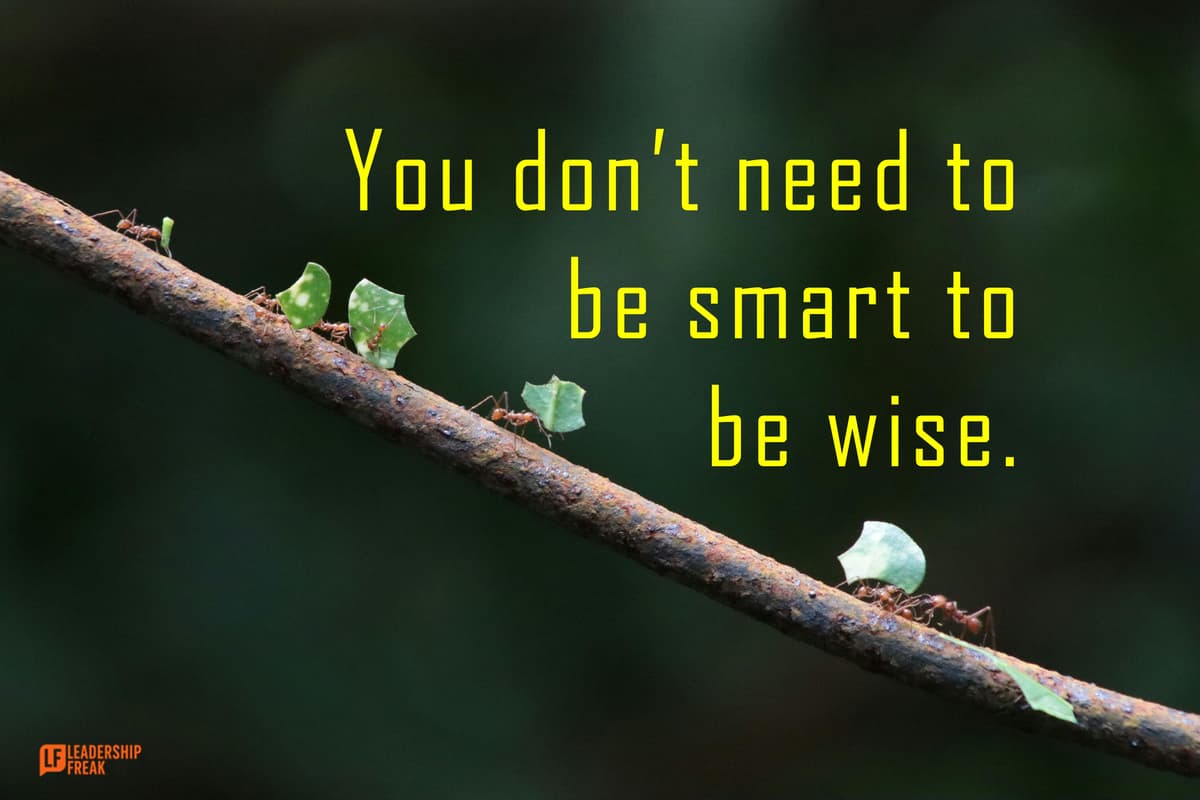
7 Tests to Expose Wise Leaders
The article outlines seven observable tests that separate wise leaders from merely competent managers. It argues that wisdom is demonstrated through curiosity toward feedback, listening to understand, seeking input, consistent conduct, influential peers, emotional control, and the ability to develop...

I Read Over 20 Psychology Books to Learn These 20 Lessons
The article distills 20 core lessons drawn from more than 20 seminal psychology books, spanning cognitive biases, trauma, habit formation, and social dynamics. It explains dual‑system thinking, predictable irrationality, choice overload, and Cialdini’s persuasion levers, then moves to body‑stored trauma,...

5 Types of People You Should Not Trust According to Charlie Munger
Charlie Munger, the late Berkshire Hathaway vice‑chair, warned investors to steer clear of five character types that can erode wealth and decision‑making. He flagged people who force a single solution on every problem, those whose incentives clash with clients, individuals...

10 Signs You’re a High Value Person, According to Warren Buffett
Warren Buffett outlines ten habits that define a high‑value person, from using an inner scorecard instead of external applause to protecting reputation at all costs. He stresses intellectual honesty, daily learning, disciplined focus, and choosing associations that raise standards. Long‑term...

How to Stay Sharp, Creative, and Focused in the Age of AI with Steven Kotler
Steven Kotler, NYT‑bestselling author and founder of the Flow Research Collective, joins The Ready State to explore how AI, information overload, and rapid tech change strain our ancient brains. He argues that the mismatch fuels burnout, fragmented attention, and a...

Singer-Songwriter Courtney Barnett on the Importance of Looking Back at Your Progress
Australian singer‑songwriter Courtney Barnett explains how she shifted from early imitation to a more honest, self‑directed voice as she crafted her latest album. She relies on free‑writing and a dream‑state approach, recording ideas without pre‑planned themes and later extracting motifs....

Tribal - by Michael Morris
Michael Morris’s "Tribal" argues that culture is not a static backdrop but a fluid system shaped by the continuous interplay between individual minds and shared institutions. He highlights the peer instinct—our innate drive to align with perceived group norms—as a...

🧭 I Built a Tool to Restore Clarity. It's Free. It Takes 90 Seconds.
An AI‑generated web app called SQ Decision Navigator launches as a free, no‑login tool that promises to turn decision fatigue into clarity in under 90 seconds. Built on the Lovable low‑code platform, the app guides users through a four‑step framework—Define,...

The Decision I Almost Talked Myself Out Of
Heather, CEO of Choice, launched a Substack newsletter called The Red Lip Life on her 50th birthday. The publication debuted at #12 in the Business category and is approaching 9,000 subscribers after a strategically planned launch. She frames Substack as...

Get Back In The Chair
Jac’s post urges readers to "get back in the chair" and resume daily meditation after a hiatus. He cites Massachusetts General Hospital research showing that regular practice can keep the brain up to twenty years younger and lower stress. The...

Afraid You're Faking Neurodivergence? Read This.
The post tackles the unsettling doubt many feel when questioning a possible autism, ADHD, or gifted diagnosis, even after external confirmation. It outlines the internal dialogue of fearing self‑deception and appropriating language from those truly struggling. By naming this anxiety,...

How to Live Fully: Ursula K. Le Guin’s Remedy for Our Resistance to Change
Ursula K. Le Guin’s 1971 novel *The Lathe of Heaven* offers a stark meditation on humanity’s instinct to resist change, equating that resistance with suffering. The essay highlights her argument that true equilibrium is a dynamic process, not a static...

Small, Sacred Rituals for Flourishing Your Own Way
The author reflects on the resilience of two neglected rosebuds as a metaphor for personal flourishing amid chaos. They argue that small, intentional rituals—like opening a window for five minutes or playing instrumental music—can reset the nervous system and create...

The Age of Hyperproductivity
The post argues that AI is ushering an era of hyperproductivity, with developers now spending 70‑80% of their time coding thanks to AI‑driven tools. It highlights how AI will automate low‑value tasks while spawning new roles, and points to Attio,...
An Infinite Game You Can’t Lose, on Why You Will Never Feel ‘on Top of Things” And More
The post frames lifelong learning as an "infinite game" you can’t lose, emphasizing continuous personal and professional growth. It links a growth mindset to adaptability, especially as AI, geopolitical shifts, and inflation reshape markets. The author cites philosophers and modern...

The Sage Who Stopped Forcing Life: How Lao Tzu’s Wu Wei Can Bring You Back Into Flow
The post revisits Lao Tzu’s ancient principle of wu wei, clarifying that it means “effortless action” rather than laziness. It argues that modern professionals often push harder, creating internal friction that hampers performance. By aligning with the natural flow of events—like water navigating...

How to Delegate to AI Without Lowering Your Standards
AI product manager Karo Zieminski and researcher Eva Keiffenheim discuss how they delegate tasks to Claude Cowork without compromising quality. They emphasize framing prompts around the desired outcome, feeding the model finished work for repurposing, and using it to handle...

(Comic) The Work-Life Balance Connection
A comic released on April 15, 2026 satirizes the paradox of work‑life balance in hiring. The interviewer first asks a candidate if they have a life outside work; the candidate says no, then the interviewer asks if they let their...

Masters Running, Motivation, and Breakthroughs with Nick Thompson
Nick Thompson, CEO of The Atlantic and world‑ranked ultrarunner, shattered the 40‑44 age‑group American 50k record by running 31 miles at a 5:56‑per‑mile pace. After a cancer diagnosis two decades ago, he reinvented his training with elite coaches, structured periodization,...
A Leadership Reset for INTP Personalities
The post highlights that 63% of INTP leaders fear decision‑making, not from low confidence but from relentless analysis that stalls action. It identifies three self‑sabotaging patterns: turning self‑awareness into endless research, withdrawing into solitude so burnout goes unnoticed, and skipping...
The Point Where Self-Improvement Starts Feeling Like Maintenance
The article outlines the often‑overlooked shift from active self‑improvement to a maintenance phase where habits become routine and the emotional spark fades. It explains how consistency, once rewarding, can feel like mere upkeep, and how identity moves from "becoming disciplined"...

The Subtle Exhaustion of Always Being Mentally Available
The article highlights how perpetual mental availability—always staying ready to respond—creates a subtle, chronic fatigue. Even after work ends, the brain remains partially engaged, scanning for potential tasks, which prevents true rest. This low‑level activation fragments attention, reduces focus, and...
How Imposter Syndrome Affects High-Achieving Professionals
Imposter syndrome is increasingly common among high‑achieving professionals, and paradoxically, each new promotion or award can amplify the self‑doubt rather than resolve it. The condition is driven by perfectionism, cultural and familial expectations, and systemic biases that make belonging feel...

Are You Simplifying The Right Things? A Leadership Framework for Cutting Through Complexity
The piece highlights a paradox: as organizational complexity rises, leaders scramble for efficiency initiatives that often amplify uncertainty. To address this, the author presents a three‑step leadership framework that helps teams focus on the right priorities, aligning corporate objectives with...

Discipline Without Immediate Results
The post argues that true discipline is forged when actions continue despite a lack of immediate results. It explains how the absence of visible feedback can trigger doubt and reduce consistency, even when the underlying process remains sound. The author...

The Quiet Discomfort of Living a Life That Still Looks Like the Old You
The piece explains how personal growth often outpaces the external structures that still reflect an older version of yourself, creating a quiet, persistent discomfort. This misalignment leads to psychological fatigue as you continue to act out of habit rather than...

Mentally Tired, Avoiding Everything Important
The post frames mental fatigue as a genuine cognitive overload rather than laziness, explaining why important tasks feel heavier and decisions become exhausting. It shows how avoidance provides temporary relief but only deepens the backlog of critical work. The author...

The Quiet Habit of Always Holding Something Together
The piece describes a subtle habit many professionals develop: constantly holding small tasks, conversations, and unfinished work together to keep operations smooth. Over time this micro‑management becomes automatic, creating a persistent mental load that hinders true relaxation. The author differentiates...

The Habit Trap: Why You Keep Doing What You Want to Stop?
The article argues that the reason people keep repeating unwanted habits isn’t a lack of willpower but the hidden system that sustains them. It explains that cues, rewards, and environmental triggers create a feedback loop that overrides conscious intent. To...
The First Few Minutes of Doing Nothing
The post explores the fleeting moments we experience when we finish one task and haven’t yet started the next, describing the instinct to fill that silence with a phone, thought, or new activity. It highlights the subtle discomfort that arises...

Becoming Okay with Wasted Potential
The post describes how people gradually lose momentum on goals, allowing potential to slip away without a dramatic failure. It highlights a silent shift from active pursuit to passive acceptance, where expectations are lowered instead of actions. The author argues...

Intention without Action Changes Nothing
The post argues that clear intentions alone do not generate results; without concrete action, ideas remain stagnant. It points out that overthinking creates a false sense of progress, widening the gap between planned and actual outcomes. The author emphasizes that...
The Easier Story Is Usually the Lie — 15 April
George’s post argues that people gravitate toward simple, self‑protective explanations when outcomes fall short, because they reduce discomfort. While these narratives feel clear, they omit uncomfortable truths that are essential for learning. Repeating easy stories creates a cycle of uncorrected...

Your Potential Doesn’t Live in the Comfort Zone
The post uses William Tylee Ranney’s "The Lazy Fisherman" to illustrate how idle leisure can become wasteful. It draws on Marcus Aurelius’s *Meditations* to argue that inaction without purpose harms the soul and squanders personal potential. The author stresses that...