
3 Years with French Business Leaders, 5 Lessons in Leadership
After three years at the British Embassy in Paris, the author reflects on leadership insights gained from France’s top executives. He identifies five core lessons—vision, ambition, risk‑taking, networking, and geopolitical awareness—that shape how French leaders drive growth at home and abroad. These traits are reinforced through rigorous debate, mentorship, and a willingness to expand into markets like the UK. The piece concludes that leadership is a continuous journey, not a static destination.

Psychology Says the Reason Attractive Kind People Sometimes Have No Close Friends Isn’t a Personality Flaw — It’s that They’ve...
The article explains that attractive, kind people often feel profoundly lonely because the halo effect causes others to value them for what they provide rather than who they are. Research dating back to Thorndike and a 2022 study of 11,000...

The People Who Mistake Self-Sufficiency for Healing and Don’t Realize They’ve Just Gotten Better at Hiding What Still Hurts
Self‑sufficiency is widely praised, but the article argues it often disguises unresolved emotional pain rather than true healing. It distinguishes between genuine processing—where people can articulate hurt—and mere containment, which appears as high performance but erodes connection over time. The...

Your Habits Are Automation. You Just Don’t Think of Them That Way.
Productivity expert Asian Efficiency shows that a weekly review can be treated as automation by turning a simple two‑question habit into a 30‑item routine over 15 years. The process starts with a 15‑minute Sunday block answering "What did I learn...

7 Strategies for Creating High-Performing Culture, Building a Winning Team
Jim Knight, founder of Knight Speaker, outlines seven intentional strategies to build a high‑performing culture, from defining purpose to continuous improvement. He illustrates each tactic with real‑world examples such as Patagonia’s mission focus, Zingerman’s communication training, Atlassian’s autonomy‑driven "ShipIt Days,"...

Leaders, Treat Resistance to Change as Valuable Data
Leaders often label pushback as "knee‑jerk resistance," but the article argues that every form of resistance is valuable data about underlying fears, losses, or genuine flaws in a change initiative. By diagnosing the root causes—such as loss of identity, uncertainty,...

The Metric Missing From Every AI Dashboard
The article warns that AI dashboards focus on speed, output and cost while ignoring the psychological side effects on employees. Gartner finds 91% of CIOs spend little or no time monitoring behavioral byproducts of AI, even though workforce resilience directly...

Redefining Success With Victoria Thomas, CFO Of Kellymoss
Victoria Thomas, CFO and co‑owner of Kellymoss Racing, steered the Porsche‑centric team from a nine‑person shop to an 88,000‑square‑foot operation with 135 staff and 48 national championships. Her unconventional path—emancipating at 17, earning a GED in the top three percent,...
![High Performance Planner [Our 2026 Review]](/cdn-cgi/image/width=1200,quality=75,format=auto,fit=cover/https://www.developgoodhabits.com/wp-content/uploads/2024/10/cropped-DGH-v1.6.png)
High Performance Planner [Our 2026 Review]
The High Performance Planner, launched in 2018 by personal‑development guru Brendon Burchard, is a 60‑day, 192‑page hardcover that merges daily scheduling, habit tracking, and reflective journaling. Developed after two decades of research on elite performers, the planner offers structured morning...

Tales of Management: Myths and Fears About Leadership
IESE professor Santiago Álvarez de Mon dissected five pervasive leadership myths—micromanagement, title‑based authority, avoiding terminations, one‑way feedback, and profit‑only success—while also highlighting three common managerial fears such as isolation, demotivated teams, and difficulty showing empathy. He argued that authentic leadership...

Peak Brain Power Comes After 50: Here’s Why Your Business Can’t Afford to Ignore That
Recent research overturns the long‑held belief that cognitive ability peaks in early adulthood, showing that crystallized intelligence—knowledge, judgment, and pattern recognition—continues to improve into the 50s. While fluid intelligence, the capacity for rapid abstract problem‑solving, declines after the late teens,...

7 Reasons You Keep Getting Passed over for CIO
The article identifies seven recurring gaps that keep IT leaders from landing CIO roles, from remaining order‑takers to lacking storytelling skills. It highlights the shift in the CIO’s mandate: 65% now report directly to the CEO, up from 41% a...

7 Small Morning Habits That Make a Big Difference
A new case study by Naturepedic and Talker Research found that 49% of Americans say their morning routine shapes the rest of their day, with 37% able to predict their day’s quality within ten minutes of waking. The research highlights...
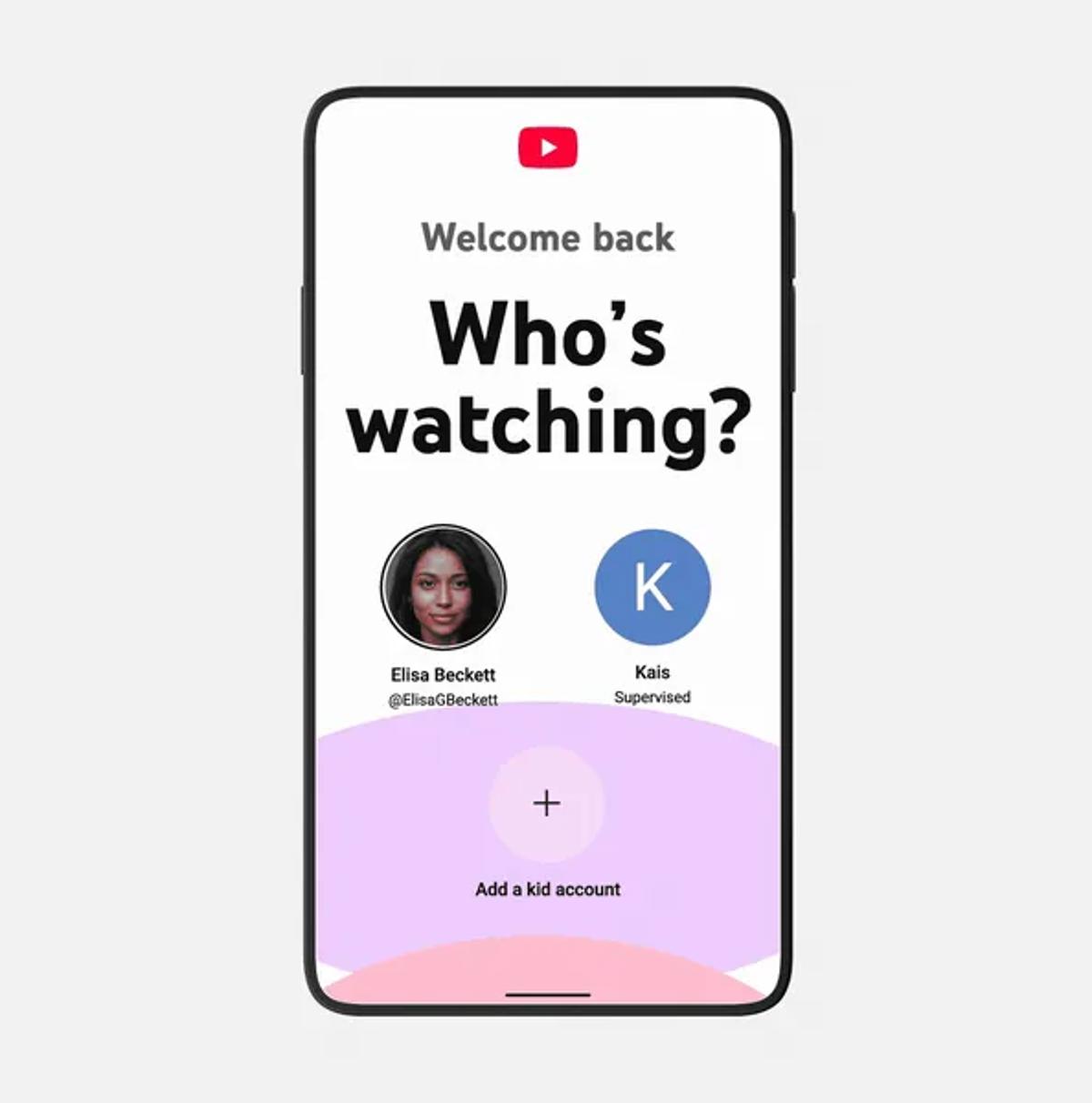
Helping Families Across Europe Build Healthy Digital Habits
YouTube has launched a suite of family‑focused tools across Europe, highlighted by an industry‑first Shorts timer that lets parents cap or completely block the Shorts feed. The rollout also includes a streamlined process for creating supervised kid accounts, making age‑appropriate...

5 Signs You're Living Someone Else's Definition of Success (and How to Stop That Without Burning It All Down)
Becca Pearce warns that many high‑achievers are living by a borrowed definition of success, chasing external markers like bigger houses, titles, and salaries. She outlines five tell‑tale signs—comparison‑driven ambition, hollow achievements, role‑based identity, guilt over new desires, and postponing happiness—that...

Why Prioritisation Alone Doesn’t Fix Overwhelm at Work
Many workers feel overwhelmed not because of workload size but due to lacking the right type of support. Liane Davey's upcoming book *Thoughtload* argues that productivity solutions must match four coping styles—talking, acting, structuring, and finding meaning—rather than relying solely...

Want to Be More Organized This Year? Start With These iPhone Apps
The Inc. article spotlights eight iPhone organizer apps aimed at busy founders, with detailed looks at Things 3 and Todoist. Things 3 offers a minimalist, flat‑fee interface for project‑level task management, while Todoist provides a subscription‑based platform featuring AI‑driven task breakdown and...

Your Boss’s Feelings Matter Too
A new LSE Business Review analysis challenges the myth that senior leaders are emotion‑free, citing a review of 101 academic studies that link leader feelings to downstream outcomes. The authors highlight the double‑edged nature of emotions—anger can deter misconduct yet...

There’s a Specific Kind of Adult Who Apologizes for Crying Even when They’re Alone, and It Isn’t Sensitivity, It’s the...
The article explains why many adults automatically apologize when they cry, even when alone. It traces the habit to childhood emotional invalidation, where caregivers dismissed or ignored distress, teaching children to treat emotions as a mess to be hidden. Psychological...

Psychology Says the Unhappiest Men in Any Room Aren’t the Ones Who Complain — They’re the Ones Who’ve Become so...
The article reveals that many high‑functioning men in their 30s‑40s hide profound unhappiness by perfecting a performance of contentment. Interviews with over 200 professionals show they often cannot articulate their true feelings, having compartmentalized emotions for years. Psychological research links...

World Champion and Awake Academy Founder Layne Beachley Talks High Performance at Sydney Growth Summit
World champion surfer and Awake Academy founder Layne Beachley will speak at Sydney's Growth Summit on June 18, delivering a session titled “High performance that lasts.” She will discuss emotional fitness and resilience, drawing on her seven‑time world title experience...

Mental Wellness & The Culture You Leave Behind
John Trautwein, founder of the Will To Live Foundation, urges CEOs to confront the hidden mental‑health crisis in their workplaces. He cites that one in five employees silently battle diagnosable mental illness, a stigma‑driven condition that can erode productivity and...

The Hidden Cost of Growth: Leadership Debt
Leadership Debt™ describes the hidden liability that builds when founders cling to day‑to‑day control, preventing the development of a scalable leadership team. The article outlines four stages—from founder‑as‑driver to scaling headcount without output—showing how each compounds operational risk and erodes...

How My Divorce Changed the Way I Lead
Rita Cincotta reflects on how her divorce—occurring in her early 40s, a peak leadership age—disrupted focus and productivity but ultimately reshaped her approach to leading. She notes that divorce affects roughly one in three adults, often coinciding with senior‑level responsibilities,...

I Hit Every Goal I Set – the Title, the Income, the House – and Sat in My Car in...
The article explores the "achievement trap," where reaching long‑held goals—like a dream house, a big contract, or financial security—leaves many professionals feeling empty. Citing psychologists such as Tim Kasser and concepts like hedonic adaptation, it shows that extrinsic milestones often...

This Is a Hard Time to Start a Career. These Two Words Can Help.
Graduates of 2026 are entering a labor market strained by AI‑driven automation and rising unemployment among degree holders. Economists warn that many entry‑level roles could disappear, while digital interview platforms add a layer of impersonal assessment. In her commencement address,...

People Who Accomplished Remarkable Things by 60 Share One Pattern — They Changed Their Minds More Often and Their Identity...
People who achieve extraordinary results by age 60 share a distinct mental pattern: they regularly update their beliefs while keeping their core identity stable. Research on epistemic humility shows that frequent mind‑changing improves forecasting, decision‑making, and long‑term outcomes. Conversely, most...

Happiness Hacks: 28 Simple Strategies For A Brighter, Joy-Filled Life (P)
Psychologist Dr. Jeremy Dean outlines 20 evidence‑based strategies to improve everyday happiness. The article, titled “Happiness Hacks,” groups simple mindset, habit, and lifestyle tweaks that readers can adopt immediately. Dean draws on decades of research to explain how gratitude, physical...

Why Better Thinking Skills May Reduce Anxiety Risk (M)
Recent research highlights that robust cognitive abilities—particularly working memory, mental flexibility, and problem‑solving skills—act as a protective factor against anxiety disorders. Studies show individuals with higher executive function scores experience fewer anxiety symptoms and lower risk of clinical anxiety. The...

Why Am I So Tired All the Time?
Office workers often hit a pronounced energy dip between 1 p.m. and 4 p.m., a phenomenon Dr. Brandon Luu attributes to the body’s natural circadian rhythm. As cortisol levels fall and melatonin readiness rises, alertness wanes, increasing the risk of performance lapses...
The Real Cost of Letting AI Do It for You
Researchers at MIT Media Lab found that participants who used ChatGPT displayed the weakest neural connectivity, indicating reduced cognitive engagement. The article argues that while AI tools boost short‑term efficiency, they erode deep thinking, originality, critical judgment, and long‑term skill...

I'm a Psychologist Who Studies Couples: People in the Happiest Relationships Do 5 Things on Sundays—That Most Neglect
Psychologist Mark Travers identifies a simple "Sunday reset" that the happiest couples use to strengthen their bond. The ritual consists of five focused activities: a logistical check‑in, a moment of appreciation, an emotional debrief, a look ahead at the week,...

Why High Achievers Can Feel Lost After Success
High achievers often experience a sharp emotional dip after reaching major milestones because the brain’s dopamine surge fades once the goal is met. The pursuit of goals provides structure and a sense of identity, turning performance into a proxy for...

The People Who Remember Every Small Kindness but Can’t Recall a Single Compliment About Themselves
Researchers describe a memory asymmetry where people vividly recall concrete acts of kindness but lose self‑praise, a pattern dubbed the fading affect bias. Astronauts and isolated crews consistently report remembering supportive actions while failing to retrieve compliments, a bias that...

The Real Enemy of High Performance Isn’t Laziness, It’s Low-Grade Busyness
The article argues that low‑grade busyness, not laziness, undermines high performance. It cites Stanford research showing productivity plateaus after about 50‑55 hours a week, and shares the author’s own startup failure caused by endless meetings and shallow tasks. By avoiding...

The Hardest Part of Being Trusted Isn’t the Responsibility. It’s Realizing People Stopped Checking on You because They Assumed You...
The article explores a paradox in high‑performing individuals, especially in long‑duration isolation crews: as competence builds trust, routine check‑ins fade, leaving the reliable person invisible. Drawing on a 2011 confinement study, it links this dynamic to childhood emotional neglect, which...

How to Train Your Brain to See Possibility Instead of Doom
The article explains that humans are wired to dread uncertainty, a negativity bias that makes ambiguous situations feel more threatening than known risks. Neuroscience shows the brain expends extra energy on ambiguity, leading to stress and narrowed thinking. By cultivating...

Psychology Says the Happiest People After 60 Aren’t the Ones Who Found Purpose or Passion — They’re the Ones Who...
Recent psychological research shows that older adults who stop actively pursuing happiness report higher well‑being than those who chase purpose or passion. Studies by Iris Mauss and colleagues found that treating happiness as a life goal predicts lower life satisfaction and...

In 1 Sentence, a Retired Electrician Just Explained How to Motivate Anyone (Even Yourself)
Tommy Baker, a retired electrician, argues that motivation comes from feeling needed rather than from an abstract sense of purpose. After retirement left his schedule empty, he regained drive by volunteering to teach repairs, discovering that even a few people...

Psychology Says People Who Naturally Become the Center of Attention in Any Room Aren’t Necessarily Extroverted — They’ve Mastered Subtle...
Recent psychological research reveals that individuals who dominate a room’s attention are often not the loudest extroverts but master subtle non‑verbal cues. By projecting simultaneous signals of warmth and competence—through stillness, slightly prolonged eye contact, comfortable silences, restrained reactions, and...
:max_bytes(150000):strip_icc():format(jpeg)/GettyImages-1298252213-881dc57e798841c88fd89dd7d2a841fc.jpg)
What Are the 5 Top Stressors in Life?
The article identifies death of a loved one, divorce or separation, moving, long‑term illness, and job loss as the five most common life stressors. It explains how chronic stress can suppress the immune system, leading to digestive, sleep and cardiovascular...
:max_bytes(150000):strip_icc():format(jpeg)/what-is-body-positivity-4773402-final-withtext-2b6f5175004e408e915680b57383739e.png)
What Is Body Positivity?
Body positivity, rooted in the 1960s fat‑acceptance movement, has evolved into a mainstream cultural force that challenges unrealistic beauty standards and promotes self‑acceptance across all body types. The movement gained momentum through social media, especially Instagram, and has spurred major...
:max_bytes(150000):strip_icc():format(jpeg)/GettyImages-168358912-5aee5e5a119fa800378360d6.jpg)
7 Tips for Finding Your Purpose in Life
A recent article outlines seven practical strategies for uncovering personal purpose, from volunteering and seeking positive relationships to actively soliciting feedback and exploring one’s interests. It cites research showing that a strong sense of purpose correlates with better health, longer...

The People Most Frequently Mistaken for Lazy Aren’t the Ones Who Never Worked Hard — They’re the Ones Who Worked...
The article argues that people labeled as lazy are often victims of chronic burnout, not character flaws. It cites the WHO’s 2019 classification of burnout as an occupational phenomenon defined by exhaustion, mental distance, and reduced effectiveness. Real‑world examples show...

Why Great Leaders Pause Before Acting in a Crisis
Great leaders often feel compelled to act immediately when a crisis erupts, but the most effective response begins inward. Psychologist and CEO coach Yosi Amram argues that pausing to acknowledge and process emotions restores clarity and prevents rash decisions. He...

Psychology Says People Who Reach Their 60s without Close Friends Aren’t the Ones Who Lost Everyone Along the Way —...
Psychologists argue that many people in their 60s with small social circles have not been abandoned, but have deliberately stepped back from draining relationships over decades. Research shows they often feel less lonely than those surrounded by superficial contacts, because...

I Let AI Plan My Workdays Down to the Minute for a Week — the Shock Wasn’t My Output, It...
A writer handed a week‑long, minute‑by‑minute calendar to ChatGPT, expecting a modest productivity boost. The AI stripped out vague blocks, aligned tasks with the writer’s natural energy peaks, and imposed strict deep‑work, email, and break windows. Output rose slightly, but...
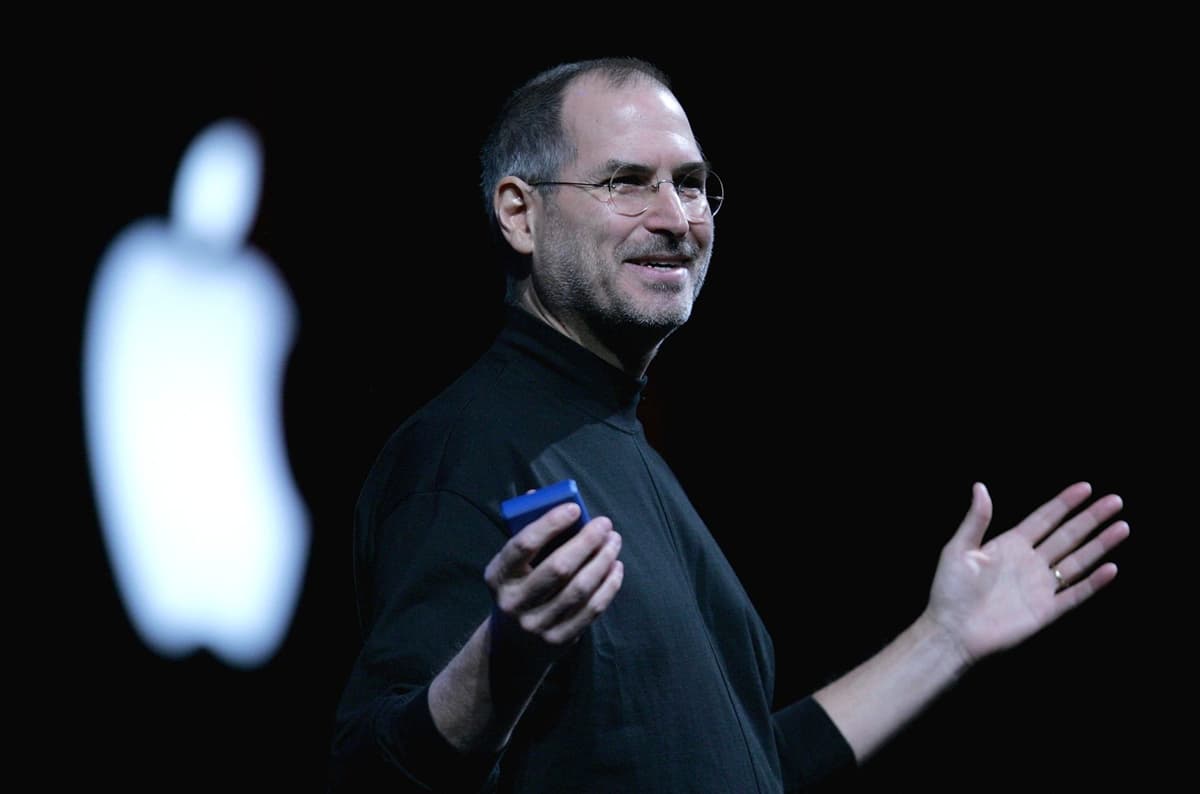
Zillow’s CEO Says His Friends Were Shocked when He Quit a Cushy Microsoft Job—But Steve Jobs Led to His Success at the $10.5...
Jeremy Wacksman quit a comfortable Microsoft Xbox marketing role in 2009 to join Zillow, a struggling real‑estate startup. Six months later, the launch of Apple’s App Store prompted him to spearhead Zillow’s mobile strategy, a move that proved pivotal. Over...

The Most Dysfunctional Leadership Habit In Healthcare: ‘Split The Baby’ Thinking
The article warns that healthcare leaders often default to “split the baby” thinking—seeking compromise instead of decisive, evidence‑based choices. This habit turns complex, high‑stakes decisions into watered‑down middle grounds, leaving initiatives half‑implemented and outcomes stagnant. The author argues that true...
:max_bytes(150000):strip_icc():format(jpeg)/Lainey-Wilson-973-04162026-d39eb7f9e8bc402eb3e42b09e668621b.jpg)
Lainey Wilson Had 'Several Breakdowns' As Career Took Off, Reveals Advice Reba McEntire Gave Her to Keep Going
Lainey Wilson’s new Netflix documentary, *Keepin’ Country Cool*, reveals how sudden stardom triggered severe anxiety, panic attacks and multiple breakdowns. The 33‑year‑old country star turned to mentor Reba McEntire, who urged her to “do it for somebody else,” helping her reframe...