Today's Quantum Pulse
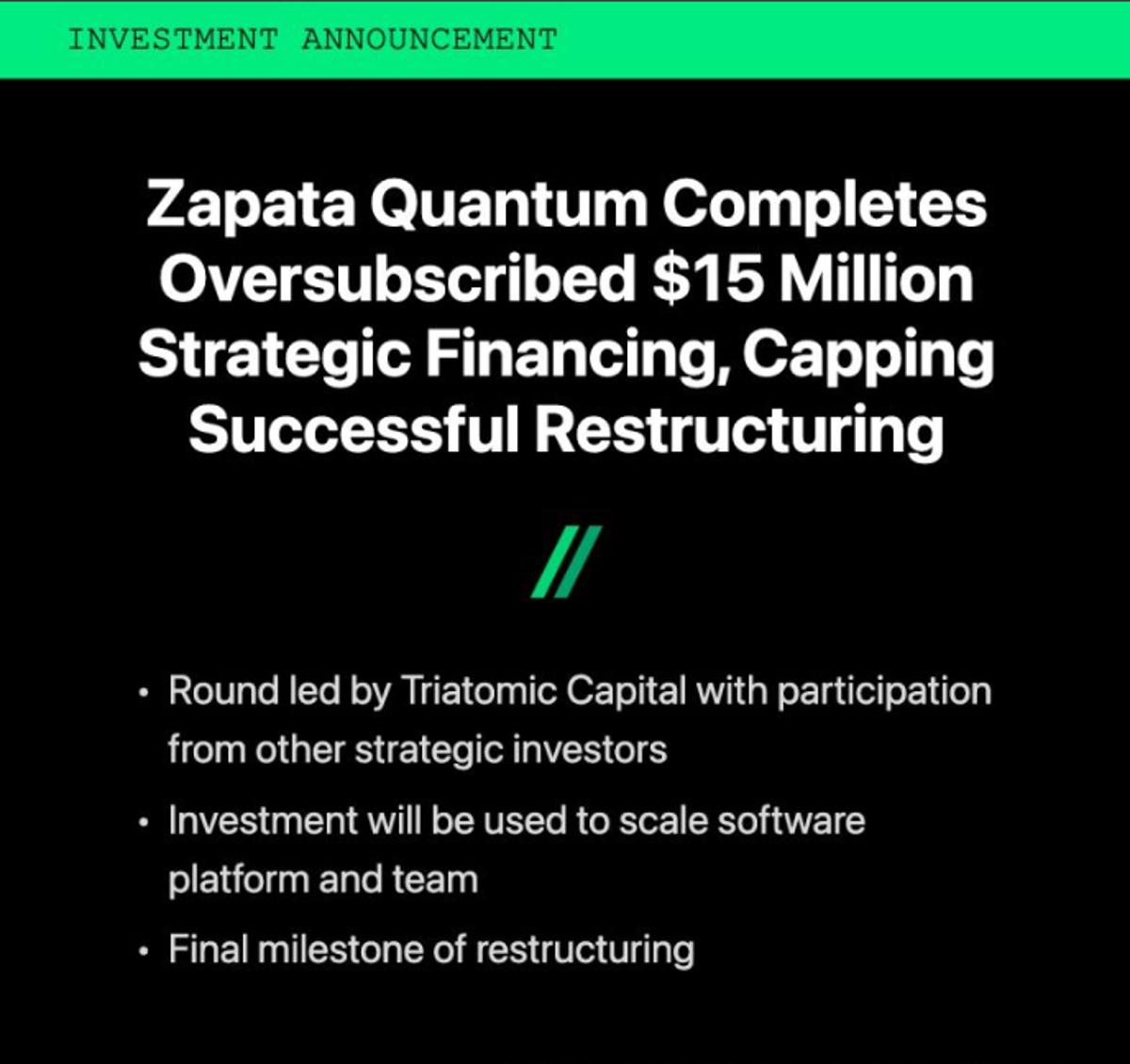
Zapata Quantum secures $15M Series D to reboot its quantum software platform
Zapata Quantum announced an oversubscribed $15M Series D financing, led by Triatomic Capital, to scale its hardware‑agnostic quantum software platform and expand its science and engineering teams. The funding follows a year‑long restructuring after a 2024 financing default and comes as the company highlights a breakthrough quantum‑enabled KRAS drug‑discovery study published in Nature Biotechnology.
Also developing:
By the numbers: Cerca Magnetics raises $4.75M Series A

Podcast REPLAY: D-Wave (QBTS), SPACs, and the Quantum Revival
Quantum computing has become a top‑performing de‑SPAC sector, driven by SPAC listings that fast‑tracked capital to the industry. After a bearish period in 2021‑22, recent hardware and algorithmic breakthroughs revived investor enthusiasm. The podcast revisits a February 2025 interview with D‑Wave CEO Alan Baratz, who discusses the company’s SPAC merger with DPCM Capital, strategic pivots, and how to interpret emerging quantum advancements. Baratz offers guidance for investors navigating the evolving quantum landscape.
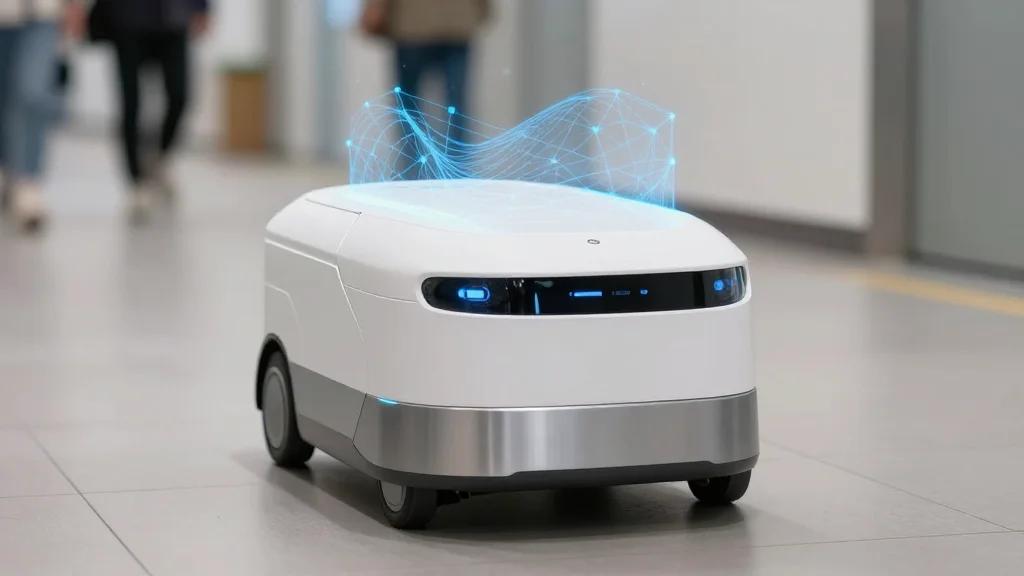
Autonomous Robot Runs Quantum-Inspired Optimization in Real Time
Japanese tech giant Toshiba and MIRISE Technologies have embedded their Simulated Bifurcation Machine, a quantum‑inspired optimization engine, into an autonomous mobile robot. The on‑board FPGA runs a new multi‑object tracking algorithm at 23 frames per second, delivering up to 23%...

A Protocol to Realize Near-Perfect Atom-Photon Entanglement
Researchers at Academia Sinica and Harvard have refined the state‑carving (SC) protocol, enabling near‑perfect atom‑photon entanglement by letting a single photon interact twice with atoms inside an optical cavity. The revised method eliminates the 50 % success ceiling of the original...

Patent Granted for Quantum Machine Perception at Google
After a very long time this patent is finally out Inventing Quantum machine perception, i.e. combining quantum machine learning with quantum sensors. One of my first contributions at Google. Enjoy 🖖⚛️ https://t.co/xSigOnrl6A

IonQ Hires Trio of Dell Vets to Lead Federal Push
IonQ has bolstered its federal division by appointing three former Dell executives to senior roles, while former NGA director Robert Cardillo serves as executive chairman. Steve Harris will lead the go‑to‑market organization, Cameron Chehreh will head field engineering, and Mike...
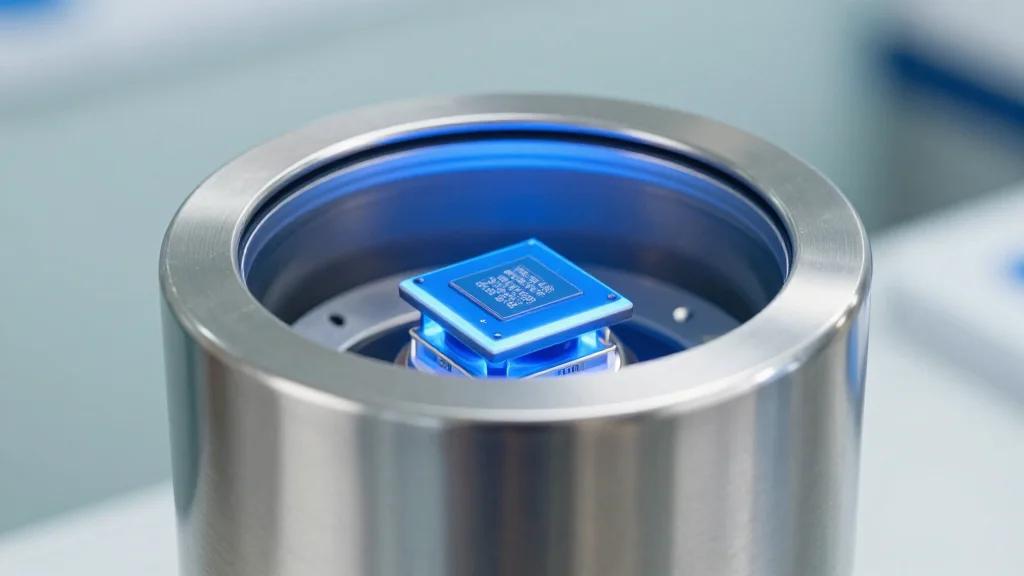
QEC4QEA to Support Development of Quantum-Enhanced Applications Across Europe
QEC4QEA, a new Quantum Excellence Centre funded by EuroHPC JU and Horizon Europe, receives roughly €4.9 million to accelerate quantum‑enhanced application development across Europe. The centre links end‑users with quantum developers, experts and computing providers, offering guidance, tools, training and hybrid quantum‑HPC resources....

Quantum Threats Demand Immediate Bitcoin Resistance Upgrade
There are 2 threats that quantum computers pose to Bitcoin, both have the same solution. Threat 1: A QC is built and used to break Bitcoin's cryptography. Threat 2: Even before such computer is here, people will lose confidence in Bitcoin out...

Quantcore Secures £2.5M ($3.4M USD) to Establish Sovereign Niobium-Based Quantum Hardware Manufacturing
Quantcore, a University of Glasgow spin‑out, closed a £2.5 million seed round led by PXN Ventures, Blackfinch Ventures and Scottish Enterprise. The funding will be used to build a sovereign niobium‑based quantum hardware manufacturing line at the James Watt Nanofabrication Centre,...

BluGlass Secures A$190,000 Order From TOPTICA for Custom GaN Visible Lasers
BluGlass Ltd secured a A$190,000 (US$132,500) order from TOPTICA Photonics to supply custom gallium‑nitride visible‑wavelength lasers for photonic integrated circuits. The lasers will be used in TOPTICA’s next‑generation single‑frequency PICs that enable quantum capabilities for trapped‑ion, neutral‑atom, and photonic quantum...
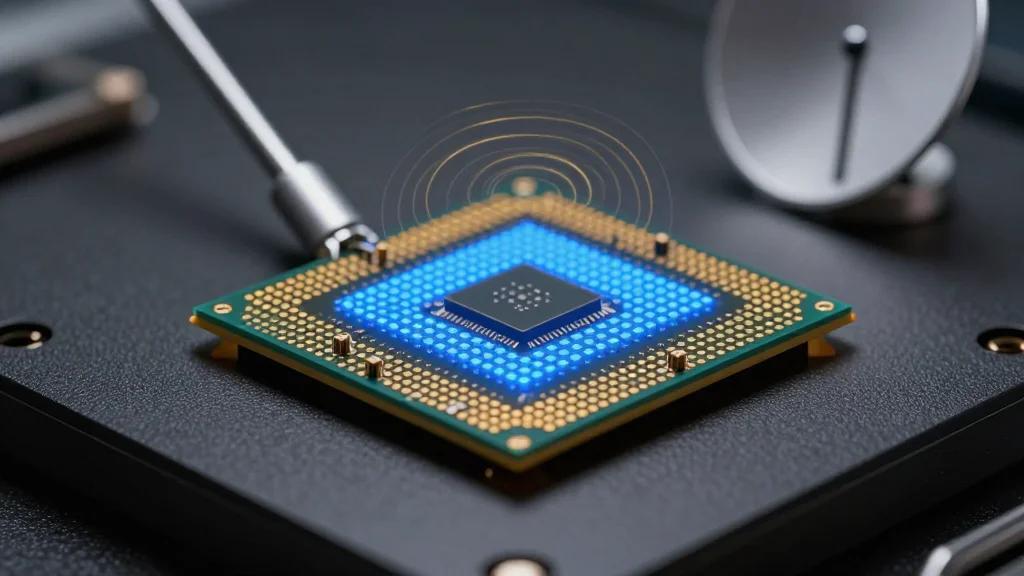
Assessing the Practical Feasibility of the Clader-Jacobs-Sprouse Quantum Algorithm for Calculating Radar Cross Sections
The 2013 Clader‑Jacobs‑Sprouse (CJS) quantum algorithm promises an exponential speedup for electromagnetic scattering problems, including radar cross‑section (RCS) calculations. A new study compares its end‑to‑end complexity with the best classical finite‑element method and finds the theoretical advantage offset by massive...
IonQ Selected for Missile Defense Agency SHIELD IDIQ Contract
IonQ has been named an eligible contractor for the Missile Defense Agency’s SHIELD IDIQ contract, a multi‑year procurement vehicle with a $151 billion ceiling. The selection positions IonQ among more than 2,400 firms competing for future task orders that support rapid,...
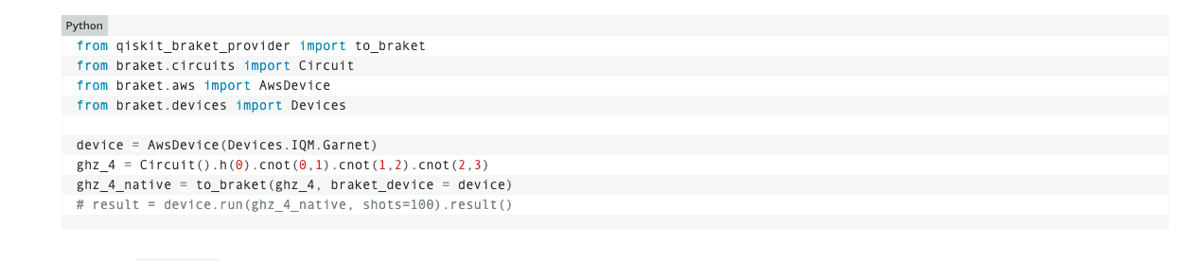
AWS Quantum Technologies Releases Qiskit-Braket Provider v0.11, Now Compatible with Qiskit 2.0
AWS Quantum Technologies launched Qiskit‑Braket provider version 0.11, adding BraketEstimator and BraketSampler primitives and full support for Qiskit 2.0 while retaining backward compatibility to v0.34.2. The update introduces a versatile `to_braket` function that compiles circuits from Qiskit, OpenQASM 3, and native Braket inputs...

4colors Research & Partners Secure Funding to Tackle Aircraft Loading with Quantum Computing
A consortium led by 4colors Research, together with Airbus, DNV, NQCC and ORCA Computing, has received an NQCC SparQ grant to develop a hybrid classical‑quantum solution for aircraft cargo loading. The project, titled “Quantum‑Accelerated Mixed‑Integer Optimisation for Aircraft Loading,” will...

NQFF and Qolab Collaborate on Wafer-Scale Cryogenic Filters for Quantum Scaling
National Quantum Federated Foundry (NQFF) and Qolab have launched a research partnership to create integrated cryogenic low‑pass filters on silicon wafers for superconducting and spin‑qubit processors. By moving from discrete, bulky filters to wafer‑scale fabrication, the collaboration aims to shrink...

Quantum Computers Go High-Dimensional with a Four-State Photon Gate
A joint effort by TU Wien and Chinese researchers has demonstrated a heralded quantum logic gate that operates on two photons each encoded in four distinct quantum states, or qudits. The gate leverages the photons' orbital angular momentum rather than...
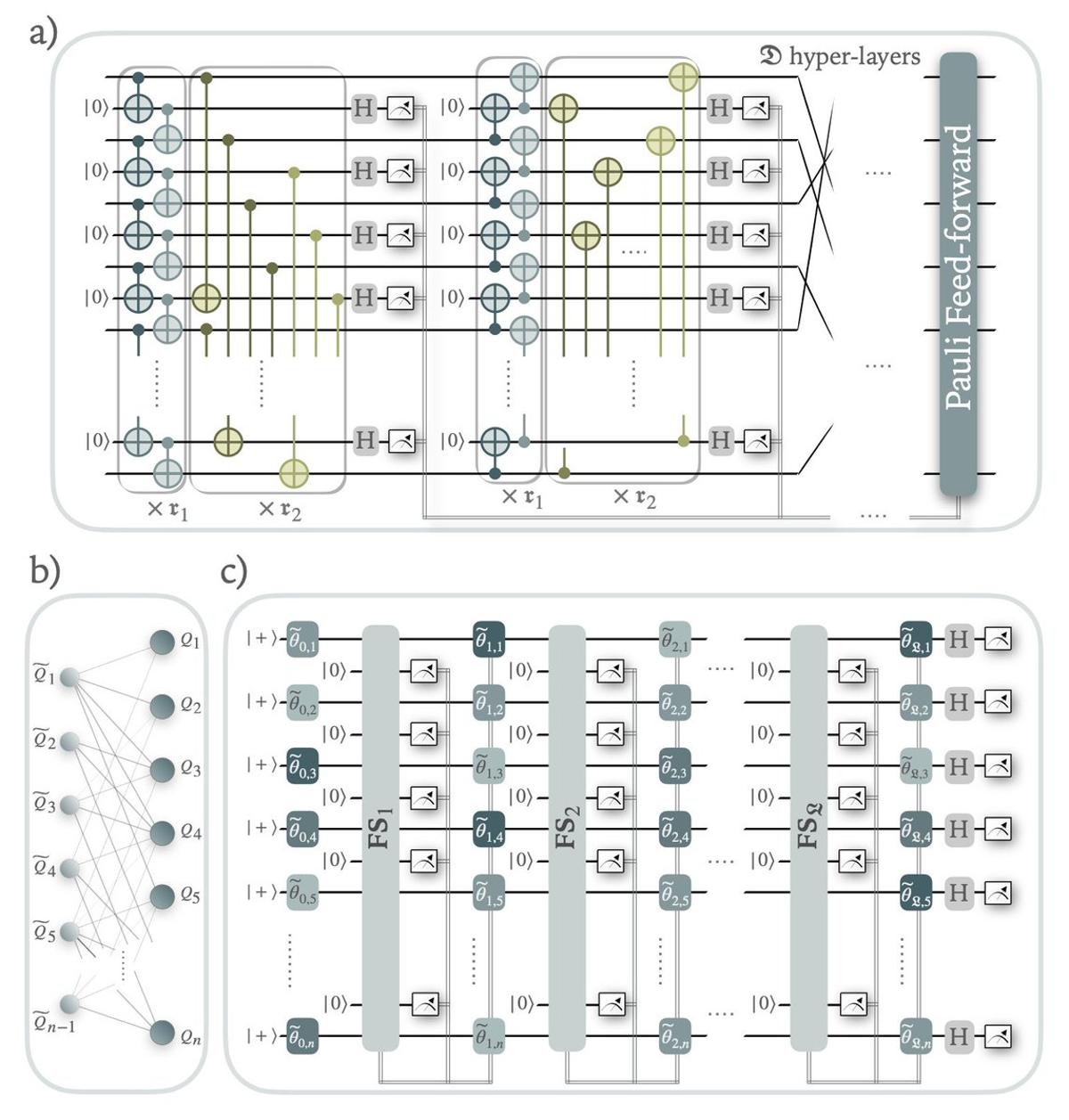
Mid‑Circuit Measurements Unlock Quantum Advantage in Shallow Circuits
Mid-circuit measurements are a powerful tool for state preparation, and they have generated considerable excitement in condensed matter physics due to their rich and surprising effects. In contrast, their usefulness for #quantumcomputation remains comparatively less well understood. In this work,...

Our Quantum Future with Evan Kubes
In this episode, host Sebastian Hassinger chats with Evan Kubas, a lawyer‑turned‑quantum media entrepreneur, about the origins of Quantum Insider and its parent company Resonance. Kubas recounts how he and co‑founder Alex Challens built a leading quantum news platform from...
Quantum Algorithm Beats Classical Tools on Complement Sampling Tasks
Researchers at Quantinuum and QuSoft have introduced a quantum algorithm that solves the complement sampling problem using a single quantum sample, a task that classically requires on the order of N samples when the subset size is half the universe....

Quantum Reservoir Computing Peaks at the Edge of Many-Body Chaos, Study Suggests
University of Tokyo researchers demonstrated that quantum reservoir computing (QRC) achieves its highest accuracy when operating at the edge of many‑body quantum chaos. By applying random‑matrix theory to the Sachdev‑Ye‑Kitaev (SYK) model, they identified two distinct chaos boundaries—in the time...

Bitcoin Could Be Quantum‑proof with Just Two Steps
“Only two steps” required to make Bitcoin quantum-resistant? In this @Unchained_pod episode, @TheBlueMatt joins me to discuss: ❌ Why he thinks Nic Carter is wrong about the quantum threat to Bitcoin ⛔ Why he disagrees with Nic on his ranking of Bitcoin’s most...
24 Concise Chapters Showcase Diverse Author Perspectives
Interesting format for a review article. 24 brief chapters, each offering perspective from a small subset of the 69 authors on a particular topic. https://t.co/S49x2Mr1g2

Coinbase CEO Says Potential Quantum Computing Threats Are “Solvable”
Coinbase has created a quantum‑computing advisory board to assess and mitigate future threats to blockchain security. CEO Brian Armstrong told CNBC the quantum risk is “solvable” and that Coinbase is already “front‑footed” in developing post‑quantum cryptography solutions. The board will...

Tectonic Labs Releases PQ Wallet and Post-Quantum Audit Services for EVM Chains
Tectonic Labs unveiled PQ Wallet, a browser‑based EVM extension that supports Falcon‑512 quantum‑resistant signatures, available for Chrome, Firefox, and via a command‑line interface for developers. The wallet offers two operating modes: a “Quantum‑secure” mode that signs transactions with post‑quantum keys...

MerLin: Framework for Differentiable Photonic Quantum Machine Learning
MerLin 0.3, an open‑source framework from Quandela, brings photonic and hybrid quantum machine learning into standard AI pipelines. Built on the Perceval SDK, it uses Strong Linear Optical Simulation to compute exact quantum states inside a PyTorch‑native environment via a QuantumLayer...

New Quantum Algorithms Deliver Speed-Ups Without Sacrificing Predictability
Researchers Aaronson, Gur and Li introduced a systematic study of pseudo‑deterministic quantum algorithms, a class that returns a canonical solution with high probability. Their paper demonstrates an exponential speed‑up for the Quantum‑Locked Estimation problem compared with classical pseudo‑deterministic methods, and...

Quantum: Photonic Inc. Names Executive Chair and Four Directors
Photonic Inc., a Vancouver‑based distributed quantum computing firm, announced a refreshed board after a CAD 180 million financing round. Alex van Someren returns as Executive Chair, while Don Mattrick takes the Vice Chair role. New directors include Nathan Medlock, Ashton Scordo, and existing founders Stephanie Simmons...

Quantum and Games: The Shift Developers Can’t Afford to Ignore
Quantum computing is poised to reshape game development by tackling the most complex design problems, not by running games in real time. Developers are already leveraging quantum algorithms for procedural generation, rule‑validation across massive worlds, and hard‑to‑find bug elimination, feeding...

Quantum Computing Weekly Round-Up: Week Ending February 21, 2026
The weekly roundup spotlights rapid progress in quantum hardware, with packaging technologies scaling to industrial volumes and a metro‑scale networking demo achieving 50‑kilometer entanglement. Legal and financial frameworks are emerging to manage post‑quantum cryptography risk, while venture capital pours $250 million...
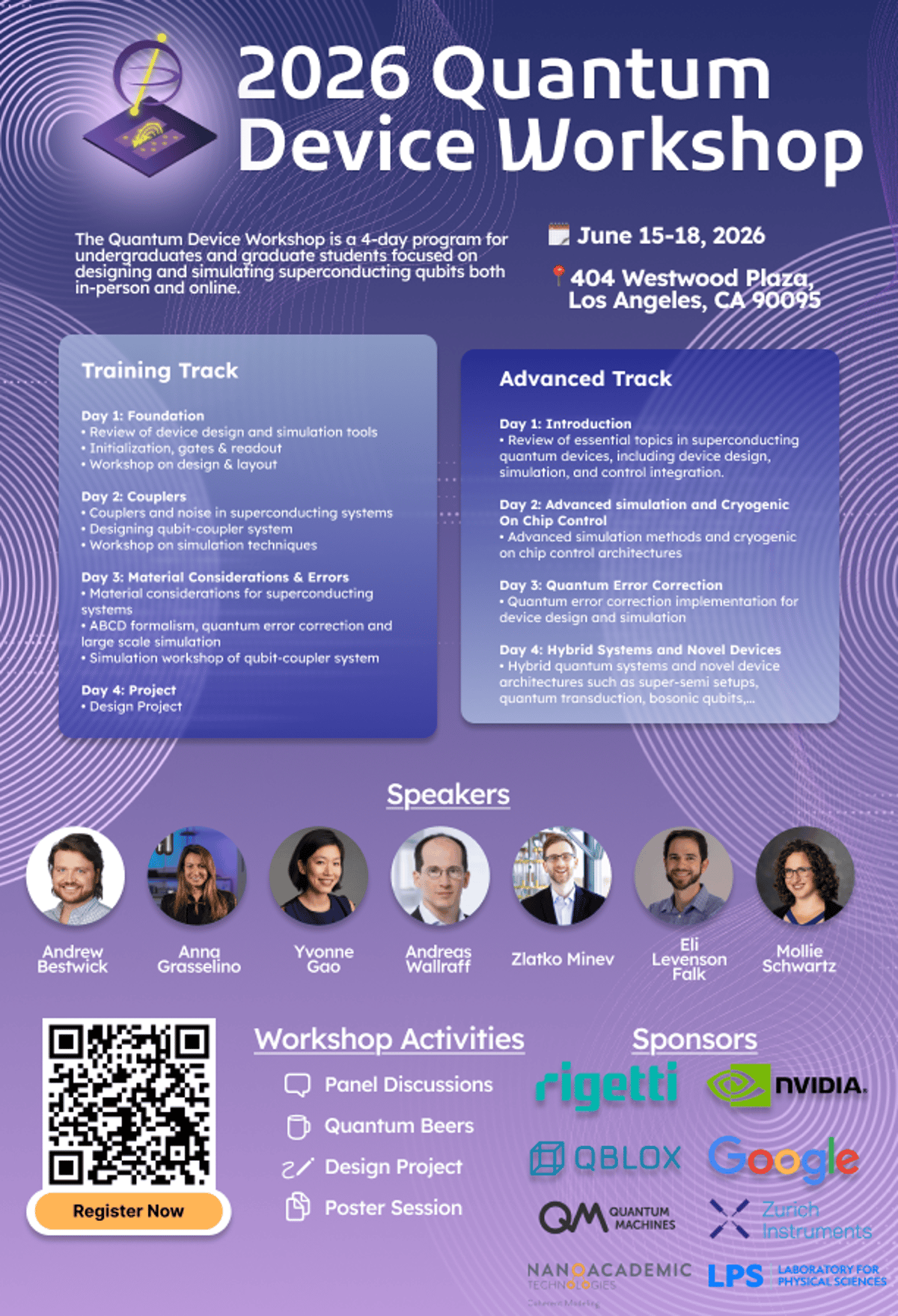
Register Now for UCLA's 2026 Quantum Device Workshop
🚀 Registration is now open for the 2026 Quantum Device Workshop, held at UCLA on June 15–18, 2026 https://t.co/TpnOviTsh8

NIST’s Quantum Breakthrough: Single Photons Produced on a Chip
NIST announced a chip that reliably generates a single photon on demand using quantum‑dot technology. The device achieves near‑perfect efficiency and, when paired with superconducting nanowire single‑photon detectors, can transmit photons up to 600 miles. Mass‑production of the chip is...

Quantum Entanglement Could Link Distant Telescopes for Sharper Images
Researchers from the University of Arizona, University of Maryland and NASA have proposed a quantum‑entanglement‑based long‑baseline interferometry method that eliminates the need for fragile optical links between distant telescopes. By sharing pre‑distributed entangled qubits and using spatial‑mode sorters at each...

Bloomberg Reports: Quantum Startup Pasqal Seeks €200 Million to Fuel Growth
French quantum computing startup Pasqal announced it is in talks to raise €200 million, valuing the company at over $1 billion pre‑money. The round, led by undisclosed investors, would fund the expansion of its neutral‑atom quantum processors and full‑stack hardware‑software platform. Co‑founder...

Coherent Emitters Unlock Brighter, Correlated Light Sources
Researchers at The Chinese University of Hong Kong have demonstrated squeezed superradiant lasing in a quantum many‑body system by coupling a cavity to interacting spin‑½ emitters modeled with the Lipkin‑Meshkov‑Glick Hamiltonian. Their analysis shows that spin‑squeezing generated through coherent all‑to‑all...

Entanglement Boosts Machine Learning of Quantum Systems
Researchers at Universitat Autònoma de Barcelona introduced an entanglement‑assisted learning strategy for quantum generative adversarial networks (QGANs). By coupling a randomly initialized auxiliary qubit during training, the method overcomes plateaus and local minima that limit QGAN scalability. In a 72‑qubit...
Federal Government Slips $12.7 Million to 8 Quantum Projects Tackling Energy, Minerals and Health
The Australian federal government allocated an additional $12.7 million to eight collaborative quantum‑technology demonstrators, expanding the $35.9 million National Quantum Strategy. Funding ranges from $1.1 million for a data‑centre cooling solution to $2.4 million for rare‑earth detection in mines. Projects span energy optimisation, medical...

Tower Semiconductor and Xanadu Industrialize Silicon Photonic Quantum Stack
Tower Semiconductor and quantum‑computing startup Xanadu have broadened their partnership to industrialize a silicon‑photonic quantum stack. Leveraging Tower’s PH18 200 mm silicon photonics platform, the joint effort will transition Xanadu’s low‑loss SiN waveguide and integrated photodiode designs from prototype to high‑volume...
Quantum eMotion to Transition Trading Operations to NYSE American Exchange
Quantum eMotion Corp. received approval to list its common shares on NYSE American under the ticker QNC, with trading slated to start around February 24, 2026. The move will see the company exit the OTCQB market while retaining listings on the TSX Venture...
AQT Integrates IBEX Q1 Trapped-Ion QPU Into Scaleway Sovereign Cloud
Alpine Quantum Technologies and Scaleway have integrated AQT’s IBEX Q1 trapped‑ion quantum processor into Scaleway’s sovereign Quantum‑as‑a‑Service platform. The QPU, featuring all‑to‑all qubit connectivity and high gate fidelity, is accessible via open‑source frameworks without reservation during set time windows. Hosted...
2 Top Quantum Computing Stocks to Buy in 2026
Quantum‑computing stocks have fallen sharply in early 2026, making IonQ and IBM attractive entry points. IonQ (IONQ) trades around $33, bolstered by a 222% YoY revenue jump and recent acquisitions including SkyWater to control chip manufacturing. IBM (IBM) trades near...

Quantum Cryptography Threat Still a Decade Away, Experts Say
"People keep claiming that we'll have a cryptographically-relevant quantum computer soon. The actual quantum experts are giving 10-year time horizons." https://t.co/CLMWr1HiYS
D-Wave Joins Southeastern Quantum Collaborative as an Inaugural Member
D‑Wave Quantum Inc. has joined the newly formed Southeastern Quantum Collaborative (SQC) as an inaugural member alongside the University of Alabama in Huntsville, Davidson Technologies, IBM and Alabama A&M University. The partnership aims to unite academia, industry and government to...

Triplet Superconductivity—Physicists May Have Found the Missing Link for Quantum Computers
Physicists led by Jacob Linder at Norway’s NTNU claim to have observed intrinsic triplet superconductivity in a niobium‑rhenium (NbRe) alloy. The discovery, published in Physical Review Letters, suggests NbRe can carry spin‑polarized Cooper pairs without resistance, a property absent in...
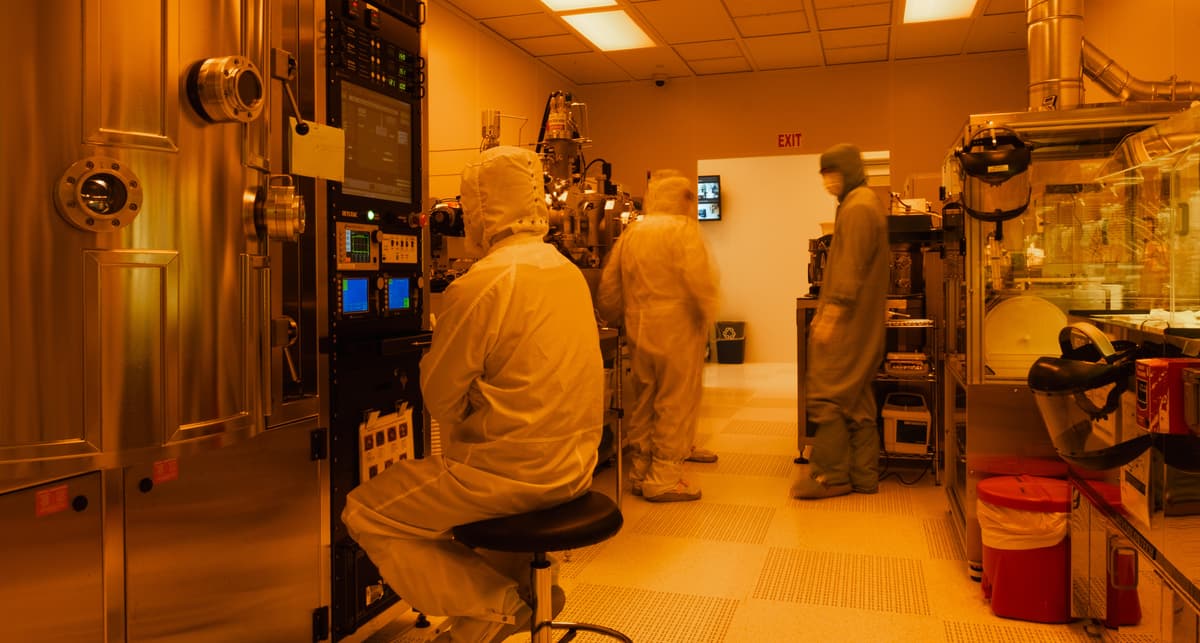
Quantum Co-Laboratory Expands Its National Partnership, Strengthening Canada’s Leadership in Quantum Science and Technology
Canada’s Quantum Co‑laboratory has entered its second five‑year term, adding the University of Calgary’s Institute for Quantum Science and Technology to its existing partners—University of Waterloo, Université de Sherbrooke, and UBC’s Blusson Quantum Matter Institute. The expanded network provides researchers,...

Quantum 'Ghost Imaging' Paves Way for Nanoscale Images at Lower X-Ray Dose
Researchers at Brookhaven National Laboratory’s NSLS‑II have demonstrated quantum‑inspired ghost imaging using entangled X‑ray photon pairs. By correlating a photon that passes through a sample with its untouched partner, they produced high‑resolution images of a tungsten cat and a cardamom...

Palm Beach County Receives $1M Federal Funding to Expand Quantum Ecosystem
The Business Development Board of Palm Beach County secured a $1,031,000 federal grant to coordinate regional quantum technology initiatives and workforce training. Palm Beach State College also received over $2 million to launch a Quantum Innovation Center that will serve as...
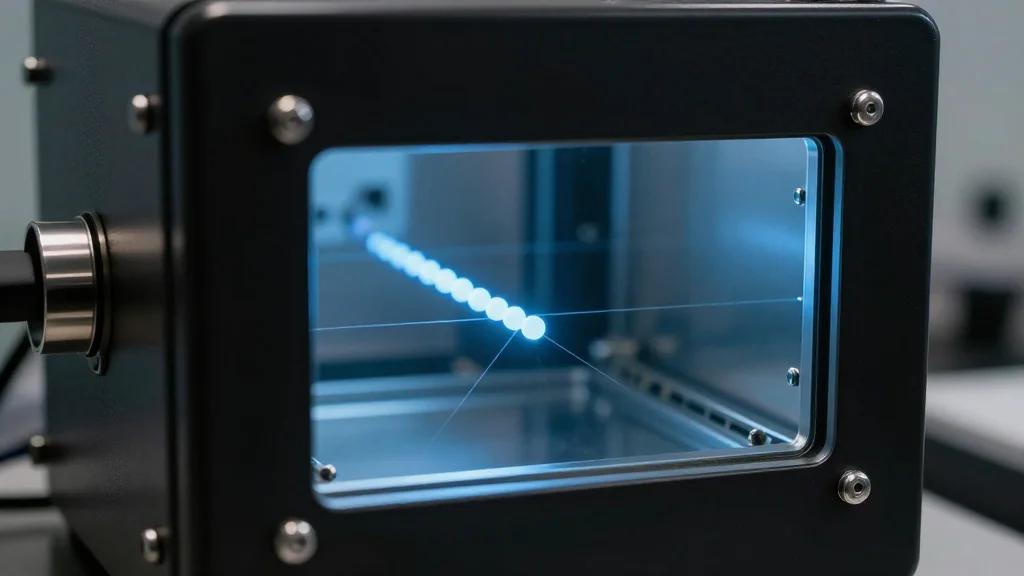
Quantum Simulator Reveals Statistical Localization that Keeps Most Qubit States Frozen
Researchers at Duke University used a neutral‑atom Rydberg quantum simulator to observe statistical localization, a phenomenon where most qubit configurations remain frozen despite quantum evolution. The effect, first theorized in 2020, was demonstrated in a one‑dimensional chain of rubidium atoms...

Simplifying Quantum Simulations—Symmetry Can Cut Computational Effort by Several Orders of Magnitude
Physicists Guido Burkard and Joris Kattemölle introduced a symmetry‑based method that slashes the computational effort of quantum simulations by over a thousandfold. By treating repeating lattice patterns as single tiles, the approach replaces thousands of point‑by‑point mappings with a few...

Microscopic Mirrors for Future Quantum Networks: A New Way to Make High-Performance Optical Resonators
Harvard SEAS researchers have introduced a micro‑fabrication technique that creates some of the smallest, smoothest mirrors ever made for photon control. By thermally oxidizing silicon, stripping the oxide, and applying a stress‑engineered dielectric stack, the film buckles into a precisely...
NSF CISE: Making Quantum Computers Resilient to Adversarial Attacks
Researchers at Rice University and Johns Hopkins, funded by multiple NSF CISE grants, introduced a new adversarial state corruption model and accompanying algorithms that enable quantum computers to operate despite noisy or malicious disturbances. The framework assumes attackers can tamper...

Measuring Chaos: Researchers Quantify the Quantum Butterfly Effect
Chinese researchers led by Yu‑Chen Li have, for the first time, precisely quantified the exponential growth of chaos in a quantum many‑body system during a time‑reversal protocol. Using solid‑state nuclear magnetic resonance, they measured out‑of‑time‑ordered correlators (OTOCs) and applied a...