Today's Quantum Pulse
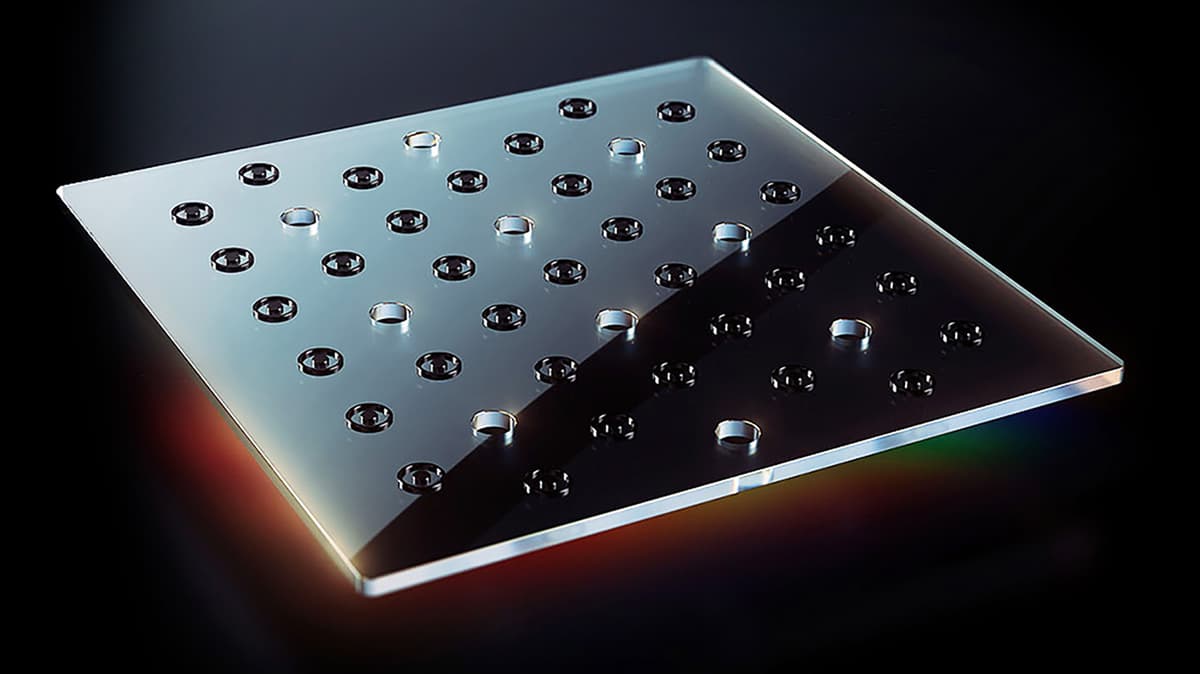
JPMorgan, OQC, and AMD team up on London quantum‑AI data center
Oxford Quantum Computing, JPMorgan Chase, and AMD announced a joint research effort to build a colocated quantum‑AI data center in London. The facility will combine OQC’s Genesis quantum processor with AMD’s AI and high‑performance computing hardware to tackle finance‑focused workloads such as portfolio optimization and quantum machine learning.

NVIDIA’s Svore Keynotes Northwest Quantum Nexus’s Quantum Economy Push
NVIDIA’s Dr. Krysta Svore, VP of Applied Research for Quantum Computing, will deliver the closing keynote at Northwest Quantum Nexus’s inaugural NW Quantum Day summit on April 14, timed with World Quantum Day. The Seattle‑based event, co‑hosted by law firm K&L Gates, gathers government, industry and academic leaders to accelerate the Pacific Northwest’s quantum economy. Priorities include building a quantum‑ready workforce, advancing post‑quantum cybersecurity, and shaping policy frameworks. State officials such as Lt. Governor Denny Heck will open the summit, underscoring regional commitment.
Los Alamos Researchers Show Some Quantum Learning Models Are Classically Simulable
Los Alamos National Laboratory researchers published a perspective in Nature Communications showing that quantum machine‑learning models designed to avoid barren plateaus are often classically simulable. By restricting variational quantum circuits to small subspaces, they demonstrated end‑to‑end classical surrogates that match...
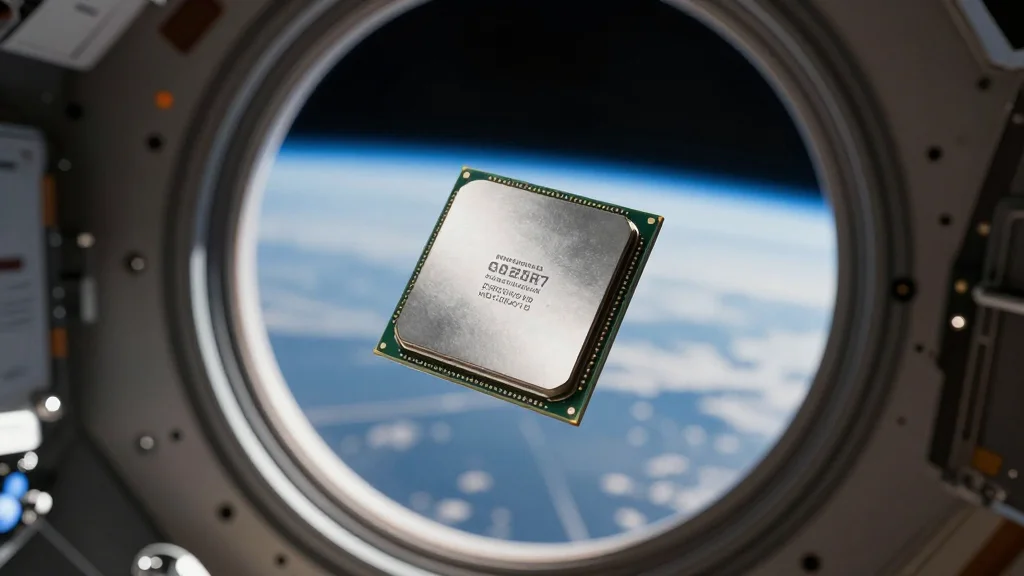
Infleqtion Partners with NASA to Deploy Quantum Hardware on ISS, Stock Rises 3%
Infleqtion, Inc. announced a partnership with NASA to deliver upgraded quantum hardware to the International Space Station via the Northrop Grumman‑24 cargo mission. The news sent the company's NYSE‑listed shares up 3.36% to $11.70, underscoring investor enthusiasm for space‑enabled quantum...
QuantrolOx and RAQS Quantum Partner to Scale Automation and Workforce Development in Asia Pacific
QuantrolOx and Singapore‑based RAQS Quantum announced a partnership to bring the Quantum EDGE automation platform and Quantum EDGE Academy to the Asia Pacific region. The collaboration, unveiled at GITEX Asia 2026, aims to replace manual calibration of quantum hardware with automated workflows, targeting research labs,...

Q-CTRL Proposes Heterogeneous Architecture to Optimize Fault-Tolerant Resource Requirements
Q‑CTRL unveiled Q‑NEXUS, a heterogeneous quantum‑computing architecture that separates logic, memory and state‑generation into specialized modules. By offloading idle qubits to high‑density storage, the design cuts physical‑qubit requirements for fault‑tolerant tasks by up to 138× and reduces logical error rates...
Google Quantum AI Flags Near‑term Crypto Break Risk, Bernstein Says Threat Now Manageable
Google Quantum AI warned that advances in quantum computing could soon break cryptocurrency encryption, prompting the division to publish a safety roadmap. Bernstein analysts said the threat is real but manageable, noting Google's reduced qubit requirements as a key catalyst.

SPINS Project Aims for Millions of Stable Semiconductor Qubits
The EU‑backed SPINS project secured a €50 million (~$54 million) investment to create a pan‑European research and production hub for semiconductor spin qubits. Coordinated by imec and involving 25 organisations, the consortium will develop three material platforms—Si/SiGe, Ge/GeSi and SOI—to deliver stable,...

Cleveland Clinic Catalyzer Program Awards $250K to Quantum Startups
Cleveland Clinic’s Quantum Innovation Catalyzer Program will award up to $250,000, matched with in‑kind resources, to three startups applying quantum computing to health challenges. The selected firms—EntangleBio, Polaris Quantum Biotech, and Singularity Quantum—gain access to IBM’s Quantum System One, the...

Classical Data Limits Quantum Computing’s Broad Impact
Researchers led by Haimeng Zhao have introduced a framework called quantum oracle sketching to solve the data‑loading bottleneck that limits quantum computers from handling real‑world, classically generated datasets. The method streams data, applying incremental quantum rotations to build an accurate...

Pasqal Partners with True Nexus on Quantum Food Protein Design
Quantum computing firm Pasqal has teamed up with computational‑intelligence specialist True Nexus to use Pasqal’s neutral‑atom quantum processors for protein modeling in alternative food systems. The partnership will develop the first fully vectorized, dynamic 3‑D model of protein gelation, integrating...

Quantum 2025 Trends: Error Correction Dominates, Simulation Lags
On his blog https://t.co/OV89KJngtS, the friend and colleague @quantum_minhsiu presents the 2025 "trends in quantum research". He offers the results of a comprehensive analysis of quantum papers and their ranking on SciRate, having run sophisticated scripts. Some trends do not surprise...

Logarithmic-Depth Quantum Circuits Possible Without Error Correction
In the absence of quantum error correction, and under fairly general—possibly even non-unital—noise models, one can still hope to achieve quantum circuits of logarithmic depth. While these can still be quite deep in practice, this insight is important when planning...

Qoro Quantum Secures $750,000 Pre-Seed to Orchestrate Hybrid Networks
London‑based deep‑tech startup Qoro Quantum announced a $750,000 pre‑seed round led by Ada Ventures, with participation from Superangels Venture Fund and the Polsky Center. The company’s platform provides a unified orchestration layer that condenses roughly 150,000 lines of integration code...

New Cascade Decoder Signals End for BP+OSD
Might be time to retire BP+OSD soon. Many new decoders for qLDPC codes with really impressive performance these days, e.g. the Cascade decoder from the Harvard group https://t.co/5qeOhZbCrQ

Infleqtion and NASA Deploy Upgraded Quantum Hardware to International Space Station
Infleqtion, in partnership with NASA’s JPL, delivered an upgraded physics package to the International Space Station aboard the Northrop Grumman‑24 cargo flight. The new hardware enhances the Cold Atom Laboratory’s ability to generate record‑large atom clouds and reach ultracold temperatures in...
IQM Announces 1st US Quantum Technology Center in the University of Maryland’s Discovery District
IQM Quantum Computers, a Finnish leader in superconducting quantum computing, announced the opening of its first U.S. Quantum Technology Center in the University of Maryland’s Discovery District. The center is part of Maryland’s Capital of Quantum initiative, a five‑year, $1 billion...
Riverlane Demonstrates Real-Time QEC Latency Performance Advancements
Riverlane unveiled its second‑generation Deltaflow 2 quantum error‑correction system, reporting a mean real‑time decoding latency of 16.32 µs—about four times lower than Google’s 2024 Willow benchmark. The platform also achieved a maximum sub‑shot latency tenfold better than prior records, edging toward the...

Chip Can Project Video the Size of a Grain of Sand
Researchers from MIT, the University of Colorado, Sandia National Laboratories and MITRE have unveiled a sub‑0.1 mm² photonic chip that can steer light with unprecedented speed. The device uses voltage‑actuated metallic cantilevers to project up to 68.6 million light spots per second...
Integrating IonQ 256‑Qubit System to Boost Quantum Advantage
We're pushing forward with our effort to unlock broad quantum advantage by adding a frontier system to our testbed: @IonQ_Inc 's next-gen 256 qubit system, which is expected to have more nines of fidelity than you can shake a stick...
Quantum Computing Sales Surge 68% MoM, 88% YoY
Quantum computing is the next big technology revolution solving hours/days/weeks problems into minutes. Quanta Computing - just posted March sales up 68% m/m and 88% y/y. Likely 2029 event but CTOs are starting spend now.

European Union Deep Tech Plan Too Late for Quantum Champions IQM and Pasqal
Europe’s two leading quantum‑computing firms, Finland’s IQM and France’s Pasqal, announced U.S. SPAC listings to secure the capital needed for next‑generation hardware. Their moves coincide with the European Commission’s rushed €3 bn (≈$3.2 bn) ScaleUp Europe fund, designed to keep late‑stage deep‑tech...

BMO to Open Institute to Boost Quantum Computing and AI Capabilities
Bank of Montreal announced the launch of the BMO Institute for Applied Artificial Intelligence and Quantum, headed by former chief AI and data officer Kristin Milchanowski. The institute will fuse AI and quantum research, aiming to move quantum from experimental...

Cryptographers Place $5,000 Bet Whether Quantum Will Matter
Two leading cryptographers, Filippo Valsorda and Matthew Green, are arranging a $5,000 wager to test whether post‑quantum cryptography (ML‑KEM‑768) or classic elliptic‑curve cryptography (X25519) will be broken first, either by classical or quantum attacks. The bet follows Google’s claim that...

Quantum Computers and Post-Quantum Security
Swiss financial infrastructure operator SIX is accelerating its shift to post‑quantum cryptography as quantum computers threaten current asymmetric encryption. The firm has launched a comprehensive crypto‑inventory, built crypto‑agility into its systems, and begun hybrid testing of NIST‑standardized PQC algorithms. By...

Interview: Researching Quantum Algorithms for Today’s Devices
Quantum computers today remain noisy, limiting the number of logical, error‑free qubits despite hardware that can host hundreds of physical qubits. Universal Quantum’s algorithm scientist Lucy Robson is building error‑correction protocols and trapped‑ion algorithms to speed up drug‑discovery simulations, focusing on...

Cloudflare Sets 2029 Goal for Full Post‑Quantum Security Across All Services
Cloudflare announced it will achieve full post‑quantum security, including authentication, by 2029 after recent quantum‑computing breakthroughs. The move comes as the company sees over 65% of traffic already using post‑quantum encryption and as cybersecurity spending is projected to hit $320 billion...

CIA Deploys ‘Ghost Murmur’ Quantum Magnetometer to Rescue Downed Airman 40 Miles Away in Iran
The CIA employed a secret quantum‑magnetometry tool called “Ghost Murmur” to locate a U.S. airman shot down over southern Iran, pinpointing him roughly 40 miles from the crash site. Developed by Lockheed Martin’s Skunk Works, the system uses diamond‑based sensors...
Robust Against Noise, Geometric-Phase Swap Gates Bring Stability to Quantum Operations
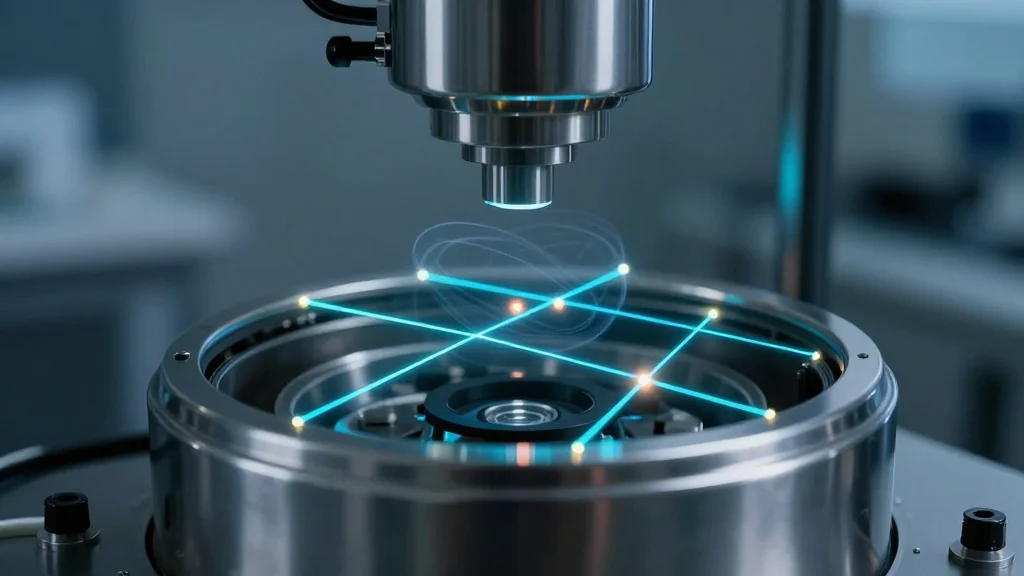
Researchers at ETH Zurich have demonstrated a geometric‑phase swap gate for neutral‑atom qubits that operates with 99.91% fidelity. The gate exchanges quantum states in under a millisecond and can be applied simultaneously to 17,000 qubit pairs. By relying on a...

Optical Control of Nuclear Spins in Molecules Points to New Paths for Quantum Technologies
Researchers at the Karlsruhe Institute of Technology have, for the first time, optically initialized, manipulated and read out nuclear spin states in a europium‑doped molecular crystal. By combining laser excitation with high‑frequency radio fields they achieved nuclear‑spin coherence times of...

Equal1’s Silicon Qubits Gain Autonomous Calibration with Q-CTRL
Equal1 has partnered with quantum‑control specialist Q‑CTRL to embed its Boulder Opal Scale Up software into the company’s Bell‑series silicon qubit systems. The integration adds autonomous calibration, eliminating the need for manual, expert‑driven tuning of quantum hardware. This software‑driven autonomy...

Martina Matusko Joins Planqc to Build Quantum Computer with Neutral Atoms
Planqc has appointed Martina Matusko as a Quantum Hardware Engineer to accelerate its neutral‑atom quantum computer program. Matusko, a physicist with a PhD in quantum metrology and prior software experience, will lead atom‑trapping operations and hardware development in the Munich‑area lab....

Fully Programmable Quantum Computing with Trapped-Ions
Researchers at Quantum Art in Israel unveiled a semi‑global field technique that leverages all motional modes of ion crystals to execute universal quantum gates. By combining global drives with a limited number of semi‑global fields and single‑qubit flips, the team...
Quantum Threat Looms: Upgrade Cybersecurity Now
Quantum computing is coming. And it will challenge current cybersecurity. Even if quantum-ready machines are 5–10 years out, moving to quantum-safe systems can’t wait. https://t.co/WhtoSQvyc4

Quantum Computers Could Crack Bitcoin by 2030, Experts Warn
Google researchers and Nobel‑winning physicist John M. Martinis say a cryptographically‑relevant quantum computer could break Bitcoin's elliptic‑curve signatures within minutes, potentially as early as 2030. The findings revive a long‑standing debate over whether Bitcoin can upgrade to post‑quantum security before a...

Quantum Computing Threat Looms Over Bitcoin as Energy Requirements Reach Star Scale
Researchers estimate a quantum mining attack on Bitcoin would demand roughly 10²³ qubits and 10²⁵ watts—about 3% of the Sun’s output—making a 51% quantum takeover physically impossible today. At the same time, Google and Oratomic papers suggest a cryptographically‑relevant quantum...

Graphene Helps Molecular Qubits Keep Strong Antiferromagnetic Order
Researchers deposited a monolayer of the copper‑based molecular qubit Cu(dttt)₂ onto graphene grown on silicon carbide and demonstrated that the film retains the bulk‑like one‑dimensional antiferromagnetic order. Scanning tunneling microscopy, X‑ray spectroscopies and density‑functional theory show densely packed, flat chains...

Quantum Computers Keep Losing Data. This Breakthrough Finally Tracks It
Researchers at Norway's NTNU and the Niels Bohr Institute unveiled an ultra‑fast measurement method that tracks qubit relaxation in about 10 milliseconds—over 100 times quicker than prior techniques. The real‑time capability reveals random fluctuations in superconducting qubits that were previously hidden, offering...
Protected Quantum Gates Using Qubit Doublons in Dynamical Optical Lattices
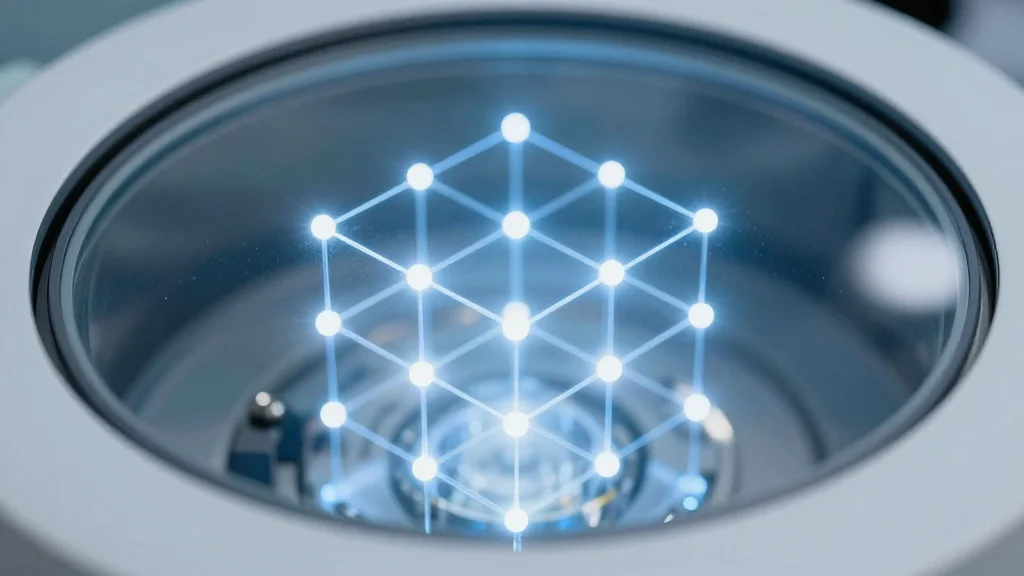
Researchers have demonstrated protected two‑qubit gates that exploit qubit doublons—paired fermionic atoms—in a dynamically driven optical lattice. By periodically modulating the lattice depth, the doublon states become immune to motional dephasing, delivering gate fidelities exceeding 99.9%. The technique integrates seamlessly...
Rigetti Announces General Availability of 108-Qubit System
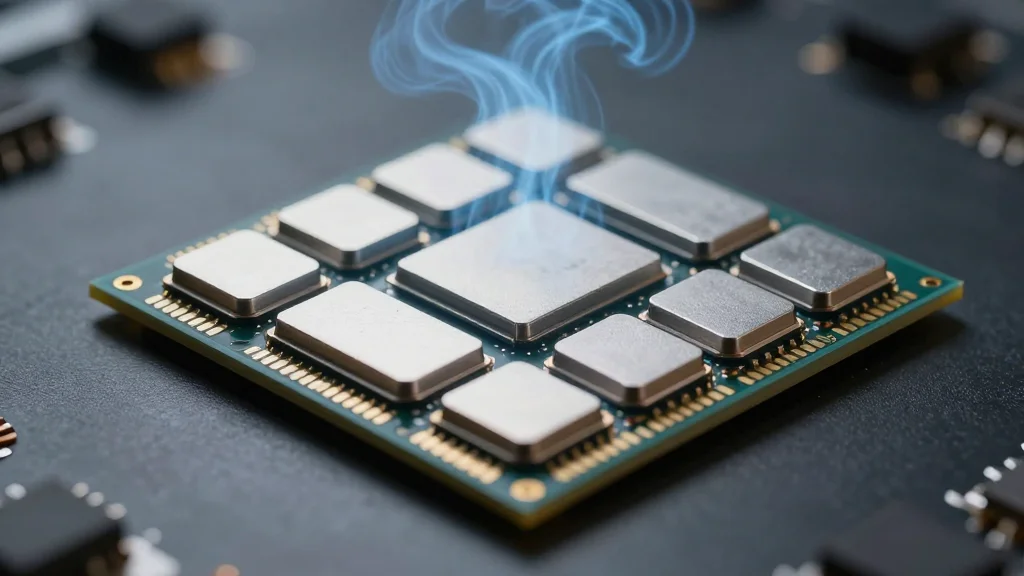
Rigetti Computing has made its 108‑qubit Cepheus‑1‑108Q system generally available through its Quantum Cloud Services platform and Amazon Braket. The modular chiplet‑based architecture stitches together twelve 9‑qubit chiplets, delivering a median two‑qubit gate fidelity of 99.1% with ~60 ns gate times...

IQM Lands World-First Private Enterprise Quantum Sale with 54-Qubit System
IQM Quantum Computers announced the sale of its 54‑qubit Radiance system to Poland’s Galaxy Systemy Informatyczne, marking the world’s first quantum computer purchased by a private enterprise. The on‑site installation, scheduled for the fourth quarter of 2026, will become Poland’s...

Bet: Quantum Won’t Break ECC by 2032, ML‑KEM
I’m making a bet with Filippo Valsorda that quantum computers won’t break ECC by 2029/2032, and (secondarily) that one version of ML-KEM will be de-standardized. I have loads of confidence in the former and little in the latter. I just...
Quantum Computing without Interruptions
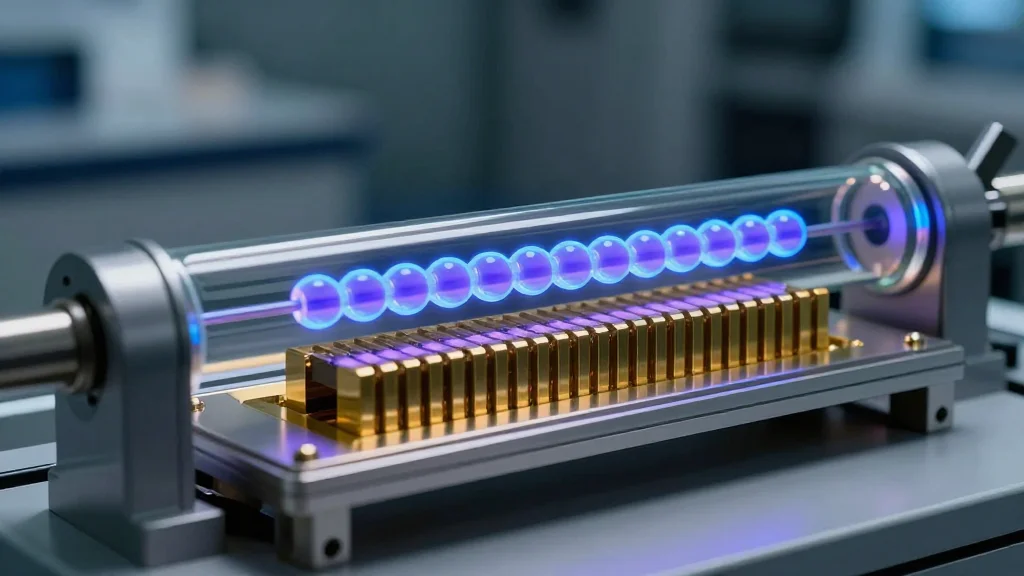
Researchers from Innsbruck, Aachen, and partners have experimentally demonstrated a universal fault‑tolerant quantum algorithm that operates without any mid‑circuit measurements. Using a trapped‑ion processor, they executed Grover’s search on three logical qubits encoded across eight physical qubits. The new method...

Simulating Quantum Materials with Arnab Banerjee
In this episode, host Sebastian Hassinger talks with experimental physicist Arnab Banerjee about using quantum computers to simulate real quantum materials. Banerjee explains how his team used IBM’s 153‑qubit Heron processor to reproduce neutron‑scattering data from the magnetic crystal KCuF₃,...
IonQ Shares Plunge 24.9% as Trapped‑Ion Edge Meets Market Headwinds
IonQ (IONQ) saw its shares tumble 24.9% in March, driven by analyst price‑target cuts and a shift away from growth stocks after the Iran conflict began. The decline comes despite the company's record 99.99% two‑qubit gate fidelity and a 429%...
Neutral Atoms Become Second‑largest Qubit Platform by Company Count
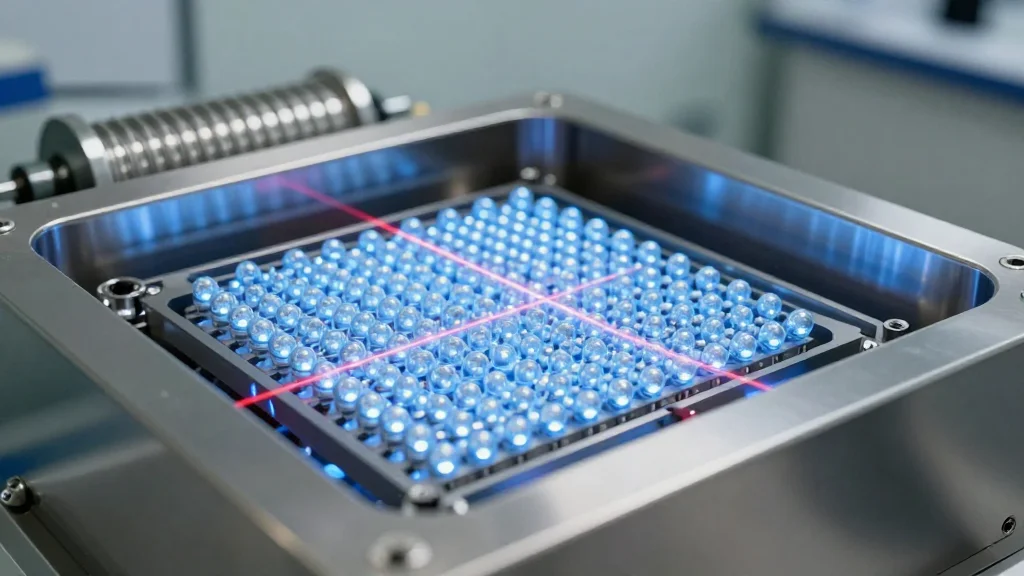
neutral atoms are now officially the second most competitive qubit platform out there in terms of numbers of companies… with at least one more company in stealth. https://t.co/XoL1yY1JY2

QCNNs Classically Simulable Up To 1024 Qubits
Researchers led by Pablo Bermejo have shown that quantum convolutional neural networks (QCNNs) can be faithfully simulated on classical hardware for systems as large as 1,024 qubits. The study attributes the apparent quantum advantage to QCNNs processing only low‑bodyness, or local,...
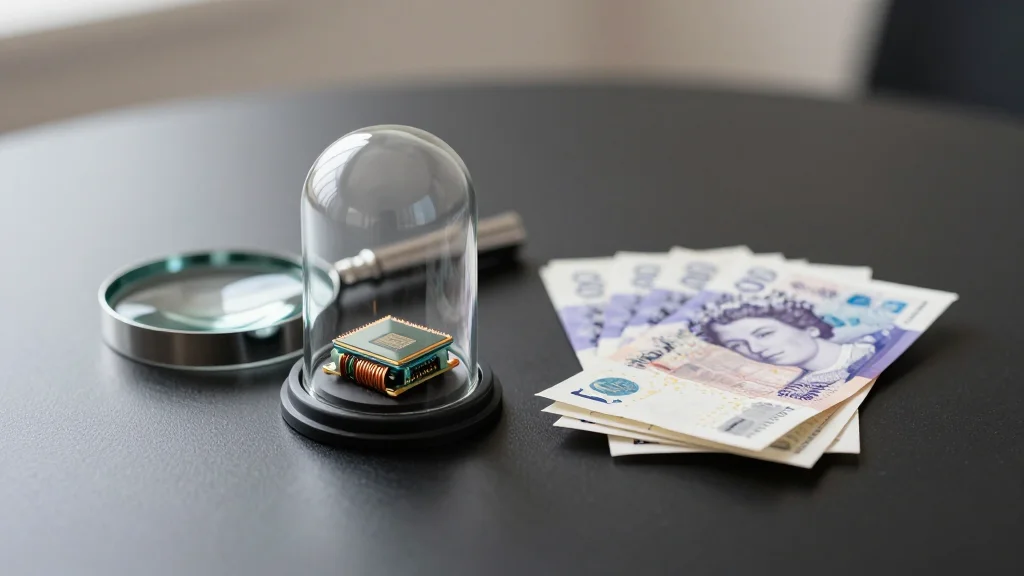
Quantum Used to Tackle Fraud in Lloyds Experiment
Lloyds Banking Group partnered with IBM to run a fraud‑detection experiment on IBM's 156‑qubit quantum computer. Multiple quantum algorithms scanned transaction data and successfully uncovered a deliberately embedded money‑mule network. The trial demonstrates that quantum computing can move beyond theory...

Quantum Penetration Testing: Are We Ready Yet?
Is It Time For A Quantum Penetration Test? by J Nathaniel Ader @Forbes Learn more: https://t.co/CodfvKavfv #QuantumComputing #EmergingTech #Technology #Innovation #Tech https://t.co/rKyowhOBLq

Google Says Quantum Computer Could Crack Bitcoin in Under 9 Minutes, Prompting Urgent Security Push
Google researchers released a whitepaper indicating that a sufficiently powerful quantum machine could derive a Bitcoin private key in under nine minutes, with a 41% success probability. The finding compresses the timeline for a practical quantum attack to as early...

Inspira Targets Connectivity Bottleneck in Quantum Systems with 3D Architecture
Inspira Technologies is pivoting into quantum computing with a 3‑dimensional additive manufactured electronics (AME) architecture aimed at solving connectivity bottlenecks inside dilution cryostats. The company has invested over $200 million in the AME platform and has already demonstrated proof‑of‑concept integration with...