Today's Quantum Pulse
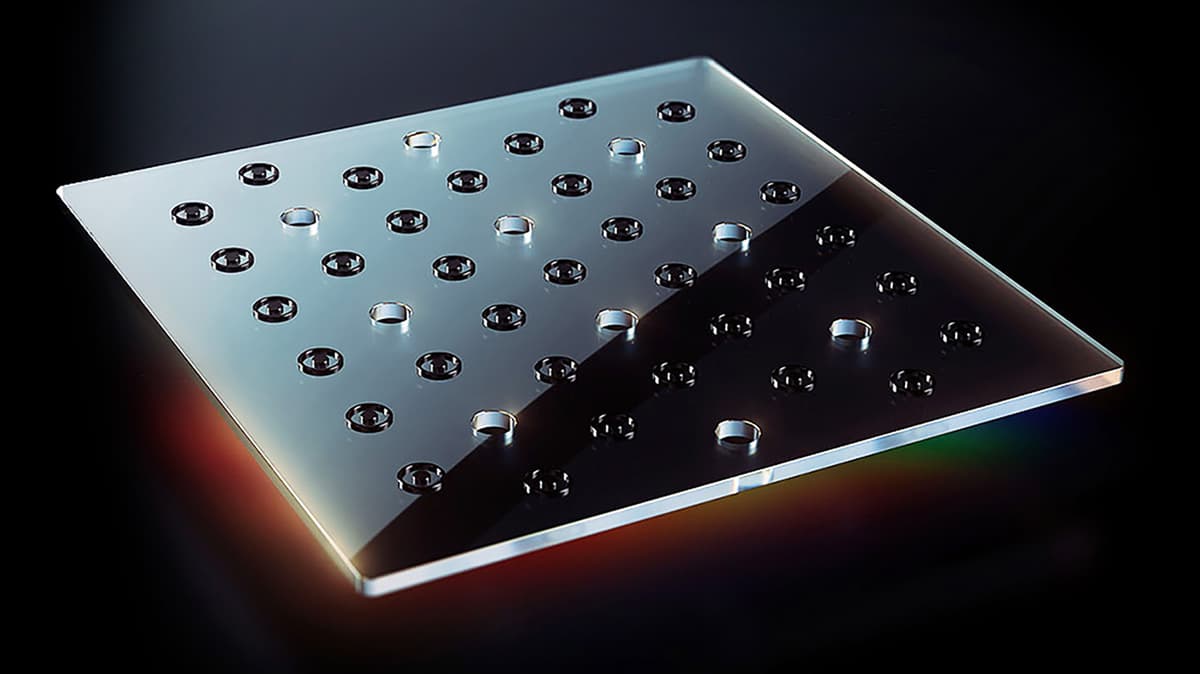
JPMorgan, OQC, and AMD team up on London quantum‑AI data center
Oxford Quantum Computing, JPMorgan Chase, and AMD announced a joint research effort to build a colocated quantum‑AI data center in London. The facility will combine OQC’s Genesis quantum processor with AMD’s AI and high‑performance computing hardware to tackle finance‑focused workloads such as portfolio optimization and quantum machine learning.
Quantum Simulations Reveal Spin Transport in 1D Materials
Researchers at Oak Ridge’s Quantum Science Center used a 40‑qubit IBM Heron processor to perform the first digital quantum simulations of spin‑transport dynamics in a one‑dimensional Heisenberg model. The study captured ballistic, diffusive and super‑diffusive regimes and validated the results against experimental spin‑Seebeck data from potassium copper fluoride (KCuF₃). A novel mid‑circuit measurement algorithm reduced computational overhead, making the simulations feasible on today’s noisy quantum hardware. The work demonstrates that quantum computers can address experimentally relevant questions in condensed‑matter physics.
Perspectives on World Quantum Day 2026: From CEO of D-Wave
D‑Wave CEO Alan Baratz says the threshold for commercially viable quantum computing has been crossed, shifting the industry from pure development to real‑world adoption. The company cites its Advantage 2 system solving a problem in minutes that would take a classical...

AQT Low Errors Boost Horizon Quantum Software
Quantum software firm Horizon Quantum announced a strategic partnership with Alpine Quantum Technologies to integrate its Triple Alpha IDE with AQT’s trapped‑ion quantum processors via the cloud. The collaboration lets developers compile and run quantum code on AQT’s low‑error hardware...

NVIDIA Debuts AI Models for Quantum Computing
NVIDIA unveiled the Ising family of open AI models designed to tackle quantum computing’s toughest hurdles—error correction and system calibration. The models use neural‑network decoding for real‑time error correction and a vision‑language framework to slash calibration times from days to...

Quantum Computers: Automated Error Correction Boosts Design
Researchers at the University of Tokyo have introduced KOVAL‑Q, an electronic design automation kernel that formulates surface‑code logical operations as satisfiability (SAT) problems. By exploiting SAT solvers, KOVAL‑Q identifies optimal sequences for CNOT gates and patch rotations, cutting execution time...
IonQ Beats Milestones, Becomes Scalable Quantum Leader
IonQ's hitting its tech targets early, shifting from science project to scalable biz. Their trapped-ion quantum computers lead in quality. High risk, but a pure-play on the future. QuantumComputing
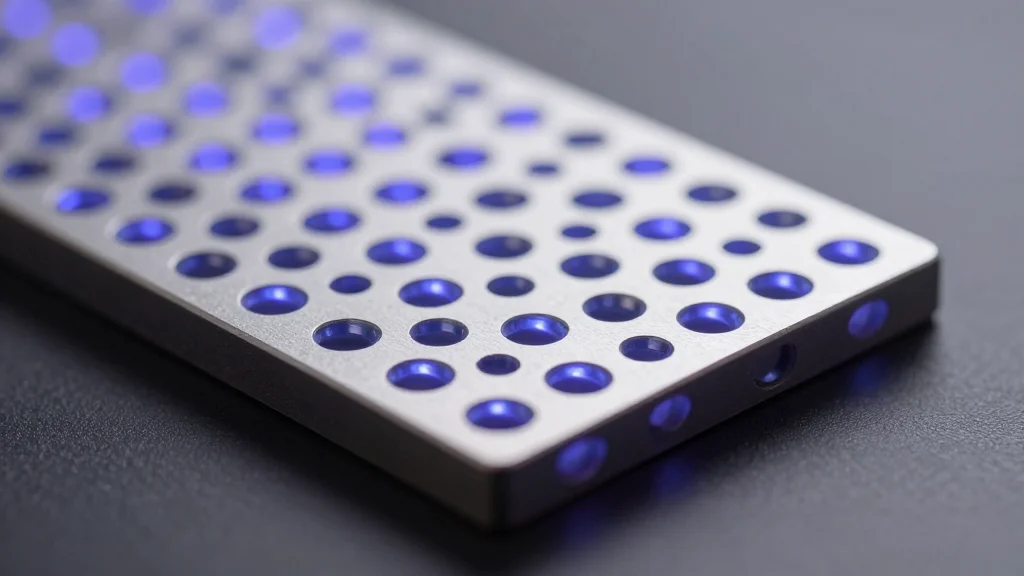
Nanohole Arrays Boost Quantum Light Source Brightness 130‑Fold at Room Temperature
A joint team from the Institute for Basic Science and POSTECH has demonstrated a 130‑fold increase in luminescence efficiency for quantum light sources by trapping excitons with 500‑nm nanohole arrays, reaching 98% confinement at room temperature. The breakthrough promises scalable...
Quantum‑Secure VPNs Spotlighted on World Quantum Day as Post‑Quantum Market Grows
World Quantum Day on April 14 prompted six VPN providers—including Proton VPN, Private Internet Access and IPVanish—to market post‑quantum encryption at prices as low as $1.78 per month. The push reflects a nascent but accelerating market for quantum‑resistant consumer security...

Forrester’s Top 10 Emerging Technologies For 2026: Beyond Chat
Forrester’s 2026 Top 10 Emerging Technologies list marks a pivot from chat‑centric AI to a three‑layer framework—Interact, Build, and Fuel. It highlights layer‑zero experiences that overlay apps, physical AI and robotics delivering 20‑50% efficiency gains, and multi‑agent systems that coordinate autonomous...

Quantum Computing Stocks Are Back on the Rise. Here’s Why IONQ, QBTS, RGTI, and QUBT Are Up
Quantum‑computing stocks surged on World Quantum Day, with IonQ jumping 20% and D‑Wave gaining 16% after announcing a photonic interconnect milestone and a DARPA contract. The other members of the so‑called Quantum Four—Rigetti and Quantum Computing Inc.—also posted double‑digit gains,...

BTQ, Daou Data Partner on Post-Quantum Security
BTQ Technologies and Daou Data have teamed up to embed hardware‑rooted post‑quantum cryptography into Korea’s payment gateways and value‑added networks. The collaboration builds on BTQ’s prior investment in Keypair, enabling faster integration of dedicated cryptographic modules. By securing key generation...
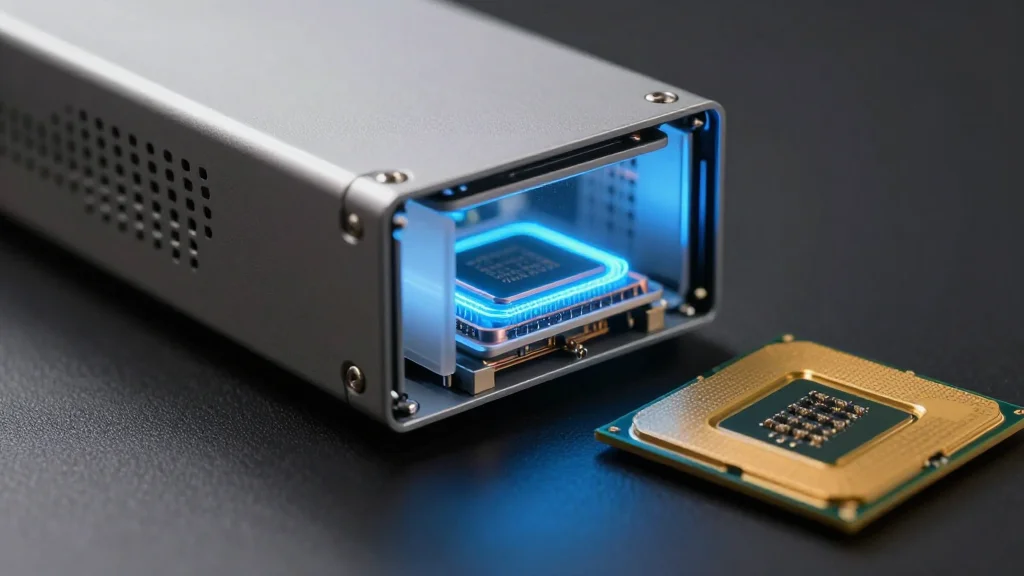
Sygaldry Secures $139 Million to Build Quantum‑Accelerated AI Data‑Center Servers
Quantum‑startup Sygaldry announced a $139 million funding round, led by Breakthrough Energy Ventures, to create servers that blend quantum processors with classical chips for AI workloads. The capital will fund a roadmap targeting commercial deployment by the end of the decade,...
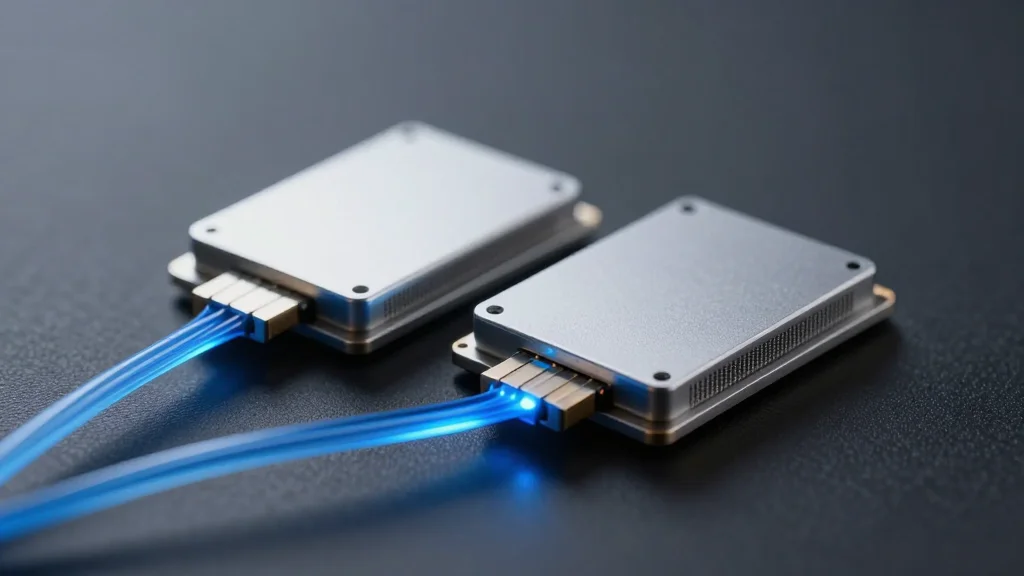
IonQ Shares Jump 17% to $34.86 After Photonic Interconnect Breakthrough and DARPA Deal
IonQ Inc. saw its NYSE shares rise 17.14% to $34.86 after unveiling a photonic interconnect that linked two quantum systems and securing a DARPA contract under the HARQ program. The twin milestones reinforce the company's push toward modular quantum networks...

Rigetti and IonQ Show Diverging Quarterly Revenue Paths as Rigetti Launches 108‑Qubit System
Rigetti Computing reported Q4 2025 revenue of about $1.87 million, far below IonQ’s soaring earnings that surged 429% YoY, underscoring opposite commercial trajectories. The gap reflects Rigetti’s hardware‑first push with its new 108‑qubit Cepheus‑1 system versus IonQ’s cloud‑centric expansion and recent...

Quantum Industry Projected to Surpass USD 4 Billion by 2028
The Quantum Economic Development Consortium forecasts the global quantum technology market to more than double, rising from $1.9 billion in 2025 to over $4 billion by 2028. Quantum computing will drive most of the growth, reaching $3 billion with a 30% annual compound...

Bridging Gaps: Navigating Roadblocks to Quantum Advantage
The challenges in and possibilities of achieving quantum advantage. It has been a great pleasure to discuss with @science_eye where we stand in quantum computing, what the remaining road blocks or "gaps" are and how we can overcome them. Recent months...
CEOs Co‑author Quantum Verification Paper, Celebrate AQT Partnership
Delighted to be working with AQT. Fun fact: Horizon Quantum and AQT CEOs (along with many others) co-authored a paper back in 2021 using quantum computers to check each others work: https://t.co/GUKksFtBkV

Deteqt Secures AUD 5 Million Seed Funding to Build Chip‑Scale Quantum Magnetometer
Sydney‑based Deteqt closed a AUD 5 million seed round led by Main Sequence, with participation from ATP Fund, BOKA Capital and others, to accelerate its chip‑scale quantum magnetometer. The funding will fund product development, diamond chip manufacturing and hiring, positioning the firm...

Adversaries Harvest Encrypted Data Today for Future Quantum Decryption
Adversaries are already collecting encrypted data today, betting they can decrypt it once sufficiently powerful quantum systems arrive. This is called "harvest-now, decrypt-later." And it's happening right now. Here's why no industry is exempt from what's coming: https://t.co/KvatQOAzmh #QuantumComputing #Cybersecurity #WorldQuantumDay

2026 Marks Quantum’s Shift From Hype to Reality
Every year we celebrate World Quantum Day. Most orgs treat it as a science story. It isn't. Not anymore. My take on why 2026 is the year quantum stops being a "watch this space" conversation 👇 https://t.co/KvatQOAzmh #WorldQuantumDay #QuantumComputing
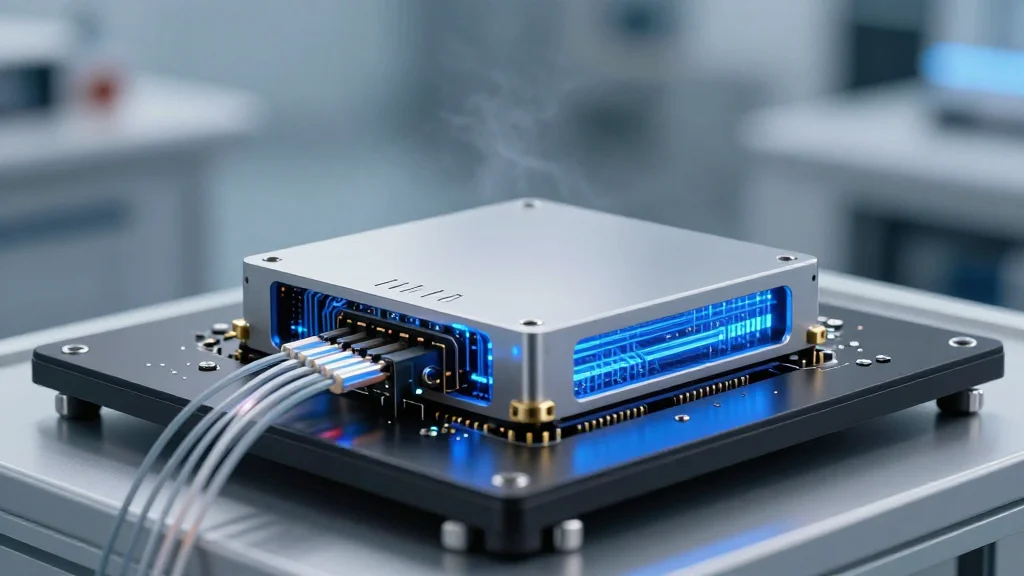
EuroHPC Inaugurates ‘Lucy’ Photonic Quantum System in France
EuroHPC JU inaugurated Lucy, a photonic quantum computer with 12 qubits, at France’s TGCC supercomputing centre. The system, built by Quandela and attocube, costs €8.5 million (about $9.3 million) split evenly between EuroHPC and France. Lucy will be integrated into the Joliot‑Curie...
Google Finds 1,200 Logical Qubits Could Break ECC, Driving Quantum‑Resistant Authentication Push
Google researchers announced that a quantum computer with as few as 1,200 logical qubits could break elliptic curve cryptography, the backbone of modern authentication. The finding has accelerated enterprise efforts to adopt post‑quantum authentication methods ahead of NIST’s 2030 deprecation...

Senate Committee Approves Quantum Reauthorization Bill with 7 Amendments
The Senate Commerce Committee advanced the reauthorization of the National Quantum Initiative Act, attaching seven amendments that broaden its scope. Senator Marsha Blackburn’s three proposals embed a quantum manufacturing institute, a public‑private sandbox for near‑term applications, and a federal quantum...

Florance Gift Fuels Princeton’s Quantum Research & Discovery
Andy and Heather Florance have made a substantial, undisclosed donation to Princeton University’s Princeton Quantum Initiative, accelerating its research and education efforts. The gift bolsters work in superconducting qubits, quantum materials, and other quantum information science, aligning with recent breakthroughs...
DARPA Launches HARQ Program to Advance Heterogeneous Quantum Architectures
DARPA has inaugurated the Heterogeneous Architectures for Quantum (HARQ) program to break the single‑qubit limitation that hampers current quantum computers. The effort will bring together 19 teams from 15 universities and companies to develop both software frameworks (MOSAIC) and hardware...
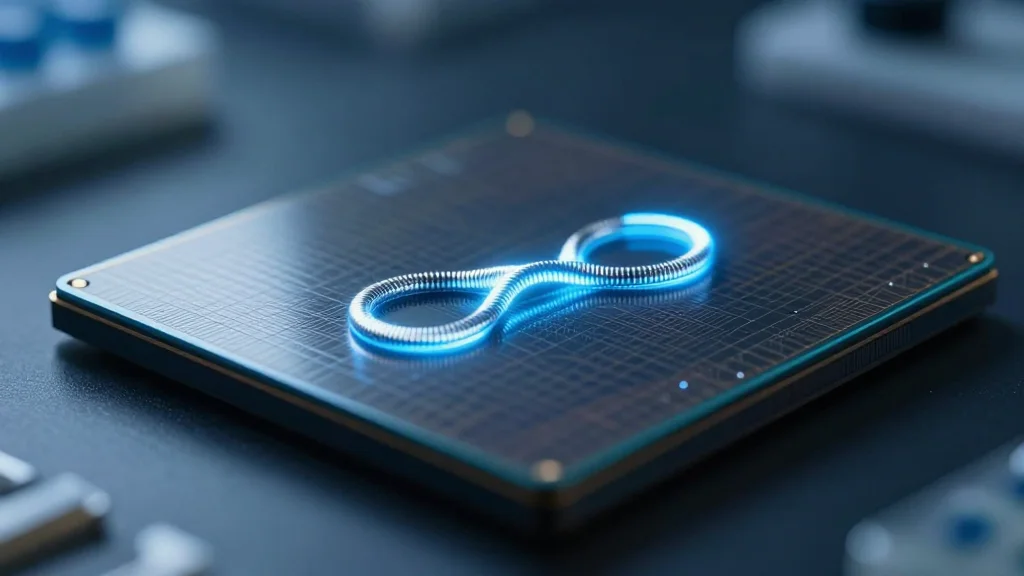
Brookhaven Lab: A Silicon-Compatible Path Toward Scalable Quantum Systems
Brookhaven National Laboratory researchers have fabricated superconducting quantum interference devices (SQUIDs) using transition‑metal silicide layers on silicon substrates. The process adapts standard CMOS lithography and etching techniques, enabling the creation of constriction‑type junctions instead of conventional Josephson junctions. Operating the...
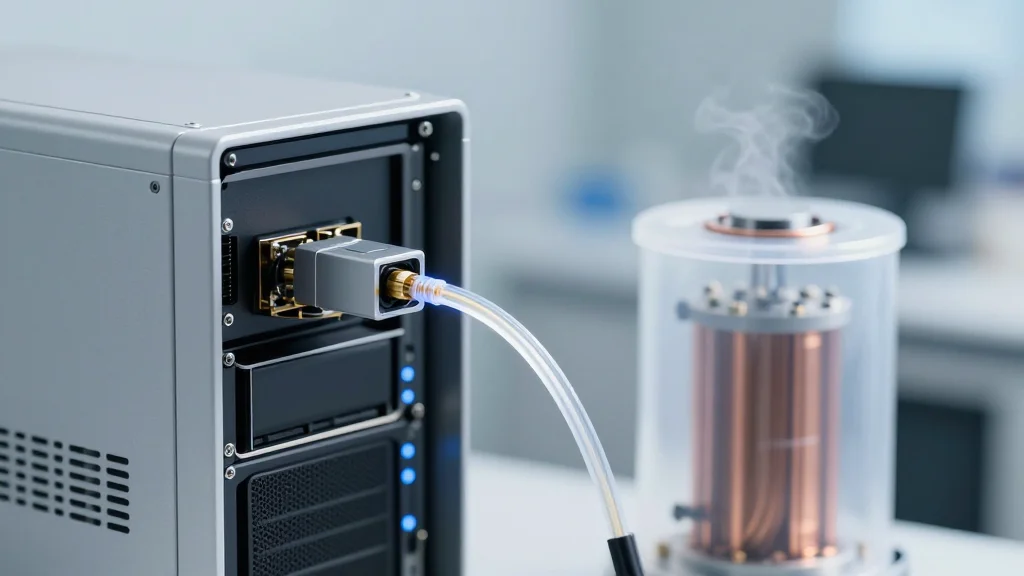
Bull and Equal1 Partner to Accelerate Hybrid Quantum-HPC Integration in Europe
Bull, a European HPC and AI leader, and Dublin‑based Equal1 have signed a Memorandum of Understanding to fuse Bull’s Qaptiva supercomputing platform with Equal1’s silicon‑spin quantum servers. The collaboration will create a high‑speed connector that lets classical supercomputers run quantum‑accelerated...
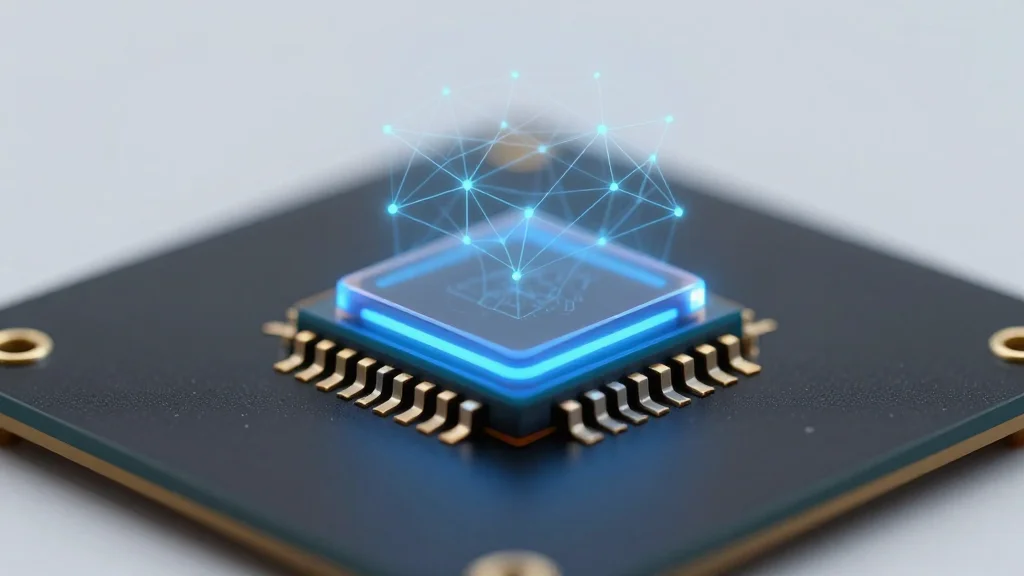
Northwestern and Fermilab Quantum Data Helps Build a New AI Benchmark for Quantum Calibration with NVIDIA Ising Open Models
Northwestern researchers at Fermilab's NEXUS underground lab have released a high‑dimensional superconducting qubit dataset on the American Science Cloud, marking the first globally accessible charge‑jump measurements. The data enabled NVIDIA to train its new Ising Calibration vision‑language model, which can...

Chalmers Researchers Propose ‘Giant Superatoms’ to Tackle Quantum Decoherence
Researchers at Sweden’s Chalmers University of Technology introduced a theoretical framework for “giant superatoms,” a hybrid of giant atoms and superatoms that promises to suppress decoherence in quantum processors. The proposal could reshape hardware roadmaps for the quantum computing industry.

Quantum States Predictably Distribute with Noise
Researchers at the University of Waterloo, led by Matthew Duschenes, expanded the theoretical framework for quantum expectation‑value distributions to include arbitrary sets of measurement operators and random quantum states. Using combinatorial moment analysis and noisy circuit simulations, they showed that...

Quantum Networks: Unknown State Verification Limit
Researchers at the University of Edinburgh and Stellenbosch University introduced a framework for distributed quantum inference that sharply reduces the communication needed to certify an unknown quantum state. By leveraging public randomness and shared entanglement, the sample complexity improves to...

Quantum Data Transfer Beats Classical Speeds
Researchers at ITMO University, led by Andrei Stepanenko, experimentally demonstrated quantum advantage in excitation transfer across a honeycomb‑structured qubit lattice. Using the quantum brachistochrone optimization, they achieved transfer times shorter than the classical bound of 2N‑2, leveraging superposition and interference to...
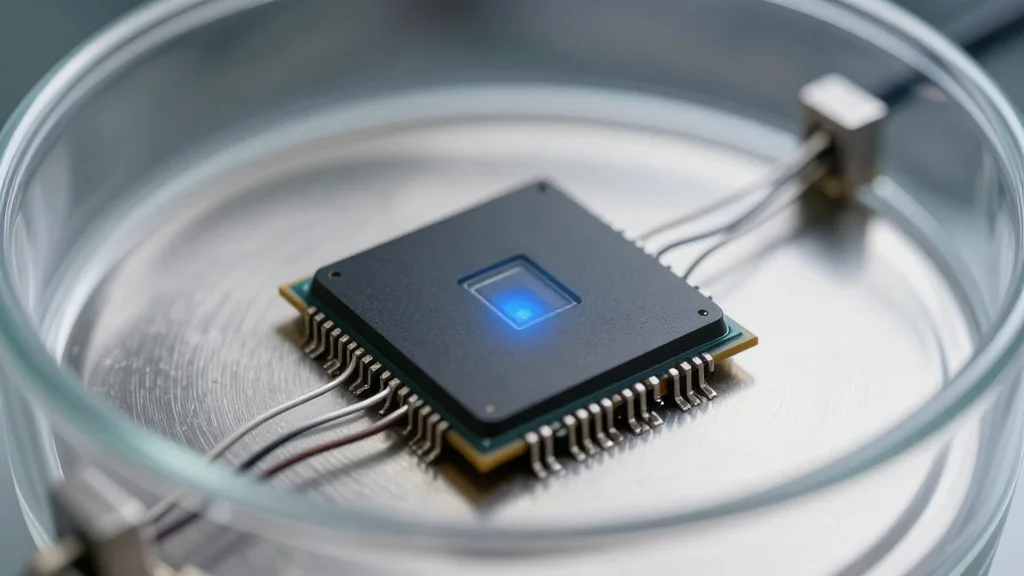
Key Quantum Innovations Covered by eeNews Europe
World Quantum Day on April 14 highlighted a surge of commercial‑grade quantum activity. Rigetti Computing unveiled a 108‑qubit superconducting processor aimed at research and enterprise workloads, while Finland’s IQM raised €50 million (about $55 million) to fast‑track its roadmap. Parallel advances include...

Answering Your Trending Questions on World Quantum Day
Google’s Quantum AI team used World Quantum Day to field the most‑searched questions about quantum computing, outlining its mission to build large‑scale, error‑corrected machines. The team highlighted the unique properties of qubits, such as superposition on the Bloch sphere, and...
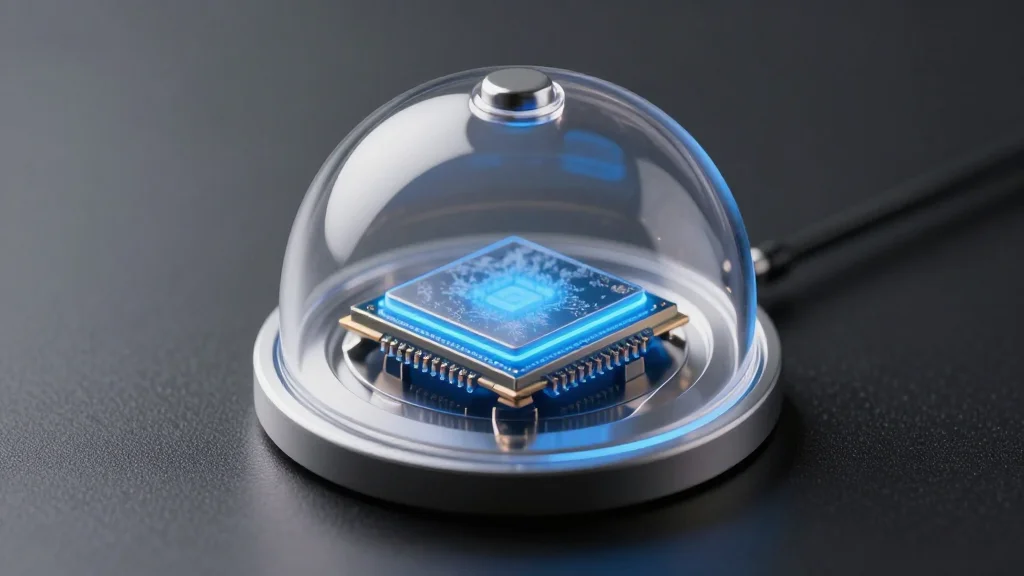
IQM Advances AI-Driven Agentic Calibration, Opening Quantum Computing to the Enterprise With NVIDIA Ising
On World Quantum Day, IQM Quantum Computers unveiled an AI‑driven agentic calibration system built on NVIDIA Ising models. The technology automates qubit tuning by inspecting calibration results across all qubits in parallel, eliminating the traditional sequential bottleneck. By shifting calibration...

Nvidia Unveils Ising AI Models for Quantum Error Correction and Calibration
Nvidia announced Ising, the first open‑source AI model family designed for quantum computing calibration and error correction. The suite includes two 3‑D convolutional neural network models—one optimized for speed, the other for accuracy—delivering up to 2.5× faster processing and three...

Quantum Computers Could Usher in a Crisis Worse than Y2K
Quantum researchers warn that a functional, large‑scale quantum computer capable of breaking RSA and ECC encryption – dubbed Q‑Day – may emerge within the next decade. The threat mirrors the Y2K panic, but the underlying cryptographic foundations are far more...

How AI Will Change Quantum Computing - Ep. 294
In this episode, NVIDIA’s Nick Harrigan explains how quantum computing works, its current state, and why it’s poised to tackle problems classical computers can’t, such as drug discovery and material design. He highlights the biggest technical hurdle—quantum error correction—and shows...
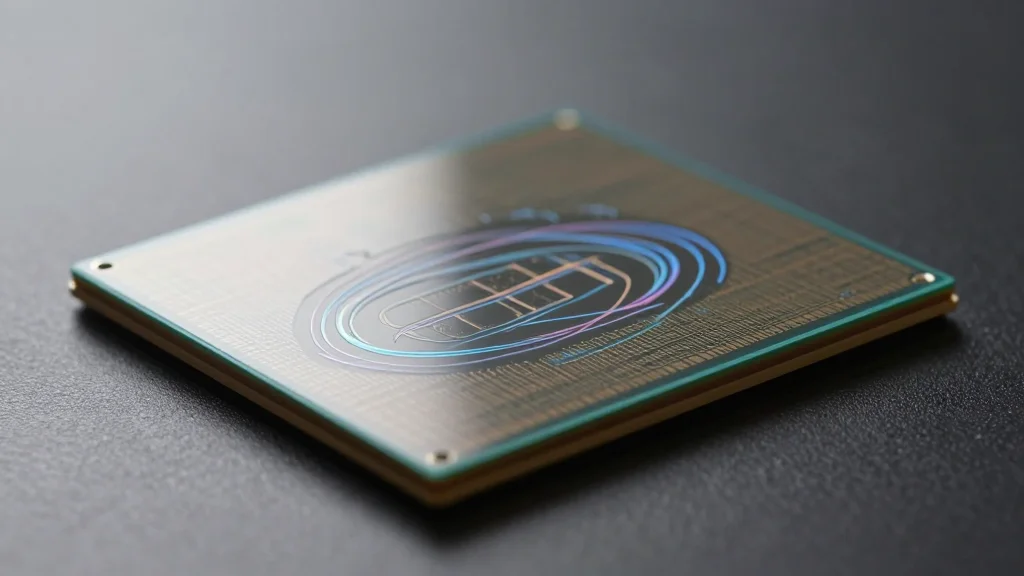
How GlobalFoundries Is Manufacturing Quantum at Scale
GlobalFoundries (GF) is positioning its specialty‑foundry capabilities to become the manufacturing backbone for quantum computers across all qubit modalities. By extending proven semiconductor platforms—such as 22FDX® FD‑SOI, high‑voltage/RF, and 300 mm silicon photonics—GF offers a repeatable, high‑yield path from prototype to...
Lloyds Banking Group Leads Landmark Quantum Computing Experiment to Catch Money Mules
Lloyds Banking Group has completed a nine‑month pilot that used IBM’s 156‑qubit Quantum Heron computer to spot a concealed money mule within a synthetic transaction graph. By running quantum algorithms on anonymized real‑world data, the experiment successfully isolated the mule, demonstrating...

D‑Wave CEO Alan Baratz Puts Commercial Quantum Computing on World Economy Stage
D‑Wave’s chief executive, Dr. Alan Baratz, will address the Semafor World Economy conference on April 14 and the QED‑C Quantum Summit on April 15, positioning commercial quantum computing at the heart of global economic policy discussions. The appearances signal a...

Calibrating Quantum Computing Activity in Financial Services
At a Fujitsu‑hosted event, senior technologists from Fujitsu, HSBC and industry analysts discussed the realistic state of quantum computing in financial services. The consensus was that while quantum offers promise for probabilistic modeling, optimization and quantum‑machine‑learning, hardware is still years...
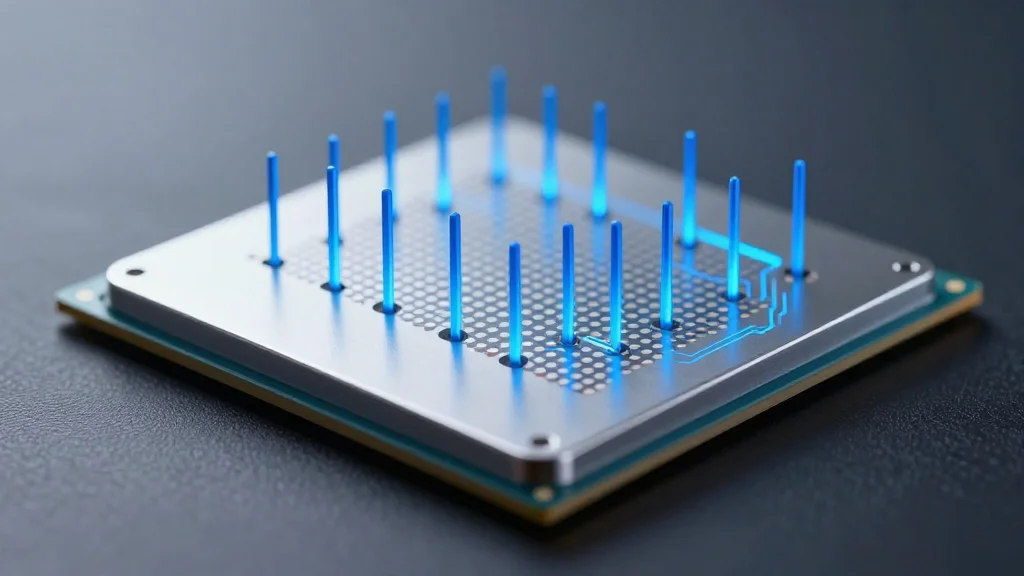
IQT The Quantum Dragon Podcast Episode 83 – This Podcast Has an Open Architecture.
In this episode, host Brian Siegelwax talks with Matt Rylarsdom, CEO and co‑founder of Quantware, about the company’s mission to become the "Intel of quantum" by delivering standardized, mass‑produced quantum processors. Rylarsdom explains Quantware’s Vertical I/O (VIO) architecture, which routes...

3 Quantum Realities to Confront This World Quantum Day
World Quantum Day highlighted the accelerating timeline toward a post‑quantum future, with industry leaders warning that waiting for certainty will delay critical migration. Experts emphasized that the operational risk lies in how long it takes to identify dependencies, prioritize remediation,...
Qoro Quantum Simplifies Access to Growing Quantum Demand
Given I do a lot of work in the quantum space these days, this wears an interesting one to write… An easier path to working with quantum computers: Qoro Quantum wants to tap into growing demand for quantum computing.

Quantum Leaders Discuss Today’s Impact and Future
Good to be here at the NYSE for World Quantum Day presented by $IONQ. Listening to customers and business leaders discuss quantum today and into the future. https://t.co/jCZriHhQPB
World Quantum Day 2026 Unites 65 Nations with New Grants, Exhibits and Industry Showcases
On April 14, 2026, more than 65 nations marked World Quantum Day with over 400 coordinated activities, a new humanities mini‑grant program at the University of Rhode Island, and high‑profile participation from IBM, AWS, HPE, Pasqal and Quantinuum. The celebrations...

Quantum Market Set to 10x by 2035, Stocks Cheap
McKinsey estimates quantum computing market to grow ~10x by 2035 Quantum computing stocks were crushed during the recent selloff and the risk/reward now looks good. https://t.co/Bgr7oW49kB
Google Invites Proposals for Early Willow Quantum Access
@GoogleQuantumAI is currently accepting proposals for early access to the Willow quantum processor. This hardware is not yet publicly available, so this a notable opportunity for research groups looking to run experiments on state-of-the-art superconducting quantum hardware.
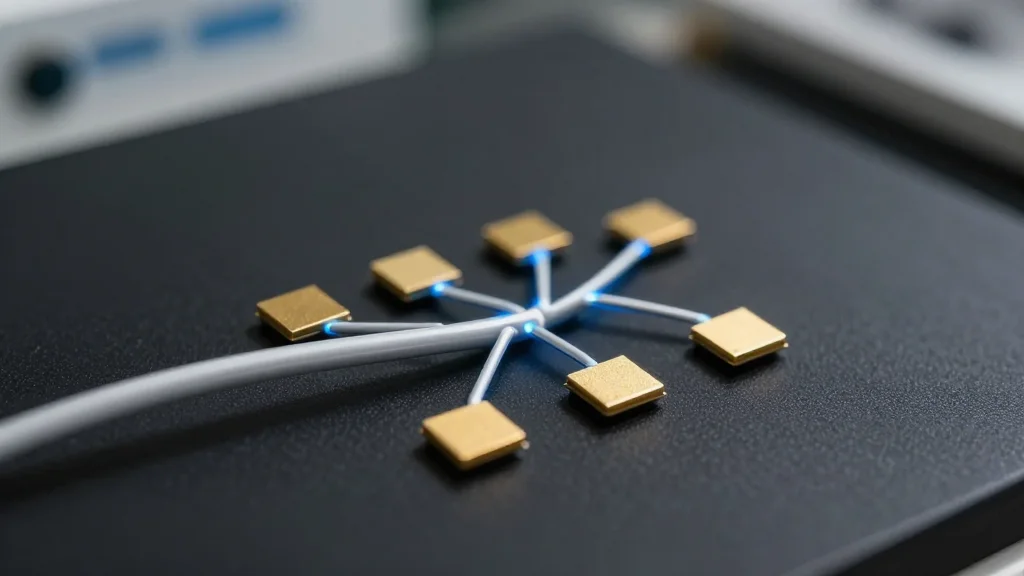
Reducing Wires in Quantum Computers
A new theoretical study shows that time‑multiplexing control wires across multiple superconducting qubits can dramatically cut wiring density while adding only a modest speed penalty. By scheduling fast single‑qubit operations during the longer two‑qubit gate windows, the researchers found that...