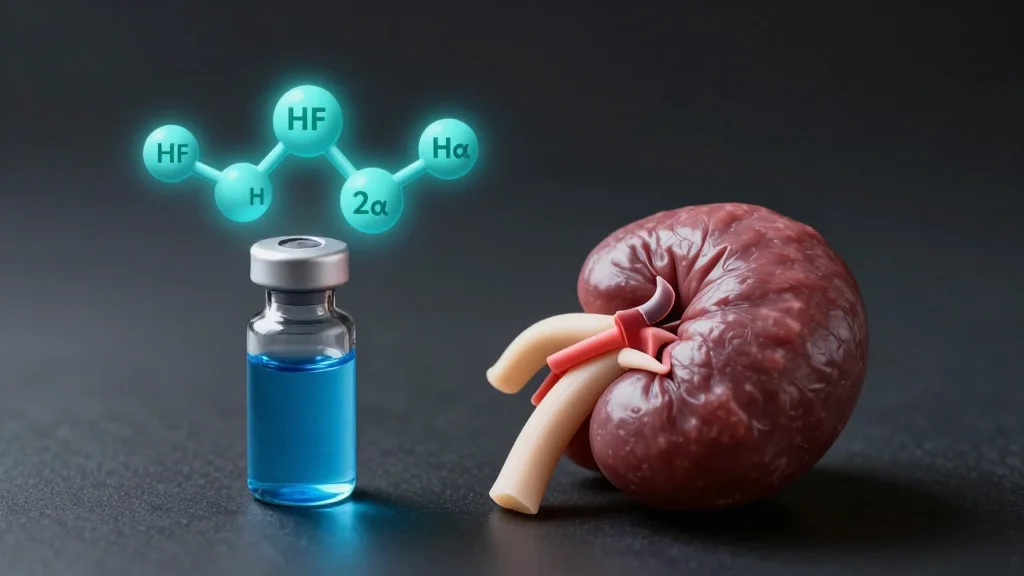
Renal Cell Carcinoma Strategic Intelligence Report
The latest ASCO GU strategic intelligence report spotlights renal cell carcinoma (RCC) as a field entering a transformative phase. Analysts highlight emerging biomarkers, novel HIF‑2α inhibitors, and evolving immunotherapy combinations as potential high‑impact developments. While these advances promise to reshape treatment paradigms, the report warns that unanswered questions about long‑term efficacy and cost remain. The analysis suggests a quiet but significant shift in RCC’s therapeutic landscape.

Weekly Neuroscience Update
Recent neuroscience research is reshaping our understanding of brain health by highlighting ethnic diversity in Alzheimer’s biomarkers, a blood‑based test that predicts dementia decades before symptoms, and sex‑specific effects of GLP‑1 weight‑loss drugs. Advanced genomic tools uncovered new autism‑linked variants,...

The Neuroscience of Focus: How to Make Smarter Decisions?
Recent neuroscience research reveals that sustained focus, not just raw intelligence, is a critical driver of better decision‑making. When attention remains steady, the brain’s prefrontal circuits can weigh options more clearly and project outcomes farther into the future. Studies show...

W a Croatian Lab Peptide Saved My Shoulder, My Father's Hip, and My Friend's Fingers
The post examines BPC‑157, a synthetic peptide derived from human gastric juice, highlighting personal anecdotes of accelerated healing for shoulder, ankle, hip and frost‑bitten fingers. It outlines the compound’s 30‑year research history, including early Croatian clinical trials that demonstrated safety...
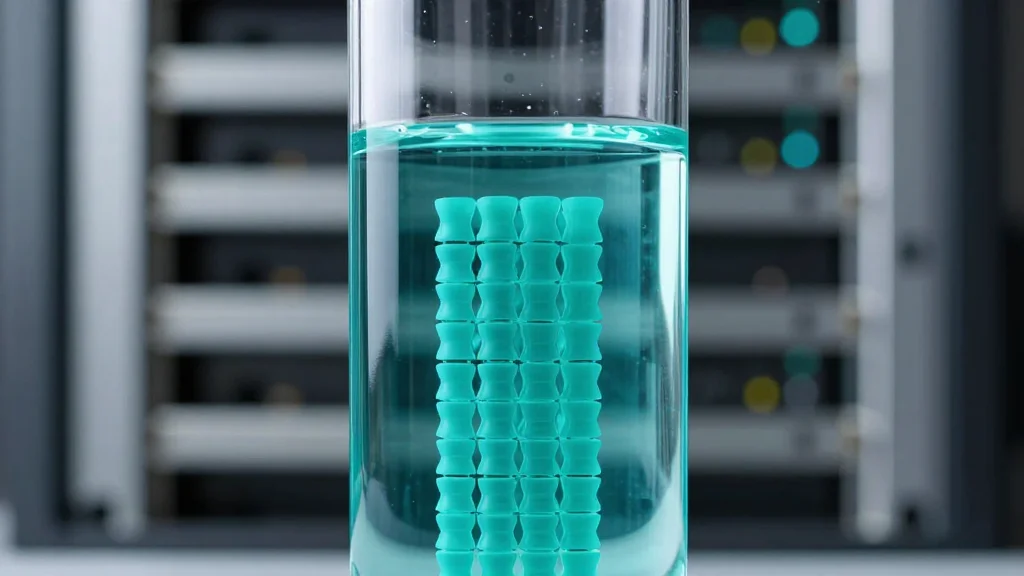
TACC: Designing Protein Building Blocks for Advanced Materials
University of Delaware researchers, using TACC’s Stampede3 supercomputer, have computationally designed peptide fragments called bundlemers that self‑assemble into ordered structures under extreme pH conditions. Molecular simulations on Stampede3 revealed how precise surface charge patterns stabilize the barrel‑shaped four‑peptide units, enabling...

Coming at 3 P.m.: I Talk Live to Jim Haslam, Who Has Investigated Covid's Origins for Years, About Ralph Baric,...
Alex Berenson announces a live interview at 3 p.m. ET with Jim Haslam, a longtime investigator of COVID‑19 origins. Haslam will discuss his new theory involving virologist Ralph Baric, Dr. Anthony Fauci, and the Rocky Mountain National Laboratory. The session follows Berenson’s recent exposé on...
Gold Nanoclusters Could Help in Identifying Diseases
Researchers at the University of Jyväskylä used GPU‑accelerated simulations on the LUMI supercomputer to explore how chiral gold nanoclusters bind small chiral biomolecules. Nearly 100 cluster‑biomolecule pairings and 300 simulation runs revealed that only specific combinations trigger a measurable change...
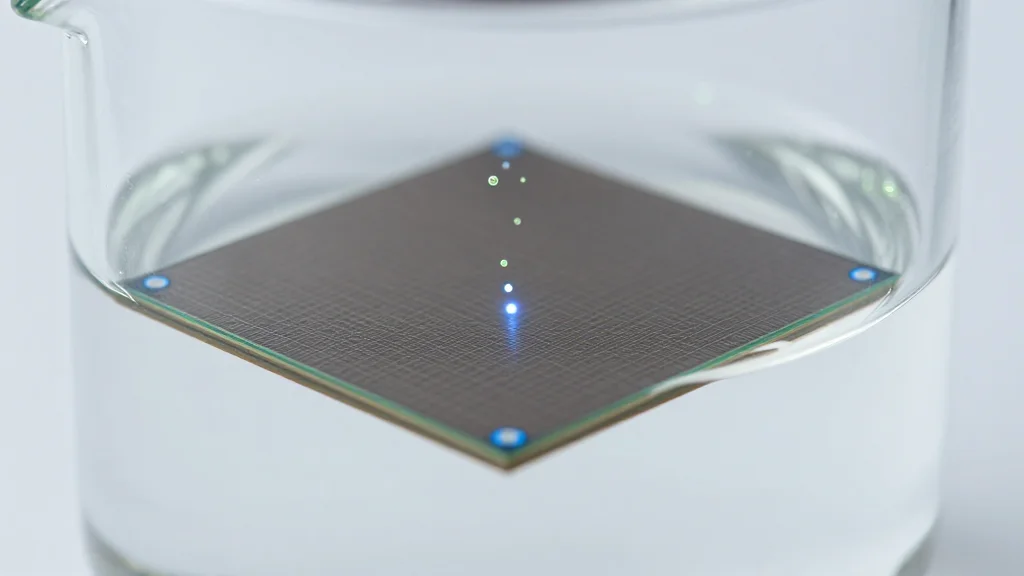
New Research Reveals How Semiconductor Electrodes Can Achieve Green Hydrogen Production
University of Jyväskylä researchers used a new constant inner potential density functional theory to model semiconductor electrochemistry, revealing that lowering the electrode potential creates polarons on TiO₂ surfaces that activate the hydrogen evolution reaction. State‑of‑the‑art Raman, electron resonance and photoelectron...

Comprehensive Digital Materials Ecosystem Streamlines Material Design
Researchers at Tohoku University have introduced a digital materials ecosystem that integrates databases, AI models, and closed-loop experimental workflows to accelerate material discovery. The platform automates candidate screening, prediction, and experimental planning, enabling rapid iteration across domains such as solid‑state...
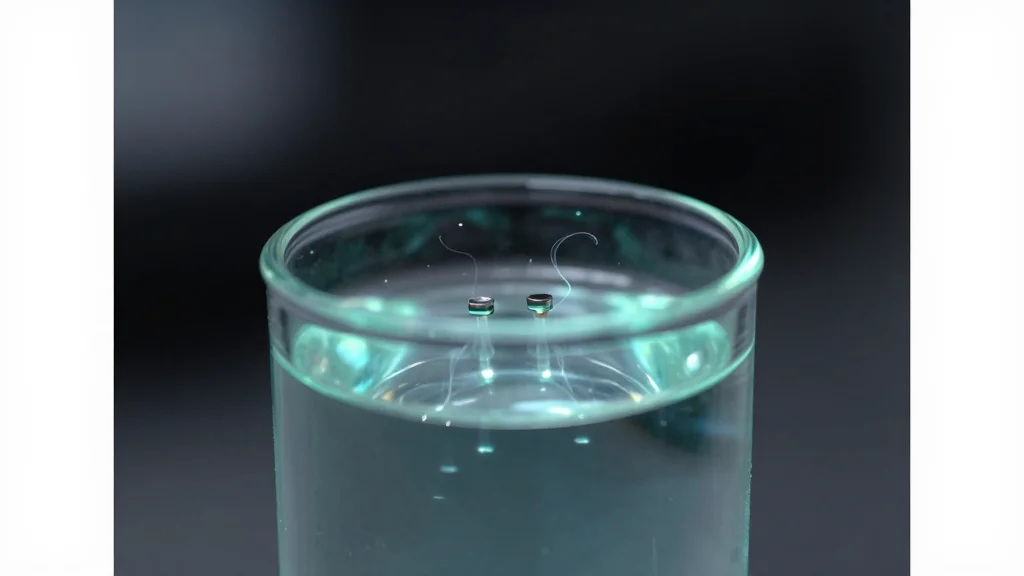
How Invisible Electric Fields Drive Device Luminescence
Researchers at Osaka Metropolitan University employed electroluminescence‑detected magnetic resonance (ELDMR) to directly observe fleeting electron‑hole pairs inside operating polymer light‑emitting electrochemical cells (LECs). Their measurements showed that mobile‑ion migration continuously reshapes the internal electric field, and that a lower, more...

How Orbital Overlap Dictates Molecular Conductance
Researchers at National Taiwan University introduced single‑atom bismuth and lead layers on gold electrodes to isolate the electronic contribution of the metal‑molecule interface. By measuring the interfacial hopping integral, they linked orbital overlap and molecular tilt directly to single‑molecule conductance....
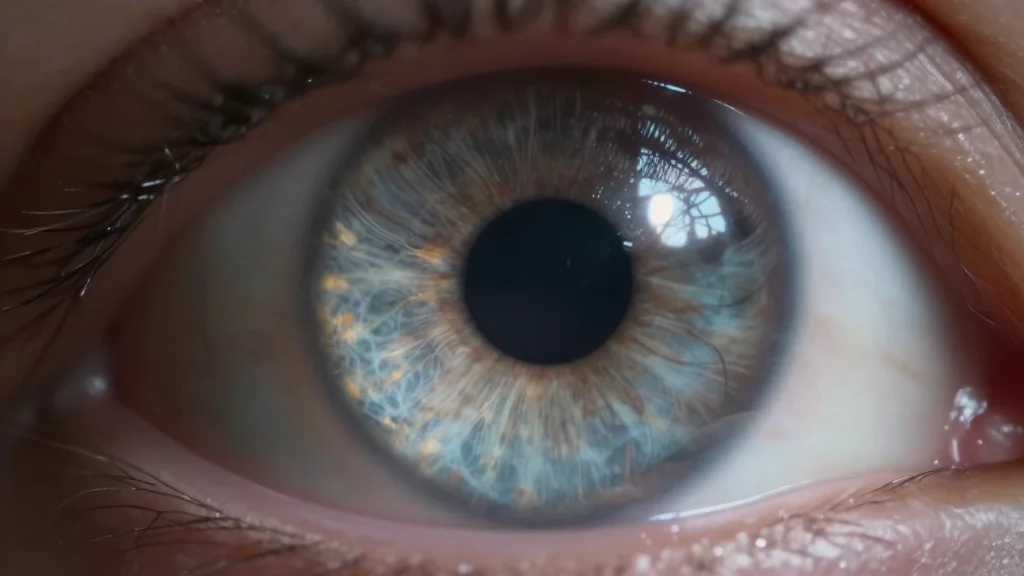
Investigating the Early Stages of Age-Related Cataract Formation
Researchers used genetic code expansion to insert the oxidation product 5‑hydroxytryptophan into a critical tryptophan site of human γS‑crystallin, creating a controlled model of early cataract chemistry. The modified protein showed reduced thermal stability and a heightened tendency to aggregate,...

In an Average Decline of Function, Some Old People Exhibit Improved Function
A longitudinal study of U.S. adults aged 65 and older found that 45.15% improved either cognitive performance or walking speed over a 12‑year span. Researchers used a measure capable of detecting upward trajectories, contrary to typical aging metrics that only...

The Kardashev Blind Spot
The Kardashev Scale ranks civilizations by energy use but neglects the material foundations required to capture that energy. The article introduces the “Mineral Imperative,” arguing that mineral availability sets the true limits on technological progress and on ambitious energy‑transition scenarios....

Isn’t It Time We Had a Back-Up Plan ‘Just in Case’ Things Do Go Catastrophically Wrong?….
A new report argues that climate and ecological crises demand a pragmatic "Plan B" rather than endless debate. It labels discussions such as degrowth as unwinnable, urging focus on adaptive strategies that work across political divides. The authors propose concrete community...

40 Years Since Prof. Susan McKenna-Lawlor Made Contact with a Comet – Guest Post by Emma Whelan
On 14 March 1986 the ESA Giotto spacecraft passed within 600 km of Halley’s comet, delivering the first close‑up images and in‑situ measurements of a comet nucleus. Irish astrophysicist Prof. Susan McKenna‑Lawlor served as Principal Investigator for the Energetic Particle Analyser (EPONA),...
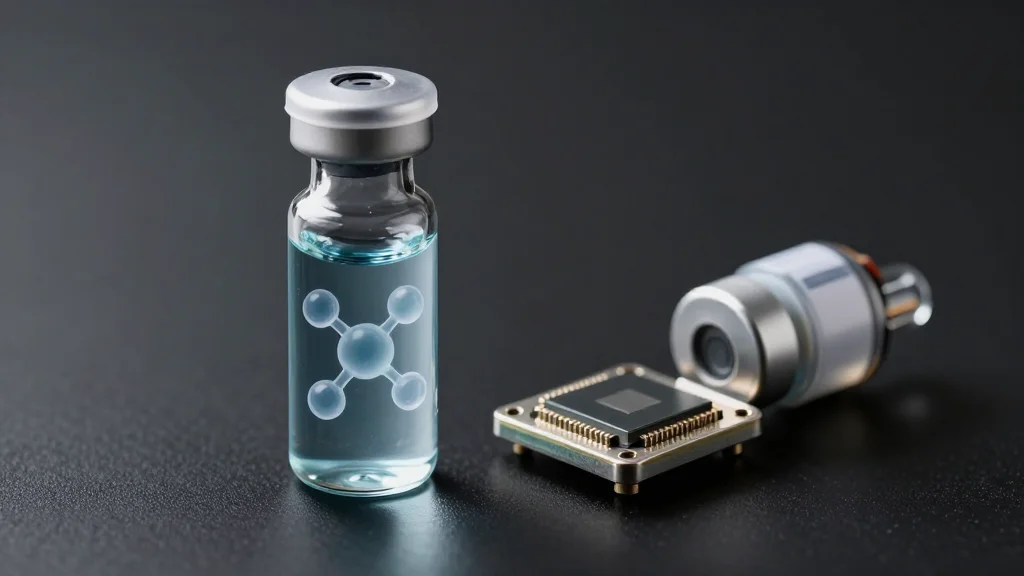
Kvantify Advances Hybrid Quantum-Classical Software for Drug Discovery
Kvantify closed a €7 million second‑stage funding round to accelerate its hybrid quantum‑classical software stack for drug discovery, building on a $10.8 million seed round and earlier EU Innovation Council support. The company’s Qrunch platform integrates conventional chemistry methods with proprietary FAST‑VQE...

Quantum Method Processes Problems in Parallel, Cutting Solution Time by 20%
Researchers at Tokyo University of Agriculture and Technology introduced multi‑tasking quantum annealing (MTQA), a method that runs multiple combinatorial optimisation problems simultaneously on a single quantum annealer. By embedding distinct problem graphs into separate regions and using idle qubits, MTQA...

Precision Measurement Now Underpins Industrial Technology Development
Researchers at Japan's AIST and NMIJ have released a strategic review outlining how precision metrology will become the backbone of quantum‑technology industrialisation. By establishing traceable electrical standards linked to fundamental SI constants, the framework aims to enable automated, large‑scale verification...

Superconductivity’s Key Ingredient Now Easily Calculated by Computers
Researchers at Aalto University and collaborators have introduced a computational framework that calculates the superfluid weight of a material using only non‑self‑consistent Kohn‑Sham bands from standard DFT. The approach reduces the computational cost by orders of magnitude, turning a former...

Entangled Light Boosts Sensing of Material Stress Beyond Known Limits
Researchers at Bar‑Ilan University have demonstrated a hyper‑entangled SU(1, 1) interferometer that pushes birefringence sensing 3–15 dB beyond the classical shot‑noise limit. The scheme couples two nonlinear interferometers with squeezed light, allowing phase‑shift detection using ordinary photon detectors. This approach simplifies quantum‑enhanced...

Binary Optimisation Networks Unlock Efficient Permutation Calculations
Researchers introduced a sparse QUBO formulation for permutation problems that leverages oblivious compare‑exchange networks, cutting the variable count from quadratic to O(n log₂ n). The new encoding supports unbiased sampling of permutations as well as algebraic operations such as multiplication and inversion....

Accurate Quantum Sensing Now Accounts for Real-World Limitations
Researchers at Palacký University introduced a framework that evaluates quantum‑sensing performance using the full inference dataset rather than relying solely on Quantum Fisher Information. The method explicitly incorporates finite resources, prior knowledge, and estimator construction, revealing that NOON states and...

Light’s Subtle Shifts Measured with Unprecedented Precision
Researchers Mikhail and Sergey Podoshvedov have demonstrated ultra‑precise optical phase estimation that reaches sub‑Heisenberg precision without relying on mode entanglement. By engineering continuous‑variable probe states from squeezed‑vacuum light and a single beam splitter, they achieve quantum Fisher information far beyond...

Magnetic Fields Stabilise Insulating States in Twisted Semiconductors
Researchers at the University of Kentucky introduced a novel “center‑of‑charge” basis to model moiré flat‑band physics in twisted bilayer semiconductors under magnetic fields. By treating the minibands as paired Landau levels with opposite Chern numbers, they identified a sharp loss...

Ken Kremer Live Interview WESH 2 NBC News Orlando on Artemis II 2nd Rollout and April 1 Launch Target: Video
NASA announced that repairs to the helium flow interruption in the Interim Cryogenic Propulsion Stage are now mostly complete, allowing the Space Launch System and Orion stack to roll back to the Vehicle Assembly Building. The rocket is scheduled to...
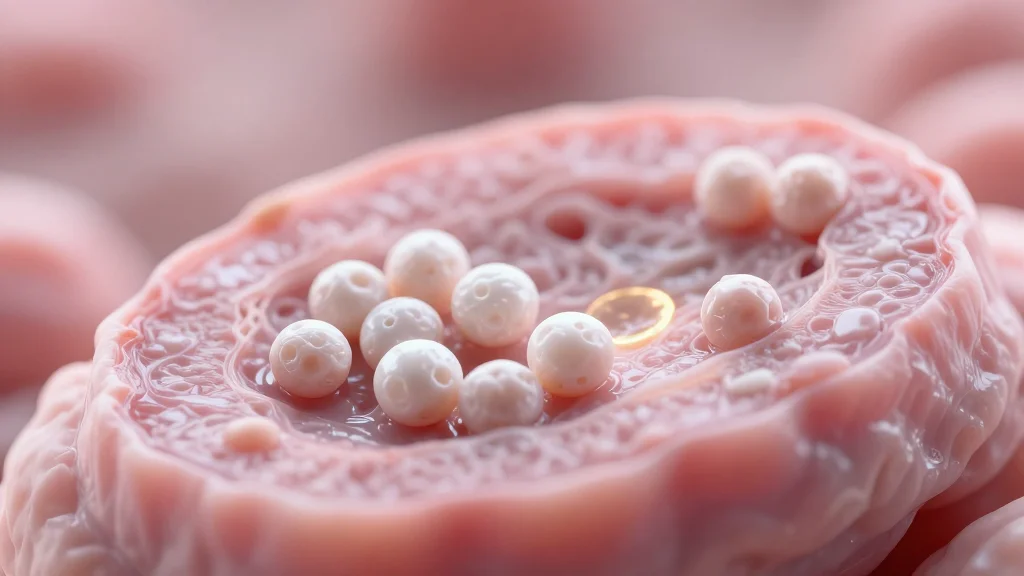
Functionalized Nanoparticles Could Open the Door to Swallowable Insulin Pills
Researchers have grafted the permeation enhancer 1‑phenylpiperazine onto safe silica nanoparticles, creating a hybrid that boosts intestinal insulin absorption while eliminating toxicity. In obese, insulin‑resistant mice, oral insulin delivered with these functionalized particles lowered blood glucose for 8‑10 hours, outperforming...
![Heat Therapy Activates Proteins that Repair Cells and Protect the Heart [PODCAST]](/cdn-cgi/image/width=1200,quality=75,format=auto,fit=cover/https://kevinmd.com/wp-content/uploads/Design-4-scaled.jpg)
Heat Therapy Activates Proteins that Repair Cells and Protect the Heart [PODCAST]
Physician‑researcher Dr. Khushali Jhaveri examined the health claims surrounding infrared saunas, noting that most data derive from Finnish‑style sauna studies. A 20‑year Finnish cohort of 2,300 men showed 22‑40% lower risks of cardiac death, coronary mortality, and all‑cause mortality with...

Ordered Electron Interactions Reveal a New State of Matter
Scientists have directly observed an ordered Kondo hybridization wave (KHW) in the heavy‑fermion superconductor UTe₂ using scanning tunneling microscopy. The KHW appears as a periodic Fano lattice that coexists with a commensurate charge‑density wave and a pronounced energy gap. This...

Closing the 9-Year Gap: A New Biomarker Targets the Diagnostic Delay in Axial Spondyloarthritis
Axial spondyloarthritis affects about 1.4% of adults but patients wait an average of nine years for diagnosis in North America, far longer than rheumatoid arthritis. Augurex has introduced SPINEstat, an anti‑14‑3‑η multiplex blood test that can distinguish inflammatory back pain...

The Evolutionary Intelligence of Human Milk: HMOs and Lactose
Human milk contains two key sugars—human milk oligosaccharides (HMOs) and lactose—that serve distinct yet complementary roles in infant development. HMOs, present at 0.5‑1.5 g/dL, bypass digestion to nourish specific gut microbes such as Bifidobacterium longum subsp. infantis, which in turn produce...

SparseNUTS: Preconditioning Hierarchical Models in HMC with a Sparse “Laplace Approximation” At the Marginal Mode
Researchers led by Cole Monnahan released SparseNUTS, an R package that preconditions Hamiltonian Monte Carlo using a sparse Laplace approximation at the marginal mode of hierarchical models. By leveraging the sparse precision matrix from TMB or lme4, the method replaces...
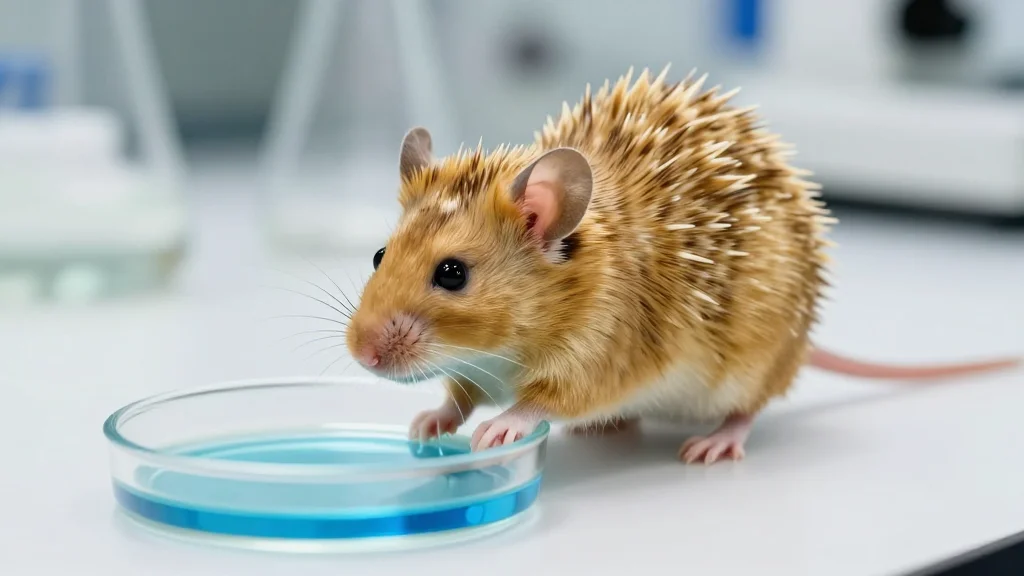
Some Spiny Mouse Species Are Long-Lived in Addition to Displaying Exceptional Regeneration
Researchers found golden spiny mouse (Acomys russatus) lives longer and retains regenerative abilities compared to its sister species. In a non‑pathogen‑free setting, aged A. russatus showed minimal frailty, reduced inflammaging, and preserved thymic structure beyond four years. Transcriptomic analysis revealed youthful...

Argonne Receives DOE Funding to Advance AI for Science
The U.S. Department of Energy awarded Argonne National Laboratory funding for more than a dozen AI‑driven research projects under the Genesis Mission. Argonne will lead the Transformational AI Models Consortium (ModCon), building self‑improving AI models that leverage DOE’s supercomputers, experimental...

‘Magic Mushroom’ Derivative Could Heal without Hallucinations, Sparking Hope for New Therapies
Scientists at the University of Padova synthesized fluorinated psilocin derivatives, identifying compound 4e as a lead that retains serotonergic activity while markedly reducing hallucinogenic effects in mice. In vitro assays showed 4e is a selective partial agonist at 5‑HT2A and...

Richtmyer-Meshkov Instability
A recent study demonstrates that sending a shock wave through a magnetized plasma triggers the Richtmyer‑Meshkov instability, which manifests as mixed Kelvin‑Helmholtz roll‑ups and Rayleigh‑Taylor‑like plumes. Researchers used a two‑fluid model—separating ion and electron fluids—to capture these structures, which are...

Navigating Complexity in Emerging Biotech: Innovations, Integrations, and Initial Hurdles
Industry experts highlight three intersecting forces reshaping emerging biotech: the persistent funding and regulatory hurdles faced by early‑stage startups, the rapid migration of AI from a supportive tool to an operational backbone, and breakthrough computational methods—including quantum chemistry—that are redefining...
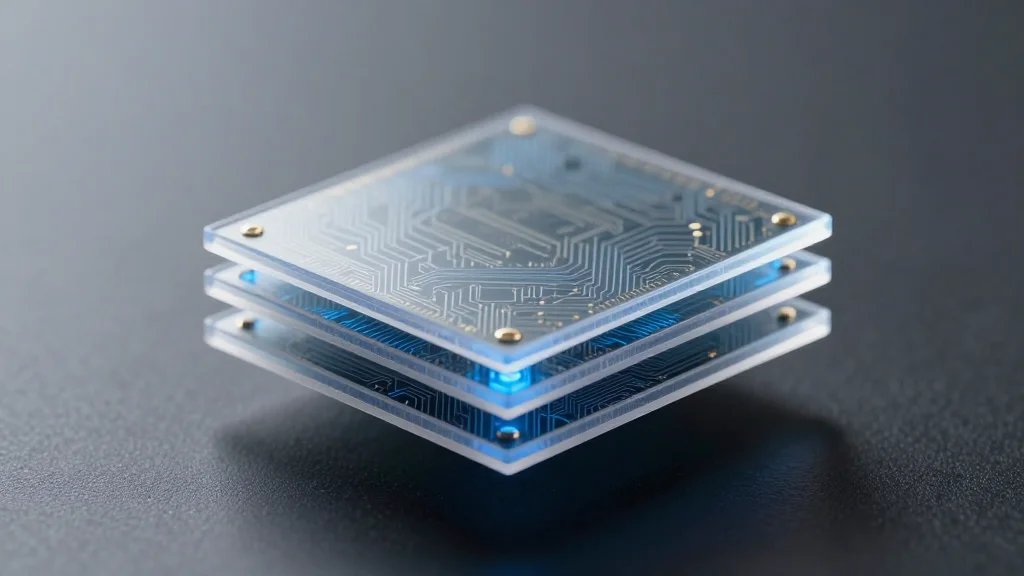
(PR) Imec Launches University Consortium Around Next Generation of Chips
Imec announced a European university consortium of 26 institutions to develop CMOS 2.0, a post‑CMOS scaling paradigm that leverages fine‑grain wafer stacking and heterogeneous integration. The partnership will fund 26 PhD researchers who will remain at their home universities while accessing...

This Is The U.S.'s Last Chance At Solar
Swift Solar, a California start‑up, is buying key assets and patents from the bankrupt Meyer Burger to launch a production line for perovskite‑silicon tandem solar cells. The company claims its hybrid cells could reach 45 percent efficiency, far above the 30 percent ceiling...
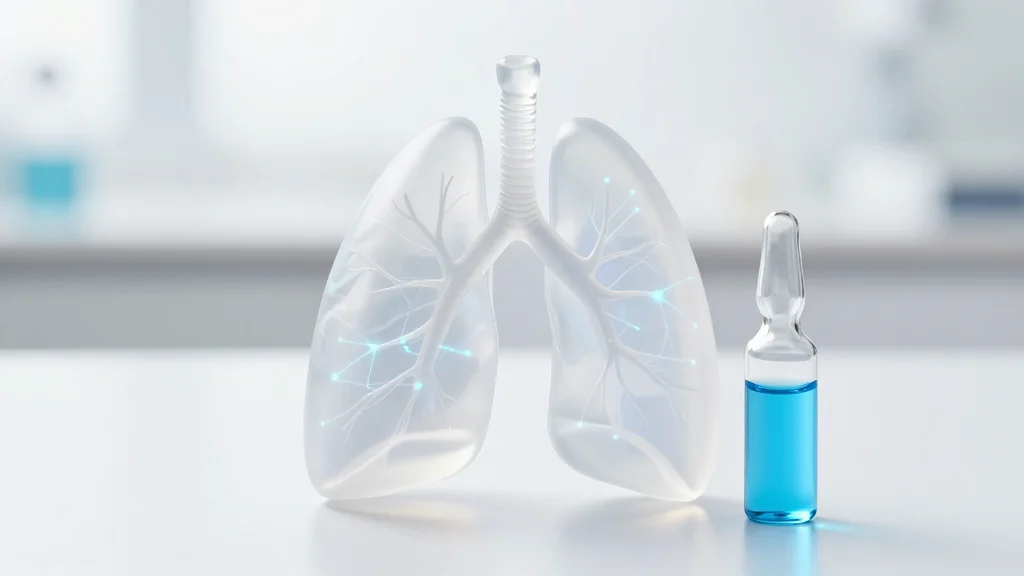
Baseimmune Announces Strategic Expansion Into Fibrosis with Lead Program Targeting Idiopathic Pulmonary Fibrosis (IPF)
Baseimmune announced a new fibrosis‑focused pipeline leveraging its computational protein design platform to create multi‑pathway immunotherapies, starting with idiopathic pulmonary fibrosis (IPF). The company aims to deliver proof‑of‑concept efficacy data for its lead IPF program in 2026‑2027, addressing the limitations...

What Can We Say About the Cosmic Host?
The article critiques Nick Bostrom’s “cosmic host” hypothesis, which posits that the preferences of advanced civilizations or superintelligent AIs could become universal norms that humanity and its own ASI should follow. It dissects Bostrom’s six‑rung assumption ladder, outlines three possible...

How Does Cocaine Rewire the Brain?
Researchers at Michigan State University used mouse models and CRISPR technology to map how cocaine rewires the ventral hippocampus‑nucleus accumbens (vHPC‑NAc) circuit. They discovered that the transcription factor ΔFosB acts as a molecular switch, accumulating with repeated cocaine exposure and...

Yttrium-Doped Nickel Catalyst Boosts Ammonia to Hydrogen Conversion Efficiency
Researchers at Tohoku University have created a yttrium‑doped nickel‑ceria catalyst (Ni₁Ce₁₋ₓYₓOα) that dramatically improves ammonia decomposition into hydrogen. The yttrium addition generates stable surface oxygen vacancies and tunes the electronic structure around nickel sites, lowering reaction energy barriers. The optimized...
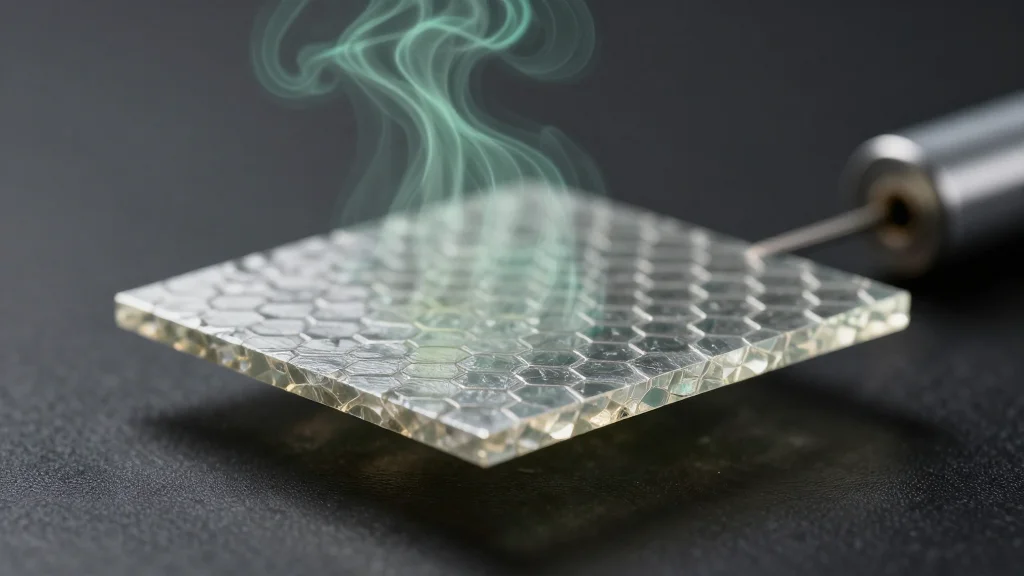
MXenes Move Closer to Real World Use in Energy Storage and Medicine
A Swiss research initiative, TailorX, has advanced the synthesis, modeling, and sustainable production of MXenes, a versatile class of 2‑D transition‑metal carbides and nitrides. The team built a high‑purity library of MAX‑phase precursors, deployed AI models to predict MXene structures...

Rethinking Endocrine Therapy in ER-Positive Breast Cancer
Dr. Steven Quay, CEO of Atossa Therapeutics, highlighted a new focus on tolerability and prevention in estrogen‑receptor‑positive breast cancer, where five‑year survival now exceeds 90%. Atossa is developing a next‑generation SERM that aims to reduce side‑effects while maintaining efficacy and...
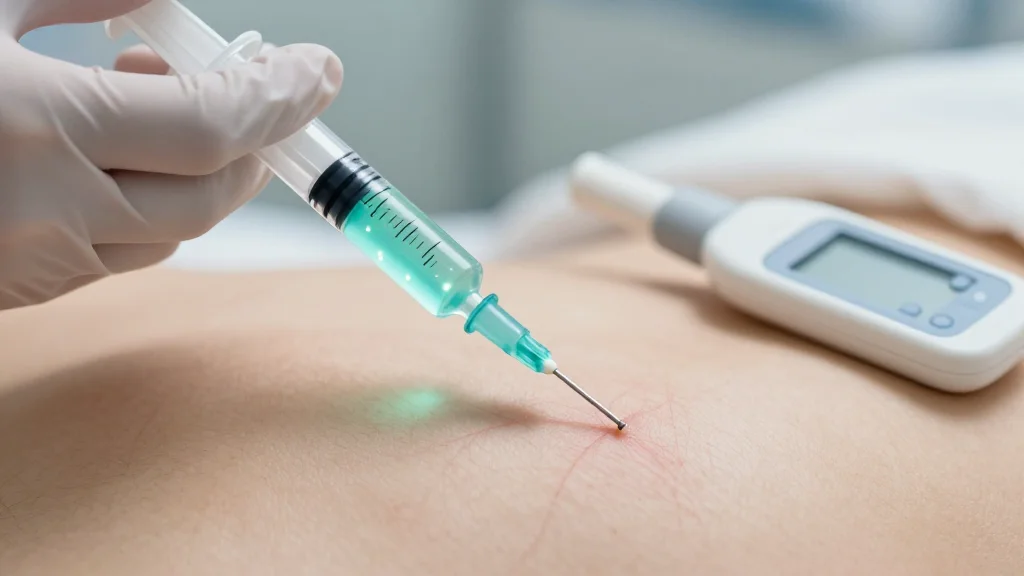
Injectable Mini-Livers as an Alternative to Liver Regeneration
Researchers have introduced INSITE, an injectable platform that combines primary human hepatocytes with hydrogel microspheres to form self‑assembling, vascularizable tissue ensembles in situ. Using ultrasound guidance, the scaffold is delivered to an ectopic site where it integrates with host vasculature...

How Does the Body Detect Physical Force?
Scientists at Scripps Research used MINFLUX super‑resolution microscopy to reveal why the ion channel PIEZO2 is uniquely tuned for light touch. They discovered that PIEZO2 is intrinsically stiffer than its sibling PIEZO1 and is physically tethered to the actin cytoskeleton...

Moving CAR-T Beyond Oncology
Researchers are expanding CAR‑T cell therapy beyond cancer to treat autoimmune diseases such as lupus and rheumatoid arthritis. Sail Biomedicine’s chief products and operations officer highlighted on the Pharmaceutical Executive podcast that the company has pivoted to RNA‑based CAR‑T platforms,...

NASA ESCAPADE Will Study Space Weather From Earth to Mars
NASA’s ESCAPADE mission has activated its twin science instruments to study how the solar wind stripped Mars of its atmosphere, turning a once‑wet world into a barren desert. Launched on 13 Nov 2025, the dual‑orbiter pair is the first to operate together...

Quantum Communication Achieves 85.35% Bit Matching with New Causal Method
Researchers introduced a quantum key distribution protocol that leverages indefinite causal order, a form of causal nonseparability. In ideal conditions the scheme attains an 85.35% bit‑matching probability, corresponding to a 14.65% raw error rate suitable for standard error‑correction codes. The...